Liquica Where to Stay: Best Areas and How to Choose Your Base

Choosing where to stay in Liquica is less about selecting a large hotel district and more about choosing the right coastal base. Accommodation is spread between Liquica town and Lauhata, the Tibar corridor near Dili, and the more rural Maubara and Lake Maubara area. This guide compares those bases, the documented resort, guesthouse, camping, and group options, indicative prices, road access from Dili and Comoro Airport, and the practical questions to settle before arrival. Because the visible accommodation market is small, the recommendation is priority-based rather than an unsupported ranking of the safest or best property.
Liquica Where to Stay: The Short Answer
For most first-time visitors, choose the wider Liquica town and Lauhata Beach area, especially if you want a beach stay with meals available on site and a reasonable connection to town services. Choose Tibar when airport access and proximity to Dili matter more than being near Liquica town. Choose Maubara or Lake Maubara when the fort, rural scenery, birdwatching, and outdoor activities are the main purpose of the trip.
The Default Base for First-Time Visitors
The default base is Liquica town and Lauhata, but this describes a coastal area rather than one compact, walkable hotel center. It is the most practical starting point for a short coastal break because it combines a municipal town with a clearly documented beachfront property. Tourism Timor-Leste describes Lauhata Beach Escape as a beachfront accommodation with eight rooms arranged for couples or families. Its public description also identifies air conditioning, private bathrooms, a restaurant, a bar, and camping space; confirm which facilities are currently operating when you contact the property.
This base suits couples, families, and visitors who want to spend much of the stay at the coast rather than arrange every meal and transfer independently. A beachfront resort can also simplify a one- or two-night visit from Dili. At the same time, Liquica town and Lauhata should not be treated as interchangeable: a property beside the beach may be outside the center, while a room in town may offer easier access to local services but no direct beach setting.
There is not enough consistent evidence to call this the safest area or to rank it as the best property in the municipality. Treat it as the strongest documented fit for a first visit. Daytime proximity to town or the beach also does not automatically mean easy walking at night, and the cost of a formal resort may be higher than the price of a basic local room.
When Tibar or Maubara Is a Better Fit
Tibar is the eastern, Dili-facing choice. It makes sense when you are arriving through Comoro Airport, leaving early for Dili, or want a retreat setting without going as far west as Liquica town. Tibar Beach Retreat is the main documented example, with public information describing a hilltop property with bungalows, views, a restaurant, and airport-transfer facilities. Its position can make arrival logistics simpler, but a hilltop retreat is not the same as staying beside a walkable beach or in a town center.
Maubara is the better priority-based choice for visitors focused on Maubara Fort, Lake Maubara, the surrounding hills, or a quieter rural itinerary. It places you farther west and closer to those attractions, but the documented selection of accommodation and dining is thinner. Camping and locally promoted guesthouses may offer simpler or lower-cost alternatives in the wider municipality, but their current facilities, rates, and availability should be confirmed directly rather than assumed from a general accommodation search.
Best Areas to Stay in Liquica
Liquica is easier to choose by travel purpose than by neighborhood ranking. Compare the three bases by road access, distance from daily services, beach access, dependence on a vehicle, and the amount of accommodation information available.
Liquica Town and Lauhata Beach
Liquica town and Lauhata Beach offer the strongest combination of local services and a coastal setting. The town is the municipal center, while Lauhata is the beach-focused area nearby in the wider Liquica municipality. Staying in or near town is useful if you want to buy basic supplies or avoid being completely dependent on a resort. Staying at Lauhata is more suitable if the beach, swimming, meals, and time at the property matter more than town errands.
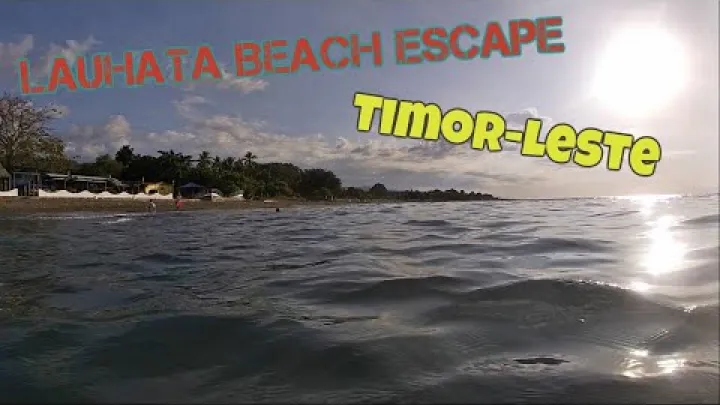
Lauhata Beach Escape is the clearest documented accommodation anchor in this area. Its listed eight-room layout may appeal to couples and families who prefer a small property to a large hotel. Air conditioning, private bathrooms, a restaurant, bar, and camping are publicly described features, although the current condition and availability of each amenity should be confirmed. Direct beachfront access is a meaningful advantage for a short break because it can reduce the need for daily transport.
Walkability depends on the exact property location. Town services may be closer than they are at an isolated resort, but the area is not a dense hotel district with guaranteed sidewalks, continuous lighting, or many restaurants on every block. Local activity, roadside traffic, and community events may also create more variation in noise than a remote retreat. The cost level is similarly difficult to define: a formal beach resort will usually need to be compared with local rooms on a total-stay basis, including meals and transport, rather than through a municipal average that does not exist.
Choose this base when you want the simplest first experience of the Liquica coast and do not need every attraction to be within walking distance.
The Tibar Corridor
Tibar is the practical gateway between Dili and the Liquica coast. Its main advantage is transfer logic: it is the first of the three bases when traveling west from Dili and Comoro Airport. This can be useful for a short stop, a late-stage departure plan, or a traveler who wants access to Dili while sleeping outside the capital.

Tibar Beach Retreat is presented as a hilltop retreat rather than a town hotel. Public descriptions identify bungalows, coastal views, a restaurant, and airport-transfer facilities. Those features make it a possible fit for couples, small groups, or travelers who value seclusion and a property-based stay. The trade-off is mobility. A hilltop location may provide views without providing convenient walking access to shops, town services, or a broad stretch of beach.
Use Tibar as a transport and retreat choice, not as the default sightseeing base for Liquica town. Ask about the exact road entrance, vehicle access, transfer arrangements, meal hours, and the distance to any beach access before booking. If you plan to visit several places west of Tibar, compare the cost of repeated car trips with the convenience of staying nearer Liquica town or Lauhata.
Maubara and Lake Maubara
Maubara and Lake Maubara suit a different kind of trip. The principal heritage anchor is Maubara Fort, a historic fort associated with the Dutch period. The grounds include a restaurant and a small shop selling local handicrafts, according to Tourism Timor-Leste. Staying in the western part of the municipality can make a fort visit more convenient than using a base near Tibar or central Liquica.
Lake Maubara and the surrounding hills are the relevant nature anchor. They may suit travelers interested in birdwatching, scenery, and informal outdoor exploration. The area should be treated as rural rather than as a second resort strip. There are fewer clearly documented hotels, restaurants, and transport services, so the base works best for visitors who are comfortable arranging a vehicle and spending more time planning each outing.
Outdoor access also varies by route. A recent traveler account describing a hike behind Lake Maubara reported an absence of formal tracks or paths. That does not establish a permanent trail condition, but it is a reason not to assume that a map point represents a maintained walking route. Maubara is a good choice when heritage and nature are more important than accommodation variety, nightlife, or spontaneous movement between restaurants.
Choose a Lodging Type by Budget and Trip Style
Liquica's visible accommodation is more strongly represented by small resorts and locally promoted properties than by a well-documented hostel or serviced-apartment market. Choose the lodging type according to how much independence, comfort, and transport support you need.
Beach Resorts for Comfort and Convenience
A beach resort is usually the easiest option for travelers who want a private room, air conditioning, a private bathroom, food on site, and access to the coast without arranging each part separately. This is particularly useful for a short stay, a family trip, or an arrival when you do not want to search for dinner after reaching a rural property.
Lauhata Beach Escape is the best-documented example. Its tourism listing describes eight rooms for couples or families, along with resort-style facilities. Alma do Mar is another publicly promoted resort-style option in Liquica. Its public profile describes villas, a beachfront restaurant, a conference center, and a camping site. Tibar Beach Retreat adds a hilltop bungalow format with views and a restaurant. These descriptions show the range of settings available, but they are not proof that every amenity, room type, or service remains available on a particular date.
Resorts are a good match when convenience is more important than living in the town center. They can also be useful for travelers without a vehicle because meals and basic recreation may be available on the property. The disadvantages are a potentially higher nightly rate, fewer spontaneous interactions with town life, and a greater need to arrange transport for heritage or inland activities. Ask whether the quoted rate includes breakfast, other meals, transfers, taxes, or access to facilities before comparing it with a basic room.
Guesthouses and Homestays for a More Basic Stay
Locally promoted guesthouses may suit travelers who value a simpler room, local contact, or a lower negotiated price. Namira Guest House in Mauboke is publicly promoted as offering executive accommodation and restaurant meals. That description indicates a possible local lodging option, but it does not establish current rates, room standards, bathroom arrangements, internet access, or availability.
Other family-run rooms or homestays may exist outside major booking platforms. Liquica-specific evidence for their prices and standards is limited, so do not transfer an informal price mentioned for a homestay in another Timor-Leste town into a Liquica budget. A local room may be excellent value, but it may also have fewer services than a resort.
Before accepting a basic room, ask:
- Is the bathroom private, and is hot water available?
- How reliable are water and electricity during the planned stay?
- Are meals available, and at what hours?
- Can the host communicate in a language you understand?
- Is Wi-Fi available, and does mobile coverage work at the property?
- Can the host arrange a driver or explain the arrival route?
- Is payment expected in cash, and is a deposit required?
This category is best for flexible travelers who can accept fewer published details and who will confirm the practical basics before traveling.
Camping, Groups, and Longer Stays
Camping is a documented alternative at Lauhata Beach Escape and Alma do Mar. It may reduce accommodation cost while preserving access to a resort restaurant or beachfront setting, but camping should not be treated as a guaranteed low-cost fallback. Confirm whether you need to bring a tent, what toilets and showers are available, whether meals can be purchased, and how the site handles wet or windy conditions.
Alma do Mar and Tibar Beach Retreat also have public indications of conference or group facilities. They may therefore suit a workshop, retreat, or small organized group, subject to confirmation of room capacity, meeting equipment, meal arrangements, and transport. A property that advertises a conference center is not automatically suitable for a large event.
For a longer stay, ask about a negotiated weekly or monthly rate, meals, laundry, workspace, internet, electricity, room cleaning, and transport. Do not assume that Liquica has a reliable supply of classic hostels or serviced apartments with standard long-stay packages. In many cases, a resort or guesthouse may be able to create an arrangement, but the terms need to be agreed directly.
What the Current Accommodation Evidence Shows
The available evidence points to a small and unevenly documented market. That makes current listing details useful for finding names, but not sufficient for a definitive hotel ranking.
Indicative Prices and Limited Availability
The current district accommodation page supplied for this guide shows a short visible list: Lauhata Beach Escape, Tibar Beach Retreat, Caimeo Beach Resort, and Alma Do Mar Resort Liquica. The page displays a starting price of about US$98. Treat that figure as a time-sensitive starting indicator, not as the price of every room or a complete average for Liquica.
| Area or listing | Documented lodging style | What to confirm |
|---|---|---|
| Lauhata Beach Escape | Small beachfront resort; eight rooms listed | Current rate, facilities, and room availability |
| Tibar Beach Retreat | Hilltop retreat with bungalow-style accommodation | Exact access, transfers, meals, and rate |
| Caimeo Beach Resort | Named in the district accommodation listing | Current operation and detailed facilities |
| Alma Do Mar | Resort-style listing with public villa and camping information | Current rooms, camping, group facilities, and price |
A separate accommodation aggregator gives an approximate average near US$95, but its wording refers to hotels near Liquica and does not establish complete municipal coverage. Use it only as a broad signal that formal resort accommodation is likely to be much more expensive than an informal local room. Cheaper options may exist, but they are not documented well enough to support a dependable low-budget average.
Rates can change with management, weekends, public holidays, events, season, room type, meals, and direct-booking negotiations. Small properties can also have limited availability even when the destination has little international booking inventory. Compare the complete cost of the stay, including transport and meals, rather than looking only at the nightly number.
How to Compare Properties Without Overclaiming
Use a priority label instead of asking which property is universally best. For example, Lauhata may be the best fit for direct beach convenience, Tibar for an eastern transfer and retreat setting, and Maubara for heritage and nature. Those labels describe suitability for a purpose; they do not prove superior service, value, safety, or comfort.
Compare each property using these questions:
- Where is it in relation to Liquica town, Lauhata Beach, Tibar, Maubara Fort, and Lake Maubara?
- Is the beach directly accessible, or does the property only offer a coastal view?
- Will you need a vehicle for meals, supplies, sightseeing, or the airport?
- Does the property have a restaurant, and are meals served outside normal daytime hours?
- Is the room suitable for one person, a couple, a family, or a group?
- Are group rooms, meeting space, camping, or long-stay arrangements actually available?
- How recent are the reviews or public updates, and what are the cancellation terms?
Separate documented facts from your own inference. A hilltop property can be an attractive retreat without being a convenient walking base. A beachfront resort can provide comfort without functioning like a full-service town hotel. A property appearing in a district list, such as Caimeo Beach Resort, should not be ranked solely because it appears above or below another name. Ask for current details and compare the answers in writing.
Getting to Liquica and Moving Around
Liquica is a road-access destination, and the location of your accommodation affects the ease of every transfer. The transport system is practical but informal, so the property you choose can be as important as the area name.
Reaching Liquica from Dili and the Airport
From Dili and Comoro Airport, the practical choices include a private car, taxi, shared van, bus, or other local road transport. A general Timor-Leste transport guide describes public transport as informal and inexpensive, but it does not provide a dependable current timetable or fare for every Liquica route. The guide gives Dili mikrolet fares of roughly US$0.25 to US$1 as an urban example; do not use that figure as a confirmed intercity fare to Liquica. Travel with Hello provides useful context for the wider transport system.

The bases follow a simple westbound logic. Tibar is the eastern option closest to the Dili-facing approach. Liquica town and Lauhata lie farther along the coastal route, while Maubara is the more western choice. Exact travel time depends on traffic, road conditions, the pickup point, and the property entrance, so an online map estimate should not replace local confirmation.
Ask the accommodation or a known driver for the current pickup route, fare, travel time, luggage space, and a daylight transfer plan. Confirm whether the driver will meet you at Comoro Airport or another Dili location, and what happens if a flight is delayed. If you arrive late, rely on a prearranged and confirmed pickup rather than an unverified public transport timetable.
Moving Between the Town, Beaches, and Maubara
The main coastal road links the relevant bases, but the accommodation and attractions are spread out rather than concentrated in a dense, walkable hotel district. A map distance can therefore hide the need for a vehicle, an uphill approach, a road shoulder, or a return journey after restaurants and attractions close.
Choose a base that reduces your repeated travel. Liquica town is the practical choice for basic services, Lauhata works for a beach-focused stay, and Maubara is more logical when the fort and lake area are central to the itinerary. Tibar is useful when the trip is organized around Dili access or a retreat rather than daily sightseeing in Liquica.
For several coastal stops, arrange a local car or driver through the property or a known contact. Ask about the full-day or point-to-point fare, waiting time, fuel expectations, and the planned return. Keep sightseeing logistics separate from night-time movement: convenient daytime road access does not mean that every route is suitable for walking after dark.
Booking, Payments, and Arrival Planning
Good arrival planning matters more in a small accommodation market than in a large city with many interchangeable hotels. Confirm the details that affect your specific trip before you leave Dili.
What to Confirm Before Booking
Contact the chosen property directly by phone, email, or its current public contact channel. Ask for the current operating status, room availability, total price, exact location, arrival instructions, and the facilities included in the rate. A tourism page or booking-platform listing can help you identify a property, but it may not show real-time inventory or recent changes.
Use this checklist:
- Current room rate, taxes, deposits, extra-person charges, and meal costs
- Room type, bed arrangement, private bathroom, air conditioning, and water supply
- Restaurant opening hours, breakfast arrangements, and options for dietary needs
- Direct beach access versus a beach view or a separate drive to the coast
- Airport pickup, private-driver options, luggage handling, and late-arrival procedures
- Check-in and check-out hours, cancellation terms, and refund conditions
- Wi-Fi, mobile coverage, electricity, workspace, laundry, and other long-stay needs
Request the exact location pin or a clear landmark, especially when the property is outside Liquica town or on a hill. Confirm who will meet you and how to contact the property if your arrival time changes. Early contact is sensible for weekends, public holidays, and group events because a small property can fill quickly even when few rooms appear on international platforms.
Cash, Connectivity, and Late Arrivals
United States dollars are widely used in Timor-Leste. Carry enough cash in small denominations for transport, meals, and incidental purchases, and ask whether the property currently accepts cards before leaving Dili. Card acceptance, nearby ATM access, and payment reliability at an individual property are not established consistently in the available evidence, so do not depend on a card-only plan.
Connectivity should be part of the lodging decision if you work remotely, study online, or need to coordinate transport. Ask about Wi-Fi speed and reliability, mobile coverage, power interruptions, workspace, and charging access. Also confirm whether food is available when you arrive. A resort restaurant may not serve late, and a rural guesthouse may need advance notice for meals. These questions are especially important when your flight, transfer, or work schedule falls outside normal daytime hours.
Safety, Weather, and Night-Time Practicalities
The available evidence does not support Liquica-specific crime statistics or a defensible ranking of the safest neighborhood. Practical safety therefore depends heavily on infrastructure, property arrangements, transport, and your timing.
Night-Time Movement and Property Security
Outside built-up areas, lighting may be limited, and roads can include traffic, uneven surfaces, shoulders, and long gaps between properties. Do not assume that a short distance on a map is an easy or comfortable walk after dark. The relevant questions are whether the accommodation has working exterior lights, secure room locks, staff or a responsible contact, controlled access, and food available on site.
Ask the property specifically about late-night arrival, access to your room after reception closes, lighting between rooms and common areas, and the arrangements for guests returning from a day trip. If you are traveling without a vehicle or prefer not to travel at night, an established, self-contained property is usually a more practical choice than an isolated room that requires evening transport.
Use on-site dining or a confirmed vehicle instead of walking long distances on unlit roads after dark. Keep valuables secured, let the property know when you expect to return, and follow local advice about beaches, roads, and private areas. These are standard precautions, not a claim that any Liquica base is risk-free.
Wet-Season Conditions and Outdoor Plans
Weather can change the practical value of a base. Rain may affect coastal road travel and access to rural roads, while unsettled seas can affect swimming, snorkeling, and other water activities. Rain or heat can also make the hills around Lake Maubara harder to access. Avoid treating fixed seasonal descriptions as a guarantee for the dates of your trip.

Before planning an outdoor day, check the current forecast and ask the accommodation or a local driver about road, trail, and sea conditions. The reported lack of formal tracks on one outing behind Lake Maubara is a reminder that informal routes should not be treated as maintained trails. It is not a complete or permanent statement about every route in the area.
Plan outdoor activities in daylight and carry suitable footwear, drinking water, sun protection, and a charged phone. Have a realistic fallback if rain, rough water, or road conditions change. Choose a Maubara base only when you can manage the required transport and route planning, rather than assuming that the lake and surrounding hills will be immediately accessible from any guesthouse.
Final Recommendation for Your Stay
For a first visit, choose Liquica town and the Lauhata Beach area if you want the clearest combination of documented accommodation, coastal access, meals, and a connection to local services. Lauhata Beach Escape is a practical example of that fit, but confirm its current operation, rate, and facilities directly.
- Choose Lauhata or Liquica town for a short beach break, couples, families, and travelers who want a self-contained coastal stay.
- Choose Tibar when access from Dili or Comoro Airport, an eastern transfer, or a hilltop retreat matters most.
- Choose Maubara or Lake Maubara when Maubara Fort, nature, and a rural western-coast itinerary are the main priorities.
- Choose a guesthouse or camping arrangement only after confirming the facilities, total price, payment method, meals, and arrival logistics.
There is no reliable evidence for a universal best hotel or safest area in Liquica. The strongest decision is the one that matches your route, transport needs, comfort level, and tolerance for limited published information. Confirm the property and transfer before departure, carry cash, and plan outdoor and night-time movement around current local conditions.
Select area
Create a post
Posting is free and no registration is required.