Maliana Getting There: Routes and Transport in Timor-Leste

Getting to Maliana in Timor-Leste is mainly an overland planning question. The practical choices are a bus or private vehicle from Dili, a limited operator-confirmed light-aircraft possibility, or a cross-border journey through Atambua and Mota'ain. This guide compares the gateways, costs, travel-time patterns, booking difficulty, border requirements, and last-mile options in Maliana Vila. Services can change, so reported fares and times should be treated as planning baselines rather than guarantees.
Understand Maliana's Access Before You Book
Maliana is served primarily by road from Dili or from the Indonesian side of Timor. Choosing the right gateway depends on where you are already traveling, whether you need the lowest price or more control, and whether you can manage border formalities and an extra transfer.
Maliana Is Primarily an Overland Destination
Most travelers should plan to reach Maliana by road rather than by booking a normal commercial flight into the town. International visitors usually begin at Presidente Nicolau Lobato International Airport in Dili, arrange a western road transfer, and continue along the Dili-Maliana corridor. Travelers already in Indonesia can approach from Kupang or Atambua and cross into Timor-Leste near Mota'ain.
Maliana does have a listed aviation facility, but it should not automatically be treated as a passenger airport. The OurAirports listing describes the Maliana facility as a highway-strip airfield that is closed to fixed-wing aircraft and used for helicopter operations. That description is very different from a standard airport with a regular bookable airline timetable.
The practical implication is simple: make road transport your default plan. There is no established rail, ferry, or regular fixed-wing passenger route into Maliana in the available route information. A light aircraft or helicopter service, if offered for a particular date, must be confirmed directly with the operator and should not replace a road backup.
Road access also gives you more useful arrival choices. A bus is normally the budget approach, while a private vehicle and driver can provide a more direct trip with better control over departure time and luggage. The Indonesian route can work well for an overland Timor itinerary, but it adds two national transport systems and an international border to the journey.
Choose Between Dili, West Timor, and a Cross-Border Journey
There is no single best gateway for every traveler. Dili is usually the simplest starting point if you are arriving internationally in Timor-Leste. Atambua is useful as an Indonesian staging point close to the border, while Kupang can fit better into an Indonesian or Flores itinerary. A cross-border route may be geographically efficient, but it is operationally more complicated because transport, immigration, and the final connection to Maliana are separate matters.

| Option | Main advantage | Main limitation | Cost and time pattern | Booking and verification |
|---|---|---|---|---|
| Dili bus | Lowest-cost road option | Early, demand-based departure and less control | Lowest cost; reported road time is about two hours, but the full journey varies | Usually arranged locally; confirm at Tasi Tolu |
| Dili private vehicle | Direct departure, luggage space, and flexibility | Higher, quote-based cost | Road travel can be more predictable than the bus, but conditions still affect timing | Arrange a driver and confirm what the quote includes |
| Dili light aircraft | Potentially much faster than the road | Limited seats, uncertain operation, and weather restrictions | Price and total time depend on a confirmed operator service | High difficulty; obtain direct seat and schedule confirmation |
| Kupang or Atambua overland | Fits travelers already in Indonesia or on a Flores-Timor route | Several legs, border formalities, and a separate Maliana transfer | Total cost accumulates across Indonesian transport, border transfer, and Timor-Leste transport | Confirm Indonesian services, entry rules, and onward transport separately |
Choose Dili when you want the clearest national route and are arriving through the Timor-Leste capital. Choose the Indonesian side when you are already traveling through West Timor and can allow time for the crossing. A group with substantial luggage may find a private vehicle more practical than several informal transfers. If you have a fixed meeting, conference, or international flight, avoid building the plan around an unconfirmed bus, border connection, or aircraft.
Getting to Maliana from Dili by Bus
The Dili bus route is the most useful option for travelers who want to keep the cost low. It is also the option that requires the most realistic expectations about informal departure practices and the difference between a listed journey time and a door-to-door trip.
Find the Western Departure Point at Tasi Tolu
Tasi Tolu Bus Station is the practical Dili departure area associated with western intercity services, including the route toward Maliana. It should be approached more like a local loading point than an airport terminal. A bus may have a reported departure period, but passenger demand, loading, and local operating practice can affect when it actually leaves.

Use this sequence:
- Ask your accommodation or a local transport contact whether a Maliana bus is expected to operate on your travel day and where it will load at Tasi Tolu.
- Reach Tasi Tolu early, especially if the service is reported to operate once daily. Leave time to find the correct vehicle rather than arriving at the last possible minute.
- Before boarding, say Maliana clearly and confirm that the vehicle is going to Maliana Vila or the Maliana area, not simply to another western destination.
- Confirm the fare, payment method, and likely drop-off point. Keep enough small cash because online booking and card payment cannot be assumed.
If you arrive in Dili late in the day, staying overnight and arranging the trip to Tasi Tolu in advance is usually more practical than trying to make an uncertain same-day departure. This is especially important when you have luggage or are unfamiliar with Dili's western transport areas.
Use the Dili-Maliana Bus as the Budget Option
The bus is likely to be the lowest-cost way to travel between Dili and Maliana. For a planning baseline, the route listing from Rome2Rio available for this guide in August 2026 reports Local Bus Timor Leste service once daily, a fare of about USD 6, and a listed journey time of approximately two hours. The listing is useful for understanding the scale of the trip, but it is not a live official timetable.
| Item | Reported August 2026 baseline | What to expect in practice |
|---|---|---|
| Fare | About USD 6 | Carry cash and confirm the current amount locally |
| Frequency | About one service per day | A missed or full bus may require a different plan |
| Listed road time | About two hours | Stops, loading, road conditions, and the last mile can make the full trip longer |
| Advance booking | Not established as a dependable online process | Confirm the departure point, destination, fare, and operating status shortly before travel |
The reported two-hour figure should be understood as a route estimate, not as a guaranteed arrival time at your accommodation. It may not include the transfer from your Dili accommodation to Tasi Tolu, time spent waiting for loading, intermediate stops, or the journey from the drop-off point in Maliana Vila to your room. The same USD 6 figure should be treated as an approximate reference dated August 2026, not a fixed current fare.
For travelers without a strict schedule, this trade-off is often worthwhile. The bus keeps the journey simple and inexpensive once you are at the departure point. For travelers carrying equipment, traveling in a group, or needing to arrive at a specific hour, compare the bus with a private driver before committing to the lowest headline price.
Prepare for a Demand-Based Rural Bus Journey
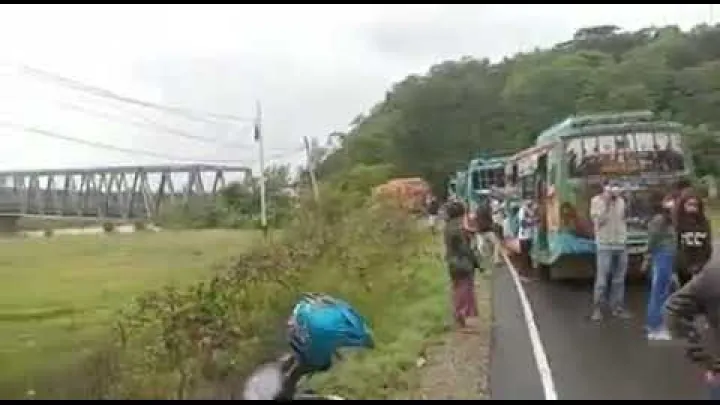
A rural intercity bus journey can involve passenger loading, cargo handling, and frequent stops. The precise experience depends on the vehicle, the day, and the number of passengers. Do not assume that the bus will leave at exactly the time shown in an old travel report or arrive after an uninterrupted two-hour drive.
Pack for a basic road journey rather than a full-service coach:
- Carry small cash for the fare and possible local transport at the other end.
- Keep water, a snack, necessary medicine, and a light layer within reach.
- Keep your passport, phone, wallet, charger or power bank, and accommodation details in a small personal bag.
- Save the accommodation name, address, and contact number offline in case mobile data is unreliable.
- Use luggage that you can identify quickly and keep track of during loading and unloading.
The bus is best for a flexible day plan. Do not schedule a tight onward connection immediately after the nominal arrival time. If a conference, check-in deadline, or appointment matters, travel earlier or use a private vehicle with a clearly agreed departure plan.
Compare Private Road Travel and Light-Aircraft Access
Private road travel gives you control without depending on a formal scheduled service. A light aircraft can look attractive on a map, but its value depends entirely on whether an operator confirms a current flight for your date.
Hire a Private Vehicle and Driver for Flexibility
A private vehicle with a driver is the most flexible road option from Dili. It can leave at an agreed time, travel directly toward Maliana Vila, carry more luggage comfortably, and pause when you need a rest or a practical stop. It is particularly useful for groups, travelers with bulky bags, people who must reach Maliana at a defined time, and itineraries that include side roads around Bobonaro.
The main disadvantage is price uncertainty. There is no verified current private-car fare in the available material, so do not plan around an invented per-car or per-person amount. Ask for a written or clearly stated quote and check whether it is for one way or return travel.
Before accepting the vehicle, confirm:
- the vehicle type, passenger capacity, and luggage space;
- the driver's name and contact number;
- the exact pickup point in Dili and the intended drop-off in Maliana Vila;
- whether fuel, the driver's meals, waiting time, stops, and any overnight requirement are included;
- whether the price changes if the road is slow or the schedule extends; and
- the payment amount, currency, and timing.
A private car is not immune to road delays. Its advantage is departure control and directness, not a guaranteed travel time. Ask the driver which route is currently usable and allow daylight for the main journey. If you want to visit Balibó, Lolotoe, or smaller settlements after reaching Maliana, discuss those movements separately rather than assuming they are included in the Dili-Maliana quote.
Check Whether a MAF Shuttle Is Operating
MAF access should be treated as a limited operator-confirmed shuttle or charter possibility, not as a normal commercial domestic flight that can be selected from a standard airline timetable. Scheduled or charter access may have existed at different times, but older schedules are not proof that a seat is available now.
The possible advantage is a substantial reduction in road travel time. The limitations are equally important: light aircraft have limited seats and luggage capacity, and operations can depend on daylight, weather, aircraft availability, staffing, and short-notice operational changes. The current fare, route, check-in arrangements, and cancellation conditions also need direct confirmation.
If you are considering this option, ask MAF directly for all of the following:
- whether a Maliana service operates on your date;
- whether your seat is actually confirmed rather than merely requested;
- the fare, payment method, baggage allowance, and any weight limits;
- the departure location and passenger reporting time;
- the conditions that could delay or cancel the flight; and
- the recommended road-transport backup.
Keep the Dili-Maliana road route available until the flight is confirmed and the operator explains what happens if the service cannot operate. Do not connect an uncertain light-aircraft journey to an international flight on the same day. The time saved in the air is not useful if a weather or operating change leaves you without a practical alternative.
Reach Maliana via Indonesia and the Mota'ain Border
The Indonesian route can suit travelers already moving through West Timor or arriving from Flores. It is not simply a longer bus ride, however. It combines Indonesian transport, an international border crossing, and a separate decision about how to travel from Batugade to Maliana.
Approach Through Kupang and Atambua
Plan the cross-border journey as a chain of separate legs:
- Kupang: Use Kupang when your Indonesian itinerary naturally brings you there. It can be the starting point for the overland approach to West Timor's border area.
- Kupang to Atambua: Arrange this as an Indonesian transport leg. Depending on the current service, it may require a separate bus, car, or other locally available connection.
- Atambua to Mota'ain: Continue toward the Indonesian border post. Confirm the vehicle's destination and whether it will wait or return after dropping passengers.
- Immigration crossing: Complete Indonesian departure and Timor-Leste entry formalities as separate steps. Transport arrangements do not decide whether you are admitted.
- Batugade to Maliana: After entering Timor-Leste, use a prearranged vehicle or find a locally confirmed onward connection toward Maliana Vila.
Some travelers use through-services toward Dili, but a ticket to Dili is not the same as a guaranteed stop in Maliana. A staged itinerary through Atambua can be easier to understand and manage because you can confirm the Indonesian leg first, spend the night if needed, and arrange the border approach separately.
Travelers coming from Flores may need an additional Indonesian flight, ferry, or bus leg before reaching Kupang or Atambua. Those connections have their own schedules, fares, luggage rules, and cancellation risks. Treat traveler posts and social-media suggestions as leads for finding a service, not as proof of a current operator timetable.
The West Timor route is most attractive when you are already in Indonesia and want to continue overland across Timor. If you are arriving internationally for the sole purpose of visiting Maliana, compare the added border and transfer work with the simpler Dili road route.
Cross at Mota'ain and Continue from Batugade
Mota'ain is the Indonesian-side border anchor, while Batugade is the Timor-Leste-side settlement and transport reference. The Batugade reference places the settlement on the main road between Dili and Kupang and identifies its role as a major immigration area. These names are useful when confirming directions with drivers and border-area contacts.
Crossing the border interrupts the vehicle journey. The driver who brings you to Mota'ain may not be the driver who takes you onward, and an Indonesian through-service may continue toward Dili rather than wait while passengers complete immigration. Never assume that a bus will stop at Maliana, hold your seat after formalities, or provide the final connection to your accommodation.
After crossing into Batugade, you have three practical choices:
- Arrange a direct ride to Maliana: This is usually the clearest option if a driver is waiting at an agreed point and understands that your destination is Maliana Vila.
- Continue toward Dili: This may provide more transport choices if no Maliana connection is available, but it can add backtracking because Maliana is west of Dili. Use it only when you have confirmed the onward plan.
- Break the journey: If the crossing or the final connection is too late or uncertain, use an overnight option that you have confirmed rather than continuing without a destination plan.
Keep the border crossing and the Batugade-to-Maliana transfer as separate blocks in your itinerary. Allow time for immigration, vehicle changes, waiting, and finding the correct pickup point. Do not build the plan around an exact border opening time or transfer duration unless a current official notice confirms it.
Confirm Land-Entry Requirements Before Departure
Check the current Timor-Leste land-entry rules before you leave Indonesia. Immigration preparation is a required part of this route, and a bus ticket or private transfer does not guarantee permission to cross.
Confirm your situation with a current official Timor-Leste immigration authority or Timor-Leste consulate. Check:
- whether your passport is eligible for entry at Mota'ain;
- whether you are visa-exempt or must obtain permission in advance;
- whether an advance authorization or visa application is required for land entry;
- which passport, travel, accommodation, and supporting documents you must carry;
- the accepted payment method and currency for any applicable charge; and
- the current operating conditions for the border post on your travel day.
A travel guide from Koryo Group also flags the possibility of advance arrangements for overland entry. Use that information as a reminder to investigate the process, not as a replacement for current official legal guidance. Requirements can depend on nationality, passport type, purpose of travel, and the entry point.
Check Indonesian departure requirements as well as Timor-Leste entry requirements. Keep original documents and accessible digital copies with you, and make sure you have enough time for an unexpected question or additional procedure. Do not rely on nationality-specific visa exceptions, fees, or visa-on-arrival claims unless they have been rechecked against an official current source.
Plan the Last Mile and Local Transport in Maliana
Reaching the town is not the same as reaching your accommodation or a rural destination in Bobonaro. Treat Maliana Vila as the arrival anchor and arrange the final movement with the same care as the long-distance route.
Arrive in Maliana Vila and Reach Your Accommodation
Maliana Vila is the useful town reference for explaining where you want to arrive. The available evidence does not establish a dependable formal central bus terminal or a universal drop-off point for every intercity vehicle. A bus from Dili or a ride from Batugade may stop at a locally understood point rather than at the entrance to your accommodation.
A prearranged accommodation pickup gives the clearest arrival plan. The driver can meet you at an agreed location, identify the accommodation, and reduce the need to search for local transport after a road journey. The price may be higher than finding a vehicle locally, but the cost and meeting arrangement can be agreed in advance.
Locally arranged transport may be quicker or less expensive in some situations, but availability and pricing are less predictable. Informal taxis, motorbikes, or other local vehicles may be available without being part of a published network. Use cautious, practical steps:
- Give your long-distance driver the exact accommodation name and Maliana Vila destination before departure.
- Ask the accommodation to send a pickup instruction or identify a reliable local driver.
- Agree the fare before boarding any informal vehicle and clarify whether the price is per person or for the whole ride.
- Use a known or accommodation-recommended driver where possible rather than accepting the first unsolicited offer.
- Keep your passport, phone, money, medicines, and other essential belongings with you.
If you are crossing from Batugade, arrange the meeting point before reaching the border and confirm how the driver will identify you. If you are taking the Dili bus, ask the driver where passengers normally leave the vehicle and have your accommodation contact available when you arrive.
Plan Local Transport Beyond the Town
Route-level information for transport around Maliana and wider Bobonaro is limited compared with the mapped urban systems available in Dili. Do not assume that a regular public service will match a plan to visit Balibó, Lolotoe, interior villages, or less accessible sites.
For travel beyond Maliana Vila, ask a trusted accommodation or local contact to help arrange a private vehicle or driver. Confirm the vehicle, driver's identity, price, meeting point, waiting time, and return plan before setting out. For a remote destination, also clarify whether the driver will remain with you, return at a stated time, or require a separate arrangement for the return journey.
Keep the local trip separate from your arrival transfer. A driver taking you from Batugade or Dili to Maliana may not be available for a full-day journey around Bobonaro. Likewise, a local vehicle arranged for one village should not be assumed to provide a scheduled connection to the next. Avoid quoting unverified microlet, motorbike, or local vehicle fares and frequencies; ask for the current local price for your specific route.
Allow for Weather, Road Conditions, and Changing Services
The road route is practical, but its nominal time and ease can change. Build the itinerary around daylight, spare time, and current local information rather than around a single old schedule.
Account for Rain, Road Works, and Daylight Travel
The Dili-Maliana approach uses the western road corridor, including northern coastal sections near the route toward Batugade. Some available reports describe the northern coastal corridor as more usable than difficult mountainous or interior roads, but they do not establish a guaranteed current road condition. A route that was comfortable for one traveler can be slower after rain or road works.
Heavy rain can affect travel through flooding, landslides, potholes, and reduced visibility. Road works may narrow the route or create delays. Passenger and cargo loading can also extend the bus journey, while darkness can make an already slow or unfamiliar road transfer more difficult. These factors matter more when you are connecting from the border or arranging transport to a remote part of Bobonaro.
Travel during daylight where possible and avoid planning around the exact nominal bus or driving time. During periods of heavy rain, allow additional buffer for the Dili-Maliana road corridor and for any transfer after Batugade. Ask your accommodation, driver, or another recent local contact about the road shortly before departure, particularly if there has been a storm or visible road work.
Do not use a month-by-month assumption as a guarantee that the route will be easy or difficult. Conditions are local and can change quickly. The useful decision is whether the road is currently suitable for your vehicle, departure time, luggage, and onward commitments.
Verify Departures, Fares, and Service Status
Verification is the most important practical step in getting to Maliana. No live official bus timetable or comprehensive route-status database is established in the available information. Online aggregators, older blogs, and social-media posts can help you identify names such as Tasi Tolu, Local Bus Timor Leste, Atambua, or Batugade, but they should be treated as starting points rather than final confirmation.
Shortly before travel, confirm these details with the terminal, your accommodation, or the operator:
- the exact departure point, including the correct part of Tasi Tolu or the border-area meeting point;
- the departure time and whether passenger loading can change it;
- the current fare, currency, and payment method;
- the destination wording and expected drop-off in Maliana Vila;
- whether the bus, private vehicle, through-service, or aircraft is operating and has space;
- any current road, weather, or border condition that could affect the route; and
- the backup plan if the intended service is full, delayed, canceled, or unavailable.
Apply the same rule to every transport type. For a MAF flight, confirm the seat, fare, baggage rules, operating conditions, and road backup. For a private driver, confirm the full quote and vehicle details. For a Kupang-Atambua-Mota'ain journey, confirm the Indonesian leg, entry permission, border process, and Batugade connection independently.
Carry extra cash, keep important contacts available offline, and leave enough space in the itinerary for a change of plan. The USD 6 bus fare and approximately two-hour listing are useful August 2026 reference points, not a promise of service. The decision rule is straightforward: verify first, leave a buffer, and use road transport as the fallback whenever an air service or informal connection cannot be confirmed.
Conclusion: Build a Flexible Plan for Getting to Maliana
For most travelers, the clearest route to Maliana is from Dili by road. The bus from Tasi Tolu is the budget choice, with a reported baseline of about USD 6 and two hours for the Maliana-Dili corridor, while a private vehicle offers more control and easier luggage handling. A MAF light-aircraft service may save time only when the operator confirms it directly.
The route through Kupang and Atambua is a reasonable alternative for travelers already in Indonesia, but it requires separate planning for the Indonesian journey, Mota'ain immigration, Batugade, and the final transfer to Maliana Vila. Whichever gateway you choose, confirm current transport and land-entry details, plan for weather and road delays, and arrange the last mile before departure. A flexible plan is more reliable than relying on an old timetable or a nominal travel time.
Select area
Create a post
Posting is free and no registration is required.