Timor-Leste Country Facts: Complete Country Profile
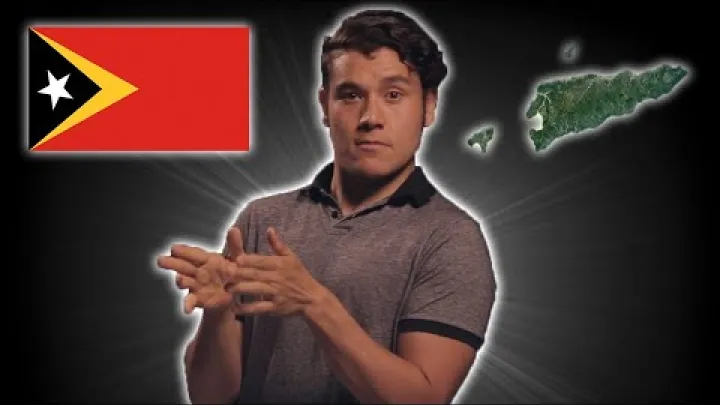
Timor-Leste, also known in English as East Timor, is a sovereign country in maritime Southeast Asia with a distinct Portuguese-speaking and Timorese identity. It occupies the eastern part of Timor island and includes an exclave and offshore islands. This country profile gives direct Timor-Leste facts first, then explains the geography, history, institutions, society, and development issues that shape the modern state. Figures are dated because census counts, international estimates, and area definitions can differ.
Timor-Leste Quick Facts
The following basic information answers the most common questions about Timor-Leste. It is a country profile rather than a travel guide, so the facts are paired with brief context where it helps avoid common misunderstandings. The country is geographically close to Indonesia and Australia, but its historical links, official languages, and constitutional identity give it a distinctive place in Southeast Asia.
Name, Capital, and Largest City
The official name is the Democratic Republic of Timor-Leste. Timor-Leste is the usual English and international name, while East Timor remains a common English alternative. The name Timor-Leste combines a local name for Timor with the Portuguese word for east.
Dili is both the capital and the largest city. As capital, it is the main location for national government, diplomatic institutions, and many national services. As the largest city, it is also the country’s principal urban center. These are separate classifications, although they refer to the same place in Timor-Leste. Dili’s political importance comes from its role as the seat of national institutions, while its status as largest city refers to its concentration of residents and urban activity. ISO identifies the country’s full name and standardized identifiers as the Democratic Republic of Timor-Leste through ISO.
| Item | Timor-Leste fact |
|---|---|
| Official name | Democratic Republic of Timor-Leste |
| Common English names | Timor-Leste; East Timor |
| Capital | Dili |
| Largest city | Dili |
| Region | Maritime Southeast Asia |
| Government | Unitary semi-presidential republic |
Location, Area, and Population
Timor-Leste lies in Southeast Asia, north of Australia and east of Indonesia. Its main territory covers the eastern half of Timor island. The country also includes the Oecusse exclave in the northwest of the island, Atauro island north of Dili, and Jaco island near the eastern end of Timor. The main territory faces the Timor Sea to the south, while the country’s northern and eastern waters connect it with the wider maritime setting of the Banda and Flores seas.
The national population recorded in the 2022 Population and Housing Census was 1,341,737. This is an official census count, not a projection. The National Institute of Statistics reported that the count was 158,094 higher than the previous census total, representing a 13.4 percent increase over that census interval. The census result is available through the National Institute of Statistics Timor-Leste.
A later international estimate answers a different question. UN Data lists Timor-Leste’s population at about 1.418 million in 2025, which is an estimate intended for international statistical comparison rather than a replacement for the 2022 enumeration. Readers comparing figures should therefore keep the reference year and source type beside the number: a census counts people at a defined time, while an annual estimate models population between or after census years. The latest figure can be consulted through UN Data.
Area figures require care because sources do not always use the same definition. A figure of about 14,870 square kilometres is commonly used for land area, while figures near 15,007 square kilometres may describe total area or use a different territorial measurement method. A comparison is meaningful only when the source states whether it measures land area, total area, or another boundary-based definition. This distinction matters particularly when comparing Timor-Leste with countries that report land and inland-water areas separately.
Currency, Languages, and Country Codes
The United States dollar is the main currency used in Timor-Leste. The country also issues centavo coins for small-denomination transactions. This dollarized system means that everyday prices and many official monetary values are commonly expressed in US dollars, while local coins support smaller payments. It also means that a country fact sheet may list the US dollar even though Timor-Leste has its own national coinage for fractional amounts. For banking, remittances, contracts, or exchange questions, use current official monetary guidance because legal-tender terminology and practical services can change.
Tetum and Portuguese are the official languages. Tetum has a central role in daily communication and national identity, while Portuguese is important in state institutions, law, education, and links with other Portuguese-speaking countries. The Constitution also recognizes Indonesian and English as working languages where needed; working-language use is not the same as official-language status. Timor-Leste’s language situation reflects both indigenous linguistic diversity and the successive effects of Portuguese and Indonesian administration. The constitutional framework is set out in the Constitution of Timor-Leste.
| Identifier | Value |
|---|---|
| Main currency | United States dollar |
| Official languages | Tetum and Portuguese |
| Calling code | +670 |
| ISO alpha-2 code | TL |
| ISO alpha-3 code | TLS |
| Country-code domain | .tl |
Time Zone and Form of Government
Timor-Leste uses UTC+09:00 throughout the country. In software and digital calendars, this is commonly represented as Asia/Dili. The country does not observe daylight saving time, so the offset remains the same through the year. This places Timor-Leste one hour ahead of western Indonesia’s commonly used UTC+08:00 time and on the same standard offset as eastern Indonesia, although time-zone comparisons should always use the date and location specified by the application.
Its constitutional system is a unitary semi-presidential republic. Unitary means that sovereignty and core constitutional authority are held at the national level rather than divided among states in a federation. Semi-presidential means that the country has both an elected President and a Government led by a Prime Minister, with responsibilities distributed under the Constitution. The government description is therefore more precise than simply calling Timor-Leste a presidential or parliamentary country.
Geography, Territory, and Administration
Timor-Leste’s territory is small but geographically varied. Mountains, coasts, islands, and the separated territory of Oecusse affect where people live, how services are delivered, and how national institutions organize administration. Geography is not just a map detail: it influences travel time between communities, the cost of infrastructure, agricultural opportunities, and the reach of schools, clinics, markets, and public offices.
Physical Setting and Climate
The main island territory is strongly mountainous, with narrow coastal plains and inland highlands. This physical setting influences transport connections, farming patterns, settlement, water management, and access to schools and health services. Dili sits on the north coast, while many communities are located in terrain where distance cannot be understood only in kilometres. Mountain roads, seasonal rainfall, and the distribution of flatter land can all affect how easily goods and people move between municipalities.
Timor-Leste has a tropical climate with broadly distinct rainy and dry periods. Rainfall, local elevation, and coast-facing conditions vary across the country, so weather patterns are not identical in every municipality. Seasonal conditions can affect agriculture, water availability, road access, and the timing of local economic activity. A general national description is useful for orientation, but it should not be treated as a precise forecast for every district or island.
The country’s maritime setting connects it with the Timor Sea to the south and nearby waters associated with the Banda and Flores seas. Its position between Indonesia and Australia has long shaped trade, movement, security, and regional relations. The combination of an island setting and a land border with Indonesia also helps explain why Timor-Leste is both maritime and closely connected to its nearest neighboring state.
Oecusse, Atauro, and Jaco
Oecusse, also called Oecusse-Ambeno, is an exclave of Timor-Leste on the northwest coast of Timor island. It is separated from the main territory by Indonesian territory, but it remains an integral part of Timor-Leste. This arrangement matters for public administration, transport planning, supply routes, and the way national maps are read. Oecusse is not a foreign territory or an independent island state; it is part of the same national territory despite its geographic separation.

Atauro is an island north of Dili, and Jaco is an uninhabited island at the eastern end of the country. Both are part of Timor-Leste. Their inclusion shows that the country is not limited to the eastern half of the main island. For public services and environmental management, island geography can create different practical conditions from those in inland municipalities. The three territories are useful reminders that a simple description of Timor-Leste as “the eastern half of Timor” is incomplete.
Municipalities and Local Administration
Timor-Leste is organized into 14 municipalities. Oecusse has an additional designation as a Special Administrative Region. Below the municipal level are administrative posts and sucos, a local term often translated as villages or village communities. These divisions help connect national policy with local government and community-level administration.
Municipalities are not identical in their physical setting or administrative needs. Dili has the country’s greatest concentration of national institutions and urban activity. Baucau is an important eastern municipal center, while Ermera is associated with highland rural communities and agriculture. Oecusse has the distinctive administrative challenge of being physically separated from the main territory. These examples illustrate why national averages can conceal important differences between the capital, regional centers, highland areas, islands, and the exclave.
Population totals for municipalities should be compared only when they come from the same census or estimate series; mixing years can create a misleading picture of local change. Administrative boundaries and statistical definitions should also be checked when a source uses terms such as municipality, administrative post, or suco, because these levels describe different parts of the local-government structure.
History, Independence, and National Identity
Modern Timor-Leste was shaped by colonial rule, occupation, a UN-supervised transition, and the restoration of independence. This history helps explain its languages, political institutions, international ties, and strong emphasis on sovereignty. It also explains why historical dates are especially important in a basic country profile: different dates refer to a declaration, a referendum, a transition, or the restoration of internationally recognized independence.
Portuguese Rule and Indonesian Occupation
Portugal governed the eastern part of Timor for centuries. Portuguese influence remains visible in the official language, elements of the legal and administrative tradition, religious history, and the country’s ties with Lusophone states. That legacy exists alongside older Timorese languages, local social systems, and cultural practices that predate colonial rule.
Colonial administration did not erase the country’s indigenous identities. Communities retained local languages, customary relationships, and distinctive regional traditions, while Portuguese institutions added another layer to public life. The resulting combination is one reason Timor-Leste can be described both as a Southeast Asian country and as part of the Portuguese-speaking world.
In 1975, following Portugal’s withdrawal from its colonial role, Indonesia invaded the territory. The occupation lasted for nearly a quarter of a century and is central to the national memory of the independence struggle. A concise account should not treat this period only as a geopolitical event: it also affected families, language use, institutions, displacement, and the meaning attached to national self-determination.
The 1999 Referendum and Independence
The 1999 referendum was the decisive public vote that opened the path toward independence. Timorese voters chose to reject a proposed autonomy arrangement within Indonesia. Violence followed the vote, and an international transition administration helped prepare the territory for full self-government. The referendum is therefore both a political milestone and a major point in the transition from occupation to an independent state.
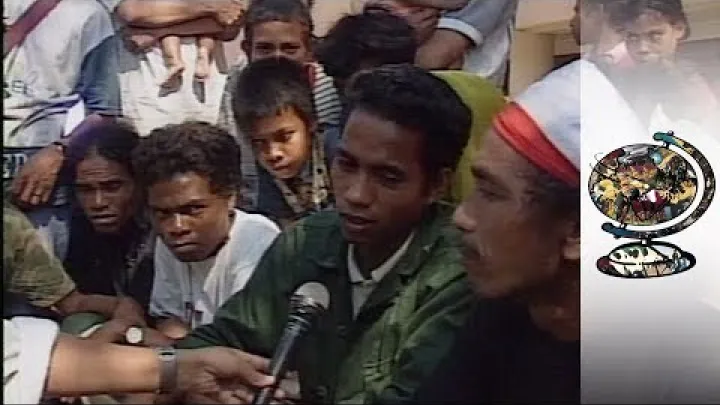
Two dates are important. Timorese leaders declared independence on 28 November 1975, before the Indonesian invasion. The internationally recognized restoration of independence occurred on 20 May 2002. The 2002 date is why Timor-Leste is widely described as one of the world’s youngest sovereign states and as the first new sovereign country of the twenty-first century. Keeping the dates separate prevents the earlier declaration and the later restoration from being treated as the same event.
Constitutional and International Identity
The 2002 Constitution establishes Timor-Leste as a democratic, sovereign, independent, and unitary state based on the rule of law. It places human dignity, popular participation, multi-party democracy, and separation of powers at the center of the constitutional order. These principles are not simply formal descriptions: they provide the framework for elections, legislation, courts, and public authority.
Timor-Leste is simultaneously a Southeast Asian country and a Lusophone state. Its Constitution gives particular importance to relations with countries that use Portuguese as an official language, while geography and regional cooperation place it firmly in Southeast Asia. This dual identity can be seen in its official languages, historical connections, institutions, and regional location. International memberships and observer arrangements can change over time, so readers seeking a current institutional status should consult the relevant organization’s official information rather than relying on a general country profile.
Government and Public Institutions
Timor-Leste’s institutions reflect its Constitution and the experience of building a state after independence. The country has separate constitutional organs, but their work is connected through lawmaking, executive administration, elections, budgets, and judicial review. Understanding these roles helps explain why the country’s form of government is described as semi-presidential rather than by the title of one office alone.
The Semi-Presidential System
In a semi-presidential system, the President and Prime Minister have different constitutional roles. The President is the head of state and is directly elected. The Prime Minister leads the Government and is central to day-to-day executive administration. The Government is politically accountable to the National Parliament under the constitutional framework.
The President’s role includes constitutional responsibilities associated with the head of state, while the Prime Minister and Government manage the ordinary work of executive administration. The division is not identical to the systems used in every other semi-presidential country; the Constitution determines the precise powers and procedures. In Timor-Leste, the President, Parliament, Government, and courts must operate within the same unitary constitutional order.
This arrangement should not be confused with a purely presidential system, where the president normally leads the executive government directly, or a purely parliamentary system, where there may be no separately elected president with substantive constitutional functions. In Timor-Leste, executive authority is structured through institutions that must operate within constitutional limits. The Constitution describes the organs of sovereignty and their roles in the Constitution of Timor-Leste.
Parliament, Courts, and Democratic Institutions
The National Parliament is a unicameral legislature. Its central functions include making laws, considering and approving public budgets, and scrutinizing the work of the Government. A unicameral legislature has one legislative chamber rather than an upper and lower house.
The Government administers public policy and public services, while the courts exercise judicial authority. The constitutional separation among the President, Parliament, Government, and courts is intended to provide institutional balance. Timor-Leste’s multi-party democracy allows political competition and representation, but a country profile should distinguish these stable constitutional features from changing election results or party alliances.
These institutions also connect national decision-making with everyday administration. Parliament provides the legislative and budgetary framework, the Government carries out policy, and courts apply judicial authority. The arrangement is particularly important in a country where national programs must serve a dispersed population across mountainous areas, islands, municipalities, and Oecusse.
Population, Society, and Culture
Timor-Leste has a young and growing population, substantial linguistic diversity, and a society in which rural and urban life remain closely connected. Demographic trends influence schools, health systems, housing, employment, infrastructure, and public planning. Population facts are most useful when they are connected to these practical consequences rather than presented as isolated totals.
Population Growth and Demographic Change
The 2022 census count of 1,341,737 provides the clearest official benchmark for the national population in that year. The count was 158,094 higher than the previous census total, a reported increase of 13.4 percent over the interval. Census results are based on a national enumeration at a defined time. Later figures from international institutions may be modeled annual estimates designed for cross-country comparison, so they can differ from the census without either figure necessarily being erroneous.
Population growth has been a major planning issue since the early post-independence period. A youthful population can offer long-term potential when education, health care, and employment opportunities expand, but it also increases pressure on public services and household resources. Growth affects not only the number of classrooms or clinics required, but also the need for roads, electricity, water systems, housing, and jobs in both rural communities and expanding towns.
Readers should identify the year and method behind any population figure, growth rate, age statistic, or life-expectancy estimate before comparing it with another source. A census total, a modeled estimate, and a projection may each be useful, but they should not be combined into one undifferentiated population series.
Urbanization and Rural Life
Rural communities and agriculture remain important to Timor-Leste’s social and economic structure. At the same time, Dili has a growing concentration of population, services, education, government employment, and commercial activity. Other municipal centers also serve as local hubs, though their scale and functions differ from those of the capital.
Urbanization does not mean that rural life is disappearing. Many households maintain family, land, work, and cultural connections across rural and urban areas. People may move temporarily or permanently for education, employment, health care, or administrative services, while continuing to depend on rural homes and agricultural activities. This makes the urban-rural distinction more complex than a simple division between city residents and farmers.
Differences in terrain, transport, employment options, schools, health care, and public utilities contribute to uneven access to services. An urban-share percentage should always be treated as a dated estimate unless it comes from a census using a clearly stated definition of urban residence. Dili and other municipal centers can function as service hubs even where much of the surrounding population remains rural.
Languages, Religion, and Cultural Identity
Tetum and Portuguese are the official languages, while Indonesian and English can be used as working languages in the circumstances recognized by the Constitution. In practice, many Timorese also use one or more national languages in family and community life. This multilingual setting reflects indigenous heritage, colonial history, the Indonesian period, and post-independence nation-building.
Language can serve different purposes in the same person’s life: Tetum may be central to everyday communication, a local language may be used within a community, and Portuguese, Indonesian, or English may appear in education, administration, media, or cross-border communication. This is why listing official languages alone does not fully describe the country’s linguistic landscape.
Roman Catholicism is a major demographic and historical feature of Timor-Leste. The 2015 census recorded a very large Catholic majority, but religious percentages should be read as statistics for that census year rather than assumed to be permanent. Religious identity is important in many communities, yet it is only one part of culture. Local languages, kinship systems, customary practices, music, ceremonies, food traditions, and the experience of the independence struggle also shape Timorese identity.
Economy and Development Context
Timor-Leste’s economy combines public spending supported by petroleum wealth with agriculture, small businesses, services, and household livelihoods. Its development choices are closely linked to the needs of a young population, difficult terrain, and the challenge of broadening economic activity. Economic conditions can look different in Dili, municipal centers, highland communities, islands, and Oecusse because employment and access to markets are unevenly distributed.
Economic Structure and Main Livelihoods
Petroleum revenues have been highly important to state finances and economic activity. This has enabled public investment, but it also creates exposure to resource-income volatility and makes diversification an important long-term objective. Agriculture remains central to many rural livelihoods, with coffee among the country’s better-known agricultural products. Small-scale commerce and services are particularly visible in Dili and municipal centers.
Petroleum dependence should not be interpreted as a description of every household’s livelihood. Many families combine farming, informal trade, wage work, public employment, remittances, and other activities. Agriculture is important for both income and food systems, while urban services and public expenditure play a larger role in the capital. These overlapping activities help explain why national GDP alone cannot show how economic opportunity is distributed.
Gross domestic product and GDP per capita should be read carefully. GDP measures the total value of goods and services produced in an economy, while GDP per capita divides that total by population. Neither number alone describes household income, inequality, food security, or access to services. The World Bank publishes dated indicators that can be used for current comparisons, but readers should check whether a value is nominal, per capita, annual, or expressed as a percentage before drawing conclusions. A year attached to each indicator is essential because economic totals and per-person measures can change at different rates.
Development Indicators and Current Context
Development in Timor-Leste involves more than national income. Electricity access, roads, water systems, health care, education, nutrition, environmental resilience, and local administrative capacity can vary between Dili, other municipal centers, highland communities, islands, and Oecusse. Progress in one indicator does not automatically mean that access is equal across the country.
Infrastructure and geography are closely connected. A service that is relatively accessible in Dili may be more difficult to reach in a mountainous municipality or on an island. Similarly, a national education or electricity figure may conceal differences in reliability, distance, quality, or household access. For that reason, development comparisons are strongest when they combine national indicators with location-specific information.
The country’s development trajectory is shaped by connected factors: a growing population increases demand for services; mountains and separated territories raise delivery costs; democratic institutions determine how priorities are debated; and petroleum dependence affects the resources available for public investment. Dated, location-specific indicators are the best basis for studying these issues in detail. Specialist country profiles on the economy, education, health, environment, and local administration can add detail beyond this overview.
Conclusion: Timor-Leste in Context
Timor-Leste is a small Southeast Asian state with a large historical and cultural significance. Its key facts include Dili as capital and largest city, a 2022 census population of 1,341,737, an estimated population of about 1.418 million in 2025, official languages of Tetum and Portuguese, use of the US dollar, and a unitary semi-presidential system. Understanding the country also requires looking beyond quick facts: its mountainous geography, Oecusse exclave, independence history, multilingual society, and need for broad-based development all shape Timor-Leste today.
Select area
Create a post
Posting is free and no registration is required.