Macau National Anthem: March of the Volunteers

The Macau national anthem used today is March of the Volunteers, the national anthem of the People’s Republic of China. Macau is the Macao Special Administrative Region, so it does not have a separate Macau-only national anthem or royal anthem. The answer becomes clearer when the current position is separated from the Portuguese-era history before the 20 December 1999 sovereignty handover. This guide explains the anthem’s name, origins, themes, language, official settings, and basic etiquette for residents and visitors.
What Is the National Anthem of Macau?
For a reader asking what is the national anthem of Macau, the direct answer is March of the Volunteers. The song is a national symbol of the People’s Republic of China and is used in Macau under the territory’s post-handover status. Macau also has its own regional flag and regional emblem, but those regional symbols do not create a separate national anthem.
Official Title and Chinese Name
The common English title is March of the Volunteers. Its original Chinese title is 《义勇军进行曲》, written in simplified Chinese, and its pinyin is Yìyǒngjūn Jìnxíqǔ. In traditional Chinese, a form commonly seen in Macau is 《義勇軍進行曲》. The English title is a translation of the Chinese name, not the name of a different song.
English-language sources may include the article The before the title, but March of the Volunteers and The March of the Volunteers refer to the same anthem. Pinyin is a pronunciation guide for the Chinese title. It is useful for international readers, but it does not turn the anthem into an English- or Portuguese-language composition.
Search phrases such as Macau national song or national song of Macau are often used informally. They should not be taken to mean that Macau has another official song alongside the national anthem. The historical and current identification is summarized in the National Anthem of Macau reference, although legal questions should be checked against current official rules.
Current Status and Adoption in Macau
March of the Volunteers became the current official anthem used in Macau when sovereignty was transferred from Portugal to the People’s Republic of China on 20 December 1999. This date is the Macau application date. It is not the date when the song was written, and it is separate from the date when the People’s Republic of China adopted the song as its national anthem.
The distinction matters because Macau is not treated as an independent country with an independent national anthem. In the Macao Special Administrative Region, the national anthem belongs to the national symbol system of the People’s Republic of China. The Macao regional flag and emblem express the region’s own status and identity, while March of the Volunteers serves as the national anthem in official use.
There is also no separate royal anthem to identify. Macau is not a monarchy, and a patriotic song, ceremonial arrangement, or local cultural song should not be confused with the official national anthem. When a program refers to the national anthem of Macau, the expected title is therefore March of the Volunteers.
The Anthem Before and After the 1999 Handover
Macau’s anthem history follows the territory’s change in sovereignty. Looking at the period before and after 1999 prevents a former representative anthem from being mistaken for the anthem used in Macau today.
The Portuguese Anthem in Pre-Handover Macau
Before 20 December 1999, Macau was under Portuguese administration. During that period, Portugal’s national anthem, A Portuguesa, served as the representative anthem associated with Portuguese Macau. Its role reflected the sovereignty and administration of Portugal at that time.
This is a historical reference, not the current answer to the question about Macau’s national anthem. A Portuguesa may appear in historical accounts, archival material, or descriptions of Portuguese-era ceremonies, but it is not the official anthem used by the Macao Special Administrative Region today.
When comparing historical sources, check whether each source refers to Portuguese-administered Macau before 20 December 1999 or to the current Macao SAR after the handover. This simple date check is important because a list that includes both A Portuguesa and March of the Volunteers may be describing two different political periods rather than two current choices.
The Ceremonial Change on 20 December 1999
The handover officially took place at midnight on 20 December 1999. In the official transition, A Portuguesa was associated with the outgoing Portuguese administration, while March of the Volunteers represented the incoming national and regional framework of the People’s Republic of China and the new Macao Special Administrative Region.
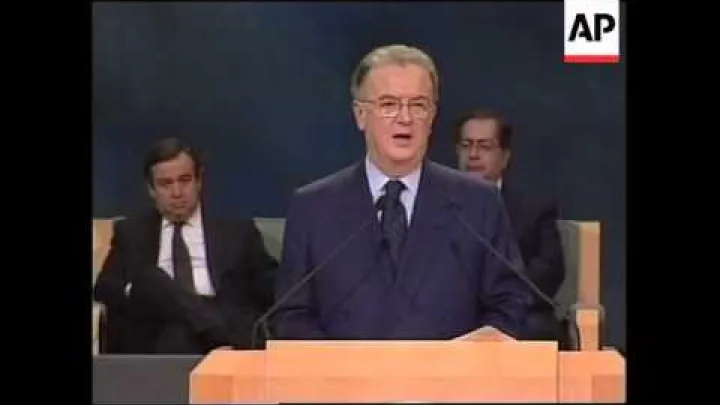
The change was therefore both musical and symbolic. An anthem can communicate which state has sovereignty, and the handover ceremony made that change visible through national flags, the regional flag, and official protocol. The important documented point is the transition from the Portuguese anthem to the Chinese national anthem; the exact order of every musical and flag movement should not be assumed for ceremonies whose programs have not been published.
After the handover, Macau retained a distinctive regional administration and a bilingual cultural environment, but its national symbols were connected to the People’s Republic of China. That is why the current anthem is a national Chinese anthem rather than a new song created specifically for Macau in 1999.
Origins and Meaning of March of the Volunteers
Although the song is now heard in Macau, its origins are in mainland China in the 1930s. Its authorship and historical adoption are separate from the later decision to use it in Macau.
Lyricist, Composer, and Adoption History
Tian Han wrote the lyrics, and Nie Er composed the music in the mid-1930s. The song became associated with the film Children of Troubled Times. It was created during a period of national crisis and resistance, long before the establishment of the People’s Republic of China and decades before the Macao SAR was created.
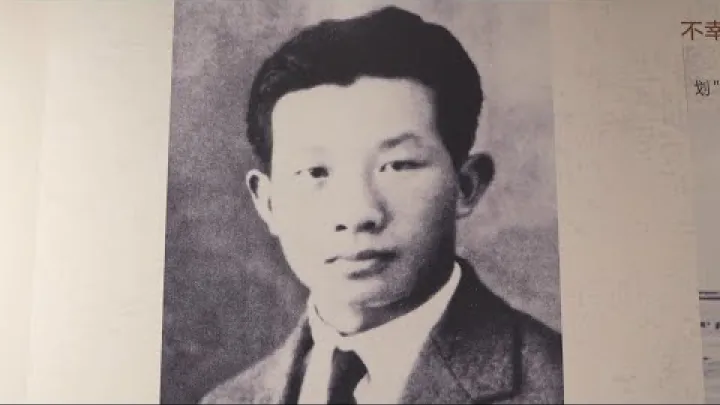
The song’s early history helps explain why its style is forceful and mobilizing rather than quiet or purely ceremonial. It was not originally written as a Macau song. The key milestones are different: the composition and film association belong to the mid-1930s, the People’s Republic of China adopted it as its national anthem in 1949, and Macau began using it as its current official anthem after the 1999 handover.
The March of the Volunteers reference provides a concise overview of the song’s authors, origins, national adoption, and later use in Macau. Keeping the dates separate avoids the common mistake of describing the 1930s composition date as the national adoption date or the Macau use date.
Themes of Resistance, Unity, and Collective Action
The title presents the song as a march of ordinary people who take collective action. Its central themes include resistance to subjugation, unity, courage, sacrifice, and the willingness to move forward together. The language is connected with China’s historical resistance to foreign aggression and with the idea that national survival depends on public solidarity.
The anthem is therefore more historically specific than a generic patriotic song. It expresses urgency, mobilization, and defiance. The force of the song comes from its call for people to act together rather than from a description of one city, region, or local tradition.
For international readers, a paraphrase is usually more useful than a long quotation. Translations can vary in wording and tone, but the main idea remains a collective call to resist domination and protect national dignity. In Macau’s official ceremonies, those historical themes are carried into a present-day national symbol without changing the song’s original title or authorship.
Language and Identity in Macau
The anthem also raises a language question because Macau has a bilingual administrative environment and a complex cultural history. The language of the anthem and the identity of the place are related, but they are not the same issue.
A Chinese Anthem in a Bilingual SAR
Chinese and Portuguese are official languages in Macau. That fact does not make the national anthem bilingual. The original official text of March of the Volunteers is in Chinese, while English and Portuguese versions are explanatory translations for readers who do not read Chinese.
In practical terms, an official document or public explanation may identify the anthem in more than one language, but a translation does not replace the Chinese original. The pinyin Yìyǒngjūn Jìnxíqǔ helps readers understand how to pronounce the title. It is not a second official title, and it does not indicate that Macau has a separate local version.
Macau commonly uses traditional Chinese characters, so readers may see 《義勇軍進行曲》 rather than the simplified form 《义勇军进行曲》. These are script variants of the same title. For research, travel, or study, recognizing both forms makes it easier to match Chinese-language material with English references.
National Symbol and Local Heritage
The anthem represents national belonging, while Macau’s local identity is also shaped by Chinese traditions, Portuguese heritage, historic architecture, and cultural tourism. These layers can exist together. Hearing the national anthem in Macau does not erase the territory’s local history, just as Macau’s Portuguese-influenced architecture does not imply that it has a separate current national anthem.
This distinction is useful for visitors and students. Macau can be understood at two levels: as a region with its own historical and cultural character, and as a Macao Special Administrative Region whose national symbols are those of the People’s Republic of China. The anthem expresses the second level, while local heritage helps explain the first.
Public attitudes toward national symbols can differ among residents, families, institutions, and visitors. It is better not to assume that everyone understands the lyrics in the same way or attaches the same personal meaning to the song. A careful explanation should describe the official function and historical themes without claiming one universal political or cultural response.
Where the Anthem Is Used in Macau
Most visitors encounter the anthem in formal public settings rather than as ordinary background music. Its use is connected with national symbolism, official ceremony, and civic education.
Official Ceremonies and Flag-Raising Events
Depending on the event and its protocol, the anthem may be used at settings such as:
- Flag-raising ceremonies involving the national flag or a formal civic program.
- Major national, regional, or public celebrations where national symbols are presented.
- Oath-taking and official ceremonies connected with public institutions or formal appointments.
- Memorial or commemorative events with an official national-symbols component.
- Diplomatic activities and major sporting events where Macau is represented within the national framework.
The precise event list and sequence depend on the applicable protocol. A fixed list of every Macau ceremony should not be inferred from general categories. An official event may display the People’s Republic of China flag together with the Macao regional flag, but the two flags have different roles: one is the national symbol, and the other identifies the special administrative region.
A ceremony connected with Macau does not automatically use a separate local anthem. If music is included, the event program determines whether the national anthem is played, whether a regional or institutional song is also used, and how attendees should respond. The presence of the regional flag likewise does not change the official identity of March of the Volunteers.
Schools, Civic Education, and Public Awareness
Schools and civic education help students understand the difference between the national anthem, the national flag, the national emblem, and Macau’s regional symbols. The Macao Education and Youth Development Bureau provides educational material covering the national flag, national emblem, and national anthem.
For a student, the useful learning goals are broader than memorizing a song. They include recognizing the official Chinese title, understanding the anthem’s historical background, identifying its themes, and learning how to behave respectfully when it is played. They also include distinguishing national symbols from the symbols of the Macao SAR.
Official educational material should not be used to claim that every school holds the same ceremony or plays the anthem at the same frequency. School schedules and activities can differ. The safer conclusion is that the anthem forms part of national-symbols education and public awareness in Macau, with the exact teaching activity determined by the institution and applicable guidance.
Etiquette and Legal Boundaries
Knowing the anthem’s name is only part of understanding its role. Visitors, students, event guests, businesses, and content creators should distinguish ordinary respectful attendance from regulated public use.
Expected Conduct When the Anthem Is Played
The basic respectful response is to stand when physically able, stop conversation, remain solemn, and face the national flag when one is present. Avoid joking, deliberately disruptive movement, or treating the performance as ordinary entertainment. If a visitor does not know the Chinese words, standing quietly and paying attention is more respectful than attempting to sing inaccurately as a joke.
Active singing and respectful attendance are not identical. Unless the instructions for a particular ceremony require participation, a guest should not assume that everyone must sing. The organizer’s directions can establish the expected role for participants, performers, and spectators.
Uniformed personnel may have additional protocol requirements. Those requirements should not automatically be applied to every attendee. Visitors and civilian guests can follow the general standard of standing, facing the flag when directed, remaining attentive, and observing the ceremony without creating a distraction.
Commercial Use, Alterations, and Current-Law Checks
Respect for the national anthem also has a legal dimension. Macau’s local framework includes Law No. 5/1999 concerning the use and protection of national symbols. A report by Macao News describes the law’s requirement that the national flag, national emblem, and national anthem be respected. The broader national legal framework concerning the anthem must also be considered where it applies.

The areas that require particular care include commercial advertising, inappropriate settings, altered lyrics or music, and public performances intended to insult or demean the anthem. These categories are not permission to treat every nontraditional use as automatically illegal, but they are clear warning signs. A humorous edit, a marketing slogan placed over the anthem, a deliberately distorted version, or a performance in a degrading setting can raise issues that ordinary ceremonial use does not.
- Businesses and advertisers: do not use the anthem as a routine promotional device or background for a sales message.
- Event organizers: use the current official protocol and avoid improvising the anthem’s place in a formal ceremony.
- Educators: use official educational material and explain the difference between teaching about the anthem and altering it for entertainment.
- Content creators: take special care with remixes, parody, edited audio, sponsorship, and public distribution.
The exact wording, scope, exceptions, and penalties must be taken from the latest Macau legislation and official guidance, not from a general article or an old news summary. Check those current sources before publicly performing, adapting, advertising, or otherwise using the anthem. This article provides general cultural information and is not legal advice.
Conclusion
Macau’s current national anthem is March of the Volunteers, written in Chinese as 《义勇军进行曲》 or 《義勇軍進行曲》 in traditional characters. It became the anthem used in Macau after the 20 December 1999 sovereignty handover, replacing the Portuguese-era use of A Portuguesa in official representation. Tian Han wrote the lyrics and Nie Er composed the music in the mid-1930s, and the song expresses resistance, unity, courage, sacrifice, and collective action. For anyone attending a ceremony in Macau, the practical rules are simple: remain solemn, stand when able, respect the flag and the setting, and consult current official guidance before using the anthem in public or commercial work.
Select area
Create a post
Posting is free and no registration is required.