Macau Immigration Procedures: Entry, Stay, and Reporting Guide

Macau immigration procedures involve more than showing a passport at the border. The correct process depends on your nationality, travel document, purpose of travel, intended length of stay, and whether you are visiting, working, studying, joining family, or applying for residence. This guide explains what to prepare before travel, what to expect on arrival, how to manage your authorization to stay, and which reporting duties may apply during your time in Macau. It also covers extensions, work-linked status, residence applications, overstay risks, and departure.
Macau Immigration Procedures at a Glance
Use the following structure to identify the procedures that apply to your situation. A short-term visitor will usually focus on entry eligibility, arrival clearance, the authorized-stay expiry date, and departure. A worker, student, dependant, or residence applicant must also manage status-specific documents and ongoing reporting duties.
Choose the Procedure That Matches Your Status
Macau immigration procedures can be viewed as a sequence of administrative stages:
- Before entry: determine whether you may enter under a visa-free arrangement, need a visa or prior authorization, or may request authorization at a port of entry.
- At arrival: complete immigration control, present the required documents, answer questions about your visit, and receive or confirm the permitted period of stay.
- During a short stay: follow the conditions of the authorization to stay, keep the expiry date visible, and avoid activities that require a different status.
- During a longer stay: complete any address notification, work-related, study-related, family-related, or residence procedures that apply to your category.
- If circumstances change: use the appropriate official process before changing employment, purpose, accommodation, or immigration status.
- Before departure: leave within the authorized period and retain important records such as entry details, approvals, applications, and receipts.
The same person may move between these categories. For example, a visitor who later receives an employment offer cannot assume that the original visitor authorization covers the new activity. A family member may have a separate authorization from the principal worker or resident, with a different expiry date and separate reporting obligations. Treat each person and each status as a separate administrative file.
Visa, Authorization to Enter, and Authorization to Stay
These terms describe different points in the process. A visa or prior authorization, where required, allows a person to seek entry under stated conditions. Permission to enter is the decision made at the checkpoint after the document and circumstances are assessed. The authorization to stay is the period granted after entry and is the date that controls how long the person may remain in Macau.
Visa validity and authorized-stay validity are not interchangeable. A visa may remain valid for travel while the permitted stay from a particular entry has a different end date. Similarly, a visa-free traveler still receives an actual authorized period of stay rather than an unlimited right to remain.
Entry permission also does not automatically authorize employment, residence, or activities outside the declared purpose of the visit. The official Macao Government Services Portal describes authorization to enter and stay within Macau's immigration-control and residence-authorization framework. Use the category shown in your own entry or status record as the controlling reference.
Before You Travel: Macau Immigration Requirements
Good preparation reduces the risk of arriving without the required document or evidence. Entry rules can differ according to nationality, travel document, purpose, and intended duration.
Check Entry Eligibility Before Departure
Before leaving for Macau, identify the entry route that applies to you. Depending on your circumstances, you may be able to enter without obtaining a visa in advance, may need a visa or prior authorization, or may be allowed to request authorization at a checkpoint. Do not choose a route solely because another traveler with a different passport used it.
Check all of the following:
- Whether your nationality is covered by the entry arrangement you intend to use.
- Whether your passport or other travel document is valid and recognized for the journey.
- Whether the document has enough validity and unused pages for your itinerary, if those conditions apply to your category.
- Whether your purpose is tourism, business activity, study, employment, family reunion, residence, or another purpose requiring a separate authorization.
- Whether your planned period in Macau fits the available entry route.
Use current instructions from the Public Security Police Force and the Macao Government Services Portal for nationality-specific and document-specific requirements. A third-party list can be incomplete or outdated, especially when it does not distinguish between entry permission and the period of stay granted at the border.
Prepare Proof of Travel, Funds, and Purpose
Immigration officers may ask for evidence that the proposed stay is genuine and financially supportable. The Public Security Police Force states that non-residents must possess appropriate means of subsistence to enter and stay in the Macao SAR. The Public Security Police Force should be treated as the reference for the applicable requirement rather than an unofficial fixed amount.
Keep the following information accessible, in paper or electronic form:
- A valid travel document and any visa, prior authorization, or supporting approval required for your route.
- Return or onward transportation details when relevant to your itinerary.
- Accommodation information and contact details for the place where you plan to stay.
- Evidence of funds or other support appropriate to the proposed visit.
- A clear, accurate explanation of your purpose, planned activities, and intended length of stay.
Answer questions consistently with your documents. If your itinerary includes mainland China or Hong Kong, check their entry requirements separately. Permission to enter Macau does not by itself create an entry right for either of those jurisdictions.
Arrival Procedures at Macau Ports of Entry
Arrival is the point at which the practical details of your stay are recorded or confirmed. Read the result of the immigration check before leaving the port.
Complete Immigration Checks at the Port of Entry
At Macau International Airport or another applicable port of entry, the process generally follows these steps:
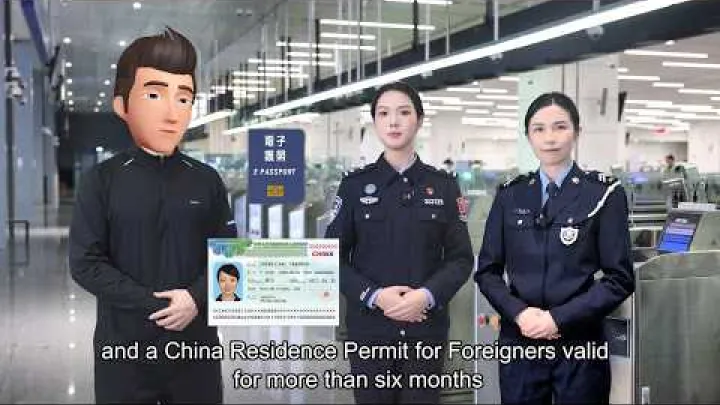
- Proceed to the immigration-control area after leaving the aircraft, vessel, or vehicle.
- Present your travel document and any visa, prior authorization, or other document requested for your entry category.
- Answer questions about your purpose, accommodation, onward plans, and intended period of stay if an officer asks.
- Complete any required biometric, automated-clearance, or manual-counter procedure applicable to you.
- Receive or confirm the authorization-to-stay information issued for that entry.
- Before leaving the port, check the expiry date and keep the entry record, slip, stamp, or electronic confirmation available.
Some eligible travelers may use automated clearance arrangements, while others must use a manual immigration counter. Eligibility for an automated channel does not change the need to follow the conditions and duration attached to the entry. If an officer gives you a written instruction or document, keep it with your passport or other travel record.
Do not assume that visa-free entry guarantees a particular number of days. The period actually granted at arrival is the practical deadline for that entry, and it may not be the same as a general maximum mentioned in travel information.
Arrival Cards and Online Immigration Registration
Searches for Macau arrival card, arrival card Macau, or Macau online immigration registration can be confusing because different jurisdictions use similar terms for different forms. Do not assume that every visitor must complete one universal Macau form, and do not use a website simply because it appears in a search result.
Instead, establish four points before or during travel:
- Whether it is mandatory: determine whether the form applies to your nationality, travel document, status, or port of entry.
- Who must complete it: check whether the requirement covers visitors, residents, non-resident workers, or another group.
- When it is completed: the process could be before travel, during airline or ferry processing, at the port, or through an instruction issued after arrival.
- Which official channel is valid: confirm the exact system name, website address, application, and data requested through the PSP or the Macao Government Services Portal.
The PSP's Immigration Services information includes immigration-related services and automated passenger-clearance information, but it should not be read as confirmation that an arrival card is universally required. Distinguish Macau procedures from mainland China entry systems. If no current official instruction applies to your case, follow the instructions given by the port of entry or the responsible authority and avoid unofficial registration sites.
Manage Your Authorization to Stay
After entry, the most important date is the end of the authorization to stay granted for that entry or status.
Read the Authorization to Stay and Track Its Expiry
The authorization to stay may appear on a stamp, slip, electronic entry record, identification document, or another official record, depending on the procedure. Read the record immediately after immigration clearance and note both the expiry date and any conditions. Save a photograph or secure copy if permitted, while keeping the original document safe.
Use the actual date issued for you rather than calculating from nationality, a typical tourist stay, or the validity of a visa. For example, if your entry record states that your authorization ends on 18 June, treat 18 June as the controlling date and arrange departure or an appropriate application before then. A booking that extends beyond that date does not extend immigration permission.
Repeated exits and re-entries should not be treated as a guaranteed reset of the permitted stay. Border officers assess each entry, and a pattern of short visits may raise questions about whether the person is effectively living in Macau or engaging in activities not covered by the visitor status. If your plans are becoming long-term, investigate the correct special-stay or residence route instead of relying on repeated visitor entries.
Understand the Available Extension Routes
Macau provides different extension routes for different reasons. The official extension service identifies ordinary extension, exceptional extension, and extension connected with an application for residence authorization that is still awaiting a decision. The Macao Government Services Portal is the appropriate starting point for identifying the route, requirements, and application channel.
| Route | Typical purpose | What to prepare |
|---|---|---|
| Ordinary extension | A permitted stay needs more time under the ordinary procedure | Current stay record and documents required by the service checklist |
| Exceptional extension | Serious or otherwise justified circumstances require additional time | Evidence explaining the circumstances and the requested period |
| Residence-related extension | A residence authorization application is pending when the current stay may end | Application record and documents requested for the pending case |
An exceptional request is not simply a convenient way to remain longer. The current exceptional-extension instructions state an application approach 10 days before the expiry of the authorization to stay; read the route-specific Macao Government Services Portal instructions for the procedure that applies to you.
An extension is an administrative application, not an automatic entitlement. Approval, duration, evidence, and any conditions depend on the category and the facts of the case. Submit before the current authorization expires and do not assume that filing alone guarantees permission to remain.
Prepare an Extension Application
Start the process as soon as you know that your current period may be insufficient. A practical sequence is:
- Read the official service page for the exact extension category and note its timing, eligibility, fee, documents, and submission method.
- Confirm the responsible Public Security Police Force channel. Depending on the case, the instructions may direct you to an online service, an appointment, a legal agent, or an in-person submission.
- Prepare your travel document, current entry or stay record, explanation of the request, and evidence supporting the reason for the extension.
- If the matter concerns a residence application or another status, include the relevant application number, approval, sponsor information, or other record requested by the official checklist.
- Submit the application within the stated time and keep the receipt, appointment details, payment record, and any authorization slip.
- Use the official application-status inquiry channel when available, and respond promptly if the PSP requests additional information.
For an in-person matter, check whether the current instructions direct applicants to the PSP Residence and Stay Affairs Department at the Immigration Building in Taipa. Service locations and appointment arrangements should be taken from the applicable official page rather than assumed from an older guide.
Address Reporting and Ongoing Compliance During a Stay
Reporting obligations depend on immigration status. They should not be confused with routine check-in information collected by a hotel or other accommodation provider.
Address Reporting and Foreigner Registration During a Stay
There is no single universal Macau foreigner registration rule that can safely be applied to every short-term visitor. A tourist staying for a limited period should follow the entry and accommodation instructions that apply to that visit. People holding residence authorization or another qualifying longer-term status may have a separate duty to notify the PSP of changes to their habitual residence.
For people granted residence authorization, the official Residence Authorization FAQ states that a change in habitual residence address in Macau must be reported to the Public Security Police Force within 45 days where that rule applies. The Residence Authorization FAQ should be read together with the terms of the individual authorization and any updated instructions.
This is status-based Macau immigration reporting, not a general instruction for every foreign visitor. Before relying on a deadline, identify the status that creates the duty. If you are a residence authorization holder or another covered category, notify the PSP within the applicable period, provide the requested address details, and retain proof of submission.
Accommodation providers may separately record guest information as part of their own check-in procedures. That operational record is different from a residence holder's obligation to notify the immigration authority of a change in habitual residence. Do not import mainland China registration procedures into Macau without an official instruction that applies to your case.
Online and In-Person Address Updates for Non-Resident Workers
Non-resident workers have specific address-update channels. PSP guidance describes three options:
- Online Services for Non-resident Workers: use the designated online system to declare or update the contact and habitual residence address information requested.
- Macao One Account: use the official account channel if you are eligible and have the required access credentials.
- In-person submission: attend the designated service location when online submission is unavailable, unsuitable, or specifically required.
The Public Security Police Force explains these channels for non-resident workers. Choose one channel, enter the information carefully, and check that the submission has succeeded. Keep a confirmation page, reference number, screenshot, or receipt that shows what was submitted and when.
Before using an online channel, confirm the current system name, login method, and website address. Do not send identity or address documents through a link received from an unknown source. If your access credentials fail or your address cannot be updated online, use the official in-person route rather than leaving the record inaccurate.
Keep Your Status, Purpose, and Contact Details Consistent
During the stay, keep your travel document, authorization record, contact information, habitual residence address, and any status-specific identification current. You should be able to explain where you live, why you are in Macau, and which document authorizes your current activity.
A visitor authorization should not be treated as work permission. A person who receives a job offer, begins a course, joins a family member, or changes from temporary accommodation to a longer-term arrangement should obtain guidance on the correct procedure before making the change. The relevant process may involve an employer, school, sponsor, family member, or the PSP, but the person remains responsible for ensuring that the immigration record matches the actual circumstances.
Keep contact details usable for official communication. Missing a request because an old phone number or address remains on file can make an otherwise manageable application more difficult. When a circumstance changes, ask which document or application must be updated instead of trying to explain the change only at the next border crossing.
Special Procedures for Workers, Students, and Family Members
Longer or purpose-specific stays require more than ordinary visitor clearance. Each person should identify the document that authorizes the activity and the document that authorizes the stay.
Non-Resident Worker Identification and Work-Linked Status
A non-resident worker generally needs three connected elements: appropriate work authorization for the approved employment arrangement, a non-resident worker identification card, and valid immigration permission to stay. These documents perform different functions. Work authorization relates to the approved employment; the identification card identifies the worker under that arrangement; and authorization to stay controls the person's lawful presence in Macau.

Do not use one document as a substitute for another. An identification card does not by itself prove that the current authorization to stay has not expired, and an entry record for a visitor does not by itself authorize employment. Employer involvement can be important, but it does not remove the worker's responsibility to monitor expiry dates, address information, and changes to the employment arrangement.
Before starting work or changing employer, role, work location, or other material employment details, confirm that the work authorization, non-resident worker identification card, employer information, and authorization to stay are all valid for the proposed activity. If one document has expired or no longer matches the arrangement, contact the responsible authority and employer before proceeding.
Students, Dependants, and Family-Reunion Procedures
Students, dependants, and family members joining a resident or worker may need a special authorization to stay or a residence-related procedure. The correct route depends on the person's purpose, relationship, sponsor, duration, and the status of the principal family member. The PSP's Immigration Services information includes special authorization to stay for reuniting and related immigration services.
Prepare evidence only from the checklist for the relevant category. Depending on the route, the authority may request proof of relationship, enrolment, financial support, accommodation, sponsorship, or another fact. Do not assume that documents accepted for one family member will automatically be accepted for another.
Each student, dependant, or family member may receive a separate authorization, duration, expiry date, and reporting obligation. A responsible sponsor, employer, school, legal agent, or family member may help assemble the file, but each applicant should keep a copy of their own approval and track their own deadlines.
Residence Authorization and the Transition from Short Stay
Residence authorization is a different administrative status from a visitor's authorization to stay. It should be considered when the purpose and duration of a person's presence no longer fit an ordinary short visit.
When Residence Authorization Becomes Relevant
A visitor's short-term authorization and a temporary extension are designed for a limited stay. Residence authorization concerns a longer-term relationship with Macau and may be connected with employment, family, investment, study, or another official category. The responsible authority, eligibility conditions, supporting evidence, and application steps depend on the specific route.
Use a practical decision boundary: if you expect to live in Macau for an extended period, work there, study there, join a resident family member, or maintain an ongoing activity, stop treating the matter as ordinary tourism and investigate the appropriate special-stay or residence procedure. This is especially important when the planned activity will continue beyond the visitor period.
Repeated visitor entries or repeated extensions should not be presented as a guaranteed substitute for a long-term status. They may not match the purpose of the stay, and a new entry remains subject to border assessment. Investigate the correct pathway early and avoid making commitments based on an assumption that residence authorization will be approved.
Manage Responsibilities After Applying or Receiving Residence Authorization
There are two distinct stages: an application that is still pending and an authorization that has already been granted. If the original authorization to stay may expire while a residence application is being assessed, the applicant may need to use the residence-related extension route. Filing a residence application alone should not be described as automatic permission to remain.
After approval, follow the validity period and conditions of the residence authorization. Keep the identification document and contact information current, report a covered change in habitual residence, complete renewal or replacement steps when required, and respond to official requests. A family member or sponsor may receive communication on your behalf, but you should also retain your own application and approval records.
Keep the application reference, appointment confirmations, receipts, correspondence, and copies of submitted documents. Use official status-inquiry channels for case-specific dates and instructions. Processing time can vary, so do not make a departure, employment, study, or housing decision solely on an assumed decision date.
Overstay, Departure, and Final Compliance Checklist
The safest approach is to manage the expiry date before it becomes an urgent problem. If an issue has already occurred, treat it as an immigration matter requiring prompt contact with the responsible authority.
Overstay Consequences and Immediate Next Steps
An overstay means remaining after the authorized period has ended without another permission that covers the continued presence. It is not automatically corrected by having a pending application, a future ticket, or a plan to leave later.
The official extension FAQ currently states that an overstayer may be fined MOP500 to MOP800 for each overdue day, subject to a maximum of MOP15,000, with payment required within the statutory 10-day period. Check the linked Macao Government Services Portal FAQ for the current amount, payment instructions, and any conditions that apply to your case.
Limited circumstances may allow a person to regularize or normalize status, but this is not guaranteed. More serious consequences can include removal or deportation, restrictions on future entry, and complications for later residence or special-stay applications. The result depends on the facts, the length and reason for the overstay, the person's status, and the authority's decision.
- If expiry is approaching: arrange departure or submit the correct extension application within the applicable time. Do not wait until the final day if the procedure requires documents or an appointment.
- If you have submitted an application: keep proof of submission and confirm whether it actually gives permission to remain during the pending period.
- If an overstay has already occurred: contact or present yourself to the PSP promptly, explain the circumstances accurately, and follow the case-specific instructions. Do not rely on automatic normalization or leave the issue unaddressed.
This is general administrative information, not legal advice. A disputed refusal, detention risk, removal matter, or complex status problem may require professional advice in addition to contacting the authority.
Final Checklist for Entry, Stay, and Departure
Use this stage-by-stage checklist to organize your records:
- Before departure
- Confirm that your nationality, travel document, purpose, and intended duration fit the entry route.
- Check the validity of your passport or other recognized travel document.
- Prepare onward or return travel details, accommodation information, financial evidence, and documents explaining your purpose.
- Check separately whether mainland China or Hong Kong requires another permission for the rest of your itinerary.
- At arrival
- Complete immigration clearance at Macau International Airport or the applicable port.
- Follow any instruction concerning an arrival card, electronic form, or immigration registration.
- Read and save the authorization-to-stay record and note its expiry date.
- During the stay
- Keep your travel document, stay authorization, identification card, and contact information current.
- Complete address reporting if your residence, worker, or other status requires it.
- Ensure that work, study, family, and residence activities match the authorization held.
- Apply for an extension or other status change early when the current period will not be sufficient.
- Before departure
- Confirm that you will leave within the authorized period.
- Keep copies of entry records, applications, approvals, receipts, and official correspondence.
- For unusual or disputed circumstances, obtain instructions from the PSP or qualified professional before making a final decision.
For current details, use the Public Security Police Force and Macao Government Services Portal, including the service page for the status you actually hold. Official instructions should control when they differ from a general travel article or an older online form.
Conclusion: Verify Each Macau Immigration Step Before Acting
Macau immigration procedures are easiest to manage when you separate entry permission, authorization to stay, activity authorization, address reporting, and residence status. Before travel, confirm the correct entry route and prepare evidence of your purpose and means of support. After arrival, record the exact expiry date, follow any applicable registration or reporting instruction, and use the correct extension or status procedure before circumstances change. If you are a worker, student, family member, residence applicant, or person approaching an overstay, manage the documents and deadlines for your own status rather than relying on another person's authorization. For current and case-specific instructions, contact the Public Security Police Force or consult the relevant Macao Government Services Portal service.
Select area
Create a post
Posting is free and no registration is required.