Macau Capital: What Is the Capital of Macau?

Macau, also spelled Macao, is the common answer to the question, “What is the capital of Macau?” The answer needs a small qualification: Macau is a Special Administrative Region (SAR) of China, not an independent country with a national capital in the usual constitutional sense. In everyday geographic references, Macau names both the territory and its main urban center, while “seat of the Macao SAR government” is the more precise political description. This article explains Macau’s geography, history, government functions, population terminology, and the separate gaming-capital label.
What Is the Capital of Macau?
The Direct Answer: Macau
The direct answer is Macau, also written Macao. General-reference books, maps, quizzes, travel materials, and country-and-capital lists commonly use Macau as the capital or principal city of the territory. The same name can therefore refer to the whole Macao Special Administrative Region, the Macau Peninsula, or the wider built-up urban area.
Macau is not an independent sovereign country. It is a Special Administrative Region of the People’s Republic of China with its own local administrative institutions and a distinct legal framework. That makes the phrase capital of Macau less straightforward than the phrase capital of an independent state. In practical terms, however, Macau is the location associated with the territory’s central government functions.
For readers encountering the name in different databases, “Macau” and “Macao” are spelling variants, not two capitals. The English spelling Macau is widespread, while Macao appears in formal institutional names and official statistical material. A capital list may therefore show Macau, Macao, or “Macau (Macao)” without identifying different places. In each case, the reference is to the same SAR and its principal administrative center.
The Basic Law of the Macao SAR describes the Macao SAR as a local administrative region that comes directly under the Central People’s Government. It does not need to be presented as designating a separate national-style capital city inside the SAR. When formal constitutional precision matters, describe Macau as the seat of the Macao SAR government or as the territory’s administrative center rather than treating it as the capital of a separate nation.
Why the Capital Question Is Unusual
For an independent country, a capital is usually the city where the national executive, legislature, and highest courts are based. Macau creates an overlap between several geographic terms. A territory is the jurisdiction as a whole. A city may mean a built-up settlement or a label used by a database. An urban area describes connected development, while a seat of government identifies where political institutions operate.

These meanings often point to Macau in ordinary usage, but they are not identical. A reference to Macau’s population may mean the entire SAR, whereas a city database may use Macau as a simplified name for the main urban area. This is why a precise answer should give the common name first and then explain the administrative qualification.
Hong Kong and Macau are separate Special Administrative Regions of China. They do not share a capital, and neither serves as the capital of the other. Each has its own local government institutions and administrative framework.
Where Macau’s Capital Lies
To picture the capital, it helps to view Macau as a compact and highly urbanized territory rather than as a country containing several independent cities.
The Macau Peninsula, Taipa, Coloane, and Cotai
The Macau Peninsula is the historic and political core most closely associated with the capital. It contains the oldest urban areas and has long been the main setting for public administration, commerce, and civic institutions. When people imagine central or historic Macau, they are often referring to the peninsula.

Taipa and Coloane are other major parts of the wider Macao SAR. The Cotai reclamation zone occupies land developed between the island areas and has become an important part of the territory’s modern urban landscape. A general geographic overview of Macau identifies the peninsula, Taipa, Coloane, and Cotai as connected elements of the territory rather than separate capital jurisdictions.
Bridges, reclamation, and dense development have made these areas part of an integrated urban system. That does not mean every neighborhood has the same historic or governmental role. The peninsula remains the clearest reference point for Macau’s administrative and historic center, while Taipa, Coloane, and Cotai are important parts of the wider territory. For an address, map, or official service, use the current local district and address information rather than assuming that every area is interchangeable.
Is Macau Also the Largest City?
In ordinary geographic and travel references, yes: Macau is commonly treated as both the capital and the largest urban center of the territory. This overlap is logical because the Macao SAR is small, densely developed, and closely integrated. Its main urban areas are not separated into several rival cities with their own capital functions.
Taipa and Coloane should not normally be described as competing cities that have separate capitals. They are parts of the same jurisdiction, although they have their own local identities and different patterns of development. Cotai is also a developed part of the wider urban system, not an independent capital.
The wording can change depending on the source. A population database may list Macau as a city, while an official statistical release may report the population of the whole Macao SAR. A built-up urban area, a city-proper figure, and the administrative territory may therefore produce different results. For the simple question of the largest city, Macau is the usual answer; for a statistical comparison, always identify the geographic unit being measured.
How Macau’s Capital Role Developed
Macau’s role developed through the continuity of administration in one compact territory. It is more accurate to describe this as the continuation of an administrative center through different governing periods than as a series of moves between different national capitals.
Portuguese Administration and the Historic Administrative Seat
Macau developed as a Portuguese-administered port settlement and administrative center. Portuguese presence in Macau lasted for more than 400 years, forming a long historical connection between the settlement, maritime trade, and public administration. The History of Portuguese in Macau provides background on this extended period of Portuguese involvement.
During Portuguese administration, the historic urban core on the peninsula served as the main setting for territorial administration and public institutions. This is why the peninsula remains especially important when discussing Macau’s historic administrative seat. Its role was territorial and colonial, not that of a sovereign Portuguese national capital.
There is no need to identify a different former capital to explain the modern answer. The useful historical point is that Macau’s administrative importance was centered in the same broad urban area that is now associated with the Macao SAR government. Terms such as administrative center, colonial seat, or territorial capital are more careful than describing Macau as a former independent national capital.
The 1999 Handover and the Current Administrative Seat
The key modern date is 20 December 1999, when sovereignty over Macau was transferred from Portugal to China. On that date, Macau became the Macao Special Administrative Region of the People’s Republic of China under the framework of the Basic Law.
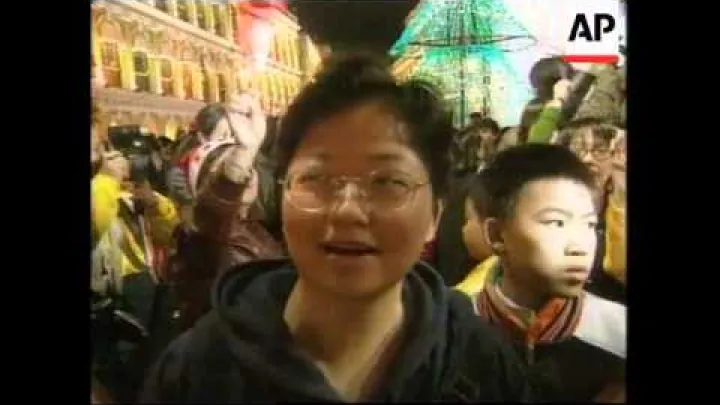
The handover changed the governing framework and sovereignty of the territory. It did not represent a move from one Macau capital to another, and the available evidence does not support describing a separate former capital or a later relocation of the administrative seat. The current political description is therefore the seat of the Macao SAR government in Macau.
This distinction also prevents a common date error. Macau did not become the capital of an independent country on 20 December 1999. Rather, the territory entered its present SAR arrangement, while Macau continued to function as the center of local administration. The central government and the SAR government have different responsibilities within that constitutional structure.
The Political and Administrative Role of Macau
Macau is commonly called the capital because it is the center of the Macao SAR’s local political and administrative institutions. Its role is defined by the territory’s constitutional framework, not by the powers of an independent national government.
Executive Government and Local Administration
Macau is the center of the Macao SAR government’s executive administration. The Chief Executive leads the SAR government, and government departments carry out public administration within the authority granted by the Basic Law.
These local responsibilities cover domestic policy and public services administered at the SAR level. Depending on the department, this can include areas such as economic regulation, education, culture, infrastructure, public services, and internal administration. The exact organization of departments can change, so the enduring point is the location and function of the executive government rather than the name of any particular officeholder or department.
The concentration of executive institutions in Macau’s established urban core explains why general references use the word capital. It is a practical description of where the territory’s government is centered. It does not mean that the SAR executive has the same constitutional position as the government of an independent country.
Legislative, Judicial, and Central Government Functions
Macau’s local institutional framework also includes the Legislative Assembly and the SAR courts. The Legislative Assembly performs legislative functions within the Basic Law framework, including considering local laws and public finances. The courts apply the local legal system and exercise judicial functions under the constitutional arrangements of the SAR.
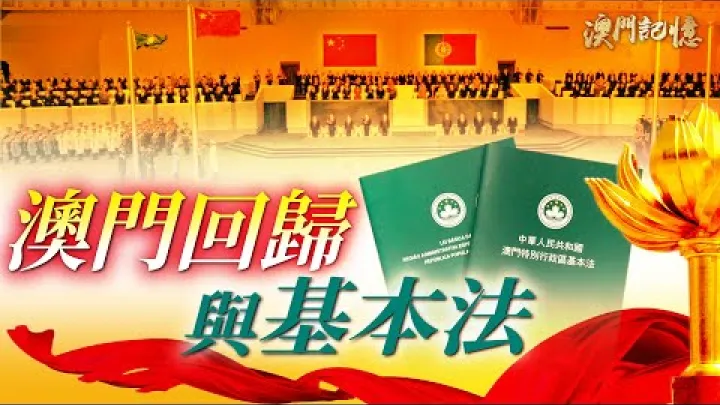
In accessible terms, Macau has local executive, legislative, and judicial institutions. The Basic Law provides for executive and legislative powers and independent judicial power, including final adjudication within the SAR’s legal structure. These powers explain why Macau operates as a distinct administrative and legal jurisdiction even though it is part of China.
That division is important when interpreting the word capital. A national capital normally represents the sovereign state in all major governmental matters; Macau’s local institutions handle SAR matters, while central authorities retain specified national functions. Thus the answer works as a geographic and administrative shorthand, but not as a claim that Macau is China’s national capital or a separate sovereign capital.
Some responsibilities remain with the central authorities. Foreign affairs and national defense are central government responsibilities, not ordinary functions of the Macao SAR government. Macau’s local laws and courts therefore operate within the constitutional framework of the People’s Republic of China. The political meaning of Macau as a capital is the location of SAR institutions, not the location of all sovereign functions of China.
Population and the Modern Meaning of Macau’s Capital
Population figures can make the capital question more confusing because Macau is both a territory and an urban area. A careful answer should identify whether a number covers the whole SAR, a narrower city area, or a particular population category.
How to Describe Macau’s Population Accurately
For a current population figure, begin with the official Macao Statistics and Census Service. Its demographic statistics, census materials, and related releases use defined reference periods and statistical categories. A number without a date or definition can be misleading, especially when comparing Macau with another city or urban area.
A useful distinction is:
- Macao SAR population: the population reported for the entire administrative territory at a specified reference date.
- City-proper population: the population assigned to a narrowly defined city unit, if the source uses one.
- Built-up urban area: people living within a continuously developed urban zone, which may not match an administrative boundary.
- Metropolitan or wider urban area: a broader statistical area that may include connected settlements outside the core city.
- Non-resident workers and visitors: groups that may be reported separately and should not automatically be added to a resident population figure.
Macau’s compact and heavily urbanized form makes these categories appear to overlap. Much of the territory functions as one connected urban environment, so a general source may simply use Macau as the city name. That does not make a whole-SAR figure and a narrowly defined urban-center figure automatically interchangeable.
When comparing Macau with another city, record three details: the geographic unit, the reference date, and the population definition. This simple check is more useful than quoting a precise number whose method is unknown. It also avoids mixing official DSEC data with estimates from websites that may use different dates or boundaries.
Political Capital Versus Gaming Capital
Macau is also associated with the informal label gaming capital. This expression describes an economic or tourism reputation connected with casino gaming and entertainment. It is not a constitutional title and does not change Macau’s status as a Special Administrative Region of China.
The longer phrase “gambling capital of the world” is a superlative used in some public and commercial descriptions. Treat it as an informal label rather than as a legal designation or a permanent global ranking. Comparisons can depend on the measure used, such as gaming revenue, visitor activity, market size, or the period being studied.
- Political capital or seat of government: Macau is the common geographic answer and the center of SAR administration.
- Largest urban center: Macau is generally used as the main city label for the compact urban territory.
- Gaming capital: an informal description of Macau’s economic and tourism identity.
Keeping these meanings separate gives a clearer answer. A question about government, geography, or administration calls for Macau and its SAR qualification. A question about tourism or gaming may use the gaming-capital label, but that label should not be confused with the political meaning of capital.
Conclusion
Macau, or Macao, is the common answer to the question of the capital of Macau and is also generally treated as the territory’s largest urban center. The precise constitutional description is that Macau is the seat of the Macao SAR government, because the territory is a Special Administrative Region of China rather than an independent country.
The Macau Peninsula provides the historic and political core, while Taipa, Coloane, and Cotai form connected parts of the wider urban territory. The 20 December 1999 handover changed Macau’s governing framework without creating a separate capital or moving the administrative seat. Finally, political capital, largest urban center, population area, and gaming capital are related but distinct ideas.
Select area
Create a post
Posting is free and no registration is required.