Macau Flag: Design, Meaning, History, and Use
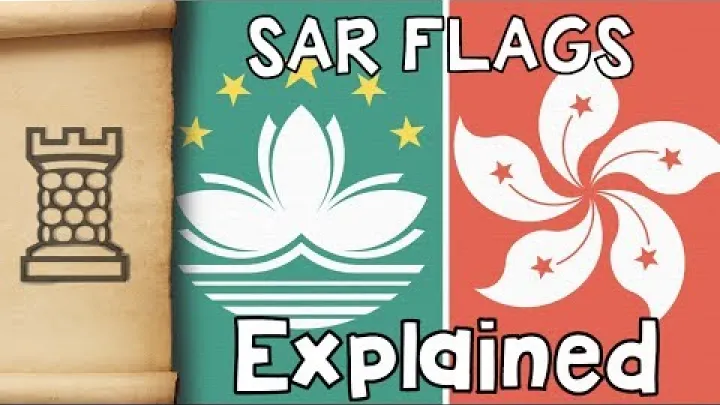
The Macau flag is the official regional symbol of the Macao Special Administrative Region, not a separate national flag. It is recognizable through a green field, an arc of five stars, and a white central scene combining a lotus, bridge, and sea water. This guide explains what those elements look like, how Macau flag meaning is commonly understood, when the current design was approved and first used, and how it differs from China’s national flag and Hong Kong’s regional flag. It also outlines the main points to know when the flag appears in official or non-official settings.
Macau Flag at a Glance
For quick identification, begin with the flag’s constitutional status and overall silhouette. The details below also separate the features expressly described in Macau’s legal framework from interpretations often used in cultural explanations.
Regional Flag, Not a Separate National Flag
Macau is a special administrative region of the People’s Republic of China. Its flag is therefore a regional flag, formally called the regional flag of the Macao Special Administrative Region. It represents Macau within China’s constitutional arrangement. It does not represent a separate sovereign state with its own national flag.
The Basic Law provides for a regional flag and allows it to be displayed alongside the national flag of the People’s Republic of China. Its legal design description identifies a green flag with five stars, a lotus flower, a bridge, and sea water. The Basic Law of Macao provides the formal framework for understanding this status and the flag’s principal elements.
This distinction matters when people search for Macau national flag. That phrase is common in casual conversation and online searches, but Macau flag or flag of Macau is more precise for the current symbol. Calling it a regional flag does not make it less official. It identifies the level of public identity that the flag represents.
A One-Sentence Visual Description
The Macau flag is a green rectangle with an arc of five gold five-pointed stars above a white lotus, a stylized bridge, and curved white lines representing sea water.
Viewed from top to bottom, the design places the stars at the top, the lotus near the center, the bridge beneath the lotus, and the water lines at the bottom of the central composition. One larger star sits in the middle of the arc, with four smaller stars arranged around it. This verbal description is enough to identify the Macau flag even when an image is unavailable or difficult to view.
Macau Flag Design: Colors and Visible Elements
The main Macau flag colors are green, white, and gold. Green fills the background, white forms the lotus, bridge, and water, and gold appears in the five stars. The design has no stripes or separate border, so the central group of symbols provides most of its visual identity.
The Green Field, Lotus, Bridge, and Water
Green covers the entire rectangular field. It is a single background color rather than a band or panel. This gives the flag a calm, continuous appearance and makes the lighter central symbols visible from a distance.
The white lotus is the main floral symbol. It is drawn in a simplified, highly recognizable form rather than as a detailed botanical illustration. In the flag’s composition, the lotus sits between the arc of stars and the bridge. Its central position makes it the first local symbol many viewers notice after the green field.
The bridge beneath the lotus is usually identified as the Governador Nobre de Carvalho Bridge, one of Macau’s best-known connections between the Macau Peninsula and Taipa. The flag presents it as a stylized symbol, not as a complete architectural drawing. This simplified treatment allows the bridge to work as part of a larger scene instead of competing with the lotus and stars.
Curved white lines beneath the bridge represent sea water. They place the built landmark in a coastal setting and connect the design with Macau’s maritime geography. The lines are intentionally simple: viewers do not need to identify a particular shoreline or measure each curve to understand their role as water.
The top-to-bottom arrangement is useful when identifying a small flag, a photograph, or an illustration. Look first for the green field, then the five-star arc and white lotus, and finally the bridge over curved water lines. A green flag that has stars but lacks the lotus, bridge, and water may be an incomplete reproduction or a different symbol.
Stars, Placement, and Proportion
The five stars are five-pointed and arranged in an arc above the lotus. One larger central star is flanked by four smaller stars. Their position is important: they are centered over the local scene rather than placed in the upper hoist corner, as they are on China’s national flag.
The arrangement visually echoes the five-star motif of the national flag of the People’s Republic of China. This creates a clear visual connection between Macau and China while allowing the regional flag to retain its own field color, floral emblem, bridge, and water. The stars are therefore a point of resemblance, not a reason to treat the two flags as interchangeable.
For ordinary identification, the relative arrangement is more useful than an asserted technical measurement. The key features are the larger star in the middle, the four smaller stars in an arc, and the location of that arc above the lotus. A design with five equal stars, stars grouped in a corner, or no central lotus scene should not be identified as the Macau regional flag simply because it uses five stars.
Macau Flag Meaning
A flag’s visible design and its symbolic interpretation are not always the same thing. For Macau, the Basic Law sets out what the flag contains, but it does not provide an exhaustive statutory explanation for every color, petal, or line. Keeping this distinction clear helps readers understand Macau flag meaning without presenting popular explanations as legal definitions.
Official Meaning and Common Interpretation
The elements with the clearest official status are the green field, five stars, lotus flower, bridge, and sea water. The lotus serves as the flag’s floral emblem, while the bridge and water refer to recognizable aspects of Macau’s built environment and coastal setting. These descriptions are secure because they identify the elements in the formal design, even when the legal wording does not assign a separate symbolic sentence to each one.
Many cultural and vexillological explanations add meanings to the colors and shapes. These explanations can be useful, but they should be introduced as common interpretations. They are not necessarily definitions established by the Basic Law.
- Green is often explained as a color of prosperity, growth, or vitality.
- White in the lotus, bridge, and water is often associated with purity, peace, or visual balance.
- The three visible lotus petals are sometimes connected with the Macau Peninsula, Taipa, and Coloane.
The stars are also commonly discussed in relation to China because their number and general visual arrangement recall the national flag. The safest explanation is that the Macau design creates a visible relationship with China while using a separate regional composition. Additional political or historical meanings should not be added unless they are supported by a specific official explanation.
This approach is useful for students, travelers, and writers. A description can say that green is commonly interpreted as prosperity or that the lotus is linked with Macau’s identity, while making clear that these are interpretations. It should not state that every color association or petal meaning is a formal legal rule.
Local Geography and Maritime Identity
The flag becomes more specific when its imagery is connected with local places. Macau’s landscape includes the Macau Peninsula, Taipa, and Coloane, and the flag’s central scene can be read as a compact expression of these connected land areas and their surrounding water.
A common interpretation links the lotus’s three petals with the Macau Peninsula, Taipa, and Coloane. This reading gives the flower a geographic dimension as well as a cultural one. It is an interpretive connection, not a labeled map. The petals do not provide an official administrative diagram, and the flag does not name the places directly.
The bridge adds the idea of connection. The Governador Nobre de Carvalho Bridge is associated with the link between the Macau Peninsula and Taipa, so its simplified form can suggest movement, access, and physical continuity across Macau’s waters. The bridge should still be understood as a symbolic reference rather than a claim that every part of Macau is represented by one structure.
The curved water lines broaden the image beyond a single landmark. They point to Macau’s coastal and maritime setting and help explain why the bridge is shown above flowing lines rather than on an empty field. Read together, the lotus, bridge, and water combine natural imagery, local infrastructure, and geography.
These geographic readings complement the formal description of the flag. They help explain why the design feels specifically connected to Macau instead of being generic floral or star imagery. At the same time, residents and sources may emphasize different aspects of the symbolism, so the interpretations should not be described as universally accepted or fully codified.
History and Adoption of the Macau Flag
The current Macau flag is closely linked to the creation of the Macao Special Administrative Region. Two dates are especially important because they describe different stages: approval of the design and the beginning of official use.
- 31 March 1993: The regional flag design was approved.
- 20 December 1999: The design entered official use when the Macao Special Administrative Region was established at the handover.
Approval in 1993 and Use From 1999
The approval date of 31 March 1993 refers to the establishment of the regional flag design. This date is useful when discussing when the current flag was adopted in a design or legal sense. It marks the point at which the visual identity of the future regional administration was formally settled.

The flag did not become the present-day regional symbol in everyday official use until 20 December 1999. That date was the handover from Portuguese administration to the establishment of the Macao SAR. The current flag therefore began its official role at the same major constitutional and administrative transition.
Separating the two dates prevents a common historical mistake. Saying that the flag was adopted in 1993 is reasonable when referring to approval of its design. Saying that it was first used in its current regional role in 1999 is appropriate when referring to the handover and the beginning of the Macao SAR. Both dates describe the history, but they do not describe the same event.
The timing also explains the flag’s combination of local and national references. The lotus, bridge, and water identify Macau, while the five-star arrangement visually acknowledges its place within China. The result is a regional symbol created for a new administrative status rather than a continuation of a separate pre-1999 national flag.
Flags Used Before the Handover
Before 1999, Macau’s flag history reflected Portuguese administration. Flags of Portugal were the main sovereign symbols used in the colonial era, and the Portuguese national design changed over time. A historical image of a Portuguese flag in Macau must therefore be dated rather than treated as one unchanging flag for the entire period.

Historical compilations commonly list Portuguese flags for periods such as 1816–1830, 1830–1911, and 1911–1999. These periods reflect changes in Portugal and its national symbols, not the existence of the current Macao SAR flag. The List of Macanese Flags offers a concise starting point for viewing these historical categories, but secondary compilations should be read with attention to their dates and classifications.
Colonial government and municipal flags could also appear in particular administrative or civic contexts. They should not automatically be treated as territory-wide equivalents of the present regional flag. A municipal emblem, an administrative banner, and a sovereign national flag can all appear in historical material while serving different purposes.
This distinction is important when comparing old photographs with current images. A pre-handover flag may show Portuguese national identity, a local government, or a particular institution. The green Macau flag with the lotus, bridge, water, and five-star arc belongs to the post-1999 regional framework.
Macau Flag Compared With Other Chinese Flags
Comparison is easiest when status, field color, central symbol, and star placement are considered separately. Macau’s flag shares some visual ideas with other Chinese flags, but its full design is distinctive.
Macau Flag and the Chinese National Flag
The national flag of the People’s Republic of China has a red field with five yellow stars in the upper hoist corner. One large star is surrounded by four smaller stars. By contrast, the Macau flag has a green field, an arc of stars centered above a lotus, and a lower scene showing a bridge and sea water.
The shared five-star motif creates a visual connection between the two flags. The difference in placement is just as important as the number of stars: China’s stars occupy one corner, while Macau’s stars form an arc over the central floral symbol. The colors also separate them immediately when the full flags are visible. China uses red as the field color, while Macau uses green.
The status distinction is fundamental. China’s flag is the national flag of the sovereign state. Macau’s flag is the regional flag of a special administrative region. The regional flag may appear with the national flag, but it does not replace it or become another version of the national flag.
For a reader labeling a photograph, the practical rule is simple: identify the red, corner-star design as China’s national flag and the green, lotus-and-bridge design as Macau’s regional flag. If both appear together, they represent different levels of public identity rather than two competing national flags.
Macau Flag and the Hong Kong Regional Flag
Hong Kong also has a regional flag, but its appearance is different from Macau’s. The Hong Kong regional flag uses a red field with a white bauhinia flower. Five red five-pointed stars appear on the flower’s petals. Macau instead uses a green field, a white lotus, a white bridge and water scene, and five gold stars arranged above the lotus.
Both designs combine a regional floral symbol with star imagery, reflecting their status as Chinese special administrative regions. That shared structure can make the flags seem related, but it does not make their artwork interchangeable. The Hong Kong Protocol provides official information about Hong Kong’s national and regional symbols and their use.
A quick visual check usually separates the two. A red background and a bauhinia indicate Hong Kong, while a green background and a lotus above a bridge and water indicate Macau. If the flower is partly hidden, the field color and star placement remain useful clues. The Macau stars form an arc above the central scene; Hong Kong’s stars are placed on the bauhinia petals.
The comparison also helps explain why the phrase Macau national flag can be misleading. Like Hong Kong, Macau has an official regional flag, but neither regional flag is the national flag of China. Their designs communicate local identity within a shared national framework.
How the Macau Flag Is Used Today
Today, the Macau flag functions as a living public symbol rather than only a historical design. It appears in official settings, public ceremonies, commemorations, and other occasions where the identity of the Macao SAR is represented. Its use communicates regional identity while remaining distinct from China’s national symbol.
Official Displays and Ceremonies
The regional flag may be displayed with the national flag during official ceremonies and public commemorations. Seeing both flags together is consistent with their different roles: the national flag represents the People’s Republic of China, while the regional flag represents the Macao SAR.
In a joint display governed by applicable rules, the national symbol receives the more prominent position where the rules specify one. Position, order, relative size, and orientation can matter in formal arrangements. A photograph from one event should not be treated as an exhaustive guide to every setting, because official protocol can depend on the occasion and location.
Public institutions and event organizers should follow the current rules for formal displays. For visitors and readers, the practical point is simpler: a Macau flag at a ceremony identifies the Macao regional setting or institution, while a Chinese national flag identifies the national level. The two symbols can be shown together without having the same status.
Protection and Non-Official Use
Using the Macau flag outside a formal display also requires attention to Macao’s rules on national and regional symbols. Administrative Regulation No. 5/2019 sets out concrete provisions concerning the use and protection of the national and regional flags and emblems, as well as the national anthem. The Macao Official Gazette publishes the regulation.
For non-official organizations, prior approval from the Chief Executive is required before incorporating the national or regional flag, emblem, or its design into an organizational logo, seal, or badge, subject to the current wording of the regulation. This is particularly relevant to associations, companies, schools, clubs, event organizers, and other groups creating a permanent identifier.
The approval rule should not be expanded into a claim that every private display, educational explanation, or discussion of the flag is automatically prohibited. Ordinary writing about the design, classroom analysis, museum interpretation, and properly authorized display are different from incorporating the design into an organization’s official identifier.
If a private organization plans to place the Macau flag or its design in a logo, seal, or badge, check the current Macao regulation and obtain prior approval before proceeding. Do not rely only on a copied image, an old template, or the assumption that a design is acceptable because it is available online.
Conclusion
The Macau flag is the regional flag of the Macao Special Administrative Region, not a separate sovereign national flag. Its green field, five-star arc, white lotus, stylized bridge, and sea water make it easy to distinguish from China’s red national flag and Hong Kong’s red bauhinia flag.
Its meaning is best understood at two levels. The formal design identifies Macau’s regional status and principal visual elements, while common interpretations connect the colors and symbols with prosperity, purity, local geography, physical connection, and maritime identity. Approved in 1993 and used officially from 20 December 1999, the flag remains a clear public expression of Macau’s local identity within China.
Select area
Create a post
Posting is free and no registration is required.