Macau Getting There: Flights, Ferries & Border Routes
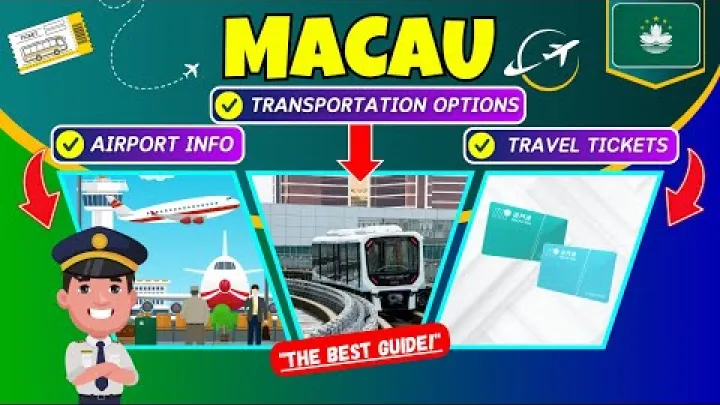
Getting to Macau is not a one-route decision. The best option depends on whether you start in Hong Kong, Hong Kong International Airport, Guangzhou, Shenzhen, Zhuhai, or farther away, and whether you value speed, low cost, simple booking, or fewer border procedures. This guide compares flights, ferries, Hong Kong–Zhuhai–Macau Bridge buses, mainland rail, coaches, and land crossings. It also explains how each Macau gateway connects with the Macau Peninsula, Taipa, Cotai, and Coloane.
Choose the Best Way to Get to Macau
Start with your origin and your accommodation district. A route that looks short on a map can become less convenient after terminal access, ticket collection, immigration, luggage handling, and the final journey to your hotel are included.
Match the Route to Your Starting Point
Travelers from Hong Kong usually compare a ferry with a bridge bus. From Hong Kong Island, the ferry from the Sheung Wan Hong Kong–Macau Ferry Terminal may be a natural choice because the departure point is in a central transport area. The Hong Kong–Zhuhai–Macau Bridge option begins at Hong Kong Port, so it can be more useful when your route already connects well with the airport or bridge access network.
Travelers arriving at Hong Kong International Airport have additional possibilities. Depending on the itinerary and passenger eligibility, they may use an airport-linked ferry or bridge bus rather than entering central Hong Kong first. These products involve their own airport, airline, baggage, ticket, and immigration rules. From Guangzhou, a common land route is high-speed rail to Zhuhai Railway Station, followed by the Gongbei border area and a Macau local connection. Shenzhen travelers can compare rail to Zhuhai with a suitable ferry, cross-boundary coach, or airport-connected service when available.
In every case, compare the complete journey to the hotel. Include access to the departure point, the transport segment, border clearance, and the local ride after arrival.
Compare Travel Time, Cost, Booking and Border Complexity
Published sailing or driving time is only one part of the trip. A ferry may have a direct terminal-to-terminal segment but still require a city journey to the terminal and time for check-in. A bridge bus may have a straightforward road segment but requires access to Hong Kong Port, clearance at both sides, and onward transport from HZMB Macau Port. Rail can be predictable between stations while the border crossing and final Macau bus are separate stages.
| Route type | Best starting pattern | Cost profile | Booking and border profile |
|---|---|---|---|
| Direct flight | Origin with a suitable Macau flight | Often higher, but date-dependent | One airport arrival; airline rules apply |
| Hong Kong ferry | Central Hong Kong or a connected terminal | Medium | One transport booking plus sea and border procedures |
| HZMB shuttle bus | Hong Kong Port or an eligible airport connection | Often competitive | Port-to-port bus, clearance, and a Macau local leg |
| Rail to Zhuhai plus border | Guangzhou or a mainland city with rail access | Often economical | Separate rail, border, and Macau transport decisions |
| Coach or mainland ferry | Origin near a suitable operator or coastal terminal | Varies | Fewer changes in some cases, but schedules and border conditions matter |
Booking difficulty depends on whether you are buying one protected itinerary or combining separate tickets. A direct flight may be simple after booking, while a regional hub route can require careful timing between an aircraft, ferry, bridge bus, or train. Rail and border routes may offer flexibility, but a delay on one part normally does not automatically change the next ticket.
Identify the Macau Gateway Before Booking
Macau has several arrival gateways, and they are not interchangeable:
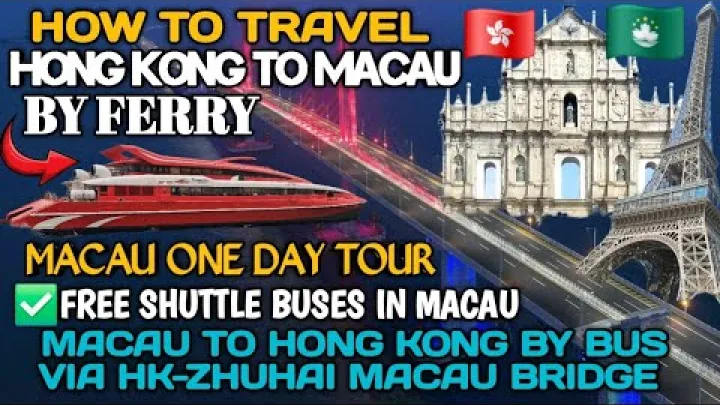
- Macau International Airport: located in Taipa and useful for air arrivals, especially for accommodation in Taipa or Cotai.
- Taipa Ferry Terminal: convenient for many Taipa and Cotai destinations, subject to the terminal printed on the current booking.
- Outer Harbour ferry area: associated with access to the Macau Peninsula; current route assignments should be checked for the sailing selected.
- HZMB Macau Port: the Macau endpoint of the bridge route, not the city center or a ferry terminal.
- Gongbei Port and Qingmao Port: northern land gateways near the Border Gate area, with different access and clearance arrangements.
- Hengqin Port and the Lotus Bridge: a western crossing connected with Hengqin Island and Macau through a separate border system.
The gateway affects your last-mile route, hotel shuttle availability, and the amount of luggage movement involved. Note the exact terminal or port name and compare it with your hotel location.
Arrive by Air at Macau International Airport
Flying directly to Macau can be the simplest arrival pattern when a suitable flight is available. The airport is in Taipa, so air travel does not remove the need to plan a local connection for hotels on the Peninsula or in other districts.
Check Direct Flights to Macau
Macau International Airport handles international and regional services, but destinations, airlines, and frequencies depend on the departure city and travel date. Do not treat an old destination list as a permanent route map. The airport’s real-time departures page is a useful starting point, followed by the airline’s own booking and travel information.
A direct flight can be attractive because the arrival point is already inside Macau and there is no intercity ferry, bridge, or mainland border transfer. However, Hong Kong, Guangzhou, and Shenzhen may offer a wider choice of flights for some origins. Compare the full itinerary, including the cost of reaching the regional hub, connection tickets, checked-baggage rules, and the transfer into Macau.
Use the Airport's Nearby Connections
Macau International Airport is on Taipa, close to the island’s accommodation and resort areas. Local buses, taxis, hotel shuttles, and the Macau Light Rapid Transit connection can serve different parts of the onward journey. The best choice depends on your hotel rather than simply the airport’s district.
For Taipa or Cotai, a local rail, bus, or hotel shuttle may provide a practical continuation. For the Macau Peninsula, check the route and luggage space before choosing a bus or LRT combination. Coloane is farther south, so a direct taxi or carefully selected bus may be more convenient with large bags. Hotel shuttles are useful when the property publishes a clear pickup location and operating schedule.
Local transport may require separate payment, and a hotel shuttle may require no booking, a reservation, or proof of a hotel booking depending on the operator. Treat these as separate arrival arrangements.
Check Special Airport Connections Before Relying on Them
Some travelers connecting through Hong Kong or using an airport facility may be able to use an air-sea transfer or an airport-linked bus through the Hong Kong–Zhuhai–Macau Bridge. These are specialized products, not automatic substitutes for a normal city-to-city ferry or bridge journey.
- Check whether the airline, airport, ticket type, and passenger status allow the transfer.
- Confirm where the ticket is issued or collected and whether baggage is handled through to Macau.
- Follow the airport’s transfer instructions instead of leaving the relevant transfer area without checking the consequences.
- Check the exact Macau arrival point, because an airport transfer can end at a port rather than at your hotel or the airport.
If any part of the transfer is unclear, compare it with a normal Hong Kong ferry or HZMB bus route. A cheaper or faster-looking product is not useful if you cannot meet its passenger or baggage conditions.
How to Get to Macau From Hong Kong by Ferry
Ferries remain useful for travelers already near a Hong Kong ferry terminal or those who prefer a direct sea connection. The practical route depends on the departure terminal, Macau terminal assigned to the sailing, and final district.
Choose a Ferry From Central Hong Kong, Kowloon, or the Airport
Hong Kong Island travelers often begin at the Sheung Wan Hong Kong–Macau Ferry Terminal. Some services may also connect with Kowloon, Hong Kong International Airport, or selected Shenzhen locations, but those patterns are not identical and may not operate on every date.
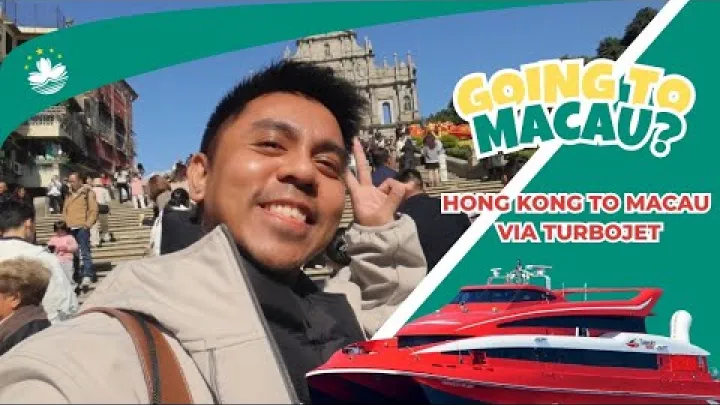
Central Hong Kong departures can be convenient when your hotel, rail connection, or airport bus places you near Sheung Wan. A traveler starting in the New Territories or on the airport side should compare the time and cost of reaching Sheung Wan with a bridge bus or airport-linked ferry. For current sailing choices, terminal names, and booking conditions, consult the named operator; the Cotai Water Jet site provides operator booking and schedule information.
A published sailing duration describes time on the water, not the complete journey. Add terminal access, check-in, document processing, customs, and the local trip from the Macau terminal to your accommodation.
Understand Taipa and Outer Harbour Arrivals
The Macau arrival terminal matters because Taipa and the Macau Peninsula are separate areas. Taipa Ferry Terminal is generally more convenient for many Taipa and Cotai hotels. The Outer Harbour ferry area can be more convenient for destinations on the Macau Peninsula. Neither assumption should replace the terminal printed on the current booking.
| Arrival area | Useful orientation | Typical onward choices |
|---|---|---|
| Taipa Ferry Terminal | Taipa and Cotai side | Hotel shuttle, bus, taxi, or local rail where suitable |
| Outer Harbour ferry area | Macau Peninsula side | Peninsula bus, hotel shuttle, or taxi |
Terminal assignments and route names can change. Book according to the current operator page, then use that exact terminal when planning the hotel transfer.
Prepare for Ferry Boarding and Ticket Procedures
Ferry operators can differ in check-in deadlines, identification requirements, digital ticket acceptance, seat classes, ticket collection, and rules for changing a sailing. Read the conditions attached to the specific booking instead of relying on a general ferry routine.
Reach the departure terminal with enough time for the city journey and terminal entry. Keep the travel document used for the booking available, confirm whether a digital code is sufficient or a counter exchange is required, and allow time for border and customs procedures before boarding. Understand what happens if you miss the sailing or need another service. Promotional fares, seat categories, and late-day pricing can be time-sensitive, as can change rules.
How to Get to Macau From Hong Kong by Bridge Bus
The bridge route uses the Hong Kong–Zhuhai–Macau Bridge to connect the Hong Kong and Macau port areas. It can be a useful alternative to the ferry, but the bus ends at a border gateway, so the final ride into Macau must be planned separately.
Cross From Hong Kong by HZMB Shuttle Bus
The standard structure is a journey to Hong Kong Port, a bridge shuttle bus to HZMB Macau Port, and immigration or customs procedures at the relevant ports. The shuttle is a port-to-port service rather than a bus into the Macau Peninsula, Taipa, or Cotai hotel district.
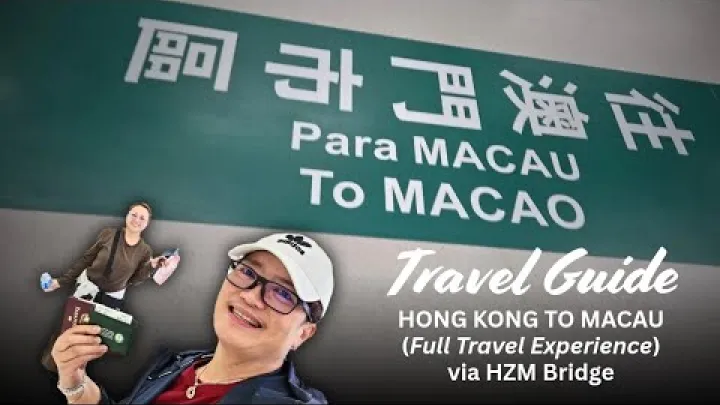
For travelers well connected to Hong Kong Port, the bridge can be a practical road alternative. It may also suit passengers who prefer not to travel by boat or need another option when a ferry does not match their departure location. Travelers starting near central Hong Kong should compare the additional journey to Hong Kong Port with the simpler terminal access of a Sheung Wan ferry.
Service intervals, ticket channels, fares, and port arrangements are operational details. Confirm the current provider information before leaving and plan a separate Macau local connection.
Connect From Hong Kong International Airport
Hong Kong International Airport can offer a bridge connection for eligible passengers using airport transfer facilities. Convenience depends on the airline, baggage arrangement, ticketing process, and immigration flow.
- Identify the airport transfer point and whether you must collect a ticket there.
- Confirm whether checked baggage is transferred, reclaimed, or excluded.
- Check whether your flight connection remains in the required transfer process.
- Note that the Macau endpoint is HZMB Macau Port, not Macau International Airport.
- Compare the final port-to-hotel journey with an airport ferry arrival point.
If the airport product does not clearly match your itinerary, a normal ferry or city-to-port bridge route may be easier. Do not assume that every airport passenger can use every bridge service.
Continue From HZMB Macau Port
After arriving at HZMB Macau Port, choose a local bus, taxi, or hotel-operated shuttle according to your destination and arrival time. The port is a gateway outside the main hotel areas, so the bridge journey is not complete when the shuttle bus stops.
For the Macau Peninsula, compare bus routes with a taxi if you have heavy luggage or arrive late. For Taipa and Cotai, a hotel shuttle or direct taxi may reduce changes. Coloane travelers should check the full route because the southern destination can require a longer local leg. Resort hotels may operate pickup services, but the pickup point and hours belong to the hotel, not the bridge ticket.
How to Get to Macau From Mainland China
Mainland-origin journeys usually combine a train, ferry, coach, or urban transfer with a border crossing. The most useful route depends on the city district where you start and the Macau district where you will stay.
From Guangzhou: High-Speed Rail to Zhuhai and Gongbei
A common Guangzhou-to-Macau sequence is:
- Travel from Guangzhou to Guangzhou South if needed.
- Take a high-speed train to Zhuhai Railway Station.
- Continue from the railway station to the Gongbei border area.
- Complete the border process and enter Macau through the Border Gate side.
- Use a Macau bus, taxi, or hotel shuttle to reach the Peninsula, Taipa, Cotai, or Coloane.
Zhuhai Railway Station and Gongbei Port are close enough to plan as one interchange area, but they remain different parts of the journey. A railway ticket takes you to the station; it does not include the border crossing or Macau local ride. Rail can be attractive when you are near Guangzhou South and prefer a defined station-to-station segment. It becomes less attractive when reaching the station requires a long urban transfer, luggage is difficult to carry, or a holiday timetable does not fit. Use the current railway booking system for departures and fares.
From Shenzhen and Other Mainland Gateways
Shenzhen travelers should choose by starting district rather than city name alone. Rail to Zhuhai can work well when you can reach the relevant station efficiently. A ferry connected with Shenzhen Airport or another suitable coastal terminal can reduce the overland journey when a current sailing matches the date. A cross-boundary coach may be attractive when it departs near your starting area and avoids a train-to-border interchange.
Each option has a different exposure to urban traffic, road conditions, sailing availability, and border procedures. A route that looks direct from Shenzhen may still involve a local ride to a port, a ticket exchange, or a change between mainland and Macau transport systems. Travelers from other mainland cities should identify the nearest practical high-speed rail station, coastal terminal, or coach departure point, then compare the route to Zhuhai with any direct service to Macau.
Use Qingmao, Hengqin, or Cross-Border Coaches
Gongbei, Qingmao, and Hengqin are separate land gateways, not interchangeable names for one border. Gongbei is associated with Zhuhai Railway Station and the northern Border Gate area. Qingmao is another northern pedestrian crossing near the Border Gate. Hengqin serves a different western approach and connects with Macau through the Lotus Bridge. The Hengqin Government describes Hengqin Checkpoint as connected to Macau by the cross-border Lotus Bridge.
| Gateway or service | Location logic | Potential use |
|---|---|---|
| Gongbei | Zhuhai Railway Station and northern border area | Rail-plus-border planning |
| Qingmao | Near the Border Gate area | Alternative pedestrian crossing when applicable |
| Hengqin | Western approach via Lotus Bridge | Some western Macau or resort-side journeys |
| Cross-boundary coach | Operator-defined mainland and Macau stops | Road-based option that can reduce changes |
Cross-boundary coaches may provide a direct road alternative from Guangzhou or other mainland locations. They can reduce station changes, but road traffic and border processing still matter. Before choosing a less familiar port, confirm that the crossing is open for your travel purpose, that your documents are accepted, and that Macau-side onward transport is practical.
Use Macau Transport After Arrival
Arrival planning does not end at the airport, ferry terminal, port, or border. Macau’s buses, LRT, taxis, and hotel shuttles serve different needs, and the least expensive mode is not always easiest with luggage or at night.
Use Macau Buses, LRT, Taxis, and Hotel Shuttles
Public buses provide broad coverage between the Macau Peninsula, Taipa, and Coloane. The LRT can be useful on network sections matching an airport, Taipa, or Cotai journey. Taxis offer the simplest door-to-door connection, particularly for groups or travelers with bags. Hotel-operated shuttles can be efficient for major resort areas but follow property-specific stops and schedules.
The Macao Government Tourism Office publishes local transportation information and gives MOP6.00 as fare context for a frequent bus service between the Macau Peninsula, Taipa, and Coloane. Treat a published fare as a reference rather than a permanent promise, and confirm the payment method before boarding.
| Mode | Best use | Main limitation | Payment or booking point |
|---|---|---|---|
| Public bus | Low-cost travel across districts | Traffic, stops, and luggage space | Confirm cash, exact-change, or stored-value rules |
| LRT | Suitable airport, Taipa, or Cotai connections | Only useful where the network reaches your route | Separate local fare and station access |
| Taxi | Direct travel with luggage or at less convenient times | Higher cost than a bus | Use an identified taxi stand or official service |
| Hotel shuttle | Resort hotels and selected property routes | Limited stops and operating periods | Check the hotel pickup point and booking rules |
Carry a small amount of Macau currency or confirm accepted electronic payment before boarding a local bus. Do not assume that a card or payment app accepted at the airport, ferry terminal, or hotel will work on every bus. Check Macau Pass and other local payment arrangements for current validity.
Choose the Best Gateway for the Peninsula, Taipa, or Coloane
Choose the intercity route with the final district in mind. This is a starting point, not a promise that one gateway is closest to every hotel.
| Arrival gateway | Often practical for | What to plan next |
|---|---|---|
| Macau International Airport | Taipa and Cotai | Hotel shuttle, LRT, bus, or taxi |
| Taipa Ferry Terminal | Taipa and Cotai | Resort shuttle, bus, LRT where suitable, or taxi |
| Outer Harbour | Macau Peninsula | Peninsula transport, hotel shuttle, or taxi |
| HZMB Macau Port | Bridge travelers | Separate bus, taxi, or hotel shuttle |
| Gongbei or Qingmao | Northern Macau Peninsula | Border exit followed by local transport |
| Hengqin | Some western Macau and resort-side journeys | Border exit and connection toward Cotai, Taipa, or other districts |
Use the exact hotel address, not just the district name, when comparing routes. A hotel in northern Taipa, central Cotai, or southern Coloane can have a different best gateway even though all three are on the same side of Macau.
Plan for Late Arrivals, Luggage, and Unofficial Offers
Late arrival and heavy luggage can change the best local transport choice. A bus may be inexpensive but require walking, transfers, and space for bags. The LRT is useful when its station matches the route, while a taxi may be more practical for a group or a hotel away from a station. A hotel shuttle helps only if it is operating and its pickup point is clear.
Before leaving, ask the hotel where its official shuttle collects passengers, whether a reservation is needed, and what the fallback is outside normal hours. At a terminal or port, buy tickets through the named operator, an authorized counter, or a clearly identified transport stand. Use published hotel information rather than accepting an unsolicited private-transfer offer.
- Save the hotel address in a format that can be shown to a driver.
- Identify the official taxi area, bus stop, or shuttle pickup point.
- Keep your ticket and travel document accessible until the local transfer is complete.
- Ask for the price and destination before accepting a private transfer.
Compare Macau Routes by Time, Cost, and Ease
There is no single fastest or cheapest way to get to Macau for every traveler. Compare the route from your actual starting point to your hotel, not only the advertised transport segment.
Hong Kong Ferry or HZMB Bus
The ferry is often easier for someone who can reach a central ferry terminal without a difficult transfer. It usually places the traveler at a named Macau ferry terminal, where the next step is a local bus, taxi, or hotel shuttle. The HZMB bus can be a strong alternative for travelers with convenient access to Hong Kong Port, airport-transfer eligibility, or a preference for road travel.
For a Peninsula hotel near the ferry side of the city, ferry access may reduce the last-mile journey. For a Cotai hotel, compare the Macau terminal and available shuttle before deciding. Ferry and bridge bus services also have different disruption risks, so check the relevant operator rather than using one general reliability assumption.
Direct Flight or Regional Hub
A direct flight to Macau International Airport can minimize regional transport changes when the departure city has a suitable service. Using Hong Kong, Guangzhou, or Shenzhen as a regional hub can offer more flight choices or better departure times, but adds a transfer decision and often a separate ticket.
A low-cost flight can lose its advantage after adding airport-to-port transport, baggage fees, terminal access, and a Macau local ride. Travelers with checked luggage should favor connections with clear baggage rules and enough time. Travelers combining unrelated tickets should allow extra contingency because a delay on one ticket may not protect the next.
Rail and Border, Coach, or Ferry From Mainland China
Rail to Zhuhai followed by Gongbei is logical when the origin is close to a convenient high-speed station. It provides a clear station-to-station segment, but the border crossing and Macau transport remain separate. A direct coach can reduce vehicle changes when its departure point is convenient, although road traffic and border conditions can affect the journey.
A mainland ferry may suit travelers near a coastal terminal or Shenzhen Airport connection. It avoids the Zhuhai rail interchange but depends on available sailings and terminal access. Compare options qualitatively:
| Option | Speed profile | Cost profile | Booking difficulty | Flexibility |
|---|---|---|---|---|
| Rail plus border | Predictable rail segment | Often economical | Medium because stages are separate | Good when trains are frequent |
| Direct coach | Can reduce changes | Varies by operator | Medium | Lower if traffic or border delays occur |
| Mainland ferry | Good when terminal access is easy | Medium to high | Medium, with sailing-specific rules | Dependent on operating sailings |
Choose according to starting district, luggage, preferred arrival gateway, and hotel location. Exact train counts, fares, sailing times, and coach schedules should come from current booking systems.
Verify Your Macau Route Before Departure
A short final check prevents mistakes because Macau routes can involve similar names, separate tickets, and different arrival gateways. Complete the check for the exact date and traveler group.
Verify Macau Route Schedules and Terminal Names
Use the airline or airport for direct flights, the ferry operator for sailings and terminal assignments, the bridge bus provider for port transport, the railway for mainland trains, and the relevant border or port authority for entry arrangements. Confirm the departure time and operating status, exact departure and arrival gateway, ticket channel, check-in deadline, collection or exchange requirement, change conditions, and connection to the hotel.
Official operator and government information should take priority over an old guide, search snippet, map label, or itinerary using an imprecise terminal name. Save the relevant booking details and note the Macau-side destination before leaving for the first terminal.
Allow Time for Entry, Border, and Ticket Procedures
Air, sea, bridge, and land routes do not use the same passenger process. A ferry may require operator check-in and ticket exchange. A bridge bus involves port procedures. A rail itinerary to Zhuhai adds a land border crossing, while an airport transfer product may have special rules that do not apply to ordinary city travel.
Check requirements for every traveler, including travel documents, entry eligibility, airline or transfer eligibility, and identification details connected with the ticket. Keep separate tickets organized when combining rail, ferry, coach, or local transport. Allow a buffer beyond published travel time according to the route, terminal, passenger needs, luggage, and time of day. A transport ticket does not necessarily guarantee entry into Macau or permission to use a special airport transfer.
Keep a Backup for Disruptions
Build a backup around your origin and destination district. For Hong Kong, a ferry traveler can identify the HZMB bus as a possible alternative, while a bridge traveler can check whether a ferry from a suitable terminal is operating. The backup may require a different city transfer, ticket, and Macau arrival terminal.
For mainland China, rail to Zhuhai, a cross-boundary coach, and a suitable coastal ferry can form different backup choices. A second border gateway is useful only if it is open for your travelers, reachable from your location, and connected to your Macau destination. Do not assume that one operator will accept another operator’s ticket.
Weather and other operating conditions can affect ferry, bridge, road, and flight services. Check same-day notices before leaving for a port or station, especially for a time-sensitive journey. Keep the booking reference, alternative route name, and enough payment capacity for a separate ticket if the original service cannot be used.
Key Takeaways for Getting to Macau
The best way to get to Macau depends first on where you begin and where you will stay. Choose a direct flight when the schedule fits, a Hong Kong ferry when terminal access is easy, an HZMB bus when Hong Kong Port or the airport suits your itinerary, and rail, coach, ferry, or a land gateway when traveling from mainland China. Always identify the exact Macau gateway, plan the local connection to the Macau Peninsula, Taipa, Cotai, or Coloane, and check current operator information for schedules, terminal assignments, access rules, and service notices before departure.
Select area
Create a post
Posting is free and no registration is required.