Macau Traditional Clothing: Local Dress and Cultural Heritage
Macau traditional clothing is best understood as a collection of local, community-associated, ceremonial, and performance traditions rather than one universal national uniform. Cantonese Chinese dress, Macanese wedding clothing, Portuguese folk dance attire, Cantonese opera costumes, and festival dress each reflect a different setting. This guide explains the main garments and costume traditions connected with Macau, when they are worn, and how to distinguish documented heritage from a generic tourist costume.
Understanding Macau Traditional Clothing
Macau’s clothing heritage reflects the meeting of Cantonese Chinese, Macanese, Portuguese, religious, occupational, and performing-arts traditions. The most useful way to understand Macau traditional dress is to ask who wore it, for what occasion, and whether it belongs to daily life, a ceremony, a stage, or a public festival.
Why Macau Is Better Understood Through Multiple Traditions
There is no single outfit that can represent every community and historical period in Macau. The phrase Macau national costume may be useful as a search label, but it should not automatically be treated as the name of a formally designated local costume. A qipao, a Macanese bridal gown, or a Portuguese folk dance outfit can each be culturally relevant without being a Macau-exclusive national dress.
The main strands include Cantonese and Chinese clothing, Macanese garments shaped by Chinese-Portuguese contact, Portuguese folk dance attire, Cantonese opera costumes, and festival or performance dress. These examples should be classified carefully. Some are associated with Macau itself, some belong to communities with a long local history, and some are broader regional forms that are worn or performed in Macau.
The Main Communities and Settings Behind the Clothing
Clothing becomes easier to interpret when it is connected to a community and a setting. Cantonese Chinese dress may appear at a family ceremony or formal event. A Macanese bridal gown documents a particular cultural history. Folk dance and opera costumes support performance, while dragon dance objects and performer clothing belong to festival or community practice.
| Tradition | Example | Typical setting | Local connection |
|---|---|---|---|
| Cantonese or Chinese dress | Qipao or cheongsam | Formal or ceremonial wear | Regional form used in Macau |
| Macanese heritage | Documented bridal gown | Wedding and museum context | Chinese-Portuguese cultural contact |
| Cantonese opera | Role-based stage costume | Opera performance | Cantonese cultural tradition in Macau |
| Portuguese and Macanese dance | Folk dance attire | Public performance | Local intangible heritage practice |
| Festival communities | Dragon or lion dance equipment | Festival and procession | Community-based local practice |
The same visual feature can carry a different meaning in a wedding photograph, a theatre production, a museum case, or a souvenir shop. Community identity, language, religion, and clothing often overlap in Macau, but they are not interchangeable categories.
Chinese and Cantonese Dress in Macau
The Chinese and Cantonese strand is one of the most visible parts of Macau’s cultural clothing landscape. It includes garments with a wider Chinese history as well as specialized local uses in family ceremonies, opera, and festivals.
Qipao and Cheongsam in Macau
Qipao and cheongsam are commonly used names for a Chinese women’s garment. The terms generally refer to a broader Chinese fashion history, not to a design that belongs only to Macau. Common descriptions identify features such as a standing collar, a side opening, and frog fasteners, although the cut and details have changed across periods and modern designs.

In Macau, a qipao may be chosen for a formal occasion, a wedding-related event, hospitality work, a cultural presentation, or a photography experience. Those uses should not be confused with proof that the garment is everyday Macau traditional clothing. A modern qipao may also be inspired by Chinese dress while using contemporary fabric, tailoring, length, or decoration.
For international visitors, the most accurate description is usually Chinese dress worn or presented in Macau unless a local source identifies a specific Macau style or social history. This distinction helps avoid assigning Macau-specific symbolism to standard qipao features.
Cantonese Opera Costume
Cantonese opera costume is specialized stage attire connected with Macau’s Cantonese-speaking cultural heritage. It is designed to be seen from a distance and to work with acting, movement, music, makeup, headgear, and accessories. The result is a complete performance system rather than an ordinary form of local clothing.
Costume helps an audience recognize stage roles such as scholars, officials, warriors, and female characters. The garment, headwear, and accessories can indicate rank, character type, or performance role within the conventions of the opera. These conventions should be separated from broad claims about color symbolism unless a specific Macau performance or heritage explanation documents that meaning.
When Cantonese opera is performed in Macau, its clothing belongs primarily to the theatre and heritage setting. It is therefore more accurate to call it Cantonese opera costume in Macau than to describe it as the everyday national dress of Macau.
Dragon and Lion Dance Costumes
Dragon and lion dance attire is not only clothing. It includes the large manipulated figures, structural parts, masks or heads, and the practical clothing worn by the performers. The people inside or around the figure need garments that allow coordinated movement, while the figure itself creates the main visual focus.
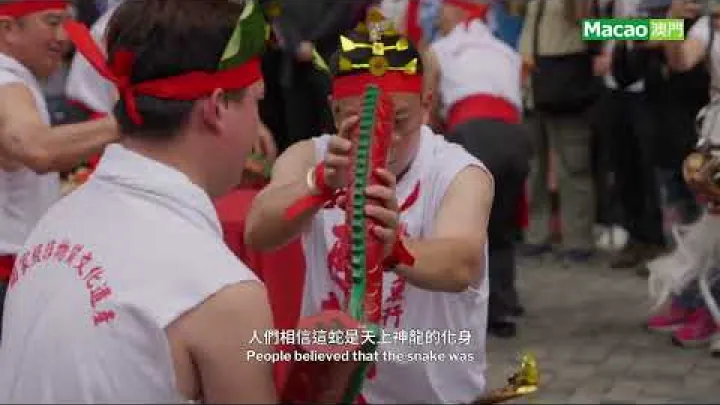
A strong local example is the Feast of the Drunken Dragon. The Macao Government Tourism Office describes the Drunken Dragon dance as traditionally performed by men who carry dragon effigies and spray rice wine from their mouths. Local descriptions also associate the event with Macau’s fishmonger community.
This tradition shows why festival costume should not be reduced to a clothing list. The dragon or lion structure, performer clothing, rice wine practice, music, and public setting work together. These are ritual or performance elements for a particular occasion, not a general Macau national costume.
Macanese and Portuguese Heritage Dress
Macanese and Portuguese heritage dress is especially important for understanding how clothing can express cultural contact. These examples should be discussed through named objects and documented community practices rather than through a generic image of Portuguese clothing.
Macanese Bridal Gowns and Chinese-Portuguese Weddings
The Macao Museum’s documented bridal gown is a useful starting point for understanding Macanese cultural hybridity. The Macao Museum describes the exhibited gown as designed and tailored toward Macanese fashion. It also explains that Chinese and Portuguese customs came together to create a culturally composite wedding.
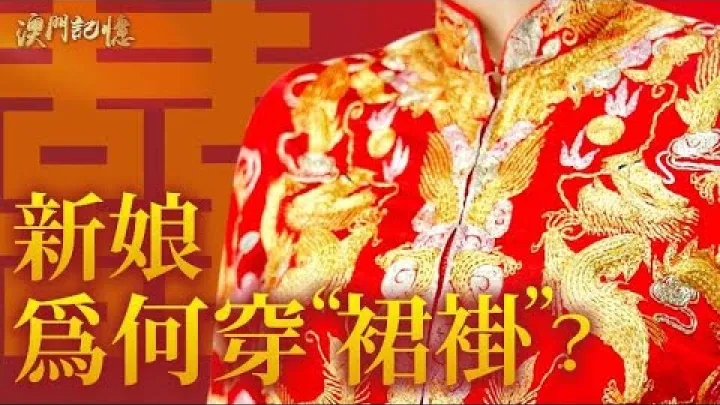
This museum object links clothing with family practice, cultural contact, and historical identity. It is more informative than a general claim that Macanese clothing is simply a mixture of East and West, because it points to a specific garment and a specific social setting.
At the same time, one bridal gown cannot represent every Macanese wedding. Brides may have used different silhouettes, materials, accessories, or ceremonial arrangements according to period, family, religion, and personal choice. The museum’s interpretation should therefore be presented as evidence about the documented object, not as a rule for all Macanese brides or all present-day weddings.
The Dó and Historical Macanese Women’s Dress
Dó is a term that appears in historical and encyclopedic accounts of attire associated with Macanese women. It should be treated as a historically bounded form rather than as a widely worn contemporary dress or a universal Macanese costume.
The available evidence does not establish the exact cut, fabric, period of use, or decorative symbolism of the dó in enough detail to support a confident visual reconstruction. If a photograph, product listing, or article uses the name, identify the historical period and community first. A museum, archive, or Macanese community source is the safest way to confirm the garment’s appearance and use before accepting claims about its fabric, cut, or symbolism.
Portuguese Folk Dance Costumes in Macau
Portuguese folk dance in Macau is a localized performing tradition associated historically with Portuguese and Macanese communities. The Cultural Heritage of Macao record states that the dance was mostly popular in Portuguese and Macanese communities in the early period and later began to attract the interest of local Chinese people in the second half of the twentieth century.
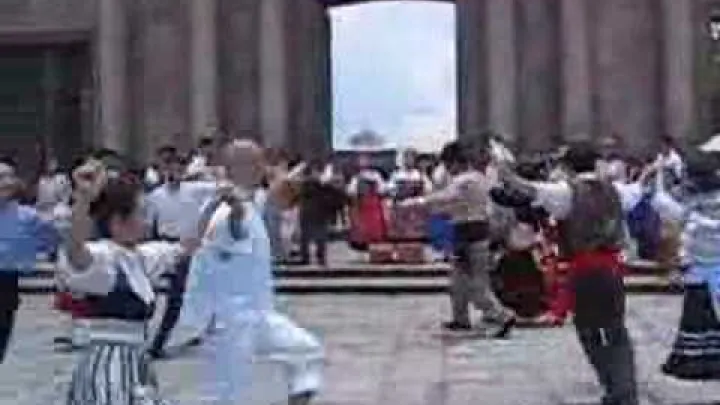
Its clothing is performance attire linked to the dance. It should not automatically be treated as a complete representation of Portuguese dress, rural clothing from Portugal, or a Macau national costume. The precise skirt, blouse, waistcoat, headwear, colors, and accessories can vary according to the dance group and the regional influence being presented.
For that reason, use exact garment names and color descriptions only when Macau’s cultural heritage documentation or a reliable local organization confirms them. A performance group’s clothing may preserve a regional reference while also reflecting local adaptation, stage requirements, or later reconstruction.
When Traditional Clothing Is Worn
Traditional clothing in Macau is closely tied to occasion. Weddings, religious observances, festivals, theatre, folk dance, museums, and tourism can all make heritage dress visible, but each setting has a different purpose.
Weddings and Family Ceremonies
Chinese wedding clothing may include a qipao or another traditional bridal form, depending on the family and ceremony. A Macanese wedding example may show Chinese and Portuguese customs meeting within one family history. These forms should be compared as related but distinct expressions of ceremony rather than combined into one fixed Macau bridal uniform.
A single wedding can involve several ceremonial stages, religious settings, family customs, and formal outfits when the people involved choose to combine them. Historical evidence supports the possibility of this kind of cultural layering, but it does not establish one sequence for every Macau family. Contemporary couples may also select modern clothing, a traditional garment, a museum-inspired design, or several outfits for different parts of the celebration.
Wedding dress is therefore occasion-specific. Seeing a bride in a qipao or a composite Macanese-style gown does not show that the same garment was worn for ordinary daily life or that it represents every person in Macau.
Festivals, Performances, and Religious Observances
Macau’s festival and performance clothing includes dragon and lion dance equipment, the attire of Drunken Dragon performers, Cantonese opera costumes, and Portuguese folk dance dress. Each is connected to a named activity and should be identified by that activity rather than grouped under a single label such as traditional Macau clothes.
Religious observances can also involve specialized costumes, ceremonial garments, uniforms, or ordinary clothing used within a ritual setting. Chinese and Catholic traditions may have different roles, objects, and expectations, and clothing worn by performers, clergy, ritual participants, and spectators should not be described as if it served the same purpose.
For a current procession or festival, the official event or heritage organizer is the best place to learn the date, participation arrangements, and any clothing guidance. Public photographs may show a particular year or group and do not necessarily establish a universal dress code.
Daily Wear, Heritage Display, and Tourist Costume
Most examples discussed in this guide are more visible in ceremonies, performances, festivals, museums, or cultural events than in ordinary daily wear. That does not make them less important. It means their social role has changed, or that the garment is preserved through a particular practice rather than through everyday use.
Museums and heritage events keep selected clothing visible by displaying objects, recreating past scenes, teaching performance traditions, and presenting community history. A rented qipao, a staged folk dance outfit, or a costume offered for tourist photography may resemble a traditional garment while serving a different purpose.
A tourist costume should therefore be described as a rental, stage, souvenir, or cultural experience unless its community and original use are documented. Its appearance alone cannot prove that it was once common daily clothing in Macau.
Gender, Design, and Cultural Meaning
Searches for female, male, and boys’ traditional clothing in Macau need the same historical and community context. Gendered forms exist within particular traditions, but the evidence does not point to one standard outfit for every age or gender.
How Women’s, Men’s, and Children’s Clothing Varies
For women, the main examples include the qipao or cheongsam, Macanese bridal gowns, and the historical dó. These belong to different categories. The qipao is a broader Chinese garment, the bridal gown is a documented example of Macanese Chinese-Portuguese cultural contact, and the dó is a historical term whose details require careful documentation.
Men’s clothing is especially visible in performance and ceremonial contexts. The Drunken Dragon tradition described by the local tourism office is traditionally performed by men, while Cantonese opera uses costume to distinguish different stage roles. These examples show male participation or role-based dress, but they do not establish one universal Macau men’s traditional costume.
For boys, the evidence reviewed here does not establish a distinct Macau-specific national costume. A child may wear a smaller version of a qipao, a festival outfit, an opera costume, or a school or performance uniform, but that does not automatically make it a named traditional garment. Child-specific examples should be connected to a documented ceremony, group, performance, or community practice.
Gender roles and clothing conventions can also change by historical period, performance role, family custom, and ceremony. It is better to describe what a garment did in its setting than to assume that a modern category such as women’s, men’s, or boys’ clothing had the same meaning in every period.
How to Describe Materials, Colors, and Motifs Carefully
Descriptions should begin with features documented for the specific garment. Common descriptions of a qipao may mention a standing collar, side opening, or frog fasteners, but these construction details do not automatically carry a Macau-specific meaning. A museum object may show a particular fabric or decoration without proving that it was standard for all garments of the same name.
Colors and motifs also need context. Dragons, phoenixes, flowers, embroidery, and strong color contrasts may appear in Chinese ceremonial or performance clothing, but their meaning can depend on the garment, character, ceremony, period, or community. Use phrases such as associated with, shown in, or documented for when the evidence describes one local object or practice rather than a universal rule.
This approach is useful when comparing Chinese, Macanese, and Portuguese influences. It avoids turning a general idea about Chinese or Portuguese symbolism into an unsupported statement about Macau.
Museums and Intangible Heritage
Clothing is often preserved as part of a living practice rather than as an isolated object. Museums, heritage records, performance groups, families, and festival organizations all help explain how garments and costume objects functioned in Macau.
How Living Heritage Practices Preserve Costume
Macau’s heritage framework recognizes cultural practices such as opera, theatre, folk dance, dragon and lion dance, festivals, and religious traditions. Many of these practices require distinctive clothing, accessories, masks, or performance objects. The costume remains meaningful because people continue to perform, teach, repair, recreate, or explain the practice around it.
Recognition of a practice does not automatically mean that every garment connected with it is separately listed as intangible heritage. A costume may be preserved through a community organization or performance tradition even when the individual garment is not treated as a standalone heritage item.
Preservation can include storing old clothing, making replacement pieces, training performers, teaching younger participants, maintaining ceremonial knowledge, and recording local history. This is why an intact costume in a museum and a newly made performance costume can both matter, even though they have different dates and uses.
Using the Macao Museum as a Local Reference
The Macao Museum presents Macau’s traditional culture and folk arts through different aspects of local life. Its description refers to scenes involving daily life, religious ceremonies, leisure, and folk celebrations. This makes the museum a useful local reference for connecting clothing with the people and activities that gave it meaning.
The bridal gown collection item is a good example of how one object can document cultural contact, family practice, and historical identity. A museum object should be read together with its description, date, provenance, and social setting. It should not be used as proof that every clothing tradition in Macau appears in one collection or that one object represents an entire community.
For research, compare a museum record with a local heritage record or a community account when possible. This can help distinguish an original garment from a later reconstruction and a historical practice from a modern presentation.
Separating Macau Heritage from Generic Costume Labels
Commercial phrases such as Macau national costume may refer to a generic Chinese dress, a martial arts outfit, a festival costume, or stylized fashion. A product photograph or rental listing may use Macau as a location label without identifying a local community, historical period, or original social use.
When assessing a product listing, photograph, museum image, or tourist performance, ask:
- Who is associated with it? Look for a named Cantonese Chinese, Macanese, Portuguese, religious, occupational, or performance community.
- What is the garment or costume called? A specific name is more useful than a broad label such as ethnic clothing or folk costume.
- When and where was it used? Identify the historical period, ceremony, festival, stage, procession, or daily setting.
- Is there a Macau-based reference? Look for a museum, archive, official heritage record, event organizer, or community organization.
- What was its original purpose? Separate wedding wear, ritual clothing, performance attire, occupational equipment, tourist rental, cosplay, and souvenir fashion.
This checklist does not mean that a modern adaptation has no cultural value. It simply gives it an accurate description. A rented qipao can be a way to learn about Chinese fashion, and a staged dance costume can support heritage education, without being presented as the one authentic Macau traditional dress.
Conclusion: Macau Traditional Clothing Is a Plural Heritage
Macau traditional clothing is a plural heritage shaped by Cantonese Chinese culture, Macanese history, Portuguese and Macanese community practices, religious settings, festivals, and the performing arts. Qipao and cheongsam represent a broader Chinese tradition used in Macau, while a documented Macanese bridal gown shows Chinese-Portuguese cultural contact. Cantonese opera, Portuguese folk dance, and the Drunken Dragon tradition demonstrate how clothing and costume objects remain tied to performance and community life.
For an accurate description, always connect a garment with its community, occasion, historical period, and original use. That approach gives travelers, students, and researchers a clearer understanding of Macau traditional dress than a single generic national costume label.
Select area
Create a post
Posting is free and no registration is required.