Brunei Official Languages: Malay, English, and More
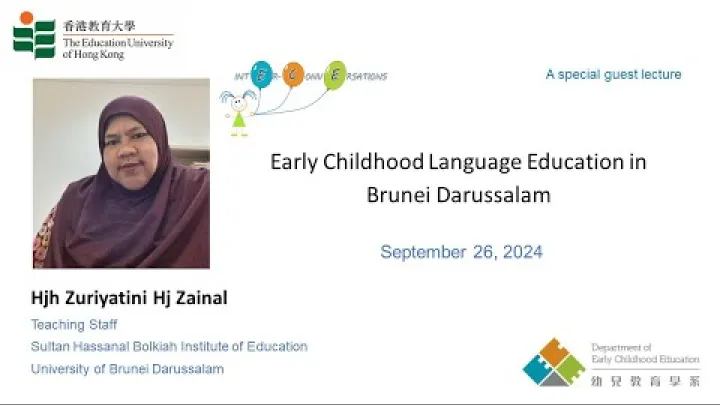
Malay is the official language of Brunei Darussalam, but Brunei’s language landscape is more multilingual than that short answer suggests. Standard Malay has the central formal and national role, while English is important in education, professional life, business, and international communication. In daily conversation, many people also use Brunei Malay and may speak one or more heritage or community languages. This guide explains the difference between legal status and everyday use, as well as the scripts and language communities found in Brunei.
What Are the Official Languages of Brunei?
The most useful starting point is to separate the language named in law from the languages that are widely useful in institutions and daily communication. This distinction helps students, visitors, and professionals understand why Malay and English can both be highly visible without necessarily having the same constitutional position.
The Short Answer: Malay Has Constitutional Primacy
Malay is Brunei’s official language. The Constitution states that the official language of Brunei Darussalam shall be the Malay language and that its script is to be provided for by written law. This is the formal legal basis for Malay’s position in the state and in national life. The wording can be read in the Constitution of Brunei Darussalam.

In practical descriptions of the country, English is often listed alongside Standard Malay as an official language. For example, country-level language references may use that label to reflect English’s major institutional presence. That description is useful for understanding how Brunei functions in education, commerce, and international settings, but it is not the same as saying that English has the same constitutional wording as Malay.
For formal matters, Malay has constitutional primacy. For everyday planning, English can still be very useful, particularly in professional and educational contexts. Keeping these two points separate gives a more accurate answer than simply calling Brunei either Malay-only or fully English-speaking.
Official, National, and Working Language Are Not the Same
An official language is a language designated for formal state purposes by a constitution, statute, or other legal authority. A national language has a strong role in shared identity and public symbolism. A working language is used because it is practical for communication in particular institutions, professions, or international relationships. One language can hold more than one of these roles, but the terms should not be treated as interchangeable.
| Language | Main status in Brunei | Common domains |
|---|---|---|
| Standard Malay | Constitutionally official; central national role | Formal writing, administration, education, national communication |
| English | Major practical working language | Business, education, professional and international communication |
| Brunei Malay | Widely used local spoken language | Daily interaction and wider communication |
| Heritage languages | Community and cultural languages | Home, community, cultural and religious settings |
Malay’s national role is visible in formal public life and in its connection to Brunei’s identity. English has a broad practical role because it connects Brunei to international education, business, technical information, and global communication. A person may therefore encounter Malay in an official setting and English in a meeting, classroom, contract discussion, or professional email.
This does not mean every institution uses the same balance, or that every resident has the same level of English proficiency. Language choice depends on the purpose of the communication, the audience, and the setting.
Malay in Brunei: Standard Malay, Brunei Malay, and Jawi
The word “Malay” can refer to a formal standard, a group of related varieties, or a locally spoken language. In Brunei, distinguishing Standard Malay from Brunei Malay makes the language situation much clearer.
Standard Malay in Formal and National Contexts
Standard Malay is the formal variety associated with Brunei’s official-language role. It is important in official writing, administration, education, public announcements, and communication intended for a national audience. It gives institutions a shared written and formal spoken standard.
The constitutional use of the word “Malay” establishes the language’s official status, but it does not provide a complete map of every Malay variety used in homes, neighborhoods, or informal conversation. In practice, formal Standard Malay and local speech can differ in pronunciation, vocabulary, grammar, and preferred expressions.
Brunei’s Standard Malay belongs to the wider Malay linguistic sphere that extends across parts of Southeast Asia. This regional relationship can help speakers of related varieties recognize familiar features. However, it should not be assumed that the standard used in Brunei is identical in every detail to the standards or everyday speech found in Malaysia or Indonesia. Official language use is shaped by Brunei’s own institutions, education, history, and national context.
For a newcomer, Standard Malay is the appropriate reference point for official documents, formal notices, and structured learning. It is also a better label than “Brunei Malay” when discussing the country’s constitutionally official language.
Brunei Malay as a Local Spoken Variety and Language of Wider Communication
Brunei Malay is a prominent local form of Malay used in everyday speech. It can serve as a language of wider communication among people whose family or heritage languages are different. This makes it especially important for informal interaction, local social life, and communication across communities.
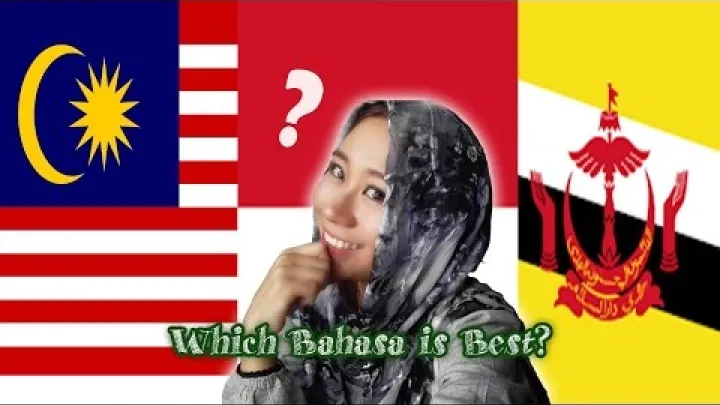
Ethnologue describes Brunei Malay as an Austronesian language that originated in Brunei, is part of the Malay macrolanguage, and functions as a language of wider communication. Its Brunei Malay profile reflects one common classification approach. Linguistic labels can vary by source: some discussions emphasize Brunei Malay as a distinct language, while others frame it as a Malay variety. The practical point is that it has a recognizable local role and should not be treated as simply interchangeable with formal Standard Malay.
A simple contrast is useful. A formal announcement, school exercise, or government text is likely to follow Standard Malay conventions. A relaxed conversation among friends, family members, colleagues, or shopkeepers may include Brunei Malay. These are not rigidly separated worlds: multilingual speakers can adjust their language according to audience, purpose, and degree of formality.
For learners, this means that formal Malay study can be valuable for reading and official communication, while exposure to local Brunei Malay can make ordinary conversation easier to follow. Neither variety should be presented as less authentic; they serve different, overlapping social functions.
Roman and Jawi Scripts Used for Malay
Malay in Brunei is commonly written with the Roman alphabet, also called Rumi in Malay contexts. It is the dominant modern script for much administrative, educational, commercial, and media writing. English is also written in the Roman alphabet, which makes bilingual signs and documents visually familiar to many international readers.

Jawi is a Perso-Arabic writing system used for Malay. It has an important place in religious, educational, cultural, and historical contexts. Jawi may appear in material connected with Islam, traditional learning, ceremonial presentation, or cultural expression, but it should not be assumed that it is used equally in all modern public writing.
Script and language are different categories. Jawi is a way of writing Malay; it is not the Arabic language. Arabic has its own role in Islamic scripture, religious study, and scholarship. A text in Jawi may represent Malay, while an Arabic text represents Arabic unless it is explicitly a transliteration or translation.
How English Is Used in Brunei
English is highly visible in Brunei and is an important resource for education and professional communication. Its strong practical presence helps explain why many descriptions of Brunei emphasize bilingualism, even though Malay retains the constitutional position described above.
English in Bilingual Education
Brunei has long used a bilingual education approach in which Malay and English have complementary roles. The model supports national-language learning while giving students access to English-language knowledge, academic materials, and international communication.
English is particularly relevant to areas such as science, mathematics, technical fields, higher education, and information from international sources. This does not mean that English is the main home language for most people, nor does it mean that every learner reaches the same level of confidence. Educational outcomes depend on a student’s school experience, family language environment, and opportunities to use English beyond the classroom.
The English Development Trust describes Standard Malay as Brunei’s official language and English as a principal language of business, while discussing English-language teaching in the country. This combination captures the broad policy and social picture: Malay remains central to national institutions, while English offers access to international academic and professional networks.
Students considering education in Brunei should review the language requirements for their specific school, course, or university programme. The language used for instruction, assessment, and administrative communication can differ by institution and subject area.
English in Business, Government, and Legal Communication
In business and professional life, English is a major working language. It is useful for communication with international partners, technical documentation, finance, higher education, and regional or global networks. In many workplaces, English may appear alongside Malay rather than replacing it.
Government-facing communication also has a bilingual dimension. Some legal and administrative materials are made available in Malay and English, especially where a clear English version assists professional, international, or public access. The Attorney General’s Chambers law index identifies Malay versions within its listings, illustrating the importance of language versioning in legal materials. The Attorney General’s Chambers is a useful place to locate official legal publications.
For a legal, immigration, employment, or regulatory matter, use the applicable official text and seek qualified local advice where necessary. An English version can be helpful, but a reader should not assume that an informal summary or an isolated translation determines the legal effect of a document.
For day-to-day work, a respectful bilingual approach is often practical: use the language requested by the organization or contact, and do not assume that English is preferred in every government office or local business. Extensive functional use of English creates a bilingual working environment, but it does not alter Malay’s constitutional status.
Other Languages Spoken in Brunei
Brunei is home to multiple Indigenous, community, and migrant languages in addition to Malay and English. Country-level language inventories record a wider range of languages, but a list alone cannot show how often each language is used or how strongly it is passed between generations.
Indigenous Languages and Local Communities
Indigenous and local communities in Brunei are associated with languages including Tutong, Belait, Kedayan, Dusun, Bisaya, and Murut. These names describe an important part of the country’s linguistic diversity, but it is important not to assume that an ethnic category, a local identity, and a language name always correspond exactly. Individuals and families may identify with a community while using Malay, English, Brunei Malay, or several languages in daily life.

Heritage languages can carry family history, place-based knowledge, oral traditions, and community belonging. At the same time, Brunei Malay and Standard Malay can connect people across language communities, particularly in public and intercommunity settings. This multilingual pattern allows a person to use a heritage language in one context and Malay or English in another.
Language vitality is not identical across communities or generations. A language may be actively spoken at home in some families and less frequently used in others. Without a current, comparable survey, it is not reliable to rank these languages by speaker numbers or make broad claims about their level of endangerment. Respectful language discussion begins by recognizing both their cultural significance and the variation in actual use.
Chinese, Tamil, Arabic, and Other Community Languages
Chinese languages are used by parts of Brunei’s Chinese communities, especially in family, cultural, and community settings. The term “Chinese” covers more than one language or variety, so it is better not to assume a single home language for all Chinese Bruneians. Tamil may also be used as a heritage or community language, including in cultural and religious settings.
Arabic has a specialized and significant role in Islamic scripture, religious education, worship, and scholarship. Its religious importance does not make it a general official language for ordinary state communication. Likewise, a community language can be important to a family or institution without being a national official language.
Brunei also includes residents from migrant and expatriate backgrounds who may use additional languages at home and at work. The languages encountered can vary by neighborhood, employer, school, and social network. It is therefore more accurate to describe Brunei as multilingual than to attach fixed speaker totals to each community language without current data.
How Brunei's Language Landscape Works in Daily Life
Language use in Brunei is shaped by setting and relationship. A single person may use formal Malay for one task, Brunei Malay in a relaxed exchange, English for study or work, and a heritage language with relatives or community members.
Multilingual Communication, Identity, and Code-Switching
In formal administration and national events, Standard Malay has an important role. In education and many professional fields, English can be useful or expected. At home and in local social life, Brunei Malay and heritage languages may be more prominent. Religious contexts can also bring Malay, Jawi, and Arabic into distinct roles.
Code-switching, or moving between languages or varieties during conversation, can be a natural feature of multilingual communication. A speaker might use Brunei Malay for an informal exchange, insert English technical terms at work, and shift toward Standard Malay in a formal message. This should not be assumed to happen in every conversation or for every person; it depends on the participants, subject, and setting.
These choices are connected to identity as well as convenience. Malay can express national belonging and formality. Brunei Malay can signal local familiarity. English can support education and professional opportunity. Heritage languages can sustain family and community ties. For visitors and new residents, listening to the language preferred by others and adapting politely is usually more useful than assuming one language will fit every situation.
Why Speaker Counts and Language Rankings Need Care
Questions such as “What is the most spoken language in Brunei?” appear simple, but the answer depends on what is being measured. A census may record ethnicity, a survey may ask for first language, and another study may ask which language is used at home, understood, read, or used at work. These measures can produce very different results.
Bilingual and multilingual speakers add another difficulty. A person who uses Brunei Malay every day, reads Standard Malay for formal purposes, works in English, and speaks a heritage language with family cannot be represented fully by a single-language ranking. Counting each person only once can hide multilingual ability, while counting every language they know can make totals exceed the population.
Ethnologue lists 17 languages used in Brunei and describes English and Standard Malay as official languages in its country profile. This is a useful broad inventory, but it does not by itself provide a current, uniform percentage for every language role. See the Ethnologue country profile for its classification framework.
When reading language statistics, check the source year, the population covered, and the exact question asked. In particular, distinguish first language, home language, ability to speak a language, and language of wider communication. If these details are not stated, precise comparisons between languages should be treated cautiously.
Conclusion: Brunei's Language Landscape in Brief
Malay is Brunei’s constitutionally official language and holds the central formal and national role. Standard Malay is important for official and institutional communication, while Brunei Malay is a major local spoken form and a language of wider communication. English is widely useful in education, business, professional life, and international communication, but its practical reach should be distinguished from Malay’s constitutional position.
Brunei’s linguistic life also includes Indigenous languages, Chinese languages, Tamil, Arabic in religious and scholarly contexts, and other community languages. Understanding this layered picture helps newcomers read formal information accurately, communicate respectfully, and appreciate the country’s multilingual identity.
Select area
Create a post
Posting is free and no registration is required.