Brunei National Symbols: Official Emblems and Cultural Icons
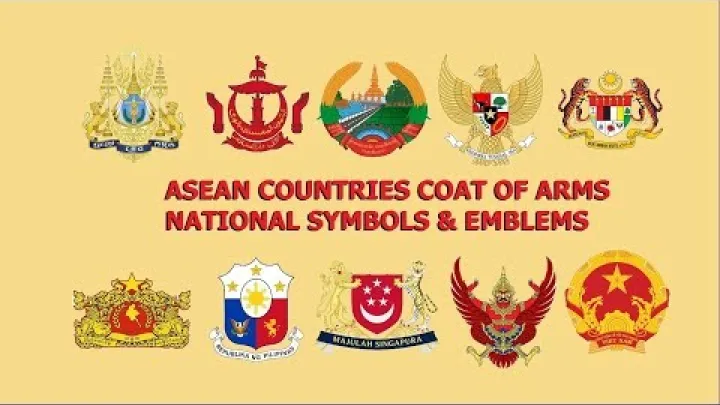
Brunei national symbols include clearly established state emblems as well as natural symbols that are strongly associated with the country in public life. The most secure starting points are the National Crest and the national motto, both of which express Brunei Darussalam’s monarchy, Islamic identity, and public ideals. Simpor is also widely recognized as Brunei’s national flower. By contrast, claims about a national animal, bird, tree, or fruit need more careful reading because popular online lists do not necessarily show an official designation.
This guide separates official state symbols from cultural associations. It focuses on the crest, motto, and simpor, then explains what can and cannot be confidently said about Brunei’s fauna, trees, and fruits.
Brunei National Symbols at a Glance
Brunei’s symbols do not all have the same status. The National Crest is a formal state emblem, while the motto is an integral part of that crest. Simpor has broad public recognition as the national flower, although easily accessible public material does not clearly show a single legal proclamation that explains its designation. Several other symbols often appear in general country lists, but their official standing is less clear.
| Symbol | Common status | What it represents |
|---|---|---|
| National Crest | Official state emblem | Monarchy, Islam, service, and public responsibility |
| National motto | Part of the official crest | Service guided by God |
| Simpor | Widely recognized national flower | Natural and cultural identity |
| White-bellied sea eagle | Popular association, not confirmed here as official | Coastal and wildlife identity |
| National tree or fruit | No clear official designation established | Cultural claims vary |
The table is best read as a guide to the strength of each claim, rather than as a single list of equally official emblems. In formal schoolwork or government-facing material, describe the crest and its motto as state symbols. Describe simpor as widely recognized, and use a qualification for the sea eagle or any proposed tree and fruit. This wording preserves the answer readers are looking for while avoiding a false impression that every country-symbol list has the same legal basis.
For readers preparing educational material, travel content, or formal presentations, the distinction matters. A plant or bird may be familiar in Brunei and still not be an official national emblem. Before describing any plant, animal, bird, tree, or fruit as officially national, consult a Brunei government publication or an appropriate specialist authority.
The National Crest: Brunei's Coat of Arms
The National Crest is the central visual emblem of Brunei Darussalam. It is the symbol most closely tied to the state’s constitutional and ceremonial identity, and it appears prominently in official contexts, including at the centre of the national flag. Its imagery brings together royal authority, Islamic faith, and a stated commitment to the people of Brunei.
Why Brunei's National Crest Is Also Called a Coat of Arms
In English, Brunei’s National Crest is commonly called the country’s coat of arms. Both terms refer to the same principal heraldic state emblem rather than two separate national symbols. “National Crest” is the useful official-style term to use first; “coat of arms” helps international readers recognize its role as a formal emblem used to identify the state.
The crest is closely connected with Brunei’s Malay Islamic monarchy. Its royal imagery reflects the position of the Sultan within the state, while its religious wording and symbols express the importance of Islam to national identity. This does not mean that every royal device is a separate national emblem; rather, the National Crest is the principal composition through which these state and royal themes are presented together.
Brunei’s Information Department includes the crest in its publication on the country’s flag and national anthem, placing it within the documented presentation of modern state symbols. The Brunei Information Department is a useful starting point for readers seeking the official context of the emblem and its use.
The Crest's Main Elements and Their Meanings
The National Crest is made up of several distinctive elements. Together, they create a compact visual statement about authority, faith, protection, and public duty.
| Element | Commonly stated meaning |
|---|---|
| Royal umbrella | Royal dignity and sovereign authority |
| Flag and wings | Protection, justice, peace, welfare, and progress |
| Hands | The state’s duty of care and service to its people |
| Crescent | Islam |
| Arabic motto | Service with God’s guidance |
| Scroll | The name Brunei Darussalam |
The royal umbrella sits above the composition and is associated with the monarchy. A flag and wings form the upper portion of the emblem. The wings are commonly explained through ideals that include protection, justice, peace, welfare, and progress. These values should be understood as the meanings presented for the emblem’s parts, rather than as a complete definition of Brunei’s political system.
Below, two upturned hands support the crescent. The hands are widely read as a representation of the government’s responsibility to protect and serve the people. The crescent is an established Islamic symbol. It carries the Arabic motto, while a lower scroll bears the country name, Brunei Darussalam. The official explanatory approach is especially important here because the crest’s individual parts are intended to work as one state emblem rather than as unrelated decorative images.
The National Motto: Service with God's Guidance
Brunei’s national motto is part of the National Crest, not a separate logo or slogan used independently of it. It is written in Arabic on the crescent and is also visible whenever the crest appears on the national flag. The motto provides the clearest verbal expression of the ethical ideal embedded in the emblem.
Meaning, Language, and Placement of the Motto
The motto is written as الدائمون المحسنون بالهدى. A commonly used English rendering is “Always render service with God’s guidance.” Malay translations commonly express the same idea as continuing to do good or provide service under Allah’s guidance. Exact English wording can vary because translation choices differ, but the central meaning remains consistent: good conduct and service should be directed by divine guidance.
Its placement inside the crescent matters. The crescent links the motto to Islam, while the wider crest places the message within Brunei’s national and monarchical setting. Read together with the hands beneath it, the wording supports an image of public responsibility guided by religious and moral principles. It is best not to assign a separate adoption date to the phrase without a specific official historical record.
Simpor: Brunei's Widely Recognized National Flower
For the direct question, Brunei’s widely recognized national flower is simpor. The name is commonly associated with Dillenia suffruticosa, a conspicuous native Southeast Asian plant with bright yellow flowers. Simpor is the strongest natural-symbol association in Brunei’s public and cultural identity.
What Is the Simpor Flower?
Simpor is commonly identified by the scientific name Dillenia suffruticosa. It is generally described as a large evergreen shrub or small tree, with broad leaves and large yellow flowers. The petals open around a conspicuous central cluster, giving the flower a bold appearance that is easy to recognize.
![Preview image for the video "[Sri Lanka Wildflowers]#열대식물#Dillenia suffruticosa#simpoh air#Godapara(ගොඩපර)".](/sites/default/files/styles/media_720x405/public/oembed_thumbnails/2026-07/xL7Ugioj8JRJu_ZgksSAVC7gPbi1xfiq4tKX3m1D6M8.jpg.webp?itok=p1yGlxi3 "Preview image for the video \"[Sri Lanka Wildflowers]#열대식물#Dillenia suffruticosa#simpoh air#Godapara(ගොඩපර)\".")
Local names can vary, and “simpor” may be used in ways that require botanical care. Using Dillenia suffruticosa is therefore helpful in international writing, museum labels, school projects, and translated material. It reduces the risk of treating similarly named plants as automatically identical. A basic botanical overview is available through the Dillenia suffruticosa reference, though formal plant identification should rely on specialist botanical sources where needed.
The flower’s visual character helps explain its symbolic strength. Its yellow blooms are distinctive, while its broad leaves make the plant memorable even when it is not flowering. This combination gives simpor a practical role as a recognizable natural marker in local cultural representation, rather than merely a scientific species name.
For a Brunei-focused description, it is useful to keep the common name and scientific name together: simpor, usually identified as Dillenia suffruticosa. That pairing helps readers distinguish the national-flower association from similarly named plants and from unrelated floral emblems elsewhere in Southeast Asia.
How Simpor Became Associated with Brunei
Simpor is widely identified in local and regional public usage as Brunei’s national flower. The association is repeated often enough that it has become the standard answer in educational and general-reference contexts. It is therefore reasonable to call simpor Brunei’s widely recognized national flower.
However, broad recognition and a publicly accessible legal designation are not the same thing. The material available here does not establish a clear public proclamation setting out when, how, or by whom simpor was formally selected. That gap does not erase the flower’s cultural importance; it simply means that careful writing should avoid claiming a documented legal process that has not been shown.
Local discussion has linked simpor with Bruneian identity and with ideas such as endurance, growth, and resilience. These are meaningful interpretations of a familiar native plant, but they should not be presented as a single universally fixed official definition. A local discussion in Brunei Resources illustrates both simpor’s cultural visibility and the uncertainty surrounding an easily documented designation process.
For most practical purposes, simpor is the appropriate floral emblem to mention when introducing Brunei’s natural heritage. The more precise formulation is: “Simpor, usually identified as Dillenia suffruticosa, is widely recognized as Brunei’s national flower.”
Does Brunei Have a National Animal or Bird?
Questions about Brunei’s national animal and national bird often produce a quick answer online: the white-bellied sea eagle. The available evidence supports treating this bird as a popular association, not as a confirmed official national animal or bird. That distinction is important for students, writers, and organizations that need accurate country information.
The White-Bellied Sea Eagle as a Popular Association
The white-bellied sea eagle, Haliaeetus leucogaster, is the species most often linked with claims about Brunei’s national animal or national bird. It is a large coastal raptor found across parts of South and Southeast Asia and is a plausible symbol of Brunei’s maritime environment, rivers, coast, and wildlife.
Its appearance in online country-symbol collections and general reference categories has helped strengthen the association. Birdwatching, tourism, commercial, and social-media material may also repeat the label. Such repetition can make a claim seem settled, but it does not by itself demonstrate that a government body has formally selected the species as a national emblem.
The careful description is that the white-bellied sea eagle is popularly associated with Brunei in some public sources. It may be a useful example when discussing the country’s coastal wildlife, but it should not be described as Brunei’s official national animal or bird on the evidence available here.
What Can Be Confirmed About Official National Fauna?
The supplied material does not establish a clearly documented official national animal or official national bird for Brunei. This is not proof that no designation exists in any government record. It means that a reliable public confirmation has not been demonstrated by the available evidence.
Internet lists commonly gather flags, flowers, animals, birds, trees, and fruit into one convenient format. They can be useful starting points, but they often mix official emblems with cultural associations and may copy one another without identifying an appointing authority. A species’ importance to biodiversity, its visibility in local scenery, or its frequent use in promotional content is also different from formal symbolic status.
For a worksheet, article, or presentation, the safest concise answer is: Brunei has a popularly associated bird, the white-bellied sea eagle, but no official national animal or bird is confirmed by the accessible evidence used here. When a formal answer is necessary, look for confirmation from a Brunei government department with responsibility for national information, environment, wildlife, or biodiversity. This wording keeps the useful cultural association while showing readers where official status would need to come from.
National Tree and Fruit Claims: What the Evidence Supports
Brunei’s equatorial forests and tropical food traditions naturally encourage interest in a national tree or fruit. Yet ecological importance and culinary popularity do not automatically create official national symbols. The available information supports a cautious answer for both categories.
Is There an Official National Tree?
No reliable, clearly documented official national tree for Brunei is established by the supplied research. Brunei has a strong rainforest identity, and many native trees are important to its ecosystems, landscapes, and forest knowledge. None should be converted into a national-tree claim without authoritative evidence that identifies the species and its official status.
This distinction is especially useful in educational material. A tree can be locally iconic, economically important, protected, or characteristic of Brunei’s forests without being a designated national symbol. If a publication names a particular tree as national, readers should seek the original statement from a relevant Brunei authority rather than relying only on a compiled symbol list.
Does Brunei Have a National Fruit?
The supplied evidence does not confirm a formally designated national fruit for Brunei. Tropical fruits may be central to local food culture and may appear in regional social-media lists, but popularity is not evidence of an official selection. For example, a fruit that is widely enjoyed in Brunei or shared with neighbouring countries should not automatically be presented as a national emblem.
It is therefore more accurate to discuss Bruneian fruits as part of cuisine, agriculture, or regional tropical food traditions unless a government or other authoritative national source identifies one fruit as an official symbol. Compared with fruit claims, simpor has much stronger and more consistent public recognition as a Bruneian national symbol.
Conclusion: Reading Brunei's Symbols by Their Status
Brunei’s National Crest and its Arabic motto are the country’s clearest formal symbols beyond the flag and anthem. The crest combines royal, Islamic, and civic imagery, while the motto expresses service with God’s guidance. Simpor is widely recognized as the national flower and provides a strong natural symbol of Brunei.
Claims about the white-bellied sea eagle, a national tree, or a national fruit should be labelled more carefully. The sea eagle is a notable popular association, but the available evidence does not confirm an official national animal or bird, tree, or fruit. Reading each symbol by its status gives a more accurate picture of Brunei Darussalam’s official identity and cultural heritage.
Select area
Create a post
Posting is free and no registration is required.