Brunei Population: Latest Figure, Growth, and Key Facts
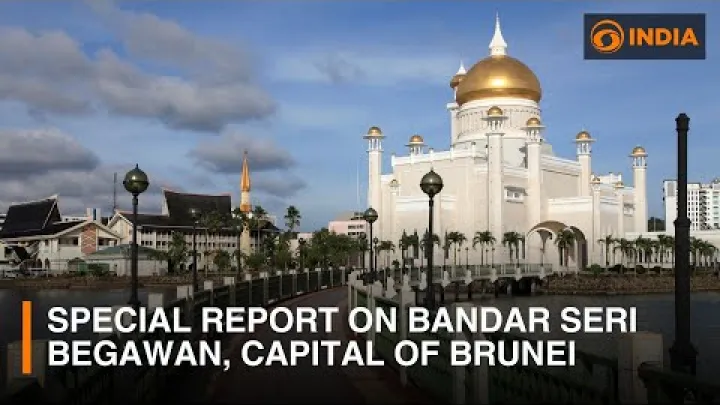
Brunei’s official population estimate was 458,600 people in 2025. This figure is an annual national estimate from the Department of Economic Planning and Statistics, not a new census count. The latest full Population and Housing Census counted 440,715 residents in 2021. Understanding the difference between these figures helps students, visitors, businesses, and prospective residents interpret Brunei population data correctly.
Brunei is a small country by population, but its settlement pattern, working-age population, and high level of urbanization matter for public services, housing, transport, and long-term planning. This guide explains the latest figure, population growth, demographic composition, and why international databases may show a different total.
Brunei Population at a Glance
The most useful starting point is the official national estimate, with its reference year stated clearly. Census results remain essential because they provide the most detailed picture of residents and households at a specific point in time.
How many people live in Brunei?
According to the DEPS Population Statistics, Brunei Darussalam had an estimated population of 458,600 people in 2025. DEPS reported 244,800 males and 213,800 females within that total.
This is the best direct answer to the question, “How many people live in Brunei?” when using the latest official figure available in the supplied data. It should be described as a 2025 national estimate, rather than as a census result or a real-time count.
Brunei’s latest comprehensive enumeration was the Population and Housing Census 2021, which recorded 440,715 residents. A census is especially valuable for detailed information on households, age, housing, and geographic distribution. Annual estimates are designed to update the population picture between censuses.
Census counts, estimates, and projections
A census is a systematic count of people at a defined time. Brunei’s 2021 census is therefore a benchmark count, not an estimate extended from earlier data. An annual national estimate, such as DEPS’s 2025 figure, uses demographic information to update the benchmark for a later year.
![Preview image for the video "[🇧🇳Brunei Darussalam] Population Pyramid & Ranking (1950-2100) #wpp2024".](/sites/default/files/styles/media_720x405/public/oembed_thumbnails/2026-07/b123uuAqJrl9dj1Bkw9anKtKgA7H4VE0ZVlxjeMlCFs.jpg.webp?itok=0b3rHIGB "Preview image for the video \"[🇧🇳Brunei Darussalam] Population Pyramid & Ranking (1950-2100) #wpp2024\".")
International datasets can use another method. The World Bank lists Brunei’s 2025 population at 466,330, drawing on internationally harmonized demographic data. That number is useful for comparing Brunei with other countries, but it is a separate international estimate and should not be presented as the same statistical series as the DEPS figure.
Different totals do not necessarily mean that one source is unreliable. National and international systems can differ in their reference date, treatment of migration, assumptions about births and deaths, population coverage, and model revision schedule. When using a figure, check its reference year and whether it is labeled a census count, national estimate, or international projection. Those labels are more important than choosing a number simply because it is higher or more recent.
Brunei Population by Year
Population by year is most useful when the figures come from one consistently defined series. Brunei’s census and official annual estimates provide a national perspective, while international series support cross-country comparisons.
The recent population trend
The official figures show gradual population growth. The 2021 census recorded 440,715 people, and the DEPS estimate reached 458,600 in 2025. This is an increase of 17,885 people over the period when the census count and later national estimate are compared.
| Reference year | Population | Statistical status |
|---|---|---|
| 2021 | 440,715 | Population and Housing Census count |
| 2025 | 458,600 | DEPS national estimate |
The table is intentionally limited to two clearly identified official reference points. It indicates a steady upward direction, but it does not create a full annual series or imply that the growth was identical in every year. Overall, Brunei’s population has been growing gradually rather than experiencing rapid demographic expansion.
How to read population figures by year
A population number attached to a year can mean several different things. It may be a census count, an official post-census estimate, an international projection, or a model-based reconstruction of earlier population levels. These are all useful for particular purposes, but they should not be treated as interchangeable.
For any Brunei population-by-year figure, first identify the source organization. Next, check the reference date or year, the geographic area covered, and the data type. A figure for Brunei Darussalam should refer to the country as a whole unless it expressly identifies a district or municipality. Finally, note that a report published today may still describe an older reference year; a newer publication date does not make that earlier population value current.
For a trend chart or calculation, use one labeled source series throughout. Combining a census count, a DEPS estimate, and an international modeled estimate into a single uninterrupted line can produce an artificial trend. If both national and international figures are needed, keep them in separate tables, charts, or clearly named comparisons.
How Brunei's Population Is Changing
Brunei’s demographic change is shaped by modest population growth, low fertility, long life expectancy, and migration patterns that should be interpreted with care. Together, these factors affect the future size and age structure of the country.
Brunei population growth rate
International data place Brunei’s annual population growth at about 0.8 percent in 2025. The World Bank Brunei Data also lists a 2025 population total of 466,330, so its growth indicator belongs to that international series rather than the DEPS national estimate series.
The official comparison between the 2021 census and the 2025 DEPS estimate also shows positive growth. Dividing the official increase of 17,885 by the 2021 census total gives a cumulative increase of about 4.1 percent over the four-year interval. This is a simple comparison of two official reference points, not a published annual growth rate and not a replacement for the World Bank indicator.
The broad direction is clear: Brunei continues to add population, but growth is modest. This pattern is more consistent with a maturing population than with the much faster expansion often associated with earlier demographic periods.
Fertility, mortality, and migration trends
Brunei’s longer-term outlook is influenced by below-replacement fertility and relatively high survival. Below-replacement fertility means that, without migration, each generation is not large enough to fully replace itself over time. The World Bank’s available country data reports life expectancy at birth of 76 years for 2024, which is consistent with a population in which people generally live into older ages.
Low fertility and longer survival can coexist with population growth for a period, especially where there is a substantial working-age population and migration contributes to population change. Over a longer horizon, however, persistent low fertility tends to slow growth and increase the share of older residents. This has practical implications for workforce planning, health care, family services, and retirement systems.
Migration is harder to interpret from a single headline value. International demographic series publish net migration estimates, but net migration is the balance between people entering and leaving the country, not a count of all moves. A limited or near-balanced net figure does not mean that no one arrives in Brunei or leaves it. It simply means that inflows and outflows may offset one another in the modelled total.
Population Composition
Population composition describes who makes up the total population by sex, age, and other characteristics. The most current official summary supplied here provides a clear sex breakdown, while detailed age and household patterns are best assessed through census and demographic publications.
Sex composition and the male majority
In the 2025 DEPS estimate, Brunei had 244,800 males and 213,800 females. These figures equal 53.4 percent male and 46.6 percent female in a total population of 458,600.
The result is a modest male majority. It is meaningful for demographic description, but it should not be interpreted as an extreme imbalance. Explanations for sex composition can involve age structure, citizenship and residency definitions, and population movements, so it is better not to assign a single cause without directly comparable official analysis.
The 2021 census can provide a more detailed baseline for demographic categories. Comparisons with the 2025 estimate should use the same definitions and population coverage before drawing conclusions about changes in the sex balance.
Age structure and demographic transition
Brunei has a large working-age population, alongside a declining relative emphasis on younger age groups and a gradually growing older population. This is broadly consistent with an advanced demographic transition: families have fewer children than in the past, while improved survival means more people live to older ages.
It would be inaccurate to describe Brunei as either entirely youthful or already predominantly aged. A more useful description is relatively mature and gradually aging. The country still needs education, first-job opportunities, and family support for younger residents, while also preparing for rising demand for health care, accessible housing, pensions, and care services for older people.
For employers and policymakers, a large working-age population can support economic activity, but it does not remove future labor-supply challenges. For students and relocating professionals, demographic change also helps explain why skills development, public services, and housing planning remain important national issues.
Urbanization, Population Density, and District Distribution
National population totals do not show where people live. Urbanization, density, and the different roles of Brunei’s districts offer a more practical view of settlement across the country.
How urbanized is Brunei?
International UN-based data indicate that roughly four-fifths of Brunei’s population lived in urban areas in the mid-2020s. The World Bank Urbanization Data presents this indicator using the United Nations urbanization series.
A high urban share means that most people live in settlements classified as urban under that international system. It does not mean that every resident lives in Bandar Seri Begawan, nor does it mean that every built-up area has the same density or access to services. National and international systems may also apply different definitions of urban and rural areas.
In practical terms, urbanization concentrates demand for housing, schools, health services, roads, utilities, and digital infrastructure. It also means that national averages can hide different living conditions between established urban areas, suburban communities, smaller towns, and rural settlements.
Population density and where people live
Population density is calculated by dividing population by land area. It is a useful national indicator, but the result changes if a different population estimate or land-area denominator is used. Brunei is moderately populated overall, while settlement is more concentrated in developed and coastal parts of the country than in its more sparsely settled interior areas.
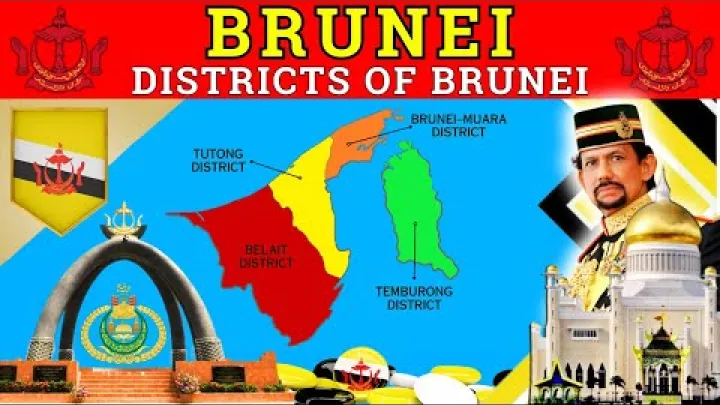
Bandar Seri Begawan is the capital and an important urban center. Brunei-Muara, the district containing the capital area, is widely understood as the main population and administrative concentration. Belait has a distinct economic and settlement profile, while Tutong includes a mix of communities outside the principal urban concentration. Temburong is geographically separate from the main western part of Brunei and has a different settlement pattern shaped by its location and extensive natural areas.
Exact density comparisons require a consistent land-area denominator and a population figure from the same reference year. This is particularly important when comparing Brunei with other countries or when translating a national density into assumptions about local crowding. National density does not describe the density of a specific neighborhood, district, or town.
Why Population Sources Report Different Numbers
It is normal to encounter more than one Brunei population figure online. The key is to use the figure that fits the question and to preserve its source label rather than trying to merge different methodologies into one total.
Official Brunei statistics and international estimates
The Department of Economic Planning and Statistics is Brunei’s primary source for official population estimates and census results. Its DEPS Statistical Publications include Population and Housing Census 2021 material that supports detailed national demographic analysis.
International systems such as the World Bank and United Nations harmonize population data so countries can be compared on a common basis. They may revise earlier estimates when new census results, demographic assumptions, or methodological updates become available. This makes them valuable for regional and global comparisons, even when their total differs from a current national estimate.
For a question about Brunei’s official population, use the DEPS 2025 estimate of 458,600. For an international comparison, use the World Bank’s 2025 estimate of 466,330 alongside its source label. Do not average the two values: an average would not represent an official count, an official estimate, or a recognized international demographic series.
Live population counters and data limitations
Live population counters can be visually useful, but they are projections that update from underlying assumptions. They are not direct, moment-by-moment enumerations of everyone in Brunei. For official questions, the latest DEPS estimate and the Population and Housing Census are more appropriate starting points.
Detailed population breakdowns also have limits. A headline estimate may not provide current information on ethnicity, religion, district-level age structure, household composition, or the reasons people move into and out of the country. Those topics require the relevant census table or specialized statistical publication rather than inference from a national total.
Readers using population data for relocation, market research, study, or policy comparison should match the source to the decision. A national total is useful for country scale, but local planning often needs district, household, age, or housing data that may be published separately.
Brunei Population: Key Takeaways
Brunei’s latest official population estimate is 458,600 people in 2025, while the latest full census counted 440,715 residents in 2021. The difference reflects the distinction between a census enumeration and a later national estimate.
The country’s population is growing gradually, with international data indicating annual growth of about 0.8 percent in 2025. Brunei is highly urbanized, has a modest male majority in the official 2025 estimate, and is gradually aging as low fertility and longer life expectancy shape its demographic future.
For the clearest answer, always retain the year and data type with the number: use DEPS for official Brunei statistics and international datasets for comparable cross-country estimates. This simple distinction makes Brunei population figures far easier to read accurately.
Select area
Create a post
Posting is free and no registration is required.