Muara Budget: Daily Costs, Prices & Saving Tips
Planning a Muara budget requires more than comparing room prices. A beach day near Muara or Serasa can be inexpensive with local food and public buses, while a Labuan ferry, private ride, rental car, diving session, or private tour can change the total quickly. This guide gives budget, mid-range, and comfortable daily planning bands, then separates recurring spending from one-off costs. It also compares staying near Serasa with using Bandar Seri Begawan as a base and explains how to plan in Brunei dollars.
Muara Budget at a Glance
Muara is best budgeted as part of a Brunei-Muara trip rather than as a completely separate destination. Accommodation availability, the choice between Bandar Seri Begawan and the Serasa area, and the number of paid activities can have more effect on the final cost than an inexpensive meal or bus ride. The following figures are practical planning estimates based on available Brunei travel benchmarks, not guaranteed prices for every property or business in Muara.
Daily Budget Ranges by Travel Style
For ground costs, a useful starting point is about US$20–35 per person per day for budget travel, US$44–85 for mid-range travel, and US$88–180 for a comfortable trip. A recent Brunei budget account from Never Ending Footsteps provides a broader country-level framework for accommodation, food, and low-cost transport. Muara-specific prices can differ, so use the figures as planning bands rather than as a local price list.
| Travel style | Planning range | Typical mix | Best fit |
|---|---|---|---|
| Budget | About US$20–35 per person per day | Shared room or dorm, local meals, buses, free beach time | Travelers who accept fewer lodging and dining choices |
| Mid-range | About US$44–85 per person per day | Private room, mixed local and restaurant meals, occasional taxi, selected activities | Most short leisure trips |
| Comfortable | About US$88–180 per person per day | Comfortable hotel, frequent restaurants or cafés, private rides, paid activities | Travelers prioritizing convenience and flexibility |
The budget tier usually works best when a room is shared or when a dorm bed is available. A solo traveler paying for a private room may spend more than the lower band even when food and transport remain inexpensive. The mid-range and comfortable bands are also wide because one person may use buses and local restaurants while another chooses taxis, cafés, and hotel facilities.
These daily ranges normally cover accommodation, food and drinks, local transport, and ordinary sightseeing. International flights should be added separately. A ferry to Labuan, a diving session, a private tour, or a full-day rental car is better treated as an occasional cost rather than hidden inside every day of the trip. Keep local transaction examples in BND; the USD ranges above are planning bands and are not exact currency conversions.
Use the published bands as estimates, and recheck major accommodation, transport, and activity prices before booking. This is especially important when a low daily budget depends on a particular room, bus connection, ferry departure, or activity package.
What the Daily Ranges Include
The daily number becomes more useful when each part is separated. Accommodation is usually the largest recurring cost, while food can be adjusted through local markets and simple meals. Local transport may be very low when buses fit the itinerary, but taxis, ride-hailing, and rental cars can quickly change the total. Activities range from a self-guided beach visit to equipment-heavy water sports, so they should not be treated as a fixed amount.
- Accommodation: Count the nightly room cost, then divide it by the number of people sharing the room. A private room used by one person has a different per-person cost from the same room shared by two people.
- Food and drinks: Include breakfast, meals, snacks, bottled drinks, cafés, and any meals bought while travelling between Bandar and Muara or Serasa.
- Local transport: Include buses, taxis, ride-hailing, airport transfers, parking, or a share of a rental car. Do not assume that a low-cost room removes the cost of reaching it.
- Activities: Separate free beach time from diving, boat trips, water sports, city tours, and other paid experiences.
A simple trip-total worksheet is: total trip cost = nights × nightly room cost + days × daily food and local transport allowance + one-off ferry costs + paid activities + rental or private transfers + fees. If the room price is in USD but meals and buses are paid in BND, keep both currencies visible until the final conversion. This avoids mistaking a platform average or a converted estimate for the amount you will actually pay locally.
A low-cost beach day may need only a shared room allocation, local meals, bus fares, and drinks. A ferry day adds the crossing and travel to Serasa Ferry Terminal. An activity day may add equipment, a boat, a guide, or a package fee. Comparing these day types gives a more realistic trip total than multiplying one average by every day.
Accommodation Choices Around Muara
Where you sleep can determine whether a Muara trip feels economical or inconvenient. Compare the room price with the cost of reaching beaches, the ferry terminal, food, and activity operators. The best choice may be a lower-priced room in Bandar Seri Begawan, or it may be a more convenient property near Serasa when time and transport matter more than having the widest selection of hotels.
Staying Near Muara or Serasa
The available evidence does not present Muara as a large hotel center with the same range of properties found in Bandar Seri Begawan. Near Muara and Serasa, travelers may encounter homestays, guesthouses, vacation rentals, or activity-focused accommodation rather than a deep choice of standardized hotels. A name such as Poni Homestay can be a useful local starting point for comparison, while Oceanic Quest Dive Shop is an activity anchor rather than evidence of a published accommodation rate.
Staying near Serasa Ferry Terminal, Muara Beach, Serasa Beach, or a water-sports operator can reduce the need for a long transfer. It may also make an early ferry or a morning activity easier to manage. The trade-off is that the immediate area may have fewer restaurants, shops, and evening choices than Bandar Seri Begawan. A room that appears cheaper can become less economical if every meal or city visit requires a private ride.
Before relying on a Muara-area booking, confirm the property's exact location, room inclusions, availability, payment method, and cancellation terms. Ask whether breakfast, meals, transfers, equipment, ferry assistance, parking, or kitchen access are included. A property described as being in Brunei-Muara may still be a considerable distance from the beach or ferry terminal, so the map location matters as much as the headline rate.
Using Bandar Seri Begawan as a Base
Bandar Seri Begawan generally offers a wider choice of accommodation, restaurants, supermarkets, cafés, and evening activities. This can make it easier to control food spending and find a room that matches a particular budget. It also gives travelers more flexibility when weather, activity availability, or ferry timing changes.
The cost of that flexibility is travel to Muara or Serasa. Add the bus, taxi, ride-hailing fare, or shared rental-car cost each time you make the trip. A single beach visit may still work well from Bandar, but repeated journeys can reduce the saving from a cheaper room. The time cost also matters if the day is organized around a fixed ferry departure.
- Choose Bandar Seri Begawan when room choice, food variety, supermarkets, and city access are the main priorities.
- Choose Muara or Serasa when a ferry, beach, or repeated water activities are the main reasons for the trip.
- Compare the full itinerary when the room-price difference is small but the number of private transfers is high.
- Consider group size because sharing a room, taxi, or rental car can make a more distant base reasonable.
A short Muara-focused stay may justify paying for proximity, especially before an early ferry. A longer trip with only one beach day may benefit from Bandar's wider range of rooms and meals. The cheapest room is not always the cheapest overall itinerary.
Comparing Hostels, Guesthouses, Hotels, and Rentals
Available Brunei and Brunei-Muara benchmarks show why accommodation comparisons need a common basis. Reported planning points include dorm beds around US$15, simple private rooms around US$25, Brunei-Muara homestay averages around US$44, mid-range rooms around US$40–70, and comfortable stays around US$90–150 or more. The figures below are broad reference bands, not promises of current availability.
| Accommodation type | Planning benchmark | Important comparison |
|---|---|---|
| Dorm bed | Around US$15 per person | Check privacy, bathroom access, breakfast, and location |
| Simple private room | Around US$25 in reported Brunei examples | Confirm whether the price is per room or per person |
| Homestay | About US$44 average in available Brunei-Muara listing data | Check kitchen, transport, host services, and exact district |
| Mid-range hotel or guesthouse | About US$40–70 per room in broad planning terms | Compare Wi-Fi, private bathroom, parking, and breakfast |
| Comfortable hotel | About US$90–150 or more per room | Check taxes, resort facilities, transfers, and cancellation terms |
| Vacation rental | No single dependable Muara rate | Divide the total by the group and add transport and cleaning fees |
The available Brunei-Muara homestay listings on Trip.com illustrate the value of using platform averages only as a starting point. A listed price may be per room, per person, per night, or an average across different properties. Compare the same basis before deciding that a dorm is cheaper than a shared homestay or that a hotel is better value than a rental.
Also compare inclusions. A private bathroom, breakfast, Wi-Fi, parking, kitchen access, drinking water, or a shuttle can reduce other spending. A vacation rental may work well for a family or group, but a property outside central Bandar or away from regular services can create extra transport costs. Divide the total rental price among the actual occupants, not the maximum capacity, and include any cleaning, service, or deposit amounts shown at booking.
Food and Drink Costs in Muara and Bandar
Food costs can stay moderate in Brunei when travelers use local meals and markets, but a Muara itinerary may require planning around where food is available. Bandar Seri Begawan and Gadong provide more variety than the immediate beach and ferry areas described in the available evidence. A low-cost meal is only a saving if the cost of travelling to it does not exceed the difference in menu price.
Local Meals and Night Markets
Reported Brunei examples include simple meals from about US$1, many Gadong Night Market items around BND1–3, and an inexpensive market dinner of roughly BND5. A Brunei travel budget account from Never Ending Footsteps gives useful country-level context for these low-cost food examples. Treat them as reported benchmarks rather than guaranteed prices at every stall or restaurant in Muara.

For planning, food and drinks may take about US$10–15 per day in a budget pattern, US$18–25 in a mid-range pattern, and US$25–40 when cafés and restaurants are used more often. These are broad daily allowances, not conversions of a particular menu. They should cover the traveler's preferred breakfast, lunch, dinner, snacks, and drinks, so a person who skips breakfast may spend less while a person who buys specialty coffee and restaurant meals may spend more.
- Budget food day: Use simple local meals, market items, water, and limited snacks.
- Mid-range food day: Combine local meals with one restaurant or café stop.
- Higher food day: Include several café drinks, a sit-down meal, or more frequent restaurant dining.
Muara's smaller food scene may make Bandar or Gadong Night Market useful for variety and predictable low-cost choices. Grouping a meal with a city visit can be efficient, but add the bus or private transport cost to the meal decision. Check menus and serving prices locally, especially when a market, café, or restaurant is being used to set the food budget for several days.
Cafes, Drinks, and Self-Catering
Drinks and snacks can quietly raise a daily budget. A reported Brunei cost benchmark places a cappuccino at about S$5.19, but this is a general cost-of-living reference rather than a Muara café quote. One specialty coffee each day can therefore affect the budget even when the main meals are inexpensive. Bottled drinks, beach snacks, desserts, and convenience purchases should be included in the food line rather than treated as insignificant extras.
Self-catering may help in a kitchen-equipped homestay or vacation rental, particularly for families, longer stays, or travelers who prefer simple breakfasts. It does not automatically produce a saving. Grocery prices, stock, kitchen equipment, cooking supplies, and the distance to a suitable shop all affect the result. A rental with a kitchen may also cost more per night or be farther from buses and restaurants.
Before choosing self-catering, check whether the accommodation includes breakfast, drinking water, a refrigerator, cookware, utensils, and basic cooking supplies. Compare the total room and transport cost with the cost of buying meals locally. For a short stay, a local breakfast and market dinner may be simpler than shopping for ingredients and leaving unused food behind.
Transport Costs to Include in a Muara Budget
Transport is often inexpensive when the itinerary fits the bus network, but convenience has a price. Include the cost of reaching Muara Beach, Serasa Beach, Serasa Ferry Terminal, accommodation, and activity operators from the chosen base. A plan that looks inexpensive on paper can become more costly when it depends on several private rides.
Bus Costs Between Bandar and Muara or Serasa
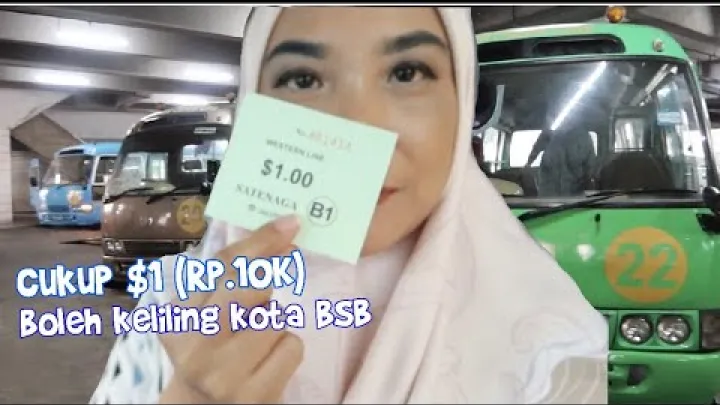
Brunei Tourism reports an average bus fare of about BND1 per ride. On that benchmark, a reported BND2 return trip can keep a beach or ferry-terminal visit inexpensive when the departure and return times fit the itinerary. Bus use can preserve money for accommodation, meals, or activities, although it requires more flexibility than a private ride.
Route information has placed the airport-to-Serasa journey at approximately 35 minutes, with reported service intervals in the range of roughly 20–30 minutes. These figures are useful for estimating time and cash, but they should not be treated as a guaranteed schedule. The bus may be a good choice for a daytime beach visit or a flexible transfer, while a fixed ferry departure requires more careful timing.
Before connecting a Bandar or airport transfer with a fixed ferry departure, check the current bus schedule and fare. Allow time for waiting, walking, luggage, and any delay. The value of a BND1 ride disappears if a missed connection creates a last-minute taxi, overnight stay, or changed ferry booking.
Taxi, Ride-Hailing, and Car Rental
Reported DART fare examples have included a BND5 minimum fare, a per-kilometre charge, and an airport surcharge. These figures are best used to understand how a private ride can exceed the cost of a bus, not as a fixed quote for every journey. The distance, pickup point, airport surcharge, waiting time, and current fare structure can all affect the final amount.
For a rental car, Brunei Tourism gives a planning benchmark of about BND60–100 per day. For one traveler, that is a substantial fixed daily cost before fuel and other conditions. For two people, the benchmark is about BND30–50 each; for four people, it is about BND15–25 each before fuel, insurance, parking, deposits, or other rental charges. Sharing changes the calculation, but it does not remove the need to check the rental terms.
At a reported BND5 minimum private fare, a single traveler pays the full minimum, while two people could divide it to BND2.50 each and four people to BND1.25 each if the same fare covers the group. The actual ride may be higher because of distance and surcharges. Compare the fixed daily rental cost with the lower cash cost but greater schedule dependence of buses, and include parking, insurance, deposits, fuel, and rental conditions in the comparison.
Ferry Costs Between Muara and Labuan
The Labuan crossing is a one-off cost that can be large compared with an ordinary low-cost Brunei day. A reported fare example from Asocialnomad lists about BND15 per adult when buying at the terminal and BND17.15 for an online ticket. These are dated or operator-specific benchmarks, not a promise of the current fare. On those examples, a return crossing would be about BND30 or BND34.30 before other costs.
Add local transport to and from Serasa Ferry Terminal, possible booking or printing charges, meals during the crossing day, and any overnight stay made necessary by departure or arrival times. If the ferry is part of a longer itinerary, keep its cost in a separate line rather than dividing it across every day. This shows whether the crossing is affordable as a trip addition instead of making the daily Brunei budget appear higher than it normally is.
Before committing to the crossing, verify the current ferry fare, timetable, booking process, port charges, printing requirements, passenger documents, and departure times with the terminal or operator. Do not choose an online or terminal purchase method solely from an older price comparison.
Free and Paid Things to Do
Muara and Serasa are useful for a budget itinerary because a day outdoors does not need to include an expensive attraction. The main budgeting question is whether the visit remains self-guided or adds equipment, a boat, a guide, or a private transfer. Free admission also does not mean zero spending once transport, food, drinks, parking, and facilities are considered.
Low-Cost Beach and City Days
Muara Beach and Serasa Beach are the main local budget anchors. The available descriptions do not identify a standard admission charge for ordinary beach access, so travelers can treat the beaches as having no listed admission fee for planning purposes. That wording is different from a guarantee that every access point, facility, parking area, or special event will always be free.
A low-cost beach-day template can include:
- Bus or shared transport from the selected accommodation base.
- A local meal, snacks, and water brought from a shop or market.
- Self-guided time at the beach without hired equipment or a boat.
- A small allowance for parking, facilities, or optional purchases if they apply at the access point.
A beach visit can be combined with free or low-cost sightseeing in Bandar Seri Begawan when the transport pattern is efficient. The activity line may remain small, but the full day still includes the cost of reaching each place. Water-taxi trips, mangrove experiences, and organized city tours should be listed separately as paid activities rather than assumed to be part of a free city day.
Water Sports, Diving, and Private Tours
Water sports and dive-related activities around Serasa can become the largest part of a daily budget, even when the beach itself has no listed admission fee. The available evidence does not provide a reliable current standalone price list for diving, equipment rental, boat trips, or private tours. Oceanic Quest Dive Shop is a local operator name travelers may encounter, but it should be treated as a contact point rather than as evidence of a current package price.
Some activity packages may combine accommodation, meals, boat trips, equipment, and several activities. Such a package cannot be compared directly with a normal hotel night or a free beach day. Ask for a current written quote that clearly states:
- Equipment, tanks, safety gear, and any equipment rental limits.
- Boat, fuel, pickup, transfer, or ferry-terminal costs.
- Meals, accommodation, drinks, and other inclusions.
- Guide services, instructor requirements, activity duration, and number of sessions.
- Weather arrangements, cancellation conditions, deposits, and refund rules.
Request the quote directly from the operator and keep the activity cost as a separate budget line. Do not import generic regional diving prices and present them as Muara prices. If the quote is unclear about equipment, meals, transfers, guides, or cancellation conditions, the activity should be treated as a high-uncertainty expense.
How to Save Money in Muara
The most effective saving tactics in Muara involve decisions made before booking: choosing the right base, limiting private transport, using local food, and separating occasional splurges from ordinary daily spending. The goal is not to choose the lowest price in every category, but to avoid paying repeatedly for convenience that the itinerary does not need.
Choose a Base That Matches Your Priorities
Compare the total itinerary rather than the room price alone. A cheaper room in Bandar Seri Begawan may lose its advantage after repeated trips to Serasa, while a more expensive room near the ferry may save a private transfer and reduce the risk of a difficult early departure. The right choice changes with trip length, ferry timing, group size, and the number of planned water activities.
- Lowest room cost: Start with Bandar's broader accommodation market, then add each planned Muara or Serasa transfer.
- Ferry convenience: Consider staying closer to Serasa when an early or fixed departure makes a long transfer unattractive.
- Food choice: Favor Bandar when access to markets, supermarkets, cafés, and varied restaurants matters every day.
- Beach or activity access: Consider Muara or Serasa when most days will be spent nearby and repeated transport would be wasteful.
Sharing changes the result. A room, vacation rental, taxi, or rental car that looks expensive for one person may be reasonable for four. Conversely, a solo traveler may save more by staying near a planned activity than by splitting a distant room price with nobody.
Use Local Transport and Low-Cost Food
Prioritize saving tactics by their likely effect on the full trip:
- Use buses when the schedule fits and the journey does not put a fixed ferry or paid activity at risk.
- Use local meals and market food, including Gadong Night Market when a Bandar visit is already planned.
- Group errands, meals, and city sightseeing so that one trip does more than one job.
- Reserve cafés, taxis, ride-hailing, and private transfers for occasions when they provide clear value.
- Bring water and suitable snacks to a beach day, or use a kitchen-equipped rental when the room and grocery location make self-catering practical.
These choices work together. A bus trip to Bandar may be worthwhile if it combines groceries, dinner, and another activity. A separate private ride for each meal is less efficient. At the same time, a small saving is not worthwhile if it creates a missed ferry, an emergency taxi, or an unplanned overnight stay.
Control Paid Activities and Date-Sensitive Costs
Accommodation availability, weekends, local events, and peak travel periods can change the options available on a particular date. The available evidence does not support a fixed Muara seasonal surcharge, so compare the actual dates rather than applying a universal percentage. A property or activity with a low average price may not be available when you travel.
Build the itinerary using three day types:
| Scenario | Accommodation | Food | Transport and activities |
|---|---|---|---|
| Low | Shared or simple room | Local meals and market food | Buses and beach time |
| Typical | Private room | Mixed local meals and cafés | Bus plus occasional private ride or modest activity |
| High | Comfortable hotel | Frequent cafés and restaurants | Rental car or private rides plus paid activities |
Keep ferry tickets, diving, private tours, and car rental outside the ordinary daily allowance. When a date-sensitive price is uncertain, use the upper end of the relevant range until you have a current quote. Check accommodation availability, ferry fares and schedules, rental conditions, and activity prices directly for the dates you intend to book.
Currency, Payment, and Final Budget Checklist
A good Muara travel budget should be easy to use during the trip. Keep local examples in BND, separate one-off costs from daily spending, and carry a payment method that works for both established businesses and small purchases. This makes the budget more reliable than a single converted number shown before departure.
Plan in Brunei Dollars
The Brunei dollar, written as BND, is the practical currency for local budgeting. It is pegged at parity with the Singapore dollar, so the two currencies have the same face value for the peg. Keep bus fares, taxi examples, market items, ferry benchmarks, and local quotes in BND rather than converting every amount into another currency.
Some accommodation and travel sources report prices in US dollars, while cost benchmarks may use Singapore dollars. Those figures are useful for comparison but should not be treated as guaranteed local quotes. When building the final budget in euros, pounds, US dollars, or another currency, check the current exchange rate and allow for the rate and fees used by your card provider or cash exchange service.
Cash, Cards, and Small Purchases
Cards may be practical at larger hotels, malls, and established businesses. Buses, small stalls, markets, and some Serasa-area purchases may be more likely to require cash or may not accept every international card. A homestay, dive operator, or rental provider may also prefer cash, an online transfer, or a specific payment platform.
Carry sufficient BND before an early ferry or a trip to a less commercial area instead of relying on a last-minute ATM. Confirm with the accommodation and activity provider whether international cards, online transfers, or cash are accepted. Ask your bank about foreign transaction fees, cash withdrawal fees, daily limits, and card notification requirements; do not add an assumed fee to the budget when the amount depends on your bank.
Build a Flexible Muara Budget Before Booking
Use this checklist before confirming the trip:
- Nightly accommodation cost, taxes, deposits, cancellation terms, and the number of people sharing the room.
- Food and drink allowance, including breakfast, cafés, snacks, market meals, and water.
- Local transport between Bandar Seri Begawan, Muara, Serasa, the accommodation, and the ferry terminal.
- One-off ferry tickets, booking or printing costs, port charges, and possible overnight costs.
- Activity fees for diving, water sports, boats, private tours, equipment, guides, and transfers.
- Payment, exchange, withdrawal, parking, fuel, insurance, rental, and other trip-specific fees.
- A contingency amount for uncertain prices, changed transport, or an unplanned meal or transfer.
Ask what is included in each room rate, activity package, ferry ticket, and transfer before comparing options. Then choose the daily tier that matches the selected base: about US$20–35 for a strongly budget-focused plan, US$44–85 for a mid-range plan, or US$88–180 for a comfortable plan. Add ferry, diving, private-tour, and rental-car costs separately rather than hiding them in the daily average.
Muara can support a low-cost trip when travelers use local food, buses, and beach time. Limited nearby lodging, repeated transfers, and specialized activities require more careful planning. The strongest budget is therefore the one that matches the base, the ferry schedule, and the number of paid activities instead of simply choosing the lowest advertised room price.
Select area
Create a post
Posting is free and no registration is required.