Brunei Major Cities: Main Urban Centres, Population and Roles

Brunei has a small, closely connected urban system rather than a long list of large cities. For most readers, the main places to know are Bandar Seri Begawan, Kuala Belait, Seria, and Tutong, with Muara and Bangar adding important port and district-centre roles. This guide explains which places are municipal centres, why population comparisons can be difficult, and what each town means for administration, business, culture, and travel. It also separates the capital's national role from the different functions of Brunei's smaller towns.
What Counts as a Major City in Brunei?
The term “major city” needs careful use in Brunei. The country is divided into districts and smaller administrative areas, and its settlements are often described as cities, towns, municipalities, villages, or mukim centres depending on the context. A useful list should therefore combine formal status with each place's real-world importance.
City, Town, Municipality, and Significant Settlement
Bandar Seri Begawan is Brunei's capital and the place most clearly described as a city. It is the national centre for government, major public institutions, commerce, and cultural life. For a reader asking how many cities Brunei has, the practical answer is that Bandar Seri Begawan is the principal city, while the country also has several important municipal towns.
Kuala Belait, Seria, and Tutong are the other core municipal centres commonly included in a Brunei cities list. Kuala Belait and Seria share municipal administration through the Kuala Belait and Seria Municipal Department. Tutong is a smaller municipal district capital. Together with Bandar Seri Begawan, these four places form the clearest formal core for comparing Brunei's urban centres.
Other settlements can still be major in a functional sense. Muara is important because of its port and industrial activity, while Bangar is the administrative centre of Temburong District. Neither should automatically be treated as one of the four main municipal cities. In Brunei, population size is only one measure of importance: administration, the oil and gas economy, district services, cultural identity, and access to different parts of the country also matter.
How to Read Population Figures Without Mixing Boundaries
Population figures for Brunei's towns need a boundary label. A town or city proper is the settlement within a defined local boundary. A municipality may cover a larger administrative area. A mukim is a subdistrict that can include multiple villages and built-up areas, while a district is much larger still. An urban area may join neighbouring settlements into one continuous built-up zone.
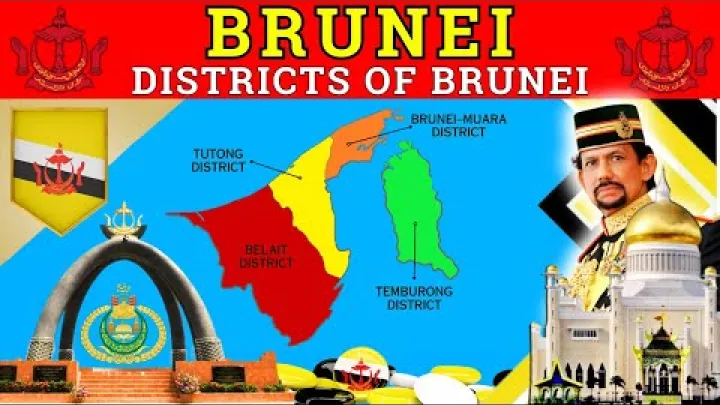
This is why a figure for Bandar Seri Begawan municipality can be very different from a figure for the wider Brunei-Muara urban area. The same issue applies around Kuala Belait and Seria, where nearby settlements may be counted with a broader urban area but not with a town proper. A district total is particularly unsuitable as a town population: Tutong District, for example, includes many communities beyond Tutong Town.
The clearest available municipality comparison reports Bandar Seri Begawan municipality at 82,437 people in 2021. The City Population data series also shows earlier municipal totals for the capital, illustrating that even a single place can be reported differently over time and by boundary. Use dated figures as context, not as an absolute ranking of every settlement. Official district totals are useful for regional context, and current figures can be checked through DEPS population statistics.
The Four Municipal Centres in Brunei at a Glance
The following four places are the most useful starting point for understanding Brunei's municipal urban network. They are not interchangeable: the capital dominates national administration, while the western towns have strong links to the energy economy and Tutong serves a more local district role.
A Population-Aware List of the Main Municipalities
Bandar Seri Begawan comes first because it is the capital, Brunei's largest city by the usual municipal comparison, and the country's main concentration of national services. Its 2021 municipal population of 82,437 should be read as a municipality figure, not as a total for every surrounding built-up community.
Kuala Belait is the administrative centre of Belait District and an important western town. A reported town-proper figure of 4,544 for 2021 indicates the narrow scale of the defined town, not the full population of the wider Belait urban setting. Seria, nearby in Belait District, had a reported total of 3,625 in 2016 under a different dated source and boundary context. These figures are useful as local indicators but should not be ranked directly against Bandar Seri Begawan's 2021 municipality total.
Tutong is the administrative centre of Tutong District and a municipal town, but a clearly comparable recent town-proper figure is not available in the material used here. Its district population must not be substituted for the town population. This is a good example of why Brunei's major places are better understood through their combined administrative and economic roles than through a single population table.
How Administrative, Economic, Cultural, and Travel Roles Differ
Bandar Seri Begawan is Brunei's national centre. It brings together government ministries, public services, major retail and business activity, museums, mosques, and the country's best-known historic waterfront communities. It is the natural first reference point for visitors, students, and professionals.
Kuala Belait and Seria serve a different urban region. Both are in Belait District, where oil and gas activity has shaped employment, services, and local history. Kuala Belait has district-administration and river-mouth functions, while Seria is especially associated with the oil field that helped define Brunei's modern economy. Their populations may be small by international standards, but their economic importance is substantial.
Tutong is a district capital and local trading centre on the route between the capital area and western Brunei. Muara adds port and industrial context in Brunei-Muara District, and Bangar provides district administration in Temburong. These places are important because of what they connect and serve, rather than because they compete with the capital in urban scale.
Bandar Seri Begawan: Capital and Largest City
Bandar Seri Begawan is the central place in any overview of Brunei's largest cities. It is where national decision-making, daily urban services, royal heritage, and much of the country's visitor-facing cultural infrastructure meet.
Capital and Largest City: The Same Place, Different Lenses
Bandar Seri Begawan is both Brunei's capital and its largest city. “Capital” describes its political function: it is the seat of national government. “Largest city” describes its relative urban scale and concentration of services. In Brunei, both descriptions point to the same place rather than to separate political and commercial centres.
The city is in Brunei-Muara District, the country's most populous district. Its municipality should still be kept separate from the larger built-up area around the capital. A person commuting into the capital, living in a nearby settlement, or using services in the city may be part of the wider urban region without living within the municipality itself.
For a dated benchmark, the municipality recorded 82,437 residents in 2021 in the City Population compilation. This is a useful comparison point, but it should not be replaced with an estimate for a wider urban area or presented as a national total. The distinction matters most when comparing the capital with smaller, tightly bounded towns such as Kuala Belait or Seria.
Why Bandar Seri Begawan Matters to Visitors and Residents
For residents, Bandar Seri Begawan is the main location for national institutions, professional services, higher-level shopping, public administration, and many cultural venues. For visitors, it offers the most direct introduction to Brunei's royal history, Islamic architecture, and public life.
The Brunei River is central to the city's landscape. Along it, Kampong Ayer represents a long-established water-settlement tradition and remains one of the most recognisable parts of the capital experience. Major mosques, the Royal Regalia Museum, central market areas, and waterfront views help explain why the city is more than an administrative headquarters: it is also Brunei's strongest cultural reference point.
Bandar Seri Begawan is usually the best base for a first visit or an initial period of study or relocation. It gives the easiest access to national services and a broad view of everyday Bruneian life. The city also makes a useful starting point for understanding how the rest of the country differs, from Belait's energy towns to the more rural character of Temburong.
Kuala Belait: Belait District's Municipal and Oil-Support Centre
Kuala Belait is one of Brunei's most important western towns. Its role comes from district administration, its setting near the Belait River, and its connection to the regional economy that developed around oil and gas.
Kuala Belait's Status, Setting, and Population Scope
Kuala Belait is a municipal town and the administrative centre of Belait District. It stands near the mouth of the Belait River on Brunei's western coast. This location gives the town a practical role in district services, local commerce, and the wider corridor that links communities in western Brunei.
Its reported 2021 town-proper population of 4,544 reflects a defined town boundary. It does not represent the whole district, and it should not be assumed to cover every nearby settlement that forms part of the wider urban pattern. Belait District itself is much larger than Kuala Belait and includes Seria as well as other communities.
Kuala Belait's significance is therefore better understood through its role than through its town-proper number alone. It is a district seat with a developed service function, close connections to Seria, and a place within Brunei's most energy-oriented region. This combination gives it a larger regional presence than a narrow population figure might suggest.
Kuala Belait's Oil, River, and Local Travel Role
Kuala Belait supports the broader oil and gas economy through district services, local businesses, housing, and commercial activity. It should not be confused with an oil field itself: the town's importance includes administration and everyday urban life, while specific industrial sites may be elsewhere or have controlled access.

The Belait River helps define the town's setting and its quieter character. Riverfront areas, parks, local commercial streets, and district heritage provide a different experience from the capital's denser concentration of national landmarks. For travellers, Kuala Belait can be a useful stop or base for understanding Belait District rather than a replacement for Bandar Seri Begawan's cultural and institutional role.
Its connection with Seria is especially important. The two towns are close in regional terms and share municipal context, but they have distinct identities: Kuala Belait is the district-administration centre, while Seria is the town most strongly associated with Brunei's petroleum history.
Seria: Brunei's Compact Oil Town
Seria is a compact town with national importance that far exceeds its physical size. Its identity is inseparable from the development of Brunei's petroleum industry and from the communities and services that grew around that industry.
Seria's Municipal Status, Population, and Setting
Seria is a municipal town in Belait District and is closely linked administratively with Kuala Belait. It sits on and around the Seria oil field area, giving it a strong relationship with the industry that has been central to Brunei's modern economy. Its compact town form is part of its character: this is not a large metropolitan centre, but a specialised industrial town with a highly significant national story.
A reported population total of 3,625 for 2016 is useful only when kept with its year and stated scope. It should not be treated as a current figure, nor compared directly with a later municipal count for Bandar Seri Begawan. Nearby settlements, changing local boundaries, and different statistical units can all affect how a place appears in a population list.
For readers comparing Brunei's biggest cities, Seria shows why economic relevance cannot be reduced to population. Its role in energy production, technical work, housing, community life, and national development makes it one of the country's major urban places even though its town-proper population is modest.
Seria's Industrial Heritage and Cultural Role
Oil was first struck in the Seria area in 1929, and the Seria oil field became a foundation of Brunei's modern economic history. The town's streets, workplaces, community institutions, and local identity developed in relation to this long-term energy activity. Understanding Seria helps explain why oil and gas have such an important place in Brunei's national economy.
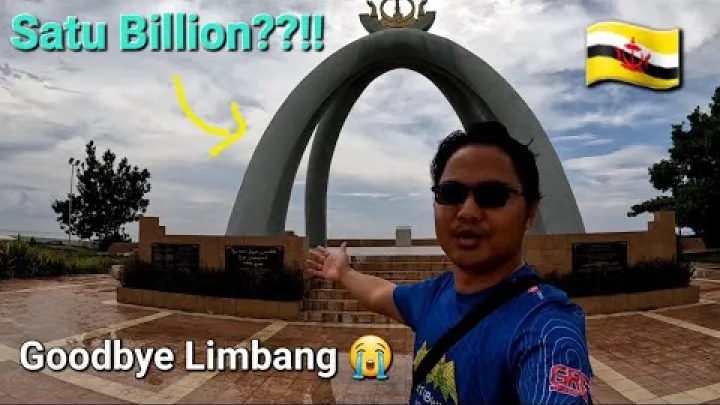
The Billionth Barrel Monument is a visible marker of this industrial heritage. Seria Energy Lab is another named point of interest associated with energy learning and local history. Together, they can provide useful context for visitors interested in industry, science, and the history of national development.
Seria should be approached as a specialist destination rather than a generic sightseeing centre. Its appeal is the connection between industrial heritage, local religious and community life, and Brunei's wider economic story. Access to industrial facilities, corporate sites, and individual venues is not automatic, so visitors should treat public monuments and independently accessible spaces as separate from operational industry.
Tutong: Municipal District Capital and Regional Trading Hub
Tutong offers a different model of urban importance. It is neither the national capital nor an oil-centred town; instead, it serves as a district capital and local commercial centre for the communities around it.
Tutong's Municipal Status, Demography, and Geography
Tutong Town is a municipal town and the administrative centre of Tutong District. It lies along Brunei's east-west road corridor and is associated with the Tutong River. These connections help explain its role as a service centre between the capital region and the western districts.
Population terminology is particularly important here. Tutong Town is not the same as Mukim Pekan Tutong, and neither is the same as Tutong District. The district had a population of 47,210 in 2021, according to the district figures shown by DEPS, but that total includes settlements far beyond the town. It must not be presented as the population of Tutong Town.
The town's prominence comes from its administrative function, local services, and position within the national road network. A smaller urban scale does not mean that it is unimportant: for people living in the surrounding district, Tutong is a key point for public services, shopping, and everyday connections.
Tutong's Administrative, Trading, and Regional Role
Tutong is a centre for district government, local commerce, and services used by surrounding communities. Its trading role is practical rather than metropolitan. The town supports daily needs and administrative tasks for a broad local area, making it important to residents even though it has a lower national profile than Bandar Seri Begawan.
Its identity differs clearly from the other main municipal centres. Bandar Seri Begawan concentrates national administration and cultural institutions. Kuala Belait and Seria are shaped by Belait District's energy economy. Tutong is more closely defined by district administration, local trade, and its role as a link between communities along the country’s main road corridor.
For visitors or new residents, Tutong is best understood as a quieter district-centre experience. It can offer a useful view of everyday life outside the capital and energy towns, especially for those interested in local services, river geography, and the changing character of Brunei's districts.
Significant Towns Outside the Main Municipalities
A broader guide to cities in Brunei should also mention Muara and Bangar. They are significant towns with clear functional roles, but they should not be placed in the same formal municipal grouping as Bandar Seri Begawan, Kuala Belait, Seria, and Tutong.
Muara: Port and Industrial Town Outside the Municipal List
Muara is a notable settlement in Brunei-Muara District with major port and industrial importance. Its role is tied to maritime activity, cargo handling, logistics, and the coastal economy. For businesses, students, and residents interested in how goods move through Brunei, Muara is an important place to recognise.
Functional importance does not automatically give Muara the same municipal classification as the four centres in the main comparison. It is better described as a significant port town than as a separate major city in a simple population ranking. This distinction prevents nearby industrial activity, coastal attractions, and the town itself from being merged into one misleading category.
Include Muara when looking for a wider list of Brunei towns, especially for its port context. Do not assume that its operational facilities are visitor attractions or that it has a clearly comparable town-proper population figure for ranking against the municipalities.
Bangar: Temburong's Administrative and Gateway Town
Bangar is the administrative centre of Temburong District, Brunei's eastern district. It is a small town, but its role is important because it provides a local administrative base and a practical starting point for understanding the district. Bangar should be distinguished from Temburong itself, which includes a much wider area and many natural landscapes beyond the town.
A reported town-proper population of 451 in 2021 illustrates Bangar's small scale. That figure must not be confused with the population of Temburong District, which is far larger than the town alone. In a conventional population ranking, Bangar would sit well below the main municipal centres, but its district role gives it continuing importance.
For travellers and researchers, Bangar is best understood as a gateway town for Temburong rather than as the destination's wilderness area itself. The town provides an urban reference point, while forests, waterways, and other district destinations lie beyond its compact centre.
Compare Brunei's Cities by Purpose
Choosing a place in Brunei is usually easier when based on purpose rather than on a narrow list of population totals. The country’s towns are close enough in national terms that their roles often matter more than their size.
Choosing a City for Culture, Industry, Administration, or Access
| Place | Best known for | Useful for |
|---|---|---|
| Bandar Seri Begawan | Capital, culture, national services | Government, heritage, first visits |
| Kuala Belait | Belait administration and services | Western Brunei and district context |
| Seria | Oil history and energy identity | Industrial heritage and local research |
| Tutong | District administration and trade | Everyday regional life |
| Muara | Port and industrial activity | Maritime and logistics context |
| Bangar | Temburong administration | Eastern district access |
Choose Bandar Seri Begawan for the strongest concentration of national culture, public institutions, royal heritage, and visitor services. Choose Kuala Belait or Seria when the focus is Belait District, the oil and gas economy, industrial history, or western Brunei. Their complementary roles make it useful to consider both rather than treating them as duplicates.
Tutong suits readers interested in district administration and local commerce outside the capital. Bangar is the relevant town for Temburong administration and local access, while Muara matters most for port and industrial context. None of these roles requires an oversimplified claim that one place is universally “better”; the right town depends on what a visitor, student, worker, or researcher needs to do.
What to Verify Before Using Population or Travel Information
Use a short checklist before relying on a population number or making a trip between Brunei's towns:
- Check the publication year of the figure.
- Identify whether it covers a town proper, municipality, mukim, district, or wider urban area.
- Do not compare totals from different boundary types as if they were a single ranking.
- Confirm the current municipal information for the place you plan to visit or use for official purposes.
- Confirm current road and bridge access, public transport options, attraction opening hours, and operator availability directly with official or local providers.
This final step is especially important for travel to smaller or more remote areas, including Temburong. Brunei's urban system is small and interconnected, so choosing by function and current access is usually more useful than choosing solely by a population list.
Conclusion
Bandar Seri Begawan is Brunei's capital and largest city, but the country's urban story also includes Kuala Belait, Seria, and Tutong as major municipal centres with distinct roles. Muara and Bangar add essential port and district-administration functions outside that core group. When comparing Brunei's cities, use clearly defined population boundaries and look beyond size to understand each place's contribution to government, energy, trade, culture, and access across the country.
Select area
Create a post
Posting is free and no registration is required.