Bandar Seri Begawan Budget: Daily Costs & Saving Tips

A Bandar Seri Begawan budget is easier to control when you separate an ordinary city day from accommodation, arrival costs, and optional nature trips. As a rounded planning guide, allow about BND 40–60 per person for a budget day, BND 75–110 for mid-range travel, and BND 200–335 or more for a comfortable day with a private room and paid experiences. These are planning ranges rather than fixed city prices, and they exclude flights unless stated otherwise. This guide explains what each range includes, where prices can rise, and how to build a realistic three-day Brunei travel budget.
Bandar Seri Begawan Budget at a Glance
The largest differences between a cheap and expensive Bandar Seri Begawan trip usually come from the room, taxis or private transport, and guided activities. Local meals, walking, buses, markets, and several central sights can keep an urban day manageable. A short trip can still become expensive if airport access, a private boat, a resort stay, or a Temburong excursion is added to the daily city costs.
Daily Budget Ranges for Budget, Mid-Range, and Comfortable Travel
Use the following figures as a first-pass budget in Brunei dollars. The amounts are per person per day. The budget column assumes a dorm bed or a low-cost room shared by two people. The mid-range column assumes two people sharing a private room. The comfortable column assumes one person pays for a good private room, uses taxis more often, and includes a larger activity allowance. A couple can reduce the comfortable accommodation amount per person by sharing the room cost.

| Daily cost | Budget | Mid-range | Comfortable |
|---|---|---|---|
| Accommodation | BND 20–25 | BND 40–55 | BND 90–150 |
| Food | BND 12–17 | BND 22–30 | BND 45–70 |
| Local transport | BND 3–8 | BND 5–13 | BND 20–40 |
| Activities | BND 5–10 | BND 8–12 | BND 45–75 |
| Typical daily total | BND 40–60 | BND 75–110 | BND 200–335+ |
For international comparison, the first two bands correspond broadly to about US$28–45 and US$57–80, while the comfortable band is roughly US$150–250 or more. Those comparisons are only approximate because exchange rates change. Keep the main worksheet in BND and label each amount as per person, per room, per bed, or per vehicle.
The activity allowance is not a compulsory ticket cost. A day built around the waterfront, markets, mosque exteriors, and a park can use less. The allowance gives room for a museum, a basic boat crossing, a café stop, or another small paid experience. A full Ulu Temburong or diving package should be added separately rather than hidden inside the ordinary comfortable daily range.
What the Daily Ranges Include and What Pushes Costs Up
The cheapest practical city day combines a dorm or shared room, simple local meals, walking, daytime buses, and mostly free or low-cost sights. The mid-range version adds a private room shared by two people, a mix of local restaurants and cafés, and occasional ride-hailing. Comfortable travel usually means a private room, more restaurant meals, more taxis, and a planned paid activity. It does not automatically mean a luxury resort or a private guide every day.
Accommodation creates the first major swing because one private room is charged per room while the daily table is per person. Optional activities create the second. A private boat, guided wildlife trip, diving day, or resort excursion may cost more than several ordinary city days combined. Weekend demand, events, limited room availability, restaurant choices, and last-minute transport can also raise the total, but there is no single percentage that applies to every property or date.
Keep flights, airport transfers, regional buses, ferry connections, and cross-border travel outside the on-the-ground average. A traveler can spend little each day in the capital but still have an expensive two- or three-day trip when access costs are divided across a short stay. Use this simple formula: total trip cost = city days + accommodation differences + access costs + optional excursions + one-off purchases.
Accommodation Costs in Bandar Seri Begawan
Room prices should be compared by final cost and by how many people use the room. A low headline rate may be a dorm bed, while a slightly higher private room can be better value for two travelers. Location, breakfast, transfers, cancellation rules, and taxes can matter as much as the nightly number.
Hostels, Dorms, and Budget Guesthouses
Hostel and guesthouse listings are useful for setting a lower boundary, but they are not a permanent citywide average. A Momondo listing snapshot places Bandar Seri Begawan hostel rates around US$23 per night, with the cheapest listings around US$20. Treat those amounts as a listing example rather than a current guaranteed rate. Check whether the price is per dorm bed, whether taxes are included, and whether the displayed currency is the currency charged at checkout.
Named options such as Miniinn Guest House and Co.Living Hostel Bandar can be useful comparison points when searching for a budget stay. Their value depends on the room type available on your dates. A dorm bed may suit a solo traveler, while a private guesthouse room may be more comfortable for a couple or for anyone carrying work equipment. A room that appears cheap in a foreign currency can also have a fixed conversion policy, so confirm the BND equivalent and the payment method before treating it as part of the final budget.
For a budget worksheet, use the room total first and then divide it by the number of occupants. For example, a BND 50 private room shared by two people contributes BND 25 per person, while the same room occupied alone contributes the full BND 50. This simple distinction prevents a couple's room rate from being presented as a solo travel price.

Mid-Range Hotels and Higher-End Options
The Capital Residence Suites provides a useful dated example rather than a guaranteed typical rate. An Expedia snapshot dated August 11, 2026 shows a one-night starting price of US$46 for two adults, including taxes and fees, under the conditions shown in that listing. The date, room availability, cancellation policy, and booking conditions matter, so do not use this single starting rate as a citywide average.
The Brunei Hotel is another central comparison point. Higher-priced city hotels such as the Radisson may appeal to travelers who value services and location, while The Empire is a resort-oriented comparison rather than a normal city-centre benchmark. Exact prices for these properties should come from the same travel dates and the same final-payment screen.

Mid-range value often comes from what the rate includes. Free Wi-Fi, breakfast, airport transfer, a larger room, flexible cancellation, and a walkable location can reduce other daily costs. A lower room rate may be less useful if it requires several taxi trips or paid breakfasts. Compare the whole stay, not just the number beside the room name.
Timing and Booking Terms That Change the Nightly Total
Rates can change when a property has fewer rooms available, when an event increases demand, or when a booking is made close to the travel date. Weekdays and weekends may also price differently, but the pattern is property-specific. Flexible cancellation can be worth more than a small discount if plans may change, while a non-refundable rate should only be used when the itinerary is firm.
Compare the same dates, room type, occupancy, and cancellation terms. Include taxes, breakfast, extra guests, airport shuttles, resort fees if shown, and any payment surcharge. For an illustration, a BND 70 room with breakfast and a transfer may cost less overall than a BND 60 room that requires a paid breakfast and a late taxi. The lower advertised rate is not always the lower trip cost.
Check the hotel's own website and at least one booking platform, then compare the total checkout amount. Record the final BND cost, not only the nightly headline. This method is especially important for a short stay because one breakfast package or one transfer can have a large effect when spread over only two or three nights.
Food and Drink Prices in Bandar Seri Begawan
Food spending can stay moderate when local meals are the base of the plan. It rises quickly when every meal is at a hotel, mall restaurant, or café. Breakfast included with the room can shift the food budget, so count meals rather than applying one fixed daily food figure.
Low-Cost Meals at Markets and Local Eateries
Budget travelers can build meals around nasi katok, food courts, small local eateries, Gadong Night Market, and Kianggeh Market. These places also make it easier to buy a snack or a small meal instead of paying for a large restaurant serving. Market food is useful for variety, but a market item, a complete meal, and a drink are separate budget lines.

For a first-pass worksheet, allow roughly BND 3–7 for a simple local meal, BND 1–4 for a snack or drink, and BND 6–12 for a fuller market meal with more than one item. These are flexible planning allowances, not guaranteed prices for every stall or menu. Portion size, ingredients, location, and the choice of drink can move the total.
A budget food day can therefore fit within about BND 12–17 when breakfast is simple and meals are local. If breakfast is not included, add it separately. Keep a little room for water, coffee, or a café stop, because small purchases repeated several times can push a low food budget toward the mid-range.
Restaurants, Cafes, and Self-Catering
Simple restaurants usually cost less than hotel dining, but a mid-range traveler can combine one local meal with a café or mall meal and remain within a BND 22–30 daily allowance. A comfortable traveler may reserve BND 45–70 for more frequent cafés, larger meals, hotel restaurants, or drinks. Use these as planning bands and replace them with current menu prices when choosing specific venues.

Self-catering can reduce spending only when the accommodation has practical kitchen access. A room with a refrigerator but no cooking equipment may support breakfast items but not full meal preparation. Grocery shopping also takes time and may not be worthwhile for a short visit. For two or three nights, one included breakfast and two local meals may be simpler than buying ingredients that will be left unused.
To control food costs without removing local experiences, choose the meal pattern deliberately. Budget travel can use markets and simple eateries most of the time. Mid-range travel can mix local food with selected cafés. Comfortable travel can include hotel dining, but should still identify which meals are part of the experience and which are merely convenient.
Transport Costs in and Around the City
Bandar Seri Begawan is compact enough for some central sightseeing on foot, but the distance between accommodation, markets, commercial areas, and outlying attractions can make transport important. The lowest-cost plan groups nearby places and uses public transport during its operating hours, then reserves ride-hailing or taxis for gaps in the schedule.
Walking and Public Buses
Walking can connect the central waterfront, nearby markets, the Royal Regalia Museum, and views of Sultan Omar Ali Saifuddien Mosque. It can also reduce the number of short paid trips in a day. A bus is more useful for longer daytime connections, especially when the accommodation is outside the central area.

A local transportation guide reports bus fares starting at BND 1 and an operating window of about 6:30 a.m. to 6:00 p.m. The example is described by the Brutourbn transportation guide. Before building an itinerary around buses, check the current fare, operating hours, and the route or stop information locally. For a late-evening return, keep a Dart or taxi option in the budget rather than assuming a bus will still be running.
For cost control, group the waterfront and central museums together, use one bus journey for several nearby stops, and avoid paying for repeated short transfers. A budget city transport allowance of BND 3–8 per day is most realistic when walking and buses do most of the work. A day with several ride-hailing trips belongs closer to the mid-range allowance.
Dart, Taxis, Water Taxis, and Car Rental
Dart and taxis provide convenience when buses are unavailable, when luggage is involved, or when several people are sharing one ride. Their cost depends on distance, time, demand, pickup location, and the number of passengers. Use the app or the driver’s quote for the actual journey rather than placing one universal taxi fare in the budget.
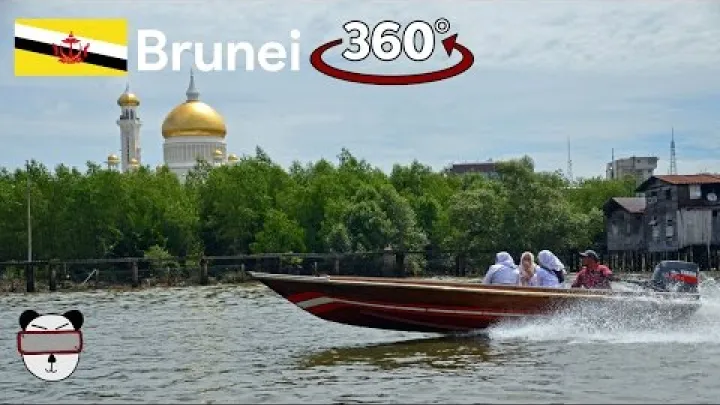
A basic water-taxi crossing to Kampong Ayer should be treated as functional transport. A private boat, sightseeing trip, wildlife route, or longer river ride is an activity as well as a transport cost. Ask whether a quote is per passenger or per boat, whether waiting time is included, and whether the boat returns to the original landing point. If a boat costs BND 20 in total and four travelers share it, the transport component is BND 5 each; if one person hires it alone, the result is very different.
Rental cars require a separate calculation for the rental, fuel, insurance, deposit, parking, and any other contract charges. For a short city stay, a car may add cost without adding much value. It becomes easier to justify when the plan includes several places outside the capital, when public transport does not match the schedule, or when mobility needs make independent transport important.
Airport and Intercity Access as Separate Costs
Do not combine the cost of reaching Bandar Seri Begawan with the normal daily city average. Add flights, the airport-to-hotel transfer, regional buses, ferry connections, or cross-border travel involving Muara as separate lines. The correct amount depends heavily on the departure city, travel date, luggage, booking conditions, and chosen operator.
This separation shows why a low-cost city day does not always produce a cheap short trip. If a traveler stays for two nights, an airport transfer or regional connection is divided across only two daily budgets. A longer stay spreads the same one-off cost more widely.
Use an access-cost line in the worksheet with the actual dated quote: arrival transport + departure transport + regional or border connections. Avoid using an old traveler's total as a current fare. The city budget describes time spent in Bandar Seri Begawan; access costs describe how you enter, leave, or extend the journey.
Free and Paid Things to Do in Bandar Seri Begawan
Many of the most useful city experiences need little or no activity spending, but visitor access is not identical at every site. Keep a small admission buffer and separate ordinary sightseeing from private boats, guided wildlife trips, and diving.
Free and Low-Cost Sights in Bandar Seri Begawan
A low-cost urban activity list can include the waterfront, public markets, Tasek Lama Recreational Park, views of Sultan Omar Ali Saifuddien Mosque, and the exterior of Jame’ Asr Hassanil Bolkiah Mosque. The Royal Regalia Museum can add a cultural focus, but its admission rules should be treated separately from sights that are simply viewed from public areas.
The Brunei Tourism page displays adult and child fee figures, a residents-free statement, and exemption wording for non-residents. Because those pieces of wording should not be combined into one assumed visitor rate, do not describe the museum as definitely free or definitely paid for every traveler. Use the current official attraction page or the notice at the museum to confirm opening hours, admission, visitor status, dress requirements, and access rules before going.
Religious sites may also have different rules for exterior viewing and interior visits. Dress respectfully, follow staff instructions, and do not assume that a public view means every interior area is open. These checks protect both the visit and the budget by preventing a wasted trip outside visiting hours.
Kampong Ayer and Paid River Experiences
Kampong Ayer can fit into a budget itinerary, but the cost depends on what kind of visit you choose. A basic water-taxi crossing is a transport decision. A longer trip with river views, wildlife viewing, palace views, multiple stops, or a private boat is a paid experience and should use the activities allowance.
Ask four questions before accepting a boat quote: Is the price per person or per boat? How long is the trip? Is it shared or private? Are waiting time, stops, and the return crossing included? These details can change the per-person result more than the first number mentioned by the operator.
A traveler using a basic crossing and walking around the village can keep the visit close to the budget tier. A couple or group that shares a private boat may obtain better value per person, but the total should still be recorded as an activity if the boat is arranged for sightseeing rather than a simple crossing.
Ulu Temburong, Diving, and High-Cost Add-Ons
Ulu Temburong, diving, and other guided nature activities should be modeled as optional high-cost additions. They are not normal daily expenses in Bandar Seri Begawan. A short city itinerary can remain in the budget or mid-range tier until one of these experiences is added.
Package prices are difficult to compare without an inclusion list. One quote may include transfers, boats, guides, park access, meals, equipment, or accommodation, while another may cover only the main activity. The headline amount may also be per person, per group, or based on a minimum number of participants.
Request a written quote from a licensed tour or dive operator. It should show transfers, permits or access fees, meals, equipment, guide services, meeting points, and cancellation terms. Keep the excursion outside the ordinary city budget, then add its full quoted cost to the trip total. If a BND 150 activity is added to a three-day trip, it increases the three-day average by BND 50 per person before any other changes, which shows why a single splurge day can reshape the headline daily cost.
Where to Base Yourself Across the City and Nearby Areas
The cheapest nightly room is not always the cheapest base. Compare the room price with daily transport, time, meals, and the purpose of the trip. A central base may save transfers, while a less central or resort-oriented base may make sense when its nearby activities are the main reason for visiting.
Central Bandar Seri Begawan for Short Stays
The central waterfront, Yayasan Sultan Haji Hassanal Bolkiah Complex, Royal Regalia Museum, main bus terminal, and Kampong Ayer access are useful reference points for a short sightseeing stay. A room near these places may make it easier to walk between several activities and reduce daytime transport spending.
Central accommodation is not automatically the cheapest. A higher room rate can be worthwhile if it replaces several taxi rides, avoids a late transfer, and allows a traveler to return easily for a break. For a short visit, calculate room price plus expected daily transport. Compare that combined figure with a cheaper room farther away, rather than ranking locations by the nightly rate alone.
This base works especially well for travelers with only two or three days, people who want to use buses, and visitors focused on central museums, markets, mosques, and the waterfront. It may be less useful for a resort stay or an itinerary built mainly around distant nature activities.
Gadong, Kiulap, Muara, Jerudong, and Temburong Compared
Gadong and Kiulap can suit travelers who value food, shopping, and commercial access. They may offer more nearby dining choices for some itineraries, but the cost of returning to central sights should be included. A lower room rate is only a saving if the extra Dart, taxi, rental, or time cost does not remove the difference.
Muara is more relevant to coastal plans, port-related connections, or an itinerary that includes the surrounding area. It is not automatically a cheaper substitute for a central city base. Jerudong is better matched to resort-oriented travel and leisure facilities than to a compact walking itinerary. A traveler who chooses it for a city visit should price the extra transfers to Bandar Seri Begawan.
Temburong is a separate nature extension, not a normal low-cost base for exploring the capital. Access and activities may be bundled into an organized package, and returning to the city can make the arrangement more complicated. Choose the area that matches the main purpose of the trip, then compare the complete stay and transport cost rather than the room alone.
Payment, Connectivity, and Other Budget Details
Small payment decisions can create friction even when the main travel budget is accurate. Keep local cash for low-value purchases, use cards where acceptance is clear, and separate recurring daily costs from one-off items such as data and airport transfers.
BND Cash, Cards, ATMs, and Fees
Use BND for the main budget and carry enough small notes for buses, markets, small eateries, and many water-taxi situations. Hotels, malls, and larger restaurants are more likely to accept cards, but acceptance is not universal. A card-friendly hotel does not mean that every market stall or transport provider will take the same card.
ATM withdrawals can involve a local surcharge, a home-bank fee, a foreign-exchange markup, or a poor exchange rate. The exact charge depends on the ATM, card issuer, account, and transaction. Keep a small cash reserve for one day of ordinary purchases rather than withdrawing a large amount unnecessarily.
If an ATM or card terminal offers to bill the transaction in your home currency, compare the displayed rate with the local-currency option. Declining dynamic currency conversion and choosing BND can avoid the machine or merchant setting its own conversion rate, although your bank may still apply its own fee. Record bank charges separately from the local price of the meal, ticket, or ride.
SIM Cards, Data, and One-Off Extras
A local SIM, eSIM, or roaming plan is a one-off connectivity cost. Keep it outside the daily food and transport allowance. The right option depends on phone compatibility, trip length, roaming terms, and the price offered by the provider on the travel date. Record the quoted package price before departure rather than assuming that a room's Wi-Fi will cover mapping and transport needs.
Mobile data can support maps, Dart, budget tracking, hotel comparisons, and communication with tour operators. It can also help when a bus or attraction plan changes, but data is not a replacement for carrying BND cash in places that may not accept cards or online payment.
List minor extras separately: airport transfers, café drinks, breakfast differences, paid boat trips, luggage charges, card fees, and connectivity. A two-day trip can be distorted by one large one-off cost, so showing these items separately makes the daily city budget easier to understand.
Final Budget Checklist and Takeaway
Use the ranges as a flexible model, then replace them with the prices that match your dates, room choice, and activities. The following template shows how a three-day stay can look before flights and other access costs are added.
Turn the Ranges into a Three-Day Budget Template
The table is per person. The budget lodging line assumes a dorm bed or a low-cost private room shared by two people. The mid-range line assumes two people sharing a private room. The comfortable line assumes a private room paid by one traveler. The activity line includes a modest allowance for city experiences, not a full Ulu Temburong, diving, or private nature package.
| Three-day cost | Budget | Mid-range | Comfortable |
|---|---|---|---|
| Accommodation | BND 60–75 | BND 120–165 | BND 270–450 |
| Food | BND 36–51 | BND 66–90 | BND 135–210 |
| Local transport | BND 9–24 | BND 15–39 | BND 60–120 |
| Activities | BND 15–30 | BND 24–36 | BND 135–225 |
| Three-day city subtotal | BND 120–180 | BND 225–330 | BND 600–1,005 |
| Flights and access | Add dated quote | Add dated quote | Add dated quote |
The comfortable subtotal can look high because it includes a private-room allowance, frequent paid transport, and several paid experiences. A comfortable city stay with free sights and limited taxis can be lower. Conversely, one guided nature day can make any tier higher. Use the component rows to adjust the total instead of treating the subtotal as a fixed package.
Saving Tactics That Change the Total
- Choose the room carefully. Compare a dorm bed, a shared private room, and a central hotel after taxes, breakfast, cancellation terms, and transfers. Accommodation is usually a larger saving opportunity than small snack purchases.
- Separate splurge days. Price Ulu Temburong, diving, and private boats as optional additions. Keeping one expensive activity visible prevents it from silently inflating every daily estimate.
- Reduce paid transport. Stay near the part of the city you want to explore, group nearby sights, walk central areas, and use daytime buses where they fit the schedule. Use Dart or taxis for deliberate gaps rather than repeated convenience trips.
- Use local food as the base. Choose markets and simple eateries for most meals, then budget selected cafés or hotel meals as experiences. This protects the mid-range and comfortable budgets without removing local dining.
- Share where it is practical. Sharing a private room, taxi, or boat can lower the per-person result. Confirm the total price and what is included before dividing it.
- Keep payment costs visible. Carry small BND notes, use cards selectively, and avoid unnecessary foreign-currency conversion. Track ATM and bank charges separately.
These tactics protect the main cultural experiences. A traveler can still visit Kampong Ayer, see the waterfront and mosques, explore markets, and visit museums while controlling the costs that move the budget most: lodging, private transport, and optional guided activities.
Final Price Check Before You Book
Before confirming the trip, review the budget in this order:
- Record the dated accommodation total, occupancy, taxes, breakfast, transfer, and cancellation terms.
- Set meal assumptions for local food, cafés, hotel dining, drinks, and any included breakfast.
- Allow for walking, buses, Dart, taxis, and late-evening alternatives rather than assuming every journey is free.
- Confirm attraction access, hours, admission, dress requirements, and visitor rules for museums, mosques, and other sites.
- Obtain written inclusions and cancellation terms for any boat, nature, or diving activity.
- Add flights, airport transfers, Muara or other intercity connections, connectivity, ATM charges, and other one-off costs.
- Keep enough BND cash for small purchases even if most accommodation and restaurant payments will use a card.
In direct terms, Bandar Seri Begawan can be manageable for an urban budget stay, especially with shared accommodation, local meals, walking, buses, and free or low-cost sights. Private rooms, frequent taxis, resorts, and guided nature activities can move the trip into a much higher tier. Build a range-based budget in BND, add access costs separately, and recalculate the component totals when your dates or bookings change.
Select area
Create a post
Posting is free and no registration is required.