Brunei National Anthem: Name, History & Meaning
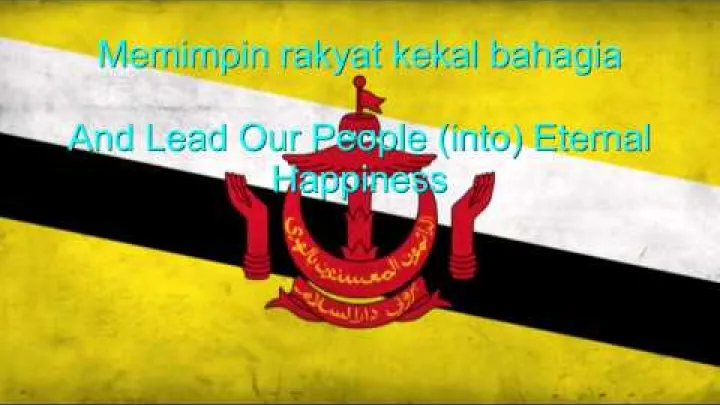
Brunei's national anthem is Allah Peliharakan Sultan, commonly rendered in English as “God Bless the Sultan.” Its brief title expresses a prayer for the Sultan's protection, and the anthem brings together faith, monarchy, Malay language, and public identity. This guide explains its name, creators, historical development, meaning, and place in Brunei Darussalam's formal life.
What Is Brunei's National Anthem?
The national anthem of Brunei Darussalam has a strongly royal and devotional character. That character is central to its purpose: it is a public national symbol, not simply a song about a ruler.

The Original Title and Its English Meaning
The official Malay title is Allah Peliharakan Sultan. The most common English rendering is “God Bless the Sultan,” although translations can vary slightly because peliharakan can convey the sense of preserving, protecting, or caring for someone.
The title is therefore a prayer rather than a description of a battle, place, or historical episode. It asks for divine protection for the Sultan and introduces the wider themes developed in the anthem: just rule, public welfare, and the peace of Brunei Darussalam. English labels on commercial recordings may add phrases such as “Dear Homeland,” but these should not be treated as an alternative official English title.
The anthem is Malay. Readers may encounter its title in Roman letters or in Jawi, an Arabic-based writing system used historically for Malay. These are different ways of presenting the same title, not separate anthem names. A secondary overview by Lorraine Music Academy also identifies “God Bless the Sultan” as the usual English rendering.
National Anthem, Royal Music, and Patriotic Songs
Allah Peliharakan Sultan is Brunei's official national anthem. Because the lyrics address the Sultan and invoke Allah, it can sound more explicitly royal than the national anthems of many republics. Its official national role, however, distinguishes it from a private court song or music reserved only for palace settings.
Brunei also has music associated with royal weddings, processions, ceremonial traditions, and patriotic occasions. Such pieces may be called royal songs, ceremonial music, or patriotic songs in informal discussion. They should not automatically be called the national anthem. The safest distinction is simple: Allah Peliharakan Sultan is the anthem used as the country's principal national song, while other pieces serve specific cultural or ceremonial functions.
How the Anthem Emerged and Became Official
The anthem's history reflects continuity in Brunei's political and cultural life. It was created before independence, then retained as the country became fully independent.
Creation in 1947 During the Protectorate Era
1947 is commonly reported as the year in which the anthem was composed. At that time, Brunei was still a British protectorate, so it is important not to describe the work as an independence anthem from the beginning. It emerged in the postwar period as Brunei developed modern public ceremonies while maintaining its own Sultanate, Malay traditions, and Islamic identity.
A formal anthem gave the state a recognizable sound for collective occasions. Its design is suited to that role: the text is concise and ceremonial, and its central appeal for the Sultan's wellbeing connects the ruler's position with the welfare of the country. The available widely circulated online accounts are mainly secondary, so the year is best understood as the commonly documented date rather than as a claim about every stage of the anthem's creative process.
Adoption in 1951 and Continuity at Independence
The anthem was commonly reported as adopted in 1951 in association with the coronation of Sultan Omar Ali Saifuddien III. This occurred during the protectorate era, rather than after Brunei's full independence. The date is useful because it shows that the anthem was already an established state symbol before later constitutional and political changes.
Brunei retained the anthem at the independence ceremony on 1 January 1984. Its use at that moment of transition expressed institutional continuity: the independent nation continued to identify itself through the Sultanate, Malay language, and Islamic public symbolism. A commonly cited overview notes the 1951 adoption and its continuation after independence, but it does not indicate that the anthem was newly composed or substantially rewritten in 1984.
| Date | Milestone | Context |
|---|---|---|
| 1947 | Commonly reported composition | Late protectorate era |
| 1951 | Commonly reported adoption | Coronation of Sultan Omar Ali Saifuddien III |
| 1 January 1984 | Continued national use | Brunei's independence ceremony |
Who Created the Anthem?
Standard accounts credit one writer for the words and one composer for the music. Names can appear in several forms, especially across Malay and English-language references.
The Lyricist and His Multiple Names
The lyrics are widely credited to Pengiran Haji Mohamed Yusuf bin Abdul Rahim, who is also known as Yura Halim. The shorter literary name is particularly useful when comparing references, while full Malay names may include honorifics and spelling variations.
Some sources use forms such as Pengiran Muhammad or Mohamed Yusuf. These differences do not by themselves show that different people were involved; they can reflect transliteration, abbreviation, or the use of a pen name. A Malay-language account identifies the lyricist with the fuller name Pengiran Haji Mohammed Yusuf bin Abdul Rahim, which helps connect the formal attribution with Yura Halim.
The anthem's elevated language is consistent with a work made for state ceremony. It addresses religious devotion, royal authority, and the people's wellbeing in a compact form. It is reasonable to see the writing as formal and courtly, but detailed claims about the lyricist's personal intentions should not be assumed without stronger documentary evidence.
The Composer and the Anthem's Musical Character
Haji Awang Besar bin Sagap, generally known as Besar Sagap, is widely credited as the composer. His melody supports the anthem's ceremonial task: it has a solemn, dignified character that can be sung by groups and performed in formal settings.
A national anthem needs to work in more than one situation. It may be sung by students, played by a band, or arranged for an orchestra, yet it must remain recognizable and manageable as a collective performance. That practical clarity helps explain the value of a concise melody without requiring assumptions about its exact key, harmony, tempo, or original instrumentation.
Instrumental and orchestral versions can help listeners become familiar with the tune, especially outside Brunei. They are arrangements or recordings of the anthem, not evidence that Brunei has several different official anthems. Streaming titles should also be read carefully, as promotional labels can combine the anthem with descriptive wording not found in the official title.
How to Handle Conflicting Attribution Claims
The standard attribution remains Yura Halim for the lyrics and Besar Sagap for the music. An informal local commemorative account describes a broader co-writing role, but such a claim does not by itself establish a revised official credit. It may reflect local memory, shorthand descriptions of collaboration, or creative work that is not fully recorded in readily available publications.
For a clear general introduction, it is best to use the widely credited division of roles while recognizing that accessible accounts are not always identical. If a reader needs definitive credits for a formal programme, publication, or performance note, an official Brunei cultural publication should take priority over informal social-media attribution. The HathiTrust Catalog records a revised 1986 Brunei Ministry of Culture, Youth and Sports publication connected with the national anthem, illustrating its official post-independence documentation.
What the Anthem's Words and Title Express
The anthem is best understood through its overall message rather than through a full reproduction of its words. Its language is prayerful, public, and focused on the relationship between the Sultan and Brunei.
A Short Prayer for the Sultan and Brunei
The lyrics can be summarized as a supplication for the Sultan's long life, wise and just rule, the happiness of the people, and the preservation of Brunei Darussalam. The title immediately establishes this prayerful approach: divine protection is sought for the Sultan, whose wellbeing is linked to the country's wellbeing.
This is not an anthem built around a military campaign, revolution, or territorial conflict. Instead, it presents security and prosperity through moral governance, religious faith, and public peace. The country name Brunei Darussalam is often understood in relation to peace, and the anthem's themes strongly support that peaceful framing.
Readers looking for an English explanation do not need a word-for-word translation to understand the main idea. Translation choices can differ in nuance, particularly for honorific, religious, and governmental terms. For that reason, a thematic summary is often more reliable than treating one English lyric version as definitive. Full lyrics are also not necessary for understanding the anthem's role, and their reproduction should be avoided unless the wording and permission status are clear.
Malay, Jawi, and Historical Spelling
The anthem is written in Malay, the language of its official title and original words. Malay can be represented in Roman script, as in Allah Peliharakan Sultan, and in Jawi, which is an Arabic-based script historically used for Malay.
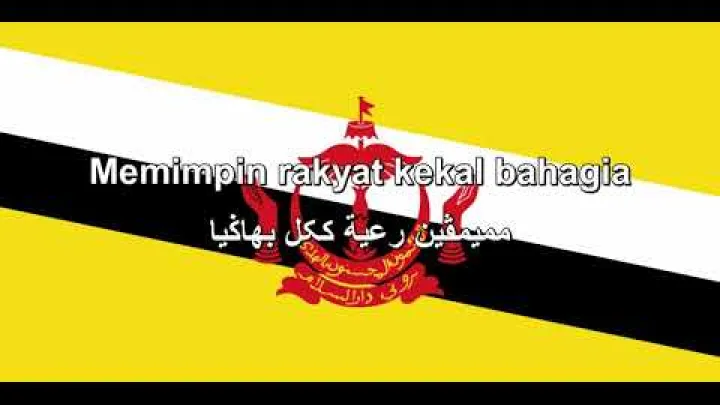
For international readers, three things should be kept separate. The original Malay text is the anthem itself; a Roman-script transliteration makes it easier for many readers to pronounce; and an English translation explains meaning but is not the original text. Older documents may also use spelling conventions that differ from modern Romanized Malay. Such variation is a feature of historical presentation, not necessarily a change in the song.
When reading a programme or archive, the title is the most useful short example to recognize. It is better not to infer current official rules about the display of Jawi from an old publication or an individual recording label.
Islamic, Monarchical, and Peace-Centered Themes
The anthem reflects the public framework often described in English as Malay Islamic Monarchy. In plain terms, this refers to the close connection of Malay cultural identity, Islam, and the Sultanate in Brunei's national life. The anthem expresses all three through Malay language, an invocation of Allah, and direct concern for the Sultan.
Its message also links good rule with the happiness and security of the people. The Sultan is not presented only as an individual to be praised; the prayer asks for wise and just governance that protects the country. Peace is therefore more than an abstract idea in the anthem. It is connected to public order, welfare, and the continued preservation of Brunei Darussalam.
This gives the work a continuity-focused tone that differs from anthems centered on liberation struggles or military victory. That is an interpretation of the text and its state symbolism, not a claim that every Bruneian responds to it in exactly the same way.
When Brunei Uses the National Anthem
As a national symbol, the anthem belongs in formal public settings as well as educational and civic contexts. Exact protocol can vary by event and should be confirmed through the responsible Brunei authority or event organizer.
State Ceremonies and National Occasions
The anthem is associated with formal national and royal occasions, including national-day observances and other state ceremonies. At these events, its performance marks the official importance of the gathering and expresses national identity together with loyalty to the Sultan.
It is sensible to treat examples such as flag observances and royal events as illustrative rather than as a complete legal list. Public protocol may specify who performs the anthem, when it is played, and how participants should conduct themselves. Anyone organizing an official ceremony should obtain current guidance from the relevant Brunei government body or the event host rather than relying on a general description.
This distinction matters for visitors, schools, and organizations. Listening respectfully is appropriate in a formal setting, but claims about mandatory posture, performance order, duration, or penalties should not be made without Brunei-specific official instructions for the particular occasion.
Schools, Civic Performances, and Recordings
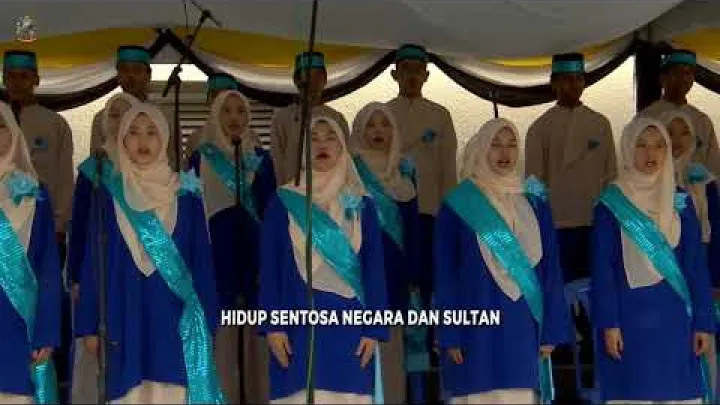
Schools and national-day ceremonies in Brunei help introduce the anthem to younger generations and place it within civic life. School celebrations connected with National Day provide a visible example of how national symbols can be taught and performed outside the most formal state occasions.
Public performances may use vocal groups, bands, or instrumental arrangements. For listeners abroad, legitimate streaming services can offer a practical way to hear the melody, but a platform recording is not automatically an official government release. Descriptive track names may also combine commercial wording with the anthem title.
These recordings should be understood as performances or adaptations of the same national anthem. They do not create separate national songs, and they should not be confused with music written for royal weddings or other specialist ceremonies. Where recording rights or downloading options are unclear, use authorized platforms and avoid assuming that a freely shared copy is official.
How the Anthem Fits Brunei's National Identity
The anthem is short, but it carries a concentrated statement of Brunei's public identity. Its continued use makes it a recurring part of national ritual rather than only a historical composition.
A Sounding Expression of Malay Islamic Monarchy
Allah Peliharakan Sultan brings together Malay language, Islamic invocation, and attention to the Sultan. These are the three principal elements that make its symbolism immediately distinctive. In a short collective performance, the anthem turns those ideas into a repeatable public act.
Its history adds another layer of meaning. The anthem originated during the protectorate era, was commonly adopted in 1951, and continued at independence. That sequence allows it to express continuity across changing political circumstances. For international readers, this helps explain why Brunei's national anthem can be both national and strongly royal in character: the Sultanate is central to the state's national symbolism.
The anthem itself provides the strongest basis for this reading. It does not require broad claims about uniform public opinion or personal belief. Its official function and language are enough to show how faith, monarchy, justice, and the country's welfare are joined in public expression.
What International Readers Should Remember
The essential facts are straightforward. Brunei's national anthem is Allah Peliharakan Sultan, usually translated as “God Bless the Sultan.” It is commonly dated to 1947, commonly reported as adopted in 1951, and remained in use when Brunei became independent on 1 January 1984.
Yura Halim, also known by the fuller name Pengiran Haji Mohamed Yusuf bin Abdul Rahim, is widely credited with the lyrics. Besar Sagap is widely credited with the music. The anthem's central themes are divine protection, just royal rule, the happiness of the people, and peace for Brunei Darussalam.
Most importantly, the Brunei national anthem should not be confused with other royal ceremonial music or general patriotic songs. A concise explanation of its title, creators, history, and themes is usually more useful than reproducing its complete lyrics.
Conclusion: A Symbol of Continuity
Allah Peliharakan Sultan is both a national anthem and a concise statement of Brunei's public identity. Its prayer for the Sultan connects religious devotion, responsible rule, public wellbeing, and peace. From its protectorate-era origins to its continued use in independent Brunei Darussalam, it remains a symbol of continuity in the country's ceremonial life.
Select area
Create a post
Posting is free and no registration is required.