Brunei Traditional Clothing: Dress, Textiles and Culture
Brunei traditional clothing is often introduced through elegant Malay garments and luminous woven textiles, but it is not a single outfit worn in the same way by every person. Baju Melayu for men, baju kurung for women, and jong sarat brocade are important cultural references in Brunei Darussalam. Their meanings depend on the wearer, community, occasion, degree of formality, and personal style. This guide explains the principal garment names, the role of textiles, ceremonial use, ethnic diversity, and the place of traditional dress in contemporary Brunei.
What Brunei Traditional Clothing Includes
The phrase Brunei traditional clothing usually refers to clothing associated with the country’s Malay-Islamic cultural setting, especially formal Malay attire and locally valued textiles. For many readers, the most recognizable forms are the men’s baju Melayu and the women’s baju kurung. These are often discussed as Brunei national costume, particularly in official, festive, and cultural settings.
However, “national costume” is a useful broad label rather than a rule that defines every citizen’s dress. Brunei includes people with different ethnic backgrounds, languages, religious practices, family histories, and approaches to fashion. A garment can express participation in a national event while also reflecting Malay identity, a particular community tradition, religious modesty, or an individual preference.
Traditional clothing also includes more than cut and silhouette. A waistcloth, cap, scarf, jewelry, embroidery, and the choice of woven fabric can make an ensemble simpler or more ceremonial. Jong sarat is especially important in this respect: it is a textile tradition rather than one single garment, and it can transform the appearance and status of clothing made or styled for special occasions.
The Main Malay Garments in Brunei
Malay garments are shared across parts of the wider Malay world, so similar names may appear in Brunei, Malaysia, Singapore, Indonesia, and neighboring areas. In Brunei, they should be understood in their local social and ceremonial context rather than treated as identical to every regional version. A comparative exhibition by the Islamic Arts Museum Malaysia reflects this wider Malay-world setting for traditional busana, or dress.
Baju Melayu for Men
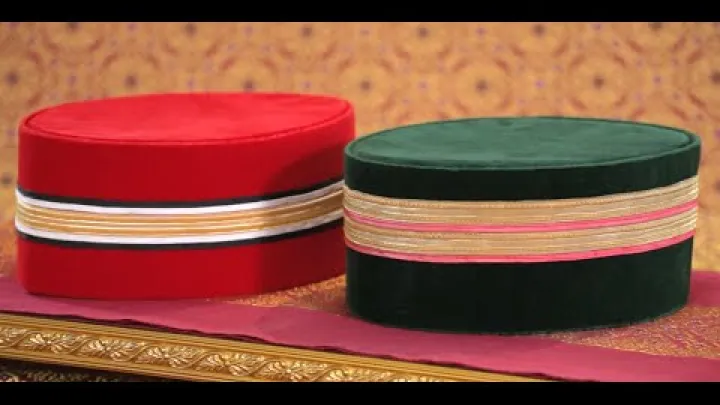
Baju Melayu is the principal name many people use when searching for Brunei traditional clothes for men or the Brunei national costume male form. At its basic level, it is a long-sleeved upper garment worn with trousers. For formal Malay dress, it is commonly paired with a samping, a cloth worn around the waist over the trousers, and a songkok, a structured dark cap associated with Malay Muslim male attire.
The resulting ensemble has a modest, orderly, and formal appearance. It may be seen at religious occasions, celebrations, family gatherings, official functions, and cultural presentations. A plain, practical outfit and a ceremonial one may share the same basic garment name, yet differ greatly in fabric, tailoring, color coordination, accessories, and the quality of the samping.
There is no need to assume that one fixed cut is the only Bruneian baju Melayu. Tailoring choices vary, and forms shared with the wider Malay world can be adapted locally. It is also important not to describe baju Melayu as the everyday clothing of every Bruneian man or as the traditional dress of every community. It is a major representation of Malay cultural identity in Brunei, while other identities and contemporary wardrobes coexist.
Baju Kurung for Women
Baju kurung is a major women’s garment associated with Brunei traditional dress. It generally consists of a loose, long tunic worn with a long skirt. Its covered silhouette fits naturally within Malay and Islamic ideas of modest dress, while allowing substantial variety in fabric, tailoring, color, and decoration.
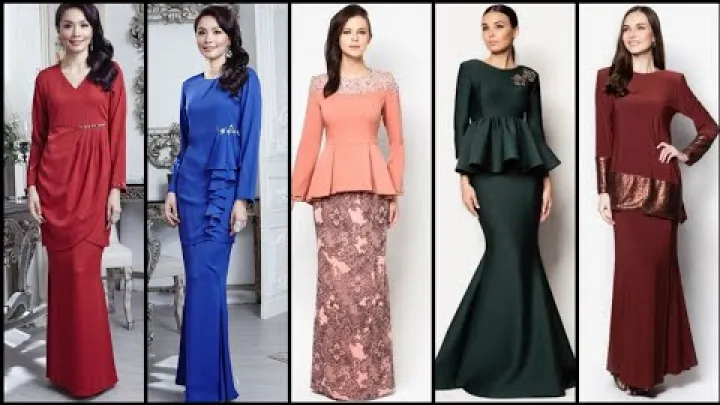
For readers looking for Brunei traditional dress female or Brunei national costume female forms, baju kurung is the clearest starting point. It can be styled for everyday needs, work, religious gatherings, festive visits, formal ceremonies, and weddings. A relatively simple version may use a plain or lightly patterned textile, while a more formal version may use richer cloth, more visible embellishment, jewelry, or a carefully coordinated shawl.
Head coverings and scarf styles are personal and context-dependent. Many women may wear a tudung or another headscarf as part of modest attire, but it is not accurate to present one particular method of styling as universal. Likewise, ornament is not required for a garment to be traditional; formality is often communicated through the whole ensemble, not a single decorative feature.
Samping, Songkok, Tudung and Other Accessories
Accessories provide useful traditional clothes names and help explain why two otherwise similar outfits can look very different. The samping is the waistcloth associated with men’s formal Malay attire. It adds color, pattern, and texture around the lower body. The songkok is a cap often worn with formal male dress, especially in Malay Muslim contexts.
For women, a tudung is a head covering or scarf worn by many Muslim women. Scarves and shawls can be chosen to complement the garment and the occasion. Jewelry, handbags, footwear, and fabric finishes may also increase the sense of ceremony. Their use is flexible rather than uniform.
| Term | Usual role | How it affects formality |
|---|---|---|
| Baju Melayu | Men’s upper garment with trousers | Fabric and accessories change the effect |
| Baju kurung | Women’s tunic and long skirt | Tailoring and textile suit the occasion |
| Samping | Men’s waistcloth | Adds pattern and ceremonial presence |
| Songkok | Men’s cap | Common in formal Malay ensembles |
| Tudung | Women’s head covering | Styling varies by wearer and context |
Other regional Malay-world terms, including names for shawls or ceremonial headwear, may appear in photographs and fashion descriptions. They should not automatically be assumed to be standard Bruneian components, because terminology and use can differ by place and community.
Jong Sarat and Brunei’s Textile Heritage
Jong sarat is among the strongest visual markers of Brunei textile heritage. Its sheen and intricate appearance make it especially visible in ceremonial clothing, but its value lies not only in its appearance. It represents skilled textile work, cultural memory, and a prestigious form of material expression.
What Jong Sarat Is and Why It Matters
Jong sarat is a highly valued Bruneian brocade. Descriptions of the textile associate it with silk or cotton grounds interwoven with metallic gold or silver thread. The exact material combination, weave structure, and finishing may differ between pieces, so a photograph alone cannot establish how a particular textile was made.
![Preview image for the video "#SPM - BINGKISAN KAIN TENUN BRUNEI [25 OKT 2015]".](/sites/default/files/styles/media_720x405/public/oembed_thumbnails/2026-07/Rh2JcEpo-PJ2nSYxNOgJgcKX4OhGYPme3za-eYncq7A.jpg.webp?itok=BUFBswHu "Preview image for the video \"#SPM - BINGKISAN KAIN TENUN BRUNEI [25 OKT 2015]\".")
Jong sarat is associated with high-formality settings rather than ordinary daily clothing. Reporting by the Borneo Bulletin describes it as Brunei’s distinctive regional brocade and links it with royal functions, state ceremonies, and weddings. In these settings, the fabric can communicate care, occasion, and cultural prestige through its visible metallic elements and detailed surface.
It is useful to distinguish the textile from the clothes made with it. A person may wear a baju kurung, a waistcloth, or another formal ensemble that incorporates jong sarat. Calling every ornate outfit “jong sarat” can obscure the difference between the garment’s name and the name of the woven material.
Materials, Motifs and the Limits of Interpretation
Metallic thread and a fine base fabric give jong sarat its recognizable reflective quality. Descriptions may refer to geometric forms or plant-inspired designs, but a motif that looks familiar to a viewer does not automatically carry a confirmed symbolic meaning. Colors and patterns can be selected for visual harmony, family preference, fashion, or ceremonial presentation as well as inherited convention.
The textile belongs within a broader regional environment of Malay-world weaving and brocade traditions. Comparisons with songket, tenun, and other woven textiles can help visitors recognize shared technical and aesthetic ideas, but they should be framed as regional comparisons rather than evidence that all traditions are the same.
When interpreting a specific piece, rely on information from its maker, owner, museum label, or cultural institution. Online descriptions may simplify material details, weaving methods, motif names, and symbolism. The most reliable conclusion from the textile itself is its visible craftsmanship and ceremonial importance; more precise claims require documentation connected to that particular piece or weaving tradition.
When Traditional Clothing Is Worn in Brunei
Traditional dress remains visible in Brunei, but it forms part of a changing wardrobe rather than a fixed uniform. The same garment names can cover both restrained and highly ornate versions, depending on where and why they are worn.
Everyday, Religious and Official Wear
Baju kurung and baju Melayu may appear in public, professional, religious, family, and institutional settings. Simpler fabrics and less elaborate accessories are generally more practical for routine use. More formal tailoring, a samping, coordinated colors, jewelry, or a prestigious textile can signal a special occasion.
Modesty, religious observance, workplace expectations, and the character of an event all influence clothing choices. Traditional forms can therefore remain meaningful in modern Brunei without displacing Western-style clothing, contemporary Islamic fashion, or other practical everyday options. Some people wear traditional garments frequently, while others reserve them mainly for particular occasions.
For an international visitor, a respectful approach is to recognize the formality of the setting rather than to assume that every traditional-looking outfit has the same purpose. Clothing at a mosque-related event, an office function, a wedding, and a cultural performance may share elements but carry different social expectations.
Weddings, Festivals and Ceremonial Occasions
Weddings are among the clearest settings for elaborate Brunei traditional dress. Coordinated garments, metallic textiles, jewelry, and carefully selected colors can create a more prominent ceremonial appearance for the couple and their families. Jong sarat may be chosen for its visual richness and cultural association with major celebrations.
Royal, state, diplomatic, and cultural events can also provide occasions for Bruneian textiles and formal Malay attire to be displayed. These appearances should not be treated as proof that the same garments are worn in every household or at every celebration. They show the public role of heritage clothing at moments where presentation matters.
Brunei wedding imagery sometimes identifies a stage called Majlis Malam Berbedak. Because practices, garments, and visual conventions can vary between families and ceremonies, it is better to ask the hosts or event organizer about the significance of a specific outfit than to assign universal meanings to its red, gold, or other colors.
Tourist Costume Experiences and Staged Images
Rental outfits, photography sessions, pageants, cultural performances, and social media posts can introduce visitors to attractive forms of traditional-looking clothing. They can also remove an outfit from its original social setting. A styled image may combine garments, textiles, headwear, or accessories from Brunei, Malaysia, Sarawak, or broader Borneo traditions for visual effect.
Before using an image as a guide to Brunei ethnic clothing, identify five things: the named community, the event, the location, the garment or textile name, and the organization or person providing the description. A museum label, a community cultural program, or an explanation from the wearer is generally more useful than a caption without context.
This does not make contemporary performance or tourist participation invalid. Cultural presentation can support learning and artistic work. The respectful distinction is between enjoying a styled representation and claiming that it proves the original everyday, ceremonial, or community use of a garment.
Ethnic Diversity Beyond the Main Malay Forms
The prominence of Malay garments in national representation should not flatten Brunei’s diversity. Traditional clothing can be connected to community histories that are not fully visible in general descriptions of national dress.
Why Brunei Does Not Have One Universal Costume
Baju Melayu, baju kurung, and jong sarat are powerful national symbols, but they do not form one standardized costume worn by all Bruneians. Identity can be expressed through Malay cultural affiliation, religion, language, family background, community membership, status, and participation in a particular event. These meanings may overlap in the same outfit.
Official identity categories are not a substitute for a detailed account of clothing traditions. They may group people broadly, while families and communities maintain distinct practices, adapt older forms, or wear traditional clothing mainly for selected ceremonies. The phrase national costume is therefore best understood as a convenient way to locate widely recognized representative dress.
Indigenous and Minority Clothing: What Can Be Confirmed
Brunei includes communities such as Kedayan, Dusun, Murut, Tutong, Iban, and others, each with distinct histories and cultural connections. Community clothing may differ in textiles, beadwork, headwear, color combinations, or ceremonial styling. Yet a complete and accurate catalog requires reliable Brunei-specific documentation for each named community.
Generic Borneo images are not enough to establish that a costume belongs to a particular group in Brunei. Neighboring regions may have related peoples, cross-border histories, and visually similar clothing, but that does not make every regional image locally representative. Religion, migration, urban life, cultural festivals, and contemporary fashion also affect whether and how community dress is worn today.
Readers seeking detailed information about a specific community should use materials from that community, Brunei museums, cultural institutions, or locally documented events. This is more respectful than transferring details from generalized Borneo costume collections to Brunei without a clear attribution.
Modern Use, Heritage and Cultural Representation
Traditional clothing in Brunei is not separate from modern life. It is continually selected, tailored, photographed, taught, displayed, and adapted according to the needs of wearers and the settings in which it appears.
Traditional Dress in Contemporary Brunei
Contemporary Brunei clothing can combine Malay attire, indigenous and minority-community dress, modern Islamic fashion, and Western-style clothing. Traditional garments may be worn for daily or religious reasons by some people, while others primarily choose them for weddings, family occasions, cultural programs, heritage displays, or official events.
Adaptation can appear in modern tailoring, new color palettes, lighter or more practical fabrics, coordinated family outfits, and contemporary styling. These changes do not automatically mean that tradition has been abandoned. They show how established garment forms remain useful and meaningful in changing social environments.
At the same time, it would be too broad to say that modernization has either preserved or eliminated traditional clothing across the whole country. Use differs between individuals, generations, workplaces, communities, and occasions. The most accurate picture is one of coexistence rather than replacement.
Heritage Promotion, Regional Context and Fashion Innovation
Artisans, museums, exhibitions, cultural events, and public institutions help present clothing and textiles as living heritage. Brunei’s Ministry of Culture, Youth and Sports has a role in cultural and community activity, as outlined by Culture360. Such work can create opportunities for traditional knowledge to be seen by younger audiences and international visitors.
Jong sarat is especially suited to discussions of regional context and local distinction. It shares a broader Southeast Asian textile environment with other woven and brocade traditions, while remaining closely identified with Brunei in ceremonial presentation. Contemporary designers may experiment with its use in new silhouettes or color combinations, but this does not erase the fabric’s associations with formal occasions.
When looking at current fashion, check who designed the item, which community or country is named, what event it was made for, and whether the textile description comes from a knowledgeable maker or institution. These questions help separate thoughtful adaptation from vague regional branding.
A Diverse Living Tradition
Brunei traditional clothing is best understood as a diverse living tradition. Baju Melayu and baju kurung provide widely recognized Malay forms, while samping, songkok, tudung, and other accessories shape how formal an outfit becomes. Jong sarat adds a distinctive Bruneian textile heritage associated with major ceremonial presentation.
For visitors and learners, the most respectful approach is to use garment names carefully, avoid treating one image as representative of every community, and ask about context when attending a celebration or cultural event. This leaves room for the country’s Malay heritage, indigenous and minority traditions, religious life, and contemporary fashion to be understood together rather than as competing definitions of Brunei identity.
Select area
Create a post
Posting is free and no registration is required.