Thailand Language: What People Speak in Thailand, Thai Alphabet, Tones, Dialects, and Phrases

Understanding the Thailand language helps travelers, students, and professionals communicate with confidence. Thai is the country’s official language, and it has a unique alphabet and a five‑tone system that shape meaning. This guide explains what people speak in Thailand, how the Thai script works, and how tones and vowel length affect pronunciation. You will also find practical phrases, a look at regional speech, and advice for translation and study.
Quick answer: What language is spoken in Thailand?
Thai is the sole official language of Thailand. Standard Thai, based on the Bangkok dialect, is used in education, government, and national media. It is written with the Thai alphabet, which has 44 consonants, 16 vowel symbols with combinations, and four tone marks that help produce five tones. English appears widely in tourism and business, especially in Bangkok, but proficiency varies by area.
Across the country, most people understand Standard Thai, while many also use regional varieties at home and in local contexts. These varieties include Isan (Thai–Lao), Northern Thai, and Southern Thai, each with distinct sound patterns and vocabulary. In border regions and among ethnic communities, other languages are also present, but Standard Thai functions as the common language for nationwide communication.
Key facts at a glance (official status, speakers, script, tones)
If you need a quick snapshot before you travel or study, these points cover the essentials about language in Thailand. They address what is official, how Thai is written, and how pronunciation works at a high level.

- Official language: Thai (Central/Standard Thai) nationwide.
- Script: Thai alphabet with 44 consonant letters; 16 vowel symbols that combine into many vowel sounds.
- Tones: Five lexical tones (mid, low, falling, high, rising) indicated by rules using four tone marks plus consonant class and syllable type.
- Standard Thai: Based on the Bangkok dialect; taught in schools; used in media and public life.
- English: Common in cities, tourism, and business; proficiency varies by region and setting.
Standard Thai differs from regional speech in sound and word choice, but code‑switching is smooth in daily life. Most public signage, official documents, and national broadcasts follow Standard Thai norms, ensuring shared understanding even when people speak local varieties at home.
Thai alphabet overview
The Thai writing system is an abugida that encodes consonants, vowels, and tones in compact syllables. Unlike English, vowels may appear before, after, above, or below the consonant, and there is no upper‑ or lower‑case distinction. The script is central to reading pronunciation, because vowel length and tone are part of how Thai words differ in meaning.
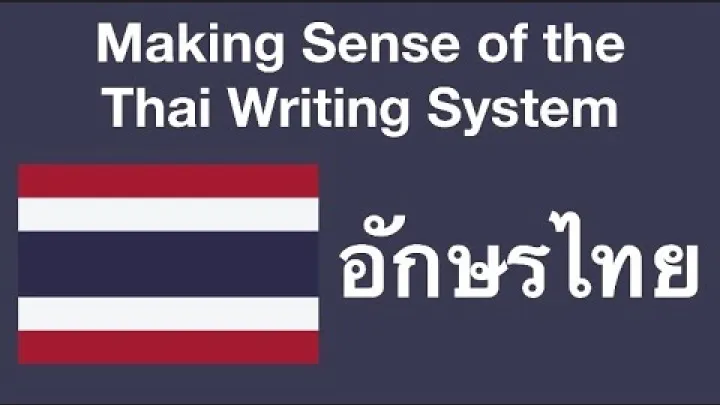
For learners, the visual layout may feel unfamiliar at first, but patterns emerge quickly with practice. The alphabet includes some letters that are used mostly in loanwords or historical spellings, and tone marks operate with consonant classes to signal pitch. Romanization systems such as RTGS help with street names and transport, but only the Thai script shows tones and vowel length in context.
Number of letters and vowels (44 consonants; 16 vowels + diphthongs)
Thai uses 44 consonant letters. Many map to similar sounds, but they also encode consonant classes that affect tone rules. There are 16 basic vowel symbols, and these combine into additional vowel sounds, including diphthongs and long/short pairs. Because vowels can be written in multiple positions relative to the consonant, a single syllable can look compact yet carry rich information.
Thai does not have uppercase and lowercase forms, which simplifies letter recognition. A few consonants are rare in modern writing or appear primarily in loanwords and historical contexts, while the core set covers everyday Thai. The 16 vowel symbols, when combined, produce more than 16 distinct vowel sounds. This is why learning the combinations and their lengths is more useful than memorizing a fixed count of vowel “letters.”
Tone marks and how they work
Thai uses four tone marks ( ่ ้ ๊ ๋ ). Together with the consonant’s class (low, mid, high) and the syllable type (live or dead), they yield five tones: mid, low, falling, high, and rising. Many syllables carry no tone mark; in those cases, default rules based on consonant class and syllable structure apply to determine the tone.
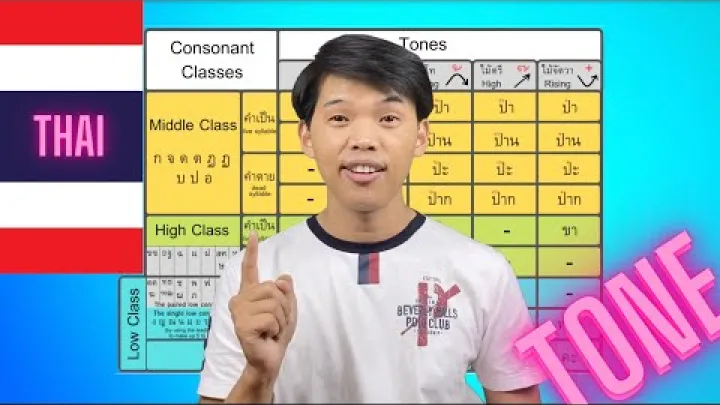
As a helpful rule of thumb for mid‑class consonants, think of the marks in this order: no mark → mid tone, ่ (mai ek) → low tone, ้ (mai tho) → falling tone, ๊ (mai tri) → high tone, ๋ (mai chattawa) → rising tone. High‑ and low‑class consonants shift these results, and whether a syllable is “live” or “dead” also influences the outcome. Learners can memorize patterns gradually and verify with audio practice.
| Tone mark | Thai name | Rule‑of‑thumb tone (mid‑class) |
|---|---|---|
| (none) | — | Mid |
| ่ | mai ek | Low |
| ้ | mai tho | Falling |
| ๊ | mai tri | High |
| ๋ | mai chattawa | Rising |
Script origins and romanization (RTGS vs. other systems)
The Thai script descends from Old Khmer, which in turn comes from the Pallava script of South Asia. Its development produced a writing system well suited to Thai phonology, including tone marking and vowel placement around consonants. The script has remained relatively stable for centuries, allowing historical inscriptions to be read by modern scholars with training.
For romanization, Thailand uses RTGS (Royal Thai General System) on road signs, maps, and many public materials. RTGS favors easy reading for non‑specialists, but it omits tones and vowel length, so it cannot fully represent Thai pronunciation. Other systems exist, such as ISO 11940 (more precise, less readable) and Paiboon (designed for learners). For travel and addresses, RTGS consistency is helpful; for speaking and listening, audio and the Thai script are essential.
Pronunciation and tones made simple
Thai pronunciation rests on two pillars: tones and vowel length. Tones are pitch patterns that distinguish words with the same consonants and vowels, and vowel length is a separate contrast that changes meaning. When combined with final consonants and syllable type, these features create a compact but predictable sound system.

Romanization rarely signals all of these contrasts at once, so learners benefit from training their ears with native audio. A focus on a few high‑frequency words, practiced in minimal pairs, builds awareness quickly. With consistent listening and shadowing, the tone categories and long vs. short vowels become familiar.
The five tones (mid, low, falling, high, rising)
Thai has five tones: mid, low, falling, high, and rising. Using the wrong tone can change meaning even if the consonants and vowels are the same. In writing, tones come from tone marks, consonant class, and syllable type; in everyday speech, context helps, but accurate tones lead to clearer communication, especially for short words.

Because most romanization systems do not show tones, learners should rely on audio and mimicry. Start by matching pitch contours slowly, then speed up while keeping the shape. Record yourself, compare with native models, and practice pairs that differ only in tone. This approach makes tones feel like part of the word, not an extra layer to add later.
Vowel length and why it changes meaning
Short and long vowels are different sounds in Thai, and length can change the meaning of a word. Long vowels are held for noticeably more time, and shortening them can cause confusion. This contrast interacts with final consonants and tones, so it is important to keep length steady before you adjust pitch.
English speakers often reduce vowels in rapid speech, which does not work in Thai. A simple habit is to over‑practice long vowels until they feel natural, then refine. Shadow along with recordings, exaggerate length at first, and practice minimal pairs that differ only by vowel duration. Accurate length reduces misunderstandings as much as correct tones do.
Core grammar in brief
Thai grammar is analytic and relies on word order, particles, and context rather than complex inflection. The default order is Subject‑Verb‑Object, but Thai is also topic‑prominent, so topics can move to the front for emphasis. Sentence‑final particles shape politeness, mood, and attitude, which is central to natural interaction.
Number, tense, and aspect are handled with time words, auxiliary markers, classifiers, and reduplication. This system is flexible and compact once you learn a few patterns. With clear time references and the right classifiers, you can express quantity and timing without verb conjugations.
Word order (SVO), particles, classifiers
Thai typically follows SVO order: subject, then verb, then object. However, speakers often start with the topic, followed by a comment about it, which creates a natural flow in conversation. Sentence‑final particles such as “khrap” (male speakers) and “kha” (female speakers) mark politeness, while others like “na” soften requests or add friendliness.
![Preview image for the video "[Intensive Thai] Thai Sentence Structures - Best for beginners".](/sites/default/files/styles/media_720x405/public/oembed_thumbnails/2025-10/LKuH-wo6FZcbMQ2dgHDhv13vnxoZdOWKXtsON-2MoQk.jpg.webp?itok=0-eF27_l "Preview image for the video \"[Intensive Thai] Thai Sentence Structures - Best for beginners\".")
Classifiers are required with numbers and demonstratives. Common ones include “khon” for people, “an” for general items, and “tua” for animals or some objects. You say “song khon” for two people or “sam an” for three items. Learning a handful of frequent classifiers covers many daily needs and keeps your Thai clear and correct.
Tense and plurality (how Thai expresses time and number)
Thai verbs do not inflect for tense. Instead, time is shown with adverbs and auxiliary markers near the verb. For future meaning, speakers add “ja” before the verb. For completed or past‑relevant actions, they often use “laeo” after the verb or at the end. Ongoing action can be shown with “kamlang” before the verb. Negation uses “mai” before the verb.

Plurality is context‑driven. Numbers with classifiers specify quantity, while reduplication can suggest “various” or “many.” For example, a simple pattern is: subject + time word + “ja” + verb + object, or subject + verb + object + “laeo.” Clear time words like “muea waan” (yesterday) or “phrung ni” (tomorrow) help your listener understand when something happens without changing the verb form.
Dialects and other languages in Thailand
Thailand is linguistically diverse. Standard Thai unifies schools, government, and media, while regional varieties carry local identity and everyday conversation. Many people grow up bilingual or bidialectal, using local speech at home and Standard Thai in public settings.

Cross‑border history and migration also shape the language landscape. In the northeast, Isan is closely related to Lao. In the south, Malay varieties influence local speech. Mountain regions feature languages from other families, and many speakers are fluent in Thai as a second language.
Central Thai (Standard Thai)
Standard Thai is based on Central Thai and serves as the national standard for education, administration, and nationwide broadcasting. It includes formal and informal registers and a rich set of polite particles that help speakers manage social relationships and tone of voice.
Bangkok pronunciation often anchors broadcast norms and school models. While informal Bangkok speech can be casual and fast, the standard taught in classrooms is clear and widely understood. This makes Standard Thai an effective lingua franca for the country’s many communities.
Isan (Thai–Lao), Northern Thai, Southern Thai
Isan, spoken in the northeast, is closely related to Lao and shares much vocabulary and grammar. Cross‑border ties between northeastern Thailand and Laos reinforce this similarity, and many speakers move comfortably between Isan, Lao, and Standard Thai depending on context.

Northern Thai (Lanna/Kham Mueang) and Southern Thai have distinct sound systems and vocabulary. Mutual intelligibility with Standard Thai varies by speaker and topic, but code‑switching is common. In cities, people often use Standard Thai with outsiders and local varieties at home or with neighbors.
Other languages (Malay/Yawi, Northern Khmer, Karen, Hmong)
In Thailand’s Deep South, Malay (often called Yawi) is widely spoken, with Arabic‑based Jawi script used in some cultural and religious contexts and Thai script in official contexts. In parts of the lower northeast, Northern Khmer is used, and many speakers are bilingual in Thai for public life and education.
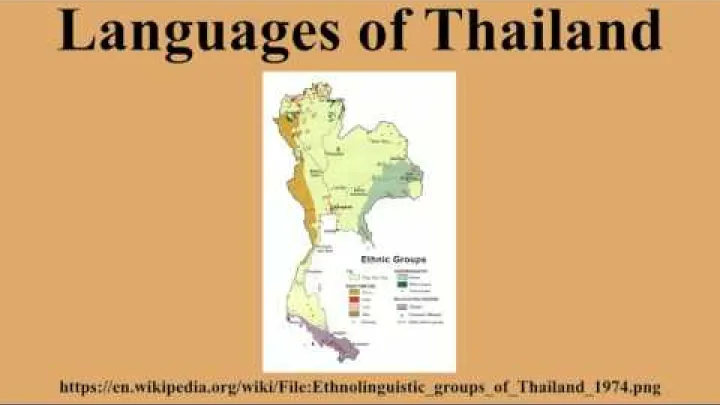
Hill communities across the north and west speak Karenic and Hmong‑Mien languages. Public signage and schooling primarily use Standard Thai, but regional allowances and bilingual skills are common in daily life. Thai serves as the connective language for services, media, and inter‑community communication.
Language in Bangkok and English use
Bangkok is where visitors most clearly experience Standard Thai in government offices, national media, and formal education. Signs, announcements, and official paperwork follow Standard Thai conventions, while neighborhood speech may reflect Central Thai or mixed urban influences. This combination makes Bangkok a practical starting point for learning Thai.

English is most available in Bangkok, major tourist hubs, and business districts. Airports, hotels, shopping centers, and many restaurants can assist in English. Outside these areas, basic Thai helps greatly with taxis, markets, and services. Carrying key addresses in Thai script is a simple way to reduce confusion during travel.
Standard Thai in government, education, media
Standard Thai is mandated in government, courts, and the national curriculum. Official documents and nationwide broadcasts use consistent spelling and pronunciation norms rooted in the Bangkok dialect. This ensures that citizens from different regions can access public information equally.
In everyday life, people switch between Standard Thai and regional varieties as needed. A news presenter may speak formal Standard Thai on air, then use a local variety with family. This fluidity supports local identity while maintaining national intelligibility in public domains.
Where English is common (tourism, business, urban centers)
English is widely used in tourism corridors and international business. You will hear it in airports, hotels, larger retail chains, and popular attractions in Bangkok, Chiang Mai, Phuket, and other hubs. Younger urban residents and staff in international schools often have higher proficiency.

In rural areas and local markets, English use decreases. Basic Thai phrases improve service interactions, and showing addresses written in Thai script helps taxi and ride‑hail drivers.
Standard Thai in government, education, media
Standard Thai is mandated in government, courts, and the national curriculum. Official documents and nationwide broadcasts use consistent spelling and pronunciation norms rooted in the Bangkok dialect. This ensures that citizens from different regions can access public information equally.
In everyday life, people switch between Standard Thai and regional varieties as needed. A news presenter may speak formal Standard Thai on air, then use a local variety with family. This fluidity supports local identity while maintaining national intelligibility in public domains.
Where English is common (tourism, business, urban centers)
English is widely used in tourism corridors and international business. You will hear it in airports, hotels, larger retail chains, and popular attractions in Bangkok, Chiang Mai, Phuket, and other hubs. Younger urban residents and staff in international schools often have higher proficiency.
In rural areas and local markets, English use decreases. Basic Thai phrases improve service interactions, and showing addresses written in Thai script helps taxi and ride‑hail drivers. If you plan to visit less touristy spots, keep a short list of essential words and numbers ready.
Useful phrases for travelers
Learning a few Thai phrases changes the quality of daily interactions. Polite greetings and thanks go a long way, and numbers and direction words help with transport and shopping. Because tones and vowel length matter, keep your speech steady and slow at first.

RTGS romanization is used below for readability, but remember it does not show tones or vowel length. Listen to native audio when possible and try to imitate the rhythm and pitch of whole phrases.
Greetings and thanks (with polite particles)
In Thai, greetings and thanks often include a polite particle that depends on the speaker’s gender: “khrap” for male speakers and “kha” for female speakers. Use “sawasdee” for hello at any time of day and “khop khun” for thank you. The wai gesture (palms together, slight bow) is used in many formal or respectful contexts.

Keep your tone and vowel length steady when adding particles. In casual situations, people may shorten phrases, but clear and polite speech is always appreciated. Try these essentials:
- Hello: sawasdee khrap/kha
- Thank you: khop khun khrap/kha
- Yes: chai; No: mai chai
- Sorry/Excuse me: khor thot
- Please: ga‑ru‑na (formal) or add “na” for softness
Numbers, help, directions
Learn 1–10 first, then tens and hundreds. For questions, short patterns like “... yu nai?” (where is ...?) and “tao rai?” (how much?) are used everywhere. If a driver does not recognize a place name in RTGS, show it in Thai script.

Direction words keep travel simple: left, right, straight, and stop. Combine them with place words like “near” and “far” and location markers like “in front of” and “behind.” Practice slowly and clearly.
- 1–10: neung, song, sam, si, ha, hok, jet, paet, kao, sip
- How much?: tao rai?
- Please help: chuai duai
- I do not understand Thai: mai khao jai phasa Thai
- Where is ...?: ... yu nai?
- Left/Right/Straight/Stop: sai / khwa / trong pai / yud
- Near/Far: klai (near) / klai (far) — tones differ in Thai; check audio
- Please take me to ...: chuai pai song thi ...
Tip: write hotel names and key destinations in Thai script to show taxi drivers. Ask your hotel to prepare a card with the address and a nearby landmark.
Translation and learning tips
Digital tools make it easier to read menus, signs, and simple messages, but they have limits with tones and vowel length. Combine machine translation with learner dictionaries and RTGS spellings to confirm names and addresses. Save offline packs for travel areas with spotty connectivity.

For steady progress, set a short daily routine that trains listening, pronunciation, and core vocabulary. Tone control and vowel length improve with focused, repetitive practice. A tutor or language exchange partner can correct particles and tones in real time.
“Thailand language to English” and reliable tools
For “Thailand language to English” needs, use reputable apps with text input, camera OCR for menus and signs, and offline language packs. Camera translation is helpful for quick decisions, but always double‑check names, addresses, and times, since these can be mistranscribed.

Because tools ignore tones and vowel length, they may confuse look‑alike words. Cross‑reference with a learner dictionary, and keep a note with RTGS versions of frequent locations. Save key phrases and your accommodation address for instant offline access when you need to show someone quickly.
Study resources and tone practice methods
Adopt a simple 15‑minute daily plan to build consistency: 5 minutes of listening and shadowing, 5 minutes of minimal pairs for tones and vowel length, and 5 minutes of flashcards for script and high‑frequency words. Short daily practice beats longer, irregular sessions.
Use spaced‑repetition flashcards for consonants, vowels, classifiers, and frequent phrases. Record yourself to compare tone contours with native audio. A tutor or exchange partner can provide live feedback on particles like “khrap/kha,” which are key to natural communication.
Frequently Asked Questions
What language is officially spoken in Thailand?
Thai (Central/Standard Thai) is the sole official language of Thailand. It is used in government, education, media, and daily communication nationwide. Standard Thai is based on the Bangkok dialect and is taught in schools. Many citizens also speak regional varieties alongside Standard Thai.
Is English widely spoken in Thailand and in Bangkok?
English is taught nationwide and is most common in Bangkok and major tourist areas. You will find English in hotels, airports, and many city businesses, but proficiency varies outside urban centers. Learning basic Thai phrases improves communication and travel comfort.
How many letters are in the Thai alphabet?
Thai has 44 consonant letters and 16 vowel symbols (plus diphthongs) arranged around consonants. Thai also uses four tone marks to indicate tone classes. Vowels can appear before, after, above, or below the consonant.
How many tones does Thai have, and why do they matter?
Thai has five tones: mid, low, falling, high, and rising. Tone choice changes word meaning, even if the consonants and vowels are the same. Accurate tones improve intelligibility, especially with short words. Context helps, but clear tones support smoother conversations.
Is Thai hard to learn for English speakers?
Thai can be challenging due to tones, a new script, and different grammar and pragmatics. Many learners reach conversational ability with consistent daily practice. A common benchmark suggests around 2,200 classroom hours for high proficiency, but progress varies by exposure and study habits.
Is Thai similar to Lao or Isan?
Thai, Lao, and Isan are closely related Tai languages with partial mutual intelligibility. Isan (Thai–Lao) is widely spoken in northeastern Thailand and is very close to Lao. Standard Thai differs in pronunciation, vocabulary, and formal registers.
How do you say hello and thank you in Thai?
Hello is “sawasdee,” with polite particles “khrap” (male speakers) or “kha” (female speakers). Thank you is “khop khun,” followed by “khrap” or “kha.” Add the wai gesture in formal or respectful situations.
What is the Thai writing system based on?
The Thai script descends from Old Khmer, which comes from the Pallava script of South Asia. It has remained relatively stable since early historical periods. Thai is an abugida with inherent vowels and tone marking.
Conclusion and next steps
Thai is the official language of Thailand, and it is built around the Thai script, five tones, and meaningful vowel length. Standard Thai, based on the Bangkok dialect, connects the country’s diverse regions, while local varieties enrich daily life. Romanization is practical for signs and maps, but only the Thai script and audio reveal tones and length precisely.
For visitors and new learners, a small set of phrases, clear politeness with “khrap/kha,” and knowledge of numbers and directions make travel easier. In Bangkok and major hubs, English is common, but Thai remains essential outside tourist zones. Use reliable tools for “Thailand language to English” tasks, and adopt brief daily practice to build listening, pronunciation, and vocabulary. With steady effort, Thai’s patterns become clear and communication becomes rewarding.
Your Nearby Location
Your Favorite
Post content
All posting is Free of charge and registration is Not required.