Sulu Provincial Capitol Jolo: Civic Landmark and Nearby Attractions

Any plan to see the Sulu Provincial Capitol should begin with current security, transport, and access information. The landmark is important for understanding Jolo as Sulu’s provincial capital, but an in-person visit should depend on current conditions and trusted local guidance.
Start with Current Travel Conditions in Jolo
Any plan to see the Sulu Provincial Capitol should begin with current security, transport, and access information. Conditions can change, and the practical question is not only where the landmark is, but whether travel is appropriate at the time you are considering it.
Official advisories and why they matter
Jolo and the wider Sulu Archipelago should be treated as safety-sensitive destinations. The U.S. Department of State warns travelers to exercise increased caution in the Philippines due to risks that include crime, terrorism, civil unrest, and kidnapping, and its current wording should be checked carefully for area-specific warnings. Travelers should also check the advisory of their own government, because advice may differ by nationality and date.
This does not mean the Sulu Provincial Capitol lacks cultural value. It means the landmark should not be treated as a casual stop for all visitors. Security conditions, local restrictions, and the availability of trusted local support matter as much as the attraction itself.
Who this guide is most useful for
This guide is useful for readers who want to understand Jolo from a distance, researchers studying Bangsamoro or Sulu civic landmarks, domestic travelers with local support, and culturally interested visitors comparing top attractions in Jolo. It is also useful for people who are building a cautious itinerary and need to know which places are locally significant.
The Capitol can be meaningful even if you never travel there. It is a civic reference point for the province of Sulu, a visual landmark in Jolo town, and a starting point for understanding how government, history, faith, and trade meet in the area.
What to verify before any visit
Before making any travel commitment, verify current security conditions, ferry or flight availability, local transport, local permissions, and public access around government buildings. Public areas, offices, entrances, and nearby roads may be restricted or managed differently depending on local conditions.
Visitors should seek current guidance from trusted local hosts, relevant local authorities, or institutions with direct knowledge of conditions in Jolo. Do not rely only on old travel posts, old route descriptions, or general booking websites. For a safety-sensitive destination, the decision to go or not go is part of the planning process.
- Check current government travel advice from your country.
- Confirm whether travel to Jolo is advisable for your profile and purpose.
- Verify transport to and from Jolo, including return options.
- Confirm whether the Capitol grounds or nearby public areas are accessible.
- Use trusted local arrangements rather than improvised travel.
Why the Sulu Provincial Capitol Matters
The Sulu Provincial Capitol matters because it represents provincial administration in a place with a deep and complex historical identity. Its value is civic, symbolic, and contextual rather than entertainment-based.
A civic landmark in the provincial capital
The Sulu Provincial Capitol is associated with the provincial government of Sulu and is located in Jolo, the provincial capital. For international readers, a Philippine provincial capitol is broadly comparable to a main provincial government seat. It is where public administration and official provincial functions are centered, although specific office access and services can change.
As an attraction, the Capitol is best understood as a landmark of civic life. It gives visitors and remote readers a clear reference point for Jolo as a capital town, not only as an island destination. For people searching for Sulu Provincial Capitol Jolo, the main interest is often the building, its setting, and what it says about the role of Jolo in Sulu.
The Capitol Park setting in Asturias
Available visual documentation identifies Sulu Provincial Capitol Park in Asturias, Jolo, giving the Capitol area a specific local anchor rather than only a general town location. A location-specific image file hosted through Wikimedia Commons helps confirm the name and setting as a civic open space associated with the Capitol area.
It is best to describe the park cautiously. It may be useful for exterior observation and orientation, but visitors should not assume facilities, hours, public events, or unrestricted access without checking locally. The important point is that the Capitol is not isolated from the town. It sits within Jolo’s urban fabric, where government, daily movement, and public space intersect.
A lens on Sulu identity and governance
The Capitol also matters because it places modern provincial governance within the wider historical identity of Sulu. Sulu is associated with Tausug and Moro cultural contexts, Islamic history, maritime trade, and the legacy of the Sultanate of Sulu. The Capitol is a modern administrative landmark in this older cultural landscape.
For readers interested in politics, culture, and regional identity, the building helps connect the present with the past. It is a reminder that top attractions in Jolo are not only scenic places. Some are landmarks that help explain how public authority, community identity, and local memory are expressed in everyday space.
Location and Transport Basics
Transport planning for Jolo should be handled carefully. The route is not only a question of distance; it also depends on current services, security conditions, port or airport procedures, and local movement inside Jolo.
Getting to Jolo via Zamboanga City
Jolo is commonly approached through Zamboanga City, which functions as an important gateway to the Sulu Archipelago. From there, onward travel may involve sea connections and, when available, air services. Route-planning platforms such as Rome2rio can help readers understand possible route patterns, but they should not be treated as a guarantee of current service.
Schedules, operators, weather interruptions, and security restrictions can change. If you are considering travel, confirm details close to the date of departure and check whether the onward route from Zamboanga City to Jolo is appropriate and available.
Reaching the Capitol within Jolo
The Capitol is in Jolo town and should be widely recognized locally as a government landmark. Local movement may involve tricycles or other local vehicles, but visitors should avoid assuming that independent navigation is suitable in a safety-sensitive area.
If a visit is appropriate, arrange movement through a trusted local host, official contact, or reliable local transport source. Use local names such as Capitol, Asturias, and Jolo town proper when confirming directions. Do not rely only on a map pin if local access, checkpoints, or route restrictions are possible.
Transport details to confirm locally
Before traveling to Jolo, confirm the practical details that could affect both arrival and departure. This is especially important because island travel can be disrupted by weather, service changes, and local procedures.
- Current ferry schedules and ticketing procedures.
- Whether any flights are operating and who can use them.
- Port or airport requirements in Zamboanga City and Jolo.
- Road access from the arrival point to the Capitol area.
- Local checkpoints, identification requirements, or movement restrictions.
- Return travel options, including backup plans.
- Weather and sea conditions before departure.
Build flexibility into any itinerary. A plan that depends on a single return connection or an unverified local route is not suitable for this area.
What to See at the Capitol Area
The visitor experience at the Capitol area is likely to focus on exterior context, the civic grounds, and the surrounding town setting. It should be approached with respect because this is a working government environment.
The building facade and civic grounds
The Capitol building is the main visual focus of the area. For many visitors, the meaningful part of the stop is seeing the facade, the civic grounds, and the relationship between the building and Jolo’s town center. Exterior photography may be possible where permitted, but rules should be followed carefully.

Avoid assuming detailed architectural claims such as construction date, design influence, or formal style unless you have current official information. A more reliable way to understand the site is as a civic landmark: a building that gives physical form to provincial government in Sulu.
Public access, office boundaries, and etiquette
The Sulu Provincial Capitol is a working government building. Offices, entrances, security areas, and interior spaces may not be open to casual visitors. Access may depend on official business, local rules, security instructions, or temporary restrictions.
Dress modestly and behave respectfully. Follow instructions from guards, officials, or local hosts. Keep visits short if you are only observing the exterior. The main value for many readers and visitors is not an interior tour but the context of the building within Jolo’s civic life.
Responsible photography and low-impact visiting
Photography should be handled carefully. Ask permission before photographing people, officials, security personnel, vehicles, checkpoints, entrances, or sensitive areas. If someone asks you not to photograph, comply immediately.
A low-impact visit means not blocking entrances, not disrupting government work, and not treating local residents as part of a sightseeing scene. This approach is respectful in any destination, and it is especially important in Jolo because the area requires caution and local awareness.
Nearby Attractions in Jolo and Jolo Island
The Capitol is only one part of Jolo’s attraction profile. Nearby landmarks and cultural stops can help explain the town as a center of faith, administration, trade, and island life. Each place should still be checked for access and suitability before visiting.
Masjid Tulay
Masjid Tulay is one of Jolo’s most prominent religious and cultural landmarks. The Bangsamoro Government describes it as a major mosque and a symbol of faith and resilience, with capacity for more than 5,000 worshippers.
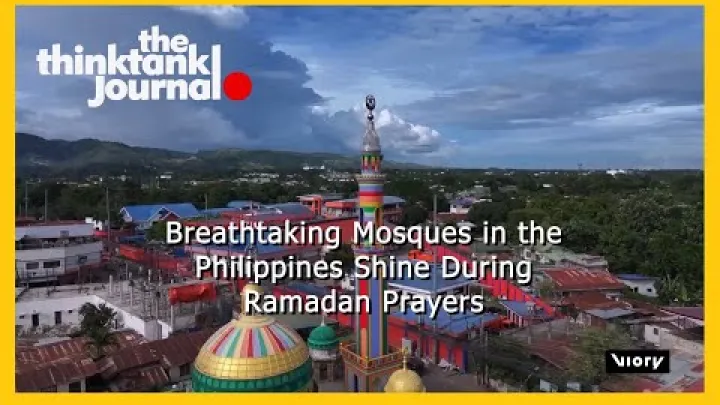
Masjid Tulay complements the Capitol because it represents a different but equally important dimension of Jolo: religious life and community identity. Visitors should remember that it is an active place of worship, not only a photo stop. Access may depend on prayer times, local guidance, and visitor conduct. Dress modestly, speak quietly, and ask before taking photographs.
National Museum and Sulu cultural heritage
The National Museum - Sulu Archipelago Area Museum can help visitors understand Tausug and Sulu cultural heritage before or after seeing the Capitol and Masjid Tulay. A museum stop can provide background that makes civic and religious landmarks easier to interpret.
Before visiting, confirm current hours, access rules, and whether the museum is open to the public on your intended date. Do not assume that operating conditions match older listings. If open and appropriate to visit, the museum can serve as a useful context-building stop rather than a quick add-on.
Markets and barter-trade heritage
Jolo has long been associated with trade, and barter-trade heritage is part of its wider identity. A legal document available through the Philippine Judiciary eLibrary refers to the Barter Trade Operations Center in Jolo, Sulu, showing the administrative relevance of barter trade operations in the area.
For visitors, markets and trade areas should be approached as places of commerce and daily life, not as open-air attractions to wander without guidance. Current conditions, local advice, and personal security should guide any decision to visit. The heritage value is clear, but practical access should be confirmed locally.
Lake Seit and Maubo Beach
Lake Seit on Jolo Island and Maubo Beach in Patikul are often mentioned as natural attractions in the wider area. They broaden the picture of Jolo beyond civic and religious landmarks by pointing to island landscapes, inland water, and coastal scenery.
However, excursions outside the town center require extra planning. Do not assume that swimming, trekking, photography, or easy road access is available or advisable. Confirm local security conditions, transport, weather, and guidance before considering any trip beyond central Jolo.
Historical and Cultural Context
Understanding the Sulu Provincial Capitol is easier when it is placed within Sulu’s longer history. The building represents modern administration, but the landscape around it has older layers of faith, trade, political identity, and resilience.
From the Sultanate of Sulu to the modern province
Sulu’s history is closely connected with the coming of Islam to the Philippines and the legacy of the Sultanate of Sulu. The Bangsamoro Commission for the Preservation of Cultural Heritage provides broad historical framing for Sulu, including its rich cultural origins and Islamic heritage.

The modern Capitol should be read against this background. It is not a relic of the Sultanate, and it should not be made to carry every part of Sulu’s history. Instead, it represents contemporary provincial administration within a region whose political and cultural identity developed over many centuries.
Jolo as a center of faith, trade, and administration
Jolo can be understood through several overlapping roles. It is the capital municipality of Sulu, a center of administration, a place of Islamic religious significance, and a town connected with trade networks. The Capitol, Masjid Tulay, museum spaces, and market areas each show a different part of this identity.
Seeing these places together, even only through research, gives a more complete picture than viewing the Capitol alone. The Capitol explains formal governance. Masjid Tulay explains faith and community presence. Trade-related areas point to movement, exchange, and economic history. Cultural institutions help interpret the region’s heritage.
Conflict, resilience, and careful interpretation
Jolo’s modern history includes serious conflict and security challenges. Any guide to the area should acknowledge this honestly without sensationalizing it. Conflict should not be used as a tourism hook, and local communities should not be reduced to crisis narratives.
Landmarks such as the Sulu Provincial Capitol and Masjid Tulay can be understood through themes of governance, rebuilding, continuity, and resilience. At the same time, residents’ everyday lives, work, worship, and family routines deserve respect. A careful visitor or researcher should avoid treating difficult history as spectacle.
Practical Planning Notes
If you are considering a visit, practical planning should be conservative. The most useful plan is one that can adapt to changing conditions and that does not depend on assumptions.
Timing, weather, and sea conditions
Island travel can be affected by weather and sea conditions, especially when ferries are involved. Jolo-specific public travel seasonality information is limited, so it is better to check current marine weather, ferry status, and local advice shortly before any planned movement.
Do not choose dates only because they look convenient on a booking website. If sea travel is involved, weather and port conditions can affect both arrival and return. A cautious itinerary should include extra time and a backup plan.
Accommodation and local tourism services
Jolo has less internationally visible tourism infrastructure than major Philippine destinations such as Manila, Cebu, or Boracay. Travelers should confirm lodging, local contacts, transport, and on-the-ground support through trusted and current channels before making the trip.
Specialist visitors, researchers, journalists, government-linked guests, or cultural delegations may need institutional coordination or a local host. Independent travelers should be especially careful not to assume that standard tourist services are widely available or suitable for their needs.
Information gaps and how to handle them
Several practical details may remain uncertain until checked locally. These include public access to the Capitol, current transport schedules, local security restrictions, park facilities, attraction operating conditions, and travel outside Jolo town.
Treat uncertainty as a planning issue, not as a detail to ignore. If you cannot verify safe access, reliable transport, and appropriate local support, postpone or limit the visit. A conservative decision is better than relying on assumptions in a safety-sensitive area.
Frequently Asked Questions
Is the Sulu Provincial Capitol in Jolo open to visitors?
Public access should be confirmed locally. The Capitol is a working government building, so offices, entrances, and security areas may be restricted. Many visitors may only be able to view the exterior or nearby civic grounds where permitted.
Is it safe to travel to Jolo to see the Sulu Provincial Capitol?
Do not assume that travel is safe. Jolo and the Sulu Archipelago are safety-sensitive areas, and official travel advisories should be checked before any plan is made. Travelers should also seek current local guidance and avoid independent movement without trusted support.
How do travelers usually reach Jolo from other parts of the Philippines?
Jolo is commonly approached through Zamboanga City, with onward travel by sea and, when available, air connections. Services can change, so schedules, procedures, and return options must be verified close to the travel date.
What attractions can be combined with a visit to the Capitol area?
Nearby or related attractions include Masjid Tulay, the National Museum - Sulu Archipelago Area Museum, trade and market areas connected with Jolo’s barter-trade heritage, and wider Jolo Island sites such as Lake Seit and Maubo Beach. Access and security should be checked for each place.
What should be verified locally before planning a visit?
Verify security conditions, transport availability, port or airport procedures, local movement, Capitol access, attraction hours, weather, and return travel. If reliable information is not available, delay the visit or seek stronger local coordination.
Conclusion: The Capitol as a Starting Point for Understanding Jolo
The Sulu Provincial Capitol in Jolo is important because it helps explain the town as a provincial capital, not only as a point on a map of the Sulu Archipelago. Its civic setting in Asturias, its relationship to nearby landmarks such as Masjid Tulay, and its place within Sulu’s historical landscape make it a meaningful subject for travelers, researchers, and culturally interested readers.
At the same time, any practical visit must be planned with caution. Current advisories, local security conditions, transport reliability, and access rules should guide every decision. For many readers, the best first step is to understand the Capitol as a landmark of governance and identity before deciding whether an in-person visit is appropriate.
Select area
Create a post
Posting is free and no registration is required.