Jolo Car Rental: Self-Drive Risks and Safer Transport
Jolo car rental is not a simple airport-counter booking decision. For most visitors, the main question is not which vehicle class is cheapest, but whether self-driving in Jolo town, Sulu, is available, permitted, insured, and sensible under current conditions. Public search results may show car hire pages for Jolo, Bangsamoro Autonomous Region in Muslim Mindanao, but that does not prove there is a reliable local self-drive rental market. This guide explains what to verify, why safety and access matter, and when a vetted driver-with-vehicle arrangement may be more practical than trying to rent a car in Jolo.
Start Here: Is Renting a Car in Jolo a Good Idea?
Jolo is a special case within Philippines car rental planning. It is part of the Sulu Archipelago, and travel decisions can be affected by security conditions, checkpoints, sea access, insurance limits, and local road knowledge. Treat any vehicle plan as part of a wider travel risk decision.
The Short Answer for Most Visitors
For most international visitors, Jolo is not a normal self-drive car rental destination. You may find generic booking pages when searching for Jolo car rental, rent a car in Jolo, or car hire in Jolo, but those pages do not necessarily confirm a staffed rental counter, named local supplier, available fleet, or permission to drive in Sulu.
The safer practical answer is this: do not assume you can arrive at Jolo Airport or in Jolo central business district and rent a self-drive vehicle in the same way you might at a major airport in Manila, Cebu, or Davao. If travel is essential, start by arranging transport through a trusted local host, institution, accommodation, organization, or verified provider. Confirm the driver, vehicle, price, route, documentation, pickup point, and cancellation terms before you travel.
This does not mean that no vehicle hire exists locally. Private vehicles, arranged vans, official transport, and driver-with-vehicle services may be possible through local networks. However, that is different from mainstream self-drive rental, and the difference matters for safety, insurance, and accountability.
Who Might Still Need a Vehicle
Some travelers may still need a vehicle in Jolo or elsewhere in Sulu. This may include people traveling for official work, humanitarian or development projects, journalism, research, business, family obligations, or government-related visits. These travelers usually have a local host, a clear purpose, and a reason to move between locations on a schedule.
For essential trips, a vetted local driver with an arranged vehicle is usually more realistic than a self-drive rental. A local driver may understand current road conditions, community norms, language issues, checkpoint expectations, and changes in security posture. A vehicle can be useful for repeated inter-municipal movement, but only when the route, timing, permissions, parking, and communication plan are already in place.
Domestic travelers with strong family or community ties may evaluate local movement differently from first-time foreign visitors. Even so, current advice from local contacts matters more than past experience. Conditions can change, and a private family vehicle is not the same as a commercial rental car.
What Jolo Car Rental Search Results Do and Do Not Prove
Search results can create the impression that Jolo has the same rental structure as large urban destinations. In practice, the presence of a search page is only the beginning of verification, not proof that a vehicle is available or suitable.
Aggregator Pages Versus Actual Rental Counters
Travel aggregators often generate destination pages for many towns and cities. These pages may appear for Jolo, Sulu, and may use phrases such as cheap car hire, free cancellation, or pay at pickup. That type of page does not, by itself, prove that there is a physical rental counter, a named operator in Jolo, or a vehicle that can legally and safely be used in Sulu.
Before paying a deposit, look for details that show a real service. A legitimate offer should identify the operator, pickup address, vehicle type, included insurance, driver requirements, geographic-use rules, ferry rules, and emergency contact process. If a booking page cannot confirm that the vehicle may be used in Jolo or Sulu, do not treat the reservation as settled.
A search result headline is not the same as a local car rental market. In a safety-sensitive area, written confirmation is more important than a low advertised daily rate.
How to Verify a Legitimate Local Transport Provider
For essential travel, verification should come through trusted channels where possible. Ask a host organization, accommodation, institution, official contact, or local focal person to confirm the provider. Avoid relying only on informal social media posts unless the identity, terms, and safety arrangements can be checked independently.
- Confirm the driver identity and contact details.
- Confirm vehicle registration and basic roadworthiness.
- Ask what insurance applies and what it excludes.
- Get the price, inclusions, waiting time, and cancellation terms in writing.
- Confirm pickup and drop-off locations before arrival.
- Ask who to contact if the driver is delayed, stopped, or unavailable.
- Clarify whether the service is driver-with-vehicle hire or self-drive rental.
Driver-with-vehicle transport is often more practical than self-drive car rental because it keeps route decisions and local communication with someone who knows the area. It also reduces the risk of misunderstanding informal terms after payment.
Safety and Access Conditions in Sulu
Safety comes before booking logistics in Jolo. The Sulu Archipelago and Sulu Sea are not treated like ordinary leisure-driving areas by several government advisory systems, and local conditions can change quickly.
Official Advisories and Current Security Checks
The U.S. Department of State advises against travel to the Sulu Archipelago and Sulu Sea. Travelers should also check the advice of their own government, their employer or institution, local authorities, and trusted contacts before making any travel decision.

Security posture in the Bangsamoro Autonomous Region in Muslim Mindanao can change during politically sensitive periods, heightened alerts, or local operations. The Philippine News Agency has reported intensified police presence and checkpoints in BARMM during sensitive periods, illustrating why travelers should not rely on outdated videos, old trip reports, or casual anecdotes.
Checkpoints do not automatically mean a trip is impossible, but they do mean that movement requires current information, proper identification, patience, and local guidance. If current advisories or local contacts indicate unacceptable risk, postpone nonessential travel.
Why Self-Driving Can Add Risk
Self-driving makes the traveler responsible for every decision on the road. That includes route choice, timing, navigation, checkpoint interaction, parking, vehicle security, breakdowns, and communication with people who may not speak the traveler’s preferred language.
A local driver may be better able to interpret road closures, checkpoint procedures, community expectations, and route changes. A private vehicle driven by an outsider may also be more conspicuous than local public transport or a vehicle arranged through trusted channels. None of this makes any transport mode fully safe, but it changes the balance of risk.
In Jolo, the convenience normally associated with car rental can become a burden. If you do not know where to park securely, how to communicate during stops, what to do during a delay, or whether your insurance applies, self-driving may add friction rather than freedom.
Essential-Travel Decision Checklist
A checklist cannot make a high-risk trip safe, but it can reveal whether a travel plan is incomplete. Use it to decide whether to postpone, change transport, or request better support.
- Check current government advisories and local security guidance.
- Confirm that the trip is essential and that the purpose is clear.
- Verify the route, timing, pickup point, and destination with a local contact.
- Carry identification, travel documents, and host contact details.
- If driving, carry the license, rental or hire agreement, and insurance documents.
- Confirm accommodation, secure parking, and communication options in advance.
- Prefer daylight movement and avoid spontaneous detours.
- Have a contact person who knows your movement plan.
If several of these items cannot be confirmed, a self-drive rental is not the right solution. Reconsider the journey or use a vetted transport arrangement through a responsible local host.
Getting to Jolo Without Assuming a Rental Car
Access planning for Jolo should begin with flights, sea connections, local pickup, and current security conditions. Do not build an itinerary around a rental car unless the supplier has confirmed the exact use in writing.
Airport and Gateway Realities
Jolo Airport serves the general area of Jolo in Sulu, but the existence of an airport does not mean that airport-style car rental is available. No reliable evidence in the available public information confirms a standard self-drive rental desk at Jolo Airport.
Before traveling, verify current flights, operating status, baggage limits, arrival procedures, and pickup arrangements through current airline, airport, official, or local channels. If someone is meeting you, confirm the exact pickup location and contact method before departure.
Larger gateways on mainland Mindanao may be part of some travel plans, but schedules, onward transport, and security conditions must be checked close to the journey. Do not assume that a vehicle rented in a larger city can be taken to Jolo.
Sea and Overland Transport Planning
Travel to island provinces may involve sea and overland connections. However, schedules, permissions, vessel operations, and local access conditions can change. Confirm details with transport operators, local authorities, and trusted local contacts rather than relying on old route summaries.

Rental contracts often contain geographic-use limits. They may prohibit ferry transport, unapproved islands, high-risk areas, or use outside a defined region. A rental company may also require written approval before a vehicle is loaded onto a ferry. If a contract is silent or unclear, do not assume that ferry movement is allowed.
Buses, vans, official vehicles, and arranged transport may be more familiar with checkpoints and local procedures than a first-time self-drive visitor. For many essential travelers, the practical question is not how to bring a rental car to Jolo, but how to arrange verified pickup and movement with local support.
Local Movement Around Jolo Town
Short movements inside Philippine town centers often rely on walking, tricycles, motorcycles, jeepneys, or arranged rides. In Jolo, confirm what is currently available and appropriate through trusted local contacts after considering safety and timing.
A private rental car may be unnecessary for many short trips inside the town center. It can also create parking and security problems if you do not know the area. Language, pricing, route knowledge, and local expectations make trusted guidance important.
Avoid fixed assumptions about fares, routes, or availability unless a current local source confirms them. In Jolo, flexibility and local coordination are more useful than a generic city transport plan.
Roads, Parking, and Driving Conditions
Road conditions in and around Jolo are not only about pavement quality. Parking, congestion, checkpoints, weather, driver behavior, and secure storage all affect whether a vehicle is useful.
Jolo Town Traffic and Parking Constraints
The central business district of Jolo is important enough to be named in infrastructure planning. The DPWH has described a Sulu bypass road project intended to divert traffic away from the central business district of the capital town Jolo and reduce travel time between municipalities.
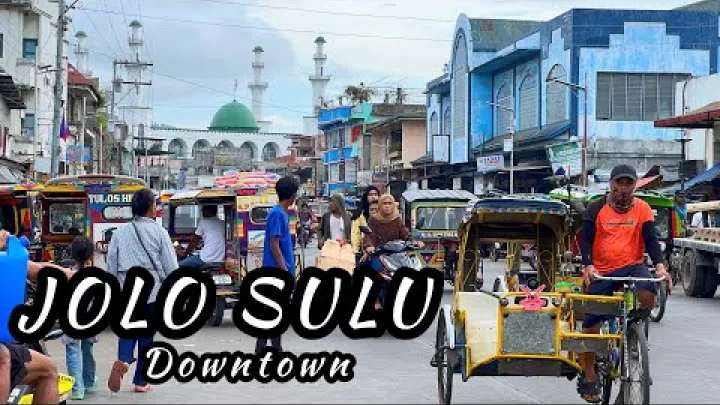
That context matters for car rental decisions. If through-traffic and congestion are planning concerns, a private car may not be an advantage in the urban core. Parking may be limited, informal, or unsuitable for a vehicle that must be kept secure and undamaged.
Do not drive into Jolo central business district unless you have a clear reason, a confirmed destination, and secure parking. If you are being collected by a driver, an arranged pickup may be more practical than trying to manage an unverified rental pickup in town. The real choice may be arranged pickup versus no verified rental service, not airport desk versus downtown office.
Road Conditions Beyond the Town Center
Infrastructure work is ongoing in parts of Sulu. The Asian Development Bank has published project documents related to improvement work on the Sulu Circumferential Road, showing that road investment is part of the wider transport context.
Road improvement does not remove other driving challenges. Conditions may vary by section, weather, drainage, maintenance, traffic mix, and local activity. Motorcycles, pedestrians, animals, parked vehicles, and uneven surfaces can all affect driving, especially outside familiar urban environments.
Tolls are not the main planning issue for Jolo. Access, road condition, parking, checkpoints, local knowledge, and safety are more important than toll budgeting. Even on improved roads, do not treat driving as a casual leisure choice if your route or permissions are uncertain.
One-Way Rentals and Ferry Restrictions
One-way rentals are usually easiest in large rental markets with multiple branches. They are much harder to arrange in smaller or higher-risk destinations, and they are especially unlikely to be simple for an island route involving Sulu.
Before assuming that a mainland rental car can be taken to Jolo, read the contract carefully. Check geographic-use clauses, ferry clauses, insurance exclusions, roadside assistance limits, and drop-off rules. A privately owned vehicle and a commercial rental vehicle are treated differently by operators and insurers.
If you do not have written approval for inter-island movement or use in Sulu, assume it is not allowed. Verbal reassurance is not enough when a deposit, insurance claim, or vehicle recovery could be at stake.
Licenses, Documents, Deposits, and Insurance
Even if a vehicle is available, the administrative details can stop a rental. License rules, identification, age limits, deposits, insurance exclusions, and contract wording all matter more in a place where resolving problems may be difficult.
Driver License and International Driving Permit Basics
Philippines rental companies may require a valid driver license, passport or government identification, minimum driving experience, and age compliance. Policies differ by company and location. For example, Fox Rent A Car lists requirements at a major Manila airport location that include license history and identification rules, but those policies should not be treated as universal for every operator.
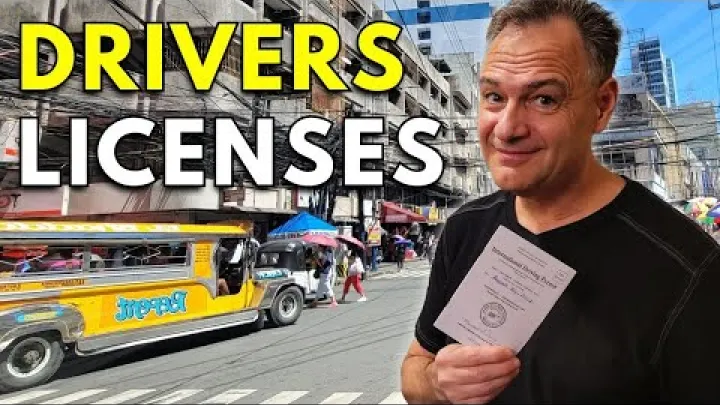
An International Driving Permit is usually a translation aid, not a replacement for your original driver license. If your license is not in English, ask the rental company and relevant authorities what translation or permit is required before you travel. The Automobile Association Philippines provides information on International Driving Permits, but renters should also check current Land Transportation Office rules and the specific rental contract.
Separate two issues in your mind: legal driving eligibility and rental company approval. You may be legally allowed to drive, but a rental company can still refuse a rental because of age, license history, payment method, destination, route, or insurance restrictions.
Deposits and Contract Terms to Read Before Paying
Deposits are common in Philippine car rental. Depending on the provider, the deposit may be a cash payment, card hold, or card charge. The amount, refund timing, and dispute process should be written clearly before you pay.
At pickup, document the vehicle with photos and video. Include the body panels, tires, windshield, interior, fuel level, odometer, tools, spare tire if present, and any existing damage. Repeat the process at return. This is important anywhere, but especially important when you are far from a major rental office or dealing with an informal provider.
- Fuel policy and return level.
- Mileage limits and extra distance charges.
- Late return fees.
- Damage excess or deductible.
- Cleaning fees.
- Geographic limits and ferry restrictions.
- Deposit refund timing and method.
- Roadside assistance and recovery process.
Informal rentals may seem flexible, but weak documentation can make disputes harder. In Jolo, the cost of a misunderstanding is not only financial; it can disrupt a safety-sensitive itinerary.
Insurance Limits and CTPL Misunderstandings
Compulsory third-party liability is limited. CTPL Philippines describes CTPL as protection for possible liability for third-party bodily injury or death arising from use of a motor vehicle. It should not be confused with full coverage for the rental vehicle, theft, personal injury, all property damage, ferry movement, or excluded areas.
Ask the rental company what cover applies to collision damage, theft, roadside assistance, towing, civil unrest, terrorism, ferry transport, and use in or near Sulu. Ask whether any area is excluded. If special permission or coverage is needed, get it in writing before you drive.
Insurance may be one of the main reasons a company refuses self-drive rental for Sulu. That refusal is not only a commercial inconvenience; it may reflect risk, recovery difficulty, or policy exclusions.
Best Transport Choice by Traveler Type
The best transport choice depends on who is traveling and why. In Jolo, traveler type matters more than vehicle category.
Independent Tourists
Independent tourists should not treat Jolo as a casual self-drive destination. If the trip is nonessential, check current advisories and consider safer itinerary alternatives. Do not let a cheap car rental headline outweigh current safety guidance.
If travel is essential, use a vetted driver-with-vehicle arrangement through trusted local channels rather than self-driving. Confirm the route, pickup point, accommodation, parking, and contact plan before arrival. If these cannot be confirmed, postpone or redesign the trip.
Domestic Travelers With Local Ties
Domestic travelers with family, business, or community ties may have access to local knowledge, private vehicles, and trusted contacts that outsiders do not. That can make movement more practical, but it does not remove risk.
Check current security, ferry, road, and checkpoint conditions before traveling. Bringing or using a privately owned vehicle is different from renting a self-drive vehicle under commercial terms. Insurance, permissions, and responsibility are different.
Before entering the town center, confirm parking and safe storage. A vehicle that is useful for inter-municipal movement may be inconvenient inside a congested urban core.
Journalists, Aid Workers, and Official Visitors
Journalists, aid workers, researchers, and official visitors should follow their organization’s security protocols rather than general tourism advice. Vehicle arrangements should be coordinated with local hosts, security contacts, and institutional focal points.
At a high level, this usually means written movement plans, vetted drivers, local contacts, communications check-ins, and clear responsibility for vehicle approval. Self-driving by foreign staff or short-term visitors is often inappropriate unless the responsible organization explicitly authorizes it.
Do not use a generic car hire search result as a substitute for professional security guidance. In Jolo, transport is part of duty-of-care planning.
Frequently Asked Questions
Can I rent a self-drive car at Jolo Airport?
Do not assume so. Jolo Airport exists, but there is no reliable public evidence of a standard self-drive rental desk there. Verify current flights, airport services, and pickup arrangements before travel.
Is it safe for tourists to drive in Jolo?
For most tourists, self-driving in Jolo is not recommended. Official advisories, checkpoints, local security conditions, parking, language, and insurance limits can make self-driving riskier than arranged transport.
Can I take a rental car from Zamboanga to Jolo by ferry?
Only if the rental company gives written approval and the contract allows ferry transport, geographic use in Sulu, and valid insurance coverage. Without written approval, assume it is not allowed.
Do I need an International Driving Permit in the Philippines?
An International Driving Permit may be needed or useful, especially if your license is not in English, but it does not replace your original license. Check current rules and the rental company policy before travel.
What is the safest alternative to self-driving in Jolo?
For essential travel, the safer practical option is usually a vetted local driver with an arranged vehicle through a trusted host, institution, accommodation, or official contact.
Will car rental insurance cover travel in Sulu?
Do not assume it will. Many policies have geographic, ferry, civil unrest, theft, or recovery exclusions. Ask for written confirmation of coverage before any travel in or near Sulu.
Conclusion: Treat Jolo Car Rental as a Safety Decision, Not a Booking Task
Jolo car rental should be approached with caution. The main issue is not whether a search page shows a low price, but whether a real provider, legal use, insurance, route, parking, and safety plan can be confirmed.
For most visitors, self-driving in Jolo is not the practical choice. If travel is nonessential, review current advisories and consider postponing or changing plans. If travel is essential, arrange transport through trusted local channels, use a vetted driver where possible, and get all key terms in writing.
In Jolo town and the wider Sulu context, transport is not just mobility. It is part of responsible travel planning.
Select area
Create a post
Posting is free and no registration is required.