Tulay Mosque Jolo: Respectful Masjid Tulay Guide
Tulay Mosque Jolo is one of the most important Islamic landmarks in Jolo, Sulu, and a meaningful sacred place in the Bangsamoro region. Also known as Masjid Tulay and Tulay Central Mosque, it is not simply a site to photograph from a travel list. It is a living place of worship, a community landmark, and a symbol of resilience in a safety-sensitive part of the southern Philippines. This guide explains what the mosque means, how to think about access, and how to approach any visit with caution, respect, and local guidance.
What Tulay Mosque Jolo Is
Understanding Tulay Mosque begins with using the right names and the right frame. In Jolo, this is a mosque first, not a conventional tourist attraction.
Use the Names Masjid Tulay and Tulay Central Mosque
The phrase Tulay Mosque Jolo is useful for travelers searching online, but the site is more properly understood through its local names: Masjid Tulay and Tulay Central Mosque. The Bangsamoro Government describes Masjid Tulay as a prominent mosque in the municipality of Jolo and also identifies it as Tulay Central Mosque.
Using mosque or masjid language matters. A masjid is an Islamic place of worship, and Masjid Tulay should not be described as a temple in the sense used for Buddhist, Hindu, or other religious sites. It is a major religious landmark in Jolo town, Sulu Province, within the Bangsamoro Autonomous Region in Muslim Mindanao.
See It First as a Living Place of Worship
Masjid Tulay is an active congregational mosque. It is not a museum with guaranteed public entry, fixed visitor routes, or a standard tour schedule. Prayer, religious learning, community gathering, and local leadership define the space.
For visitors, the right starting point is humility. Any interest in seeing the mosque should be shaped by respect for worshippers, prayer times, mosque authorities, and the wider security situation in Jolo. Observation from outside may be more appropriate than entering. Learning about the mosque may be more important than taking photographs.
Place It in the Muslim Heritage of Sulu
Jolo and the wider Sulu Archipelago are deeply connected with the Muslim heritage of the southern Philippines. For many visitors who know the Philippines mainly through Catholic churches, town fiestas, and Spanish colonial sites, Masjid Tulay offers a different view of the country’s religious landscape.

Sulu is closely associated with Tausug and Bangsamoro history, but it is important not to treat all Muslim communities in Mindanao and the Sulu Archipelago as the same. Masjid Tulay belongs to its own local setting in Jolo. Its meaning is tied to faith, town life, memory, and the continuing presence of Islam in Sulu.
Safety and Access Before You Go
Any discussion of visiting Tulay Mosque Jolo must begin with safety. Jolo and the Sulu Archipelago require careful planning, current information, and willingness to cancel a trip if conditions are not appropriate.
Check Current Travel Advisories First
Jolo and the Sulu Archipelago are safety-sensitive destinations. Before planning travel, check current government travel advisories, local guidance, and reliable security information. If official or local advice says not to travel, do not go.
Some foreign governments issue strong warnings for the Sulu Archipelago. The U.S. Department of State has identified risks in parts of the Philippines, including terrorism, kidnapping, civil unrest, and crime, and travelers should read the current advisory rather than rely on older travel stories.
Conditions can change quickly. A blog article, social media post, or older travel guide cannot replace current official advice. The practical rule is simple: safety decisions come before sightseeing interest.
Coordinate With Local Authorities
Any attempted visit to Masjid Tulay should be coordinated with local authorities, local tourism contacts, trusted community contacts, or guides who understand current conditions in Jolo. The Provincial Tourism Office of Sulu or other local government channels may be able to explain whether a visit is appropriate at the time.
Access in Jolo may be affected by checkpoints, local permissions, escorts, prayer schedules, official events, and changing security assessments. An escort or guide should not be understood as a guarantee of safety. It is only one part of a wider decision process.
Visitors should accept local decisions without argument. If a guide, mosque representative, security personnel, or local official says that a stop should be shortened, delayed, viewed only from outside, or cancelled, that instruction should be followed.
Understand That Interior Access May Be Restricted
Non-Muslim visitors should not assume they can enter the interior of Masjid Tulay. Even where mosque visits are possible in some places, access depends on local practice, mosque leadership, timing, and the presence of an appropriate guide.
If access is not clearly offered, do not enter. Ask before stepping into any mosque space, including courtyards, covered areas, or entrances. A respectful exterior view may be the most realistic and appropriate way to experience the mosque for many travelers.
Verify Transport, Timing, and Local Conditions
Zamboanga City is often discussed as a common gateway for travel onward to Jolo, but transport information can become outdated. Do not rely on old ferry schedules, flight notes, fares, or informal route descriptions when planning a trip to Sulu.
Before moving, verify flights, ferries, road transport, local transfers, and arrival procedures with current operators and local authorities. In this region, security conditions can matter more than distance or timetable convenience. A route that looks simple on a map may not be advisable on a particular day.
History and Meaning of Masjid Tulay
Masjid Tulay is significant not only because it is visible in Jolo’s townscape, but also because its history reflects faith, loss, rebuilding, and community memory.
The 1884 Foundation
Official Bangsamoro reporting identifies the original Masjid Tulay as having been founded in 1884. That date places the mosque within a long local history of Islamic worship in Jolo and Sulu.
The foundation date should be understood as part of the mosque’s community importance rather than as a reason to invent details about the original structure. Available public summaries do not support detailed claims about its nineteenth-century materials, decoration, or exact architectural plan. What can be said with care is that the mosque has deep roots in Jolo’s Islamic heritage.
Destruction During the 1970s Conflict
The original mosque was destroyed during the conflict period in Jolo in the 1970s, with 1974 commonly identified in available accounts. For a central mosque, destruction is not only a physical loss. It affects a place where people gather, pray, remember, and mark community life.
This history should be described in neutral language. The purpose here is not to reduce Jolo to conflict or assign unsupported blame. It is to understand why the rebuilt mosque carries emotional and religious meaning beyond its architecture.
Reconstruction and Community Resilience
The rebuilt Masjid Tulay is often described through the language of faith and resilience. Its reconstruction represents continuity after loss and the strength of a community that preserved a central place of worship.
Available official accounts report support connected with the Sheikh Zayed Al-Nahayan Foundation and identify completion of the rebuilt mosque in 2001. These details help explain why Masjid Tulay is remembered not only as an old mosque, but also as a modern symbol of recovery in Jolo.
Architecture and Setting in Jolo
Architecture can help visitors understand why Masjid Tulay stands out, but descriptions should remain careful. Not every visual detail has a verified public explanation.

Domes, Minarets, and the Jolo Skyline
Masjid Tulay is commonly recognized by its domes and minarets, features that make it visually distinct in Jolo’s urban setting. These elements also signal its role as a central Islamic landmark, especially in a town where religious identity is part of the public landscape.
It is better to use simple visual language than to make unsupported claims about design influences, materials, or exact style. The mosque’s architectural importance is clear enough without exaggeration: it is a prominent sacred structure in the town, and its form helps mark Jolo as part of the Muslim south of the Philippines.
Prayer Space and Mosque Layout
Like mosques generally, a prayer space is oriented toward worship. Visitors should expect customs such as shoe removal before entering appropriate interior areas, quiet conduct, and respect for prayer rows and worshippers. The qibla direction, which orients Muslim prayer toward Mecca, shapes mosque worship spaces in general.
These are general mosque principles, not a detailed confirmed floor plan of Masjid Tulay. Interior spaces should not be treated as visitor circulation areas. Gendered prayer areas may exist, but visitors should not assume where to stand or move without guidance from mosque authorities or a trusted local guide.
Central Town Setting and Nearby Context
Masjid Tulay should be understood within Jolo town, not as an isolated monument. Its meaning comes partly from its central role in a living municipality, surrounded by daily movement, civic life, religious practice, and local memory.
Nearby religious context may include Jolo Cathedral, also known as Our Lady of Mount Carmel Cathedral, but this should not be turned into an unguided walking route. Movement between sites in Jolo should depend on current local advice. Practical proximity does not always mean a route is appropriate or safe.
Etiquette for a Respectful Mosque Visit
If a visit to Tulay Central Mosque is approved, etiquette is not a minor detail. It is the main way a visitor shows respect for a living sacred space.

Dress Modestly Before You Arrive
Modest clothing is the safest and most respectful choice. Men and women should cover shoulders and legs, avoid tight or revealing clothing, and dress conservatively before arriving near the mosque.
Women should bring a scarf or shawl in case head covering is requested. Shoes should be easy to remove because mosque interiors normally require shoe removal. These steps are not a costume for a photograph. They are a practical sign of respect for local religious norms.
Respect Prayer Times and Worshippers
Daily prayers shape the rhythm of a mosque. Friday congregational prayer is especially important and may bring larger numbers of worshippers. Non-worshipping visitors should not interrupt prayer, cross in front of worshippers, speak loudly, or move through active prayer areas.
Do not rely on fixed prayer times from an old page or travel post, because times change by date and location. If a visit is approved, ask a guide, mosque representative, or local contact when it is appropriate to be nearby. If the answer is to wait, remain outside, or leave, accept it calmly.
Ask Permission Before Photography
Photography near Masjid Tulay requires sensitivity. General mosque manners, including guidance from the Sheikh Zayed Grand Mosque Centre, emphasize respectful conduct, attention to designated photo areas, and care not to disturb worshippers.
At Masjid Tulay, never assume photography is allowed. Do not photograph worshippers, women, children, security personnel, checkpoints, or interior areas without clear permission. Photography near security-sensitive locations can create serious problems. When unsure, put the camera away.
Follow Gender, Greeting, and Movement Guidance
Local gender norms may affect where visitors stand, sit, enter, or wait. These norms can vary by situation, so do not make rigid assumptions. Follow the guidance of your host, mosque authority, or local guide.
Avoid initiating physical greetings such as handshakes unless the other person clearly initiates or welcomes them. Keep your voice low, move slowly, avoid blocking entrances, and do not separate from your guide. In a sacred space, small gestures of restraint often matter more than many spoken explanations.
Tulay Mosque in Bangsamoro Sacred Heritage
Masjid Tulay is part of a wider sacred geography in the southern Philippines. Understanding that context helps travelers avoid treating Jolo as only a risk zone or only a photo destination.
How It Differs From a Tourist Temple
Some travelers search for temples or shrines in Jolo because they are looking for meaningful religious sites. Masjid Tulay can appear in that search journey, but it should not be called a temple as a substitute for mosque. It is a Muslim place of worship with Islamic norms.
In many tourist destinations, sacred sites are organized for casual visitors, with ticket counters, photo points, and regular opening hours. Jolo is different. Here, a respectful distance may be the correct form of visit. Seeing the mosque from outside, learning its history, or deciding not to visit during a sensitive period can all be responsible choices.
Connections With Other Major Bangsamoro Mosques
Masjid Tulay can be understood alongside other Islamic landmarks in the southern Philippines. Sheik Karimol Makhdum Mosque in Simunul, Tawi-Tawi, is often discussed in relation to the early history of Islam in the Philippines. Sultan Haji Hassanal Bolkiah Mosque in Cotabato City is widely recognized as a major modern mosque in the Bangsamoro region.
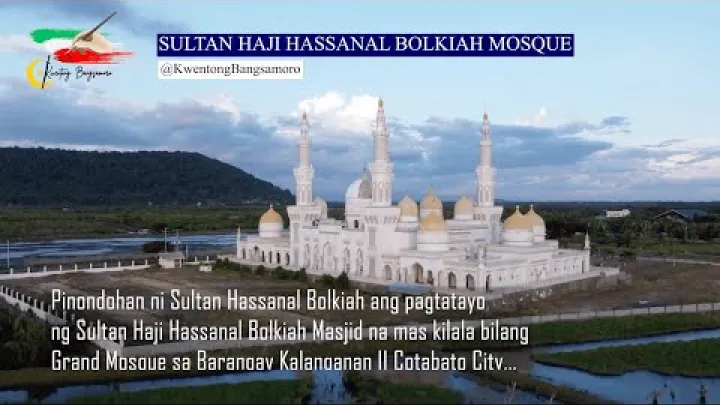
These sites represent different aspects of Islamic history, regional identity, and sacred architecture. They should not be reduced to a ranked checklist of attractions. For travelers, the useful lesson is that Muslim sacred heritage in the Philippines is diverse, locally rooted, and not limited to one town or one building.
The Interfaith Landscape of Jolo
Jolo’s religious landscape also includes Catholic institutions, including Jolo Cathedral. UCA News provides context on the Catholic diocese of Jolo while also noting the strong Muslim identity of the wider Sulu setting.
This interfaith context should be handled carefully. Religious sites in Jolo have also been affected by violence, and it is not respectful to present them as simple photo stops. At the same time, Jolo should not be described only through conflict. It is a complex town with Muslim and Christian communities, sacred memories, civic life, and continuing local resilience.
If a Visit Is Approved: A Cautious Town-Tour Framework
If current advice, local authorities, and trusted contacts all support a visit, the best approach is flexible and cautious. Do not build the day around fixed expectations.
Start With a Local Briefing Instead of a Fixed Itinerary
Begin with a local briefing. This may come from a local guide, tourism contact, government office, host institution, or trusted community contact. The briefing should cover current access, timing, appropriate dress, photography limits, and any areas to avoid.
A planned stop at Masjid Tulay may change at short notice. It may become an exterior-only stop, a brief pause from a vehicle, or a cancelled visit. This is not a failure of planning. It is a normal part of responsible movement in a place where conditions can change.
Combine Only Nearby Stops That Guides Approve
It may be tempting to combine Masjid Tulay with nearby civic landmarks, markets, or Jolo Cathedral. Do this only if guides or local authorities approve the combination on that specific day.
Avoid self-guided movement between religious, government, market, or security-sensitive areas. A location can be geographically close and still be inappropriate to visit at a certain time. Let current local advice shape the route, not a map app or an old itinerary.
Leave Space for Prayer Schedules and Security Changes
Prayer times, Friday worship, Islamic holidays, civic events, and security assessments can all change the day’s plan. Visitors may be asked to wait, skip photos, remain outside, avoid certain entrances, or leave quickly.
Patience is part of respectful travel in Jolo. If a visit is possible, keep it simple. If it is not possible, accept that decision without pressure. The community’s worship and safety come before visitor convenience.
Responsible Ways to Learn and Share
Responsible interest in Tulay Mosque Jolo does not always require physical access. Learning carefully and sharing respectfully can be just as important.
Decide When Learning From Afar Is Better
Not visiting can be the responsible choice. If advisories are strong, local contacts advise against travel, or your own risk tolerance is low, it is reasonable to postpone or abandon plans.
Meaningful learning can still happen through official Bangsamoro sources, local reporting, academic work, and careful cultural research. Physical access is not the only authentic way to understand Masjid Tulay. In some circumstances, staying away shows more respect than insisting on entry.
Share Stories Without Sensationalizing Risk
If you write or post about Masjid Tulay, center faith, community, history, and resilience. Avoid captions that make danger the main story or present Jolo as an exotic backdrop for adventure.
Do not post identifiable images of worshippers, women, children, or security arrangements without consent. A respectful caption might say that Masjid Tulay is a central mosque in Jolo with deep community meaning. A poor caption would treat the mosque mainly as a risky trophy stop.
Use Sources That Center Local Context
When learning about Masjid Tulay, prioritize sources that understand local context. Official Bangsamoro materials, local institutions, careful cultural writing, and responsible reporting are better than unsourced summaries or repeated travel claims.
Information about access, transport, and safety can become outdated quickly. Cross-check details before making decisions or repeating claims. This is especially important for Jolo, where the difference between an old travel note and current local advice can be significant.
Key Takeaways
Tulay Mosque Jolo, more properly understood as Masjid Tulay or Tulay Central Mosque, is a major Islamic landmark in Jolo, Sulu. It is a living place of worship, not a conventional tourist attraction or a temple.
The mosque’s history includes an 1884 foundation, destruction during the 1970s conflict period, and later reconstruction associated with community resilience. Its domes, minarets, and central town setting make it visually prominent, but its deeper meaning comes from faith and local memory.
Before considering any visit, check current travel advisories and coordinate with local authorities or trusted local contacts. Do not assume interior access, photography permission, or self-guided movement in Jolo. Dress modestly, respect prayer times, ask before taking photos, and follow local guidance at every step.
The most respectful way to approach Masjid Tulay is to let safety, worship, and community priorities come first. Sometimes that may mean a brief exterior view. Sometimes it may mean learning from afar. Both can be valid when done with care.
Select area
Create a post
Posting is free and no registration is required.