Jolo Neighborhoods: Where to Stay and What to Verify

Jolo neighborhoods require a different kind of travel decision than neighborhoods in a typical beach, city, or resort destination in the Philippines. In Jolo, Sulu, the first question is not which area has the best nightlife or easiest sightseeing, but whether the trip is essential, locally supported, and currently permitted by the relevant authorities and hosts. This guide uses the barangays of Jolo as the practical neighborhood map, explains the main stay-related trade-offs, and shows what to verify before booking accommodation or arranging transport. It is written for essential visitors, institutional travelers, family-related trips, and locally hosted visits, not as encouragement for casual leisure travel.
Start With the Safety Reality in Jolo
Any discussion of the best areas in Jolo must begin with the wider security context of the Sulu Archipelago. A barangay can be more practical for a specific purpose, but that does not make it safe in an absolute sense.
Official advisories apply to the whole Sulu Archipelago
Jolo is in the province of Sulu, within the Sulu Archipelago in the Bangsamoro Autonomous Region in Muslim Mindanao. Official travel advisories for this part of the southern Philippines can be severe, and they should be checked before any planning begins. For example, the U.S. Department of State advises travelers to review risks in the Philippines and gives specific warnings for higher-risk areas, including the Sulu Archipelago and Sulu Sea.
This article does not override advice from your government, employer, insurer, university, aid organization, security provider, or local host. If any of those sources advise against travel, postpone or cancel the trip. If the visit is essential, treat neighborhood choice as only one part of a broader risk management plan.
Neighborhood choice can reduce exposure but cannot remove risk
In many cities, a neighborhood guide helps visitors choose between nightlife, family comfort, walkability, and price. In Jolo, the more useful question is: which base gives the lowest practical exposure for the purpose of the visit? That may mean staying close to a host organization, in a controlled compound, or in accommodation where pickup, registration, access, and emergency contacts are already arranged.
Central areas, port-adjacent areas, residential barangays, and security-adjacent locations each have trade-offs. A central location may reduce travel time but increase exposure to crowds and public spaces. A port-adjacent location may help with arrivals or departures but may not be the best overnight environment. A compound-style or institution-linked stay may offer more controlled access, but it is not a guarantee of protection and may have its own sensitivities.
How Jolo Neighborhoods Are Defined
For visitors trying to understand Jolo districts, the most practical unit is the barangay. A barangay is the smallest local government unit in the Philippines and often functions as the named neighborhood people use for location, administration, and local identity.
Use barangays as the practical neighborhood map
Jolo has eight barangays: Alat, Asturias, Bus-Bus, Chinese Pier, San Raymundo, Takut Takut, Tulay, and Walled City. This barangay structure is shown in local administrative profiles such as PhilAtlas, which lists the municipality and its barangays.
These names are more useful than imported ideas such as “tourist district,” “resort zone,” or “backpacker area.” Jolo does not have the same visitor infrastructure found in mainstream Philippine destinations. When someone asks for the best neighborhoods in Jolo, the answer must be framed around purpose, verified local support, and current conditions.
Expect limited formal tourism and lodging infrastructure
Public accommodation information for Jolo is sparse compared with cities such as Cebu, Davao, Manila, or Zamboanga. Listings may be incomplete, outdated, or not detailed enough to support a safety-sensitive travel decision. A place appearing on a map or booking platform should not be treated as proof that it is open, suitable, or appropriate for your visit.
The typical outsider visiting Jolo is more likely to be traveling for official work, institutional duties, family reasons, community work, or a locally hosted purpose. Before travel, confirm the exact barangay, current operating status, access procedures, pickup arrangements, reception hours, emergency contacts, and whether the property or host is acceptable under your organization’s rules.
Neighborhood-by-Neighborhood Guide to Jolo
The following guide compares Jolo barangays as stay-related areas, not as conventional tourist neighborhoods. The descriptions are cautious because public visitor-specific information is limited and conditions can change.
Asturias and the Camp Asturias area
Asturias is one of the most relevant areas to discuss for essential stays because of its association with Camp Asturias and the possibility of more controlled or institution-linked arrangements. For some visitors, a base connected to an official, institutional, or trusted local host may reduce exposure compared with an open street-front stay.
That does not mean Asturias is safe in a general sense. A security-adjacent location can also be sensitive, and its suitability depends on current conditions, permissions, access control, and the reason for the visit. If a host proposes accommodation in or near Asturias, ask who will meet you, how entry is managed, whether movements are pre-approved, and what the contingency plan is if conditions change.
Walled City
Walled City is a central and historically significant barangay in Jolo. It may matter for civic access, heritage-related visits, official errands, or town-center meetings. Its centrality can be useful when the purpose of the trip is nearby and movement is organized.
The trade-off is that central public spaces, landmarks, commercial activity, and crowds can increase exposure. Walled City should not be treated as a casual sightseeing base. If you need to visit, do so in daylight, with host guidance, and only after local contacts confirm that the timing, route, and purpose are appropriate.
Bus-Bus and Chinese Pier
Bus-Bus and Chinese Pier are important because they are associated with port and pier access. They may matter for arrivals, departures, maritime movement, cargo, or coordination around Jolo Port. For a traveler with a tight transport plan, being near a port area may seem convenient.

Convenience is not the same as suitability for an overnight base. Port-adjacent areas can involve crowds, loading activity, irregular schedules, traffic, and security considerations. Do not plan to wander independently around port areas while waiting for a connection. Confirm ferry or boat details through current operators or local hosts, arrange pickup and drop-off in advance, and keep the transfer plan simple.
San Raymundo
San Raymundo is a large urban barangay with limited public visitor-oriented information. Barangay directories identify it as a barangay of Jolo, and one directory reports a 2024 population figure of 28,035 for San Raymundo, but that single data point should not be stretched into a full travel profile. The BarangayDirectory listing is useful for basic identification, not for deciding whether an outsider should stay there.
San Raymundo may be relevant for family ties, community work, local appointments, or a host’s specific reason. There is no strong public evidence that it is a primary visitor lodging area. If you are considering a residential stay in San Raymundo, do so only through a trusted local contact who can confirm current access, transport, communications, and security conditions.
Alat, Takut Takut, and Tulay
Alat, Takut Takut, and Tulay should be approached cautiously from a visitor planning perspective because public, stay-specific information is especially limited. In the absence of reliable current details, treat them as local residential or mixed-use barangays rather than visitor bases.
A trusted host may have a specific reason to place a visitor in one of these barangays, such as proximity to family, a work site, or a local office. Without that reason, do not improvise a stay. Ask about access, recent local conditions, flood or weather exposure, road conditions, communications, transport pickup, and whether movement between barangays is currently advised.
| Area | Possible reason to stay or visit | Main trade-off |
|---|---|---|
| Asturias and Camp Asturias area | Institutional, official, or controlled-access arrangements | More controlled does not mean risk-free |
| Walled City | Civic, central, or heritage-related access | Central public exposure and crowd sensitivity |
| Bus-Bus and Chinese Pier | Port, pier, arrival, or departure coordination | Transport convenience may not suit overnight stays |
| San Raymundo | Family, community, or local host reasons | Limited visitor-oriented lodging evidence |
| Alat, Takut Takut, and Tulay | Specific local host placement only | Information scarcity and need for local verification |
Choose a Base by Priority
The best area to stay in Jolo depends on why you are there. In most cases, the answer should come from your host organization, local family contact, employer, or security adviser rather than from a general travel preference.
First-time essential visitors
For first-time essential visitors, the best base is usually the one connected to the verified purpose of the trip. That may be accommodation arranged by a host organization, a controlled lodging environment, or a location close to a necessary meeting site. Do not choose a base because it seems central, inexpensive, or interesting on a map.
A simple decision rule is useful: if there is no trusted host, do not improvise a stay in Jolo. First-time leisure visitors should reconsider non-essential travel in light of official advisories and should not treat Jolo as a standard island destination.
Budget stays and practical short stays
In Jolo, the cheapest room should not be the main decision factor. A low price is not helpful if pickup is uncertain, reception is unavailable, communications are weak, or the route to your appointment is not locally advised. Secure access, reliable host support, and transport coordination matter more than a small saving.
Before accepting a budget or short-stay option, confirm the exact barangay, payment method, check-in process, locks, reception or caretaker availability, backup power, water, mobile signal, internet, and pickup location. There is no verified backpacker district or budget-travel zone in Jolo comparable to those in safer tourist cities.
Families and longer stays
Jolo is not an obvious family leisure or long-stay base for outsiders under the current risk framing. Families, children, and longer-stay visitors need more than a room: they need medical planning, stable communications, local support, safe movement routines, and a clear departure plan.
If a family, work, or duty-related stay is unavoidable, minimize unnecessary movement between barangays. Choose accommodation close to the verified purpose of the stay, confirm medical access and emergency contacts, and avoid promising plans based on amenities that have not been checked directly with the host or property.
Nightlife and social activity
There is no reliable evidence of a visitor-oriented nightlife district in Jolo. Nightlife should not be a basis for choosing a neighborhood. Security conditions, local norms, and possible movement restrictions make late-night social activity a poor planning priority.
If social meetings are part of your visit, keep them daytime, host-approved, and close to your base or official purpose. In many cases, compound-based or private-host social activity may be more appropriate than public late-night movement. Do not rely on bar, club, or late-night restaurant recommendations unless a trusted local contact confirms they are currently suitable.
Stay-Relevant Trade-Offs Across Jolo
When comparing Jolo neighborhoods, focus on exposure, access, and support. The usual travel categories still matter, but they must be interpreted differently in a safety-sensitive setting.
Safety at night
Nighttime movement should be treated as a major risk variable, not a lifestyle preference. Do not assume that a short distance is walkable or that a familiar route is acceptable after dark. Follow the guidance of your host, employer, lodging provider, and local authorities on curfews, movement windows, and approved routes.
The exposure profile differs by area. Central barangays may involve crowds and public spaces. Port-adjacent barangays may involve transport activity and waiting areas. Residential barangays may be unfamiliar to outsiders and harder to navigate without a host. Controlled compounds may reduce open-street exposure but can also involve strict entry, exit, and reporting procedures.
Transport convenience and port transfers
Transport convenience matters in Jolo, especially for arrivals and departures through Jolo Port or other maritime access points. However, staying directly beside a transport node is not always the best risk trade-off. A better plan may be to stay where your host can manage access and arrange a direct transfer when needed.
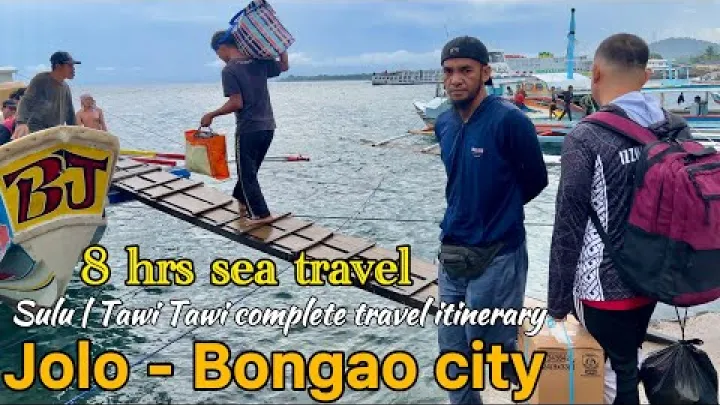
Confirm pickup and drop-off plans between lodging, Jolo Port, offices, meeting sites, and any family or community destination. Avoid building a plan around unverified ferry schedules, informal transfers, or independent exploration by tricycle or on foot. Transport details can change, and they should be verified with current operators or trusted local contacts before travel.
Walkability, crowding, and street comfort
Jolo may look compact in distance terms, but compact does not mean easy or advisable to walk for outsiders. Physical walkability and security advisability are separate questions. A route that is short on a map may pass through crowded streets, narrow local lanes, checkpoints, port activity, or areas where a visitor should not move without guidance.
Walk only when a local host says it is the locally advised option, and keep the walk purposeful. Avoid spontaneous detours, avoid displaying valuables, and keep trusted contacts informed of where you are going. If a vehicle transfer is advised, use it even for short distances.
Noise level and accommodation style
Accommodation in Jolo should be assessed by function more than style. The main categories a visitor may encounter are controlled compound lodging, small hotels or guesthouses, and street-front local properties. Each has different implications for access, noise, privacy, and movement.
Port-adjacent and commercial areas may be busier, especially around arrivals, departures, loading, and local commerce. Institution-linked lodging may be quieter and more controlled, but it may also have stricter procedures and less flexibility. Before booking, ask about room security, locks, reception hours, backup power, air conditioning, internet, water, noise, and how guests enter or leave the property.
What to Verify Before You Book
In Jolo, booking accommodation should come near the end of planning, not the beginning. First confirm that the trip is essential, allowed, supported, insured, and logistically possible.
Current advisories and local permissions
Check official travel advisories from your own government before planning, and repeat the check close to departure. Also confirm advice from your employer, institution, insurer, or sponsoring organization. The U.S. Department of State is one example of an official advisory source, but travelers should consult the relevant authority for their own citizenship and situation.
Ask whether the trip requires special authorization, security clearance, local coordination, insurance approval, or host registration. Outdated blog posts, map pins, and hotel listings are not enough for a safety-sensitive decision. If official or host guidance is negative, postpone or cancel.
Lodging security and host support
Ask direct, practical questions before confirming any stay. What is the exact barangay? Who controls access? Is there reception or a caretaker at all times? Can pickup from Jolo Port or another arrival point be arranged? Are guests registered? Who is the emergency contact? What happens if plans change?
A trusted host may matter more than a familiar booking platform. Share itinerary details only with necessary trusted parties, follow local security protocols, and avoid publishing or casually discussing sensitive movement details. Do not choose a property solely because it has a few online reviews or a recognizable name.
Transport, communications, cash, and contingency plans
Before choosing any base, confirm how you will arrive, how you will leave, and how you will communicate if the plan changes. Island access can be affected by security conditions, weather, sea conditions, and schedule changes. A neighborhood that is reachable in ordinary conditions may be difficult if transport is disrupted.
- Confirm arrival and departure routes with current local contacts.
- Arrange pickup and drop-off before arrival.
- Check mobile network reliability for your specific location.
- Carry enough cash if card payment or ATM access is uncertain.
- Keep backup contacts with your host, lodging, employer, and family.
- Have a departure plan before you arrive, not after a problem begins.
- Monitor weather and sea conditions when travel depends on maritime access.
Frequently Asked Questions
Is Jolo safe for tourists right now?
Jolo should not be treated as a normal tourist destination. Official advisories for the Sulu Archipelago can be severe, and non-essential travel should be reconsidered. Essential visitors should travel only with current official guidance, trusted local support, and a clear contingency plan.
Which Jolo neighborhood is best for a first-time essential visit?
The best base is the one arranged or approved by your trusted host, employer, institution, or security adviser. Areas linked to controlled lodging or the purpose of the visit may be more practical, but no barangay should be described as safe without current local confirmation.
Are Bus-Bus and Chinese Pier good places to stay near the port?
They may be convenient for port-related movement, but port convenience does not automatically make them good overnight bases. Arrange transfers, confirm schedules, and avoid independent wandering around port areas.
Can visitors walk around Jolo neighborhoods at night?
Visitors should not assume nighttime walking is appropriate. Follow host, lodging, employer, and local authority guidance about curfews, routes, and movement windows. Use pre-arranged transport when advised.
Is there a nightlife area in Jolo?
There is no reliable evidence of a visitor-oriented nightlife district in Jolo. Do not choose Jolo for nightlife. If social activity is necessary, keep it daytime, locally approved, and close to the verified purpose of your stay.
What should I verify before booking accommodation in Jolo?
Verify official advisories, local permission, exact barangay, access control, pickup arrangements, reception hours, emergency contacts, communications, power, water, payment method, and departure options. If these cannot be confirmed, do not book.
Final Recommendation
The most practical approach to Jolo neighborhoods is to avoid ranking them like ordinary tourist districts. For essential travel, choose a base through a trusted host, close to the verified purpose of the trip, with arranged transport and clear access procedures. Asturias and institution-linked areas may be relevant for some official or controlled stays; Walled City may matter for central access; Bus-Bus and Chinese Pier may matter for port movement; San Raymundo, Alat, Takut Takut, and Tulay should be considered only when a trusted local reason exists.
If you do not have current official clearance, reliable local support, and a confirmed departure plan, do not improvise a stay in Jolo. Neighborhood choice can reduce exposure, but it cannot remove the wider risks of travel in the Sulu Archipelago.
Select area
Create a post
Posting is free and no registration is required.