Jolo Digital Nomad Guide: Safety, Work & Alternatives
A Jolo digital nomad plan needs a different starting point from a normal Philippines remote work guide. Jolo, in Sulu Province within the Bangsamoro Autonomous Region in Muslim Mindanao, has local development activity and real community life, but it also sits in a safety-sensitive area where official advisories, access constraints, and limited nomad infrastructure matter more than lifestyle appeal. This guide explains whether Jolo can realistically work as a remote work base, what is known about internet, housing, healthcare, money, and visas, and which Philippine alternatives are more practical for most remote workers.
Bottom Line: Is Jolo a Viable Digital Nomad Base?
For most foreign remote workers, the key question is not whether Jolo is interesting, historic, or locally important. The key question is whether it is a predictable, safe, and well-supported place to live and work online for weeks or months.
The practical verdict for remote workers
Jolo should not be presented as a practical digital nomad base under current known conditions. The main blockers are safety exposure, limited verified long-stay infrastructure, access friction, uncertain work reliability, and reduced support if something goes wrong.
This is not a judgment on local residents or on the value of Jolo within Sulu Province. Local people live, work, study, and build community there every day. A foreign remote worker, however, has optional mobility and usually needs predictable internet, secure accommodation, medical access, transport flexibility, insurance coverage, and employer approval. Those requirements are not the same as the everyday resilience of local residents.
The responsible answer is therefore conservative: choose a better-supported Philippine base for now, and treat Jolo as a place to monitor rather than a current long-stay remote work destination.
How to read this guide when local data is scarce
Jolo-specific digital nomad information is thin compared with Manila, Cebu, Siargao, Palawan, or other better-documented Philippine destinations. Public information about coworking spaces, laptop-friendly cafés, review-rich accommodation, expat groups, long-stay rentals, and current monthly budgets is limited.
That lack of information is itself important. A remote worker can sometimes manage imperfect data in a low-risk, high-service city. In a security-sensitive island environment, missing data increases planning risk. If you cannot verify accommodation security, internet quality, emergency options, transport reliability, and insurance coverage before arrival, the destination is not suitable for essential work.
This guide uses cautious wording where local evidence is limited. It does not invent rent bands, café names, coworking spaces, or neighborhood recommendations. Instead, it separates what is reasonably supported from what would need current local confirmation.
Where Jolo Fits in the Philippines and Bangsamoro
Understanding location matters because the Philippines is not one uniform remote work environment. A digital nomad guide for Bonifacio Global City, Cebu IT Park, El Nido, General Luna, or Jolo should not give the same advice.
Jolo, Sulu, and the Bangsamoro context
Jolo is the capital area of Sulu Province in the Sulu Archipelago. It is part of the Bangsamoro Autonomous Region in Muslim Mindanao, often shortened to BARMM. Its cultural, political, and security context differs from the better-known tourist and nomad circuits in Luzon, the Visayas, and northern Mindanao.

That context should be handled with respect. Jolo is not only a risk label. It is a local center for government, transport, trade, education, health services, and family life in Sulu. At the same time, a remote worker evaluating a base must be honest about the gap between local significance and digital nomad readiness.
Many Philippine digital nomad articles focus on beach lifestyle, cheap living, and friendly communities. Those themes are not enough here. For Jolo, the more relevant questions are whether official advisories support travel, whether movement is reliable, whether accommodation can be verified, whether internet is strong enough for paid work, and whether emergency support is realistic.
Development signals to monitor
There are signs of local infrastructure and governance activity that are worth monitoring. The Bangsamoro Government has reported free Wi-Fi at Jolo Airport, which is a useful local connectivity signal for passengers and visitors.
Port infrastructure is also part of Jolo’s access picture. The Bangsamoro Government has reported rehabilitation work connected with the Jolo Port Management Authority. Improvements like these can support local mobility and public services over time.
Regional public safety reforms are another area to watch. Discussions such as a proposed central security data system in BARMM, reported by the Bangsamoro Parliament, may indicate governance attention to safety systems. They should not, however, be treated as proof that risk has disappeared for travelers.
The practical distinction is important: airport Wi-Fi, port rehabilitation, and proposed security systems are development signals. They do not automatically create the full package needed for a remote work base: stable housing, verified broadband, emergency care, safe movement, professional services, insurance compatibility, and reliable daily routines.
Safety and Access Constraints for Remote Workers
Safety is the first filter for Jolo. It should come before cost, scenery, novelty, or curiosity. If the safety and access conditions do not support discretionary travel, the remote work plan should stop there.
Official advisory status and main threats
Official travel advisories should be read before lifestyle blogs, social media posts, or informal travel reports. The U.S. State Department advisory for the Philippines highlights concerns including crime, terrorism, civil unrest, and kidnapping; readers should check its current area-specific language for the Sulu Archipelago before making any travel decision.
For a digital nomad, those categories are not abstract. They affect whether an employer will approve the location, whether insurance will cover the stay, whether evacuation is possible, whether family members can visit, and whether normal routines such as commuting, banking, or weekend travel are wise.
Foreign remote workers may also have a different exposure profile from local residents. They may be more visible, less culturally informed, less connected to local support networks, and more dependent on public transport, commercial lodging, and digital services. Those factors can increase practical vulnerability even when the person intends to live quietly and respectfully.
Movement constraints by air, sea, and local transport
Jolo Airport and Jolo Port are the main access anchors to consider, but route availability, schedules, operating conditions, and security procedures need current confirmation from appropriate local or operator channels. It is not responsible to rely on outdated route descriptions or informal posts for travel in a high-risk area.
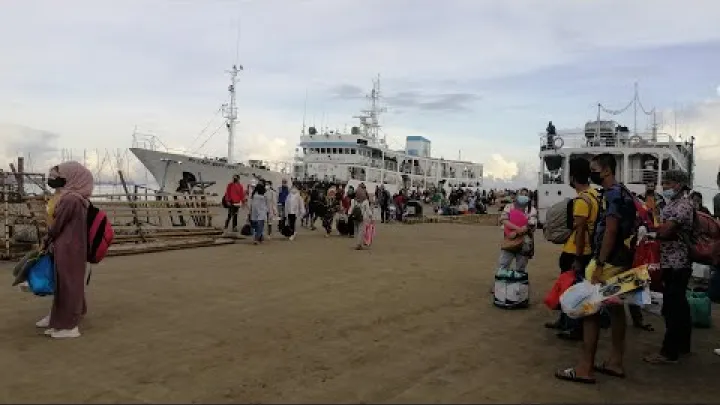
Movement in and around island areas can be affected by security conditions, checkpoints, weather, sea conditions, operational disruption, and local advisories. For remote workers, this matters because frictionless mobility is part of risk management. If you need to leave quickly for medical care, a visa appointment, a family emergency, or a work crisis, uncertain transport becomes a serious weakness.
Unlike a major city where you can usually change hotels, call multiple rideshare options, reach several hospitals, or book another flight, a less-connected and security-sensitive island location gives you fewer alternatives. That lack of redundancy is a core reason Jolo is not a good fit for most nomads.
Emergency support, insurance, and employer constraints
Before considering any high-risk advisory area, a remote worker should check three things in writing: travel insurance coverage, employer or client location approval, and emergency evacuation support. If any major item is excluded, the destination should be treated as unsuitable.
Many insurance policies contain exclusions for travel against government advice, warlike activity, terrorism, kidnapping, civil unrest, or regions named in official warnings. Corporate remote-work policies may also restrict where employees can work because of duty of care, cybersecurity, tax exposure, and emergency response obligations.
Consular support can also be harder to deliver in remote or security-sensitive locations. Even when a government can provide advice, it may not be able to provide immediate physical assistance. For a digital nomad, preparation cannot fully neutralize that limitation.
Internet, Power, and Work Setup in Jolo
Internet access is a basic requirement for remote work, but basic connectivity is not the same as professional-grade reliability. For Jolo, the available evidence supports cautious optimism about some connectivity, not confidence in a full digital nomad setup.
Mobile data and public Wi-Fi evidence
There is evidence of public Wi-Fi at Jolo Airport and mapped mobile coverage in the area. Coverage mapping from nPerf shows Globe Telecom mobile network coverage information for Jolo, including multiple network generations on the map.
Those indicators are useful, but they do not prove that you can handle daily video meetings, large file uploads, software deployments, online teaching, livestreaming, or client-facing calls. Coverage maps do not guarantee indoor signal strength, actual speeds, latency, congestion levels, or stability during bad weather or power disruptions.
A low-bandwidth worker who mostly writes offline and syncs documents may have different needs from a designer uploading large media files, a software engineer on constant calls, or a consultant who must appear on video at fixed hours. For essential work, Jolo would require real-world testing before any reliance on local connectivity, and that testing still would not solve the wider safety problem.
Workspaces, cafés, and quiet work limitations
No well-documented digital nomad coworking ecosystem is verified for Jolo from the available information. That does not mean there are no quiet places or no internet-enabled businesses. It means a foreign remote worker cannot plan with the same confidence as in established hubs where coworking spaces, laptop-friendly cafés, serviced apartments, and community groups are easy to compare.
In practice, a remote worker might need to rely on private accommodation, mobile data, or informal spaces. That creates problems for productivity and privacy. Client calls may require a quiet room. Sensitive work may require secure Wi-Fi and a controlled environment. Long workdays require stable power, seating, cooling, and predictable access.
The lack of a visible nomad ecosystem also affects social support. In established bases, other remote workers often share housing tips, internet tests, doctor recommendations, and transport advice. In Jolo, that kind of peer network is not clearly documented for international nomads.
Backup setup required for any essential work
If travel ever becomes appropriate under changed conditions, any serious remote work setup in Jolo would need redundancy. That means multiple SIM options where available, a phone that can hotspot, power banks, offline work plans, cloud sync discipline, backup accommodation options, and a clear plan for leaving if work reliability fails.
Redundancy can reduce operational disruption, but it cannot turn a high-risk location into a low-risk one. Extra batteries and mobile data do not address official advisories, medical evacuation complexity, insurance exclusions, or employer restrictions.
Remote workers with frequent live calls, strict availability requirements, large uploads, confidential client work, or no tolerance for outages should choose a better-supported Philippine base. Work reliability is not only about signal strength. It is about the full system around your workday.
Housing, Costs, Money, and Daily Logistics
A destination can be affordable and still be a poor digital nomad base. For Jolo, the housing and cost issue is not only price. It is the lack of transparent, review-rich, nomad-oriented information.
Accommodation and long-stay housing evidence is thin
Public accommodation data for Jolo appears limited compared with major Philippine tourist and remote work destinations. In places like Manila or Cebu, a remote worker can usually compare many hotels, serviced apartments, condominiums, neighborhoods, reviews, security features, and internet reports. That level of transparent choice is not clearly available for Jolo.
Informal housing markets can work well for local residents, but they create uncertainty for a foreign remote worker. You may not know whether the property has reliable internet, backup power, secure access, clear payment terms, suitable furniture, air-conditioning, or a landlord who understands remote work needs.
For that reason, this guide does not recommend specific neighborhoods, buildings, or rent ranges for Jolo. Secure, internet-capable accommodation would need direct local confirmation before any stay. If you cannot verify it in advance, you should not build a remote work plan around it.
Monthly budget planning with national-only data
National cost-of-living information can provide a broad Philippines baseline, but it should not be treated as a Jolo-specific budget. Numbeo publishes country-level cost-of-living estimates for the Philippines, but national averages do not capture security-sensitive logistics, local housing availability, evacuation needs, or transport friction in Jolo.
Some local basics may be cheaper than in large cities. However, the functional cost of living can rise if you need safer accommodation, private transport, backup connectivity, frequent trips to larger cities, extra insurance, medical contingency funds, or flexible tickets.
For Jolo, it is better to budget by risk category than by a confident monthly figure. Consider accommodation security, internet redundancy, transport flexibility, medical reserves, emergency evacuation, visa trips, and lost work time. Cheap daily expenses are not useful if safety, healthcare, and work reliability are inadequate.
Cash, banking, and everyday payments
Smaller Philippine towns and cities can be more cash-oriented than major urban centers. Before relying on any location, a remote worker should confirm ATM access, card acceptance, mobile wallet use, bank withdrawal limits, and the ability to handle rent, groceries, transport, and emergency payments.
Cash handling also has a personal security dimension. Carrying too much cash can increase exposure. Carrying too little can create problems if cards are not accepted or an ATM is offline. In a high-risk environment, routine financial friction becomes more than an inconvenience.
Do not assume that payment habits from Manila, Cebu, or resort islands will transfer smoothly to Jolo. A practical plan would require local confirmation of how people pay for daily needs, how accessible cash is, and what backup options exist if one payment method fails.
Healthcare, Climate, and Personal Resilience
Long-stay remote work requires more than a laptop and a visa plan. Health, climate, stress, and isolation can determine whether a destination is sustainable.
Healthcare availability and evacuation caveats
Sulu Provincial Hospital is a verified healthcare anchor in Jolo. ClinicFinderPH lists Sulu Provincial Hospital as a government provincial hospital in Jolo, Sulu.
That existence should not be overinterpreted. A listing does not confirm specialist availability, emergency capacity, advanced diagnostics, international-standard care, or the ability to handle complex cases. For serious illness, trauma, or specialist treatment, referral or evacuation to a larger medical center may be necessary.
Evacuation is more complex from a remote and security-sensitive island setting. It depends on transport availability, weather, security conditions, medical coordination, and insurance approval. Remote workers with chronic conditions, high medical needs, pregnancy, disability-related support needs, or limited emergency funds should choose a base with stronger hospital access and easier evacuation routes.
Climate, heat, and disruption risks
Jolo is in a tropical island environment where heat, humidity, rain, and weather-related transport disruption can affect daily life. Without relying on precise climate statistics, the practical point is clear: remote work performance depends on cooling, hydration, sleep, power reliability, and the ability to move safely when conditions change.
Air-conditioning may be important for sleep and productivity. Power interruptions, weak ventilation, or a hot workroom can reduce concentration and make video calls difficult. Heavy rain or rough sea conditions can compound access problems if flights, boats, errands, or medical movement are affected.
Before any travel in the region, check current local weather, storm advisories, flight status, ferry conditions, and local guidance. Weather risk does not exist separately from safety and access risk. It can intensify both.
Community, isolation, and cultural fit
A visible digital nomad or expat community is not verified for Jolo. This should not be framed as a flaw in local culture. It is simply a mismatch between nomad expectations and the support systems that foreign remote workers often rely on.
Peer networks matter because they help newcomers find housing, test internet, understand local norms, locate services, and manage stress. Without that network, a remote worker may be more isolated and more dependent on limited information.
Anyone discussing or visiting Jolo should do so with cultural respect and humility. The region has its own identity and community life. A digital nomad lens should not reduce it to either danger or adventure. The practical recommendation remains that respect for local life does not require choosing Jolo as a remote work base.
Visa and Legal Basics for Remote Workers in the Philippines
Visa rules are national, while the Jolo decision is local and risk-based. A person may be able to enter the Philippines legally and still choose the wrong base for safety, work, or administrative reasons.
National visa rules are separate from the Jolo decision
Philippine entry, stay, extension, and immigration rules are set nationally, not by Jolo. Remote workers should check current requirements with official Philippine immigration channels and relevant consulates before planning a long stay.

Important questions include permitted length of stay, extension procedures, onward-ticket expectations, passport validity, whether remote work for a foreign employer creates any local compliance issue, and whether any work permit or tax advice is needed for the person’s situation.
Do not assume that tourist status automatically authorizes local employment, local clients, or business activity. Also do not assume that a flexible national visa framework makes every Philippine location suitable. Legal entry is only one part of a safe remote work plan.
Local compliance and administrative support limitations
Immigration lawyers, tax advisers, consular services, international clinics, coworking operators, and expat support networks are easier to access in major cities. Administrative problems are harder to solve from a high-risk and less-connected location.
If you need to extend a visa, replace a passport, handle a tax question, resolve a banking issue, or get employer documentation, a major city base is usually more practical. Trying to solve these problems from Jolo could add transport, security, and timing complications.
The sensible approach is to handle visa, tax, insurance, and employer approvals from a better-supported Philippine base. If those administrative foundations are not already secure, Jolo should not be considered.
Better-Supported Philippine Bases to Consider Instead
The Philippines has many places that are easier to evaluate for remote work. None should be treated as risk-free, but several have stronger documentation, larger service networks, more accommodation options, and clearer nomad infrastructure.
Comparison criteria for Philippine nomad bases
A good digital nomad base is not simply cheap or beautiful. It must support predictable work routines and safe daily life. The most useful comparison factors are safety, internet, accommodation depth, healthcare, transport, community, and cost transparency.
| Criterion | Why it matters | Jolo assessment |
|---|---|---|
| Safety | Determines whether discretionary travel is appropriate | Major caution due to advisory context |
| Internet | Supports calls, uploads, and daily availability | Some indicators, not enough proof of work reliability |
| Housing | Affects security, sleep, power, and productivity | Limited public long-stay evidence |
| Healthcare | Critical for emergencies and chronic needs | Local hospital anchor, but evacuation caveats remain |
| Transport | Needed for exit plans and routine logistics | Requires current verification and may be disrupted |
| Community | Helps with housing, services, and social support | No verified nomad ecosystem |
This framework helps avoid a common mistake: choosing a base because it appears affordable while ignoring the hidden cost of uncertainty.
Practical alternatives for different work styles
Better-documented Philippine bases include Manila, Cebu, Siargao, Palawan, and other established hubs. Broad digital nomad guides, such as coverage from Ocarra Media, commonly discuss these places because they have more visible services and remote work information than Jolo.

Choose Manila if you need the strongest access to flights, hospitals, embassies, corporate services, and urban infrastructure. Choose Cebu if you want a large city with strong domestic connections and a more central Philippines location. Consider Siargao if your work can tolerate island conditions and you value surf culture and a visible traveler community. Consider Palawan if you want an island lifestyle with a larger tourism base, while still checking local connectivity and transport.
None of these alternatives is perfect. Internet can fail, storms can disrupt travel, rents can vary, and safety still requires local judgment. The difference is that these destinations are easier to research, easier to compare, and generally better supported for foreign remote workers.
If your interest is specifically in Bangsamoro, Sulu Province, or the Sulu Archipelago, follow developments remotely and wait for official conditions to materially improve. Do not treat nearby high-risk areas as substitute bases unless official guidance, local access, and support conditions clearly justify it.
Decision Checklist and Final Recommendation
A remote work decision should be based on conditions, not curiosity. Use the following checklist as a go or no-go filter, not as a packing list.
Practical decision checklist
- Official advisory status: Does current official guidance support discretionary travel to the specific area?
- Insurance coverage: Will your travel medical, evacuation, and personal coverage apply without high-risk exclusions?
- Employer or client approval: Are you allowed to work from this location under company policy, contract terms, and cybersecurity rules?
- Verified accommodation: Can you confirm secure lodging, reliable power, workable internet, and clear payment terms before arrival?
- Tested internet: Do you have real evidence that the connection supports your actual workload, not just basic browsing?
- Medical plan: Do you know where you would go for urgent care and how evacuation would work if needed?
- Transport reliability: Can you enter, move, and leave safely with backup options if routes change?
- Local contacts: Do you have trusted, current local guidance rather than relying on old online posts?
If you fail any major safety, insurance, medical, or employer approval item, choose another base. Preparation can reduce some risks, but it cannot fully neutralize high-risk advisory conditions.
Final recommendation and what would need to change
Jolo is better treated as a place to monitor than as a current digital nomad base. The available picture does not support recommending it for foreign remote workers who need predictable safety, stable work conditions, transparent housing, and dependable emergency support.
Several things would need to change before that recommendation could shift: improved official advisory conditions, more transparent accommodation options, stronger evidence of reliable work infrastructure, clearer local travel guidance, better-documented emergency support, and a visible support ecosystem for long-stay visitors.
For now, the practical recommendation is to choose a better-supported Philippine base and keep Jolo on your watchlist only if official conditions, local infrastructure, and verified remote work support materially improve. This approach respects Jolo’s local development while putting remote worker safety and reliability first.
Select area
Create a post
Posting is free and no registration is required.