Singapore Traditional Clothing: A Multicultural Dress Guide
Singapore traditional clothing is best understood as a collection of living community dress traditions, rather than one outfit worn by every Singaporean. Malay, Peranakan, Chinese, Indian, Eurasian, and other communities have preserved garments with distinct names, textiles, forms, and ceremonial uses. Many of these traditions also connect Singapore to the wider Malay Archipelago, South Asia, China, and Southeast Asia. This guide explains the major garments, when they may be worn, and how to approach them with cultural care.
Is There a Single National Costume of Singapore?
Singapore’s clothing heritage reflects a multilingual and multi-ethnic society. Traditional dress can be seen at festivals, weddings, religious observances, cultural performances, school events, and formal occasions, but contemporary everyday clothing is highly varied.
What “National Costume” Means in a Multicultural City-State
Singapore does not have one universal everyday outfit that accurately represents all of its people. When people search for a Singapore national costume, they may be looking for a symbolic image used in a celebration, pageant, tourism activity, or school event. That is different from a garment’s community history and everyday cultural meaning.
It is more accurate to speak of Singapore traditional clothing in the plural: Malay dress such as baju kurung and baju Melayu; Peranakan sarong kebaya; Chinese-associated cheongsam; South Asian dress including the sari; and Eurasian heritage forms such as baju panjang. These garments can be important in Singapore while also having regional histories beyond its borders.
Corporate uniforms, themed costumes, and clothing made for photographs can reference heritage dress, but they should not automatically be treated as traditional community attire. Use a community-specific garment name whenever possible. If an event describes an outfit as an official national costume, look for confirmation from a current authoritative institution rather than assuming that a symbolic label has formal status.
Community, Regional, Gender and Religious Distinctions
Garment names alone do not tell the full story. A style may differ by family background, regional ancestry, language community, generation, gender, religious practice, and the formality of an occasion. A kebaya, for example, can have different cuts, textiles, accessories, and associations depending on the wearer and setting.
Malay, Chinese, Indian, Peranakan, and Eurasian communities are not internally uniform groups. Indian Singaporeans may have roots in many parts of South Asia; Chinese Singaporeans may have different linguistic and ancestral traditions; and Peranakan and Eurasian identities include varied family histories. Clothing choices also remain personal. Not every member of a community owns, wears, or relates to a heritage garment in the same way.
It is also wise to be careful with claims about colors, motifs, embroidery, and modesty. Floral designs, batik patterns, borders, and jewelry can be visually meaningful, but there is rarely one fixed interpretation that applies to every wearer. Describe what is visible and identify the garment’s context before assigning symbolic meaning.
Malay Traditional Clothing: Baju Kurung, Baju Melayu and Songkok
Malay traditional clothing is among the most familiar heritage dress seen in Singapore, particularly during Hari Raya and at weddings. Its forms are connected to the wider Malay world, while Singapore’s Malay community gives them local social and family significance.
Baju Kurung and the Malay Women's Ensemble
The baju kurung is a loose and modest outfit associated with Malay women in Singapore and across the region. It generally includes a long tunic-like top with a matching skirt or a sarong-style lower garment. The overall silhouette is recognized for its coverage, comfort, and graceful proportions, although details differ between designs.
Historical images and records help show that baju kurung has long been part of Singapore’s clothing landscape. The National Library Board preserves Singapore material connected with baju kurung, including an 1863 studio photograph that documents Malay dress in the settlement’s past.
Modern baju kurung designs may use lighter fabrics, printed textiles, tailored sleeves, or updated skirt shapes. Some are made as coordinated ready-to-wear sets, while others are tailored for a wedding or festival. These changes do not remove the garment’s heritage connection; they show how a recognizable form can adapt to climate, work, mobility, and personal taste.
Baju Melayu, Sampin and Songkok for Men
Baju Melayu is a traditional Malay men’s ensemble. It commonly consists of a long-sleeved shirt and matching trousers. For festive or formal wear, a sampin, also spelled samping, may be worn around the waist over the trousers. The sampin is usually a separate cloth and can add contrast in color or pattern.

A songkok is a structured black cap often associated with Malay formal and religious settings. It may be worn with baju Melayu for occasions such as Hari Raya visits, weddings, prayers, or community events. The exact combination varies: some men wear a songkok, while others do not; the fabric and formality of the sampin can also differ between families and occasions.
These items should not be treated as a uniform worn by all Malay men every day. They are clothing with ceremonial, festive, and cultural roles. A man may choose a more traditional combination for one event and contemporary clothing for another.
When Malay Traditional Clothing Is Worn
Malay attire is often especially visible during Hari Raya celebrations, weddings, religious gatherings, cultural programmes, and heritage events. Families may coordinate colors or fabrics for festive visits and photographs, although this is a personal preference rather than a requirement. Formal community occasions can also call for more elaborate tailoring or accessories.
In daily life, many people dress in contemporary clothing. Traditional silhouettes may still appear in adapted forms, including lighter materials, simpler cuts, modest layering, and styling that fits travel, work, or Singapore’s humid weather. Modesty is important to many wearers, but its expression is individual and should not be reduced to a single rule.
Sarong Kebaya and Peranakan Dress
The sarong kebaya is one of the most recognizable forms of Peranakan dress in Singapore. It is also a useful example of how clothing can carry local community identity while belonging to a wider Southeast Asian history of textile exchange.
The Peranakan Sarong Kebaya
A sarong kebaya combines a kebaya blouse with a sarong, a wrap-around lower garment. In its familiar form, the blouse opens at the front and may be secured with decorative fastening pieces. Batik cloth, embroidery, and carefully chosen accessories can be part of the ensemble, though details vary by style, period, and wearer.

The sarong kebaya is strongly associated with Peranakan women’s heritage in Singapore. Roots Singapore describes it as a highly visible expression of Peranakan culture in Singapore and across the region. That regional connection matters: the garment is not a separate or isolated invention, but part of long-standing movement of people, cloth, techniques, and styles through Southeast Asia.
For some wearers, a sarong kebaya is used for weddings, cultural events, heritage presentations, or family occasions. For others, it may be an object of collecting, tailoring, or study. It should not be assumed that every Peranakan person wears one, or that its visual beauty has the same social meaning for every family.
Kebaya Variations and Regional Connections
Kebaya styles circulate across Southeast Asia and are associated with more than one community. Malay, Peranakan, Eurasian, and other wearers may use related blouse-and-sarong structures in different ways. A shared garment family can have distinct local cuts, textiles, fastening methods, and histories.
This is why it is better to identify a garment precisely when possible. “Kebaya” may describe the blouse form, while “sarong kebaya” refers to a combination with a sarong. A particular ensemble may be connected to Peranakan heritage, Malay formal dress, Eurasian family history, or a modern fashion interpretation. Shared regional heritage does not erase Singapore communities’ own memories and practices.
Visitors and students can appreciate these connections without assigning exclusive ownership to one ethnicity or country. Asking how a wearer or maker describes the garment is often more useful than relying only on a broad visual label.
Chinese Singaporean Traditional Clothing: Cheongsam and Qipao
Chinese Singaporean heritage includes many regional traditions, so no single garment represents every Chinese family. The cheongsam is nevertheless an important and widely recognized form in Singapore’s urban clothing history.
Cheongsam or Qipao in Singapore
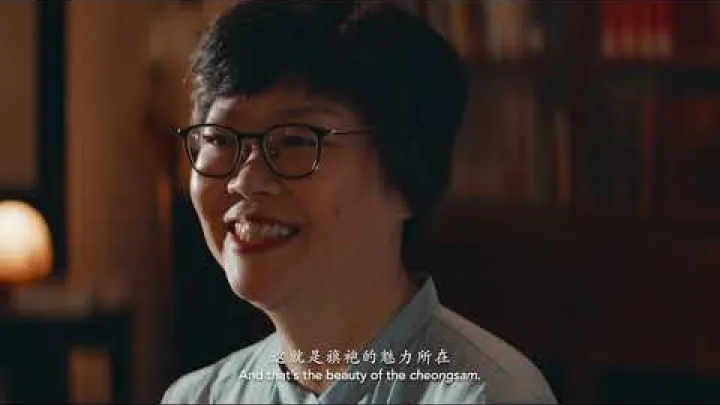
Cheongsam is the Cantonese term commonly used in Singapore for a dress also known in Mandarin as qipao. The related terms generally refer to a one-piece dress that may feature a high collar, fitted shape, side openings, and traditional fastening details. Contemporary versions can be sleeveless, loose-fitting, short, long, or made with many different fabrics.
The garment became a notable part of Chinese women’s urban dress during the twentieth century. The National Library Board notes that the cheongsam was especially popular from the late 1920s to the 1960s. Its prominence in this period helps explain why it remains a strong visual marker of Chinese dress in Singapore.
However, Chinese Singaporean clothing heritage is broader than the cheongsam. A family’s background, dialect group, migration history, and religious or ceremonial practices may shape what is worn. Not every dress with a high collar or decorative knot buttons is necessarily a cheongsam; cut, construction, and context are also important.
From Daily Dress to Festive and Formal Wear
The cheongsam was once more common as urban dress than it is today. It is now often seen at Lunar New Year gatherings, weddings, formal dinners, cultural performances, heritage activities, and selected professional settings. These occasions give the dress visibility, but they do not mean that all Chinese Singaporeans wear one during festivals.
Designers and wearers continue to reinterpret the cheongsam through new fabrics, relaxed shapes, shorter hems, layered styling, and less restrictive tailoring. A modern version may retain a collar, side opening, or fastening detail while changing other elements. This flexibility allows the garment to work as both heritage reference and contemporary fashion.
For a formal event, the appropriate choice depends on the host, dress code, and personal comfort. A cheongsam can be meaningful in the right setting, but it is not a compulsory expression of Chinese Singaporean identity.
Indian Singaporean Traditional Clothing: Sari and Related Attire
Indian Singaporean traditional clothing includes diverse dress forms shaped by South Asian regional, linguistic, and religious backgrounds. The sari is especially visible and well known, but it is only one part of this broad clothing landscape.
Sari Construction, Draping and Regional Diversity
A sari, also spelled saree, is a long length of fabric draped around the body. It is commonly worn with a blouse and a petticoat or other foundation garment. The drape creates the final shape, making the sari different from a pre-sewn dress.
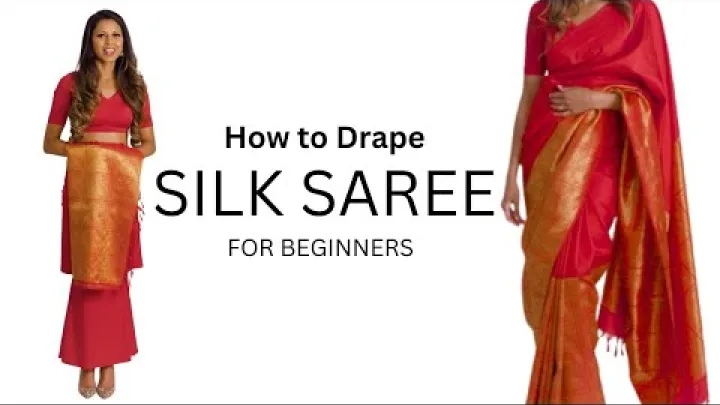
Useful textile terms include the field, the main body of the fabric; the border, which runs along an edge; and the pallu, the decorative end section often arranged over the shoulder. These elements can be woven, printed, embroidered, or plain depending on the fabric and style. The National Library Board describes the sari as traditional attire for women of South Asian, especially Indian, descent and explains its essential draped construction.
There is no single universal sari style. Draping methods, textile preferences, motifs, and ceremonial expectations can vary by regional heritage and family custom. A color or fabric that is appropriate for one wedding, temple observance, or celebration may not carry the same association elsewhere. It is therefore more accurate to ask about a specific community tradition than to make broad claims about what all Indian women wear.
Salwar Kameez and Men's Ceremonial Clothing
Salwar kameez is another South Asian outfit that may be worn in Singapore. It generally combines a tunic, known as a kameez, with loose trousers, known as salwar. Its practical structure and range of fabrics make it suitable for everyday, festive, and community-specific use, depending on the wearer.
Men’s clothing may include garments such as a kurta, a long shirt; a dhoti, a draped lower garment; or a sherwani, a more formal long coat-style garment. These are distinct forms rather than parts of one standardized “Indian costume.” A kurta may be paired with different lower garments, while a sherwani is more likely to appear in a formal or wedding context.
These clothes can be seen at festivals, weddings, temple visits, family gatherings, and cultural performances. Their use differs across South Asian communities and individual households. Clothing should be described with regional and religious context where it is known, rather than treated as interchangeable.
Eurasian and Hybrid Traditions: Baju Panjang and Performance Dress
Eurasian heritage dress in Singapore illustrates how family histories, local life, and cross-cultural exchange can shape clothing. It also shows why one garment cannot stand for a whole community.
Eurasian Baju Panjang
Baju panjang is a Eurasian heritage garment influenced by Malay dress. It is described as a long blouse worn with a sarong and secured with a kerosang, or brooch. Its resemblance to the sarong kebaya reflects overlapping regional clothing forms, while its community meaning is shaped by Eurasian family and cultural histories.
The Eurasian Association identifies baju panjang as attire worn by Eurasian women under Malay maternal influence. This history is better understood as an evolving network of family ties and cultural exchange than as a simple combination of two fixed cultures.
Baju panjang is a heritage form associated with part of Singapore’s Eurasian community, not an outfit worn by all Eurasians. Individuals and families may relate to it through performance, memory, special occasions, or not at all. That variation is part of living cultural identity.
Portuguese-Influenced Performance Attire
Colorful Portuguese-influenced attire can appear in Eurasian music and dance performances, weddings, and community events. Such clothing is designed to be expressive in a staged or festive setting and may be paired with music, movement, and group presentation.
Performance attire should be distinguished from ordinary work or daily clothing. A dance costume can communicate a particular heritage tradition without representing every Eurasian person or serving as a universal community uniform. This distinction is useful throughout Singapore: clothing for a performance, parade, or themed celebration may have a different role from clothing worn within a family or religious setting.
Traditional Clothing in Modern Singapore
Traditional and contemporary clothing exist side by side in Singapore. Heritage garments remain meaningful because they can be adapted, selected for important occasions, and passed between generations without needing to be worn every day.
Everyday Clothing versus Festivals, Weddings and Official Events
Modern daily dress in Singapore is diverse and usually contemporary. Traditional garments are often more visible during religious festivals, weddings, cultural celebrations, school heritage events, official occasions, and performances. Their visibility at these times does not make them costumes in a dismissive sense; for many wearers, they are chosen forms of family, faith, cultural memory, or personal style.
Contemporary adaptation is common. A wearer may select breathable fabric, simplified embroidery, tailored proportions, practical footwear, or modest layers. Men and women can both wear heritage forms, and ceremonial dress is not limited to women. At the same time, no one should assume that a person’s ethnicity determines what they will wear to an event.
Heritage Institutions and Museum Interpretation
Singapore’s heritage institutions provide useful starting points for learning garment names, textile histories, and changing ideas of identity. The National Heritage Board is Singapore’s heritage custodian, while its museums and digital resources help present different parts of the Singapore story.
The Asian Civilisations Museum’s Fashion and Textiles gallery uses rotating displays to explore fashion, materials, design, identity, and cultural exchange. Its Fashion and Textiles gallery can help visitors look beyond a garment’s appearance and consider how cloth, craft, trade, and social life are connected. Roots.sg and National Library Board resources are also valuable for local histories and archival material.
Museum displays are curated interpretations, not a replacement for living community knowledge. Before planning a visit, check the relevant institution’s official page for current opening details and exhibition availability, since displays and access arrangements can change.
Tourist Costume Experiences versus Cultural Use
A heritage photo experience, pageant costume, airline-inspired uniform, or tourism promotion may introduce visitors to the look of a garment. It is not the same as wearing that garment within the cultural, family, religious, or ceremonial setting in which it developed. Both can exist, but they should not be confused.
Visitors can engage respectfully by learning the garment’s correct name, asking what occasion it is associated with, and following guidance from a knowledgeable provider or host. Wear the clothing as intended, and avoid exaggerated poses, comic styling, or claims that one outfit represents every Singaporean. Do not assume that a garment is religious merely because it is modest, or that all ceremonial clothing is suitable for every event.
If renting or borrowing clothing for photographs, choose an experience that explains the garment’s context rather than presenting heritage as a generic disguise. This approach allows curiosity and participation while respecting the people and traditions connected to the clothing.
Conclusion: Singapore's Traditional Clothing Is Plural
Singapore traditional dress is a rich set of community traditions, not a single national uniform. Baju kurung, baju Melayu, sarong kebaya, cheongsam, sari, salwar kameez, baju panjang, and related forms each carry different histories and uses. Learning their names, regional connections, and occasions helps visitors, students, and residents appreciate Singapore’s multicultural heritage with greater accuracy and respect.
Select area
Create a post
Posting is free and no registration is required.