Singapore Country Facts: Quick Profile and Key Information

Singapore country facts are easiest to understand when identity, geography, population, and international identifiers are kept together. Singapore is both a sovereign country and a city-state, so its capital and largest city share the same name. This profile provides a dated quick reference, then explains Singapore’s location near the Strait of Malacca, its languages, government, history, economy, currency, and digital identifiers. It also separates official national figures from international data series that may use different years or definitions.
Singapore Quick Facts
The tables below provide a fast Singapore country profile. Numerical values include a reference year or date where the available source provides one.
Core National Identity
Singapore’s official name is the Republic of Singapore, while Singapore is the usual short name. It is an island country and a city-state in Southeast Asia. The country’s urban core and sovereign territory share the name Singapore, which explains why Singapore appears in both the capital and largest-city fields.

In a larger country, the capital may be different from the largest city. Singapore is different because the country functions as one closely integrated urban state. Listing the two fields separately is still useful because it makes the country profile clear and avoids treating the terms as identical in every context.
The city-state structure also affects how other facts are interpreted. National statistics describe a compact territory in which government, housing, transport, commerce, and urban services operate within one closely connected system. This is why a country profile of Singapore can discuss the nation and its principal city at the same time without turning the article into a city guide.
| Identity field | Singapore |
|---|---|
| Official name | Republic of Singapore |
| Common name | Singapore |
| Capital | Singapore |
| Largest city | Singapore |
| Region or continent | Southeast Asia |
| Country type | Island country and city-state |
Population, Area, Currency, and Government at a Glance
The official population update from Singstat gives Singapore’s total population as 6.11 million at the end of June 2025. It separates this total into 4.20 million residents and 1.91 million non-residents.
The area entry below uses the dated UNdata figure described in more detail in the geography section. It is labeled as surface area rather than presented as a timeless land-only measurement.
| Quick fact | Value |
|---|---|
| Total population | 6.11 million, end-June 2025 |
| Residents | 4.20 million, end-June 2025 |
| Non-residents | 1.91 million, end-June 2025 |
| Surface area | 718 sq km, UNdata 2014 |
| Currency | Singapore dollar, SGD, S$ |
| Form of government | Unitary parliamentary republic |
Languages, Codes, and Time Zone
Singapore has four constitutionally recognized official languages: Malay, Mandarin, Tamil, and English. Malay has a separate constitutional status as the national language. The Constitution of Singapore is the appropriate reference for this distinction.
Language status, telephone codes, internet domains, and time zones are different kinds of country information. The quick reference below keeps them separate. The identifiers are presented as current standard reference values; formal databases may require a specific field or format.
| Reference item | Singapore value |
|---|---|
| Official languages | Malay, Mandarin, Tamil, and English |
| National language | Malay |
| International calling code | +65 |
| ISO alpha-2 code | SG |
| ISO alpha-3 code | SGP |
| Country-code top-level domain | .sg |
| Time zone | Singapore Time, UTC+08:00 |
Geography and Territory
Singapore’s geography is compact, maritime, and strongly connected to the surrounding waterways of Southeast Asia.
Regional Location and City-State Geography
Singapore is in Southeast Asia at the southern end of the Malay Peninsula, just north of the equator. Its territory includes a main island and a group of smaller surrounding islands. The country is close to the southern tip of Malaysia, but Singapore is an independent sovereign state with its own government, currency, legal system, and international identifiers.
The Straits of Johor lie to the north and separate Singapore from the Malaysian mainland. The Singapore Strait lies to the south. Across the southern waters are islands associated with the Riau-Lingga Archipelago. To the west and northwest, the wider regional setting connects Singapore with the Strait of Malacca, one of the important maritime corridors between the Indian Ocean and the western Pacific.
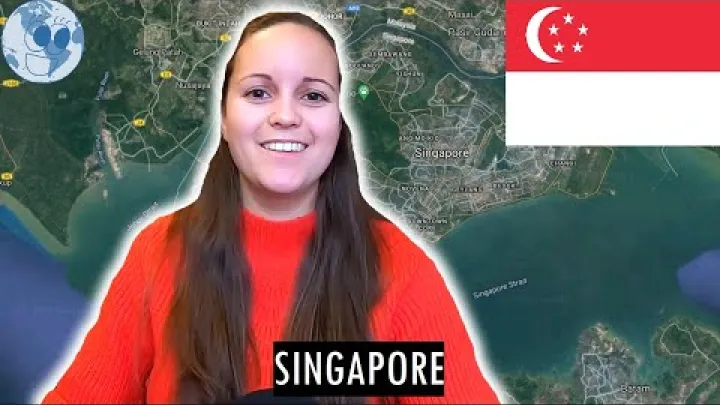
This position gives Singapore a distinctive geographic role. It sits close to routes linking the Malay Peninsula, the Indonesian archipelago, and larger Asian trading networks. The location is therefore more than a map detail: it helps explain why Singapore developed as a port, logistics center, and international business hub. Britannica describes Singapore’s regional setting, island geography, government, and historical development in its country profile.
Area, Islands, and Land Reclamation
Area figures for Singapore should always be read with the measurement type and reference year. UNdata’s country profile reports a surface area of 718 square kilometres in 2014. The same profile notes that Singapore’s land area comprises the mainland and other islands. In this article, 718 square kilometres is therefore a dated surface-area reference, not an unchanging current land-only figure.
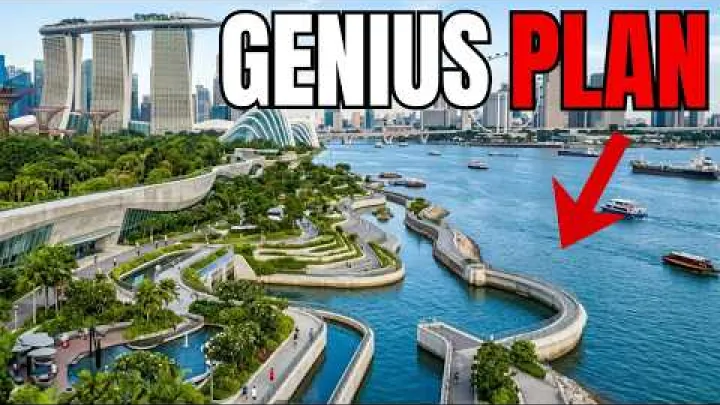
Published figures can differ because sources use different years, boundaries, and statistical definitions. Land reclamation has also changed Singapore’s physical extent over time by adding land along selected coastal areas.
A later estimate should not be compared directly with the 2014 figure unless the source explains that the definitions and reference dates are compatible.
This matters when calculating density or comparing Singapore with another country. A reader should identify whether a source reports land area, surface area, or total area, and then pair it with a population figure from a compatible year. The UNdata profile is useful for seeing how an international data source labels its area measure.
Climate and Urban Landscape
Singapore has an equatorial tropical climate. Conditions are generally warm throughout the year, and rainfall occurs in all seasons. Regional monsoon patterns influence changes in wind and rainfall, but Singapore does not have the large seasonal temperature contrast found in many countries farther from the equator.
The country is also highly urbanized. Limited land has encouraged coordinated planning for housing, transport, utilities, industry, public services, and green spaces. Singapore’s landscape therefore combines dense development with managed parks, planted corridors, reservoirs, and other planned open areas.
For a country profile, this urban landscape is geographic context rather than travel advice. It explains why national statistics often describe one closely connected urban system instead of a sharp division between large cities and extensive rural regions.
Singapore’s physical setting also creates a clear contrast between land and water. Although the country is small, its position beside the Straits of Johor and Singapore Strait gives maritime geography an unusually prominent role in transport, trade, and national development. Coastal engineering and land-use planning are consequently important parts of understanding how the territory has changed.
Population, Languages, and Society
Singapore’s population profile is shaped by high urban concentration, migration, and a multiethnic society. The definitions behind each statistic are important because different sources may describe different population groups.
Population Size, Density, and Data Definitions
Singapore’s official end-June 2025 total was approximately 6.11 million people. The total included 4.20 million residents and 1.91 million non-residents. These categories should be understood before discussing population growth, density, or international comparisons. A residents-only figure is not interchangeable with a total that includes non-residents.
For practical reading, the resident and non-resident categories are statistical groupings used in the national population count. They answer different questions: one describes the population counted as residents, while the other captures people included in the total but not in the resident category. A headline figure is meaningful only when the reader knows which total and which date it represents.
International databases may show a different population value for the same year. For example, the UNdata ISO profile lists a 2025 population of 5.871 million and a population density of 8,595.5 people per square kilometre. That is a separate international series, not a direct replacement for the Singstat total. Differences between sources should be examined through their definitions, methods, and metadata rather than treated automatically as an error.
Density is especially sensitive to these choices. It is calculated by relating population to an area measurement, so the population category, area definition, and year must be compatible. A density based on a UN population series and a dated UN area measure should not be presented as though it were calculated from the latest official total and a current land estimate. Historical estimates and projections also belong in separate labeled comparisons, not in a current-population summary.
Ethnic Composition and Linguistic Diversity
Singapore is a multiethnic society with Chinese, Malay, Indian, and other communities. This broad description helps explain the country’s cultural and linguistic diversity without reducing national identity to one group. Ethnic percentages can change according to the population category and reference year, so they should be used only when supported by a clearly dated official demographic source.

The legal language framework is precise. Malay, Mandarin, Tamil, and English are the four official languages, while Malay is the national language. English has broad use in public institutions, education, business, and everyday communication, but common administrative or commercial use should not be confused with constitutional status. In the same way, a language spoken at home or within a community should not automatically be called an official language.
This distinction is useful for students, businesses, researchers, and international organizations. It separates the country’s constitutional language provisions from the changing patterns of language use in homes, schools, workplaces, media, and public life. The wording in the Constitution of Singapore provides the legal basis for the official-language and national-language distinction.
Urbanization and Selected Social Indicators
Singapore’s fully urbanized character changes how its population statistics should be interpreted. High density is not simply a result of one crowded city within a larger rural country. It reflects a national urban system in which housing, transport, employment, schools, public services, and infrastructure are planned across a small territory.
Social indicators such as literacy and life expectancy can add useful context to a country profile. However, a number without a reference year does not describe a permanent condition. A reliable comparison should identify the year, the population covered, and the method used. These indicators can show important aspects of social development, but they should not be treated as a complete ranking of quality of life or as a substitute for understanding Singapore’s demographic structure.
Government and Historical Development
Singapore’s present political identity is closely connected to its constitutional structure and its development as a strategically located port.
Constitutional Form of Government
Singapore is a unitary parliamentary republic operating under a written constitution and a Westminster-influenced framework. “Unitary” means that national institutions hold the central constitutional authority rather than power being divided between separate states or provinces with their own sovereign constitutional systems.

The president is the head of state. The prime minister and Cabinet provide the main executive leadership. These are separate institutional roles: the head of state should not be confused with the head of government. The country’s political system is therefore best described by its offices and constitutional relationships rather than by the name of any officeholder, which can change over time.
Singapore has a unicameral Parliament. Parliament forms part of the legislative framework, while the executive leads government administration and is connected to the legislature through the parliamentary system. This structure is why a short country profile should identify the president, prime minister and Cabinet, and Parliament separately rather than describing the government only as a presidential or only as a parliamentary system. Britannica provides a high-level description of Singapore as a unitary parliamentary democracy with a president as head of state.
For readers comparing countries, the key point is that Singapore combines a ceremonial or constitutional head-of-state office with a parliamentary executive. The description identifies the enduring structure without relying on current officeholder names, which are separate from the basic constitutional facts.
From Colonial Port to Independence
A compact historical timeline begins in 1819, when the British established a trading post at Singapore. The site’s position near major maritime routes supported its growth as a strategically located port and commercial center. Its history cannot be separated from the waterways around the Malay Peninsula and the wider trading connections of Southeast Asia.
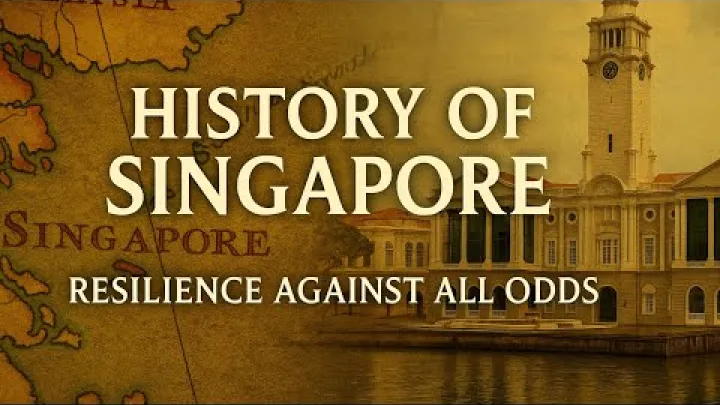
Singapore joined the Federation of Malaysia in 1963. It became independent on 9 August 1965 and developed as the Republic of Singapore. The sequence from trading post, to participation in Malaysia, to independent republic explains why Singapore’s modern identity combines a maritime past with a distinct national constitutional system.
The legal context of independence is recorded in the Republic of Singapore Independence Act. This short timeline gives the key dates without treating the article as a full chronological history.
The 1965 independence date is therefore both a historical milestone and a useful reference point for the modern republic. It should not be confused with the earlier establishment of the British trading post or with Singapore’s period within Malaysia; those events belong to different stages of the country’s development.
Economy and Currency
Singapore’s economy reflects its small territory, maritime position, and close links with international markets.
Economic Structure and Global Role
Singapore is a high-income, externally oriented economy. Major parts of its economic structure include services, finance, logistics, trade, transport, and selected high-value manufacturing activities. International business and regional connectivity are important because the domestic market and land area are limited.
Its location near the Strait of Malacca and the Singapore Strait supports a strong role in shipping, port services, logistics, and trade-related activity. Singapore’s infrastructure and institutions have also helped it develop as a financial and business center. These are structural features, not guarantees that every sector performs in the same way each year.
Limited land influences economic specialization. Activities that require efficient connections, skilled work, advanced infrastructure, or access to regional markets can fit more easily into a compact urban economy than land-intensive activities. A basic country profile should describe these sectors without turning into an investment guide or presenting an undated economic ranking as a permanent fact.
These economic roles connect Singapore’s geography with its international identity. The same location that supports maritime access also supports regional business, finance, manufacturing links, and distribution networks. Economic performance measures such as output, income, or trade can change from year to year, so structural descriptions are more durable than unsupported rankings or undated figures.
The Singapore Dollar and Monetary Authority
The national currency is the Singapore dollar. Its international currency code is SGD, and S$ is the common symbol used to distinguish it from other dollar currencies.
| Currency detail | Singapore value |
|---|---|
| Currency name | Singapore dollar |
| International code | SGD |
| Common symbol | S$ |
| Currency authority | Monetary Authority of Singapore |
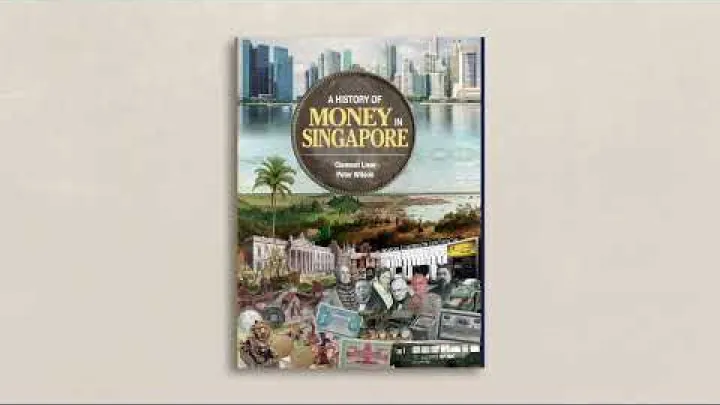
The Monetary Authority of Singapore, commonly called MAS, is associated with issuing Singapore currency and with the country’s monetary and financial oversight. Its currency information also covers the history and security features of Singapore’s notes and coins. The Monetary Authority of Singapore is the appropriate authority for currency-specific information.
Currency facts should be kept separate from exchange-rate advice. SGD identifies the currency in financial and international systems, while S$ is a practical written symbol. Exchange rates, payment practices, and financial rules are separate topics that can change and require their own current information.
Time, Codes, and Digital Identity
Time zones and standardized codes make Singapore easier to identify in international schedules, telecommunications, databases, and online systems.
Singapore Time and Daylight Saving
Singapore uses Singapore Time, commonly abbreviated as SGT, at UTC+08:00. The offset is eight hours ahead of Coordinated Universal Time.
Singapore has one national time zone and does not observe daylight saving time. This means the standard UTC+08:00 offset is used throughout the year rather than changing seasonally. For international scheduling, the practical rule is to use Singapore Time as a fixed national reference. The Singapore Time reference provides the baseline description of the offset and daylight-saving status.
Calling Code, ISO Codes, and the .sg Domain
Singapore’s international telephone calling code is +65. Its ISO alpha-2 code is SG, and its ISO alpha-3 code is SGP. The formal country name used in relevant records is Republic of Singapore, while Singapore is the short country name used in ordinary writing.
| Identifier | Value | Main use |
|---|---|---|
| International calling code | +65 | Telephone communications |
| ISO alpha-2 | SG | Short country identifier |
| ISO alpha-3 | SGP | Three-letter country identifier |
| Country-code top-level domain | .sg | Singapore internet domain |
These codes are not interchangeable. A telephone system needs +65, a data field may request SG or SGP, and a website address may use .sg. The Singapore reference provides a baseline cross-check for the country’s name and common identifiers.
The .sg ending is Singapore’s country-code top-level domain. Country-code domains help identify internet namespaces associated with countries or territories, but registration rules and eligibility requirements belong to the relevant domain registry. The country-code domain reference explains the general role of these top-level domains.
Singapore in Brief
Singapore is a Southeast Asian island country and city-state with the official name Republic of Singapore. Its capital and largest city are both Singapore. The country’s location between the Malay Peninsula, the Singapore Strait, the Straits of Johor, the Strait of Malacca, and the Riau-Lingga Archipelago helps explain its maritime and commercial importance.
The essential profile combines a dated population of 6.11 million at the end of June 2025, a 2014 UNdata surface-area reference of 718 square kilometres, four official languages, the Singapore dollar, a unitary parliamentary republic, and clear international identifiers such as +65, SG, SGP, .sg, and UTC+08:00. Reading each fact with its date, definition, or legal status gives a more accurate picture than relying on one undated number.
Select area
Create a post
Posting is free and no registration is required.