Singapore Capital: The Capital City Is Singapore

Singapore is the capital of Singapore. The answer can seem unusual because Singapore is both a sovereign country and a city-state, so the country and its capital use the same name. This guide explains where the capital lies, how Singapore became a capital, how national institutions function there, and why Singapore is also the country's largest city. It also separates national population figures from capital-city estimates.
What Is the Capital of Singapore?
Singapore's capital is not a separate city located within a larger country. Instead, the capital name describes the same city-state that forms the sovereign Republic of Singapore.
The Capital of Singapore Is Singapore
The direct answer to questions such as “What is the capital of Singapore?” and “What is the capital of Singapore country?” is Singapore. International country profiles and reference data identify Singapore as the capital city. For example, UNdata lists the capital city as Singapore.
Singapore is therefore both the country name and the capital name in ordinary geographic and political usage. When completing a country profile, reading a map, or describing the Singapore capital city, use Singapore rather than treating Singapore City as an official, separately administered capital. The phrase Singapore City may appear informally in some contexts, but it is not needed to give the standard answer.
This naming pattern is similar to other city-states in which one urban territory carries the country's national institutions. It does not mean that the whole country is one identical neighborhood. Singapore still has different districts, planning areas, residential towns, industrial zones, parks, and central civic spaces. It means that these areas belong to one compact national territory whose capital is Singapore itself.
Why Singapore Is a City-State
A city-state is a sovereign country whose territory is centered on one urban entity rather than being divided among several provinces, states, or major cities. Singapore fits this description. Its national government, urban systems, and international identity operate within the same compact territory, even though the territory includes many distinct local areas.
Unlike countries that establish a separate capital territory or capital municipality, Singapore does not have a separately administered national capital unit in the usual sense. There is no second city or federal district that must be distinguished from Singapore as the country's political center. For a clear answer, use Singapore as the capital name while explaining that the country and its principal urban territory overlap.
That administrative overlap should not be confused with the absence of a capital. Singapore functions as the country's political and administrative center. Parliament, the national executive, the courts, diplomatic missions, and central government agencies are associated with Singapore, while decisions made by national institutions apply across the entire country. The legal status of a city-state explains why the capital has no separate municipal boundary; it does not remove the capital's national role.
Where Is Singapore Located?
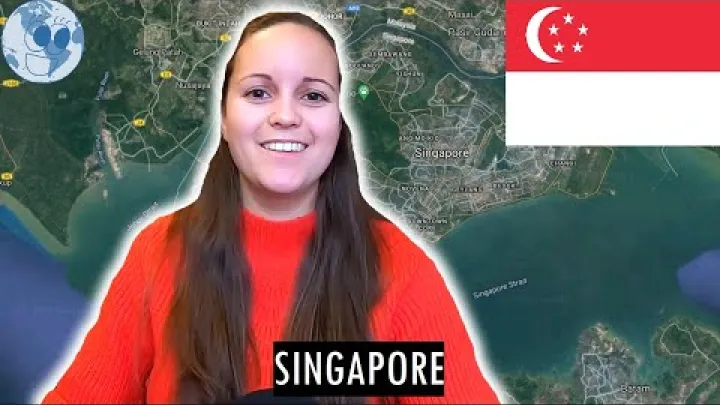
Singapore lies in Southeast Asia near the southern tip of the Malay Peninsula. Because the capital and country overlap, locating Singapore on a map also locates the national capital rather than a separate inland or federal district.
Singapore's Geographic Setting
Singapore occupies a compact island-country setting at the southern end of the Malay Peninsula. Its location gives it a clear regional identity in Southeast Asia, while its dense urban development means that the capital is experienced as a connected national city rather than as a distant administrative center inside a large rural country.
For map-oriented questions, look for Singapore's national outline and then identify its central civic and urban districts. You do not need to search for another city inside the country marked as the capital. The same geographic name, Singapore, identifies the sovereign state and the urban center in which the country's principal institutions are concentrated.
The geographic overview from Britannica provides the broader setting and identifies Singapore as the capital. Exact land-area figures and coastlines can vary as mapping and land-reclamation data are updated, so a simple regional description is more useful for this question than an unverified area or coordinate claim.
The Functional Core of the Capital
Singapore does not have a legal capital district with a single boundary that contains every national institution. However, several recognizable places help explain the functional core of the capital. The Singapore River and the Civic District are useful landmarks for understanding the historic civic center, while the Downtown Core helps orient readers to a major concentration of central commercial, governmental, and public spaces.
![Preview image for the video "Civic District (Downtown Core) - Singapore City Walks [4K]".](/sites/default/files/styles/media_720x405/public/oembed_thumbnails/2026-07/itrf7xUQ6oOfcSiKhUtRNeWJ2CCuqaJrau3okQRxoYU.jpg.webp?itok=YmgJ1PhZ "Preview image for the video \"Civic District (Downtown Core) - Singapore City Walks [4K]\".")
Parliament House is a clear legislative landmark. The Istana is associated with the presidency, official functions, and national ceremonies. Together with courts and other civic institutions in the wider central area, these places show how legislative, executive, judicial, and ceremonial roles are represented within Singapore's urban landscape.
These landmarks should be understood as parts of a functional capital core, not as proof that Singapore has a separately established capital territory. Government ministries, agencies, public services, and national facilities may operate from different locations across the city-state. The central area is therefore a useful way to understand the capital's institutional geography, but it is not a complete map of every national operation.
When Did Singapore Become the Capital?
Singapore's capital role has both a colonial history and a national history. It first became the center of a regional colonial administration, then became the capital of an independent country in 1965.
Singapore as the Capital of the Straits Settlements
Singapore became the capital of the Straits Settlements in 1832, after the administrative capital moved from George Town in Penang to Singapore. In this context, Singapore was a colonial regional capital. It was not yet the national capital of an independent Singapore because the Republic of Singapore did not exist at that time.
That distinction matters when describing the history. George Town was a former capital of the Straits Settlements, not a former capital of independent Singapore. The move to Singapore reflected the island's growing importance as a port and administrative center within the colonial system. The historical account of the change is summarized by Straits Settlements.

The colonial period also helped shape the civic landscape that many readers associate with the modern capital. Areas around the Singapore River and the Civic District contain historic buildings and public spaces connected with earlier administration. Still, the present-day republic should not be described as simply continuing the colonial government. Its institutions, authority, and constitutional position are those of an independent state.
From Self-Government to the National Capital
After the colonial period, Singapore moved through self-government, a period within Malaysia, and independence. During the Malaysia period, Singapore was a state within a federation rather than the capital of a sovereign country. This is a different status from the one it holds today.

Singapore became the national capital of the independent Republic of Singapore in 1965. From that point, Singapore was no longer only a port or a colonial regional center; it was the seat of a sovereign national government. A country overview from Britannica places Singapore's capital and national history within this broader transition.
The timeline can therefore be summarized in three stages: Singapore served as a colonial capital of the Straits Settlements from 1832; it later existed as a state within Malaysia; and, from independence in 1965, it served as the capital of the Republic of Singapore. Keeping these stages separate avoids describing Singapore as an independent national capital before independence or confusing its state-level role with its current sovereign role.
What Does Singapore Do as a Capital?
Singapore's capital role is practical as well as symbolic. It is the place from which the national government represents the country, makes and applies national policy, manages public administration, and conducts relations with other states.
Executive, Legislative, and Judicial Functions
Singapore is the seat of the national executive, legislature, and judiciary. The president serves as head of state, while the prime minister leads the government. Parliament debates and passes national laws, the executive develops and implements public policy, and the courts handle judicial proceedings under Singapore's legal system. A government overview from CountryReports distinguishes the head-of-state and head-of-government roles.

The Istana provides a recognizable example of the executive and ceremonial side of the capital. Parliament House represents the legislative function. Judicial institutions form part of the wider civic and governmental landscape, even though not every court or ministry is located in one building or within one compact government quarter.
These functions explain why the capital matters to residents and international visitors. National laws, executive decisions, public administration, and judicial processes are coordinated through institutions based in Singapore. The capital is therefore more than a label on a map: it is the operational center of the republic's national government.
Administration Across a Unitary City-State
Singapore is governed as a unitary state without provinces or states that have their own national-level capitals. Authority is organized through national institutions, while planning areas, regions, towns, and electoral divisions support urban management, public services, representation, and infrastructure planning.
These divisions should not be mistaken for autonomous cities or provincial governments. A planning area is not a separate country within Singapore, and a residential town is not a second national capital. The divisions help authorities manage a complex urban territory, but they do not divide national sovereignty among multiple regional governments in the way a federal system may.
This structure explains the close relationship between the capital and the rest of the country. A policy made by a national ministry in Singapore can apply across the whole sovereign territory. At the same time, local planning and service arrangements can differ from one area to another. The capital's institutional core and the country's wider urban fabric are connected, but they are not identical in function.
Diplomatic and International Role
As the recognized seat of Singapore's sovereign government, the capital is also the country's diplomatic center. Foreign embassies and high commissions, visiting government delegations, and Singapore's foreign-policy institutions are part of the international role normally associated with a national capital.
This role gives Singapore a practical importance for foreign nationals, students, businesses, and organizations that need to interact with the Singaporean government or with diplomatic missions. The exact services, office locations, and opening arrangements of individual missions can differ, so a person seeking consular or official assistance should use the relevant institution's current public information.
Singapore's capital function should be kept distinct from broader claims about finance, tourism, technology, or global-city rankings. Those subjects may describe other aspects of Singapore, but the capital question is primarily about the location and operation of sovereign government and international representation.
How Does Singapore's Capital Population Compare With the Country?
Population comparisons require more care in a city-state than in a country with a clearly separate capital city. A national total, a capital-city estimate, and an urban or metropolitan population may use different boundaries, dates, and definitions.
Capital-City Population Versus National Population
Singapore's official national statistics provide a clearly dated national reference point.SingStat reported that, at the end of June 2025, Singapore's total population was 6.11 million. The figure comprised 4.20 million residents and 1.91 million non-residents.
That national total should not automatically be labeled the population of a separately bounded capital city. In Singapore's case, the capital and country overlap geographically, but statistical series can still classify people and areas in different ways. A national total may include both residents and non-residents, while a capital-city series may use a particular urban, administrative, or international statistical definition.
For comparison, UNdata lists a 2025 national population of 5.871 million and a capital-city population of 5.8681 million. These figures are close to one another but are not directly interchangeable with SingStat's end-June total. The difference can reflect the reporting date, population coverage, and methodology used by each source.
When using a population figure, identify all three important details: the source, the date, and the definition. State whether the number refers to Singapore's national total, residents only, residents plus non-residents, a capital-city estimate, or an urban and metropolitan area. This prevents a precise-looking figure from creating a misleading comparison.
Why Singapore Is Also the Largest City
Singapore is both the country's capital and its largest city in ordinary geographic usage because the sovereign territory is centered on one highly urbanized city-state. There is no conventional arrangement in which one large city serves as capital while another city is the country's main urban center. The name Singapore therefore answers both the capital question and the Singapore capital and largest city question.

Within Singapore, the more useful distinctions are between central districts, residential towns, industrial areas, parks, and other planning areas. These places have different land uses and local identities, but they are not separate major cities with their own national capitals. The Downtown Core and Civic District, for example, have a stronger institutional and commercial concentration than many residential areas, while other parts of the country support housing, industry, education, transport, and recreation.
Singapore's city-state structure also means that “largest city” should be understood in context rather than as an unqualified comparison of identical statistical units. A capital-city boundary, an urban area, and the national territory may be measured differently even when they occupy the same broad city-state setting. For everyday geographic identification, the labels converge; for demographic research, the dataset's definition remains important.
Singapore Capital: Final Answer
The capital of Singapore is Singapore. Singapore is unusual because it is simultaneously a sovereign country, a city-state, and the seat of its own national government.
Its capital role began as the colonial capital of the Straits Settlements in 1832 and became the national capital of the independent Republic of Singapore in 1965. Today, the Civic District, Downtown Core, Singapore River, Parliament House, and the Istana help explain the capital's functional geography, while population comparisons should always identify the date and statistical definition being used.
Select area
Create a post
Posting is free and no registration is required.