Singapore National Anthem: Majulah Singapura Explained
 - Old Anthem of Singapore\".")
Singapore’s national anthem is Majulah Singapura, a Malay title commonly rendered in English as “Onward Singapore.” Written by Zubir Said, it began as a civic song in 1958 before becoming a defining national symbol. Its short melody and collective message are heard at major ceremonies, in civic settings, and during National Day observances. This guide explains its origins, language, meaning, formal role, and how it differs from Singapore’s many well-known patriotic songs.
What Is Singapore's National Anthem?
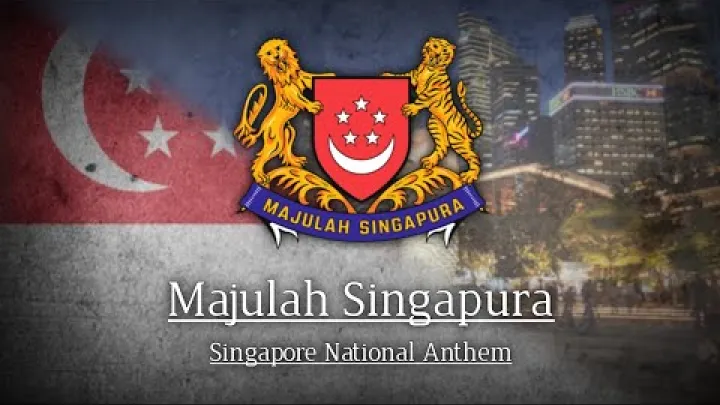
Majulah Singapura is the permanent national anthem of the Republic of Singapore. It is one of the country’s official national symbols, alongside symbols such as the National Flag, the State Crest, and the National Pledge.
Official title and English meaning
The official name of Singapore’s national anthem is Majulah Singapura. The title is in Malay and is commonly translated as “Onward Singapore.” It is sometimes described in English as the Singapore anthem or the national anthem of Singapore, but these are descriptions rather than alternative official titles.
The Malay title matters because the anthem’s official text is in Malay. “Onward Singapore” is useful for explaining its message to English-speaking readers, but it is not a replacement for the official title or the language used in formal performances.
Lyricist, composer, and adoption date
Zubir Said wrote both the words and music of Majulah Singapura. He composed it in 1958, when it was intended for a civic occasion rather than as a future national anthem. In 1959, the song was adopted as Singapore’s state anthem during the period of self-government. The Legislative Assembly adopted it as the state anthem in that year.
Its status developed with Singapore’s constitutional history. The 1959 adoption made it the anthem of the self-governing state, while Singapore’s independence in 1965 gave it its enduring role as the national anthem of the Republic. This distinction helps explain why accounts may refer to both 1959 and 1965 when discussing the anthem’s history.
That chronology also explains why a reader may see different descriptions of the same song in historical sources. “State anthem” describes its official role in self-governing Singapore, while “national anthem” describes its role for the independent republic. The musical identity remained the same song, but the constitutional setting changed. Treating 1959 as the only date misses independence; treating 1965 as the beginning misses the public and political work the song had already done.
The National Library Board records that the anthem began as a song written for a different purpose before becoming a national symbol.
How the Anthem Developed from a Civic Song to a National Symbol
The story of Majulah Singapura is closely linked to Singapore’s transition from colonial administration to self-government and then independence. Its civic origin gave the song an accessible public role before it acquired constitutional and national significance.
The Singapore City Council and Victoria Theatre
Majulah Singapura was not originally composed as a national anthem. It was commissioned for a civic purpose and connected with the Singapore City Council’s aspiration for the city to move forward. The song was associated with the reopening of Victoria Theatre, an important civic and cultural venue in central Singapore.
According to a historical account published by BiblioAsia, the song was first performed at a concert on 6 September 1958. That first performance shows why the anthem is more than a ceremonial tune: it emerged from Singapore’s public cultural life and from a call for progress.
Victoria Theatre remains a useful local landmark for understanding this origin. The anthem’s connection with a civic performance space reflects its early purpose of bringing people together at an official public occasion, rather than representing an already independent nation.
Seen in this context, the Victoria Theatre performance was a civic event, not an independence ceremony. That distinction is useful when reading older accounts: the song’s national importance developed from an existing public audience and civic message. It was not created as a National Day song for a particular anniversary, and it should not be confused with the patriotic songs later associated with annual celebrations.
Self-government and adoption in 1959
Singapore attained self-government in 1959 and needed symbols that could represent its developing political identity. In this setting, Majulah Singapura was adapted into a shorter form suitable for official ceremonial use and adopted as the state anthem.
The decision was part of a wider effort to establish public symbols for a self-governing Singapore. The anthem was therefore not simply selected for musical reasons. Its message of collective advancement suited a community defining its place and future through new institutions and shared civic rituals.
Adapting the composition for ceremony gave officials a practical form for repeated use in public proceedings. The shorter form helped distinguish the anthem’s official performance role from the longer civic-song context in which it had first appeared. The key point is not that the song was replaced, but that it was prepared for a new constitutional and ceremonial function.
The 1959 status is important in historical terms. Singapore was self-governing but had not yet become an independent republic, so describing the song as a national anthem from that point without context can obscure the stages through which it gained its present role.
Malaysia, independence, and continuity
Singapore joined Malaysia in 1963. During this period, Negaraku was the national anthem of the federation, while Majulah Singapura remained associated with Singapore at the state level. This was a short but significant stage in the anthem’s history.

When Singapore became independent on 9 August 1965, Majulah Singapura became the national anthem of the Republic of Singapore. The song thus continued across several phases: civic use, self-government, membership in Malaysia, and independence.
This continuity is one reason the anthem has strong historical resonance. It connects Singapore’s later national identity with a song that had already expressed a forward-looking civic ideal before independence.
Language, Lyrics, and Meaning of Majulah Singapura
The anthem is short, direct, and designed for communal singing. Its language and message are central to its formal identity, even for people who first encounter it through an English translation.
Why the anthem is sung in Malay
Majulah Singapura was written in Malay and is officially sung in Malay. Malay is Singapore’s national language, while English, Mandarin, Malay, and Tamil are the country’s official languages. The use of Malay in the anthem also reflects the region’s historical linguistic setting.
Malay also means the anthem should not be treated as an English-language text merely because English is widely used in Singapore. The official-language arrangement gives each language a place, but does not make all four interchangeable in the anthem itself. A translated programme can explain the words; the formal song remains Majulah Singapura in Malay.
Translations into English and Singapore’s other official languages help audiences understand the anthem’s message. However, these translations are explanatory versions; they do not replace the Malay text used for the official anthem. For international visitors and new residents, this distinction explains why an English translation may appear in educational material while formal singing remains in Malay.
The anthem's central themes
The title, “Onward Singapore,” presents the anthem as a call to move ahead together. Its message centers on unity, progress, happiness, success, and a shared future. The language is collective rather than individual: it speaks to people acting together for their country.
These themes fit the anthem’s historical development. A song first associated with civic progress later became a national expression of aspiration. Its concise form makes the message easy to sing in a group and easy to connect with civic education, public ceremonies, and national remembrance.
The anthem does not attempt to tell a detailed historical story. Instead, it expresses a clear purpose: Singapore should advance through solidarity and common effort. That directness has helped it remain meaningful across generations with different backgrounds and first languages.
Lyrics and English translation without reproducing the full text
Readers looking for the lyrics of Majulah Singapura will find that the song’s short text calls Singaporeans to unite, seek happiness and success, and progress together. An English translation can communicate the overall sense, but the rhythm, sound, and formal identity of the anthem belong to the original Malay text.
For the complete lyrics or an official translation, use an official or clearly authorized institutional source rather than an unattributed copy. This is especially important when the text is being used for education, publication, a performance, or a translated programme.
A useful starting point is the National Library Board resource on the anthem and its background.
How the National Anthem Differs from Other Singapore Songs
Singapore has many songs that are strongly associated with national identity. They may be familiar at National Day celebrations or in schools, but popularity and patriotic feeling do not give a song the same official status as the national anthem.
National anthem versus National Day songs
Majulah Singapura has formal status as Singapore’s national anthem. It is a fixed national symbol with an official Malay title and text. National Day songs and other patriotic songs have a different role: they support celebration, memory, and public participation, often in a particular period or campaign.
For example, Count on Me, Singapore and Home are widely recognised songs connected with Singaporean identity and national celebrations. Neither is the national anthem. A National Day song may become especially popular in a given year, whereas Majulah Singapura remains the permanent anthem.
When search results use “Singapore national song,” they may be referring either to the anthem or to a patriotic song. The deciding test is status, not popularity or whether a song appears in a National Day programme. If the question is asking for the permanent official symbol, the answer is Majulah Singapura.
| Feature | Majulah Singapura | National Day and patriotic songs |
|---|---|---|
| Status | Official national anthem | Cultural and celebratory songs |
| Language and text | Official Malay text | May vary by song |
| Role | Formal national symbol | National celebration and public expression |
| Examples | Majulah Singapura | Home, Count on Me, Singapore |
Relationship to Singapore's other national symbols
The National Heritage Board presents the anthem as part of Singapore’s national-symbol framework, together with the flag, State Crest, and National Pledge. These symbols communicate national identity in different ways: the flag is visual, the pledge is spoken, and the anthem is sung.
The anthem is distinctive because its public use involves a musical performance of a fixed text in Malay. Its ceremonial character makes it both an expression of identity and an act of collective participation. Singapore is a republic, so Majulah Singapura should not be confused with a royal anthem.
For an overview of this official symbolic framework, see the National Heritage Board.
When and Where Singapore's National Anthem Is Performed
The anthem is heard in settings where Singapore’s institutions, sovereignty, and collective identity are formally recognised. Its use can be ceremonial, educational, or commemorative, depending on the occasion.
National ceremonies and official occasions
Majulah Singapura is performed at National Day ceremonies in Singapore and at state and official occasions involving national institutions. In these settings, the anthem marks the occasion as one connected to the nation rather than to a particular organisation, community, or commercial event.
At major ceremonies, singing or playing the anthem can create a shared moment of respect among people with different languages, religions, and family histories. It functions as a public expression of Singapore’s sovereignty and of membership in a common civic community.
Event procedures can differ according to the organiser and the nature of the occasion. Visitors attending a formal ceremony should follow the instructions given at the venue, including any guidance about standing or joining the singing.
Schools, civic institutions, and public life
For many Singaporeans, the anthem is familiar through school and civic life. School assemblies, flag-related observances, and activities connected with the National Pledge have helped make it part of shared institutional memory across generations.
Practices can vary between schools and over time, so it is not accurate to assume that every institution follows the same daily routine. Even so, the anthem’s association with education remains important because it introduces its language and message in a setting where students learn about Singapore’s national symbols.
The government’s SG101 archive describes Majulah Singapura as a musical expression of Singapore’s identity as a nation. That role explains why the anthem is meaningful beyond a formal performance: it links official ceremony with everyday civic awareness.
Official recordings and performance practice
Official recordings and approved arrangements help ensure that the anthem is performed consistently in public settings. This is particularly useful for schools, state ceremonies, broadcasts, and events where musicians may not be available.
Historical official recordings included performances by the Radio Singapore Orchestra and the Singapore Military Forces band. Such institutional recordings underline that the anthem has both a vocal and an instrumental ceremonial life.
When listening to or preparing a formal performance of the anthem, institutional versions are preferable to informal uploads that may be altered, incomplete, or presented without context. Consistency protects the recognisable character of a national symbol.
Current Legal Status and Respectful Use
Singapore’s anthem is not only a cultural symbol; it is also covered by a legal framework governing national symbols. The rules aim to support appropriate public use while protecting the dignity associated with the anthem.
From the 1959 framework to the National Symbols Act
For many years, the anthem was regulated under the Singapore Arms and Flag and National Anthem Act 1959, which addressed the use, display, and performance of Singapore’s arms, flag, and national anthem. This historical framework reflected the anthem’s status as an official state symbol.
The National Symbols Act 2022 replaced that earlier legislation. It sets out and declares Singapore’s national and presidential symbols under the current statutory framework. The change is significant because current guidance should be read under the newer Act rather than relying on older descriptions of the rules.
The Ministry of Culture, Community and Youth explains that the framework promotes appropriate use of national symbols while providing clearer guidance on respectful use.
Commercial use, alterations, and respectful performance
Respectful use is the central principle when the anthem is played, sung, recorded, or presented publicly. The current approach allows appropriate use, but it also places boundaries around treatment that is disrespectful or unsuitable for a national symbol.
Commercial use, substantial musical or lyrical alteration, edited recordings, advertising, branded content, and unusual public presentations can raise questions that do not arise in ordinary educational or ceremonial settings. A project may need further review or permission depending on how the anthem will be used and presented.
Before using, altering, or using the anthem commercially, check the latest guidance from MCCY or the National Heritage Board. This article provides general information, not legal advice, and official requirements may depend on the specific format, audience, and purpose of the use.
Why Majulah Singapura Remains Important to Singapore
Majulah Singapura remains important because it brings together history, language, public ceremony, and a shared hope for progress. Its path from the Singapore City Council and Victoria Theatre to independence shows how a civic song became a lasting national symbol.
That combination of continuity and adaptability is part of its significance. The song belongs to a specific period of constitutional change, yet its central invitation is broad enough to be reused in different civic settings. It can be understood historically as a product of 1950s Singapore and institutionally as a symbol of the present republic. These two readings are complementary rather than competing.
For visitors, students, and new residents, knowing the anthem’s name and meaning offers a useful introduction to Singapore’s public culture. For Singaporeans, its Malay call to move onward continues to express unity and collective aspiration. The song’s enduring significance lies not only in when it is performed, but also in the values it asks a diverse nation to pursue together.
Select area
Create a post
Posting is free and no registration is required.