Singapore Continent and Region: Where Is Singapore Located?
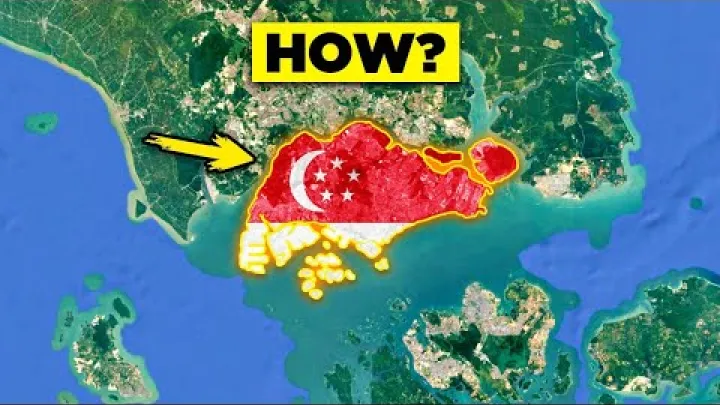
Singapore is in Asia, specifically in Southeast Asia. It is an independent island country and city-state at the southern tip of the Malay Peninsula, close to the Equator. Its compact territory lies between Malaysia and Indonesia and faces some of the most important waterways in maritime Southeast Asia. The word “region” can also mean an internal part of Singapore, so this guide distinguishes its continental location, international subregion, and five planning regions.
Singapore's Continent and Region at a Glance
The short answer is useful for travel forms, schoolwork, business profiles, and general map reading: Singapore belongs to the continent of Asia and the subregion of Southeast Asia. More specific labels can be useful in particular settings, but they do not replace that basic geographic answer.
Singapore Is in Asia and Southeast Asia
Singapore is in Asia. Within Asia, it is part of Southeast Asia, the region that includes countries such as Malaysia, Indonesia, Thailand, Viet Nam, the Philippines, and Brunei. So, when someone asks what continent Singapore is in, the answer is Asia; when they ask what region Singapore is in, the usual geographic answer is Southeast Asia.
Singapore is a sovereign country, not a territory inside either Malaysia or Indonesia. It is also a city-state: its national government governs a small, highly urbanized territory rather than a large country containing many separate cities or states. Britannica describes Singapore as a city-state at the southern tip of the Malay Peninsula.
This distinction matters because Singapore’s close physical connection to the Malay Peninsula can make its position look ambiguous on a small map. Singapore has its own territory, borders, government, and international status, even though Malaysia is very close to its north and Indonesian islands are nearby to its south.
Singapore's Position on an Asia Map
On an Asia map, look near the lower end of the Malay Peninsula. Singapore sits just north of the Equator, south of Peninsular Malaysia, and north of Indonesia’s Riau Islands. This places it in the southern part of mainland-connected Southeast Asia, at the meeting area of peninsular and island Southeast Asia.

A simple way to read its location is from north to south: Malaysia is to the north across the Strait of Johor; Singapore occupies the middle; and Indonesian islands lie across the Singapore Strait to the south. To the west is the wider approach toward the Strait of Malacca, while the South China Sea lies to the east in Singapore’s broader maritime setting.
Singapore is therefore not on the Asian mainland in the same sense as a country with a long land frontier. Its location is maritime, but its island setting does not make it separate from Asia. Islands off a continent are commonly classified with the continent and subregion to which they geographically belong.
Why Singapore Is Considered Part of Southeast Asia
Southeast Asia is a large and varied part of Asia. It contains peninsulas, river basins, large islands, archipelagos, and major coastal cities. Singapore’s position, neighbors, history of regional exchange, and membership in Southeast Asian institutions all support its place within this subregion.
Singapore's Southeast Asian Subregion
Southeast Asia generally refers to the part of Asia between the Indian and Pacific Oceans, broadly south of China and east of India. It includes a mainland area and a maritime area. Singapore is usually described as part of maritime Southeast Asia because it is an island country surrounded by sea routes, although it is immediately adjacent to the Malay Peninsula and closely linked geographically with Malaysia.

Singapore’s map position explains why it is often discussed with both peninsular and island Southeast Asia. It is south of West Malaysia and sits near the route between the Strait of Malacca and the South China Sea. A regional overview from MASA places Singapore within the Southeast Asian landscape alongside Malaysia.
Singapore also has important cultural, commercial, diplomatic, and transport connections with East Asia, South Asia, and places farther away. Those connections are significant, but they do not move Singapore into a different geographic subregion. Terms such as East Asia, South Asia, and Asia-Pacific may describe relationships, markets, or policy discussions rather than its physical location.
It is best not to treat Southeast Asia as one uniform place. Countries in the subregion differ in languages, religions, landscapes, political systems, and urban development. Singapore shares the regional setting while having its own distinct national history and city-state character.
Singapore as an Island Country and City-State
Singapore is an island country made up of one main island and smaller offshore islets within one sovereign territory. The main island contains most of the population, infrastructure, and urban development. The surrounding islands are part of the country’s maritime setting, but they do not change the straightforward answer that Singapore is in Southeast Asia.
It is also a city-state. In practical terms, Singapore’s national territory and its main metropolitan area largely overlap. This is different from a large country where a capital city is only one small administrative unit among many provinces, regions, or rural districts.
“Island country” is the clearest general term for Singapore. It should not automatically be called an archipelagic state simply because it includes smaller islands. That legal and geographic description has a more specific meaning in international maritime contexts. For ordinary location questions, describing Singapore as a compact island country and city-state in maritime Southeast Asia is accurate and easy to understand.
Singapore's Neighbors and Maritime Setting
Singapore’s location is easier to understand through the waters around it. It has very close maritime boundaries and connections with neighboring Southeast Asian countries, especially Malaysia and Indonesia. The named straits nearby are waterways, while national borders are legal boundaries that run through or across surrounding waters.
Malaysia to the North and Indonesia to the South
Malaysia is immediately north of Singapore. The Strait of Johor separates Singapore from the Malaysian state of Johor. Because the waterway is narrow in places and the two countries are connected by land crossings, Singapore can appear attached to the peninsula on some maps. It remains a separate country divided from Malaysia by the strait and international boundary.
Indonesia lies to Singapore’s south, across the Singapore Strait and nearby waters. Indonesia’s Riau Islands are among Singapore’s nearest Indonesian neighbors. This makes Singapore a country positioned between two much larger Southeast Asian states, rather than a part of either one.
The distinction between a land border and a maritime boundary is important. Singapore is linked to Malaysia by crossings over the Strait of Johor, but its setting is still defined by water. Indonesia is also nearby, yet Singapore and Indonesia are separated by maritime space rather than sharing a conventional land frontier.
The Straits and Seas Around Singapore
The Strait of Johor is north of Singapore. In the wider westward setting is the Strait of Malacca, a long waterway between the Malay Peninsula and the Indonesian island of Sumatra. Eastward, the surrounding maritime geography opens toward the South China Sea. These features help explain why Singapore is often described as a maritime crossroads.
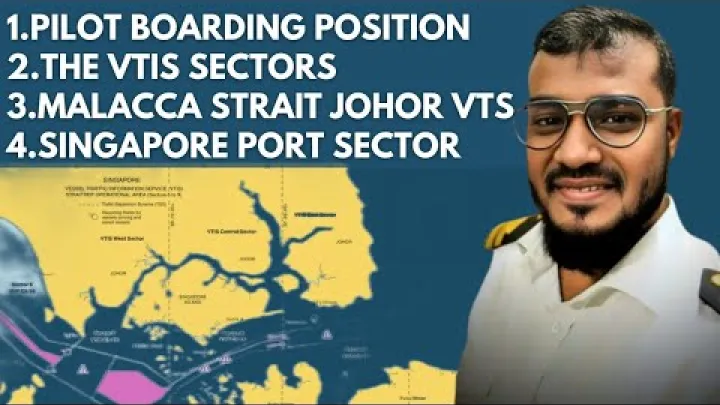
The Singapore Strait lies south of the main island and forms part of the sea route connecting the Strait of Malacca with the South China Sea. It should not be confused with the Strait of Johor: the Johor Strait separates Singapore from Malaysia to the north, while the Singapore Strait is associated with the waters between Singapore and the Indonesian islands to the south.
For a quick map-reading sequence, start with Malaysia and the Strait of Johor in the north. Move south to Singapore, then across the Singapore Strait toward Indonesia’s Riau Islands. From there, place the Strait of Malacca to the west and the South China Sea to the east. This sequence separates countries, borders, and waterways clearly.
Singapore’s position near these routes has long supported its role as a regional port and commercial center. The geographic point is simple: its importance comes in part from its location at a connection point between the Indian Ocean side of Southeast Asia and waters leading toward the Pacific.
How International Organizations Classify Singapore
International organizations often group countries for statistical, economic, or diplomatic purposes. These groupings can overlap with ordinary geography, but they answer different questions. A broader institutional label does not mean Singapore has changed continent or ceased to be part of Southeast Asia.
The United Nations Geographic Classification
In the United Nations geographic classification commonly called the UN geoscheme, Singapore is placed in Asia and in the subregion called South-eastern Asia. This is consistent with the normal geographic description of Singapore as a Southeast Asian country.
A statistical geoscheme helps organizations arrange country data in comparable regional sets. It is not intended to settle every question about culture, history, political identity, or strategic affiliation. For example, a country may be grouped with nearby states for population data while also participating in wider trade, security, or development frameworks.
The UN terminology is useful when reading international datasets because it distinguishes the continent, Asia, from the more specific subregion, South-eastern Asia. A summary of the United Nations geoscheme provides background on this statistical regional structure. For ordinary conversation, “Southeast Asia” is the more familiar form.
The World Bank's East Asia and Pacific Grouping
The World Bank commonly uses East Asia and Pacific as a broader analytical and operational grouping. This type of category can bring together economies from East Asia, Southeast Asia, and the Pacific for regional reporting, lending, and development analysis.
As a result, Singapore may appear under East Asia and Pacific in World Bank materials. That does not mean Singapore is geographically in East Asia. It means the World Bank is using a larger working region that serves its institutional purpose. The World Bank explains its country and lending group structure.
Economic labels should also be kept separate from geographic labels. A country’s income group, lending category, market classification, or development grouping may change over time or use different criteria. Its physical location in Southeast Asia does not depend on those classifications.
ASEAN, Asia-Pacific, and Indo-Pacific Terms
ASEAN is the Association of Southeast Asian Nations, a regional organization whose member states include Singapore. Its membership reinforces Singapore’s place in Southeast Asian regional cooperation, but ASEAN is not a continent and does not define a country’s geographic location. The official ASEAN member list includes Singapore alongside its Southeast Asian partners.
Asia-Pacific is a broader term used in business, trade, international relations, and geography. It commonly refers to parts of Asia connected with the Pacific Ocean and may include countries well beyond Southeast Asia. Indo-Pacific is another broad strategic and maritime term, often used when discussing connections between the Indian and Pacific Oceans.
These labels can all apply in the right context without conflicting with one another. Singapore is geographically in Asia and Southeast Asia, participates in ASEAN, and is often included in Asia-Pacific or Indo-Pacific discussions. Each term describes a different level or purpose: continent, subregion, organization, or wider strategic framework.
Singapore's Five Internal Planning Regions
“Singapore region” can mean more than one thing. Outside the country, it usually means Southeast Asia. Within Singapore, it can refer to large planning regions used to organize the territory. These internal areas answer where a place is within Singapore, not where Singapore is in the world.
Central, East, North, North-East, and West
Singapore has five broad internal planning regions: Central, East, North, North-East, and West. They are planning and geographic subdivisions within one country. They are not provinces, autonomous states, or separate local governments with a status comparable to regions in some larger countries.

| Planning region | What it describes |
|---|---|
| Central Region | Central part of Singapore |
| East Region | Eastern part of Singapore |
| North Region | Northern part of Singapore |
| North-East Region | North-eastern part of Singapore |
| West Region | Western part of Singapore |
These labels can be helpful when comparing broad areas for housing, services, schools, transport planning, or local orientation. They should not be confused with smaller planning areas, neighborhoods, postal districts, or informal place names, which may be more useful for a specific address.
For an address, service area, or planning decision, use a current Singapore government or planning authority map to confirm the relevant internal region. Boundaries and administrative reference systems can be more detailed than a broad five-region overview.
External Region Versus Internal Region
The same word can describe different geographic levels. Singapore’s external location is Asia and Southeast Asia. Its internal planning geography uses Central, East, North, North-East, and West. The correct answer depends on the question being asked.
| Level | Singapore's description | Typical use |
|---|---|---|
| Continent | Asia | Global geography |
| International subregion | Southeast Asia | Regional geography |
| Political organization | ASEAN member state | Regional cooperation |
| Internal planning region | Central, East, North, North-East, or West | Location within Singapore |
For example, a traveler completing an international form would normally select Asia or Southeast Asia if a regional field is provided. Someone looking for a local service may instead need to identify whether an address falls in the East Region or West Region. Keeping these levels separate resolves most confusion around the phrase “Singapore region.”
Conclusion: Singapore Is in Asia and Southeast Asia
Singapore is an Asian country in the Southeast Asian subregion. It is a sovereign island country and city-state at the southern tip of the Malay Peninsula, with Malaysia to the north and Indonesia’s Riau Islands across nearby southern waters. Broader labels such as East Asia and Pacific, Asia-Pacific, or Indo-Pacific may appear in institutional and strategic contexts, while Central, East, North, North-East, and West describe locations within Singapore itself.
Select area
Create a post
Posting is free and no registration is required.