Malaysia Country Facts: Quick Facts and Profile

Malaysia is a Southeast Asian country with two main geographic parts: Peninsular Malaysia and East Malaysia on the island of Borneo. It combines a federal political system, a multicultural population, major urban centres, rainforest landscapes, and close links to regional trade routes. This Malaysia country profile brings together the basic information that readers usually need first, from the capital and population to language, government, and key historical dates. It is a country overview rather than a travel guide, so figures are given with their reference dates or definitions where available.
Malaysia’s two principal regions are separated by the South China Sea rather than forming one continuous land area. That geographic arrangement helps explain the country’s varied landscapes, regional identities, transport connections, and administrative distinctions. Kuala Lumpur, Putrajaya, Sabah, Sarawak, and Labuan can therefore appear differently in maps, government records, and statistical sources.
Malaysia Quick Facts
These Malaysia quick facts provide a starting point. Population totals and density can vary between national estimates and international projections because they may use different reference dates, coverage, and methods.
Core Country Identifiers
| Item | Malaysia basic information |
|---|---|
| Common and official name | Malaysia |
| Region | Southeast Asia |
| Capital | Kuala Lumpur |
| Federal administrative centre | Putrajaya |
| Largest city | Kuala Lumpur, when referring to the city proper |
| Population | 34.1 million, national estimate for 2024 |
| Area | Roughly 330,000 square kilometres; the precise figure depends on the source definition |
| Government | Federal constitutional monarchy with a parliamentary democratic system |
Kuala Lumpur is Malaysia’s capital and principal urban centre. Putrajaya is the planned federal administrative centre, where many federal ministries and government offices are located. The distinction matters: a capital, an administrative centre, a city proper, and a metropolitan area are different geographic or institutional categories. Kuala Lumpur is commonly described as the largest city, but metropolitan population comparisons depend on the boundary used.
For a quick country comparison, the 2024 national population estimate and the approximate area provide useful orientation, but they should not be treated as a single internationally standardised dataset. Population may refer to residents counted or estimated at a particular date, while area may refer to land area or total area. Readers using Malaysia facts for research, forms, or comparisons should keep the year and definition beside the number.
Population, Area, and Landmass
The Department of Statistics Malaysia estimated Malaysia’s total population at 34.1 million in 2024, up from 33.4 million in 2023. For an internationally comparable projection, UN Data lists 36.0 million for 2025. These are not interchangeable figures: the first is a national estimate for 2024, while the second is an international projection for 2025.
Malaysia covers roughly 330,000 square kilometres. An older United States country profile listed an area of 329,749 square kilometres in 2005, without clearly stating whether that figure was land area or total area. Area figures should therefore be compared only after checking their definition. Geographically, Malaysia consists of Peninsular Malaysia on the Malay Peninsula and East Malaysia, made up of Sabah and Sarawak on Borneo. The South China Sea separates these two principal regions.
Peninsular Malaysia contains the national capital and much of the country’s most densely settled urban corridor. East Malaysia is geographically larger and includes extensive inland, forested, and coastal areas. This broad contrast is useful when interpreting national averages: a figure for Malaysia as a whole may conceal substantial differences between Kuala Lumpur and other urban areas, the peninsula’s rural districts, and communities in Sabah and Sarawak.
Currency, Language, Codes, and Time
| Item | Identifier |
|---|---|
| Currency | Malaysian ringgit, MYR |
| Official and national language | Malay |
| International calling code | +60 |
| ISO alpha-2 code | MY |
| ISO alpha-3 code | MYS |
| Country-code domain | .my |
| Time zone | Malaysia Time, UTC+8 |
| Daylight saving time | Not used |
These identifiers are useful for forms, international calls, online addresses, and time planning. Malaysia uses one national time zone across both Peninsular Malaysia and East Malaysia. Technical codes, telecommunications arrangements, and domain rules can change through their specialist authorities, so people completing legal, business, or digital-registration documents should confirm the current requirement with the relevant authority.
Geography and Territorial Structure
Malaysia’s geography helps explain its political and economic character. It has a peninsula-facing side connected to mainland Southeast Asia and an East Malaysian side on Borneo, giving the country both continental and maritime connections.
Malaysia in Southeast Asia
Peninsular Malaysia lies south of Thailand and is positioned between the Strait of Malacca to the west and the South China Sea to the east. East Malaysia occupies the northern part of Borneo and includes Sabah and Sarawak. The two regions are separated by the South China Sea, rather than joined by a land corridor.
Malaysia shares land borders with Thailand on the peninsula and with Indonesia and Brunei on Borneo. Its location near the Strait of Malacca has long linked it to shipping and exchange across Asia. This setting also explains why coastal settlements, ports, islands, and inland highlands all form important parts of the national landscape.
The country’s position also gives it several different geographic reference points. The Strait of Malacca connects the western side of the peninsula with one of the world’s important maritime passages, while the South China Sea connects Malaysia’s two main regions to wider Southeast Asian waters. These features are geographic context rather than evidence of any particular current economic ranking or policy position.
States, Federal Territories, and Physical Landscape
Malaysia is a federation of 13 states and 3 federal territories. The federal territories are Kuala Lumpur, Putrajaya, and Labuan. They have a different administrative status from the states, even though Kuala Lumpur and Putrajaya are central to national government and Labuan is geographically part of East Malaysia.

The physical landscape includes coastal plains, river systems, interior hills and mountains, tropical forests, and extensive coastlines. Peninsular Malaysia contains the country’s most continuous urban and industrial corridor, including Kuala Lumpur and surrounding urban areas. Sabah and Sarawak cover a much larger share of East Malaysia’s land area and include wide forested, coastal, and inland landscapes.
When comparing maps or statistics, it is useful to check whether a source is describing a state, a federal territory, a geographic region, or a city. The same place can appear under different categories depending on whether the subject is administration, population, or physical geography.
This structure is especially important for readers looking at local facts. Kuala Lumpur is both a city and a federal territory; Putrajaya is a federal territory designed around administration; and Labuan is a federal territory situated off the coast of Borneo. Sabah and Sarawak, by contrast, are states within the federation. These distinctions prevent a city, territory, state, and geographic region from being mistakenly treated as equivalent units.
Population and Demographic Profile
Malaysia’s demographic profile reflects urban growth, regional differences, migration, and a society with several major ethnic, linguistic, and religious communities. National statistics provide the best starting point for current totals, while international datasets can be useful for cross-country comparisons.
Population Size, Growth, and Density
Malaysia’s 2024 population estimate of 34.1 million is the principal current national figure in this profile. The reported annual increase from 2023 to 2024 was 1.9 per cent. This growth should not be read as a simple measure of births alone, because population estimates may also reflect migration and changes in statistical coverage.
UN Data reports a 2025 population projection of 35.978 million and a density of 109.5 people per square kilometre for the same year. Density is a national average, not a description of how people are distributed. Population is far more concentrated in major urban areas and parts of Peninsular Malaysia than in many interior and rural areas of Sabah and Sarawak.
Population density is therefore most useful as a broad comparison between countries or reference years. It does not show the pattern of settlement within Malaysia, where coastal and metropolitan areas can have a very different character from interior districts. A reader comparing figures should use the same year and check whether the area denominator is land area or another territorial measure.
Age Structure, Citizenship, and Migration
Malaysia has a large working-age population, while the number and share of older people are gradually increasing. This pattern affects planning for employment, housing, health care, education, and social support. It also means that a single national average does not describe every state or community.
Citizens and non-citizens should be distinguished when reading demographic or labour-related statistics. Malaysia’s population includes residents from abroad, and migration can affect population change, workforce composition, and sex-ratio measurements. Such figures provide context, but they do not by themselves explain a person’s social experience, legal status, or economic circumstances.
Age and citizenship categories also matter when statistics are used for practical decisions. A total resident estimate, a citizen count, a labour-force measure, and a school-age population are different indicators. Treating them as interchangeable can produce misleading conclusions about the size or needs of a particular community.
Ethnic and Religious Diversity
Malaysia is a multiethnic society that includes Malays, Chinese Malaysians, Indian Malaysians, and many Indigenous communities. The Indigenous peoples of Sabah and Sarawak have diverse identities and languages, and regional composition varies considerably across the federation. Ethnicity, citizenship, language, and religion are related in some individual cases but are not the same category.
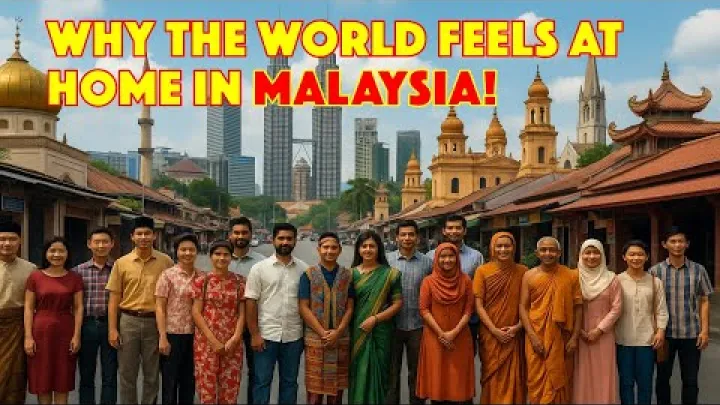
Islam is the majority religion and has a constitutional role in the federation. Buddhism, Christianity, Hinduism, Sikhism, Chinese traditional beliefs, and other faiths are also practiced. A clear country profile should describe this diversity neutrally and avoid reducing Malaysia’s communities to a single national percentage or stereotype.
Urban Malaysia often brings different communities, languages, and traditions into close contact, while regional histories shape identity in different ways. Kuala Lumpur and its surrounding urban areas are especially diverse, but cultural diversity is not limited to the capital. Sabah and Sarawak also contain many Indigenous communities whose histories and languages should not be collapsed into one national category.
Government and National Systems
Malaysia’s institutions combine a federal structure with a constitutional monarchy and an elected parliamentary government. This arrangement is an important part of the country’s identity and should not be confused with a system led by a hereditary executive monarch.
Federal Constitutional Monarchy and Parliament
Malaysia is a federal constitutional monarchy with a parliamentary democratic system. The Yang di-Pertuan Agong is the head of state. The prime minister is the head of government and leads the executive government through the cabinet.

Parliament is bicameral, meaning that it has two houses. The elected lower house is the Dewan Rakyat, while the Dewan Negara is the senate. Malaysia’s monarchy is distinctive because the Yang di-Pertuan Agong is selected under the country’s constitutional arrangements from among the rulers of the Malay states, rather than succeeding automatically through a single hereditary line. Detailed membership and procedural rules should be checked through current parliamentary and constitutional information when they are relevant to a specific purpose.
This division of roles gives readers a simple way to understand the national system: the monarch represents the head of state, the prime minister leads the government, and Parliament forms the central legislative institution. The federal structure adds another level, because state governments operate alongside federal institutions. A general country profile can explain these relationships without attempting to summarise every constitutional power or current political development.
How the Federation Is Organized
Federal powers operate alongside the governments of the 13 states. The three federal territories are administered under federal arrangements rather than as states. This is why Kuala Lumpur and Putrajaya may be shown separately from neighbouring states in administrative tables, while Labuan may be grouped geographically with East Malaysia.
Sabah and Sarawak are both states in the federation and are central to understanding East Malaysia. Their location on Borneo, distinct historical setting, and regional institutions make them especially important in national discussions. Readers seeking practical detail on a particular place should consult dedicated information on Malaysian states and federal territories rather than assuming that one local rule or statistic applies everywhere.
Economy and Development in Brief
Malaysia has developed from an economy strongly associated with primary commodities into one with significant manufacturing and service activities. Its geography, workforce, infrastructure, and position in Southeast Asia all shape that transition.
From Commodities to Manufacturing and Services
Agriculture and commodity production remain part of Malaysia’s economic story, including palm-based products and other resource-related activities. Energy, manufacturing, electronics, trade, finance, tourism-related services, and other services also play important roles. The balance differs by region and changes over time.
Malaysia’s position near major sea routes supports connections with regional and global markets. However, a country profile should not treat broad descriptions of trade links as a guarantee about current growth, investment conditions, or business regulations. People making commercial decisions need current sector data, licensing requirements, and local professional advice.
The economy also has a clear regional dimension. Manufacturing and services are prominent in and around major urban areas, while agriculture, energy, forestry, and other resource-linked activities have different importance across states. This does not mean that each state has a separate economy; it means that national economic summaries combine places with different industries and development patterns.
Income, Poverty, Education, and Health
Malaysia is generally described as an upper-middle-income economy in international development classifications. Over time, it has made broad advances in infrastructure, education, health services, and living standards. These national patterns can coexist with meaningful differences between regions, cities, and households.
Poverty, income, schooling, and health indicators need careful interpretation. National poverty lines and international thresholds answer different questions, while national averages may conceal local variation. For a general Malaysia country profile, the key point is that development outcomes have improved substantially but are not identical across all communities or parts of the federation.
For comparisons, the reference year and measurement method are as important as the headline result. A national income classification is not a direct description of every household, and a countrywide education or health average does not show every state’s outcome. Those distinctions make the profile more useful without turning it into a detailed economic or social report.
Languages, Culture, and National Identity
Malaysia’s national identity is shaped by Malay constitutional and cultural foundations alongside the languages, beliefs, and traditions of its diverse population. Public life is multilingual in practice, particularly in cities, education, commerce, and family settings.
Malay and Malaysia's Multilingual Society
Malay is Malaysia’s official language and national language. The Malaysia Government describes Malay, also known as the Malaysian language, as an official language whose national role is established. The terms Bahasa Melayu and Bahasa Malaysia are often encountered in Malaysian contexts; they refer to the same national language tradition rather than separate languages.
English is widely used in business, higher education, and many everyday settings. Mandarin, Tamil, other Chinese varieties, and a wide range of Indigenous languages are also used by Malaysian communities. Their widespread use does not mean that each has the same official legal status as Malay.
This multilingual setting is one reason that language facts need careful wording. The official status of Malay describes its national institutional role; it does not imply that it is the only language spoken at home, used in commerce, or encountered in education. Language use also varies by region, community, generation, and setting.
Religion, Symbols, and National Holidays
Islam has a special constitutional position in Malaysia, while people of other faiths also form an important part of the country’s religious life. Respectful discussion requires separating constitutional description from assumptions about individual belief or practice.
Malaysia’s flag is known as Jalur Gemilang, and its national anthem is Negaraku. Two dates are especially important in the national calendar: 31 August marks the independence of the Federation of Malaya in 1957, while 16 September marks Malaysia Day and the formation of Malaysia in 1963. The dates commemorate related but distinct historical events.
These symbols and dates help distinguish national identity from the identity of any one state or community. Malaysia’s public calendar and cultural life reflect the country’s constitutional framework as well as the traditions of its Malay, Chinese, Indian, Indigenous, and other communities.
Historical Milestones and Regional Context
From Independence to the Formation of Malaysia
The Federation of Malaya became independent on 31 August 1957. Malaysia was formed on 16 September 1963, bringing together Malaya, Sabah, Sarawak, and Singapore at its beginning. Singapore later became a separate sovereign state, but its initial participation remains part of the formation story.
This short timeline helps explain the present-day structure of the country. Peninsular Malaysia is closely connected with the history of the Federation of Malaya, while Sabah and Sarawak are East Malaysian states on Borneo. Malaysia Day is therefore not simply another name for independence day; it marks the creation of the modern federation.
The historical distinction remains useful when reading modern Malaysia facts. Independence in 1957 refers to the Federation of Malaya, while the 1963 formation created Malaysia in the form that includes the peninsula, Sabah, and Sarawak. The dates are connected, but they describe different constitutional and national milestones.
What to Remember About Malaysia
Malaysia is a Southeast Asian federation of 13 states and 3 federal territories, with Kuala Lumpur as its capital and Putrajaya as its federal administrative centre. Its population was estimated nationally at 34.1 million in 2024, and its territory spans Peninsular Malaysia and East Malaysia across the South China Sea.
Malay is the official and national language, the ringgit is the currency, and the country operates as a federal constitutional monarchy with a parliamentary system. Its multicultural society, maritime location, and history of federation make Malaysia more varied than a simple map label can show. For any use requiring current legal, technical, or statistical precision, consult the relevant Malaysian authority and confirm the date and definition behind the figure.
The most useful facts to retain are the country’s two-part geography, the difference between Kuala Lumpur and Putrajaya, the 13-state and 3-territory federation, and the distinction between Malaysia’s 1957 independence and its 1963 formation. Together, these details provide a reliable foundation for understanding Malaysia’s population, institutions, culture, and place in Southeast Asia.
Select area
Create a post
Posting is free and no registration is required.