George Town Where to Stay: Best Areas in Penang

Choosing where to stay in George Town, Malaysia, shapes how much of Penang you can experience on foot. The UNESCO-listed heritage core is usually the strongest base for a first visit, but it is not the only sensible choice. Komtar, Gurney Drive, Pulau Tikus, and the northern coast each suit different priorities, from transport and shopping to quiet evenings and beach time. This guide compares the main areas, accommodation types, night comfort, and transport considerations so you can choose a base that fits your trip.
The Best Area to Stay in George Town for Most First-Time Visitors
For most first-time visitors, stay in or immediately beside George Town's historic core. This puts the city's heritage streets, a large choice of food, and many daytime sights within a compact area. It also reduces the need to organize transport every time you want to change plans, stop for a meal, or return to your room during the heat of the day.
The best address depends on the kind of stay you want. A property described as central Georgetown can still be outside the most walkable heritage lanes, so use the map, not just the listing title, when comparing options. Penang's official tourism portal, MyPenang, is a useful starting point for broader destination information while you narrow down an area.
The Default Base: The Heritage Core Near Armenian Street and Lebuh Chulia
The default recommendation is the heritage core around Armenian Street, Lebuh Chulia, Love Lane, and the streets leading toward the Clan Jetties. It is the best area to stay in George Town if your short trip is built around historic architecture, temples, museums, street art, local food, and unplanned walking. You can start early before the streets become busy, take a rest at your hotel, and return to the same area for dinner without treating every outing as a transport decision.
Armenian Street is useful as a sightseeing reference point, while Lebuh Chulia and Love Lane offer a broad mix of guesthouses, hostels, cafés, and evening venues. The Clan Jetties and Weld Quay are also easier to include from this side of central George Town. The advantage is not that every attraction is beside every hotel; it is that several major parts of a classic itinerary are clustered close together.
Choose a micro-location rather than booking any property that uses the word “Georgetown.” A room near a lively food or bar street may be ideal for a social stay but less suitable for light sleepers. A side street a short distance away can offer a calmer setting while keeping the same practical access. Check the pin, nearby roads, building entrance, and recent guest comments before deciding.
When Komtar, Gurney Drive, Pulau Tikus, or the Coast Is a Better Fit
Choose Komtar or Magazine Road when you value city convenience, modern buildings, malls, and public-transport access more than waking up among heritage shophouses. Choose Gurney Drive when a seafront setting, shopping, larger hotels, and evening facilities matter more than walking to old-town sights. Pulau Tikus works well for travelers who prefer a more residential rhythm, while the northern coast is the better choice when the beach and resort facilities are a major purpose of the trip.
The basic decision is simple: stay in the heritage core to maximize walking and old-town atmosphere; stay farther north or east for more modern facilities, more space, or coastal surroundings. These alternatives are not inferior. They simply exchange immediate access to Armenian Street and the historic lanes for a different daily experience.
Batu Ferringhi and Tanjung Bungah are nearby coastal bases, not districts in central George Town. They can be excellent for a beach-focused holiday, but they are less convenient if heritage sightseeing is your main plan. A traveler who expects to spend most days in the old town should not assume that a beach hotel provides the same easy city access.
Best Areas to Stay in George Town Compared
George Town is compact in parts but not uniform. The following comparison focuses on what each base makes easy, what it makes less convenient, and the type of accommodation commonly found there.
| Area | Best for | Main trade-off |
|---|---|---|
| Heritage core | First visits, food, sights, walking | Noise, older buildings, limited parking |
| Komtar and Magazine Road | Transport, malls, modern stays | Less heritage atmosphere outside the door |
| Gurney Drive | Seafront, shopping, larger hotels | Rides or buses for old-town sightseeing |
| Pulau Tikus | Local feel, longer stays, calmer pace | Less convenient for heritage walks |
| Batu Ferringhi | Beach, pools, resort time | Farther from central George Town |
George Town Heritage Core: Best for Sightseeing, Food, and First Visits
The heritage core is the strongest base for travelers who want the classic George Town experience. Its historic streets connect a concentration of cultural sites, eating places, galleries, religious buildings, and small businesses. Armenian Street, Lebuh Chulia, Love Lane, and the area toward the Clan Jetties are useful landmarks when looking at maps and accommodation listings.
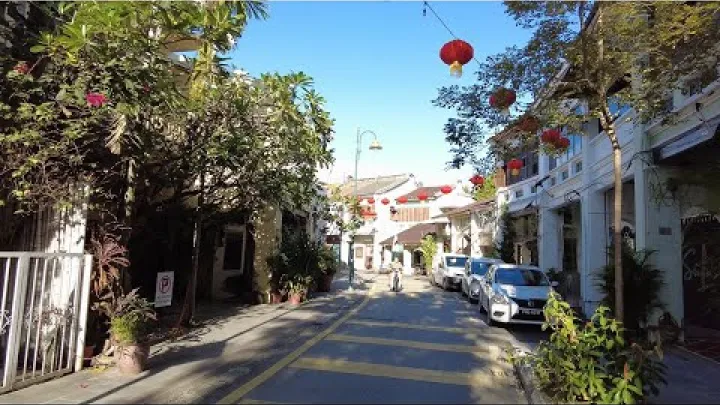
Walkability is the main benefit. You can explore at a slower pace, move between food stops and sights without returning to a vehicle, and take advantage of early mornings and evenings. The area also has the widest visible range of short-stay formats, including dormitory beds, simple guesthouses, boutique rooms, and heritage-style hotels. Current accommodation inventory changes with dates, but major booking platforms show a broad spread of properties in and around Georgetown.
The trade-offs come from the buildings and streets that create the atmosphere. Older properties may have compact rooms, stairs, limited lift access, irregular layouts, restricted vehicle access, or less consistent sound insulation than a newer hotel. Parking can be inconvenient for a road trip. A traveler who needs a large room, a pool, or easy car access may prefer a modern hotel on the edge of the center.
Within the core, do not treat every street as the same. Areas close to bars and hostels can be more active late into the evening, while side streets can feel more residential or quieter. For a first visit, the best compromise is often a location close enough to walk to Lebuh Chulia or Armenian Street but not directly on the busiest nightlife frontage.
Komtar and Magazine Road: Best for Transport, Malls, and Modern Hotels
Komtar is one of the clearest orientation points in central George Town. The surrounding area, including Magazine Road, suits visitors who want contemporary hotels, serviced-apartment-style space, air-conditioned shopping, business services, and practical access to city transport. It can also be appealing for travelers arriving with luggage, renting a car, or planning day trips beyond the old town.
This base is still central, but it has a different feel from the historic lanes. You are closer to modern commercial buildings than to the small-scale streets around Armenian Street. Heritage sights remain accessible, yet the walk is not equally convenient from every property, especially in hot or wet weather. For many travelers, a short ride or a purposeful walk is more realistic than assuming all of old town is immediately outside the door.
Komtar is a useful option for public-transport users because it is a major urban reference point. Route numbers, operating hours, fares, and service arrangements can change, so use Rapid Penang for current route information rather than relying on an old travel post. The area is especially practical if your itinerary includes multiple parts of the island and you do not need heritage atmosphere at your hotel entrance.
Gurney Drive: Best for Seafront Walks, Shopping, and Hawker Food
Gurney Drive is a seafront urban corridor north of the heritage core. It appeals to visitors who want a modern hotel environment, malls, waterfront surroundings, and easy access to evening food options. It can feel more spacious than the old-town lanes and often makes sense for families, business travelers, and guests who value familiar hotel facilities.
![Preview image for the video "[4K] Walking Tour Gurney Drive Shopping Malls and Markets, Malaysia Travel vlog".](/sites/default/files/styles/media_720x405/public/oembed_thumbnails/2026-08/VX8mM9EGSynk9A2w502_DypBrV-py5ATOWguvLQSlmY.jpg.webp?itok=eDC4ej7H "Preview image for the video \"[4K] Walking Tour Gurney Drive Shopping Malls and Markets, Malaysia Travel vlog\".")
This is a lifestyle base rather than an old-town substitute. The seafront setting and shopping access are the reasons to choose it; the heritage core is not usually a casual sightseeing walk away. Plan on using a bus or ride-hailing service when you want to spend a full day around Armenian Street, Love Lane, or the Clan Jetties. That extra movement may be worthwhile if you prefer a larger room, a pool, or a more contemporary building.
Gurney Drive can also work for a longer visit because it gives you a clear division between city sightseeing and relaxed evenings. It is particularly useful when not every day is devoted to museums and heritage streets. Do not choose it solely because a listing says it is in George Town; choose it because its seafront-and-shopping setting matches your priorities.
Pulau Tikus: Best for a Quieter, More Local Base
Pulau Tikus is a residential and commercial area north-west of the heritage core. It is better suited to travelers who want everyday neighborhood life, local eating options, shops, and a less tourism-centered environment. Families, repeat visitors, and people staying longer often appreciate having more of a daily routine than an old-town base provides.

It is not the best choice if you want to step outside and immediately begin a heritage walk. Reaching the main historic lanes will usually involve a bus, a ride-hailing trip, or a longer planned walk. That is not a problem for a traveler who has time, but it reduces the flexibility that makes the heritage core attractive for a two- or three-night city break.
Accommodation here may include hotels, apartments, and residential-style options, depending on availability. The area can feel calmer than the busiest nightlife stretches, but the exact street and building still matter. Think of Pulau Tikus as a practical local base, not as a guaranteed quiet or secluded zone.
Beach Alternatives Near George Town and Split-Stay Planning
Penang allows you to combine a city stay with a coastal stay, but this is worthwhile only when beach time is a real priority. A coastal hotel changes the pace of the trip: you gain resort facilities and beach access, but city sightseeing requires more planning.
Batu Ferringhi: Best for a Beach Resort Stay
Batu Ferringhi is a northern coastal destination outside central George Town. It is a common choice for travelers who want beaches, pools, resort facilities, family-oriented hotels, and an evening coastal atmosphere. Accommodation ranges from simpler rooms to larger resorts, and current listing platforms show substantial lodging choice in the area, including on Booking.com.
Its advantage is clear: this is the better base for a holiday centered on relaxing by the sea rather than moving between heritage streets. It can be particularly suitable for families who want a pool and room to spend time at the property, or for travelers adding a few slower days after a busy city itinerary.
The central trade-off is road transport. Before booking Batu Ferringhi as your only base, check the map and the expected transfer time to the heritage core for the times you expect to travel. Traffic and your exact hotel location can affect the experience. If you plan several days around museums, street art, food walks, and the Clan Jetties, a central base is usually more efficient.
Tanjung Bungah and a City-and-Beach Split Stay
Tanjung Bungah and nearby Tanjung Tokong sit between the central city and Batu Ferringhi. They can suit travelers who want some coastal access while remaining closer to Gurney Drive and George Town than a Batu Ferringhi resort. These areas may offer a middle ground, although they do not provide the same old-town walkability as the heritage core.
A split stay is most useful when your itinerary has two distinct parts: heritage sights and food first, then beach or resort time afterward. Begin in the heritage core so you can explore early, late, and spontaneously. Move north when you are ready for a slower pace and do not need to return to old town repeatedly.
Do not split a short trip simply because two areas sound appealing. Changing hotels consumes time through packing, travel, luggage storage, and check-in timing. For a brief visit with only limited beach interest, one well-located central hotel is usually simpler. If you do split, choose transfer times that do not remove a major sightseeing block from the day.
Where to Stay in George Town by Travel Priority
The right district becomes clearer when you start with the reason for your trip. Instead of looking for one universally best hotel, decide which daily convenience matters most.
Best Base for Heritage Sightseeing, Food, and Nightlife
For heritage sightseeing and food, choose the historic core. Staying near Armenian Street, Lebuh Chulia, Love Lane, or the route toward Weld Quay makes it easier to combine landmark visits with spontaneous meal stops. It is also the best option for travelers who want to return to their room between daytime walks and evening plans.
For nightlife, the same area remains the most convenient, but choose the exact street carefully. A social traveler may prefer to be close to the active stretches around Love Lane or Lebuh Chulia. A traveler who wants dinner and a short evening walk but not late noise may prefer a nearby side street. The core offers the greatest choice; it also requires the most attention to micro-location.
Komtar is a workable alternative for people who want central city access, shopping, and easier transit connections. It is less immersive for a heritage-led itinerary, but can be a sensible compromise when modern room features or transport convenience are more important than sleeping in the old town.
Best Base for Families, Quiet Nights, and Sea Views
Families often benefit from choosing accommodation by facilities rather than by neighborhood reputation alone. A serviced apartment or modern hotel can provide more useful space than a characterful but compact heritage room. Look for the room configuration you actually need, lift access, a pool if it matters, parking for a car, kitchen facilities where useful, and easy access for strollers or luggage.
Gurney Drive can suit families who want malls, larger hotels, and seafront surroundings. Pulau Tikus can work for a more local, longer-stay atmosphere. Tanjung Bungah and Batu Ferringhi are stronger choices when a beach, pool, and resort time are central to the trip. Quieter side streets in the heritage core remain an option for families who want old-town access without staying directly beside late-night venues.
Sea views and resort facilities usually mean accepting more distance from heritage sights. That can be a good exchange when the hotel itself is part of the holiday. Read the property details closely for child policies, bedding, pool rules, and access arrangements, since these differ widely between hotels and apartments.
Best Base for Budget Travelers, Longer Stays, and Remote Work
Budget travelers often find the greatest concentration of hostels, basic guesthouses, and social accommodation in or near the heritage core. This can lower transport needs as well as the nightly room cost, because food and sightseeing are close by. A dormitory or simple guesthouse is especially practical for a short stay when you expect to be out exploring for most of the day.
For longer stays, compare the total living setup rather than selecting the lowest nightly rate. Komtar, Magazine Road, and Pulau Tikus may offer more modern hotels or apartment-style options with extra room, a desk, laundry access, or a kitchen. These can be more useful for remote work, study, or a family stay than a small heritage room, even if the location is less scenic.
A hotel room, serviced apartment, and informal monthly rental are different products. Hotels usually provide a clearer short-stay service model. Serviced apartments may offer kitchens and more space but can have varying reception, housekeeping, and building-access arrangements. A longer rental may involve separate conditions. Decide what you need each day: reliable workspace, laundry, storage, cooking, or walkable food options can matter more than a small difference in headline price.
Choosing the Right Accommodation Type in George Town
Area choice determines your surroundings, while accommodation type determines how the stay feels. In George Town, historic character and modern convenience can be very different experiences even when properties are only a short distance apart.
Heritage Hotels and Boutique Guesthouses
Heritage hotels and boutique guesthouses are often the most memorable option in or near the historic core. Restored shophouses, colonial-era buildings, and Peranakan-inspired interiors can place you close to the streets that visitors come to see. They suit travelers who value architecture, atmosphere, centrality, and a stay that feels connected to George Town's built environment.
These properties vary greatly. A heritage design does not automatically mean a large room, modern accessibility, or consistent soundproofing. Before reserving, examine room photographs and practical details: whether there is a lift, how many stairs are involved, whether parking is available, how far vehicles can approach, and whether the room has windows facing a street or courtyard.
For many couples and short-stay visitors, the character is worth the compromises. For guests with mobility needs, large luggage, a car, or a need for a predictable work setup, a newer property may be easier. The best choice is the one whose building limitations you can comfortably accept.
Modern Hotels, Resorts, and Family Suites
Modern hotels are concentrated around areas such as Komtar, Magazine Road, Gurney Drive, Pulau Tikus, and the northern coast. They can offer features that are less common in older central buildings, including larger rooms, lifts, parking, pools, business facilities, and more standardized layouts. These benefits can justify staying outside the heritage core.
Choose a modern city hotel for a business trip, a road trip, a family stay requiring practical space, or a visit where shopping and city services matter. Choose a northern resort when beach access and time at the property are key parts of the holiday. For current choices around the wider Georgetown area, Booking.com can help illustrate the range of available property types for your dates.
Check the actual map position even when a property is marketed under the Georgetown name. The wider city label can cover places that are not convenient for the heritage streets. A modern hotel can be an excellent choice, but its advantages should match the itinerary you have planned.
Hostels and Serviced Apartments
Hostels and budget guesthouses are a good fit for solo travelers, backpackers, and short stays, particularly around the heritage and nightlife streets. They can offer a social environment and put you near food and evening activity. The most useful hostel is not always the cheapest one: consider whether its location, reception arrangements, luggage storage, shared bathroom setup, and quiet hours suit your needs.
Serviced apartments can be more suitable for families, remote workers, students, and extended stays. Extra space, a kitchen, laundry facilities, and a table for work can improve daily life. However, services differ: some have staffed reception and regular housekeeping, while others operate more like independently managed units.
Before payment, confirm the current total price, taxes, deposit, cancellation terms, reception hours, and included facilities directly in the booking details. Also check Wi-Fi information, bedding layout, whether the kitchen equipment is included, and recent reviews that discuss the exact room type. This is especially important for apartment-style accommodation, where services can vary more than the listing category suggests.
Safety, Night Walkability, and Noise by Area
Most decisions about comfort after dark are more useful when made at street level than district level. Choose an area that matches your evening routine, then assess the specific route between your accommodation, food options, and transport.
What Travelers Should Know About Safety in George Town
George Town is generally manageable for visitors who use ordinary urban awareness. Focus on practical issues rather than trying to identify a universally “safe” district: keep valuables secure in crowded places, stay alert around traffic, know how you will return after an evening out, and avoid relying on an unfamiliar quiet route when a more active route or a short ride is available.
Accommodation location affects comfort. Streets with open businesses, lighting, and regular foot traffic may feel more comfortable for an evening return than isolated stretches. Transport terminals and busy visitor areas also call for normal care with bags and phones. These are sensible precautions, not evidence that a particular neighborhood is unsafe.
If you expect to walk back at night, choose accommodation on a well-lit, active street or close to one. Use normal urban precautions, keep your route simple, and take a short ride when that feels more appropriate. No area should be treated as completely risk-free, and broad safety impressions are not a substitute for personal judgment on the day.
Micro-Location Matters: Nightlife, Quiet Streets, and Room Noise
Love Lane and parts of Lebuh Chulia can be convenient for bars, hostels, restaurants, and evening activity. That convenience may also bring music, conversation, traffic, deliveries, or late returns. Nearby side streets can offer a different sleep environment even when they are only a few minutes away. The neighborhood name alone cannot predict the noise level in your room.
The building and room position matter just as much. Street-facing windows, rooms above venues, ground-floor rooms near entrances, thin internal walls, and courtyard layouts can all change the experience. In an older heritage property, sound insulation may be uneven from room to room.
Read recent guest reviews specifically for street noise, music, and sleep quality, then request an interior-facing or upper-floor room when quiet sleep matters. This request cannot guarantee silence, but it is more useful than assuming that an entire district will be quiet or noisy. Travelers who want evening access without the strongest noise exposure should stay near active streets rather than directly above a bar or late-night venue.
Transport Access and Choosing a Base for Your Trip Length
Transport does not need to dominate a George Town visit, but it should influence your hotel choice. The heritage core rewards walking, while coastal and residential bases work best when you are comfortable using buses or ride-hailing services.
Airport Transfers, Rapid Penang, CAT, and Grab
From Penang International Airport, travelers commonly consider ride-hailing, airport taxis, and public buses. The best option depends on arrival time, luggage, group size, and the exact hotel location. A direct ride is often simplest after a late arrival or when you are staying outside the historic core, while public transport can be useful for travelers who are flexible and traveling light.
Komtar and Weld Quay are useful reference points for travelers who expect to use public transport. The heritage core combines walking with access to central city connections, though the final distance to a hotel can still involve uneven pavements or narrow streets. The central CAT service and Rapid Penang buses are useful transport anchors, but services should be treated as current operational information rather than a fixed promise.
Check current Rapid Penang routes and operating information before relying on a specific bus connection. This is particularly important when staying at Gurney Drive, Pulau Tikus, Tanjung Bungah, or Batu Ferringhi, where bus connections, ride-hailing availability, traffic, and the number of planned heritage days can change which base is most practical.
How Trip Length Changes the Best Place to Stay
For a short city break, stay in the heritage core or just beyond its edge. Reducing daily transfers gives you more time to walk, eat, rest, and revisit places at a different time of day. This is usually the simplest answer for a first visit focused on George Town itself.
For a longer Penang visit, you can choose either one central base or a city-and-beach split. One base is easier when you value routine and do not want to handle luggage twice. A split can be rewarding when you genuinely want both intensive heritage exploration and dedicated coastal relaxation.
For study, remote work, or an extended stay, prioritize the details that affect ordinary days: a usable desk, dependable internet information, laundry, kitchen access if needed, shops, food, and a transport plan. Pulau Tikus, Komtar, Magazine Road, and some coastal apartment-style options may be worth considering alongside the heritage core. There is no fixed ideal duration for any area; your mobility, work needs, and interest in the beach should lead the decision.
Final Recommendation: Match the Base to Your George Town Priorities
For most first-time visitors, book in the heritage core near Armenian Street, Lebuh Chulia, Love Lane, or the route toward the Clan Jetties. It gives the best balance of sightseeing, food, walkability, and flexibility. Select a quieter nearby street if sleep matters more than being beside nightlife.
Choose Komtar or Magazine Road for modern city convenience and transport access; Gurney Drive for seafront surroundings, shopping, and larger hotels; and Pulau Tikus for a more residential, longer-stay feel. Choose Tanjung Bungah or Batu Ferringhi only when beach time, pools, and resort facilities are important enough to justify more travel to central George Town.
The final step is to assess the exact property rather than relying on the area label. Confirm its map position, room layout, access, recent comments, and the daily routine it will make easy. With that approach, George Town can be as practical for a quick food-and-heritage break as it is for a longer Penang stay.
Select area
Create a post
Posting is free and no registration is required.