Yokohama Getting There: Airport, Train, Bus & Cruise Routes
Getting to Yokohama is straightforward when you choose the arrival point that matches your hotel or first activity. Haneda and Narita airports offer different combinations of rail and airport bus services, while travelers from western Japan may arrive at Shin-Yokohama by Tokaido Shinkansen. Yokohama Station, YCAT, Shin-Yokohama Station, and the bayfront are separate destinations, so the correct station name matters. This guide compares speed, price, luggage convenience, booking effort, and the final connection to the city center and cruise terminals.
Choose the Right Gateway for Yokohama
Yokohama has several transport gateways rather than one central arrival terminal. The best route depends on where you will sleep, how much luggage you have, whether you have a fixed cruise or flight connection, and whether you prefer the fastest journey or a direct one-seat ride. The Yokohama Official Visitors Guide provides a useful overview of routes from Tokyo, Haneda Airport, and Narita Airport.
Match Your Arrival Point to Your Final District
Before buying a ticket, identify your actual destination. Yokohama Station is the main conventional rail interchange and is usually the most useful arrival point for hotels around the station, transfers to local trains, and many business trips. YCAT, or Yokohama City Air Terminal, is an airport and highway bus terminal in the Yokohama Sky Building near Yokohama Station's East Exit. It is not a railway station, even though airport and intercity bus routes describe it as a Yokohama arrival point.
Shin-Yokohama Station is the city's Tokaido Shinkansen gateway. It is separate from Yokohama Station and is often the correct destination for travelers arriving from Nagoya, Kyoto, Osaka, or other parts of western Japan. A local train connection is required if your hotel is near Yokohama Station or the bayfront.
For a bayfront hotel or sightseeing area, the closest useful arrival point may be on the Minatomirai Line rather than at Yokohama Station. Minato Mirai, Nihon-Odori, and Motomachi-Chukagai stations serve different parts of the waterfront and Yokohama Chinatown. Ishikawacho Station and Sakuragicho Station can also be practical for particular hotels. Cruise passengers should first identify whether the ship uses Osanbashi Yokohama International Passenger Terminal or Daikoku Pier Cruise Terminal.
Think of the journey in two parts: long-distance arrival and local last mile. An airport bus may be the easiest long-distance option, but it still leaves you at a specific terminal or district stop. From there, you may need a walk, a local train, or a taxi to reach your accommodation.
Compare Time, Price, and Booking Effort
No single route is best for every traveler. Rail is generally easier to protect against road congestion, while a bus can be simpler when you have large bags or a hotel near its stop. Reserved services require the correct ticket and, in some cases, a seat reservation. Local urban rail is usually easy to use with an eligible IC card, but acceptance and ticket conditions depend on the operator.
| Route | Main arrival point | Useful when | Main tradeoff |
|---|---|---|---|
| Haneda rail | Yokohama Station | Speed and onward rail connections | Walking and platform changes with luggage |
| Haneda airport bus | YCAT or a waterfront stop | One-seat travel and baggage convenience | Road traffic and a route-specific stop |
| Narita Express | Yokohama Station | Reserved seating and direct rail travel | Longer airport journey and a local connection for some districts |
| Narita airport bus | YCAT or Yokohama Station East Exit area | Direct travel without changing trains | Highway traffic and limited departure choices at some times |
| Tokaido Shinkansen | Shin-Yokohama Station | Travel from western Japan or onward long-distance travel | Separate local transfer to central Yokohama |
| Local or private rail | Yokohama, Ishikawacho, Sakuragicho, or bayfront stations | Travel from Tokyo or the Kanto region | Best route changes with your starting station and final district |
| Highway bus | YCAT or a Yokohama Station bus terminal | Lower-cost or overnight travel | Longer journey, traffic exposure, and advance booking |
| Cruise access | Osanbashi or Daikoku Pier | Ship arrival or departure | Terminal-specific instructions and luggage arrangements |
Use these categories as planning guidance rather than fixed fare or time promises. Airport bus prices, rail products, and long-distance bus fares depend on the current operator and ticket type. If you are considering a domestic flight into Haneda, compare the full door-to-door journey with a train or highway bus from your actual origin. Include the time needed to reach the departure airport, check in, collect baggage, and travel from Haneda after landing.
Getting to Yokohama from Haneda Airport
Haneda Airport is the most convenient airport for many Yokohama itineraries. The practical choice is usually between Keikyu rail to Yokohama Station and a direct airport limousine bus to YCAT or a waterfront destination.
Haneda to Yokohama Station and YCAT by Keikyu Train
At Haneda, follow the signs for the Keikyu railway station. For many arrivals, the practical rail route uses the Keikyu Airport Line toward a service that serves Yokohama Station. The commonly cited journey is about 25 to 30 minutes in normal operation, but this is an indicative travel time rather than a live departure promise.

Check the train destination and stopping pattern on the departure information before boarding. Services using the airport line do not all have the same destination, and the most convenient train may depend on the time of day. If the displayed route does not serve Yokohama Station, use the station information or ticket machine to identify the required connection instead of assuming that every airport train is direct.
Rail is usually a strong choice if you are staying close to Yokohama Station, transferring to another local line, or continuing toward Shin-Yokohama or another part of the Kanto region. It also avoids the main uncertainty of highway travel. The disadvantages are station walking, stairs or escalators, crowded periods, and the need to move your luggage through a large interchange.
Keikyu rail takes you to Yokohama Station, not to YCAT. If you need an airport or highway bus after arriving, follow the East Exit signs and allow time to walk toward the Yokohama Sky Building. If your hotel is in Minato Mirai, Chinatown, or near Osanbashi, a local train or a different airport bus stop may reduce the final walk.
Haneda Limousine Buses to YCAT and the Waterfront
Haneda airport limousine buses provide direct routes to Yokohama Station and YCAT, as well as documented waterfront destinations including Yamashita Park, the Minato Mirai district, and the Red Brick Warehouse area. The Keikyu Bus airport information shows the route categories and destination areas to compare before you leave the arrivals floor.

A bus can be comfortable for travelers with large suitcases because you board once and travel to a named terminal or district stop. It may also be more convenient than rail when the hotel is near the waterfront and the bus stop is closer than Yokohama Station. Choose the stop based on the accommodation address, not only on the general label Yokohama.
The bus is not a general door-to-door service. You must use the correct stop, and the route may serve YCAT, Yokohama Station East Exit, or a particular waterfront area rather than every hotel. Confirm the current stop name, boarding location, ticket method, and operating period from the airport or bus operator information.
Rail is usually the safer choice when you have a tight onward connection because it is less exposed to highway congestion. The bus may be the better choice when a single seat, easy luggage handling, and a nearby waterfront stop matter more than the most predictable road-free journey.
Getting to Yokohama from Narita Airport
Narita Airport is farther from Yokohama than Haneda, so a direct route can be valuable after a long international flight. The main comparison is between the Narita Express to Yokohama Station and the airport limousine bus to YCAT.
Narita Express to Yokohama Station
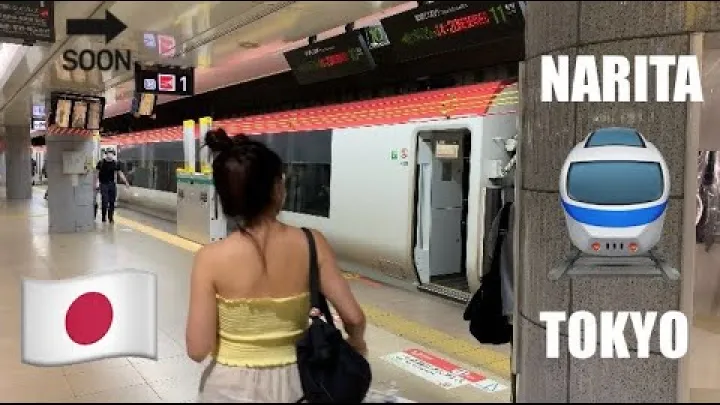
JR East's Narita Express provides a direct rail connection between Narita Airport and Yokohama Station on services that serve this route. Narita Airport's official rail access information identifies the JR railway option alongside the other airport railways. At the airport, follow the signs for the JR station area and select a ticket product that names Yokohama Station as the destination.
A journey of approximately 90 minutes is a useful planning figure for a direct Narita Express trip, but the exact time depends on the selected service and the current timetable. The service is attractive because it avoids an intermediate airport-to-city transfer and normally provides reserved seating. This can make it easier to rest, organize luggage, and avoid the uncertainty of the highway.
Arriving at Yokohama Station is not the same as arriving at YCAT. If you are staying around Yokohama Station, the rail arrival is direct and convenient. If your destination is Minato Mirai, Nihon-Odori, Motomachi-Chukagai, or another bayfront area, continue by local rail or choose an appropriate taxi or local connection after reaching the station.
For travelers with a fixed cruise departure, a domestic flight, or a meeting at a precise time, include immigration, baggage collection, station walking, and possible waiting time in addition to the scheduled train journey. The advantage of reserved rail is predictability, but a reservation does not remove the need to allow time after your aircraft lands.
Narita Airport Limousine Bus to YCAT
The direct Narita Airport limousine bus to YCAT and the Yokohama Station East Exit area is useful when you want to remain in one seat and avoid changing trains. The Narita-YCAT timetable provides the current departure information, travel-time guidance, and fare details for this route.
The often-used planning estimate is approximately 90 minutes, but a highway journey can become longer when traffic is heavy. The bus may be easier than rail for several large bags because luggage handling is concentrated at the airport and the bus terminal. It can also be a good match for accommodation near Yokohama Station's East Exit.
Choose the Narita Express when a more predictable rail journey, reserved seating, or a direct rail connection is the priority. Choose the limousine bus when one-seat travel, baggage convenience, and arrival at YCAT are more important. Neither option is automatically cheaper in every case: compare the current fare, ticket conditions, and your local connection from the arrival point.
Allow a larger buffer for a fixed appointment. Compare the current Narita-YCAT bus timetable with the rail alternative before committing to the bus, and allow extra time for highway traffic when a cruise check-in, flight connection, or other deadline follows. YCAT is near Yokohama Station's East Exit, but it is still a bus terminal and may require a walk or local connection to your final destination.
Arriving from Tokyo and Other Parts of Japan
Travelers already in Tokyo or elsewhere in Japan can usually choose between conventional rail, private rail, the Tokaido Shinkansen, and a long-distance highway bus. Start with your departure station and final Yokohama district rather than searching only for the word Yokohama.
Shinkansen via Shin-Yokohama Station
Shin-Yokohama Station is Yokohama's Tokaido Shinkansen gateway. It is the natural long-distance rail arrival point for travelers coming from or continuing toward Nagoya, Kyoto, Osaka, and western Japan. It is also useful for a traveler staying in Yokohama who might otherwise travel into central Tokyo first and then back out again.
Shin-Yokohama Station and Yokohama Station are separate stations. After arriving by Shinkansen, use the municipal Blue Line or the Yokohama Line for the local connection toward Yokohama Station. Your hotel may instead be closer to Shin-Yokohama itself, so check the address before adding a transfer that you do not need.
The Tokaido Shinkansen offers Nozomi, Hikari, and Kodama services with different stopping patterns and travel choices. Select the train by checking the current departure, destination, stopping pattern, seat type, and ticket conditions. The JR Central timetable is the appropriate place to check current Shinkansen operations rather than relying on a general journey estimate.
For a trip from Tokyo Station to a hotel near Yokohama Station, conventional JR rail may be simpler because it arrives at the central station directly. For a trip from western Japan, the Shinkansen normally saves the need to travel through Tokyo. In both cases, use the exact station name when booking accommodation, searching routes, and choosing a ticket.
Local and Private Rail from Tokyo and Kanto
Conventional rail is often the most practical way to reach Yokohama from Tokyo and nearby parts of Kanto. Organize the choice by your departure area and final district:
- Tokyo Station or Shinagawa: JR services such as the Tokaido Line, Yokosuka Line, and Keihin-Tohoku Line serve different travel patterns toward Yokohama. Select the line that matches your destination and the current departure information.
- Shinjuku or Shibuya: Shonan-Shinjuku services can provide a useful route toward Yokohama from western Tokyo. The number of stops and the onward destination vary by service, so read the platform display carefully.
- Shibuya to the bayfront: Tokyu Toyoko services connect Shibuya with Yokohama and may continue onto the Minatomirai Line. This can reduce a transfer for travelers heading toward Minato Mirai, Nihon-Odori, or Motomachi-Chukagai, but check the final destination shown on the train.
- Yokohama Chinatown: Motomachi-Chukagai Station is a convenient Minatomirai Line destination, while Ishikawacho Station on the JR network can also serve Chinatown with a walk from the station.
Yokohama Station is the broadest interchange, but it is not always the closest station to your destination. For Minato Mirai, compare a Minatomirai Line arrival with Sakuragicho Station and its onward walk. For Chinatown, compare Motomachi-Chukagai with Ishikawacho. For a hotel near the cruise-port area, Nihon-Odori may be more useful than either central Yokohama station.
Journey time, transfer count, and walking distance depend on the exact departure station. A route with one additional stop may be easier if it removes a transfer with luggage. Use the actual origin and hotel address in a current route search, and distinguish the scheduled train time from the time needed to find a platform in a large Tokyo station.
Long-Distance Highway Buses to YCAT and Yokohama Station
YCAT and the bus terminals around Yokohama Station's East Exit are part of the long-distance bus network. Depending on the current operator timetable, services may connect Yokohama with destinations in Kansai, the Tokai region, Tohoku, and other parts of Japan. Overnight buses can be useful when they reduce the need for a hotel night or allow daytime sightseeing.
Highway buses may cost less than a Shinkansen ticket, but the saving must be weighed against a longer journey, traffic exposure, less space to move, and the comfort of an overnight seat. They can be a reasonable choice for flexible travelers or travelers who value price over speed. A Shinkansen is usually more suitable for a short business schedule or a connection with a fixed departure time.
Do not confuse an airport limousine bus with an intercity highway bus. An airport bus begins or ends at Haneda or Narita and uses airport-specific boarding procedures. An intercity bus uses a departure terminal or stop in the Yokohama Station and YCAT area, and its ticket may name a specific lobby, platform, or meeting point.
Reserve long-distance travel in advance when your date is fixed. English booking support, accepted payment methods, luggage rules, and cancellation terms vary by operator. Use the current operator or booking page to confirm the departure terminal and arrive early enough to find the correct lobby rather than relying on an old route directory.
Getting from Yokohama's Main Hubs to the City Center
The final connection is where many arrival mistakes occur. Yokohama Station, Shin-Yokohama Station, and YCAT serve different transport functions, and a route that is excellent for one district may be inconvenient for another.
Yokohama Station, Shin-Yokohama, and YCAT: Know the Difference
Use this simple hub map before selecting a ticket:
| Hub | What it is | Best use | Important detail |
|---|---|---|---|
| Yokohama Station | Main conventional rail and urban interchange | Central hotels and onward local rail | Large station with several railway operators and exits |
| Shin-Yokohama Station | Tokaido Shinkansen and local rail station | Western Japan and long-distance rail | Separate from Yokohama Station |
| YCAT | Airport and highway bus terminal | Airport buses and intercity buses | In Yokohama Sky Building near the East Exit; not a rail platform |
Yokohama Station is usually the easiest hub for conventional rail, but its size can make a short transfer feel longer with heavy luggage. Shin-Yokohama may be the right hotel location for a very early Shinkansen, while a bayfront hotel may be better served by a direct Minatomirai Line station. YCAT is convenient for a bus journey, but after arrival you still need to follow signs to the East Exit, a local station, or your accommodation.
Do not treat station names containing Yokohama as interchangeable. A ticket to Shin-Yokohama does not place you at Yokohama Station, and a bus ticket to YCAT does not mean that you have arrived on a railway platform. Check the station name in your hotel booking, route search, and onward reservation.
Reaching Minato Mirai, Chinatown, and Osanbashi
Choose the last-mile route by final district rather than by the largest station:
- Minato Mirai: Use the Minatomirai Line toward Minato Mirai Station when the station is close to your hotel or first activity. Sakuragicho Station can be a useful JR alternative, especially when the remaining walk is convenient for your accommodation.
- Yokohama Chinatown: Motomachi-Chukagai Station is on the Minatomirai Line and is designed for access to the southern bayfront and Chinatown area. Ishikawacho Station on the JR network is another option, followed by a walk.
- Osanbashi Yokohama International Passenger Terminal: Nihon-Odori Station is the main rail anchor for the terminal. From there, continue on foot using the current signs for Osanbashi. Kannai and Sakuragicho can also be useful depending on your starting route, but the walk may be longer.
Local options such as the Akai Kutsu city loop bus from Sakuragicho and Sea Bass services can help with a waterfront last mile when their route and operating period match your plans. They are local transport choices, not replacements for the airport or long-distance journey. Check the current stop, departure information, luggage space, and payment conditions if you choose one.
For travelers carrying suitcases, a direct local train may be easier than changing at Yokohama Station and then walking across the bayfront. For travelers with a ship departure, Nihon-Odori and the terminal address matter more than a general destination label such as central Yokohama.
Arriving by Cruise Ship in Yokohama
Yokohama has more than one cruise arrival area. Osanbashi is central and connected to the city's rail network, while Daikoku Pier requires more careful coordination. The Japan National Tourism Organization provides documented examples of access to Yokohama's cruise-port area from airports and western Japan.
Osanbashi International Passenger Terminal
Osanbashi Yokohama International Passenger Terminal is close to the central waterfront, including Yokohama Chinatown, Yamashita Park, and the Red Brick Warehouse area. It is therefore possible to combine a cruise arrival with a short stay in the bayfront district, although luggage and ship disembarkation times can change the practical plan.
For rail access, Nihon-Odori Station on the Minatomirai Line is the main anchor. From the station, follow the current walking signs toward Osanbashi. Kannai and Sakuragicho are alternative rail areas, and nearby bus services may also be useful, but the best choice depends on the exact terminal entrance, luggage size, and the route operating that day.
A traveler leaving Osanbashi can connect to Yokohama Station through the local rail network, then continue toward Haneda Airport or YCAT. To reach Shin-Yokohama, first connect to Yokohama Station or use the local route that best matches the current service. For Narita Airport, allow substantially more time than for Haneda because the airport journey is longer.
Do not calculate a cruise connection only from the train timetable. Add time for disembarkation, customs or port procedures, baggage collection, the walk from the terminal, and any ship delay. If the cruise line provides a transfer or luggage service, compare its instructions with an independent route before leaving the vessel.
Daikoku Pier Requires Different Planning
Confirm the terminal before making any independent connection. Daikoku Pier Cruise Terminal is not interchangeable with Osanbashi and is less central to Yokohama's normal rail and walking network. A route that works well from Nihon-Odori Station to Osanbashi should not be assumed to work for Daikoku Pier.
Depending on the ship call, possible access may include a taxi from an official rank, a local bus, or a cruise-line shuttle arranged for passengers. Public transport details and shuttle departure points can vary, and the most useful information may come from the cruise line or the port instructions for that specific sailing.
Before disembarking, confirm the full terminal address, shuttle meeting point, operating time, luggage procedure, and the time needed to return to the ship or reach an airport. If you plan to use a taxi, identify the official pickup location and allow room for queues. If you plan to use a bus, confirm that it accepts cruise passengers at the relevant time and that the stop is suitable for your luggage.
Tickets, Late Arrivals, and Current Route Checks
A smooth arrival depends as much on the correct ticket and terminal as on the route itself. Use the following practical checks for airport rail, airport buses, Shinkansen, and highway buses.
Buy the Right Ticket for the Right Route
- Write down the exact endpoint. Decide whether you need Yokohama Station, Shin-Yokohama Station, YCAT, Minato Mirai, Nihon-Odori, Motomachi-Chukagai, Ishikawacho, Sakuragicho, Osanbashi, or Daikoku Pier.
- Choose the correct transport product. An airport bus ticket, a reserved limited-express ticket, a Shinkansen ticket, a local rail fare, and a highway bus reservation are different products. Read the destination and boarding instructions before payment.
- Check seat and payment requirements. Narita Express and Shinkansen travel may involve a reserved seat or a specific ticket product. Long-distance buses may require advance booking. Local rail may accept an eligible IC card, but an IC card is not a universal substitute for reserved travel or airport-specific tickets.
- Confirm the boarding place. Airports and large stations can have several terminals, exits, counters, and bus platforms. Match the ticket with the airport terminal, station entrance, bus stop, departure lobby, and boarding time.
- Use official purchase points. Buy from an airport machine or counter, a marked railway ticket office, the bus operator, the cruise line, or an official booking website. Do not accept unsolicited transport offers or unmarked transfer services. For taxis, use a marked taxi rank rather than a person approaching you inside or outside the terminal.
Keep the hotel address in Japanese or in a format that can be shown to station staff or a taxi driver. This is particularly useful when the accommodation is near a bayfront station but the booking only says Yokohama. Store the booking confirmation and the terminal name separately from the general city name.
Plan for Late Arrivals and Service Changes
Rail and airport bus services can be less frequent or unavailable late at night and early in the morning compared with daytime travel. A delayed flight, slow baggage collection, cruise disembarkation, highway congestion, or a missed connection can remove the service you originally planned to take. Do not assume that public transport operates around the clock.
Use one verification workflow before departure and again on the travel day:
- Confirm the arrival airport terminal, station, bus stop, or cruise terminal.
- Open the current official route page and timetable for the operator you will use.
- Check the latest service notice, last departure, first departure, and any reservation or ticket restriction.
- Separate the scheduled travel time from immigration, baggage collection, station walking, boarding, and transfer time.
- Choose a realistic fallback, such as a later train, a different airport bus, accommodation near the arrival hub, or an official taxi option when public transport no longer fits.
For Shinkansen travel, check the current JR Central timetable and travel information rather than relying on a printed schedule. Apply the same approach to Keikyu rail, airport limousine buses, highway buses, and cruise-line shuttles. This date-specific and time-specific check is especially important for late-night arrivals, early flights, fixed cruise boarding times, and journeys that combine more than one operator.
Final Checklist for Getting to Yokohama
Choose the gateway that matches your final district, not just the city name. From Haneda, compare Keikyu rail with a direct bus to YCAT or the waterfront. From Narita, compare the Narita Express with the Narita-YCAT bus while allowing for the longer airport journey. From western Japan, use Shin-Yokohama for the Tokaido Shinkansen and then make the local connection if needed. From Tokyo, compare the departure station, final district, and walking distance before choosing conventional or private rail.
- Confirm Yokohama Station, Shin-Yokohama Station, and YCAT as separate destinations.
- Match Minato Mirai, Chinatown, or Osanbashi with the most suitable local station.
- Confirm whether a cruise ship uses Osanbashi or Daikoku Pier.
- Check the current operator timetable, fare, ticket rules, and last departure.
- Allow time for luggage, airport procedures, port procedures, and transfers.
With the correct endpoint and a current route check, arriving in Yokohama can be simple whether you travel by airport rail, limousine bus, Shinkansen, highway bus, or cruise connection.
Select area
Create a post
Posting is free and no registration is required.