Nikko Getting There: Trains, Buses, Airports & Road Routes
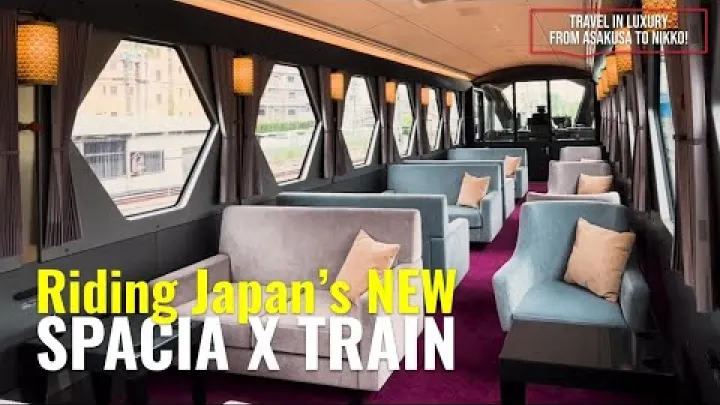
Getting to Nikko from Tokyo is straightforward once you separate the long-distance journey from the local connection after arrival. Tobu Railway, JR, airport rail links, highway buses, and roads each serve a different type of traveler. Your best choice depends on where you stay, whether you already have a rail pass, how much luggage you carry, and whether you will continue to Lake Chuzenji, Yumoto Onsen, or Kinugawa. This guide compares the main routes and explains how to reach Nikko's World Heritage sites and mountain areas from JR Nikko Station or Tobu-Nikko Station.
At a Glance: Choose the Best Way to Get to Nikko
Nikko's main rail terminals are in the same station area, but they belong to different operators. Start by choosing the route that reaches the station and network that match your accommodation, ticket, and onward plans.
Best Route by Starting Point and Travel Style
Use your starting point as the first filter, then compare price, luggage, and connections. The route that looks fastest on a map is not always the easiest after a long flight or when you have a same-day mountain itinerary.
- Eastern Tokyo: Tobu Asakusa Station is the natural starting point for travelers staying around Asakusa, Ueno, or the eastern side of the city. Tobu services arrive at Tobu-Nikko Station.
- Western Tokyo: JR Shinjuku Station and Ikebukuro Station are convenient for travelers based in Shinjuku, Shibuya, Ikebukuro, or nearby areas. Some JR-Tobu services continue toward Tobu-Nikko without a planned train change.
- JR itineraries: Utsunomiya Station is useful when you are coming from the Tohoku direction or already hold a JR pass. From there, the JR Nikko Line continues to JR Nikko Station.
- International arrivals: Narita International Airport and Haneda Airport require a separate airport-to-Nikko plan. Rail offers flexibility, while a current direct bus, if available, can reduce transfers.
Also decide whether your real destination is central Nikko, the Nikko World Heritage area, Lake Chuzenji, Yumoto Onsen, or Kinugawa. The rail journey ends near central Nikko; the lake and onsen areas require a further bus or car journey. A traveler with a Tobu-focused pass may prefer Asakusa, while a traveler with a JR pass may save effort by changing at Utsunomiya.
How the Main Routes Compare
The table gives a practical comparison rather than fixed journey times or fares. Direct services, reservations, pass rules, and bus operations can vary, so treat the cost labels as relative.
| Route | Arrival station or stop | Transfers | Cost and booking | Best use |
|---|---|---|---|---|
| Tobu limited express | Tobu-Nikko Station | Usually none on a listed through service | Medium to high; reserved seat and express supplement | Comfort from eastern Tokyo |
| Tobu ordinary or express | Tobu-Nikko Station | May require a change | Lower; usually more time and no limited-express supplement | Budget-focused Tobu travel |
| JR-Tobu through service | Tobu-Nikko Station | Usually no planned train change | Reserved service; cross-operator rules apply | Western Tokyo hotels |
| JR via Utsunomiya | JR Nikko Station | One main change at Utsunomiya | Higher without a suitable pass; Shinkansen booking may apply | JR pass holders and northern routes |
| Airport rail | JR Nikko or Tobu-Nikko | One or more | Variable; separate tickets may be needed | Flexible departures |
| Highway bus or car | Named stop or central Nikko | No station transfer | Variable; bus reservation may be required | Luggage or dispersed sightseeing |
Accommodation location is often the deciding factor. A short transfer to Asakusa can be easier than crossing Tokyo to save a small amount, while a JR pass can reverse that choice. If your itinerary includes several mountain bus rides, compare the complete journey rather than only the Tokyo-to-Nikko rail segment.
Getting to Nikko by Train from Tokyo
Train travel is the usual choice from Tokyo because it provides regular access to the two central stations. Tobu routes generally favor Tobu-Nikko and many sightseeing passes, while the JR route via Utsunomiya ends at JR Nikko.
Tobu Railway from Asakusa to Tobu-Nikko
Tobu Railway connects Tobu Asakusa Station with Tobu-Nikko Station. The simplest option is a limited express service with reserved seating, when a through service appears in the timetable. It avoids a train change and is convenient for travelers carrying large bags or planning a fixed sightseeing day.
Ordinary or express trains can provide a lower-cost alternative, but the journey may take longer and may involve a change within the Tobu network, such as at Shimo-Imaichi. The exact pattern depends on the departure selected. Do not assume that every train displayed in a general route search is a direct service to Tobu-Nikko.
Separate the basic Tobu rail fare from the limited-express supplement when comparing tickets. A Nikko pass may cover eligible rail travel but not the supplement for a reserved limited-express seat. After arriving at Tobu-Nikko, use the station-area bus stops for the World Heritage sites, Lake Chuzenji, or Yumoto Onsen. This route is especially practical when your hotel is near Asakusa or when you plan to use Tobu transport beyond central Nikko.
JR-Tobu Through Trains from Shinjuku and Ikebukuro
JR-Tobu through services are useful for travelers staying in western Tokyo. A train can be boarded at JR Shinjuku Station and may also serve Ikebukuro Station before continuing toward Tobu-Nikko. The main advantage is a simpler journey from the hotel area without first crossing Tokyo to Asakusa.
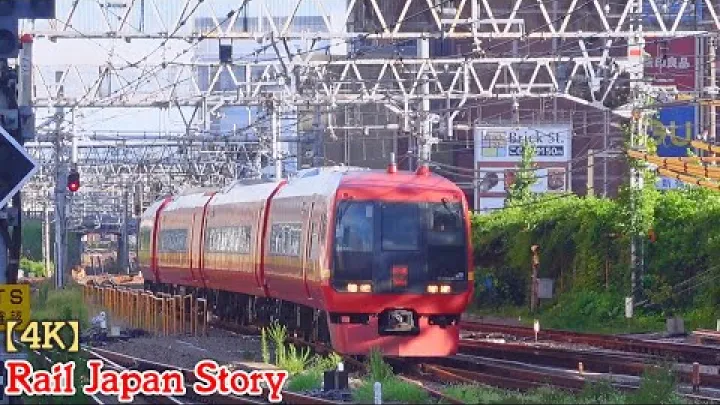
These services normally use reserved seating, and the ticket can involve both JR and Tobu rules. A JR-linked product, a Tobu pass, and an ordinary point-to-point ticket do not necessarily provide the same coverage. In particular, do not assume that a Nikko pass bought for travel from the Tobu network automatically covers every departure from Shinjuku.
The usual arrival point is Tobu-Nikko Station, so the final connection to Toshogu, Rinnoji, or the central bus network is similar to the Asakusa route. The Nikko Official Guide presents Asakusa and Shinjuku as the main Tokyo rail approaches. Compare them by hotel location, reservation availability, and pass eligibility instead of assuming one is always faster.
JR via Utsunomiya to JR Nikko
The JR-only pattern is to travel from Tokyo or Ueno to Utsunomiya by Tohoku Shinkansen, then change to the JR Nikko Line for JR Nikko Station. It is a useful option for travelers arriving from Sendai or another northern city, and for people who already have a suitable JR nationwide or regional pass.
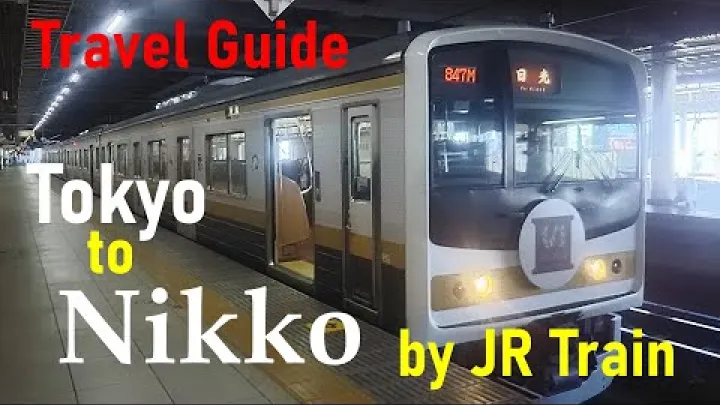
The main disadvantage is the transfer at Utsunomiya. The Nikko Line is a local service, so the next departure may not align closely with the Shinkansen arrival. The route can also be more expensive than a Tobu alternative when you pay separately for the Shinkansen, although a pass can change the calculation. JR Nikko Station is close to Tobu-Nikko Station, so the difference between the two arrival points matters less than the ticket and route you use.
Build the connection around an actual timetable: before leaving Tokyo or Ueno, identify a realistic JR Nikko Line departure, and at Utsunomiya use a timetable with a connection buffer. Confirm the next departure before leaving Utsunomiya rather than rushing across the station. This is particularly important when a missed local train would affect a bus reservation or a planned arrival in central Nikko.
Getting to Nikko from Narita and Haneda Airports
Airport journeys combine a long-distance leg with the final rail or bus connection to Nikko. The number of transfers, the time spent moving luggage through stations, and the time of landing are more important than the airport name alone.
Narita Airport Routes: Direct Bus or Rail via Tokyo
From Narita International Airport, a direct Narita-to-Nikko highway bus can be the easiest choice if the service is operating on your travel date and its stop matches your accommodation. It offers one long journey and avoids moving suitcases between airport railways and city stations. Because direct service availability can change, confirm the current departure list, destination stop, reservation method, and luggage policy before relying on it.
Two common rail patterns are:
- Keisei and Tobu: travel from the airport through the Keisei and connecting Tokyo subway network toward Asakusa, then continue from Tobu Asakusa Station to Tobu-Nikko.
- Narita Express and JR: take the Narita Express to Tokyo, use the Tohoku Shinkansen to Utsunomiya, and change to the JR Nikko Line for JR Nikko Station.
The first pattern can fit a Tobu-based itinerary, while the second can make sense for JR pass holders or travelers continuing from the Tohoku region. Rail generally gives more departure choices than a direct bus, but it requires more navigation with luggage. Whether same-day travel is sensible depends on the landing time, immigration, baggage collection, and the onward departures you can actually catch.
Haneda Airport Routes: Rail Connections, Direct Bus, and Passes
Haneda Airport has several ways to reach Tokyo rail networks, but a connection is still needed before Nikko. One pattern uses the Tokyo Monorail to Hamamatsucho and then a Tokyo or Ueno connection for the JR route via Utsunomiya. Another uses the Keikyu and Toei network toward Sengakuji or Asakusa before continuing through the Tobu network. Choose the pattern that matches your ticket and final arrival station.
A direct airport bus can be attractive when a current service runs at a suitable time, particularly for travelers with heavy luggage. It should be treated as a conditional option rather than a permanent route. Check whether the bus goes to central Nikko, a specific hotel area, or another stop before booking.
The Haneda Airport to Tokyo and Nikko Travel Pass is a combined product, not automatically a direct Haneda-to-Nikko train. Its official information describes a round-trip airport ticket between Haneda and Sengakuji together with sightseeing tickets for central Tokyo and Nikko. Read the current redemption, validity, eligible areas, and activation conditions on the Haneda Tokyo Access page. Separate the Haneda-to-Tokyo segment from the Tokyo-to-Nikko segment when calculating its value.
Late Arrivals and First-Night Planning
A flight arrival time is not the same as the time you can leave the airport. Immigration, baggage collection, airport navigation, ticket collection, and a delayed flight can remove the margin needed for the last practical train or bus. Nikko also has a further local connection from either rail station to the World Heritage area or mountain accommodation.
Continue to Nikko the same day when your landing is early enough, your onward route is clear, reservations are available, and you can tolerate arriving later than planned. Carry-on luggage and a hotel near a station make this more realistic. For a late or uncertain arrival, an overnight stay near Narita, near Haneda, or in central Tokyo is usually more comfortable than attempting several tight changes.
- Choose a Narita-area night when the flight lands late at Narita and the onward journey would depend on a narrow connection.
- Choose a Haneda-area night when you want to reduce airport stress before an early departure or when the arrival time is uncertain.
- Choose central Tokyo when you want a wider choice of trains the next morning and easy access to Asakusa, Shinjuku, or Ueno.
Make the go-or-stay decision using the actual landing time, baggage, reservation status, and desired arrival time in Nikko. If the margin is inadequate, book the first night before traveling rather than making a rushed airport-to-mountain journey.
Driving, Highway Buses, and Regional Gateways
Road travel becomes more useful as the itinerary spreads beyond the central shrines. It can also reduce station transfers, but road-based access has its own limits and planning needs.
Driving to Central Nikko and the Mountain Areas
From the Tokyo or Utsunomiya direction, the road approach commonly uses the Nikko-Utsunomiya Road and connected local roads. A car gives more flexibility for dispersed places such as Lake Chuzenji, Yumoto Onsen, mountain trailheads, and accommodation outside the main station area.
For a first visit focused on Toshogu, Rinnoji, and other World Heritage sites, rail followed by local bus is often simpler than driving into a busy sightseeing district. The central area and the mountain areas are separate decisions: a car that is convenient for a remote lodge may be less convenient for a central heritage itinerary.
Before renting, check the accommodation's access instructions, parking arrangements, road restrictions, and the route to your final destination. Do not treat the absence of a train transfer as the end of the planning process. You still need to decide where to leave the car for central sightseeing and whether the road reaches the lake or onsen area you want to visit.
Highway Buses as a Low-Transfer Option
A highway bus can provide point-to-point travel from a Tokyo-area or airport gateway with less station navigation. It is attractive for travelers who prefer one reserved seat, have bulky luggage, or want to avoid changing between JR and Tobu networks.
The trade-off is a fixed departure time and potentially limited frequency. Traffic can also make a bus arrival less predictable than the timetable suggests. Direct Tokyo or airport services should be treated as conditional until a current operator timetable confirms the route, operating date, destination stop, and booking procedure. Compare the bus with rail using four questions: how many transfers it removes, whether luggage is easy to carry, whether a reservation is required, and how much flexibility you need if your flight or plans change.
From Utsunomiya, Sendai, and Northern Kanto
Utsunomiya Station is the main JR transfer gateway for many travelers approaching from the Tohoku direction. From Sendai and other northern cities, the Shinkansen can bring you to Utsunomiya, where you can continue on the JR Nikko Line to JR Nikko Station.
If your wider itinerary already uses Tobu services, you can instead plan a connection through the relevant Tobu network after reaching the Kanto area. The better choice depends on your pass, the next destination, and whether you want to arrive at JR Nikko or Tobu-Nikko. Travelers combining Nikko with Tokyo, Sendai, or other northern destinations should compare the complete multi-city itinerary, not only the final regional leg.
This approach is often more logical than returning to Tokyo solely to start a Tobu journey. It also makes the value of a JR pass easier to assess, since several Shinkansen or regional JR segments may be included in the same trip.
Seasonal Links from Gunma and Oze
Travelers hiking in Oze can sometimes connect toward Okunikko through seasonal services on the Gunma side. Kamada is an important local anchor in this type of itinerary, and some routes can continue toward the Yumoto Onsen or wider Nikko mountain area when the seasonal network is operating.
This is a specialist connection for hikers and combined mountain trips, not the default way to get to Nikko from Tokyo. Its limited operating window means that the route should be built around the current annual schedule, not around an assumed year-round bus. If the connection does not operate on your date, use Nikko or another confirmed gateway as the base and keep a separate route to Oze.
From Nikko's Stations to the World Heritage Area and Okunikko
The two rail stations are the start of the local journey. Central heritage sites are uphill from the station area, while Lake Chuzenji and Yumoto Onsen lie farther along the mountain road.
JR Nikko and Tobu-Nikko: Which Station Should You Use?
JR Nikko Station and Tobu-Nikko Station are separate terminals served by different rail operators, but they are close to each other. The station you use is normally determined by your arrival route: JR via Utsunomiya leads to JR Nikko, while Tobu services and many Tobu-focused routes lead to Tobu-Nikko.
There is no need to choose a station based on a large difference in access to the central sights. Instead, check the operator, pass, bus boarding area, and hotel direction. The station area has tourist information, taxi services, local bus stops, and places to ask about luggage services where available. A short walk connects the two terminals, but carrying luggage between them is still less convenient than arriving at the station shown on your ticket.
When you leave the train, first identify whether your next connection is a local bus, taxi, or walk. Keep the Japanese names JR Nikko Station and Tobu-Nikko Station visible on your itinerary so that staff can direct you to the correct terminal.
Buses to Toshogu and Other World Heritage Sites
Toshogu, Rinnoji, and the other major World Heritage sites are uphill from the railway stations. Local buses are the practical choice for visitors with luggage, limited time, or a full sightseeing schedule. Walking is possible for travelers with light bags and suitable conditions, but the uphill route takes significantly longer than a short station transfer.
World Heritage loop services and central-area bus passes can simplify a day of shrine and temple visits. Route names, stop numbers, pass zones, and fares are details to separate from the stable geographic fact that the sites are beyond the stations. For a general orientation, Japan Guide describes the central access as a short bus ride or a longer uphill walk. Use the current bus map or stop display for the boarding point and the correct destination.
If you plan to walk one way and take a bus the other way, allow time for the slopes and for visiting several sites. With large luggage, go first to your hotel or a confirmed luggage facility rather than carrying it through the World Heritage area.
Buses to Lake Chuzenji and Yumoto Onsen
Lake Chuzenji and Yumoto Onsen require a longer mountain-bus journey beyond central Nikko. They are not walkable extensions of the shrine district, and a central-area bus product may not cover the full route. These buses serve lake views, onsen stays, nature areas, and trailheads around Okunikko.
A same-day extension is possible for a carefully timed itinerary, but an overnight stay often gives more time for the lake or onsen area and reduces pressure on the return connection. If you are staying in Yumoto Onsen, plan the final bus leg as part of the accommodation journey rather than treating it as a short local transfer from Tobu-Nikko.
For a central sightseeing day, keep the World Heritage area as the main plan and add the mountain leg only when the schedule leaves enough time for both directions. For a nature-focused visit, staying near Lake Chuzenji or Yumoto Onsen can be more efficient than commuting from the station area.
Continuing to Kinugawa Onsen and Tobu World Square
Kinugawa Onsen and Tobu World Square belong to a different sightseeing axis from the central World Heritage area. They are connected through the wider Tobu rail and bus network, with Kinugawa-Onsen Station serving as a useful arrival point for the onsen district and nearby attractions.
Depending on the selected train, the journey may use a Tobu connection rather than the central Nikko bus loop. Do not assume that a bus pass for Toshogu or a central Nikko ticket automatically reaches Kinugawa. Check the rail segment, local bus connection, and station for each attraction.
Combining Nikko and Kinugawa works best as a multi-day itinerary. You can focus one day on the World Heritage sites, then move toward Kinugawa Onsen or Tobu World Square without forcing two separate regional areas into a single rushed day. Pass coverage may help, but it must be compared with the actual rail and bus segments you plan to use.
Nikko Passes, Tickets, and Cost Trade-Offs
Nikko transport products are useful when they match both the rail operator and the local area you will visit. A pass is not automatically cheaper than separate tickets, especially for a short central visit or a traveler who already has JR coverage.
NIKKO PASS World Heritage Area and All Area
The NIKKO PASS World Heritage Area and NIKKO PASS All Area are designed for different sightseeing patterns. The World Heritage Area product is aimed at central Nikko travel around the shrines and temples. The All Area product is intended for a wider itinerary that can include Okunikko, Lake Chuzenji, Yumoto Onsen, and other destinations served through the broader Tobu network.
Compare each product by its validity period, designated rail coverage, local bus coverage, purchase or redemption method, and eligible travel area. The broader product can be more useful for a multi-day regional itinerary, while the World Heritage Area product may fit a shorter central visit. Neither should be evaluated only by comparing its headline price with a Tokyo-to-Nikko train fare.
A limited-express seat may require a separate supplement even when the basic rail segment is covered. Before paying for or activating a pass, confirm the zones, validity, eligibility, redemption process, and limited-express supplement. The Nikko Official Guide provides destination context for combining Tobu rail with local transport, while the current product conditions determine what is actually included.
JR TOKYO Wide Pass and Other JR Tickets
A JR regional or nationwide pass can support the route through Utsunomiya when Nikko is one part of a larger JR itinerary. It may also be relevant to selected JR-Tobu through services, but coverage can differ between the JR-operated portion, the Tobu portion, the train type, and the reservation.
Do not treat JR tickets, a JR pass, and Tobu passes as interchangeable. A JR pass does not automatically cover a Tobu-only train or a local bus in Nikko. Conversely, a Tobu product is not a substitute for JR travel from a northern city. Check whether the planned service requires a reserved seat, an express supplement, or an additional fare for a partner railway.
The JR route is usually most attractive when you already have several Shinkansen or JR journeys in the same validity period. For a standalone Tokyo-Nikko visit, compare the full JR fare and transfer with the simpler Tobu alternatives rather than buying a broad pass for one destination.
How to Choose a Ticket for a Day Trip or Multi-Day Stay
Use a simple break-even calculation. Add the eligible rail segments, limited-express supplements, and local bus rides you expect to use, then compare that total with the pass price. Count only the sections inside the pass zone, and include any ticket that must be bought separately.
- One World Heritage day trip: An ordinary point-to-point ticket may be enough. Add a limited-express reservation when comfort and time are more important than the lowest price, and compare a central bus pass if you will make several local rides.
- Central Nikko plus Okunikko: Compare separate rail and mountain-bus tickets with the NIKKO PASS All Area. The answer depends on how far you travel and how many bus rides you make.
- Several days including Kinugawa: A wider Tobu product may be useful when its rail and bus zones match both destinations. Check the connection to Kinugawa-Onsen Station separately.
- A wider Japan itinerary: A JR pass can be more relevant when it also covers travel to or from Sendai, Tokyo, or other JR destinations. Nikko alone may not justify it.
For digital products, check whether purchase, redemption, and date activation are separate steps. Keep the activation date consistent with the day you will use the transport, and confirm whether a reservation must be made after activation.
Practical Checks for a Reliable Nikko Journey
The route plan is only reliable when the departure, ticket, and local connection all match. A short final check prevents most avoidable problems at Tokyo stations and in the Nikko station area.
Verify Current Timetables, Reservations, and Service Status
Use the current information from Tobu Railway, JR East, Tobu Bus or the relevant local bus operator, the airport, and any highway-bus operator involved. Check both the departure station and the destination station, not only a general journey planner. For airport travel, also check the terminal from which your service leaves.
- Confirm the train or bus departure date and the correct station name.
- Check whether the selected limited express, through train, highway bus, or seasonal bus requires a reservation.
- Confirm the destination station or stop, especially when a bus serves central Nikko, Lake Chuzenji, or Yumoto Onsen.
- Review service notices, construction information, suspensions, and changes to direct bus availability.
- Save one practical backup, such as the other rail network, a later train, or an overnight stop in Tokyo.
On the day before travel, repeat the check for the services that your itinerary depends on most. Keep the reservation confirmation and the Japanese station or stop name on your phone. This is especially valuable when a route involves a partner railway or a service that operates only on selected dates.
Plan for Seasonal Traffic and Mountain Conditions
Peak foliage periods can increase road traffic toward Okunikko and make buses serving Lake Chuzenji and Yumoto Onsen take longer than expected. Mountain weather can also affect roads, bus operations, walking conditions, and the amount of daylight available for a return journey.
Before committing to the mountain leg, check the forecast together with mountain-road and bus notices for your travel date. Leave a time buffer before the return train from JR Nikko or Tobu-Nikko, and avoid booking a connection that depends on one exact bus arrival.
If conditions or traffic make the mountain itinerary uncertain, prioritize the central World Heritage sites and treat Lake Chuzenji or Yumoto Onsen as a separate visit. This keeps a delayed bus from affecting the entire day and gives you a realistic alternative without abandoning the trip.
Luggage, Language, and Official Ticketing
Luggage changes the difficulty of every connection. Airport railways, large Tokyo stations, the transfer at Utsunomiya, the walk between JR Nikko and Tobu-Nikko, and buses to uphill or mountain areas all require more effort with large suitcases. Check whether your hotel, station area, or another confirmed facility can store or receive luggage, and note its opening hours before relying on it.
Use station tourist information centers, official operator maps, and English-language transport pages when available. Save the written names JR Nikko Station, Tobu-Nikko Station, Lake Chuzenji, Yumoto Onsen, Kinugawa-Onsen Station, and Tobu World Square. Showing the exact destination name is often clearer than saying only Nikko.
Common ticketing mistakes include confusing JR and Tobu products, missing a digital activation step, boarding at the wrong station-side bus stop, or accepting an unofficial sales approach without checking the ticket conditions. Buy through official operator channels or station counters. If a platform, pass zone, or bus stop is unclear, ask staff to confirm it before boarding.
- Keep your next station or bus stop visible before leaving the train.
- Confirm whether your pass is active and whether an express supplement is separate.
- Allow extra time to move luggage between the station area and the local bus stop.
- Ask the station or tourist information counter to check the destination when the bus display is unclear.
Final Checklist for Getting to Nikko
Choose the route in this order:
- Identify your starting point: Tobu Asakusa Station, JR Shinjuku Station, Ikebukuro Station, an airport, Utsunomiya, or another regional gateway.
- Choose the arrival terminal: JR Nikko Station for the JR route or Tobu-Nikko Station for Tobu services.
- Compare the full ticket cost, including limited-express supplements, reservations, local buses, and pass conditions.
- Plan the last mile to the World Heritage area, Lake Chuzenji, Yumoto Onsen, or your accommodation.
- Match the plan to your landing time, luggage, and tolerance for transfers.
- Save the current timetable, reservation details, destination names, and one backup route.
For most visitors, Tobu is the simplest starting point from eastern or western Tokyo, JR via Utsunomiya is valuable for JR-focused itineraries, and a car or wider-area pass becomes more useful when the trip includes Okunikko or Kinugawa. Once the arrival station and local connection are clear, getting to Nikko becomes a manageable sequence of well-defined steps.
Select area
Create a post
Posting is free and no registration is required.