Sukhothai Getting There: Flights, Buses & Train Links

Sukhothai getting there decisions are simple once you understand one important fact: the historic city is not on Thailand’s main rail line, so many routes use a road connection for the final leg. Travelers usually choose between flying to Sukhothai Airport, taking a direct long-distance bus, or traveling by train to Phitsanulok and continuing by bus, van, taxi, or private transfer. This guide compares the main options from Bangkok, Chiang Mai, Phitsanulok, and other regional gateways. It also explains the difference between New Sukhothai, Old Sukhothai, and Sukhothai Historical Park, because your final arrival point can affect the last part of the journey.
Best Ways to Get to Sukhothai at a Glance
The best way to get to Sukhothai depends on your starting point, arrival time, luggage, budget, and tolerance for transfers. A direct bus can be the easiest overland choice. A flight can be faster door to door when the schedule works. A train-plus-bus route can be comfortable, but it requires a transfer in Phitsanulok.
Match the route to your priority
If you want the simplest overland trip, look first for a direct bus to Sukhothai Passenger Transport Station. If you want the most direct air approach, check flights to Sukhothai Airport (THS). If you want more rail or flight flexibility, use Phitsanulok as a transfer hub, then continue by road to Sukhothai.
| Priority | Best route to check first | Main transfer point | What to verify |
|---|---|---|---|
| Fewest changes | Flight to Sukhothai Airport or direct bus | Usually none before Sukhothai | Flight or bus operating day and final arrival point |
| Lower budget | Direct bus or regional bus connection | May be Phitsanulok | Terminal, departure time, seat class, luggage rules |
| Rail comfort | Train to Phitsanulok, then road transfer | Phitsanulok railway station and bus terminal | Train arrival buffer and onward road service |
| Late arrival | Pre-arranged transfer or direct arrival near hotel | Depends on route | Local transport availability after arrival |
Avoid choosing by ticket price alone. A cheaper flight to Phitsanulok can become less convenient after adding the road transfer, while a direct bus can become less attractive if it arrives late and local transport is limited.
The core decision: direct travel versus Phitsanulok transfer
The main planning choice is direct travel versus a Phitsanulok transfer. Direct travel means using a flight to Sukhothai Airport or a bus that reaches Sukhothai without requiring you to change in another city. This is often easier for first-time visitors, families, and travelers with heavy luggage.
Phitsanulok is the main practical hub for indirect routes. It has Phitsanulok Airport (PHS), Phitsanulok railway station, and road connections toward Sukhothai. This makes it useful when Sukhothai flights are not convenient, when you want to travel by train, or when your route already passes through the Bangkok to Chiang Mai rail corridor.
- Choose a direct bus if you want a simple overland route and the timetable fits.
- Choose Sukhothai Airport if you want the most direct flight-based route and can arrange the airport transfer.
- Choose Phitsanulok if you want rail access, more connection options, or an alternative flight gateway.
- Check airline sites, airport pages, bus terminal counters, and local operators close to travel time because schedules can change.
Gateways, Terminals, and Sukhothai Geography
Sukhothai transport is easier when you separate the province, the modern town, and the historical park area. The official destination page from the Tourism Authority of Thailand is useful for understanding Sukhothai as a province and cultural destination, but your transport plan should focus on exact arrival points.
New Sukhothai, Old Sukhothai, and Sukhothai Historical Park
New Sukhothai is the modern town area where many transport services and everyday facilities are located. Old Sukhothai is the area closer to Sukhothai Historical Park, the main reason many travelers visit. The historical park area is not the same thing as the intercity bus station, and not every long-distance arrival will place you beside the ruins.
This difference matters when booking accommodation and onward transport. If your hotel is in New Sukhothai, the final ride from the bus station may be short and simple. If your hotel is in Old Sukhothai or near Sukhothai Historical Park, you may need a longer local transfer after arriving by bus, van, or airport vehicle.
Before buying a ticket, check the exact wording of your destination. A ticket that says Sukhothai may mean the main town or bus station, not necessarily the historical park. Ask your hotel whether you should arrive at New Sukhothai, Old Sukhothai, or another named stop.
Sukhothai Passenger Transport Station and local arrival points
Sukhothai Passenger Transport Station is the key arrival point for many intercity buses and regional vans. It is the place most travelers should expect to use when arriving by long-distance bus from Bangkok, Chiang Mai, Phitsanulok, or other regional cities. Some services or booking platforms may describe destinations differently, so confirm the drop-off point before boarding.
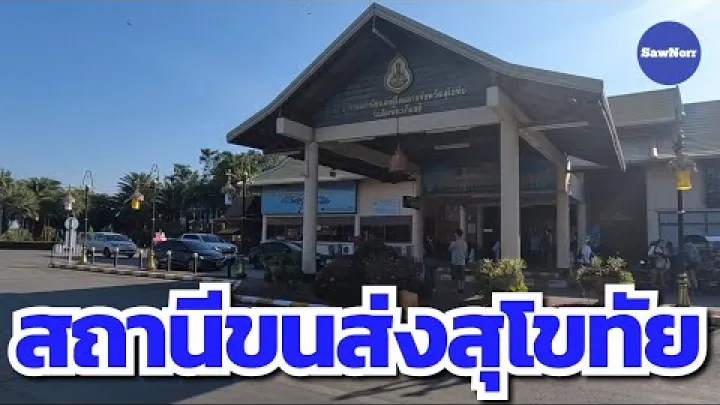
After arriving, you may need a local ride to your accommodation, especially if you are staying in Old Sukhothai. Local transport can be easier to arrange during the day than late at night. If your bus arrives after dark, contact your accommodation in advance and ask about current transfer options.
Do not rely on fixed taxi, tuk tuk, or shuttle prices from older travel reports. Local availability, fuel costs, demand, and arrival time can change the price. Confirm the fare or transfer cost before starting the ride.
Sukhothai Airport and Phitsanulok gateway basics
Sukhothai Airport (THS) is the most direct air gateway for travelers who can match their itinerary to available flights. It is outside the main town area, so the flight does not remove the need for a final ground transfer. Travelers commonly continue by taxi, hotel transfer, or pre-arranged car to New Sukhothai, Old Sukhothai, or Sukhothai Historical Park.
Phitsanulok Airport (PHS) and Phitsanulok railway station are alternative gateways. They can be convenient if you find better flight connections or if you prefer traveling by train. However, both require a road transfer from Phitsanulok to Sukhothai, so you should compare the complete journey rather than only the flight or train ticket.
Getting to Sukhothai by Air
Flying can be the fastest way to reduce long overland travel, but Sukhothai air travel is schedule-dependent. Always compare door-to-door time, including airport check-in, baggage collection, and the road transfer after landing.
Flying to Sukhothai Airport
Flying to Sukhothai Airport is the most direct flight-based approach when the Bangkok Airways schedule fits your trip. Check Bangkok Airways directly for current operating days, flight status, baggage rules, and connection timing before you book onward plans.
Sukhothai Airport is not usually the end of the journey. Travelers still need to reach New Sukhothai, Old Sukhothai, or a hotel near Sukhothai Historical Park. A pre-arranged hotel transfer can be useful if you arrive with children, large bags, or limited time.
When comparing this option with a bus, think in door-to-door terms. A short flight can still require extra time for airport procedures and ground transport. It may still be the most comfortable route, but only if the total timing works for your arrival day.
Flying to Phitsanulok Airport
Phitsanulok Airport can be a useful alternative when flights to Sukhothai Airport are inconvenient, unavailable for your date, or expensive. The onward journey usually requires moving through Phitsanulok city and continuing to Sukhothai by taxi, bus, van, or private transfer.
Check the official Phitsanulok Airport flight page close to travel time because domestic schedules can change. Do not assume that a route shown on a general travel website is operating exactly as displayed on your travel date.
The important comparison is not only airfare. Add the cost, time, and uncertainty of the Phitsanulok-to-Sukhothai road leg. If your flight lands late in the day, confirm whether public onward transport is still practical or whether you should pre-book a car.
Comparing Sukhothai Airport and Phitsanulok Airport
Sukhothai Airport is usually simpler because it places you closer to your destination. Phitsanulok Airport may give more flexibility in some itineraries, but the added transfer can reduce the benefit. Your best choice depends on arrival time, group size, luggage, budget, and connection risk.
| Airport | Best for | Trade-off | What to verify |
|---|---|---|---|
| Sukhothai Airport (THS) | Fewest ground legs | Flights may be limited by schedule | Airline operation, baggage rules, airport transfer |
| Phitsanulok Airport (PHS) | Alternative flight access | Requires road transfer to Sukhothai | Flight arrival time, bus or taxi onward options |
A cheaper ticket to Phitsanulok is not always cheaper overall. For solo travelers with flexible time, the road transfer may be acceptable. For families or late arrivals, Sukhothai Airport or a direct bus may be easier.
Getting to Sukhothai by Long-Distance Bus
Long-distance bus travel is a major way to reach Sukhothai. It is often practical for budget travelers and for visitors who want to avoid the train-to-bus transfer at Phitsanulok.
Direct buses from Bangkok
Direct buses from Bangkok are one of the most important routes for reaching Sukhothai without changing in Phitsanulok. Many northern routes use Bangkok Bus Terminal (Mo Chit 2), but you should confirm the exact terminal, counter, departure time, class, and arrival point before traveling.

BusX lists Sukhothai Thani information with Bangkok Bus Terminal (Mo Chit 2) counters and a Sukhothai Passenger Transport Station ticket booth, which is useful for identifying a relevant operator and terminal context through BusX. Treat online details as a starting point, then confirm the current service directly with the operator, terminal, or booking channel.
Daytime buses are easier if you want to arrive while local transport is available and your hotel reception is open. Overnight buses can save daylight hours and one night of accommodation, but they may leave you tired or arrive outside the easiest local transfer window.
Direct buses from Chiang Mai
Traveler reports, including route-specific notes from BBQBoy, describe direct bus travel between Chiang Mai and Sukhothai, but reported times and prices should not be treated as permanent. Use them only as a general indication that the route is commonly used, then check current schedules locally or with a booking operator.
Comfort depends on bus class and operator. If you have heavy luggage, ask about luggage storage before boarding. After arrival in Sukhothai, plan the final ride to Old Sukhothai if your accommodation is near the historical park.
Regional buses and vans through Phitsanulok
The Phitsanulok to Sukhothai road connection is the most important regional link for many travelers arriving by train or flight. Public buses and vans may connect Phitsanulok with Sukhothai, but the correct terminal, stand, and last departure should be checked on the day of travel.
Phitsanulok Bus Terminal 1 is a common local anchor for Sukhothai-bound road transport, especially for travelers coming from Phitsanulok railway station. Vans can be useful when they run frequently, but they may have less luggage space and less comfort than larger buses.
Late-day arrivals need special care. If your train or flight reaches Phitsanulok near the evening, confirm that onward buses or vans are still operating. If not, a taxi, private transfer, or overnight stop in Phitsanulok may be safer and less stressful.
Getting to Sukhothai by Train and Bus Connection
Train travel to Sukhothai is indirect. It can still be worthwhile if you enjoy rail travel, want more space than a bus, or are already using Thailand’s north-south rail corridor.
Why the train does not go directly to Sukhothai
There is no direct train into Sukhothai city for normal traveler planning. The usual rail gateway is Phitsanulok, followed by a road transfer to Sukhothai. This is the key fact to understand before building a train itinerary.
The train-plus-bus route can still make sense. It may suit travelers coming from Bangkok, Ayutthaya, Chiang Mai, or another point along the rail line. It is less ideal for travelers who want a one-seat journey or who have heavy luggage and limited time.
How to transfer at Phitsanulok
The Phitsanulok transfer is straightforward when you leave enough time and confirm the onward service locally. Do not plan a very tight connection between a train arrival and a bus or van departure.

- Arrive at Phitsanulok railway station.
- Move from the railway station to the relevant bus terminal or van stand, commonly Phitsanulok Bus Terminal 1 for Sukhothai-bound services.
- Use a tuk tuk, taxi, or local ride for the short city transfer if needed.
- Buy or confirm your onward ticket to Sukhothai.
- Check whether the service ends at Sukhothai Passenger Transport Station, New Sukhothai, Old Sukhothai, or another stop.
Local service patterns can change, and English-language information may be incomplete. Ask at the station, bus terminal, or your accommodation if you are unsure which stand is correct.
When train plus bus is worth it
Train plus bus is worth considering if you prefer rail comfort, want to break the journey, or are connecting from a city on the Bangkok to Chiang Mai rail corridor. It is less attractive if your priority is simplicity.
| Option | Pros | Cons |
|---|---|---|
| Direct bus | Fewer transfers, simple luggage handling | Comfort depends on bus class and route timing |
| Train plus bus | Rail comfort, useful on north-south itineraries | Requires Phitsanulok transfer and timing buffer |
Do not assume the train option is faster. Compare total effort: reaching the station, train time, transfer time in Phitsanulok, onward road travel, and final transport in Sukhothai.
Route Plans From Major Gateways
Most travelers reach Sukhothai through Bangkok, Chiang Mai, or Phitsanulok. These gateways are the easiest planning anchors because they have more transport options than smaller regional towns.
From Bangkok to Sukhothai
From Bangkok, the main choices are direct bus, flight to Sukhothai Airport, flight to Phitsanulok Airport plus road transfer, or train to Phitsanulok plus road transfer. If you are arriving internationally at Bangkok Suvarnabhumi Airport (BKK), a domestic flight may be convenient if the connection is safe and the schedule works.
- Budget travelers should compare direct bus services first.
- Time-limited travelers should check flights to Sukhothai Airport and include the airport transfer in the calculation.
- Rail travelers should book a train to Phitsanulok and leave time for the onward road leg.
- Travelers landing late in Bangkok should avoid tight same-day connections unless all transport is confirmed.
The best Bangkok route is the one that matches your verified arrival time. A direct bus can be easier than an indirect train route, while a flight can be worthwhile if it avoids a long day on the road.
From Chiang Mai to Sukhothai
From Chiang Mai, a direct bus is usually the simplest route when schedules fit. It works well for travelers building a north-to-south itinerary from Chiang Mai to Sukhothai and then onward to Bangkok or Ayutthaya.
Alternatives include traveling through Phitsanulok, especially if you want to use rail for part of the journey or connect with another regional route. This adds complexity, so it is mainly useful when the direct bus schedule is inconvenient or when your wider itinerary makes Phitsanulok a logical stop.
If you stay near Sukhothai Historical Park, remember that a bus arrival in Sukhothai may still require a local ride to Old Sukhothai. Confirm this with your hotel before arrival.
From Phitsanulok to Sukhothai
Phitsanulok to Sukhothai is the key last intercity leg for many travelers. You may arrive in Phitsanulok by train or flight, then choose public bus, van, taxi, or pre-arranged transfer for the road journey.
| Transport | Best for | Main caution |
|---|---|---|
| Public bus | Lower cost and simple daytime travel | Check terminal, stand, and last departure |
| Van | Flexible regional travel when available | Less luggage space and variable comfort |
| Taxi | Speed, groups, late arrivals | Confirm fare before departure |
| Pre-arranged transfer | Families, heavy luggage, hotel arrivals | Book ahead and confirm pickup point |
Ask whether your road transport ends in Sukhothai town, at Sukhothai Passenger Transport Station, in Old Sukhothai, or near Sukhothai Historical Park. This avoids confusion when you are tired after a train or flight.
From other Thai regions to Sukhothai
Travelers may also approach Sukhothai from regional cities such as Chiang Rai, Mae Sot, Tak, Uttaradit, Khon Kaen, or other parts of Northern and Central Thailand. Direct bus links may exist on some routes, but English-language online information can be incomplete or outdated.
When direct service is uncertain, use Bangkok, Chiang Mai, or Phitsanulok as planning anchors. These gateways give you more fallback options and make it easier to compare buses, flights, and rail connections.
For smaller regional routes, check the local bus terminal in person or ask your accommodation to confirm current departures. This is especially important around holidays, weekends, and festivals.
Last-Mile Travel, Booking Checks, and Common Pitfalls
The final part of the trip is where many Sukhothai plans become confusing. Your ticket may get you to the province or town, but not necessarily to your hotel or to the historical park entrance.
Reaching your hotel after the bus or flight
After arriving by bus or flight, confirm how you will reach your exact hotel area. The key choices are New Sukhothai, Old Sukhothai, and Sukhothai Historical Park. These names are important because a driver, hotel, or ticket seller may interpret “Sukhothai” differently.
- Write down your hotel name and address in Thai or in a format your driver can understand.
- Know whether your hotel is in New Sukhothai or Old Sukhothai.
- Check your expected arrival time and whether local transport is available then.
- Ask your hotel about current transfer options from the airport or bus station.
- Keep a backup contact number in case your arrival is delayed.
Pre-arranged transfers are useful for airport arrivals, late arrivals, families, and travelers with heavy luggage. They may cost more than waiting for local transport, but they can reduce uncertainty.
Verifying schedules and booking before travel
Transport schedules can change because of demand, holidays, operator decisions, road conditions, or domestic flight changes. Recent local timetable snapshots, such as a traveler-posted Sukhothai bus timetable, can show how services are discussed locally, but they should not replace confirmation from the terminal or operator.
| Mode | Before travel, verify | Why it matters |
|---|---|---|
| Flight | Operating day, flight status, baggage, connection time | Domestic schedules and delays affect transfers |
| Bus | Terminal, counter, departure, class, arrival point | Wrong terminals and unclear stops cause delays |
| Van | Stand, luggage space, last departure | Vans can be space-limited and schedule-dependent |
| Train connection | Train arrival, transfer buffer, onward road service | Late arrivals can miss the next bus or van |
| Private transfer | Pickup point, price, driver contact, destination | Clear details reduce arrival stress |
Book earlier during Thai public holidays, long weekends, school breaks, and major festivals. Seats may sell out and road traffic may be heavier than usual.
Handling taxis, touts, and late arrivals
Use normal price-clarity habits rather than assuming there is a problem. Before entering a taxi, tuk tuk, or private vehicle, confirm the destination and fare. State clearly whether you are going to New Sukhothai, Old Sukhothai, Sukhothai Historical Park, or a named hotel.
If you arrive late at night or early in the morning, arrange transport in advance when possible. Keep your hotel address ready, use official counters where available, and avoid accepting offers that do not make the price or destination clear.
Late arrivals are not automatically unsafe, but they can be inconvenient. Public transport may be reduced, hotel reception may be closed, and drivers may be harder to find. A confirmed transfer can be worth the extra cost in these situations.
Frequently Asked Questions
Is there a direct train to Sukhothai?
No. Sukhothai city is not reached directly by the main train line. The usual rail gateway is Phitsanulok railway station, followed by a bus, van, taxi, or private transfer to Sukhothai.
Which airport is best for Sukhothai?
Sukhothai Airport (THS) is the most direct airport when flights fit your itinerary. Phitsanulok Airport (PHS) can be a useful alternative, but it requires a road transfer to Sukhothai.
What is the easiest way to get from Bangkok to Sukhothai?
The easiest overland option is often a direct bus from Bangkok to Sukhothai. The easiest flight-based option is a flight to Sukhothai Airport, followed by a pre-arranged transfer to your hotel.
How do I get from Phitsanulok to Sukhothai?
From Phitsanulok, continue by public bus, van, taxi, or private transfer. If arriving by train, move from Phitsanulok railway station to the relevant bus terminal or van stand, then continue by road.
Should I plan to arrive in New Sukhothai or Old Sukhothai?
Arrive in the area closest to your accommodation. New Sukhothai is the modern town and common transport area. Old Sukhothai is closer to Sukhothai Historical Park and may require an extra local transfer from the bus station.
Final Takeaways
Getting to Sukhothai is easiest when you choose between three main plans: direct bus, flight to Sukhothai Airport, or Phitsanulok transfer. Direct buses are practical for many overland travelers, flights can save time when schedules fit, and Phitsanulok is the key hub for train-based itineraries.
Before you travel, confirm the exact terminal, operating day, departure time, arrival point, and final hotel transfer. Most problems come from assuming that “Sukhothai” always means the historical park area. If you know whether you need New Sukhothai, Old Sukhothai, or Sukhothai Historical Park, the final leg becomes much easier to manage.
Select area
Create a post
Posting is free and no registration is required.