Sukhothai Budget Guide: Daily Costs, Prices & Tips
For many travelers, Sukhothai is a short cultural stop between Bangkok and Chiang Mai, so transport and arrival transfers can matter as much as room prices. This guide breaks down daily costs in Thai baht, with practical ranges for accommodation, food, local transport, temple fees, and sample trip totals. Use the numbers as planning ranges, then check prices for your exact dates before booking.
Quick Budget Snapshot for Sukhothai
Most travelers can plan Sukhothai as a low-to-moderate cost destination in Northern Thailand. The city has affordable guesthouses, cheap local food, and low-cost cycling options, but private transfers and multiple attraction fees can raise the average daily spend.
Recommended Daily Budget Ranges
For a practical Sukhothai travel budget, think in daily ranges rather than one exact number. Solo travelers often pay more per person because private rooms are charged per room, while couples and friends can split accommodation and some transfers.
| Travel style | Lodging | Food | Transport | Activities | Daily estimate |
|---|---|---|---|---|---|
| Budget | Simple room or hostel | Markets and local meals | Bicycle or shared transport | Selective park zones | 800-1,300 THB |
| Mid-range | Private room with air conditioning | Local meals plus cafes | Some tuk tuks or scooter rental | Main park plus extras | 1,500-2,800 THB |
| Comfortable | Resort or upgraded hotel | Restaurants and drinks | Private transfers | Several zones or guided options | 3,000-5,500+ THB |
These estimates are per person per day and usually exclude international flights. They also exclude major long-distance travel unless you decide to average bus or flight costs across your nights in Sukhothai. Prices can change with season, exchange rates, holidays, booking timing, and availability.
What Is Included in the Estimates
The daily estimates include typical travel expenses inside Sukhothai: accommodation, local meals, local transport, Sukhothai Historical Park or museum fees, bicycle rental, snacks, water, and small daily purchases. They do not automatically include your bus from Bangkok, bus from Chiang Mai, domestic flight, or private intercity transfer.
Long-distance transport affects short trips more than longer stays. For example, if you spend 300 THB on a local arrival transfer and stay only one night, that transfer is a major part of your daily cost. If you stay four nights, the same 300 THB becomes a much smaller average cost per day.
A low-cost day in Sukhothai might include a market breakfast, bicycle rental, one ticketed park zone, and dinner at a night food area. A more expensive day might include multiple park zones, tuk tuks between New Sukhothai and Old Sukhothai, cafe stops, a resort restaurant meal, and a museum visit.
Where Your Money Goes in Sukhothai
The main budget decisions in Sukhothai are simple but important. You will spend on a place to sleep, food, movement between town and ruins, and entrance fees for historical sites.
The Main Cost Drivers
The biggest cost driver is accommodation type. A simple guesthouse or hostel keeps the daily budget low, while a pool resort or higher-comfort hotel can quickly move the trip into a mid-range or comfortable category. The effect is stronger for solo travelers because they pay the full room rate alone.
Location is the second major variable. New Sukhothai often works well for cheaper everyday meals and local routines. Old Sukhothai is more convenient for Sukhothai Historical Park, especially if your main reason for visiting is the ruins. A cheaper room in New Sukhothai may not be cheaper overall if you take private transport to and from the park every day.
Activities also matter. Sukhothai Historical Park is divided into fee-collecting areas, so visiting several zones can cost more than travelers expect from older online reports. Food is less likely to damage the budget if you eat local dishes, markets, and simple restaurants. Sukhothai has fewer expensive entertainment temptations than major resort areas, but repeated tuk tuks, upgraded rooms, and attraction fees can still add up.
New Sukhothai Versus Old Sukhothai
New Sukhothai is the modern town area, with the Sukhothai bus terminal, everyday markets, local restaurants, and practical services. Old Sukhothai is the area closer to Sukhothai Historical Park, the old city guesthouse zone, and visitor-focused restaurants and rentals.

If you arrive late by bus, New Sukhothai may be simpler for the first night. If you have only one full day and want to see Wat Si Chum, Wat Phra Phai Luang, and the central historical park area efficiently, Old Sukhothai can save time and transfer costs. For a longer slow stay, the cheaper food routines of New Sukhothai may be attractive if you are comfortable planning transport to the park.
| Travel need | Better base | Budget reason |
|---|---|---|
| Cheapest daily routine | New Sukhothai | More everyday food and town services |
| Easiest park access | Old Sukhothai | Less time and fewer transfers to the ruins |
| Late bus arrival | New Sukhothai | Closer to the bus terminal area |
| One-night visit | Old Sukhothai | Convenience may beat a small room saving |
| Slow low-cost stay | New Sukhothai or simple Old Sukhothai guesthouse | Choose based on food costs versus park access |
Accommodation Costs in Sukhothai
Accommodation is the easiest category to adjust because Sukhothai has basic guesthouses, modest private rooms, small hotels, and more comfortable resorts. Always compare the room price with location, air conditioning, bathroom type, breakfast, and transport needs.
Budget Guesthouses and Hostels
Budget travelers can look for hostels, simple guesthouses, fan rooms, shared bathrooms, and modest private rooms. Current booking examples show some guesthouse listings in Sukhothai starting around the high teens to low twenties in USD per night, though prices depend on dates and availability. Check live prices on Booking.com or your preferred platform before making a final plan.
For two people, a private room can be much cheaper per person than it first appears because the rate is usually charged per room, not per traveler. For solo travelers, the same room can take a larger share of the daily budget. Very cheap rooms may not include air conditioning, breakfast, a private bathroom, or a strong location, so compare the total experience, not only the lowest price.
A practical budget room allowance is often around 500-900 THB per room per night for simple private accommodation, with cheaper dorm or very basic options sometimes available. If you require air conditioning, strong reviews, or a location near the historical park entrance, plan toward the higher end of the budget range.
Mid-Range Hotels and Small Resorts
Mid-range stays in Sukhothai usually add comfort rather than luxury. You may get air conditioning, a private bathroom, better bedding, a garden setting, breakfast, a pool, better review scores, or easier access to the Old Sukhothai visitor area.
A useful mid-range planning range is roughly 900-1,600 THB per room per night, or about 25-45 USD depending on exchange rates and booking conditions. Couples sharing can keep the per-person cost moderate, while solo travelers should expect accommodation to be the largest daily expense.
Before choosing a mid-range room, compare what is included. Breakfast can save time and a small amount of money, while a location near bicycle rentals and the park entrance can reduce tuk tuk use. A cheaper hotel far from your main activity may not be the best value for a short stay.
Comfortable Resorts and Seasonal Pricing
Comfortable resorts and upgraded hotels can include pools, spa facilities, landscaped grounds, on-site restaurants, larger rooms, and quiet settings. These properties can be good value compared with higher-demand beach destinations in Thailand, but they still change the character of your Sukhothai budget.
For a comfortable stay, plan from around 1,800 THB per room per night upward, with higher prices possible for better resorts, peak periods, weekends, Thai holidays, and local events. Cool-season travel can increase demand because the weather is more pleasant for cycling and temple visits.
Book earlier if your dates are fixed during busy periods. If your dates are flexible, compare several nearby dates and locations. Sometimes a more expensive room with breakfast, a pool, or a convenient Old Sukhothai location can be worth it because it reduces transport stress and makes a short trip smoother.
Food and Drink Prices in Sukhothai
Food is one of the strongest parts of a budget trip to Sukhothai. Local meals, markets, and simple noodle shops can keep daily spending low without making the trip feel limited.
Street Food, Markets, and Local Dishes
Simple street food, noodle dishes, rice plates, and local restaurant meals are often the best value. A basic local meal can commonly be planned around 30-60 THB, although exact stall prices change and tourist-area menus may cost more. Sukhothai noodles are a useful local dish to look for because they are widely associated with the area and can be an affordable meal.
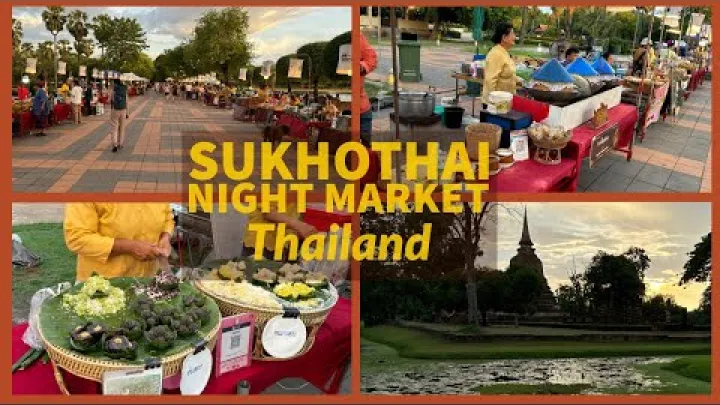
Markets and night food areas are especially useful for dinner, snacks, fruit, grilled items, and takeaway food. The Sukhothai Night Food Market and everyday market areas in New Sukhothai can help budget travelers eat well without relying on tourist restaurants for every meal.
For a very simple food budget, plan around 150-250 THB per day if you mostly eat local meals, drink water, and keep snacks modest. A mixed day with local food, a cafe, and one sit-down meal may be closer to 300-500 THB. Restaurant meals, imported food, and alcohol will push the number higher.
Sit-Down Restaurants, Drinks, and Snacks
Sit-down restaurants near visitor areas and resort restaurants can cost several times more than a market meal. They may still be good value if you want comfort, shade, air conditioning, or a slower evening, but they should be counted as a different budget category from street food.
Small purchases can quietly raise your daily spending. Coffee, smoothies, desserts, convenience-store snacks, extra bottled drinks, and late-night food may each seem minor, but together they can add 100-300 THB or more to a day.
Alcohol is a common budget divider. If you drink beer or cocktails daily, add a separate allowance instead of trying to hide it inside a food budget. Travelers who do not drink can often keep Sukhothai food costs very low.
Transport Costs to and Around Sukhothai
Sukhothai transport costs have two parts: getting to the province and moving between the bus terminal, New Sukhothai, Old Sukhothai, and the historical park zones. For short trips, transfers can have an outsized effect on the total.
Long-Distance Arrival Costs
Bangkok to Sukhothai bus tickets can start from around 13 USD when booked in advance, according to fare examples shown by Omio. Final prices depend on date, operator, booking timing, luggage rules, and seat type, so compare schedules and total ticket costs before deciding.
For Chiang Mai to Sukhothai, a practical planning figure is around 300 THB per person for the bus, based on traveler route guidance from BBQboy. Treat this as an approximate cost rather than a fixed fare, and check current bus company prices for your date.
Local Transfers Between the Bus Terminal, New Town, and Old Town
The Sukhothai bus terminal, New Sukhothai, and Old Sukhothai are separate areas. This matters because a cheap room can become less cheap if you need private transfers to reach the historical park.
Traveler reports have mentioned tuk tuk fares of around 200-300 THB from the Sukhothai bus terminal to Old Sukhothai, but this is not an official tariff and should be confirmed locally. Use informal reports such as the Facebook travel group only as a planning clue, then agree on the price before getting in.
Shared transport, such as songthaews, may be cheaper when available, but service times, stops, and fares can vary. Private transfers are expensive for one budget traveler, but they become more reasonable when two or three people share the cost. Carry small notes so you can pay the agreed fare without difficulty.
Bicycles, Scooters, and Park Mobility
Bicycles are one of the best-value ways to explore Sukhothai Historical Park and nearby ruins. The central area is especially well suited to slow cycling, and bicycles help avoid repeated tuk tuk costs.
Recent traveler content has reported bicycle rental around 30 THB per day, including an example shared on Instagram. Treat this as indicative, not guaranteed. Ask your guesthouse or rental shop about the current rate, deposit, return time, lock, and whether any park vehicle fee applies.
Scooters cost more than bicycles but can be useful for outlying ruins or travelers who want flexibility. Before renting, check helmet availability, fuel expectations, insurance coverage, and legal riding requirements. Do not rent a scooter only to save money if you are not licensed, insured, and confident riding in Thailand.
Historical Park and Activity Costs
Sukhothai Historical Park is the main paid attraction and the reason many travelers visit. The activity budget depends on how many zones you enter, whether you use a bicycle or tram, and whether you add museums or guided services.
Historical Park Entrance Fees by Zone
Sukhothai Historical Park is divided into fee-collecting zones, including the central inner city wall area and outlying areas connected with major sites such as Wat Si Chum and Wat Phra Phai Luang. Older traveler reports often mention 100 THB per zone, but updated information can differ.
The Fine Arts Department has announced updated admission information for international visitors, including a 200 THB fee for the Inner Sukhothai City Wall Area in Sukhothai Province. Because fee rules and categories can change, check the current ticket office information or official channels such as the Fine Arts Department before assuming older prices still apply.
For conservative planning, budget about 100-200 THB per zone for foreign visitors, plus possible separate vehicle entry fees for bicycles or motorcycles. Do not assume there is a combined ticket unless it is clearly offered at the ticket counter during your visit.
Museums, Tram Rides, and Low-Cost Activities
Additional paid activities can include museums, tram rides, and guided options. Ramkhamhaeng National Museum is a relevant cultural stop near the historical park, especially for travelers who want more historical context, but check current opening hours and admission before planning your day around it.
Tram rides can be useful if you want less walking or cycling, especially in heat, but they are a convenience cost rather than a required expense. Guided services may add value if you want historical explanation, but independent travelers can keep costs lower by cycling slowly and reading site information.
Free or low-cost activities include walking around New Sukhothai, eating at markets, cycling outside ticketed areas, relaxing in guesthouse common spaces, and planning sunset or early-morning views from accessible areas. These quieter activities help balance higher-cost temple days.
How to Plan Paid and Free Days
One useful budget strategy is to concentrate paid temple zones into one or two efficient days. This reduces repeated transport costs and makes it easier to compare which sites matter most to you.
For a short visit, many travelers prioritize the central zone and one outlying zone rather than trying to pay for every area in a rushed day. This is not about skipping important places only to save money. It is about matching the ticket spend to your time, energy, and interest.
For example, you might spend one full day cycling through the central historical park area and visiting Wat Si Chum, then use the next day for local food, markets, rest, and a lower-cost town walk. Across a three-day visit, that makes the average activity cost much lower than paying for several ticketed areas every day.
Sample Sukhothai Budgets for Common Trips
The best Sukhothai budget depends on trip length. Short stays feel more expensive because arrival transfers and long-distance transport are concentrated into fewer days, while three or four days let you spread fixed costs.
One-Night or Two-Day Stopover Budget
A one-night stopover is common for travelers moving between Bangkok and Chiang Mai, but it can be inefficient if you arrive late and leave early. If time is limited, staying in Old Sukhothai may be worth a slightly higher room price because it reduces the risk of wasting your only sightseeing day on transfers.
| Category | Budget traveler | Mid-range traveler |
|---|---|---|
| Room | 500-900 THB | 900-1,600 THB |
| Food | 200-300 THB | 400-700 THB |
| Local transport | 80-300 THB | 300-700 THB |
| Activities | 200-400 THB | 300-700 THB |
| Local total | 980-1,900 THB | 1,900-3,700 THB |
These totals exclude long-distance transport to and from Sukhothai. Add your bus or flight cost separately. A solo budget traveler who needs a private tuk tuk from the bus terminal may land near the higher end, while two people sharing a room and transfer can spend less per person.
Three-Day Classic Visit Budget
Three days is a balanced length for many first-time visitors. It gives enough time for one main historical park day, one slower food or market day, and one flexible day for an outlying zone, museum, or rest.
For a budget traveler, a three-day local total might be around 2,400-3,900 THB excluding long-distance transport. This assumes simple accommodation, local meals, bicycle use, and selective ticketed zones. A mid-range traveler might plan around 4,500-8,400 THB for three days, depending on room comfort, restaurants, and private transfers.
Couples sharing a room may spend noticeably less per person than solo travelers. For example, a 1,000 THB room is 1,000 THB for one solo traveler but 500 THB per person for two people. This is why daily per-person ranges are more flexible than fixed budgets.
Slow Budget Stay or Four-Day Trip
A four-day trip works well if you enjoy slow travel, markets, cycling, quiet evenings, and unhurried temple visits. It is also useful if you want to avoid making expensive rushed transport decisions.
New Sukhothai can be a good low-cost base for a slower stay because local food and everyday services may be easier to use. Old Sukhothai can still be the better choice if you plan to spend repeated mornings or afternoons around the historical park and want to avoid daily transfers.
The key to a cheap longer stay is mixing paid heritage days with low-cost days. A day with a simple breakfast, bicycle ride, market lunch, rest, and night food may cost far less than a full attraction day. Over four days, these low-cost days can bring the average daily budget down without removing the best parts of Sukhothai.
Saving Tactics and Money Logistics
Sukhothai is not difficult to do affordably, but the cheapest trip is not always the best trip. The goal is to protect the experience while avoiding unnecessary spending.
Cash, Cards, and ATM Planning
Many small expenses in Sukhothai are likely to be cash-based. Markets, local transport, bicycle rentals, small restaurants, ticket counters, and some guesthouses may prefer or require cash. Carry small notes for fares, meals, water, and entrance fees.
Cards may work at some hotels, larger restaurants, and booking platforms, but do not rely on card payment for every daily purchase. ATM and card fees can also affect the budget, especially if you make many small withdrawals. Check your home bank fees before travel and plan fewer, better-timed withdrawals.
Do not carry more cash than you can manage safely. Keep your main cash, backup card, and daily spending money separate. This is especially useful on cycling days when you may be away from your room for several hours.
Practical Ways to Cut Costs Without Missing the Best Parts
The highest-impact savings in Sukhothai come from a few practical choices:
- Choose simple accommodation. A clean guesthouse can save more than any other single category, especially for solo travelers.
- Eat local food. Markets, noodle shops, and local rice dishes keep food costs low while still giving a strong sense of place.
- Use bicycles when practical. Cycling reduces short transport costs and fits the historical park experience well.
- Group paid sites efficiently. Visit ticketed zones in a planned way instead of paying for scattered short visits.
- Compare New Sukhothai and Old Sukhothai honestly. New Sukhothai may be cheaper for food and local life, while Old Sukhothai may save time and transfers near the park.
- Travel by bus when time allows. Long-distance buses are usually the budget option compared with flights or private transfers.
- Book early for fixed peak dates. If you travel during weekends, Thai holidays, cool season, or local events, earlier booking can protect your room choice.
- Use last-minute deals only when flexible. Waiting can work if you can change dates or location, but it can backfire during busy periods.
Do not cut costs in ways that make the trip frustrating. If a slightly better location gives you more time at Sukhothai Historical Park and fewer transfers, it may be the smarter budget decision.
Conclusion: Planning the Right Sukhothai Budget
A realistic Sukhothai budget starts around 800-1,300 THB per person per day for careful budget travelers, 1,500-2,800 THB for a comfortable mid-range style, and 3,000-5,500 THB or more for upgraded hotels, private transport, restaurants, and extra activities. The biggest decisions are where to stay, how often to use private transfers, how many historical park zones to visit, and whether you eat mostly local food or restaurant meals.
For most visitors, the best value comes from a simple guesthouse, local meals, bicycle rental, and a focused plan for Sukhothai Historical Park. Choose New Sukhothai if you want cheaper everyday routines and easier town services. Choose Old Sukhothai if park access and time savings matter more. With a little planning, Sukhothai can remain one of the more manageable cultural stops in a Northern Thailand travel budget.
Select area
Create a post
Posting is free and no registration is required.