Chau Doc Getting There: Vietnam and Cambodia Routes

Getting to Chau Doc usually involves a road journey through the Mekong Delta or a cross-border river trip from Cambodia. There is no major airport or rail terminal in the town, so most visitors arrive by long-distance bus, private car, or boat and then take a short local transfer to their accommodation. Ho Chi Minh City is the most practical gateway for many international travelers, while Can Tho can work well for some domestic itineraries. This guide explains how the main routes connect, what to expect on arrival, and how to choose an option that suits your time, budget, and luggage.
Plan Your Route to Chau Doc
Choose your gateway before booking onward transport. The best route depends less on straight-line distance than on your flight timing, the availability of a confirmed service, and whether Chau Doc is a stop within a wider Vietnam and Cambodia itinerary.
Why Road and River Connections Matter
Chau Doc is a Mekong Delta border town in An Giang Province, close to the Cambodian frontier. Travelers normally reach it overland from southern Vietnamese cities or by river from Phnom Penh. A flight may get you to Ho Chi Minh City or Can Tho, but it does not complete the journey: the final long-distance leg is normally by road.
Think of the route in three parts. International arrivals commonly land at Tan Son Nhat International Airport in Ho Chi Minh City, then continue to a bus terminal or arrange a private car. Domestic travelers may use Can Tho International Airport and continue west by regional bus or car. Travelers coming from Cambodia may use a cross-border speedboat, subject to its operating status and immigration procedures.
Within Chau Doc, Chau Doc Bus Station, also called Ben Xe Chau Doc, is a useful orientation point for road arrivals. The Hau River, the Vinh Te Canal, and local ferry landings shape some onward journeys, especially toward Chau Giang and border-area communities. Nearby-airport listings can help identify possible gateways, but they should not be treated as proof of a direct connection or a currently operating route; Travelmath provides a general starting point for comparing airports.
Choose a Gateway Based on Your Starting Point
For most overseas visitors, Ho Chi Minh City offers the broadest choice of international flights and the most established onward road options. It is often the simplest choice when you want a budget bus or when your itinerary begins in southern Vietnam. The trade-off is the longer road journey and the need to move from the airport to the correct departure point.
Can Tho is a useful alternative for travelers already flying within Vietnam or spending time in the central Mekong Delta. The onward road leg is shorter than from Ho Chi Minh City, but the full door-to-door journey may not be faster if flight times are inconvenient or if you arrive after regional buses have stopped operating.
Phnom Penh suits travelers crossing between Cambodia and Vietnam who value a river experience and have suitable entry documents. A speedboat can be more memorable than a road crossing, but it is less flexible than a bus network and should not be assumed to operate on every date.
- Lowest ticket cost: usually a long-distance bus from Ho Chi Minh City or another Delta center.
- Simplest arrangement: a private car or accommodation-arranged transfer, especially for groups.
- Shorter regional road leg: fly to Can Tho only when the flight schedule works well with onward travel.
- Most scenic cross-border option: the Phnom Penh–Chau Doc speedboat when confirmed and suitable for your visa situation.
Getting to Chau Doc from Ho Chi Minh City
Ho Chi Minh City is the main southern gateway and a common starting point for reaching Chau Doc. The standard plan is to arrive in the city, travel to the confirmed bus departure point, and take a long-distance coach or a private road transfer into the Delta.
Arrive Through Tan Son Nhat International Airport
Tan Son Nhat International Airport, known by the code SGN, is practical for international visitors because it has extensive flight connections. However, it is not a direct Chau Doc transport hub. After landing, allow for immigration, baggage collection, local currency needs, and the journey across Ho Chi Minh City to your onward departure point.
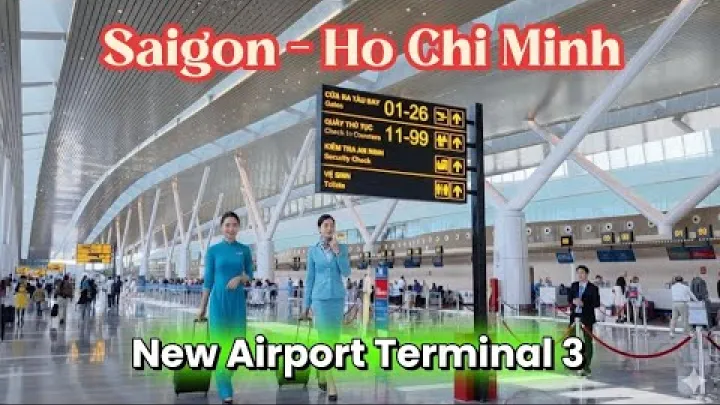
Do not assume that an airline itinerary to Ho Chi Minh City includes a through-ticket to Chau Doc. Long-distance bus tickets, private transfers, and airport transport are usually separate arrangements. If you land late in the day, compare the next confirmed bus with an overnight stay in Ho Chi Minh City; a rushed connection can be less convenient than beginning the road journey rested.
Travelers with a very early arrival, several companions, bulky luggage, or limited mobility may find a pre-arranged private car easier than managing an airport-to-terminal transfer and a separate bus. Solo travelers on a tighter budget will often prefer the bus, provided the departure time leaves enough time after the flight.
Take a Long-Distance Bus from Ho Chi Minh City
Long-distance buses are the principal budget-oriented way to get from Ho Chi Minh City to Chau Doc. Operators can offer seated or sleeper-style services, and listings commonly show departures across much of the day and evening. A typical journey is roughly six to seven hours, although congestion, stops, weather, and the precise urban pickup or drop-off can change the total time.
FUTA, also known as Phuong Trang, is one operator worth checking directly when comparing southern Vietnam bus routes. Its FUTA Bus Lines website is the best place to establish whether a route is currently offered and to review its current booking process. Other operators may serve the corridor as well, so compare the actual terminal, seat type, and arrival location rather than choosing solely on a departure hour.
A daytime bus lets you see changing Delta landscapes and arrive while local transport is easier to arrange. An evening or overnight departure can preserve daytime for sightseeing, but may bring you to Chau Doc before hotel check-in or before you are ready to continue to a ferry landing. Sleeper buses can be comfortable for some travelers but may not suit everyone, particularly if you prefer to remain seated or have large luggage that must go in the lower compartment.
Book a service that clearly states where you board in Ho Chi Minh City and where you get off in Chau Doc. Some tickets may involve an operator office, a terminal, or a pickup point rather than a single universal station. Read the ticket conditions carefully and save the operator contact details in case the pickup instructions change.
Allow Time to Reach Mien Tay Bus Station
Mien Tay Bus Station is an important departure reference for Mekong Delta routes, but it is not next to Tan Son Nhat Airport. Available route information indicates that there may be no single direct public bus between SGN and Mien Tay; the connection can involve a taxi, private car, ride-hailing vehicle, or a multi-leg public transport journey. This is why an airport arrival should not be scheduled tightly against a long-distance bus departure.
A taxi or pre-booked car is generally the most straightforward option for travelers with bags, children, or a fixed bus ticket. City buses can reduce the cost, but require more navigation and may be impractical after a long international flight. Traffic through Ho Chi Minh City can be variable, so plan the transfer as a separate part of the trip rather than as a short airport shuttle. The airport-to-station route summary from Rome2rio also indicates that a direct public-bus link should not be assumed.
Before leaving the airport, confirm your bus terminal or office, the latest acceptable check-in time, and the operator’s luggage rules. Keep a generous connection buffer between landing at SGN and departing from Mien Tay Bus Station. That buffer should cover a delayed flight, immigration queues, baggage delays, traffic, and the possibility that the bus uses a boarding point other than the one you expected.
Getting to Chau Doc from Can Tho and Other Delta Gateways
Can Tho and several other Delta towns can make Chau Doc easier to include in a multi-stop itinerary. These connections are especially useful after exploring the Mekong Delta, but regional routes are often less transparent online than the main Ho Chi Minh City corridor.
Fly to Can Tho and Continue by Road
Can Tho International Airport, code VCA, can be a practical domestic gateway. It is closer to Chau Doc than Ho Chi Minh City in broad regional terms, but travelers still need a road transfer from the airport or city center. This route works best when a domestic flight arrives at a time that permits a comfortable onward connection or when you intend to spend a night in Can Tho first.
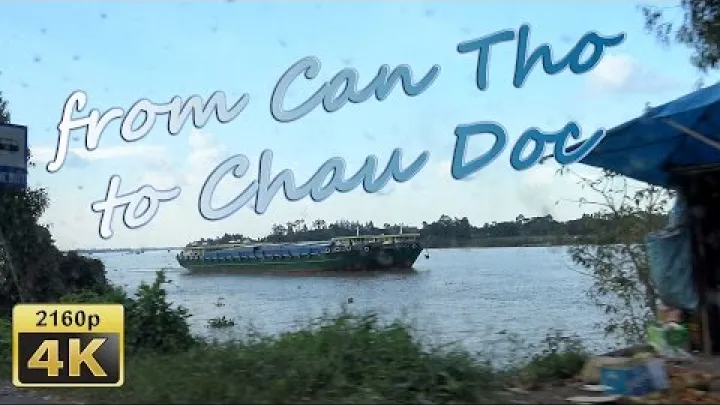
Regional buses and private cars link Can Tho with Chau Doc. Date-specific travel listings have shown a fastest journey of just under three hours, but that figure is only an indication and may exclude time getting from the airport to the departure point. The Can Tho–Chau Doc route page on 12Go can help compare current departure windows and travel products, while the operator remains the most useful source for final confirmation.
A bus is suitable when you are traveling light, arriving well before the final departure, and comfortable using a local terminal. A private car or taxi may be better when you land late, carry substantial luggage, travel with family, or want to go directly to a Chau Doc hotel. For a small group, the higher vehicle price can be balanced by the convenience of avoiding separate airport, terminal, and local transfers.
For example, a traveler landing in Can Tho in the morning may have enough time to reach the city, take a regional bus, and arrive in Chau Doc that afternoon. A traveler landing in the late afternoon may find that the same itinerary becomes an overnight stay plus a morning departure. Compare the entire sequence, not only the driving distance.
Use Regional Buses from Long Xuyen, Rach Gia, or Ha Tien
Chau Doc also connects by road with other Mekong Delta centers, including Long Xuyen, Rach Gia, and Ha Tien. These routes can be useful if you are linking the town with coastal travel, island-bound transport, or another Delta stop. They are generally approached as regional bus journeys or private road transfers rather than as airport routes.
Long Xuyen can fit naturally into an An Giang itinerary, while Rach Gia and Ha Tien are possible approach points for travelers moving through the western Delta. A direct bus is often the least expensive choice when it matches your route. A private car gives more flexibility for stops, hotel pickups, and multi-destination travel, but generally costs more than an individual bus ticket.
For these less consistently documented corridors, confirm the actual departure terminal, the route direction, and same-day service locally. A bus heading toward another Delta city may not necessarily call at Chau Doc, and similarly named stops can create confusion. Ask your accommodation to write the destination as “Chau Doc” or “Ben Xe Chau Doc” and use a map pin for the intended drop-off if you need to reach a particular hotel or pier.
Reaching Chau Doc by River from Cambodia or the Border Region
River travel is an appealing alternative for travelers combining Cambodia and Vietnam. It should be viewed as a cross-border journey with an immigration process, rather than as an ordinary local boat ride.
Use the Chau Doc–Phnom Penh Speedboat
A speedboat route has been reported between Phnom Penh and a Chau Doc pier near the Victoria Hotel area. It can be a convenient and scenic choice for travelers who want to cross the border by river instead of returning to a road terminal. The journey includes border formalities associated with the Vinh Xuong checkpoint in Vietnam and Kaam Samnor in Cambodia.
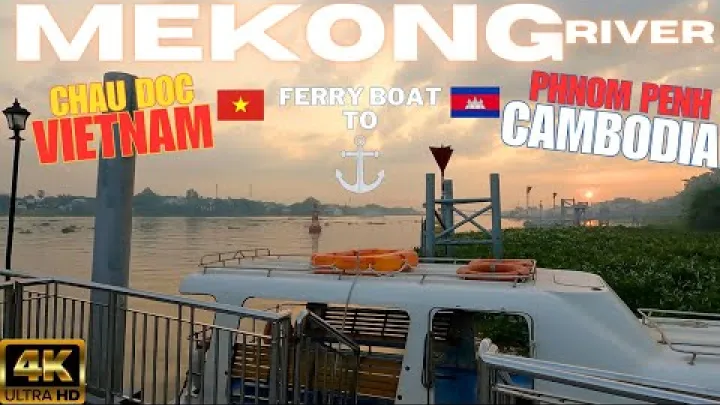
A recent local travel report described a morning departure from the Chau Doc pier, an arrival in Phnom Penh around late morning, and a fare quoted in US dollars. Treat those details as a lead rather than a permanent timetable: the local travel report is not an official operator notice. Contact the boat company or a reputable accommodation directly for the operating date, boarding location, baggage policy, fare, and whether the service is accepting passengers in your direction.
Before booking, confirm passport validity, whether you need a visa in advance, whether you are eligible for the intended entry method, the documents required for onward travel, and any border or processing fees. Check current Vietnamese and Cambodian government or border guidance rather than relying on advice from a booking agent or another traveler. Carry the documents and payment method requested by the operator, and allow for the fact that immigration processing can take longer than expected.
This option suits travelers with flexible schedules who want a direct Cambodia–Chau Doc experience and are comfortable with a fixed boat departure. Choose a road route instead if you need many departure choices, must travel at a specific time, are concerned about a missed connection, or prefer to avoid water travel and border formalities on the same day.
Treat Vinh Te Canal Boats and River Cruises as Special-Interest Options
The Vinh Te Canal is a distinctive waterway associated with the Chau Doc and Ha Tien area. Reports of canal boats and local vessels can make it sound like a standard transport route, but these services should be treated as special-interest options rather than a dependable way to reach Chau Doc on a fixed schedule.
Slow local or cargo-oriented boats may provide a close view of canal life, but conditions can be basic, operating days may be irregular, and reliable online booking information can be limited. Fares may be negotiated rather than published. This style of travel can be rewarding for patient, experienced travelers who have local assistance and no time-critical onward plans.
Organized Mekong river cruises offer a more structured way to include Chau Doc in a river itinerary. They are usually designed as part of a multi-day experience rather than as low-cost point-to-point transport. Confirm the exact embarkation, disembarkation, and inclusion of Chau Doc before committing, because cruise itineraries can vary by season and vessel.
Do not build an important same-day connection around an informal canal boat or an unconfirmed river service. If you are interested, ask a trusted hotel or established local operator what is actually running during your stay and whether the proposed vessel is appropriate for passengers and luggage.
Arriving in Chau Doc and Reaching Your Accommodation
Arrival in Chau Doc is usually straightforward once you know your drop-off point. The final few kilometers may still require a local ride, especially if you are staying along the riverfront, near a ferry landing, or outside the central area.
Use Chau Doc Bus Station as Your Main Arrival Reference
Chau Doc Bus Station, commonly called Ben Xe Chau Doc, is the principal reference point for intercity bus arrivals and departures. It is useful for navigation, but it is not necessarily beside your hotel, the riverfront, or an attraction. Ask the operator whether your particular service terminates at the station or uses another urban stop.
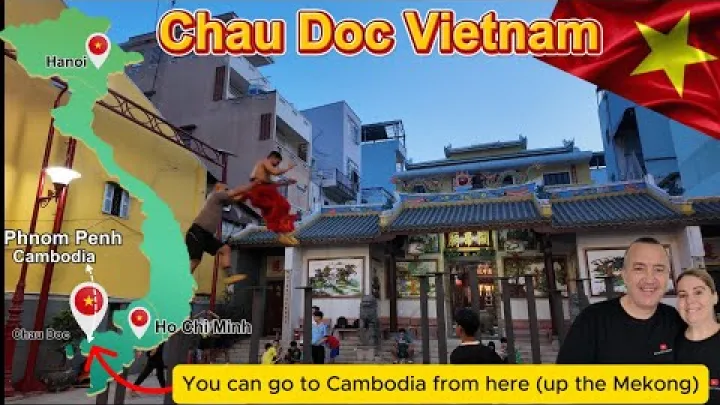
For the final transfer, choose based on your luggage and arrival time. A hotel-arranged taxi is often the easiest choice for a late arrival, while a xe om or other local vehicle may suit a traveler with one small bag. If you use an informal ride, show the driver your hotel name and map pin, agree on the fare before leaving, and make sure the destination is understood.
Send your accommodation your estimated arrival time when possible. Many properties can advise on the expected local transfer, arrange a pickup, or tell you whether their entrance is accessible by car. This can be especially helpful if the bus arrives outside normal reception hours.
Continue to the Riverfront, Chau Giang, or Local Ferry Landings
Some destinations around Chau Doc require more than a walk from the bus station. The riverfront, Chau Giang, and certain river crossings may involve a short road ride followed by a ferry or boat. This is normal in a town shaped by waterways, but it is important to identify the correct landing before you set out.
Use the landing name in Vietnamese where possible, or show a saved map pin rather than relying only on an English description. A driver may understand “ferry” but take you to a different local crossing if the final destination is unclear. If your accommodation is across the water or near a small landing, ask it to provide the exact location and the preferred arrival method.
For private boats and informal local rides, confirm the destination, number of passengers, luggage arrangement, and fare before boarding. Accommodation staff can often provide a current local benchmark and help distinguish a regular public ferry from a private hire.
Compare Chau Doc Transport Options Before Booking
No single option is best for every traveler. Compare the complete journey, including urban transfers and the final ride to your hotel, before selecting a ticket.
Compare Time, Cost, Comfort, and Booking Difficulty
| Option | Typical journey | Cost level | Best for | Booking difficulty |
|---|---|---|---|---|
| Ho Chi Minh City bus | About 6–7 hours on the road | Lower | Budget travelers | Moderate |
| Can Tho bus | Shorter regional road leg | Lower to moderate | Travelers already in Can Tho | Moderate |
| Private car | Direct, timing varies | Higher | Groups and heavy luggage | Usually simple |
| Phnom Penh speedboat | Cross-border river journey | Moderate to higher | Vietnam–Cambodia itineraries | Higher |
| Canal boat or cruise | Variable or multi-day | Variable | Scenic special-interest travel | Higher |
Times and price levels in this table are indicative only. They vary with the travel date, operator, vehicle class, road conditions, border processing, and pickup point. The best budget option is often the Ho Chi Minh City bus if you can reach its departure point without an expensive airport transfer. Can Tho can be more efficient for travelers already staying there. A private car is often the comfort-focused choice, particularly when the cost can be shared.
Compare the full door-to-door cost, not just the advertised ticket. Include the trip from airport to bus terminal, checked-baggage or seat-class charges where applicable, the transfer from Ben Xe Chau Doc to your hotel, and any cross-border expenses. A cheap ticket can become less economical if it requires several paid connections or an unplanned overnight stay.
Book Through the Right Channel and Recheck the Details
Use an operator’s official website or office to confirm that a route exists and that it is operating on your date. International booking platforms can be useful for comparing departure times, seating classes, payment methods, and broad route coverage, but a listing is not a guarantee that every service will run as shown. For example, the Ho Chi Minh City–Chau Doc page on 12Go can help with comparison, while final details should come from the operating company.
Use this short checklist shortly before travel:
- Confirm the exact departure terminal, office, or pickup point.
- Check the required check-in time and the operator’s contact method.
- Confirm seat type, luggage allowance, and whether large bags travel below the cabin.
- Verify the Chau Doc arrival point and how far it is from your accommodation.
- Read change and cancellation conditions, especially for holiday travel.
- For boats, confirm boarding pier, documentation, baggage rules, and the direction of travel.
Recheck the operator’s departure time, boarding point, fare, and service status shortly before travel. Give extra attention to early-morning, late-night, holiday, cross-border, and informal river services, since these are the situations where an outdated listing can cause the greatest disruption.
Practical Planning and Safety for the Journey
A well-planned Chau Doc journey is usually uncomplicated. The most useful precautions are specific to the transport you are using: a long bus ride, an unfamiliar terminal, a late arrival, or a boat crossing.
Plan Carefully for Night Arrivals and Long Road Journeys
Overnight or late buses can save a daytime, but they may arrive when hotel rooms are not ready and local transport choices are limited. If you choose one, arrange your first night in advance and ask the accommodation whether early luggage storage, an early check-in, or a pickup can be offered. Do not rely on finding a suitable room immediately after arriving.
Keep your passport, phone, wallet, medication, charging cable, and other essentials with you rather than in checked or under-bus luggage. Carry water and a light layer for air-conditioned buses. On a boat, keep important documents in a water-resistant bag that remains with you during immigration stops.
Use established bus operators or an accommodation-arranged private transfer. At stations and piers, decline unsolicited offers if the vehicle, fare, or destination is unclear. Check sensible basics before departure: whether a seat belt is available in a car or bus, whether luggage is secured, and whether a boat has usable life jackets. Avoid committing to an unfamiliar late-night connection without local confirmation, particularly if it would leave you without a clear way to reach your accommodation.
Leave Flexibility for Weather, Traffic, and Border Changes
Road traffic, heavy rain, local flooding, river conditions, and border procedures can affect the length or availability of a journey. These factors matter most when you are connecting a flight to a bus, a bus to a boat, or a cross-border boat to an international departure.
Avoid building a tight same-day chain of flights, buses, boats, and international departures. Keep a spare night where possible if Chau Doc is the last stop before a major flight or border crossing. The same principle is particularly important for informal canal boats and international river services, where public information may be limited.
Close to departure, check the transport operator’s notices, current weather information, terminal updates, and applicable border requirements. Leave room in the itinerary for a delayed road journey, heavy rain, flooding, or a boat suspension rather than treating published journey times as guaranteed.
Final Route Recommendations for Getting to Chau Doc
For most first-time visitors, the practical route is Ho Chi Minh City to Chau Doc by confirmed long-distance bus, with enough time to travel from Tan Son Nhat Airport to the departure point. Choose a private transfer when comfort, hotel pickup, luggage handling, or a flexible departure matters more than the lowest fare.
Use Can Tho when it fits your domestic flight or Mekong Delta itinerary, not simply because it appears closer on a map. Choose the Phnom Penh speedboat when you want a cross-border river journey and have confirmed the service and entry requirements. Once in Chau Doc, use Ben Xe Chau Doc and your hotel’s map pin as the starting points for the final local transfer. With a realistic connection buffer and a confirmed booking, reaching this border town can be a smooth part of a wider Mekong Delta journey.
Select area
Create a post
Posting is free and no registration is required.