Tokyo Getting There: Airports, Trains, Buses & Ferries

Getting there is the first major Tokyo travel decision because the city has several arrival gateways rather than one central entrance. International and domestic flights use Haneda or Narita, while long-distance trains commonly arrive at Tokyo, Shinagawa, or Ueno Station. Highway buses and sea routes can offer different price, comfort, and schedule advantages, but they may leave you farther from your final destination. This guide compares the main ways to get to Tokyo and explains how to choose the most practical final connection.
Plan Your Route to Tokyo Before Booking
A good Tokyo arrival plan has two parts: the long-distance journey into the metropolitan area and the final local transfer to your hotel, campus, office, or attraction. Comparing only the flight or train ticket can give a misleading result if the cheapest option arrives at a distant airport, uses a difficult station, or reaches Tokyo after local services have stopped.
Define the Scope of Getting to Tokyo
For this guide, getting to Tokyo means reaching the city by an international or domestic flight, Shinkansen or other long-distance rail service, highway bus, domestic ferry, or cruise ship. It does not mean detailed neighborhood travel after you have already reached Tokyo. The final local connection still matters, however, because it can change which airport, station, or port is most convenient.
The main arrival anchors are Haneda Airport and Narita International Airport for air travel; Tokyo Station, Shinagawa Station, and Ueno Station for long-distance rail; and Bus Terminal Tokyo Yaesu for some highway bus services. Sea arrivals may use Tokyo International Cruise Terminal in Odaiba, Tokyo Ferry Terminal, or another Tokyo Bay facility assigned by the operator or ship.
These gateways are not interchangeable. Narita International Airport is in Chiba Prefecture, outside central Tokyo, so reaching the city center is a separate final-leg decision. Tokyo Station may be the best rail arrival for a hotel near Marunouchi or Yaesu, while Shinagawa can be more practical for a traveler continuing west by Shinkansen. Ueno may be more convenient for northern rail journeys or a stay near Ueno and Asakusa.
Before booking, write down your final Tokyo district, the amount and size of your luggage, whether you will continue to another Japanese city, and your expected arrival time. These details usually produce a better route than choosing by ticket price alone.
Compare Air, Rail, Bus, and Sea Travel
The best mode depends mainly on where you start. Air travel is usually the practical choice for overseas origins and many distant domestic destinations. Shinkansen services are often efficient for major cities connected to Tokyo by rail. Highway buses can reduce the ticket cost or provide an overnight option. Ferries and cruises are specialized choices for coastal travel, vehicles, or travelers who prefer a sea journey.
| Mode | Best fit | Cost and booking | Comfort and baggage | Tokyo arrival |
|---|---|---|---|---|
| International or domestic flight | Overseas and distant domestic origins | Fare varies; airline booking is usually direct | Airport procedures and baggage handling add time | Haneda or Narita, followed by a city transfer |
| Shinkansen or long-distance rail | Major cities on connected rail corridors | Separate rail ticket; reservation options vary | Comfortable for many travelers; luggage stays with you | Tokyo, Shinagawa, Ueno, or another named station |
| Highway bus | Lower-cost and overnight domestic travel | Advance booking is common; operator rules differ | Longer journey; baggage and seat conditions vary | Bus Terminal Tokyo Yaesu or another named stop |
| Ferry or cruise | Coastal origins, vehicles, or sea-focused itineraries | Operator-specific booking and check-in procedures | More space in some settings, but a much slower journey | Tokyo Bay port or cruise terminal, then local transport |
Use air travel when distance makes rail impractical or when the flight schedule fits your itinerary better. Choose a Shinkansen when the departure station is convenient and you value a city-center arrival. A highway bus is worth comparing when the lower fare or overnight timing is more important than speed. Select a ferry or cruise when the sea route itself, vehicle transport, or a coastal itinerary is part of the purpose of the trip.
Travel time, fares, seat availability, terminal arrangements, and service frequency are date-dependent. Treat the comparison as a way to narrow your choices, then use the operator information for the specific travel date.
Arrive by Air: Haneda or Narita
Most international visitors begin their Tokyo route at Haneda or Narita. The airport shown on the flight booking is only the first gateway; you still need to plan how to reach your final area and whether the arrival time works with the available public transport.
Haneda Airport as the City-Adjacent Gateway
Haneda Airport, also called Tokyo International Airport, is a major domestic and international gateway located within Tokyo. Its position makes it attractive for travelers who want a relatively direct connection into central Tokyo or who will transfer to another domestic service after landing.
The two main named rail anchors are the Keikyu Line and the Tokyo Monorail. Keikyu services provide a route toward Shinagawa Station, while the Tokyo Monorail provides a route toward Hamamatsucho Station. From either station, travelers can continue through Tokyo's wider urban rail network.
Haneda can be particularly useful for a westbound itinerary. A traveler who plans to take the Tokaido Shinkansen toward destinations such as Nagoya, Kyoto, or Osaka may find Shinagawa a practical arrival and departure anchor. Someone staying near the eastern side of central Tokyo may instead prefer a route that leads naturally toward Tokyo Station or another local station.
Haneda is not automatically the best airport for every flight. A lower fare, better arrival time, or more suitable international connection at Narita can outweigh the shorter apparent distance to central Tokyo. Compare the complete journey, including the airport transfer and the final local segment.
Narita International Airport as the Longer City Transfer
Narita International Airport is in Chiba Prefecture and is an important international gateway for the Tokyo region. Because it is farther from central Tokyo than Haneda, the journey into the city should be treated as part of the arrival plan rather than as a minor final detail.
The principal named rail choices toward central Tokyo are the JR Narita Express and the Keisei Skyliner. The Narita Express is useful for travelers whose destination aligns with Tokyo, Shinjuku, Shibuya, or Yokohama services. The Keisei Skyliner is especially relevant to travelers heading toward Nippori or Ueno. Airport limousine buses provide another option for people who prefer a road journey toward selected hotels or districts.
These services differ in destination, price, reservation process, luggage experience, and operating window. A route that looks fast on a map may still require a local transfer at the city end, while a direct bus may reduce station changes but take longer on the road.
Late-night and early-morning arrivals require special care at Narita. Airport terminals and onward rail or bus services do not all operate continuously, and the available route can depend on the exact date and terminal. Before booking a late Narita arrival, confirm that the terminal is accessible and that a viable onward route is available for that date. If public transport is not workable, include a backup such as a prearranged hotel transfer or accommodation near the airport.
Choose an Airport for Your Whole Itinerary
Choose between Haneda and Narita by looking at the entire itinerary, not just the flight fare. Compare the actual airlines, connection points, operating days, arrival times, final district, onward rail or flight, luggage, and number of changes.
A traveler continuing west by Tokaido Shinkansen may value access to Shinagawa. Someone staying near Ueno or Nippori may prefer a Narita rail option. A limousine bus may be worthwhile when carrying heavy luggage to a selected hotel area, while rail may be preferable when road traffic or a late arrival is a concern.
A Haneda-Narita transfer is a separate cross-airport journey, not a simple station change. The official Haneda Airport access information gives an example of train travel between the airports taking about 90 to 115 minutes, with a fare range of 1,760 to 3,080 yen. This does not include walking through terminals, collecting and rechecking baggage, immigration, delays, or the risk of separate tickets. Treat an airport change as a higher-risk connection and allow substantially more time than the published in-vehicle journey.
Arrive by Shinkansen and Long-Distance Rail
Long-distance rail is one of the clearest ways to get to Tokyo from major Japanese cities. The correct service depends on the origin and corridor, while the best arrival station depends on your final district and onward plans.
Match Your Origin to a Shinkansen Corridor
From western Japan, the Tokaido Shinkansen connects the Tokyo area with representative origins such as Nagoya, Kyoto, and Osaka. From northern and northeastern Japan, the Tohoku Shinkansen serves the Tohoku corridor, with some journeys continuing through the wider northern network toward Hokkaido. The exact service pattern and endpoint depend on the train selected.

The Hokuriku Shinkansen is relevant to origins such as Kanazawa and Nagano, while the Joetsu Shinkansen is relevant to the Niigata direction. These corridors also serve other cities and may involve different service patterns. Use the origin station and actual service name to determine the route rather than assuming every northern train uses the same Tokyo arrival point.
Choose Tokyo, Shinagawa, or Ueno Station
Tokyo Station is the principal central Shinkansen gateway and is convenient for the Marunouchi and Yaesu areas. It is also a major interchange, but its size means that the shortest route on a map is not always the easiest route with luggage.

Shinagawa Station is especially important for Tokaido Shinkansen services. It can be practical for travelers staying in or near Shinagawa, traveling to southern Tokyo, arriving from Haneda, or continuing west by train.
Ueno Station is valuable for northern rail journeys and travelers staying near Ueno, Asakusa, or northeastern parts of the city. Its relationship with the Keisei Skyliner also makes Ueno and nearby Nippori useful reference points when comparing a Narita arrival with a rail arrival from another Japanese city.
Choose the station closest to the next important point in your itinerary. Changing from a Shinkansen to a local train can involve a considerable walk, so keep the complete hotel or venue name available and allow time to find the correct platform and concourse.
Book Rail Tickets and Check Current Timetables
Long-distance rail tickets can generally be arranged at a staffed station counter, ticket machine, or official online reservation system. For Tokaido Shinkansen planning, the JR Central timetable is a useful starting point for checking current service information.
An IC card for local transport should not automatically be treated as a complete Shinkansen ticket. Local transport cards and long-distance rail tickets serve different purposes, although some reservation systems may allow a compatible card to be linked to a booking. Read the instructions for the specific service.
Seat reservation is often sensible on busy dates, for fixed onward connections, when traveling together, or when planning around large luggage. Some services may offer non-reserved seating or different ticket types, but availability and rules vary. Check the departure station, arrival station, train name, and transfer shown in the actual booking.
Arrive by Highway Bus
Highway buses connect Tokyo with many Japanese cities and are often considered when a traveler wants a lower-cost alternative to rail. They can be useful for domestic visitors, students, and overnight travel, but the ticket price is only one part of the comparison.
When a Highway Bus Is the Better Value
Highway buses usually take longer than a comparable Shinkansen journey, but they may offer a lower fare and a useful departure time. Overnight services can reduce the need for one night of accommodation, while daytime services may suit travelers who prefer not to fly or want to avoid a rail fare.
Compare the full journey: reaching the departure stop, waiting and boarding, the ride itself, and the transfer from the Tokyo stop to your final area. A bus near your hotel can be more convenient than a cheaper service requiring several local changes. Conversely, an early arrival may create a waiting period before accommodation check-in.
The Kansai-to-Tokyo corridor is a representative example. Travelers from Kyoto or Osaka can compare a highway bus with the Tokaido Shinkansen by considering total time, fare, departure location, desired arrival time, and comfort. Advance reservations are common, and seat types, baggage limits, cancellation rules, and boarding procedures are operator-specific.
Find the Correct Tokyo Bus Terminal
Bus Terminal Tokyo Yaesu near Tokyo Station is one major long-distance bus node, but it is not the only arrival point. Services may also use stops or terminals around Shinjuku, Shibuya, and other districts. An orientation guide from Fun Japan illustrates why bus information should be read by terminal and stop rather than by the broad label Tokyo Station alone.
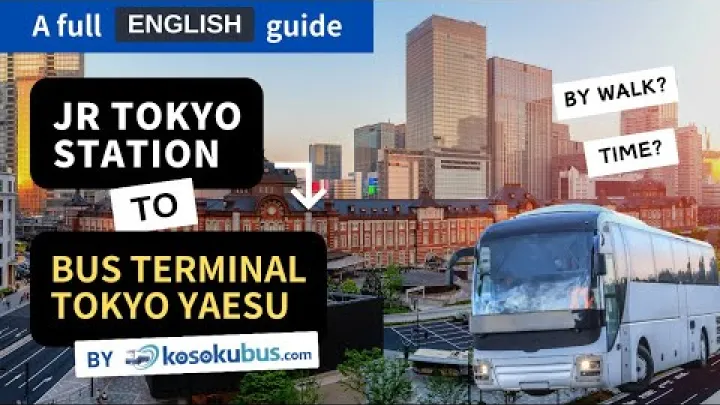
Follow the terminal and operator named on your ticket. Confirm the terminal, boarding area, boarding floor if provided, and departure instructions before leaving for the stop. Platform numbers and terminal arrangements can change, so do not rely on an old guide or a stop name remembered from a previous trip.
Arrive by Ferry or Cruise Ship
Sea travel is a smaller part of Tokyo's long-distance transport network, but it can suit a coastal itinerary, a vehicle journey, or a cruise. Port access requires more planning because the terminal is separate from central Tokyo and ship procedures determine when you are free to continue.
Reach Tokyo from a Cruise Ship
Tokyo International Cruise Terminal in Odaiba is a key cruise arrival anchor. The Odaiba area has local transport access, including connections associated with Tokyo Teleport Station, but the practical route depends on the assigned berth and arrangements available on the day.
Cruise arrival procedures may include staged disembarkation, immigration, luggage collection, customs, and ship release. If you have a flight, hotel check-in, or rail reservation afterward, base the plan on the cruise line's stated arrival and disembarkation process rather than assuming the docking time is your city departure time.
Tokyo Bay has multiple port facilities. Confirm the exact terminal assigned to your ship in the cruise line's documents and arrival instructions. A ship-day shuttle or local transfer may be available, but it should be treated as itinerary-specific. Once you have luggage, the final route may involve a train, bus, taxi, or arranged transfer.
Use a Domestic Ferry for a Slower Alternative
Tokyo Ferry Terminal and related Tokyo Bay facilities serve specialized domestic and coastal travel needs. A ferry may suit someone carrying a vehicle, traveling with substantial luggage, or preferring a sea journey to a fast flight or train. It is usually an experience and logistics choice rather than a direct replacement for the quickest route to central Tokyo.
The port is not Tokyo Station. You normally need an additional bus, taxi, or rail connection between the ferry facility and your final area. Use the ferry operator's booking information for the exact sailing, terminal, vehicle requirements, baggage rules, and passenger check-in process. Check sailing status and the weather-related change policy on the day of travel because sea conditions can affect departures, arrivals, and onward connections.
Continue from the Gateway to Central Tokyo
Once you reach an airport, station, or port, the last connection determines how simple the arrival feels. Compare the final district, number of changes, luggage handling, service window, and road or rail conditions rather than choosing solely by the shortest advertised journey.
Travel from Haneda to Central Tokyo
From Haneda, the two main rail patterns are the Keikyu route toward Shinagawa Station and the Tokyo Monorail route toward Hamamatsucho Station. Choose the pattern that fits the final district and the local connection that follows.
Airport limousine buses are another option for travelers who prioritize luggage handling or direct access to selected hotel areas. A bus can avoid carrying bags through a station, but road travel is subject to traffic and the service may not stop near every accommodation. Check the destination stop and walking distance.
For a late-night or early-morning Haneda journey, the available rail and bus pattern may differ from the daytime pattern. The Haneda Tokyo Access information includes guidance for travelers using the Keikyu Line during these periods. Check the applicable service window for your date.
Travel from Narita to Central Tokyo
From Narita, the Narita Express is a natural option when the final destination aligns with Tokyo, Shinjuku, Shibuya, or Yokohama. The Keisei Skyliner is aimed toward Nippori and Ueno and can suit travelers staying in northeastern or eastern Tokyo. Local or rapid rail may suit travelers prioritizing lower cost, while a limousine bus may suit someone seeking a direct road connection to a selected hotel or district.
Use the final destination as the deciding point. For a hotel near Ueno, compare routes to Ueno rather than only the fastest route to Tokyo Station. For a hotel near Shinjuku, the Narita Express or a direct bus may be more practical than arriving at Ueno and crossing the city with luggage. For a late arrival, service availability matters as much as normal daytime convenience.
Connect from Stations, Ports, and Airports to the Final Area
The first gateway is rarely the final stop. From Tokyo Station, Shinagawa, or Ueno, you may need a local train, subway, bus, or taxi. Odaiba and ferry-terminal areas have their own local transport patterns, while airport limousine buses stop only at selected destinations.
Central Tokyo and Tokyo Disney Resort should be treated as different final-destination plans. A route that works well for a central Tokyo hotel may not be the most convenient way to reach the resort. Write the complete destination name, including the hotel, station, campus, venue, or resort, before choosing the last connection.
For safety, follow official station and terminal signs, use marked taxi stands or official transport counters, and decline unsolicited rides or touts. If you need a taxi, use the designated queue or transport desk and show the exact destination.
Typical Routes into Tokyo and the Final Booking Checklist
Route templates help compare choices without treating one timetable or fare as permanent. Describe each option by its departure gateway, Tokyo arrival gateway, booking channel, and final transfer.
Common International Arrival Patterns
For an international flight to Haneda, a basic route is flight to Haneda, then Keikyu toward Shinagawa or Tokyo Monorail toward Hamamatsucho, followed by the final local connection. For an international flight to Narita, use flight to Narita, then Narita Express, Keisei Skyliner, or limousine bus, followed by the final district transfer.
A third pattern is an international arrival followed by a domestic flight or a separate airport transfer. This requires extra care because the airports may differ, and baggage, immigration, terminal changes, and separate-ticket rules can affect the connection. Treat a Haneda-Narita or Narita-Haneda plan as an independent journey with its own arrival buffer.
International destinations, airlines, operating days, and flight schedules are date-dependent. Build the route around the flight actually available for your dates.
Common Domestic Routes into Tokyo
- Nagoya, Kyoto, or Osaka: Depart from the relevant station on the Tokaido Shinkansen and arrive at Tokyo or Shinagawa, then continue by local transport. Compare a highway bus when a lower fare or overnight schedule matters; the bus may arrive at Bus Terminal Tokyo Yaesu or another operator-named stop.
- Tohoku and Hokkaido origins: Use the applicable Tohoku or Hokkaido rail corridor and check whether the service arrives at Tokyo or Ueno. Domestic flights to Haneda or Narita can also be compared when the origin is distant or the flight schedule better matches the trip.
- Kanazawa, Nagano, or Niigata: Compare the Hokuriku or Joetsu rail corridor with the service's listed Tokyo arrival station. The corridor name alone does not identify every endpoint or transfer.
- Shikoku, Kyushu, Okinawa, and coastal origins: Compare a domestic flight with a long-distance bus or selected ferry route where available. Include check-in, baggage collection, airport or port access, and the final Tokyo transfer.
For every domestic route, compare total door-to-door time, price, comfort, baggage handling, terminal logistics, and arrival time. Exact times and fares should come from the relevant operator for the chosen date.
Verify Schedules, Terminals, and Connection Time
Use this checklist shortly before travel:
- Confirm the gateway: Check Haneda or Narita, Tokyo or Shinagawa, Ueno or another station, Bus Terminal Tokyo Yaesu or another bus stop, and the exact Tokyo Bay port or cruise terminal.
- Check the date-specific schedule: Review the flight, train, bus, ferry, or cruise schedule for the actual travel date and check official route notices for service changes.
- Read the ticket rules: Confirm whether the booking is reserved, non-reserved, date-specific, changeable, or refundable, and whether a separate local ticket is needed.
- Match the arrival point to the final area: Write down the exact station, terminal, hotel, venue, or resort name and confirm the local route and walking segment.
- Plan for baggage: Check the applicable airline, rail, bus, ferry, or cruise baggage conditions. Decide whether a direct bus or taxi from an official stand would reduce the difficulty.
- Protect every connection: Add a generous buffer for air-to-rail, air-to-port, airport-change, or ship-to-city connections. Delays, immigration, baggage collection, terminal walks, and station navigation can take longer than the vehicle journey.
- Prepare for late or early travel: If public transport is unreliable, arrange a backup route or consider accommodation at the airport or nearby. Do not assume a daytime route will operate overnight.
Rechecking these details is especially important when flights and trains are booked separately, when a bus uses a large city terminal, or when a ferry or cruise schedule connects with another reservation.
Final Takeaway: Choose the Gateway That Fits Your Trip
Choose Haneda or Narita by considering the whole journey, including the final district and arrival time. Choose Tokyo, Shinagawa, or Ueno Station according to your rail corridor and the location of your next activity. Compare highway buses when price or overnight travel matters, and use ferries or cruise terminals when the coastal route is part of your itinerary.
The most reliable Tokyo arrival plan names both parts of the journey: how you will reach the metropolitan area and how you will reach the final hotel, campus, office, attraction, or resort. When the gateway, ticket, terminal, baggage plan, and connection time match your itinerary, getting to Tokyo becomes much simpler.
Select area
Create a post
Posting is free and no registration is required.