Tokyo Budget Guide: Daily Costs, Hotels, Food, and Tips

A realistic Tokyo budget depends more on your accommodation, travel dates, and planned attractions than on the price of every individual meal. A solo traveler using a hostel dorm and free sights can spend far less than someone booking a central private hotel and visiting Tokyo Disney Resort. This guide explains daily Tokyo travel costs, seven-day totals, typical prices for hotels, food, local transport, and attractions, plus practical ways to reduce spending. The estimates focus on costs inside Tokyo; international flights and other major journeys should be added separately.
Tokyo Daily Budget: What to Expect
For most visitors, a useful Tokyo travel budget starts with four categories: accommodation, food and drinks, local transportation, and activities. The ranges below are planning estimates in Japanese yen, not live quotes. They are designed to help you choose a travel style and identify which category needs the most attention.
Budget, Mid-Range, and Comfortable Daily Ranges
A practical in-city budget is approximately ¥8,000–¥15,000 per person per day for budget travel, ¥15,000–¥25,000 for mid-range travel, and ¥25,000 or more for comfortable travel. The lower range usually requires a dorm bed or basic room, inexpensive meals, modest train use, and mostly free activities. Mid-range travel normally adds a private room shared with another traveler, more casual restaurant meals, and several paid attractions. Comfortable travel allows for a better-located private room, frequent restaurant dining, taxis or longer journeys, and premium experiences.
| Travel style | Daily total | Accommodation | Food and drinks | Local transport | Activities |
|---|---|---|---|---|---|
| Budget | ¥8,000–¥15,000 | ¥3,000–¥7,000 | ¥2,000–¥3,000 | ¥700–¥1,500 | ¥0–¥2,000 |
| Mid-range | ¥15,000–¥25,000 | ¥7,000–¥13,000 per person when sharing | ¥4,000–¥6,000 | ¥700–¥1,500 | ¥1,000–¥4,000 |
| Comfortable | ¥25,000 or more | ¥15,000 or more | ¥6,000–¥12,000 | ¥1,000–¥3,000 | ¥3,000–¥10,000 or more |
These category figures are rounded planning allowances, so they do not always add up to the exact bottom or top of each total. Accommodation is the most important assumption. A dorm price is normally per traveler, while a hotel or rental price is usually for the room. A couple sharing a ¥12,000 room may each allocate ¥6,000, but a solo traveler pays the full room amount.
For context, one published Japan budget table, available from Japan Guide, presents broad low, medium, and high daily spending bands. A separate Tokyo travel-cost benchmark gives an average of ¥28,114 per day. That average can be useful as a reference, but it is not a minimum requirement or a universal recommendation. Set your own budget in yen first, then convert it to your home currency using a conservative exchange-rate assumption and leave a buffer for exchange-rate movement or unexpected costs.
What the Daily Budget Includes and Excludes
The core Tokyo daily budget should normally include the following:
- A share of your accommodation cost for the night.
- Breakfast, lunch, dinner, snacks, coffee, and ordinary drinks.
- Local train, subway, and bus fares within your sightseeing plan.
- Admission to the attractions you expect to visit that day.
It should not automatically include international flights, travel insurance, airport transfers, intercity rail, shopping, nightlife, large amounts of alcohol, or day trips outside Tokyo. A Shinkansen journey, a taxi from the airport, or a full day at a theme park can be a major one-off expense. Keeping those items separate makes your daily estimate easier to understand and prevents an unusually expensive day from hiding the cost of ordinary city travel.
Some costs are fixed and some are shared. A solo traveler pays the entire room price, while a couple or family may divide one room between several people. Meals, admission tickets, and most transport fares are still largely individual costs. Families should also account for age-based attraction tickets and the possibility that a larger room or apartment is needed even when some children eat for less.
Seven-Day and Longer-Stay Cost Scenarios
Multiplying the daily ranges by seven gives a simple starting envelope of approximately ¥56,000–¥105,000 for budget travel and ¥105,000–¥175,000 for mid-range travel. A comfortable seven-day plan starts around ¥175,000 per person and can rise substantially when it includes a premium hotel, several paid experiences, taxis, shopping, or nightlife. These figures cover the main in-city categories and exclude international flights, intercity travel, and other major one-off expenses.
For example, a solo traveler could plan seven nights in a dorm at ¥6,000 per night, food at ¥2,500 per day, local transport at ¥1,000 per day, and ¥5,000 for several low-cost activities. The arithmetic is ¥42,000 for accommodation, ¥17,500 for food, ¥7,000 for transport, and ¥5,000 for activities, or approximately ¥71,500 before airport access and excluded items. This example falls within the budget range because it uses a shared room, controlled food spending, and mostly inexpensive sightseeing.
A longer stay may reduce the average room cost if a property offers a weekly rate or an apartment becomes practical. However, longer trips also create more opportunities for shopping, special meals, day trips, and premium attractions. Couples can share accommodation, but they should still calculate food, admission, and most train fares for each traveler. Treat the daily figure as an average: a free park-and-neighborhood day can balance a much more expensive Disney, digital-art, or shopping day.
Tokyo Accommodation Budget: Hostels, Hotels, and Rentals
Accommodation often determines whether a Tokyo trip feels inexpensive or costly. The same sightseeing plan can fit different budgets depending on whether you choose a dorm in Asakusa, a business hotel near a major station, or a private apartment for a longer stay.
Hostel Dorms and Basic Private Rooms
A hostel dorm bed is usually the clearest route to a strict solo-travel budget. It reduces the fixed room cost and may make it possible to stay near useful areas such as Asakusa, Shibuya, or Nishikasai without paying for an entire private room. The trade-off is shared sleeping space, shared facilities in some properties, and less control over noise or personal storage.
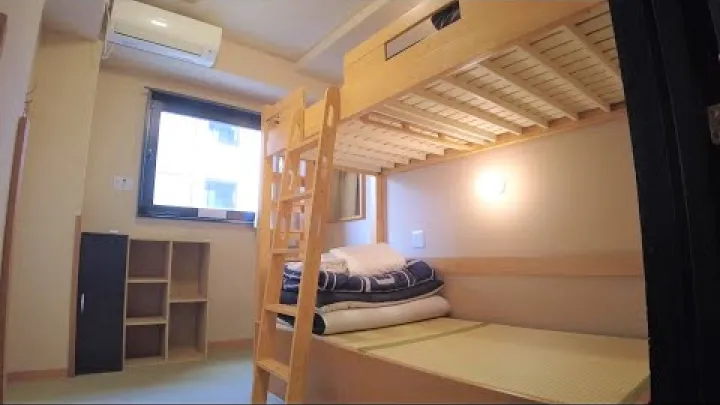
A recent Hostelworld listing snapshot showed dorms from €21.22 and private rooms from €22.04, while one listed property showed a rate from ¥6,000 per night. These figures from Hostelworld illustrate the difference between a starting listing and a normal trip price. A lowest advertised rate may apply to only one room type or a limited date. Availability, booking conditions, and property quality can change the final choice.
Private hostel rooms cost more than dorm beds but can be competitive for two people. If a private room costs ¥12,000 and two travelers share it, the accommodation allocation is ¥6,000 per person. Compare that result with two separate dorm beds, and consider whether the private bathroom, storage, quiet, and cancellation terms justify any difference.
Business Hotels, Mid-Range Rooms, and Short-Term Rentals
A practical planning frame for a business hotel or mid-range private room is roughly ¥10,000–¥25,000 per night for the room. Smaller rooms near a less central station may sit toward the lower end, while a larger room, a stronger location, a busy date, or a higher service level can move toward the upper end. A private room near Shinjuku, Shibuya, Ginza, or Tokyo Station may save commuting time, but its room rate is not automatically the best value.
Business hotels are often useful when you want a private bathroom, predictable check-in, and a compact room close to a station. Short-term rentals may offer more space, a kitchen, laundry facilities, or sleeping arrangements for a family. A supplied Airbnb snapshot displayed average figures ranging roughly from $80 to $113 across dates near the end of 2025. Use such figures only as a broad illustration because cleaning, service, and booking fees may sit outside the headline nightly amount.
Compare the full stay rather than only the nightly number. Check room size, bathroom privacy, kitchen access, laundry, station distance, cancellation terms, and all listed fees. A rental that is slightly more expensive per night may reduce restaurant spending for a couple or family with kitchen access, while a cheap room far from the itinerary may add transport and time costs.
Seasonal and Weekly Accommodation Variation
Tokyo room prices can change sharply with demand. Weekends, cherry blossom periods, autumn foliage, Golden Week, New Year, and major concerts or sporting events can reduce the supply of low-priced rooms. A room that fits a weekday budget may not be available at the same rate on Friday and Saturday nights.
For fixed dates, reserve the room type and location that fit your full itinerary, then compare the total nightly price shown for the exact stay. Include all listed fees and pay special attention to weekend nights, holidays, and major events. For flexible dates, compare a weekday-heavy stay with a weekend-heavy stay and consider moving the trip by one or two days. That change can matter more than trying to save a small amount on every subway ride.
If your dates are flexible, compare central and less central properties before deciding that a lower room rate is a true saving. If your dates are fixed, protect the accommodation budget first because the cheapest options may disappear while you are comparing small differences in food or transport.
Food Prices in Tokyo
Food is one of the most flexible parts of a Tokyo budget. You can eat economically at convenience stores and quick-service restaurants, or spend much more through cafes, drinks, izakaya meals, specialty restaurants, and premium dining.
Convenience Stores and Low-Cost Everyday Meals
7-Eleven, FamilyMart, and Lawson provide widely available choices for a low-cost breakfast, lunch, snack, or late meal. Prepared rice dishes, sandwiches, salads, noodles, onigiri, coffee, and bento make it possible to control spending without cooking. Convenience stores are especially useful on arrival days, early mornings, or days when you want to spend more on an attraction.

Recent Tokyo convenience-store examples include grilled pork with ginger bento and hamburger steak bento at about ¥659 each, and omelet rice at about ¥724. The Just Gone Wandering examples are useful anchors, but products, locations, and later price changes can affect the amount. A low-cost day might combine onigiri and coffee for breakfast, a bento around ¥659–¥724 for lunch, an inexpensive ramen or rice-bowl dinner, and limited drinks or snacks. With careful choices, that pattern can fit near the lower food allowance of ¥2,000–¥3,000 per day.
Eating every meal at a convenience store is not necessary. Use one store meal when it is convenient, then choose a local ramen shop, gyudon restaurant, curry shop, or casual cafe for another meal. This approach keeps the daily total flexible and lets you experience different types of Tokyo food.
Casual Restaurants, Cafes, Drinks, and Izakaya
Many standard ramen meals fall around ¥800–¥1,200, although extra toppings, larger portions, and specialty shops can push the bill higher. Casual soba or curry meals may range from approximately ¥1,500–¥3,000 depending on the restaurant and order. A casual dinner often costs about ¥3,000–¥6,000 per person when the meal includes more dishes or a higher-priced setting.
The meal price is not always the evening price. Coffee, beer, desserts, extra toppings, and multiple drinks can move a moderate food budget toward its upper end. At an izakaya, several small dishes may look inexpensive individually, but the total can rise as the group adds food and drinks. Decide whether your budget is for food only or for the complete restaurant bill.
These ranges describe ordinary casual dining, not premium sushi, omakase, Michelin restaurants, or a nightlife-focused itinerary. If those experiences are important, create a separate allowance rather than expecting them to fit the standard daily food range.
Food Budgets by Travel Style
- Strict food budget: ¥2,000–¥3,000 per day. Combine a convenience-store breakfast, an inexpensive lunch such as a bento or quick-service bowl, and a basic dinner. Limit alcohol, desserts, and unplanned snacks.
- Mixed casual style: ¥4,000–¥6,000 per day. Have a low-cost breakfast, a ramen or curry lunch, and one casual restaurant meal. This leaves some room for coffee or a small treat.
- Frequent restaurant style: ¥6,000–¥12,000 per day. Allow for cafes, desserts, drinks, casual dinners, and occasional izakaya spending. Premium dining and heavy nightlife need a separate budget.
Food can also be used to balance the rest of the trip. A convenience-store breakfast and affordable lunch may fund a paid attraction or a better dinner. Conversely, travelers who plan food as a central part of the experience should increase the daily total instead of treating restaurant spending as an exception.
Local Transport Costs in Tokyo
Tokyo's rail and bus network gives most visitors several ways to move around the city, but the cheapest option depends on the number of rides, the operators used, and how concentrated the daily itinerary is. A public-transport allowance of about ¥700–¥1,500 per day works for many visitors, but it is not a fixed fare.
Single Fares on Tokyo Metro and Local Buses
Individual fares are often simplest on days when you visit one area and make only a few journeys. The following figures are indicative planning amounts:
| Operator or service | Indicative fare | Budget use |
|---|---|---|
| Tokyo Metro | Approximately ¥180–¥330 per journey | Useful for cross-city subway trips |
| Toei buses | Approximately ¥210 for an adult ride | Useful for local surface travel |
| JR East and private railways | Route-dependent | Keep outside a Metro or Toei-only estimate |
The final Tokyo Metro fare depends on distance. JR East and private railway journeys are separate fare components, even when they connect conveniently with the subway. A day built around walking in Asakusa, Ueno, or a single neighborhood may cost less than a day that combines Shibuya, Tokyo Station, Ota, and an outer district.
When a Subway or Bus Pass Saves Money
The Tokyo Subway Ticket is listed at ¥1,000 for 24 hours, ¥1,500 for 48 hours, and ¥2,000 for 72 hours. These options cover the participating Tokyo Metro and Toei Subway network rather than every train or bus in Tokyo. A Toei Bus One-Day Economy Pass example is ¥500.
Use a simple break-even calculation. If your planned subway journeys would average about ¥250 each, four rides equal approximately ¥1,000, so a 24-hour ticket may break even at four rides and begin saving on the fifth. If your journeys are closer to ¥180, you need more rides to reach the same total. For the 48-hour and 72-hour tickets, add the expected single fares across the full validity period rather than assuming the daily ticket is automatically cheaper.
A ¥500 bus pass can be worthwhile after several bus rides; three rides at an indicative ¥210 each would total about ¥630. It is less useful on a day with one short bus trip and extensive walking. Before buying any pass, match every planned ride to the pass's covered operator and lines, then compare the covered fares with the ticket price.
The Japan Travel fare examples provide a starting point for this comparison. Use the itinerary, not the existence of a pass, as the reason to buy one.
Taxis, Longer Journeys, and Transport Budget Limits
Many visitors can plan around ¥700–¥1,500 per day for ordinary public transport, especially when sightseeing is grouped by area. The allowance can rise with frequent cross-city travel, private railway use, late-night journeys, or repeated trips back to the hotel. Taxis should be treated separately because even one ride can exceed the cost of several ordinary subway journeys.
Keep a separate transport checklist with these line items:
- Local Tokyo Metro, Toei Subway, JR, and private railway fares.
- Airport access to and from your accommodation.
- Taxis, late-night transport, or private transfers.
- Day-trip transportation outside the core Tokyo plan.
- Shinkansen or other intercity rail between cities.
Do not hide airport transfers, a long day trip, or intercity rail inside an average daily subway allowance. Separating them shows whether a low accommodation rate is still worthwhile after access costs are added.
Tokyo Attractions and Entertainment Costs
Tokyo can support very inexpensive sightseeing because many memorable areas, parks, shrines, and neighborhood walks do not require an admission ticket. The budget changes when you add theme parks, digital-art venues, special exhibitions, guided experiences, or several paid attractions on consecutive days.
Free and Low-Cost Sights
Build low-cost days around places where the main experience is walking and observing the area:
- Shrines and temples: Meiji Jingu and Senso-ji can anchor a cultural sightseeing day.
- Parks: Ueno Park and Yoyogi Park provide open spaces that can be combined with nearby neighborhoods.
- Neighborhood exploration: Shibuya Crossing, Harajuku, Akihabara, and Ginza can be explored with spending focused on food, transport, or shopping rather than admission.
- Low-cost cultural stops: A museum or small exhibit can add a modest paid activity without creating a premium-attraction day.
Free admission does not mean a completely free day. You may still pay for transport, food, lockers, optional exhibits, observation points, or purchases. A walking route linking nearby sights can reduce fares and create a strong budget day, while an attraction in another part of Tokyo may add both admission and cross-city travel.
Paid Attraction Price Examples
Recent price examples show how wide the attraction range can be. Ueno Zoo is approximately ¥600 for general adult admission, with different prices for some age groups. teamLab Borderless starts from approximately ¥3,800 for adults. Tokyo Disney Resort examples include approximately ¥8,900 for a standard one-day adult passport and ¥15,300 for a listed park-hopper option.
| Attraction | Indicative example | Budget effect |
|---|---|---|
| Ueno Zoo | About ¥600 for general adult admission | Accessible paid activity |
| teamLab Borderless | From about ¥3,800 for adults | Premium digital-art experience |
| Tokyo Disney Resort | About ¥8,900 for a listed one-day adult passport | Can dominate a daily activity budget |
| Listed park-hopper option | About ¥15,300 for an adult example | Major one-day splurge |
Ticket examples are date-sensitive and may differ by ticket type, age, availability, or reservation rule. Before purchase, use the official attraction operator page to confirm the current price for your date, whether advance booking is required, and what the ticket includes. The Tokyo Disney Resort ticket page illustrates why the exact ticket category matters.
Build Activity Costs Around One or Two Splurge Experiences
For mostly free sightseeing, allow approximately ¥0–¥2,000 per day for activities. A mixed paid-attraction style may need ¥1,000–¥4,000 per day, while frequent premium activities can require ¥3,000–¥10,000 or more. These are activity allowances only; food inside a venue, transport, merchandise, and upgrades are separate.
For a seven-day itinerary, one balanced allocation could include four mostly free days, two moderate paid-attraction days, and one premium experience. The four free days might use parks, shrines, temples, and neighborhood walks. The moderate days could include Ueno Zoo or another low-cost venue. The premium day could be teamLab Borderless or Tokyo Disney Resort, depending on your priorities. This approach prevents the highest ticket price from being applied to every day of the trip.
Plan the attraction calendar before finalizing the daily budget. A premium day may also require more transport, food purchased inside the venue, and optional merchandise. Treating those as separate lines makes it easier to choose one major experience while keeping the rest of the week affordable.
How Tokyo Costs Vary by Location and Regional Base
Where you sleep changes both the room price and the time and transport needed to reach your planned sights. Tokyo is not one uniform price area, so compare the total cost of a base rather than assigning one budget label to the entire city.
Central Wards, Residential Districts, and Outer Bases
Popular bases include Shinjuku, Shibuya, Ginza, Tokyo Station, and Asakusa. They can offer strong access to major sights, restaurants, and transport connections, but demand and property type affect prices. Less central options include Nishikasai, parts of Ota or Itabashi, and western suburban locations. These may provide more space or a lower room rate, although the result depends on the exact property and dates.
| Base type | Typical appeal | Budget trade-off | May suit |
|---|---|---|---|
| Central areas | Close to major districts and dining | Potentially higher room rates | Short stays and busy itineraries |
| Asakusa and nearby areas | Cultural sights and neighborhood atmosphere | Balance of access and property choice | First-time visitors and moderate budgets |
| Residential districts | More local setting and possible space | Longer journeys to some attractions | Longer stays and value-focused travelers |
| Outer bases | Potentially broader accommodation choice | More time and fares for cross-city plans | Flexible travelers with area-based plans |
Staying one or two train stops away from a high-demand station can reduce the room rate without making sightseeing impractical. The saving is strongest when your itinerary is concentrated in one part of Tokyo. If you plan to move across the city every day, the additional fares and commute time may reduce the advantage.
Tokyo Compared With Other Japanese and Kanto Bases
Tokyo is generally more accommodation-sensitive than many smaller cities and rural areas because central demand is high and private rooms can be compact and expensive. Everyday food and regulated local transport may show a smaller difference than lodging, especially when you use convenience stores, quick-service restaurants, and ordinary train fares. Premium attractions can also make Tokyo feel expensive even when an individual meal is modest.
When comparing Tokyo with another Japanese or Kanto base, do not compare room rates alone. A rural or resort property may have a lower nightly price but require a rental car, longer rail journey, or paid activity to make the trip work. A smaller city may be cheaper overall, but it may not provide the same concentration of sights that lets you walk between several attractions.
Use nationwide budget tables as context rather than as a direct Tokyo quote. The important question is whether the lower room price remains lower after access costs, fewer transport options, different activity prices, and the time needed to reach the places you want to visit.
Choose a Base by Total Cost, Not Room Rate Alone
Use this simple comparison formula for each possible base:
- Nightly accommodation cost multiplied by the number of nights.
- Expected daily fares for the planned attractions.
- Airport access and any unavoidable long journeys.
- Walking access to restaurants, stations, and the first attraction of the day.
- Commute time and the value of losing time to reach central districts.
For example, a solo traveler may compare a ¥6,000 dorm in a residential district with a ¥7,500 dorm closer to Shibuya. If the central option removes several daily fares and makes it easier to walk between planned sights, its higher nightly rate may be justified. The best choice depends on the itinerary, not only on the room price.
A couple might compare a ¥12,000 private room in Asakusa with a ¥10,000 room farther out. The Asakusa room costs ¥6,000 per person, while the outer room costs ¥5,000 per person before transport. If the couple spends more on fares and returns late from central attractions, the ¥1,000 per-person room saving may be partly or fully offset. Group size, private-room needs, kitchen access, and the concentration of sightseeing should all be included in the calculation.
Money-Saving Tactics for a Tokyo Trip
The most effective Tokyo money-saving tactics focus on large, repeated costs first. Once accommodation and major activities are under control, adjust food and transport choices without making the trip unnecessarily restrictive.
Cut the Biggest Costs First
- Compare accommodation dates and room types. A weekday stay, a shared room, or a less central base can affect several nights at once.
- Compare the full stay total. Include the number of nights, the room's occupancy, listed fees, station access, and likely local fares.
- Choose premium experiences deliberately. Reserve room in the plan for one or two high-cost attractions rather than allowing several expensive tickets to appear by accident.
- Group sightseeing by area. Shorter journeys reduce both fares and the temptation to add taxis when the schedule becomes tiring.
- Adjust meal patterns after the large costs are known. Use affordable breakfasts and lunches when needed, but keep money for the food experiences that matter most to you.
These choices do not all depend on availability. A planned activity allowance and area-based itinerary are decisions you control, while a low room rate depends on dates and supply. Make the reliable decisions first, then search for the best available room within that framework.
Balance Free Sights, Affordable Meals, and Paid Highlights
A low-cost Tokyo day could combine Meiji Jingu or Yoyogi Park with a walk through Harajuku, an affordable lunch, and an evening around Shibuya Crossing. Another day could pair Senso-ji with Asakusa streets and a modest restaurant meal. These plans keep admission spending near zero while still providing distinct experiences.
A splurge day should be planned rather than treated as a failure of budgeting. For example, choose one premium attraction, keep breakfast affordable, decide in advance whether you will buy food inside the venue, and avoid adding an unplanned taxi or expensive evening meal. The rest of the week can use free sights, parks, neighborhood walks, and a mix of convenience-store and casual restaurant meals.
Transport passes also fit this balancing method. Use a pass on a day with enough covered subway or bus rides to exceed the individual fares. On a slow walking day, individual fares may be simpler and cheaper. The aim is not to use every discount product; it is to match each choice to the day's actual plan.
Make a Yen-Based Budget Before You Book
Create the worksheet in yen and separate regular daily costs from one-off expenses. A reusable format can look like this:
| Category | Quantity | Price in yen | Subtotal | Notes |
|---|---|---|---|---|
| Accommodation | Number of nights | Nightly room or bed rate | Quantity multiplied by price | Room sharing and listed fees |
| Food | Number of days | Daily food allowance | Quantity multiplied by price | Restaurants, drinks, and snacks |
| Local transport | Days or planned rides | Fare or pass price | Estimated total | Metro, Toei, JR, and private lines |
| Activities | Tickets or activity days | Price per person | Estimated total | Free days and premium days |
| Flights and access | Travel segments | Current quote | Estimated total | International flights and airport transfers |
| Intercity travel | Rail or other journeys | Current quote | Estimated total | Keep outside the local daily budget |
| Discretionary spending | Trip allowance | Personal limit | Chosen total | Shopping, insurance, and extras |
Track the number of hotel nights, paid attractions, restaurant meals, and high-cost transport days instead of relying on one daily average. Use a conservative exchange-rate assumption when planning in your home currency, and keep a separate buffer rather than reducing the yen budget to an unrealistically precise conversion. Replace planning estimates with the current prices for your exact dates when you are ready to book.
Tokyo Budget: Key Takeaways
- Plan approximately ¥8,000–¥15,000 per person per day for budget travel, ¥15,000–¥25,000 for mid-range travel, and ¥25,000 or more for comfortable travel.
- Accommodation is usually the largest variable, especially in central areas and during busy dates.
- Food can range from ¥2,000–¥3,000 per day with careful choices to ¥6,000–¥12,000 for frequent restaurants, cafes, drinks, and desserts.
- Many Tokyo sights are free or low-cost, but one theme park or premium attraction can change the total for the entire day.
- Keep flights, airport access, taxis, day trips, intercity rail, shopping, and insurance outside the basic local daily estimate.
- Choose your base, meals, transport products, and paid attractions according to the complete itinerary rather than the lowest individual price.
A strong Tokyo budget is flexible rather than minimal. Set the main plan in yen, protect the accommodation and major-activity allowances, then balance free sightseeing and affordable meals around the experiences you value most.
Select area
Create a post
Posting is free and no registration is required.