Beijing Travel Guide: Planning Your First Visit

Beijing is a large capital with an imperial core, traditional hutongs, modern business districts, extensive public transport, and major sights that require different kinds of planning. A successful first visit depends less on fitting in every landmark than on choosing the right entry route, season, neighborhood, and daily clusters. This Beijing travel guide explains how long to stay, where to base yourself, how to move between the airports and central districts, what to prioritize, and how to prepare for costs, payments, safety, and health. Use it as a structured starting point before moving on to more detailed accommodation, transport, or activity planning.
Plan Entry, Timing, and Trip Length Before You Go
Entry requirements and trip length shape every later decision. Confirm the legal conditions first, then choose a pace that allows time for both Beijing’s best-known landmarks and the practical reality of crossing a very large city.
Choose Between a Standard Visa and Visa-Free Transit
Ordinary visa entry and visa-free transit are different pathways. The suitable option depends on your nationality, passport, route, onward destination, intended activities, planned length of stay, and the places you are permitted to visit. A transit exemption is not a general substitute for a visa, and it may require a qualifying arrival from one country and onward departure to another. The fact that a traveler has a ticket to Beijing does not by itself establish eligibility.
Beijing Capital International Airport and Beijing Daxing International Airport are important local gateways, but the airport you use does not remove the need to meet the relevant entry conditions. Before booking, read the latest official immigration guidance for your passport and itinerary, and ask the airline to confirm that your documents will support check-in and boarding. Check the permitted area, stay period, passport validity or other document conditions, onward-ticket requirements, and any restrictions on changing the route after arrival. The Beijing Municipal Government visitor information is a useful city-level starting point, but official immigration guidance and the airline remain more important for your individual case.
Do not rely on an old reference to a 72-hour or 144-hour policy when a current rule may use different wording or a different duration. Third-party travel summaries can help explain a process, but they are not definitive. Keep a copy of the relevant approval, booking details, and onward itinerary accessible during travel, and allow time for questions at check-in or immigration.
Match Your Trip Length to Your Priorities
Beijing rewards a slower pace, but even a short visit can work if you group sights carefully. Use your arrival and departure times, airport choice, season, mobility, and tolerance for long journeys to decide how much to include.
| Trip type | Good focus | Pacing decision |
|---|---|---|
| Short stopover | Imperial core and one nearby historic or hutong area | Choose central priorities and avoid adding a distant Great Wall visit unless transport time clearly fits |
| Balanced first visit | Central landmarks, one Great Wall outing, hutongs, parks or museums, and one modern district | Leave space between major sites instead of scheduling every hour |
| Slower exploration | Historic districts, several cultural venues, parks, contemporary neighborhoods, and a more flexible Wall day | Use weather and energy levels to decide the order of outdoor and indoor activities |
A short stopover should normally center on the imperial core and one nearby neighborhood. A roughly week-long first visit gives you more room to combine the Forbidden City, Tiananmen Square, the Temple of Heaven, a Great Wall section, hutongs, museums, and contemporary Beijing. A longer stay allows repeated visits to parks, markets, galleries, or neighborhood restaurants without treating every day as a checklist.
Arrival time matters as much as the number of nights. A late landing, an early departure from a different airport, or a hotel far from a subway station can remove useful sightseeing time. Build the first and last day around luggage, check-in, and airport transfer requirements rather than assuming they are full sightseeing days.
Prepare Documents and Arrival Information
Prepare a small travel file that separates travel-critical documents from convenience items. Legal requirements vary by nationality and route, so use the following as an organization checklist rather than a universal entry list.
- Travel-critical items: passport, applicable visa or transit documentation, onward itinerary, accommodation confirmation, and any documents requested by the airline or immigration authorities.
- Protection and records: travel insurance details, copies of the passport identification page, copies of entry documents, and a record of important bookings.
- Arrival information: the hotel’s full name, Chinese name if available, address in Chinese characters, telephone number, and a map pin or written directions.
- Emergency access: consular contact details, insurance assistance information, medical information, and a trusted contact at home.
Keep digital copies in a secure location and retain an offline copy in case mobile data, battery power, or an app is unavailable. Ask the accommodation provider about check-in requirements and local registration procedures. Hotels commonly manage guest registration as part of their normal process, while a private residence may involve different arrangements. Treat any registration or documentation statement as subject to current local rules and follow the instructions given by the accommodation provider.
When to Visit Beijing: Weather, Crowds, and Air Quality
There is no single best season for every Beijing itinerary. Outdoor-heavy trips benefit from comfortable conditions, while indoor cultural plans can make colder or hotter periods workable. Public holidays, school breaks, and changing air quality can affect the experience as much as the calendar season.
Spring and Autumn for Comfortable Outdoor Sightseeing
Spring and autumn are often favorable choices for walking-heavy sightseeing because they can offer a more comfortable balance between temperature and outdoor activity than the seasonal extremes. A seasonal comparison from China Highlights also identifies these periods as generally pleasant for visiting Beijing.
These seasons suit visits to the historic core, parks, hutongs, and the Great Wall. You can spend more time outside without making every stop dependent on shade or indoor heating. The main advantage is flexibility: a clear morning can support a long walk, while a museum or restaurant can be used as a natural pause later in the day.
Conditions still vary from year to year. Spring can bring changing temperatures and periods that are less comfortable for sensitive travelers, while autumn can coincide with popular travel periods and busy attractions. Check the dates of major public holidays and do not assume that a shoulder season guarantees empty sites, clear skies, or dry weather.
Summer and Winter Trade-offs
Summer can bring heat, humidity, strong sun, and a greater need to manage hydration and walking pace. These conditions are especially noticeable on exposed routes such as large squares, palace grounds, parks, and the Great Wall. Plan breaks, carry suitable sun protection, and avoid building every activity around the hottest part of the day.
Winter brings cold and wind, particularly on exposed sections of the Wall and during long outdoor walks. It may appeal to travelers who prefer a quieter atmosphere or who want to see historic sites in a different light. The trade-off is less daylight comfort for outdoor plans, so combine outdoor landmarks with museums, restaurants, or other indoor activities.
Choose between these seasons according to climate tolerance, crowd preferences, school or public holiday timing, and how much time you want to spend outside. Clothing should support layers and practical walking. Do not base the entire decision on an average temperature description; the forecast during your actual stay will be more useful.
Use Air Quality and Forecasts to Keep Plans Flexible
Air quality can change during a visit and may matter as much as temperature for outdoor sightseeing. Check current weather and air-quality information during the trip, especially before planning a long walk, a park visit, or a Great Wall excursion.
Use a simple decision rule: if outdoor conditions are comfortable, keep the planned landmark; if they are unfavorable, move an indoor museum, gallery, restaurant, or neighborhood activity forward and save the outdoor visit for a better day. This approach protects the quality of the trip without requiring you to cancel an entire itinerary.
Travelers with respiratory or cardiovascular conditions should use current medical and public-health guidance for their personal situation. Generic travel advice cannot determine whether a particular activity, mask, medication, or exposure limit is suitable for you. Pack any regular medication and make sure your travel companions know how to respond if you feel unwell.
Understand Beijing's Districts and Choose a Base
Beijing’s scale makes the location of your accommodation important. A hotel may be described as central while still being a long walk from a major attraction or a transfer from the most useful subway station. Choose a base by matching the neighborhood to your main priorities, not only by searching for the word central.
Use the Historic Core to Understand the City Layout
Use the Forbidden City and Tiananmen Square as the mental center of a first visit. Dongcheng and Xicheng contain much of the historic reference area, including imperial-era sites, traditional residential lanes, parks, and older commercial streets. This does not mean every attraction is close enough to walk from every hotel in those districts.

Beijing’s ring roads and broad radial avenues shape movement across the city. A route that looks short on a map can involve a large road crossing, a long station transfer, or a slow journey through busy streets. Hutong areas may also have narrow lanes that are easy to explore on foot but less convenient for taxis and large luggage.
Start by marking your non-negotiable sights, then look for accommodation near a practical subway station or within a manageable walk of the first daily cluster. A central base can reduce unnecessary cross-city journeys, but it is still worth checking the exact street, station entrance, hotel access, and nighttime route.
Wangfujing and Central Dongcheng for First-Time Sightseeing
Central Dongcheng, including the Wangfujing area, is a strong default for travelers whose first priorities are major historic sights, straightforward orientation, shopping, and a broad choice of dining. It can make the imperial core feel easier to organize, particularly for visitors who want visitor-oriented services and do not want to begin each day with a long cross-city transfer.
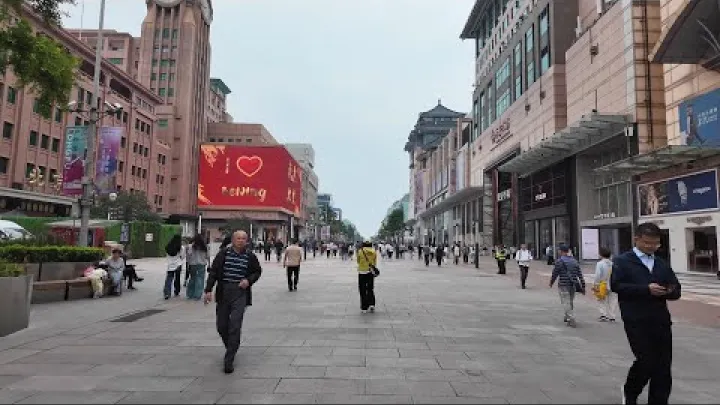
The trade-off is that convenience and central positioning can come with higher accommodation costs than less central areas. A busy shopping environment may also feel less residential or quiet. Compare properties by the actual walking route and nearest subway station rather than treating Wangfujing as one uniform area. Check whether the route involves a large avenue, a long underground passage, stairs, or a lane that is difficult with luggage.
This is a priority-based recommendation, not a universal answer. Travelers who value nightlife, a quieter lane, a modern business district, or a lower room rate may prefer another base even if they spend several days in Dongcheng.
Gulou and Shichahai for Hutong Atmosphere
Gulou, around the Drum Tower and Bell Tower, and the Shichahai area suit travelers who want traditional lanes, lakeside walks, small venues, and a neighborhood-focused atmosphere. A hutong is a traditional residential lane or network of lanes, often with low-rise buildings and a more intimate street scale than Beijing’s major avenues.
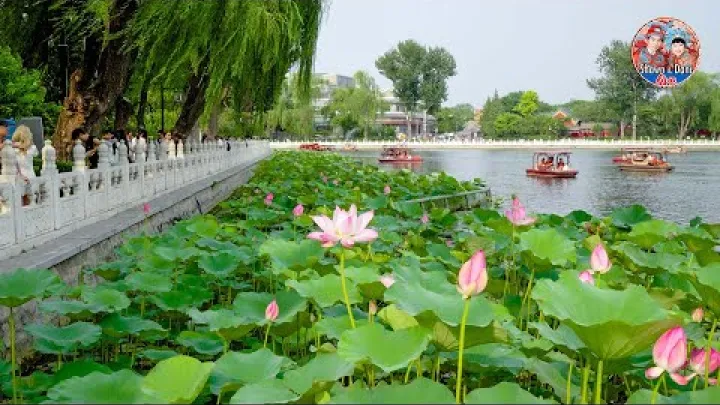
Accommodation in this area can include boutique hotels, hostels, and renovated courtyard properties. These choices may provide character and a pleasant walking environment, but check room size, sound insulation, bathroom facilities, luggage access, and the distance from a station. Narrow lanes can be difficult for a vehicle, especially during a late arrival or when carrying large bags.
Shichahai is useful for an evening walk or a slower morning, but do not assume that every lane is quiet or that every property has the same atmosphere. A visitor-information point or local tourism service may help with orientation, but availability and language support can vary. Confirm the service directly if you need it for a specific arrival or booking problem.
Sanlitun, Chaoyang, Qianmen, and Guomao for Different Priorities
Sanlitun and the wider Chaoyang area are better suited to contemporary dining, shopping, nightlife, international amenities, and some business trips. They can feel more modern and offer convenient access to offices or commercial areas, but they are not the most efficient base for a trip centered entirely on the imperial core.
Qianmen is another central option for travelers who want to remain near the historic sightseeing zone. Guomao is a modern, business-oriented base that may suit a work trip or a traveler who values contemporary hotels and commercial services over immediate access to older landmarks.
| Area | Main advantage | Main trade-off |
|---|---|---|
| Sanlitun | Contemporary dining, shopping, nightlife, and international amenities | Usually less convenient for a landmark-focused first visit |
| Wider Chaoyang | Modern services and access to business or commercial areas | Large distances can make historic sightseeing less efficient |
| Qianmen | Central position for travelers prioritizing historic areas | Busy streets and different hotel conditions from one block to another |
| Guomao | Modern business hotels, offices, and commercial facilities | Better for business or modern-city priorities than daily imperial sightseeing |
Use this framework when comparing areas: choose Dongcheng or Qianmen for historic proximity, Gulou or Shichahai for hutong atmosphere, Sanlitun or Chaoyang for nightlife and modern amenities, and Guomao for business access. Budget, quiet, accessibility, and transport can change the answer. The best area is the one that places your most important daily activities near a reliable route.
Getting to and Around Beijing
Beijing offers rail, subway, bus, taxi, and ride-hailing options, but convenience depends on the airport, arrival time, luggage, and hotel location. Plan the first transfer before departure and use the subway to connect major parts of the city when the route and operating hours fit your schedule.
Choose Between Beijing Capital and Beijing Daxing Airports
Beijing Capital International Airport and Beijing Daxing International Airport are the two main airport gateways. In many cases, airline schedules and route availability decide which one you use, so confirm the airport and terminal before planning the ground transfer. Do not assume that a hotel near one airport is convenient for the other.

Airport choice affects the length and type of the journey to your accommodation, especially if you arrive late, have heavy luggage, or need to continue to another city. It also matters for a transit itinerary: the airport, border process, permitted route, and onward departure must all fit the applicable entry conditions. Keep your arrival time and destination district together when comparing flights.
Before departure, save the airport name in English and Chinese, confirm the terminal shown on your booking, and identify at least one primary and one backup transfer option. The best airport is not universal; it is the one that matches the available flight and the practical route to your base.
Compare Airport Rail, Taxis, and Ride-Hailing
Rail-based airport transfers can provide a more predictable journey when the station and service hours suit your arrival. The Capital Airport Express is a relevant option for Beijing Capital International Airport, while the most useful rail choice for Daxing depends on the current airport and city connections. Check the current operator information for stations, service hours, fares, and any changes before relying on a particular route.
Road-based transport offers door-to-door convenience and can be easier for groups or travelers with substantial luggage. Use an official taxi stand at the airport or a recognized ride-hailing service. Avoid accepting unsolicited offers inside or outside the terminal. Show the driver the hotel’s Chinese name and address rather than relying only on an English pronunciation.
| Situation | Option to consider | What to check |
|---|---|---|
| Solo traveler with light luggage | Airport rail plus subway or a short final transfer | Station location, connections, and service hours |
| Group or heavy luggage | Official taxi or recognized ride-hailing | Vehicle size, destination address, and total cost shown in the service |
| Late arrival | Road transfer may be simpler than rail | Operating hours, pickup instructions, and a backup plan |
| Hotel far from a station | Door-to-door transport or a planned combination | Walking distance with luggage and the final road approach |
Use the Subway and Buses Strategically
The Beijing Subway is the main cross-city option for many visitors. It connects large parts of the central area and can make a distant district more practical when your hotel is near a station. Buses extend the network beyond rail stations, but route planning may require more Chinese-language preparation and more attention to stops and direction.
Allow time for station entry procedures, including security screening where required. Some route maps, machines, or information screens may offer English, but do not assume that every station, bus, or payment method provides the same level of support. Save the Chinese name of your destination and note the correct station exit when that information is available.
Plan around transfers and crowding rather than relying only on a map’s straight-line distance. The official Beijing Subway website provides current route and service information, including last-train details. Before leaving a distant district late in the day, check the final train for every part of the connection and identify a road-based alternative if the timing is uncertain.
Prepare Mobile Payments, Maps, and Offline Backups
Visitors should investigate payment options before arrival rather than assuming that one card or one app will work everywhere. Alipay, WeChat Pay, transit QR options, contactless bank cards, and cash may each be useful, but foreign-card support, identity checks, app procedures, and acceptance can change. Beijing should not be treated as completely cashless, and no single payment method should be your only backup.
Set up and test the intended mobile-payment method before your first journey. Also test mobile data, map searching, ride-hailing, and the display of your hotel address in Chinese. If a payment setup requires a bank-card link, verification step, or identity document, complete it early enough to solve problems before you are standing at an airport or station.
Keep offline copies of accommodation details, booking confirmations, transport notes, important destination names, and emergency contacts. Save both English and Chinese names for major places such as the Forbidden City, Tiananmen Square, the Temple of Heaven, Shichahai, and the Great Wall. These backups are useful when a connection fails, a map uses a different name, or a driver needs the local address.
Build a First-Time Beijing Sightseeing Plan
Beijing’s attractions are best organized in clusters rather than as a list of isolated stops. Build each day around one main area, then add a nearby walk, meal, park, museum, or neighborhood activity that matches your energy and the conditions.
Start with Imperial Landmarks and Central Sites
The Forbidden City, Tiananmen Square, and the Temple of Heaven form a strong historical foundation, but they offer different settings and require different kinds of planning. The Forbidden City presents a large palace and heritage complex. Tiananmen Square is an expansive central public space with a more formal political and security context. The Temple of Heaven offers a separate park and architectural setting connected to imperial ritual.
Plan these as related but separate stops rather than assuming that one ticket, one entrance, or one visit procedure covers all three. Opening hours, ticket availability, reservations, identification requirements, security procedures, and temporary closures can change. Read the current instructions for each attraction before assigning it to a fixed day, and keep booking names consistent with the identification document you will use.
A cluster-based plan reduces backtracking. Pair a central landmark with a nearby meal or slower walk, but do not measure the day only by the number of major sites completed. Large squares, palace grounds, and formal parks can require more time on foot than their position on a map suggests. Leave room for entry queues, security checks, rest, and an unplanned stop.
Balance Hutongs, Parks, Museums, and Contemporary Beijing
Beijing is more than its imperial monuments. A hutong walk around areas such as Gulou or Shichahai shows a smaller street scale and a different relationship between homes, shops, and public space. Parks provide a slower setting, while museums and galleries add indoor cultural time and can balance a day dominated by monumental architecture.
- Hutongs and lakeside areas: Choose these for walking, neighborhood atmosphere, photography of streetscapes, and a slower contrast to formal landmarks.
- Parks: Choose them when you want open space, a break from dense sightseeing, or a more local urban setting.
- Museums and galleries: Choose them for deeper cultural context, focused interests, or a change from outdoor attractions.
- Markets and shopping areas: Choose them for browsing, gifts, food, and an understanding of Beijing’s commercial life, while keeping spending and payment plans controlled.
- Modern districts: Choose areas such as Sanlitun or wider Chaoyang for contemporary dining, shopping, nightlife, and a view of Beijing beyond the historic center.
This mix suits different travelers. First-time history-focused visitors can add one hutong walk and one museum to the imperial core. Families or slower travelers may prefer parks and shorter neighborhood walks between major sites. Business travelers and repeat visitors may devote more time to contemporary districts and galleries. Limit specific venue commitments until you have checked current opening arrangements and access.
Treat the Great Wall as a Separate Logistics Choice
The Great Wall is a major highlight, but it should be treated as a separate logistics decision rather than a quick extension of central sightseeing. The gateway lies outside the main city pattern, so the excursion affects transport, departure time, return time, food planning, and the amount of energy available for the rest of the day.
Choose a Wall section according to available time, mobility, terrain tolerance, weather, transport preference, scenery, and crowd tolerance. A traveler seeking easier access may make a different choice from someone who prioritizes a quieter landscape or a more demanding walk. There is no single best section for every visitor, and a recommendation without your mobility and transport priorities can be misleading.
Leave buffer time for traffic, transfers, entry arrangements, weather changes, and the return journey. Verify current access, tickets, opening information, and transport conditions for the specific section you choose. A very short stopover may not fit a comfortable Great Wall visit, especially when airport transfers or an early departure are also part of the plan.
Estimate Typical Beijing Travel Costs
A Beijing budget is driven less by one average daily figure than by the combination of accommodation, location, season, transport choices, admission, food, and optional experiences. Plan categories separately so that a cheaper room does not hide higher transfer costs or a central hotel does not automatically appear unaffordable.
Understand the Main Budget Drivers
Accommodation is usually the most important variable. Room category, district, season, holiday demand, hotel facilities, and distance from major sights all affect the price. A central room in Wangfujing, Qianmen, or another high-demand area may cost more than a property farther out, but it can reduce daily transport time and the need for late road transfers. Compare the total travel pattern, not only the nightly rate.
| Cost category | What changes the cost | Planning question |
|---|---|---|
| Accommodation | District, room type, season, demand, and hotel standard | Will a cheaper base create extra transport or time costs? |
| Airport transfers | Airport, arrival time, luggage, and rail or road choice | Do you need door-to-door convenience or a rail connection? |
| Local transport | Subway use, bus use, taxis, ride-hailing, and cross-city distances | How many days require a long transfer? |
| Attractions | Admission, reservations, guided visits, and special activities | Which experiences are essential and which are optional? |
| Food | Local eateries, casual restaurants, international venues, and higher-end dining | Where will you eat most meals, and how much variety do you want? |
| Shopping | Gifts, clothing, specialty goods, and discretionary purchases | What spending limit will you set before visiting markets or shops? |
| Guided experiences | Private guides, group tours, transfers, and interpretation | Will help with language or logistics save enough time to justify the cost? |
For a lean travel style, prioritize a practical room, public transport, local meals, and a small number of paid experiences. A balanced plan can combine a central or well-connected hotel with a mixture of casual dining, selected admissions, and one major excursion. A comfort-focused plan may add a higher hotel category, more private transfers, guided visits, and flexible dining. These are useful planning tiers without pretending that one fixed amount represents every traveler.
Use a simple formula: accommodation for all nights, plus arrival and departure transfers, daily local transport, planned admission and guided activities, meals, shopping, and a contingency amount. Add the costs of airport changes or an overnight stay if your itinerary uses different airports or a long connection.
Budget for Food, Flexible Transport, and Contingencies
Meal costs can vary substantially between local eateries, casual restaurants, international venues, and higher-end dining. Decide whether food is mainly a practical daily need or a major part of the trip. Set aside room for both inexpensive meals and one or two meals that cost more than planned, especially in visitor-oriented or modern commercial areas.
Keep a contingency for a taxi or ride-hailing trip when weather, luggage, fatigue, or a missed connection makes the subway impractical. Other useful contingency categories include an attraction change, a delayed airport transfer, a replacement booking, a weather-related indoor activity, or an unexpected medical or communication cost.
Check current prices and payment acceptance close to departure. Link payment preparation to the budget by ensuring that at least one backup method can cover transport, food, and accommodation-related needs, but do not depend on a particular app procedure or foreign card feature without testing it.
Safety, Health, and Responsible Travel
Beijing is a highly organized major city, but visitors still need practical awareness. The most useful preparation covers crowded public places, misleading offers, political sensitivities, health needs, and a clear way to obtain help.
Handle Crowds, Scams, and Everyday Street Risks
Secure your passport, phone, wallet, and payment devices in crowded tourist sites, markets, stations, and public transport. Keep bags closed, avoid leaving valuables visible, and check your belongings after transfers or busy entry procedures. Use a copy of your passport for routine reference when appropriate, while keeping the original protected and accessible for situations that require identification.
Be cautious with unsolicited invitations, unfamiliar payment requests, or offers that move quickly from a public place to an expensive venue. If a new acquaintance or service provider pressures you to decide immediately, separates you from your planned route, or gives an unclear price, decline and continue with your itinerary. Confirm the price and destination before accepting a tour, transfer, meal, or shopping service.
Use recognized accommodation, transport, and tour providers. At airports, follow signs to official taxi areas rather than accepting a ride from someone who approaches you. For ride-hailing, match the vehicle and driver information shown in the service. These steps are simple precautions and do not require assuming that every unfamiliar person or neighborhood is dangerous.
Understand Political Sensitivities and Current Advisories
Beijing includes sensitive political and government spaces. Follow local instructions, do not interfere with security procedures, and be cautious about photography near protesters, police, government buildings, or security activity. Avoid demonstrations and large gatherings, and do not photograph protesters or police without permission.
Read the travel advisory issued by your own government before departure and during the trip because advice can differ by nationality and can change. The current Travel.State.gov advisory provides one example of official guidance that emphasizes avoiding demonstrations, exercising caution around large gatherings, and taking care with photography. Treat it as an example of the type of information to review, not as a universal substitute for your own government’s advice.
If a gathering or security operation affects your route, leave the area calmly and follow instructions. Do not speculate about local enforcement or political events based on social media posts. If a serious problem affects you, contact your consular service and accommodation provider using the details you saved offline.
Prepare for Health Needs and Emergencies
Travel insurance, regular medication, accessible medical information, and a plan for obtaining help are basic parts of a Beijing travel plan. Carry medication in its original packaging when possible, bring enough for the trip with a margin for delays, and keep a written record of generic names, allergies, and relevant conditions. If you use prescription medication, confirm any travel restrictions or documentation needs before departure.
Use current official health guidance for drinking water, food hygiene, vaccinations, and medical care. Travelers should make their own decision about water and food based on current advice, personal health, and the conditions of the accommodation and restaurant. Choose food and drinks from providers that appear clean and well-managed, and seek medical advice rather than trying to diagnose a serious symptom yourself.
If air quality affects your health, discuss suitable precautions with a medical professional and use current public-health information. Conditions and personal risk are different for every traveler, so a generic packing list cannot determine whether you should change activity levels or use a particular product.
Keep insurance assistance details, consular contacts, accommodation information, and relevant medical records in both digital and offline form. Ask your hotel how to obtain local help and learn the current emergency procedure for your location. Do not add an emergency number to your itinerary unless you have confirmed it through a current authoritative source.
Plan a Flexible, Well-Prepared First Visit
A good first Beijing trip starts with the correct entry pathway, a realistic number of days, and a base that matches your priorities. Spring and autumn may make outdoor sightseeing easier, but every season can work when the plan balances outdoor landmarks with indoor or neighborhood activities. Use the subway and airport options strategically, keep payment and address backups, and treat the Great Wall as a separate excursion rather than an automatic add-on.
Most importantly, leave room for the city’s scale, changing conditions, and your own energy. Check attraction access, transport details, current advisories, and prices at the point when they affect your decision, then build a flexible schedule around the Forbidden City, Tiananmen Square, the Temple of Heaven, hutongs, museums, modern districts, and the Great Wall according to the time you actually have.
Select area
Create a post
Posting is free and no registration is required.