Beijing Getting There: Flights, Trains and Arrival Tips

Getting to Beijing is not a single-route decision. International visitors usually compare Beijing Capital International Airport (PEK) with Beijing Daxing International Airport (PKX), while domestic travelers may find that a high-speed train is easier than a flight once station access and the final city transfer are included. Long-distance coaches and road travel remain useful for nearby cities and flexible itineraries. This guide compares the main ways to reach Beijing, explains which gateway fits different origins, and covers practical steps for continuing safely into the city.
Choose the Best Way to Get to Beijing
Start with your origin, intended Beijing district, luggage, arrival time, and tolerance for transfers. Beijing is being developed as an integrated transport hub, so the most convenient gateway may depend as much on the final connection as on the main flight or train journey. The Beijing Municipal Commission of Transport provides official government context for the city’s wider transport network.
Compare Flights, High-Speed Rail, Conventional Rail, Coaches, and Road Travel
The advertised journey time is only one part of the trip. For a flight, include travel to the airport, check-in, security, boarding, baggage collection, and the transfer from the airport. For rail, include the journey to the departure station, station security, and onward travel from the Beijing station printed on the ticket. A slower service can therefore be competitive when it starts or ends closer to where you are staying.
| Mode | Best suited to | Door-to-door profile | Cost and booking | Reliability and comfort | Main trade-off |
|---|---|---|---|---|---|
| Direct flight | International and long domestic journeys | Fast in the air, but airport procedures add time | Prices vary widely; airline booking is familiar | Comfort depends on route and airline; delays can affect connections | Airport access and final transfer |
| High-speed rail | Domestic city pairs with convenient stations | Usually a straightforward city-to-city journey | Class and date affect price; official booking is important | Often comfortable and predictable when seats are available | Several Beijing arrival stations |
| Conventional train | Longer routes, overnight travel, or lower-cost plans | Longer travel time, with possible hotel-night savings | Fare and berth type vary; availability matters | Useful for overnight travel, but comfort varies by berth | Slower journey and more limited convenience |
| Long-distance coach | Nearby cities and smaller towns with limited rail options | Direct in theory, but traffic can change the arrival time | Prices are often route-specific; information can be fragmented | Practical for some regional routes, less comfortable on long trips | Terminal location and traffic exposure |
| Road travel | Nearby origins, groups, luggage, or flexible itineraries | Flexible departure, but travel time is traffic-sensitive | Private hire and taxi costs depend on vehicle and distance | Door-to-door convenience; comfort depends on the vehicle | Traffic, legal requirements, and route uncertainty |
Use direct flights as the main option for many international journeys and for domestic origins where rail is inconvenient. High-speed rail is often attractive for domestic travelers because the stations are integrated with the city rather than located outside it. Conventional trains can suit an overnight itinerary, while coaches and road travel are mainly decisions about regional coverage and flexibility rather than maximum speed.
Match the Gateway to Your Starting Point and Itinerary
Choose the complete itinerary, not just the headline mode. A flight that looks shorter may require a long airport transfer at the origin and a cross-city journey after landing. A train may take longer on the timetable but save time if both stations are close to your accommodation or business destination.
- From Shanghai: compare flights with high-speed rail by checking the departure airport or station, the Beijing arrival station, and the location of your final district. Rail can be attractive when both city-center stations are easy to reach.
- From Tianjin: compare the intercity railway option with road travel according to your starting neighborhood and luggage. A short regional journey can be affected more by access and traffic than by the main line itself.
- From Northeast China: check whether the train arrives at Beijing Chaoyang or another assigned station. Flights may be preferable when the airport schedule or airline is clearly better for your itinerary.
- From central, southern, or southwestern China: compare flights with trains assigned to Beijing West, Beijing Fengtai, or another Beijing gateway. The final district can change the result.
- From overseas: compare direct services to PEK and PKX, including arrival time, airline, baggage rules, and the onward route. A connection between the two Beijing airports is a separate cross-city journey, not a simple airport transfer.
When a trip combines an airport arrival with a separate flight or train departure, allow time for baggage, immigration or security procedures, ground transport, and an alternative if the first service is delayed. The best gateway is usually the one with the strongest complete itinerary, unless another option offers a clearly better final-district or onward-rail connection.
Arriving by Air at Beijing Capital or Daxing
Beijing has two major passenger airports. Their codes should appear in your booking confirmation, because PEK and PKX are in different parts of the metropolitan area and should not be treated as interchangeable arrival points.
Beijing Capital International Airport (PEK)
Beijing Capital International Airport, commonly identified as PEK, is a major gateway for domestic and international flights. It may be the better choice when it offers the most suitable direct route, your preferred airline, a better arrival time, or a convenient position for a destination in northern or northeastern Beijing.
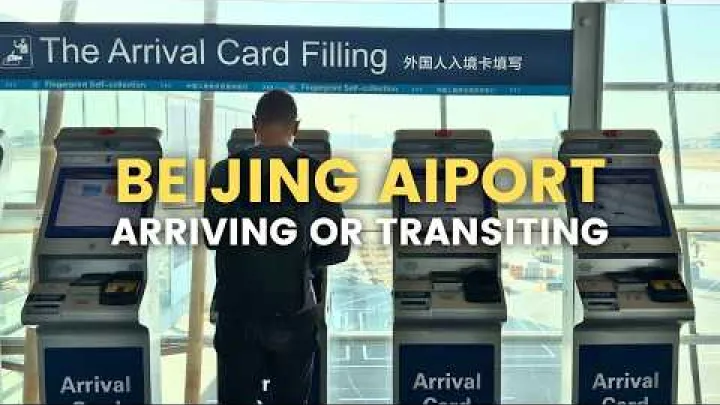
Do not infer the terminal, airline assignment, or route availability from an old travel guide. Match the airport and terminal information in your booking with the current passenger information from Beijing Capital International Airport. The airline booking remains the primary record for your flight, while the airport information helps with facilities and arrival planning.
PEK is not automatically the fastest airport for every part of Beijing. After landing, the total journey still includes baggage collection, the choice of airport rail, bus, taxi, or ride-hailing, and the final route to your accommodation. Compare those parts before choosing between otherwise similar flights.
Beijing Daxing International Airport (PKX)
Beijing Daxing International Airport, identified as PKX, is Beijing’s newer southern air gateway. It may suit travelers whose airline, fare, arrival time, final district, or onward railway plan fits the southern and western side of the metropolitan area.

The PKX Airport Express connects the airport with Caoqiao Station, which is an important local anchor when planning a rail-based continuation into Beijing. Travelers continuing toward western rail gateways may also need to consider how the airport connection relates to Beijing West Railway Station. These are separate parts of the itinerary, so do not treat an airport-to-station connection as automatic.
For current passenger facilities, services, and arrival information, use the official Beijing Daxing International Airport website. The airport code, airline confirmation, and actual arrival date matter when selecting a transfer, especially for a late arrival or a same-day train connection.
How to Choose Between PEK and PKX
Compare PEK and PKX using stable decision factors rather than assuming that one airport is always cheaper or quicker. A lower airfare can lose its advantage if it requires a difficult transfer to the final district, while a slightly more expensive flight may be worthwhile when its arrival time and onward rail connection are much better.

| Decision factor | PEK | PKX |
|---|---|---|
| Direct route | Choose it when the airline and flight time fit your origin | Choose it when its available service is better for your dates |
| Final district | May be convenient for northern or northeastern destinations | May be convenient for southern or some western destinations |
| Rail continuation | Compare the airport route with the location of your Beijing station | Consider Caoqiao and the onward route toward your station |
| Connection planning | Same-airport connections are simpler than crossing the city | Same-airport connections are simpler than crossing the city |
| Luggage and groups | Private ground transport may be easier for heavy luggage | Private ground transport may be easier for heavy luggage |
For a direct trip into Beijing, choose the airport with the better overall flight unless the alternative has a clear advantage for your final district or onward train. If you must change between PEK and PKX, treat the transfer as a substantial cross-city movement and build in a generous buffer. Confirm the airport codes before buying a connecting flight or a separate rail ticket.
Arriving by Train in Beijing
Rail is one of the most useful ways to get to Beijing from other parts of China, but Beijing does not have one universal central railway station. The station on your ticket affects the last part of the journey, so station selection is as important as the train type.
Know Which Beijing Railway Station Your Train Uses
Major Beijing railway gateways include Beijing South Railway Station, Beijing West Railway Station, Beijing Railway Station, Beijing North Railway Station, Beijing Fengtai Railway Station, and Beijing Chaoyang Railway Station. Their roles overlap in a large network, and assignments can change with the current timetable.
| Arrival station | Cautious route association | Why it matters |
|---|---|---|
| Beijing South Railway Station | Many eastern high-speed services | Useful for travelers whose final district has a convenient southern rail or metro connection |
| Beijing West Railway Station | Many central and southwestern corridors | Can be practical for western and southern destinations, depending on the onward route |
| Beijing Chaoyang Railway Station | Many services toward Northeast China | Its eastern and northeastern position can affect the final taxi or metro journey |
| Beijing Fengtai Railway Station | Routes assigned according to the current railway plan | Check the full station name instead of relying on a general search for Beijing |
| Beijing Railway Station | Selected conventional and other services | Its central location may be useful, but the train assignment must be checked |
| Beijing North Railway Station | Services assigned by the current timetable | Do not assume that a ticket for Beijing uses this station |
Use the full arrival station printed on the ticket, and save the station name in a form that can be shown to a driver or searched in a map application. This prevents a common mistake: arriving at one Beijing station while a hotel transfer, meeting, or onward ticket is planned from another.
Typical Rail Routes to Beijing
The Beijing–Shanghai corridor is a useful high-speed example for comparing rail with air. The Beijing–Tianjin intercity corridor is another regional example, while services from Northeast China often need to be compared with flights by looking at Beijing Chaoyang and other assigned stations. Routes from central, southern, and southwestern China may use Beijing West, Beijing Fengtai, or another station according to the current railway plan.

High-speed trains usually appeal to travelers who value a city-center departure and arrival, a fixed seat, and a journey that avoids airport procedures. Conventional daytime trains can be a lower-cost or more flexible alternative on some routes. Overnight trains with sleeper berths may reduce the need for a hotel night, but the longer journey and berth availability should be weighed against the value of arriving rested.
Train numbers, departure counts, journey durations, fares, and seat classes are date-specific. Use representative routes to understand the choices, but compare the complete journey: access to the origin station, station security, the Beijing arrival station, and the final transfer to your district. Rail is particularly attractive when both stations are more convenient than the relevant airports.
Book Beijing-Bound Trains Through 12306
12306 China Railway is the primary official reference for checking rail schedules, purchasing eligible tickets, and handling applicable changes or refunds. Third-party booking services can be convenient for some travelers, but they should not replace checking the official railway record.
A practical booking sequence is:
- Search the route using the correct departure city and travel date.
- Read the complete Beijing arrival station, not only the word Beijing.
- Choose the train, class, and seat or berth option shown for that date.
- Enter each passenger’s identity details exactly as required by the service.
- Review the passenger name, document information, train number, date, and arrival station before payment.
- Save the final ticket status and itinerary in a form you can access during the journey.
Foreign travelers should follow the latest 12306 instructions for accepted identity documents, name formatting, verification, payment, collection, changes, and refunds. Use the same passport or other accepted document details throughout the booking process. Popular travel dates and holiday periods can reduce availability, so a preferred departure time or seat class should not be assumed until the ticket status is confirmed.
Arrive by Long-Distance Coach or Road
Coaches and road travel are less uniform than flights and rail, but they can solve regional access problems. They are most useful when the origin is nearby, the town has limited rail service, or a group needs a flexible vehicle arrangement.
Use Long-Distance Coaches for Regional or Smaller-City Connections
Long-distance coaches remain relevant for some North China connections, nearby cities, and smaller towns that do not have a convenient high-speed railway service. They can also serve travelers whose origin is closer to a coach terminal than to a railway station. However, a coach should be evaluated as a regional solution rather than assumed to be a general replacement for high-speed rail.
Liuliqiao Passenger Transport Main Hub is a useful local name to recognize when researching coach departures, but its current destinations, operators, and departure arrangements should be treated as route-specific. Do not confuse a long-distance coach terminal with an airport shuttle bus: they may use different ticket channels, departure areas, and operating patterns.
Compared with rail, a coach may offer a lower-cost or more direct departure from a regional center, but traffic can make arrival less predictable. Before purchasing, identify the exact terminal, operator, destination wording, departure time, luggage rules, and ticket channel. Coach information is often more fragmented than railway information, so keep the terminal name and departure details with your itinerary.
Road Travel, Private Hire, and Self-Driving Limits
Road travel can make sense from nearby regions, for groups, or when travelers have substantial luggage and need a door-to-door arrangement. It is less predictable than rail because congestion, weather, road restrictions, and the exact pickup point can change the time of arrival. A private-hire vehicle may be more practical than self-driving when the traveler is unfamiliar with local roads or does not have the required documentation.
Separate the available services before booking:
- Licensed taxis: normally used for local or gateway-to-city journeys and paid under the applicable taxi system.
- Ride-hailing: booked through an approved platform with a designated pickup process.
- Intercity coaches: scheduled services using a defined terminal and operator.
- Private-hire vehicles: prearranged transport whose vehicle, driver, insurance, and payment terms should be clear.
- Self-driving: a separate legal and administrative question, not simply a matter of bringing a foreign license.
International visitors should not assume that a foreign driving license or an international driving permit alone authorizes self-driving in China. Before choosing this option, confirm current Chinese licensing, vehicle-entry, insurance, and registration requirements with an official authority. If those requirements are unclear, a licensed driver or public transport option is usually easier to plan.
Continue from the Gateway to Central Beijing
Reaching the airport or station is only the first stage. Central Beijing covers many districts, and the best last-mile option depends on the gateway, accommodation address, luggage, arrival time, and whether you prefer the lowest cost or the fewest transfers.
From PEK or PKX: Choose Rail, Bus, or Taxi
Airport rail is often the predictable budget choice, while an airport bus can be useful when it reaches a district closer to your accommodation. An official taxi or verified ride-hailing service is usually more practical for heavy luggage, several passengers, or destinations away from the rail network. No one option is best for every arrival.
| Option | Cost profile | Strengths | Limitations |
|---|---|---|---|
| Airport rail | Usually lower than a private car | Predictable route and useful for travelers near the rail network | Requires transfers and follows service hours; luggage can be difficult |
| Airport bus | Route-specific public transport cost | May provide a direct district connection | Traffic-sensitive and less useful when the destination is not on the route |
| Official taxi | Higher than public transport; depends on distance and traffic | Direct and practical for luggage or groups | Road time varies and the final destination must be communicated clearly |
| Verified ride-hailing | App quotation or route-specific price | Useful for a preplanned pickup and a precise destination | Requires phone access, correct pickup area, and driver coordination |
At PEK, the PEK Airport Express is the main named airport-rail anchor. At PKX, the PKX Airport Express to Caoqiao is the corresponding rail-based reference, with further travel needed for many districts. Buses can be more direct, but their value depends on the destination. Taxis and ride-hailing remove transfers but expose the journey to traffic.
For a late arrival, do not build the itinerary around the last airport rail or bus service without confirming that service for the actual arrival date. If public transport is no longer available, decide in advance whether an official taxi, verified ride-hailing pickup, or nearby overnight stay is the practical fallback. Allow extra time after an international landing for arrival procedures and baggage.
From Beijing Railway and Coach Stations to Your Final District
Beijing South, Beijing West, Beijing Chaoyang, Beijing Fengtai, and Beijing Railway Station serve different parts of the city. Liuliqiao Passenger Transport Main Hub also has its own relationship with the urban transport network. The final route should therefore be planned from the actual arrival station or coach terminal, not from a generic label such as Beijing city center.
The metro is often the economical choice when the station and accommodation are connected by a manageable route. A bus can work well when there is a direct service to the relevant district, but it may take more time to identify the stop and manage luggage. A taxi or ride-hailing vehicle is useful for large bags, several travelers, poor weather, or a destination far from the metro network.
Save the exact accommodation name, address, and any building or entrance information before leaving the gateway. This is especially important when the accommodation name has several English spellings or when a driver needs the Chinese address. Also consider the time of arrival: a metro route that is simple during the day may be less convenient late at night or after a long international journey.
Book and Verify Your Beijing Arrival Plan
Transport details in Beijing can be date-specific. Use stable planning principles for the initial choice, then confirm the operating details when you are ready to travel.
Check Current Routes, Schedules, and Service Changes
Use a final verification checklist for every separate part of the journey:
- Confirm the airport code, railway station, or coach terminal shown on the booking.
- Match the operator and route with the intended departure city and travel date.
- For flights, check the airline confirmation and the current PEK or PKX passenger information.
- For rail, check the 12306 record, train number, arrival station, passenger identity details, and ticket status.
- For coaches, check the relevant terminal or operator notice, including the actual departure location.
- Calculate the onward journey from the gateway to the accommodation district, including transfers and luggage.
- If separate tickets are involved, create a realistic backup for a delayed flight, missed train, or changed coach service.
Official airport websites, 12306, and the relevant coach operator or terminal notice are more useful for live details than a static travel article. Recheck the official airport, railway, or bus operator notice close to departure, particularly when traveling during a holiday, using a newly opened route, or combining different transport modes. Keep the final itinerary together so the arrival station and onward connection are easy to identify.
Avoid Arrival Scams and Reduce Late-Night Stress
Use the official taxi rank at an airport, railway station, or coach terminal, or use a ride-hailing pickup that is shown in the verified app and designated pickup area. Avoid unsolicited transport offers inside or outside the gateway. Where a taxi meter applies, check that it is being used and keep the receipt after the journey.
Before arrival, prepare the accommodation address, a working payment method, phone connectivity, and a fallback route. These simple steps reduce the need to negotiate transport while tired or carrying luggage. The goal is not to treat Beijing as inherently unsafe, but to keep the first city transfer controlled and easy to document.
Final Checklist for Getting to Beijing
A reliable Beijing arrival plan has three parts: the long-distance journey, the exact arrival gateway, and the last-mile route to the final district. Review the following before departure:
- Compare flights, high-speed rail, conventional trains, coaches, and road travel by total door-to-door time rather than headline duration.
- Record the exact airport code, railway station, or coach terminal in your itinerary.
- Check the final Beijing district before deciding whether PEK, PKX, a particular railway station, or a coach is more practical.
- Use the official booking record for flight, train, or coach details and confirm passenger identity information.
- Plan the last-mile route with the accommodation address, luggage, arrival time, and available public transport in mind.
- For late arrivals or separate tickets, keep a realistic backup that does not depend on an unconfirmed final service.
- At the gateway, use an official taxi rank or verified ride-hailing pickup and retain the receipt when applicable.
For most travelers, the best way to get to Beijing is the option that makes the whole journey simple: a suitable direct flight for long-distance or international travel, high-speed rail for a convenient domestic city pair, and a coach or hired vehicle when regional access makes those choices more practical.
Select area
Create a post
Posting is free and no registration is required.