Ayutthaya Best Time to Visit: Seasons and Monthly Weather

The Ayutthaya best time to visit is mainly a weather decision, because most of the city’s famous sights are open-air temple ruins. Ayutthaya Historical Park, Wat Mahathat, Wat Chaiwatthanaram, and riverside viewpoints are most enjoyable when rain is lower and the heat is less intense. This guide explains the best season, the months to approach with caution, and how to plan your days around heat, rain, crowds, and river conditions.
Quick Answer: The Best Time to Visit Ayutthaya
The Best Overall Window: Late November to February
The best overall time to visit Ayutthaya is usually from late November to February. This period generally brings the most comfortable conditions for outdoor sightseeing: lower rainfall, slightly cooler temperatures, and more reliable weather for walking between ruins, cycling, taking photos, or planning a boat ride around the island.
December, January, and February are especially strong choices for first-time visitors. November can also be excellent, but early November may still feel transitional in some years, with leftover rain or humidity from the wet season. If your travel dates are flexible, late November through January gives the strongest balance of comfort and predictability.
The main drawback is demand. This is part of Thailand’s popular travel season, so famous sites can feel busier and accommodation choices may tighten, especially around holidays. Even so, for most visitors, the weather advantage is worth the trade-off.
The Best Shoulder Choices for Fewer Crowds
If you want fewer crowds, consider late October, the edges of November, March, or June. These are compromise periods rather than perfect weather months. They can be useful if you prefer a quieter atmosphere or need more flexibility with travel costs, but savings are never guaranteed and depend on current bookings, holidays, and demand from Bangkok day-trippers.
Late October can be appealing because conditions often start improving, but it may still be affected by rain or high river levels. March is often drier, but the heat rises quickly and long outdoor days become harder. June is greener and often quieter, but showers become more regular and plans need flexibility.
The Least Comfortable Periods: April and Peak Monsoon
April is usually the hardest month for temple sightseeing in Ayutthaya because of extreme heat, strong sun, and humidity. It can still be culturally interesting, especially around Songkran, but it is not comfortable for long walks through exposed ruins.
September and early October are usually the least predictable months because they fall near the peak of the wet season. Heavy rain can disrupt cycling, outdoor sightseeing, and river activities. These months are not impossible, but they are better for flexible repeat visitors than for travelers who want the easiest first visit.
Why Ayutthaya’s Location Matters for Weather
A Low River City North of Bangkok
Ayutthaya is in Phra Nakhon Si Ayutthaya province in Central Thailand, north of Bangkok. The Tourism Authority of Thailand describes it as a major historic destination only about 86 kilometres from Bangkok, which is one reason it is popular for day trips as well as overnight stays.
The city sits on a flat river plain connected with the Chao Phraya River, Lopburi River, and Pa Sak River. This setting is part of Ayutthaya’s historic identity, but it also matters for travel planning. Humidity can feel high, many major ruins are exposed to direct sun, and low-lying riverside areas can be more sensitive during prolonged rain.
This does not mean Ayutthaya floods every rainy season. It means that wet-season visitors should pay attention to local conditions, especially if planning riverside walks, boat trips, cycling routes, or visits to sites near low ground.
Climate Averages Versus Live Weather Checks
Monthly climate averages are useful for choosing the best season, but they cannot tell you what will happen on your exact travel day. A dry month can still have a storm, and a rainy month can still offer clear mornings suitable for temple visits.
Before travelling, especially from March to October, check official forecasts and warnings from the Thai Meteorological Department. This is particularly important during hot-season periods, heavy-rain periods, or any time you are planning outdoor activities that depend on safe walking surfaces and river conditions.
Use averages for broad planning and live forecasts for daily decisions. If storms are expected, start earlier, reduce cycling time, keep transport flexible, and leave river activities for safer weather windows.
Season-by-Season Breakdown
Ayutthaya has three practical travel seasons: the cooler dry season, the hot season, and the rainy or green season. The differences matter because most sightseeing involves open-air ruins, brick paths, stone steps, limited shade, and time outside.
November to February: Cool, Dry, and Popular
November to February is the most comfortable season for walking, cycling, and temple-hopping in Ayutthaya. Rain is generally lower, skies are often clearer, and humidity is usually easier to manage than in the wet season. “Cool” here means cooler for Central Thailand, not cold. You should still expect warm daytime weather and strong sun.
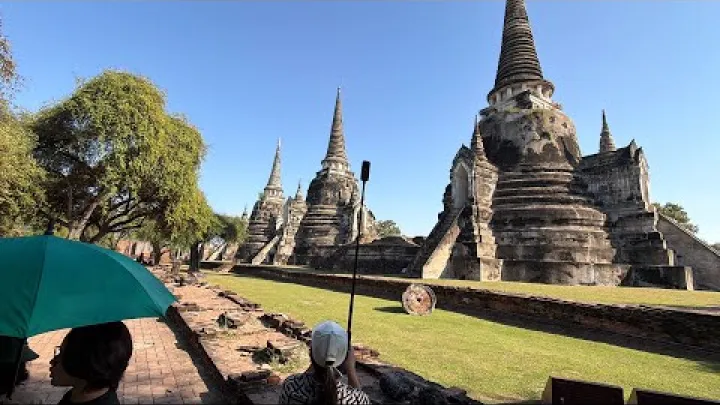
This is the best time for longer outdoor routes through Ayutthaya Historical Park, early visits to Wat Mahathat, and late-afternoon photography at Wat Chaiwatthanaram. It is also a good period for visitors who want to combine ruins, riverside views, and a relaxed meal without constantly adjusting plans around rain.
The trade-off is popularity. Day trips from Bangkok are common, and December to January can be busy. To improve the experience, start early, visit the most famous temples before midday, and save quieter or more spacious sites for the afternoon.
March to May: Hot, Humid, and Demanding
From March, heat becomes the main limitation. April is usually the most demanding month, and May often remains hot while humidity increases and showers become more likely. The challenge is not only the temperature. Sun exposure, reflected heat from brick and stone, and limited shade can make sightseeing feel harder than expected.

If you visit in this period, plan short outdoor blocks. Start near sunrise or early morning, rest indoors or in shaded places during the middle of the day, and return outside in the late afternoon. Carry water, wear a hat, use sun protection, and avoid trying to see every ruin in one continuous route.
Songkran in April can be culturally memorable, but it does not make the weather easier.
Travelers who want cultural atmosphere should balance that appeal against the physical challenge of sightseeing in extreme heat.
June to October: Rainy, Green, and Less Crowded
June to October is the rainy or green season. Ayutthaya can look lush and atmospheric, and some visitors enjoy the quieter mood. Rain does not usually mean that every hour of every day is unusable, but showers and heavy downpours become part of the planning.
Rain can interrupt cycling, make brick paths slippery, and reduce comfort at exposed ruins. Boat plans may also be affected by storms or changing river conditions. Mornings can still be useful, so a flexible schedule is more important than avoiding the season completely.
September and early October need the most caution. Rainfall is often heavier, and flood sensitivity is higher in the wider Chao Phraya basin. If you travel then, keep plans adjustable and check current weather and local access information before committing to river activities or long outdoor routes.
Month-by-Month Feel in Ayutthaya
Month-by-month climate summaries help you compare comfort, rain, and planning difficulty. Climate averages for Ayutthaya, including the tendency for April to be the hottest month, are reflected in data from Climate Data, but daily weather can still vary.
| Month | General feel | Planning note |
|---|---|---|
| January | Dry, sunny, relatively comfortable | One of the best months |
| February | Dry and warmer | Still excellent for ruins |
| March | Mostly dry, increasingly hot | Start early and rest midday |
| April | Very hot and demanding | Best avoided by heat-sensitive travelers |
| May | Hot, humid, more showers | Use flexible outdoor blocks |
| June | Greener, rainy-season start | Quieter but less predictable |
| July | Rainy but often manageable | Prioritize mornings |
| August | Humid, lush, frequent showers | Expect plan changes |
| September | Wettest and least predictable | Check warnings and access |
| October | Transitional, improving later | Early month can still be wet |
| November | Dry season begins, still green | Late month is especially good |
| December | Cooler, dry, popular | Excellent but busier |
January to March: Dry Weather, Rising Heat
January is one of the best months to visit Ayutthaya. Conditions are usually dry, bright, and relatively comfortable for long outdoor days. It is a strong choice for travelers who want to see several temple sites in one day without planning around frequent rain.
February is still excellent, but the heat starts to build. It remains a good month for walking, cycling, and photography, especially if you begin early. March is mostly dry in many years, but it feels much hotter. By March, pacing becomes more important than rain protection.
April to June: Extreme Heat and Monsoon Arrival
April is the hottest and most physically demanding month for many visitors. If you must visit then, keep your itinerary short and avoid exposed ruins during the middle of the day. Plan transport between major sites instead of relying only on walking or cycling.
May is still hot, with higher humidity and increasing showers. The discomfort comes from both heat and the start of wetter conditions. June brings greener scenery and can be quieter, but it also marks a more regular rainy-season pattern. It can work well for budget-minded or flexible travelers who accept weather uncertainty.
July to September: Regular Rain and Peak Wet Season
July is rainy but often manageable if you plan around mornings and keep the afternoon flexible. August is deeper into the monsoon, with lush scenery and frequent showers. For photographers or repeat visitors, the wet-season atmosphere can be rewarding, especially when skies clear after rain.
September is usually the most difficult month for first-time visitors because it is the least predictable. Paths can become muddy, brick steps can be slippery, and river conditions may change after heavy rain. If September is your only option, choose flexible bookings when possible and check official updates during the trip.
October to December: Improving Weather and High Season Return
October is a transition month. Early October can still feel wet and uncertain, while late October often begins to improve. Because river and ground conditions can lag behind rainfall, it is wise to check local access before planning low-lying or riverside activities.
November is a strong month as the dry season returns and the landscape may still look green from the rains. Late November is especially attractive for comfortable sightseeing. December is one of the coolest and driest months by local standards, making it one of the best choices overall. It is also popular, particularly around international holiday periods.
Best Time to Visit by Travel Style
The best month for Ayutthaya depends on how you want to experience the city. A visitor focused on cycling will value dry paths and lower heat, while a photographer may accept some rain for greener scenery and dramatic skies.
Temple Walks, Cycling, and Photography
For temple walks, cycling routes, and long photography days, December to February is the easiest period. The weather is usually more stable, and heat is less intense than in March to May. This makes it easier to spend time at Ayutthaya Historical Park, Wat Mahathat, and other open-air ruins without rushing.

In every season, early morning and late afternoon are the best times for light and heat management. Midday sun can be harsh, especially at exposed sites with brick, stone, and limited shade. If you are visiting on a day trip from Bangkok, consider choosing a focused route rather than trying to see every major temple in one day.
If you do not want to cycle, use a tuk-tuk, private vehicle, or a mixed walking-and-transport plan. The goal is to reduce unnecessary sun exposure while still leaving enough time to enjoy each site.
Festivals, Culture, and Atmosphere
November can be attractive when cultural events and improving weather align, but exact festival dates vary by year. Before planning a trip around a specific event, check current local announcements and accommodation availability.
The rainy season can also create a special atmosphere. Green grass, reflective surfaces, and dramatic clouds can make Ayutthaya feel quieter and more atmospheric. This suits photographers and repeat visitors better than travelers who need a predictable schedule.
Budget Travel and Fewer Crowds
The rainy season and hot season are often quieter than the cool dry high season. This can sometimes mean more accommodation options or better-value bookings, but lower prices are not guaranteed. Demand can still rise around holidays, events, or weekends.
June, July, and late October are relatively balanced options for travelers who want fewer crowds but do not want the most difficult conditions. September may be quieter, but it is not the easiest budget month because rain and flood sensitivity can complicate plans.
If you travel during rainy months, flexible booking terms can be valuable. Leave space in your schedule to move outdoor sightseeing to a clearer morning or to replace cycling with covered transport if conditions change.
Weather Risks and Practical Planning
Ayutthaya is not a difficult destination, but weather affects comfort more than many first-time visitors expect. Planning around heat, rain, footwear, and daily rhythm will improve your visit in every season.
Heat, Sun Exposure, and Midday Sightseeing
March to May can feel harder than the temperature alone suggests. Humidity, direct sunlight, and exposed ruins all increase fatigue. Many temple sites have open courtyards and limited shade, so even short walks can feel demanding during midday.
Start early, drink water regularly, wear breathable clothing, use a hat, and take long breaks in the middle of the day. If you are heat-sensitive, older, travelling with children, or not used to tropical climates, be conservative with your route. April deserves the most caution.
Rain, Slippery Ruins, and Flood-Prone Areas
Heavy rain can make brick steps, stone surfaces, paths, and unpaved areas slippery. This matters at temple ruins where surfaces may be uneven. Footwear with grip is more useful than dressy shoes, especially from June to October.

Ayutthaya’s river setting also means September and October deserve extra attention. The wider Chao Phraya basin has a history of significant flood events, and Flood & Drought Management Tools discusses the importance of learning to live with water in this floodplain context. For travelers, the practical point is simple: flood risk is seasonal and variable, so current official advisories matter more than historical averages during heavy-rain periods.
Do not assume the whole city will be affected every rainy season. Instead, check warnings, ask about local access, and be cautious with river activities, low-lying roads, and outdoor routes after prolonged rain.
What to Pack and How to Schedule Each Day
For the dry season, pack light breathable clothing, comfortable footwear, sunglasses, sunscreen, and a hat. For temple visits, bring clothing that allows modest coverage of shoulders and knees when needed.
For the hot season, add stronger hydration planning and longer rest breaks. Carry water, but also plan where you can stop, sit, and cool down. For the rainy season, bring a compact umbrella or light rain jacket, waterproof protection for your phone or camera, and shoes with good grip.
A simple daily rhythm works well in most months: visit major ruins early, rest indoors or in shade at midday, and return for a late-afternoon temple or riverside stop. In the rainy season, make the morning your priority and treat the afternoon as flexible.
Conclusion: When You Should Visit Ayutthaya
For most travelers, the best time to visit Ayutthaya is late November to February, with December and January offering the easiest balance of dry weather, lower heat, and comfortable outdoor sightseeing. February is also very good, while March is acceptable if you can manage rising heat.
Choose late October, June, or July if you want fewer crowds and can accept some uncertainty. Be cautious with April if you are sensitive to heat, and treat September to early October as the most flexible, weather-dependent period. With the right season and a smart daily schedule, Ayutthaya’s temples, rivers, and historic landscapes are far easier to enjoy.
Select area
Create a post
Posting is free and no registration is required.