Mrauk U Where to Stay: Best Areas and Lodging Guide
Mrauk U where to stay is a question that cannot be answered by hotel names alone. This small, dispersed archaeological town in northern Rakhine requires you to consider whether access is permitted, how you will reach the area, and whether a property is operating when you arrive. This guide compares the central market and former royal palace area, the temple belt around Shite-thaung and Htukkanthein, and quieter peripheral settings. It also matches lodging types to sightseeing, transport, budget, and longer stays, with a practical checklist for confirming a reservation.
Check Current Travel Conditions Before Choosing Where to Stay
In Mrauk U, deciding where to sleep comes after deciding whether the journey is appropriate and possible. Separate the country-level risk picture from the local accommodation question: a hotel listing cannot remove conflict, access, or consular limitations.
Use Official Advisories as the First Decision Gate
The U.S. Department of State advisory strongly urges U.S. citizens to avoid traveling to Burma, or Myanmar, and describes serious risks including unrest, armed conflict, and arbitrary enforcement. It also reflects the wider difficulty of obtaining dependable assistance in a changing environment. Travelers of other nationalities should read the advisory issued for their own passport rather than assume that another country's guidance or a recent traveler account applies to them.
A country-level advisory does not provide a precise forecast for every street in Mrauk U. It does, however, set the first decision gate. Anecdotal statements that the town is “safe for tourists” are not a substitute for official guidance, and a convenient guesthouse is not a mitigation for structural travel risks. Check the advisory's latest update date, geographic scope, and emergency guidance before making a booking. If it advises against travel, postpone rather than trying to solve the problem through a different neighborhood.
The same decision should include practical limitations. Consider whether your travel insurance responds to the destination, whether your consular service can provide meaningful assistance, and whether you could manage a delay without reliable communications or local medical support. These questions are not reasons to choose one hotel over another; they determine whether an accommodation search should proceed at all.
Decision gate: Research accommodation only if the latest official guidance for your nationality permits the trip and you understand the limitations on local services and assistance. If it does not, do not treat a refundable room as permission to travel.
Verify Entry Rules, Route Access, and Property Operation
Confirm three separate facts: whether foreign visitors can enter Mrauk U on your dates, whether registration or other permissions apply, and whether the road or river connection from Sittwe is operating. These facts are not guaranteed by an old blog, a map pin, or a booking page. Procedures described in earlier travel reports may have changed under political and security conditions.
Ask an up-to-date official or trusted local contact about entry and route access. Do not assume that a hotel can arrange permission, that registration is automatic, or that an earlier visitor's experience still describes the current process. The answer should cover the route you will actually use, not only whether Mrauk U appears on a map.
Then confirm the property itself. Contact the accommodation to establish that it is open, staffed, accepts foreign guests, and can receive you on the planned arrival date. Treat Agoda, other booking platforms, and social-media posts as leads until those points are confirmed. The correct order is permissions and route, then property operation, then neighborhood preference.
Understand Mrauk U's Visitor Geography
Mrauk U is a town and the administrative center of Mrauk-U Township in northern Rakhine State, but visitors should picture it as a low-rise settlement spread among archaeological remains rather than a compact hotel district. Wikipedia is useful for stable geographic orientation; it is not evidence that a route, temple, or hotel is currently accessible.
There are no dependable formal tourist districts to use as a substitute for checking a map. Compare properties by recognizable anchors: the central market, the former royal palace area, Shite-thaung Temple, Htukkanthein, and Koe Thaung. This approach is more useful than relying on broad labels such as “downtown” or “near the temples.”
Central Town, Market, and Royal Palace Area
The central town is the easiest base to understand on arrival. Use the central market as the everyday reference point for food, basic shopping, local orientation, and informal transport questions. The former royal palace area lies east of the market and is a useful cultural and map reference, although the remains should not be confused with a modern visitor center or proof that nearby accommodation is open.
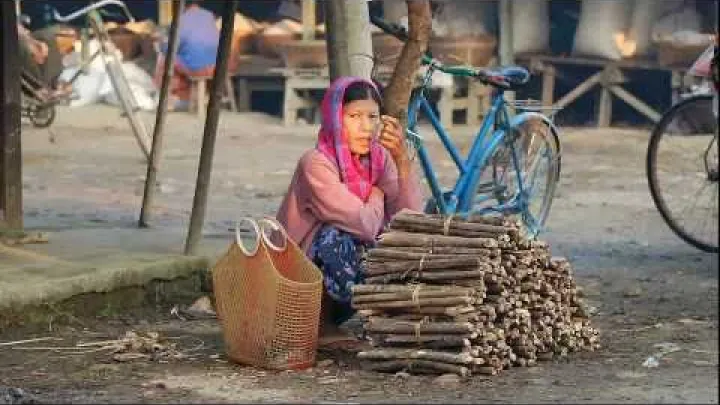
A central room usually trades direct temple proximity for better access to ordinary services. That can matter if you need to buy water, arrange a bicycle, find a meal, or ask about onward transport. The tradeoff is that the outer archaeological sites may require a bicycle, local vehicle, or hotel-arranged excursion rather than a short walk. Do not use a generic online walking time: compare the current property pin with Shite-thaung, Htukkanthein, and Koe Thaung, and ask locally about the route.
Central town should not be understood as one uniform zone. A room close to the market may offer a different evening experience from one toward the palace or the town-temple interface. When a listing is described as being in Nyaung Pin Zay quarter or on a small street such as Ah Hta Ka Shortcut Street, check the exact map position instead of judging from the neighborhood name alone. In a small town, a modest change in location can affect access to meals, the arrival road, and evening movement.
Temple Belt Around Shite-thaung and Htukkanthein
The main archaeological sights form a dispersed landscape. Shite-thaung, also written Shitthaung, Htukkanthein, and Koe Thaung are useful anchors for planning, but they do not define a fully separate tourist quarter with a complete set of services. A property that looks close to one monument may still be inconvenient for another.
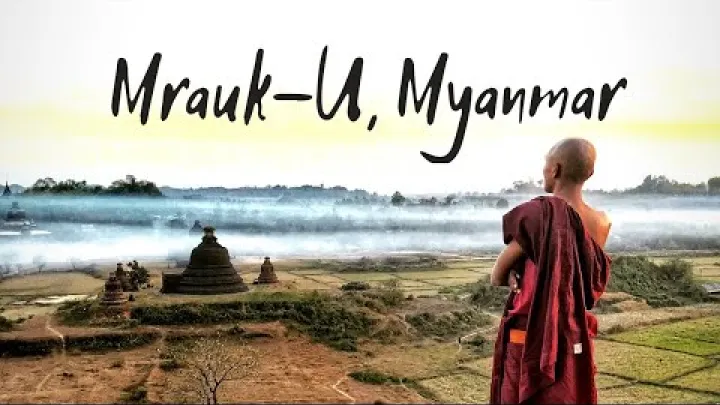
A verified stay near the town-temple edge can suit a traveler who wants dawn photography, repeated visits, or less daytime transfer. It may also feel quieter and more atmospheric than the market area. Those benefits come with tradeoffs: fewer independent places to eat, less convenient night movement, and greater dependence on the property's own dining and transport arrangements. Quiet should not be translated into safer; the available evidence does not support a universal neighborhood safety ranking.
For each temple-edge listing, check the location on a current map and ask which access road is usable by your vehicle or bicycle. Confirm whether the map pin is the actual entrance, whether the property can arrange pickup after arrival, and whether temple access rules or local conditions affect the visit. Monument locations are relatively stable; hotel geolocation and road conditions are not. Do not assume that a photograph showing one temple proves convenient access to the entire archaeological area.
Outskirts, Villages, and Riverside Areas
Settings beyond the town can include villages such as Laungbanpyauk and a broader landscape of fields, waterways, and the Kaladan River corridor. These places can work well as daytime excursions for travelers interested in the countryside and local life. They should not automatically be treated as better overnight bases simply because they are quiet or close to a map marker.
A peripheral stay can mean fewer restaurants, sparse or informal accommodation listings, limited transport after arrival, weaker communications, and a longer trip to the central market or other services. Those are concrete logistics, not a general label about the people or the area. A missed connection or a late arrival matters more when there is no nearby alternative meal, vehicle, or staffed property.
Peripheral locations may also make a short itinerary less efficient. A morning visit to the central temples, an afternoon return for supplies, or an early departure can require additional coordination. Consider an overnight village arrangement only when a trusted local contact has confirmed that it is legal for your passport, currently operating, reachable on your dates, and able to provide communication and transport support.
Ask how the host would handle an early departure or an emergency. For an independent international visitor, a documented and directly confirmed town property is the simpler default. Visit peripheral villages during the day when that better fits the available information and your transport plan.
Choose the Best Area for Your Travel Priorities
Choose the base by the activity that will occupy most of your time, not by the most attractive property photograph. The comparison below is deliberately relative because the available evidence does not establish dependable current prices or a complete accommodation map.
| Area | Best fit | Main tradeoff |
|---|---|---|
| Central town and market | First visits, services, food, and budget comparison | More transfers to outer temples; exact walkability varies |
| Town-temple interface | Balanced sightseeing and town access | Current location and road access need checking |
| Temple edge | Dawn photography and repeated temple visits | Fewer independent dining choices; evening transport matters |
| Outskirts or village | Quiet surroundings and rural excursions | Sparse services and less predictable transport |
Default Choice for First-Time Visitors
Default recommendation: If the trip remains permissible and the property is confirmed, begin with a verified guesthouse or small hotel in the central town or at the town-temple interface. This is the most practical balance for a first visit: you remain near the market and ordinary food options, can get local orientation, and can arrange bicycles or local transport for the principal temples.
You do not need to sleep beside an archaeological monument to see Mrauk U. A central base can support a morning temple circuit and a return to town for food or supplies, provided the property or a current local contact confirms the transport method. This option also gives you more ways to adjust a day when a vehicle is unavailable, a site visit takes longer than expected, or your arrival plans change.
For many first-time visitors, the value of centrality is not a promise of safety; it is simpler access to services and fewer decisions when plans change. Choose the temple edge instead when early access and repeated photography matter more than restaurant choice. Choose a peripheral stay only when the rural setting is part of the purpose and the logistics have been arranged in detail.
Best Location for Temple Access and Photography
For photography, compare the town-temple edge and a currently verified property near the main archaeological cluster. The benefit is practical: less daytime transfer can make it easier to visit a site at dawn, return for rest, and go back to a monument later. It is not necessary to pay a location premium if your itinerary includes only one temple circuit or if the central area is only a short local ride away.
Mrauk U Palace Resort is one property to investigate because its listing markets access to Shite-thaung Temple and Htukkanthein. That is a positioning claim, not a current guarantee of walking distance, open gates, road quality, room standard, or availability. Hotels associated with the Shite-thaung area should be treated the same way: geolocate them and ask the property to describe the actual route.
Do not assume that being close on a map guarantees a useful sunrise experience. The entrance, access road, local rules, and your ability to return for breakfast or rest may matter more than the straight-line distance. Before choosing a temple-edge room, weigh proximity against evening food, lighting, room comfort, and a confirmed transfer if you will arrive or move after dark.
A few saved minutes at sunrise may not justify a base that leaves you without a workable meal or transport plan. For photographers staying several nights, ask whether the property can support early departures, secure equipment, and provide a reliable way to return after the first visit.
Best Fit for Budget Travelers and Longer Stays
Budget travelers and longer-stay visitors should first compare documented guesthouses and simple town hotels. These are more likely to place you near inexpensive food, local errands, and possible bicycle hire than a self-contained property beyond town, although current services must be confirmed. Use “budget,” “basic,” and “mid-range” as comparison labels, not as promises about a room.
The research does not establish a dependable current numerical price range, hostel or dormitory supply, or serviced-apartment market in Mrauk U. Do not infer that a low platform rate means the room is operating or that a listing category is available on your dates. Ask for the total price, currency, taxes or fees, payment timing, and cancellation policy in writing.
For a longer stay, compare the total practical cost rather than only the nightly rate. A cheaper room may require more paid transport or meals outside the property, while a more self-contained property may reduce those trips. Ask about operating schedules, food or breakfast, laundry, bicycle access, internet reliability, and whether you can shorten the booking if transport changes.
A longer booking is useful only when it reduces daily effort without locking you into a property that cannot meet basic communication or departure needs. If your work depends on connectivity, or if you need regular charging and water access, treat those requirements as part of the budget decision rather than optional comforts.
Compare Lodging Types and Properties to Verify
Named accommodation can help you build a shortlist, but the local inventory shown online is small and uneven. The useful comparison is not a ranking; it is whether a property has a confirmed location, a functioning contact, and the services your itinerary requires.
Budget Guesthouses and Small Town Hotels
Booking-platform searches have surfaced Golden Mrauk U Guest House, Mrauk Oo Nawarat Hotel, Shwe Thazin Hotel Mrauk U, and Prince Hotel among Mrauk U options. Agoda can therefore be used to identify names for follow-up research, not as proof that these properties are open, staffed, accepting foreign guests, or offering the displayed rooms.
Some listing information also associates Golden Mrauk U Guest House with Ah Hta Ka Shortcut Street near Ah Lo Taw Pyae. Treat an address like this as a useful map lead rather than a complete location description. Compare it with the current map, the central market, your arrival road, and the places where you expect to eat. A street name alone does not tell you whether a vehicle can reach the entrance or whether the property sits in the part of town you intended.
Compare each candidate using the same questions: Is the map pin in the central town, at the town-temple interface, or farther out? Does the property describe private rooms and the facilities you need? Can it help with a bicycle, local vehicle, meals, and arrival transfer? Is there recent evidence from a traveler or direct message that matches the current listing? These checks are more useful than an unsupported star rating.
A listing may state Wi-Fi, air conditioning, breakfast, or a value score while the real service is intermittent or unavailable. Treat stated amenities and older review scores as starting points. Ask for present conditions and keep a record of the reply, especially when the property is one of only a few visible options.
Resort-Style and Temple-Edge Properties
A resort label may mean a larger compound, gardens, or a more self-contained stay, but it does not automatically mean international-standard facilities. In Mrauk U, the relevant question is whether the additional space and on-site services reduce enough daily transport to justify being farther from independent food and ordinary town services.
Agoda's Mrauk U Palace Resort listing markets the property as giving access to major attractions including Shite-thaung Temple and Htukkanthein. Use that as the property's stated positioning. Confirm the current map location, operating status, room services, meals, power, water, and vehicle access directly; the listing alone does not establish any of those conditions today.
Other hotels associated online with the Shite-thaung area should be handled in the same way. Geolocate the property, ask for a plain-language description of the route to the temples and market, and check whether an evening arrival is realistic. Ask whether the property has a dining option when outside restaurants are closed and how guests normally reach the central area.
A temple-edge room is a good fit only when its location premium solves a real itinerary problem. If you plan to spend most of the day in town, need flexible meals, or expect to arrive with heavy luggage, a central base may provide better overall value even if it is farther from the monuments.
Informal Village Stays and Unverified Options
Family-run, homestay-like, or village arrangements may exist outside major booking platforms, but public listings do not establish a dependable current inventory. An informal option is therefore a possibility to investigate, not a category that can be assumed to be available, cheaper, or more authentic.
It also raises additional questions: Can the host legally receive foreign guests? Is registration handled correctly? Who can translate or contact a vehicle provider? What happens if mobile service fails, the host family is unavailable, or you need to leave early? Consider payment protection and cancellation terms as well as the cultural experience.
Informal lodging may offer closer contact with local life, but that benefit depends on a respectful and workable arrangement. It should not be used to overlook basic concerns about communications, transport, or emergency access. A family setting is not automatically more ethical, affordable, or suitable for an international visitor.
For an independent international visitor making a high-uncertainty trip, documented accommodation with direct confirmation is the more workable default. Use a local partner or trusted contact to verify an alternative before relying on it, and do not treat a family setting as a replacement for a route, communications, or departure plan.
Check the Practical Tradeoffs of Each Base
Once two or three areas remain on your shortlist, compare the daily experience. The best location is often the one that removes an avoidable evening transfer or supply problem, not the one with the most impressive description.
Walkability, Food, Noise, and Nighttime Movement
The central area should be your first comparison point for food and errands because the market is the town's most recognizable everyday anchor. Current maps or local contacts may also show places such as Moe Cherry restaurant; ask whether it is operating rather than assuming an older mention represents today's options. A temple-edge property may be quieter, but you may depend on hotel dining or a pre-arranged vehicle for evening meals.
Mrauk U is not normally chosen for nightlife. Practical evening questions are more likely to involve the number of open restaurants, lighting, dogs, occasional vehicles, uneven or semi-rural roads, and early local or religious activity. These conditions can vary by street and date. Ask the property about the route from the market, how guests usually return after dinner, and whether they advise walking or arranging a vehicle.
Walkability also matters at arrival and departure. A road that is manageable during daylight may be less convenient with luggage or after a late connection. If you prefer to walk, choose a location where the route to food and the property entrance is clear; if not, include the cost and availability of local transport in your comparison.
Older traveler reports can help you form questions, but they cannot establish current lighting, restaurant operation, or movement guidance. Avoid a universal claim that one neighborhood is safe or quiet. Pick the base that matches your comfort with after-dark movement and limits unnecessary travel once the day ends.
Arrival Logistics Through Sittwe and the Kaladan Corridor
Sittwe is commonly described as the regional gateway to Mrauk U. Historical accounts describe approaches by road and along the Kaladan River corridor, including a boat journey from Sittwe. Ethical Traveler is useful for that geographic background, but its older route description is not confirmation that a boat, bus, road, or checkpoint arrangement is operating for your dates.
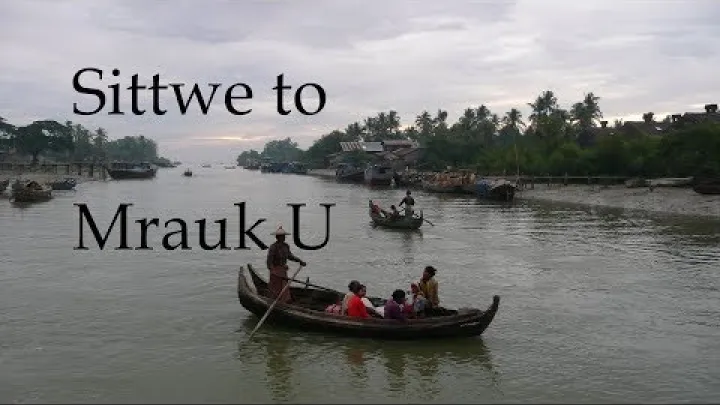
Arrival logistics can change the best base. Consider where you will meet a vehicle, how luggage will be handled, whether a checkpoint or permission affects the route, how late you may arrive, and how you will make the final transfer from the landing or road arrival point. A central or main-road-accessible property may be easier to use, but do not assume that a map pin guarantees vehicle access.
Ask about boat schedules, road conditions, luggage limits, stop points, and the time of the final transfer through a current operator or trusted local contact. Do not rely on a historical journey time to plan a same-day check-in. If the route involves a change from boat or bus to a smaller vehicle, confirm who is responsible for that connection and what happens if the first leg is delayed.
Sittwe may serve as a staging or contingency point if the current route makes that necessary. Do not present it as a simple substitute for staying in Mrauk U or assume that a night there is automatically safer. Confirm the actual route with a current operator, official source, or trusted local contact, and ask the Mrauk U property to coordinate the final leg before you leave Sittwe.
Power, Water, Connectivity, and Health Limitations
Compare basic reliability rather than luxury. Ask about electricity, backup power, water pressure, hot water, air conditioning, mobile signal, Wi-Fi, and charging access. In a small and changing market, a booking page may list an amenity without explaining whether it works continuously, works only at certain hours, or depends on a network that is weak in the property's exact location.
This matters especially if you work remotely, need to contact family, carry temperature-sensitive medicine, or depend on online travel documents. Request a plain answer about expected outages and whether the property has a backup charging arrangement. Ask whether a room can be moved if water or power service fails. Do not assume that a named hotel has a generator, reliable internet, or medical capability unless it confirms this directly.
Also compare the practical details of the room itself: mosquito protection, ventilation, secure charging space, storage for equipment, and whether doors and windows can be secured. These are not luxury requirements when you are staying several nights or carrying photography equipment, but they should be treated as questions rather than assumed amenities.
Local health support may be limited, so ask for the property's emergency contact and vehicle access as part of the accommodation check. The property is not a substitute for medical planning, but knowing who can help arrange transport and how a vehicle reaches the entrance can make a basic stay more manageable.
Book and Verify a Mrauk U Stay
Book only after the shortlist passes a direct verification process. Keep screenshots or written messages, because a platform page can change and a verbal promise may be difficult to reconstruct after arrival.
Cross-Check Listings Before Paying
Use this sequence:
- Start with the listing: record the property's full name, address, map pin, displayed room, price, payment terms, and cancellation conditions.
- Contact the property directly: ask whether it is open on your dates, accepts foreign guests, has the room, and will honor the platform reservation.
- Compare current location information: match the property reply with a map and with the planned arrival route. If the pin, street name, or pickup point conflicts, resolve that before paying.
- Check recent independent evidence: look for current traveler information, but give greater weight to evidence that identifies the date and actual operating conditions.
- Confirm transport separately: ask how the property expects you to reach it from the current Sittwe route and whether it can arrange the final transfer.
Agoda or another booking platform can show that a property has been listed, but listing presence does not prove that it is open, staffed, accepting foreign guests, or able to provide every displayed service. When available, choose a refundable or changeable arrangement until the route and operation are confirmed. Save the confirmation message, the property's current contact details, and the cancellation terms in more than one place.
Pay attention to inconsistencies rather than trying to explain them away. A different property name, an incomplete address, a map pin outside the stated area, or a request to pay through an unexpected channel should trigger another direct question. If the property cannot give a clear answer about its operating status or arrival arrangements, keep looking for a documented alternative.
Questions to Ask the Property Directly
Keep your message short and use simple wording. Ask the following:
- Are you open on my dates, and do you accept guests with my nationality and passport?
- Is a room available, what identification is required, and how is payment made?
- What are the cancellation terms, check-in hours, and latest possible arrival?
- What is the exact map location, and can you arrange pickup from the current arrival point?
- Is breakfast or another meal available, and can you help with a bicycle or local transport?
- What should I expect for electricity, water, hot water, air conditioning, Wi-Fi, mobile signal, and charging?
- Who is the emergency contact, and can I leave early if the route or local conditions change?
Ask the property for written answers to property-specific questions. Separately, check entry permissions, registration, and route operation with an official or trusted local source; a hotel cannot decide those matters for you. If a reply is vague about the address, foreign-guest eligibility, or arrival plan, do not treat the reservation as confirmed.
Keep Reservations and Departure Plans Flexible
A flexible plan is important because the route, local permissions, accommodation operation, or security environment may change faster than a fixed itinerary can absorb. Flexibility does not replace the initial decision about whether travel is appropriate; it limits the number of dependencies if travel is allowed.
Keep a current onward route and a separately checked contingency accommodation option. If the route is operating, that alternative may be in Sittwe, but confirm it independently rather than assuming every listed room there is available. Avoid relying on one boat, bus, hotel contact, payment method, or non-refundable booking.
Build flexibility into the length of the stay as well. Avoid scheduling a tight connection immediately after arrival, and leave room for an early departure if the route or property situation changes. Keep essential contacts offline and carry more than one way to access your reservation details, since internet or mobile service may not be continuous.
Before departure, confirm:
- the latest nationality-specific travel guidance and the permissions required for the area;
- the operating route from Sittwe and the final transfer to the property;
- the property's written confirmation, exact location, foreign-guest eligibility, and cancellation terms;
- the basic power, water, connectivity, food, and emergency arrangements;
- an onward plan and a separately verified contingency stay.
Final Recommendation for Where to Stay in Mrauk U
The practical answer to “where to stay in Mrauk U?” is conditional but clear. If official guidance permits the trip and current access is confirmed, choose a verified guesthouse or small hotel in the central town or town-temple interface for the best overall balance of food, orientation, local transport, and sightseeing flexibility.
Move toward the temple edge when dawn photography and repeated visits are the main purpose, and accept the possible reduction in independent dining and evening convenience only if the property's location and services are confirmed. Compare named listings such as Golden Mrauk U Guest House, Mrauk Oo Nawarat Hotel, Shwe Thazin Hotel Mrauk U, Prince Hotel, and Mrauk U Palace Resort as leads to verify, not as a current ranking. A village or riverside stay is better treated as a planned excursion or a directly supported local arrangement than as the automatic first choice.
In a destination with thin accommodation evidence and complex logistics, the strongest booking decision is not the cheapest rate or the closest-looking map pin. It is the property that answers clearly, matches the current route, and gives you a workable base for the temples and the town.
Select area
Create a post
Posting is free and no registration is required.