Mrauk U Getting There: Routes, Boats and Access Checks

Getting to Mrauk U in western Myanmar has traditionally meant travelling through Sittwe, first by domestic flight from Yangon and then by boat along the Kaladan River. Older travel accounts also describe long bus journeys and mixed road-and-river itineraries, but those patterns should not be mistaken for a current timetable. This guide explains the main Mrauk U transport routes, their historical time and cost differences, booking challenges, and arrival logistics. Because access, security and transport availability can change, the first step is to decide whether travel is currently permitted and supportable before comparing prices or comfort.
Check Current Safety and Access Before Planning a Route
A route to Mrauk U is useful only if the journey is legal, operating and reasonably supportable. Check those conditions before looking for flights, boat seats or hotels.
Read the Latest Travel Advice for Myanmar and Rakhine State
At the time of writing on 9 August 2026, the U.S. Department of State advisory for Burma says not to travel for any reason because of armed conflict, unrest, arbitrary enforcement of local laws, poor health infrastructure, landmines and unexploded ordnance. Read that advisory, your own government’s advice and any specific notice covering Rakhine State before making a decision.
This is a safety warning, not simply a note about a delayed ferry. If the latest official advice recommends against travel to Myanmar or Rakhine State, postpone the trip. A flight listing, an old guidebook or a past traveller’s itinerary can show that a route existed at an earlier time, but it cannot make the journey advisable now.
The information below is therefore conditional planning information. It describes the traditional route and historically reported alternatives so that readers can understand the geography and the trade-offs. It is not an encouragement to enter a conflict-affected area, and scenic descriptions of the Kaladan River should not be treated as a reason to overlook an official warning.
Verify Whether Foreign Visitors and Transport Are Allowed
Access to Mrauk U may depend on more than an available ticket. Administrative decisions, local security restrictions, foreigner permissions, checkpoints and the status of individual transport services can affect every part of the journey. Check the complete chain separately rather than assuming that permission to enter Myanmar also means permission to enter Rakhine State or Mrauk U Township.
A useful status checklist is:
- Confirmed: The relevant authority, transport operator or accommodation provider has recently acknowledged the specific service and your passenger eligibility.
- Unconfirmed: A booking engine, social media post, old blog or informal message mentions the route, but no responsible operator has confirmed it.
- Suspended: A service may appear in an old schedule or search result even though departures have stopped or changed.
- Unavailable: The service, permission or connection has been explicitly ruled out for your dates or nationality.
Apply these labels to the entry permission, the Yangon to Sittwe segment, the Sittwe to Mrauk U boat, accommodation and the return or onward route. A booking-engine result does not prove that a service is operating, that foreigners will be accepted, or that the same service will run on the return journey.
Assess Medical, Communications, and Exit Support
Medical and exit support should be part of the go-or-no-go decision. The official travel warning’s reference to poor health infrastructure means that readers should not assume that a suitable hospital, specialist treatment or rapid evacuation will be available in Mrauk U or elsewhere in Rakhine State. Do not describe an evacuation route, hospital capacity or emergency service as available unless a recent authoritative source confirms it.
Consider these questions before committing:
- Medical needs: Can you safely travel with your existing health conditions and medicines if treatment is delayed? Obtain professional medical advice for personal risks and carry medicines in their original packaging where lawful.
- Insurance: Ask the insurer in writing whether cover remains valid for Myanmar and Rakhine State under the relevant travel advisory. Confirm whether medical transport, cancellation and interruption are included.
- Communications: Do not assume that mobile data, phone service, electricity or charging will work throughout the route. Keep essential contacts, documents and itinerary details available offline.
- Consular support: Check what your embassy or consulate can actually provide in the area. Do not rely on an assumption that consular staff can arrange transport or evacuation from Mrauk U.
- Exit capacity: Identify how you would leave if the boat, road or flight stopped operating. If no realistic exit plan can be established, postponement is the safer decision.
Practical preparation cannot remove the underlying risk. If medical support, communications, insurance or departure options remain unclear, do not treat a cheap ticket or a confirmed hotel as sufficient evidence that the trip is acceptable.
The Traditional Route via Yangon, Sittwe and the Kaladan River
The classic Mrauk U route is a two-stage journey through Sittwe. It is important for understanding the geography of western Myanmar, but each stage has to be considered independently because the historical existence of the route does not establish current operation.
Why Sittwe Is the Main Gateway
Sittwe is the traditional gateway to Mrauk U. It lies at the mouth of the Kaladan River, while Mrauk U is farther upriver. For travellers starting in Yangon, the usual historical sequence was:
Yangon International Airport (RGN) → Sittwe Airport (AKY) → Sittwe → Kaladan River → Mrauk U.
The first long-distance segment was normally a domestic flight from Yangon to Sittwe Airport (AKY). The second was a river journey from Sittwe toward Mrauk U, using either a government-operated service or a privately arranged boat in accounts from earlier travel periods.
Sittwe’s role as the main gateway is a historical and geographic description. It does not prove that flights are frequent, that the river service is running, that a particular departure point is open, or that foreign visitors can use the route. Airport-to-town transfers are usually a smaller planning issue than the regional access question, so confirm the local transfer point with the current operator rather than relying on an old map.
Fly from Yangon to Sittwe When Flights Are Operating
When the route was operating normally, flying from Yangon to Sittwe was the faster first segment of the standard journey. It avoided the long road approaches from central and southern Myanmar and allowed travellers to begin the river connection from the region’s traditional gateway.
A live arrivals and departures board for Sittwe Airport can be one operational check. The Skyscanner AKY page is useful for seeing whether flight information is being displayed, but an aggregator or airport board is only a snapshot. It does not confirm that a flight will continue on future dates, that the operating airline will accept your booking, that foreigners are allowed to enter the area, or that a boat will be available after landing.
For that reason, confirm the Yangon-Sittwe flight directly with the operating airline or the airport as well as checking a booking platform. Ask about the operating date, cancellation policy, passenger documentation and what happens if the service is cancelled. Avoid treating an old fare, flight time or airline listing as a current booking promise.
Do not make the flight decision in isolation. A flight that reaches Sittwe but cannot connect to an authorised boat may leave you with an expensive and uncertain stopover. Conversely, a boat confirmation is not enough if the Yangon-Sittwe flight has not been directly confirmed. Both legs must be workable for the traditional route to make sense.
Travel from Sittwe to Mrauk U by River
The traditional final leg is a journey up the Kaladan River from Sittwe to Mrauk U. Older descriptions commonly place the journey at roughly four to six hours, depending on the service and conditions. This is a historical duration range, not a current departure guarantee.
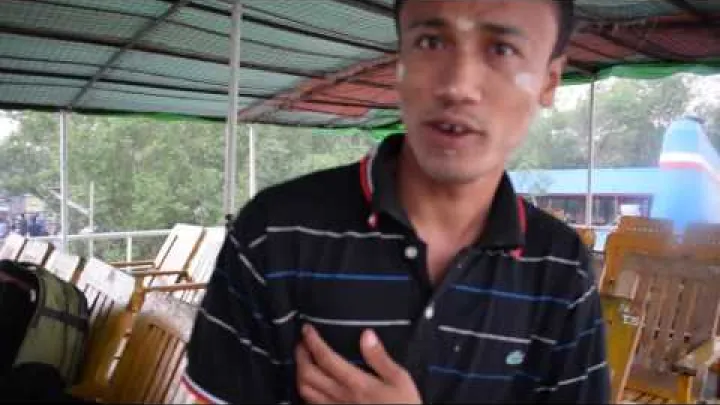
Earlier accounts describe more than one type of boat. One older report describes a government boat departing only a few times per week, with an early morning departure and a journey of about six hours, while privately arranged boats were another possibility. The Jenny Far Away account is useful as a dated travel pattern, but it should not be used as a current schedule.
Historical accounts also describe differences between government and private boats in flexibility, comfort and price. A private boat may have offered more flexibility for a group or a different departure arrangement, but that does not mean it was always faster, safer or available. A government service may have had a lower or more predictable historical price without being suitable for every traveller or every date.
The available older descriptions do not establish a dependable current fare range. Do not copy a price from a past account, convert it using an old exchange rate or assume that a private quote includes every transfer. Ask the current operator to state the total price, what it covers, the payment method and the cancellation or return arrangement.
Before travelling from Sittwe, obtain direct confirmation of four details: whether the boat is running, where passengers must report, whether foreign visitors may board, and how you will return from Mrauk U. Do not invent a jetty or terminal name from an old map. Departure points and local procedures can change, and a one-way boat arrangement is not a complete itinerary.
Overland and Mixed Routes to Mrauk U
Older travel planning also described road approaches from several parts of Myanmar. These options may look cheaper on paper, but they involved long journeys, uncertain connections and greater exposure to road conditions and delays. They should be understood as historical alternatives, not as a way to bypass a current closure or restriction.
Long-Distance Buses from Yangon and Central Myanmar
Historical route descriptions mention bus approaches from Yangon, Mandalay, the Bagan-area town of Kyaukpadaung and the Ngapali-area town of Thandwe. The exact arrangement varied by starting point and period. Some routes may have required a change rather than a single through bus, so the phrase long-distance bus route should not be read as a promise of a direct service.

The main trade-off was cost versus time and physical effort. Buses were historically presented as less expensive than combining a domestic flight with a river boat, but they could involve very long travel days or overnight movement on winding or poor roads. Limited comfort, road delays, cancellations and missed connections could make the lower fare less attractive in practice.
- Yangon: An overland approach from the main southern gateway was a long road journey. Older descriptions may show the route as possible, but they do not establish a current direct bus, fare or travel time.
- Mandalay: Travelling from central Myanmar involved a substantial road approach toward western Myanmar. The journey was physically demanding, and a current through service should not be assumed.
- Kyaukpadaung: This Bagan-area starting point appeared in historical overland planning. It may have been useful for travellers already near Bagan, but the route and number of changes require current local confirmation.
- Thandwe: This Ngapali-area approach was another historically reported road option. Its existence in an older itinerary does not prove that a current road connection to Mrauk U is open or suitable for foreign travellers.
There is no responsible current bus fare or duration to publish from the available evidence. Treat any older price as a historical indication only, and do not use endurance or adventure as a substitute for security, access and medical checks. A lower old fare does not compensate for a route that cannot be confirmed or completed safely.
Road Travel from Sittwe and Mixed Itineraries
Road travel between Sittwe and Mrauk U has historically been described as possible. It was often considered less attractive than the river route because of road quality, comfort and the additional uncertainty associated with a long overland connection. That comparison is historical and should not be turned into a current recommendation.
A mixed itinerary can involve a flight, a road transfer, a river connection or several local changes. Each added segment creates another point where a service may be delayed, stopped or unavailable. Waiting for a connection can also turn a nominally shorter route into a longer journey, especially when departure times are not published or cannot be confirmed.
An overland option is not a workaround for a closed or unsafe river service. If a river route is unavailable because of security, administrative restrictions or passenger rules, do not simply substitute a road or private boat without separate confirmation. The alternative must be legal, operating and acceptable on its own terms.
Compare the Main Ways to Reach Mrauk U
The traditional flight-and-boat route was generally favoured for speed and comfort, while bus routes were historically cheaper but longer and more demanding. The comparison below separates those historical patterns from present-day status, which must be established independently.
Compare Time, Cost, Comfort and Booking Difficulty
One route-planning overview lists a flight-and-ferry journey from Yangon to Mrauk U at about 8 hours 22 minutes and an indicative cost of US$150 to US$370. The Rome2Rio figure is a route estimate rather than a live timetable or guaranteed quote. Because the available listing does not establish a current publication date, exchange rate or operating status, use it only to understand the historical scale of the difference.
| Route | Main segments | Historical or indicative duration | Indicative cost | Comfort | Booking difficulty | Current status check |
|---|---|---|---|---|---|---|
| Flight plus river boat | RGN to AKY, then Sittwe to Mrauk U | About 8 hours 22 minutes in one route estimate; connections may add time | US$150-US$370 in one undated route estimate | Historically the fastest and more comfortable option; boat conditions vary | Two separate arrangements and a difficult connection | Confirm flight, boat, passenger eligibility and return service |
| Long-distance bus approach | Road journey from Yangon, Mandalay, Kyaukpadaung or Thandwe | Very long; duration varies by origin, road and changes | Historically lower than air plus boat; no comparable current figure | Lower comfort and greater exposure to road delays | Route and operator dependent; through service not established | Confirm the current route, checkpoints and foreigner eligibility |
| Mixed road and river | Road segments combined with a river or local transfer | Long and transfer-dependent; no reliable current total | Variable; no verified current total | Less predictable because of multiple transfers | Several arrangements must align | Confirm every segment and a workable return plan |
The table is deliberately conservative. It does not assign a reliability score or publish a current bus fare because the available evidence does not support either. Historical numbers are useful for understanding why travellers once preferred one route, but they are not enough to book a journey today.
Choose a Route Only After Current Conditions Are Confirmed
Use this decision order instead of choosing the cheapest result first:
- Safety and legal access: If official advice recommends against the trip, or if your entry into Rakhine State or Mrauk U is not authorised, postpone. A cheaper route does not change that decision.
- Operating service: Confirm the flight and the Sittwe-Mrauk U connection directly. For an overland plan, confirm the bus or road service and every required change.
- Connection and exit reliability: Check that arrival times, waiting periods, accommodation and the return route fit together without relying on an unconfirmed same-day connection.
- Price and comfort: Only after the first three conditions are satisfied should you compare the historical advantages of a flight and boat with the lower cost of an overland route.
In a future period of stable and authorised access, flight plus boat would normally be the logical preference for speed and comfort. That is a conditional preference, not a current recommendation. Do not choose a bus or a private boat simply to bypass an official closure, checkpoint, foreigner restriction or unavailable government service.
Booking, Arrival and Local Transport
Once access is permitted and each segment is operating, the practical challenge is coordinating a flexible itinerary. Mrauk U is not a destination where a single booking necessarily covers the full journey.
Build a Flexible Itinerary Around the Sittwe Connection
Build the plan in stages and record what is confirmed rather than treating every conversation as a booking:
- Gateway stage: Record the confirmed arrival in Yangon and the confirmed or provisional Yangon-Sittwe flight. Keep the booking reference and cancellation terms accessible offline.
- Sittwe stage: Arrange the Sittwe-Mrauk U boat only after checking the departure date, passenger eligibility, reporting location, total price and return possibility.
- Mrauk U stage: Use flexible accommodation dates where possible. Do not assume that a late arrival, delayed boat or changed checkpoint will be accepted without notice.
- Exit stage: Keep a realistic return route open. A plan that reaches Mrauk U but has no confirmed way back to Sittwe or Yangon is incomplete.
A practical itinerary can use placeholders instead of fixed times: confirmed Yangon arrival, confirmed or provisional AKY flight, verified river connection, flexible Mrauk U stay and confirmed return option. Avoid a tight same-day flight-and-boat connection unless the responsible operators confirm that the timing, passenger process and transfer are workable. A buffer night may be more useful than a lower fare that depends on perfect timing.
Older travel accounts sometimes relied on local hotels or agents to arrange boats and buses. That can explain how the route was handled in the past, but it does not identify a current booking office or prove that an intermediary is authorised now. Treat a hotel or agent arrangement as provisional until the operator confirms the service and your eligibility.
Prepare Documents, Payments and Communications
Historic accounts mention passport checks and close attention to foreign movement in the region. Those accounts should not be converted into universal current legal rules because requirements can differ by nationality, date, township and route.
Use this preparation checklist:
- Identity and permissions:Ask the relevant authority or operator which passport, visa, permit or written permission applies to your route and nationality. Carry only the documents they confirm are needed, and keep secure offline copies.
- Transport records: Save booking references, operator names, departure instructions and return details. A screenshot of an old schedule is not a substitute for a current confirmation.
- Payment: Confirm the accepted payment method and the total price before departure. Do not rely on an exact cash amount taken from an old travel account or an old exchange rate.
- Communications: Keep important phone numbers, accommodation details and emergency contacts available offline. Bring suitable charging equipment, but do not assume that power or network coverage will be continuous.
- Checkpoint questions: If a checkpoint or official asks for a document, do not guess about the requirement. Ask the relevant authority or operator what applies and resolve conflicting instructions before continuing.
Do not rely on unsolicited transport intermediaries or verbal promises about a seat, permission, fare or departure. This is a general verification precaution, not a claim about a particular local scam pattern. Use information that can be traced to the responsible operator or authority, and pause the journey if the documentation and instructions do not match.
Reach and Move Around Mrauk U After Arrival
Mrauk U is a riverside town. Historical visitor accounts describe walking and bicycles as practical ways to move around nearby areas, but bicycle availability, local vehicles and movement conditions cannot be assumed now.
After arrival, ask your accommodation or another trusted local contact which areas can be reached, whether movement restrictions apply and what local transport is operating. Do not assume that the boat landing point is a particular jetty, that a rental bicycle will be available, or that a taxi or other vehicle will accept every journey.
Keep this local transport plan separate from the long-distance decision. First establish that you can legally and safely reach Mrauk U and leave again. Then confirm the simple local arrangements needed for walking, cycling or a vehicle transfer. There is no need to build a detailed sightseeing itinerary until those basic conditions are clear.
Conclusion: Plan Mrauk U Travel Only When Access Is Confirmed
The traditional way to get to Mrauk U was through Sittwe: fly from Yangon International Airport (RGN) to Sittwe Airport (AKY), then continue from Sittwe by boat along the Kaladan River. Long-distance buses and mixed road-and-river routes were historically possible alternatives, usually with lower cost but longer journeys, less comfort and more complicated connections.
Today, the important distinction is between a route that existed and a route that is authorised, operating and supportable for your trip. Read the latest official advice, confirm foreigner access, check medical and exit support, and obtain direct confirmation for every transport segment. If those conditions cannot be established, postponing the journey is the responsible choice.
Select area
Create a post
Posting is free and no registration is required.