Mawlamyine Getting There: Bus, Train, Flight & Road
![Preview image for the video "[EngSub] ရထားလက်မှတ်ကို online ကနေ ဘယ်လိုဝယ်မလဲ? | DEMU Train to Mawlamyine".](/sites/default/files/styles/media_720x405/public/oembed_thumbnails/2026-08/nlSmcYvP0wBRcsKDhEabisjPy28PeiDwKqBPjBgNDZc.jpg.webp?itok=ne5kmWfD "Preview image for the video \"[EngSub] ရထားလက်မှတ်ကို online ကနေ ဘယ်လိုဝယ်မလဲ? | DEMU Train to Mawlamyine\".")
Mawlamyine getting there is primarily an overland planning question. From Yangon, the bus is usually the most practical starting point, while the train offers a slower daytime alternative and flights require careful confirmation. Travelers may also reach the city through Hpa-An and the Myawaddy borderlands, or continue along the southern corridor through Thanbyuzayat, Ye, and Dawei. This guide compares the main options by time, cost, comfort, booking difficulty, arrival point, and the checks that matter before departure.
Start with the Most Reliable Route Plan
Mawlamyine is a major gateway to southeastern Myanmar and a useful base for travel along the Thanlwin River corridor. Its practical long-distance connections are centered on roads and railways. Air services may exist at particular times, but they should be treated as limited until an airline confirms a suitable flight for your date.
Mawlamyine as an Overland Gateway
Most travelers plan to Mawlamyine from Yangon, but the city also connects naturally with Hpa-An, Myawaddy, the Thai borderlands, and the southern route toward Ye and Dawei. Yangon is the simplest starting point for many international visitors because it offers the clearest choice of long-distance bus and train. Hpa-An is more useful when the journey begins near Myawaddy or when you are already traveling in southeastern Myanmar.
The best route depends on the constraint that matters most to you:
- For a practical balance of time and availability: start by checking the Yangon–Mawlamyine bus.
- For a daytime rail experience: compare the published train time with your accommodation and onward plans.
- For the shortest scheduled journey: consider a flight only after the airline confirms that it is operating on your date.
- For groups, large luggage, or flexible stops: request a quote for a private car with a driver.
- For travel from the borderlands: plan Myawaddy–Hpa-An and Hpa-An–Mawlamyine as separate legs.
- For southern Myanmar: check whether the service begins in Mawlamyine, passes through it, or accepts passengers there.
This approach prevents a common mistake: choosing a route because its headline travel time looks attractive without checking the departure point, arrival time, or availability of the next local transfer.
What to Confirm Before You Leave
Transport information for Myanmar can change faster than printed travel guides and older online itineraries. Use guides and aggregators to understand the route, but treat the current operator, station, airport, or local ticket seller as the practical reference for your travel date.
Before leaving your origin city, write down the following:
- The operating date and approximate departure time.
- The origin terminal, station, airport, or meeting point.
- The destination terminal or station in Mawlamyine.
- The expected arrival time, including the possibility of delays.
- The seat class, baggage conditions, and current fare.
- A realistic alternative if the selected service is full, delayed, or unavailable.
Arrival time should influence your choice. A late-night bus or an early train arrival may be suitable for a traveler with a confirmed pickup, but less convenient if you must find accommodation transport after arriving. If your itinerary includes a border crossing, a southern connection, or a limited flight, leave more space than the nominal journey time suggests.
Travel from Yangon to Mawlamyine
Yangon is the main departure gateway for a direct journey to Mawlamyine. Bus, train, flight, and private car each serve a different type of traveler, but they do not offer the same level of schedule certainty.
Yangon to Mawlamyine by Long-Distance Bus
For many visitors, the long-distance bus is the default way to travel from Yangon to Mawlamyine. Departures are associated with Yangon Aung Mingalar Highway Bus Station, and the journey is generally planned as a direct intercity trip to Mawlamyine. A named operator, Mandalar Minn Express, lists Yangon–Mawlamyine among its routes. The presence of a route on an operator website does not by itself confirm the number of departures or the seats available on your date.

About seven hours is a useful planning figure for the bus, but it is not a guaranteed arrival time. Traffic leaving Yangon, road conditions, meal stops, loading time, and delays along the route can all change the total. A daytime departure allows you to see more of the road corridor and normally makes the final transfer easier to manage. An overnight departure can preserve daytime hours, but it may put you at the Mawlamyine terminal before normal hotel check-in or local transport arrangements are available.
Use this short route card when comparing bus listings:
- Departure point: Yangon Aung Mingalar Highway Bus Station or the terminal shown on the current ticket.
- Destination: Mawlamyine, with the exact arrival terminal confirmed before travel.
- Indicative journey: about seven hours, subject to road conditions and stops.
- Seating: standard and VIP categories may be offered, but the available class depends on the operator and date.
- Fare: time-sensitive; use the current operator or station quote rather than an old price conversion.
- Booking: usually more straightforward than arranging a limited flight, but seat availability can change quickly on busy dates.
When comparing a standard and VIP seat, look beyond the label. Ask about the departure time, seat layout, luggage allowance, and whether the service reaches the same Mawlamyine terminal. A cheaper ticket is less useful if it arrives at an inconvenient time or requires a second terminal transfer.
Yangon to Mawlamyine by Train
Myanma Railways provides a direct rail connection between Yangon and Mawlamyine. A published timetable reference from Myanmar Trains lists a journey of about 10 hours and 20 minutes, with an example service shown from 06:30 to 16:50. Treat these times as a published planning example, not as a permanent guarantee for every travel date.

The train suits travelers who prefer a daylight journey and a slower view of the countryside over the speed of a bus. It can also make sense when a bus departure does not fit your schedule. The trade-off is that rail travel takes substantially longer and may involve delays. Class options and comfort should be checked at the station or through a current ticket channel; do not assume that a higher class provides modern coach comfort.
Rail tickets can be less flexible for a short-notice traveler if the preferred class is unavailable. Ask whether the train accepts passengers for a shorter segment if you plan to board at Bago, Kyaikto, or Thaton rather than Yangon. These towns sit along the wider Yangon–Mawlamyine rail corridor, but a short-segment plan may require different ticketing or station advice from a direct Yangon ticket.
Choose the train when the experience of a daytime rail journey matters more than arriving quickly. If you have a fixed connection after Mawlamyine, calculate the effect of possible delays rather than using only the listed arrival time.
Yangon to Mawlamyine by Flight
Check availability before treating flying as an option. Mawlamyine Airport has had an intermittent scheduled-service history, so it should not be assumed to be a dependable gateway. A 2026 announcement from Myanmar Airways International described a Yangon–Mawlamyine route with selected Saturday services in May and September. That announcement is a time-specific development, not evidence of a permanent daily route.
Flying can be fastest in theory because the air segment is much shorter than the road or rail journey. In practice, a limited flight may be harder to plan: the schedule may be seasonal, seats may be restricted, and a cancellation can leave you needing a same-day bus or train. You also need time for airport procedures and a confirmed final ride from Mawlamyine Airport.
Older travel references may mention a Mae Sot–Mawlamyine service. Do not treat that historical connection as current unless the airline or an appropriate border and travel source confirms it for your dates. Before booking a Yangon–Mawlamyine flight, confirm it directly with the airline shortly before payment and again before departure. Keep a bus or train alternative if your onward plans depend on arriving in Mawlamyine on a specific day.
Yangon to Mawlamyine by Private Car or Taxi
A private car with a local driver follows the same broad road corridor as the bus. In favorable conditions, the driving time can be broadly comparable to a bus, but the total depends on traffic, stops, road conditions, and the agreed route. The main advantage is control: you can choose departure time, make necessary stops, and travel directly with your luggage.
This option is most useful for a group that can divide the vehicle cost, a traveler with substantial luggage, or anyone who needs more control over rest stops. Compare the complete vehicle price with a per-seat bus fare. Ask whether fuel, tolls, waiting time, overnight accommodation for the driver, and the return journey are included.
Hiring a local driver is usually a more practical planning model than assuming that every visitor can self-drive. If you are considering driving yourself, confirm current permissions, insurance requirements, checkpoint procedures, route restrictions, and the condition of the vehicle before committing. Do not rely on a general statement that a foreign visitor can automatically rent and drive on this route.
Reach Mawlamyine from Regional Gateways
Mawlamyine is part of a wider southeastern network rather than an isolated endpoint. Regional journeys often require a change of vehicle, a local terminal, or extra time for road and border procedures.
Hpa-An and the Myawaddy Border Route
Hpa-An is the practical regional link between the Myawaddy borderlands and Mawlamyine. A journey from the Thai side or Myawaddy is best planned in two stages: first Myawaddy to Hpa-An, then Hpa-An to Mawlamyine. Buses, minibuses, and shared road transport may serve these legs, but times, fares, and departure points can vary by local service.
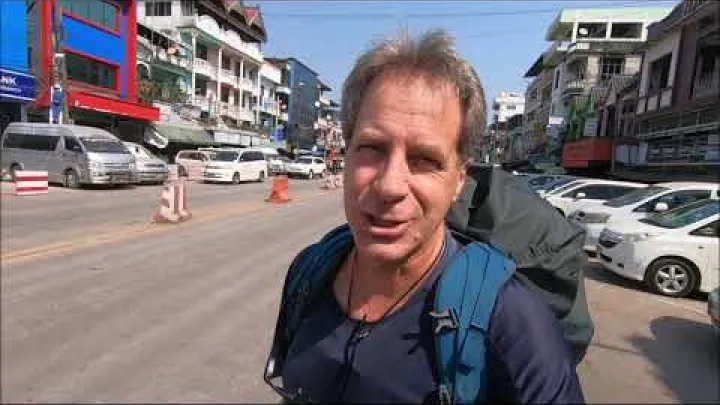
Do not assume that a ticket sold as a Myawaddy–Mawlamyine journey represents one guaranteed through-service. Separate tickets can mean separate vehicles, different terminals, and a new departure time in Hpa-An. Allow time for border procedures before you plan the first road leg, and leave additional space between the Hpa-An arrival and the onward Mawlamyine service.
Before using this route, confirm current border entry conditions, road availability, and local security information. If the border leg is delayed, a practical fallback is to stay in Hpa-An and continue on the next confirmed service rather than forcing a tight same-day connection. Keep your documents, ticket details, and accommodation information accessible during the transfer.
Ye, Thanbyuzayat, and Dawei from the South
The southern corridor runs through Thanbyuzayat and Ye toward Dawei. Travelers moving along this route may use Mawlamyine as a staging point, either before continuing south or when traveling north from Dawei toward the city. The road and rail options do not offer the same balance: buses are generally the faster road choice, while trains can take substantially longer and may depart at inconvenient hours.
For planning purposes, think in time bands rather than exact promises. A road journey between Mawlamyine and the southern towns is a several-hour trip, while a rail journey may occupy much more of the day depending on the current service. Older traveler reports and journey planners can also show fares or schedules that no longer match local ticket sales. Use them to understand the route, not as a current fare sheet.
Terminal practice is important on the southern corridor. A bus may originate in Mawlamyine, pass through the city after starting farther north, or stop only to load passengers. Ask the ticket seller whether you can board in Mawlamyine, which terminal is used, and whether your ticket covers the whole route or only a local segment. Confirm the correct departure point rather than assuming that every Dawei-bound bus uses the main highway station.
Bago, Kyaikto, and Thaton as Corridor Connections
Bago, Kyaikto, and Thaton can function as intermediate points for travelers already moving through central or southeastern Myanmar. Both road and rail corridors connect these towns with the Mawlamyine direction, but the practical boarding point depends on the current service. A traveler who wants to visit Kyaikto first, for example, may need to arrange a separate onward ticket instead of changing a direct Yangon–Mawlamyine booking.
Intermediate-stop travel is often less straightforward than a direct ticket. Ask whether a bus accepts passengers for the shorter segment and whether the train class you want is sold from that station. Confirm the arrival side of the town, the next departure point, and the amount of time needed between services. A stop at Bago, Kyaikto, or Thaton works best when it is part of a flexible itinerary rather than a tight connection.
Understand Mawlamyine's Arrival Points
Choosing a route is only half of the journey. Mawlamyine's railway station, highway bus terminals, airport, and river jetties serve different purposes and are not interchangeable. The final ride to accommodation should be part of your arrival plan.
Train Station and Main Highway Bus Station
Mawlamyine railway station is separate from the historic center, so train passengers normally need a final local ride. The reported main highway bus station is on the eastern side of the city and is associated with Yangon and northbound services, but terminal descriptions and map points can vary between booking sources. Confirm the current location shown on your ticket instead of relying on a familiar English name.
The distinction matters when arranging accommodation pickup. A hotel that can collect you from the railway station may quote a different time or price for a highway bus terminal. It also matters if you arrive early in the morning, when fewer local vehicles may be available.
| Gateway | Planning point | Useful action |
|---|---|---|
| Mawlamyine railway station | Separate from the historic center | Confirm a final ride with your accommodation |
| Main highway bus station | Reported eastern-side gateway for major road services | Confirm the current terminal and map point |
Ask the ticket seller and your accommodation to confirm the exact terminal name, location, and final fare before you travel. This is especially important when the ticket uses a transliteration that differs from the name used by a hotel or map application.
Dawei and Hpa-An Bus Terminals
Reports indicate that Mawlamyine bus services may use separate terminals for different destination groups, including southern Dawei routes and Hpa-An services. This creates a practical trap: a traveler can go to the main highway station and still miss a departure because the bus leaves from a route-specific terminal.
Use route-based labels when asking for directions. Ask for the northbound or main highway terminal, the southern or Dawei terminal, or the Hpa-An terminal, rather than relying only on an English terminal name. Names and spellings may differ between a ticket website, a local agent, and a driver.
- Ask where the bus physically departs, not only where the ticket was purchased.
- Confirm the terminal address or a recognizable local landmark.
- Ask whether the departure time is local and whether passengers should arrive early for seat assignment.
- Confirm the terminal again with your accommodation on the day before travel.
Keep the seller's phone number or booking message available in case the driver or station staff uses a different name for the same route.
Airport, Riverfront Jetties, and the Last Mile
Mawlamyine Airport should be treated as an arrival point only after an active flight has been confirmed. It is not a substitute for the established bus and rail corridors when no suitable flight is operating.
River transport remains part of Mawlamyine's regional mobility system. The Inland Water Transport page for the Thanlwin Division identifies its office in Mawlamyine and describes regular transport routes and a river-crossing ferry service. River services, including local connections toward Bilu Kyun, are useful for regional movement, but they are not replacements for the main long-distance routes from Yangon, Hpa-An, or Dawei.
For the final short transfer, travelers may encounter tuk-tuks, moto-taxis, and pickup vehicles. Exact jetty names, operating hours, and local fares can change, so keep this part of the plan simple: identify the arrival gateway, show the accommodation address, and arrange a suitable vehicle if the arrival time is inconvenient.
Compare Transport Options Before Booking
The following comparison uses indicative planning information rather than guaranteed current schedules or prices. The Yangon bus and train times are useful reference points, while regional and flight entries require more direct confirmation.
Time, Cost, Comfort, and Booking Difficulty
| Option | Indicative time | Cost position | Comfort and flexibility | Booking difficulty |
|---|---|---|---|---|
| Bus from Yangon | About 7 hours | Current fare required | Standard or VIP; fixed route | Usually practical; confirm terminal |
| Train from Yangon | About 10 hours 20 minutes in a listed example | Varies by class and date | Daylight experience; slower | Check station or current channel |
| Flight from Yangon | Shortest only when operating | Airfare and availability vary | Fast on schedule; higher disruption risk | Direct airline confirmation needed |
| Private car with driver | Broadly road or bus range | High total cost; shareable by group | Most flexible for stops and luggage | Arrange vehicle and driver terms |
| Hpa-An to Mawlamyine | Short regional leg; varies | Local fare required | Bus, minibus, or shared road service | Confirm local departure point |
| Southern corridor | Several hours by road; rail may be much longer | Older quotes may be unreliable | Bus is usually faster than train | Confirm origin, stop, and terminal |
Do not compare an old kyat price with a dollar conversion and assume that it remains current. Currency movements, operator changes, seat class, and local sales channels can all affect the amount you pay. For the same reason, a current local fare is more useful than a price copied from an older travel guide.
Booking difficulty also has a cost. A flight may appear attractive because its air time is short, but a bus with several possible departures can be the better choice if you need a dependable overland fallback. A private car may look expensive for one person but become reasonable for a group that values direct travel and flexible stops.
Choose by Speed, Flexibility, or Experience
Use the following decision rules instead of looking for one universal best option:
- Choose the bus if you want the fastest practical overland choice from Yangon. It normally offers a stronger balance of journey time and availability than the train, subject to current departures.
- Choose the train if daytime travel and the rail experience matter more than speed. Keep your onward schedule flexible because the listed journey is long and delays are possible.
- Choose a flight only if it is actively operating and reconfirmed. A nominally faster flight is not useful if the service is limited or difficult to verify.
- Choose a private car if flexibility is worth the higher total price. Groups, travelers with large luggage, and people who need direct stops may benefit most.
- Choose a daytime departure when arrival logistics are uncertain. This can make the final ride and hotel check-in easier than an overnight arrival.
- Choose a route with more than one possible departure when you have a fixed onward plan. Headline travel time should not be the only measure of reliability.
An overnight bus can save a day of sightseeing or work, but it may create an inconvenient arrival. A daytime train takes longer but may fit a traveler who prefers to remain awake and watch the route. Match the mode to your real priority: time, price, flexibility, comfort, or the experience of traveling through southeastern Myanmar.
Book and Verify Your Journey
Once you have chosen a route, turn the plan into a confirmed departure rather than relying on a general route description. This is most important for flights and regional services, but it also prevents mistakes on the main Yangon–Mawlamyine corridor.
Verify Current Routes, Fares, and Departure Times
Use the named bus operator, railway ticket channel, airline, station, airport, or a current local travel agent as your final checking point. An online listing can show that a route exists while failing to show a temporary suspension, a changed terminal, or a sold-out seat.
Reconfirm these details before traveling:
- Operating date: make sure the service runs on the day you need.
- Departure time: ask whether the displayed time is current and whether passengers must arrive early.
- Boarding terminal: confirm the actual place of departure, especially for Dawei and Hpa-An routes.
- Arrival point: identify the Mawlamyine railway station, main highway station, route-specific bus terminal, or airport.
- Seat class and availability: confirm that the selected class is still open.
- Fare and baggage: ask about the amount due, luggage limits, and any extra charges.
- Changes and cancellations: ask what the operator currently allows instead of assuming that a ticket can be changed locally.
If an online listing and a local station or operator give different information, ask the current operator to explain the difference. For limited air services, the airline's own confirmation should take priority over a generic travel page. For buses and trains, keep the booking message or receipt and compare it with the information given at the departure point.
Book with a Practical Backup Plan
Backup planning is simple when it is decided before purchase:
- If a flight is unavailable or canceled: use the bus as the primary overland alternative and check the train if its timing fits.
- If the preferred bus is full: ask about another departure or compare the next train rather than accepting an unverified substitute from a stranger.
- If the journey begins at the Myawaddy border: keep an overnight buffer in Hpa-An or another suitable stop instead of tying the border arrival to the last onward service.
- If you are continuing south: leave room for a changed bus time or an additional night in Mawlamyine.
- If you have a fixed appointment: arrive at least one travel segment early and avoid a same-day connection after an uncertain regional route.
Keep the booking reference, operator contact, accommodation address, and a record of the amount paid on your phone. A paper copy can also help when mobile access is unreliable. Do not assume that an online reservation can automatically be transferred to a different bus or refunded at the station; ask about the current terms when you buy.
Make the Arrival Safer and More Flexible
Transport choice affects the quality of the final arrival. The same Mawlamyine route can feel easy in daylight and much more complicated when the terminal transfer happens before dawn or during heavy rain.
Night Arrivals, Touts, and Local Fares
If your bus arrives early in the morning or your train reaches Mawlamyine before daylight, arrange a known pickup, a driver recommended by your accommodation, or a travel companion. This is particularly useful when the arrival point is outside the center or when you are carrying several bags.
Before leaving the terminal, keep your phone accessible, have the accommodation address ready, and carry enough local cash for the first ride. Agree on the fare before entering a tuk-tuk, moto-taxi, or pickup vehicle. If the driver changes the price after loading your luggage, calmly refer to the agreed amount or choose another vehicle if practical.
Use the ticket counter or the named operator for booking questions. Touts may offer to move you to another vehicle or terminal, but you should not change a confirmed plan because of pressure or an unverified claim. Decline politely and check with the station staff or the operator shown on your ticket. Keep your valuables close during the transfer and do not leave luggage unattended.
Rain, Delays, and Road or River Conditions
Heavy rain and monsoon conditions can slow road journeys, affect railway operations, and change activity around river crossings or jetties. This does not mean that a particular service is canceled, but it does mean that a published departure time may not produce an on-time arrival.
When severe weather is forecast, check local conditions on the travel day with the operator, station, airport, or your accommodation. Add a time buffer and avoid a tight onward connection. Daylight travel may be the better choice when poor visibility, wet roads, or a late arrival would make the final transfer more difficult.
Use a simple go-or-delay decision: continue if the operator confirms that the service is running and you have enough time for a delayed arrival; delay or add a night if conditions make the connection unsafe or the schedule too uncertain. A scheduled departure is not a promise of an on-time arrival during changing road, rail, or river conditions.
Final Checklist for Getting to Mawlamyine
For most travelers from Yangon, begin by checking the long-distance bus from Aung Mingalar Highway Bus Station. Compare it with the published train if you prefer daytime rail travel, and consider a private car when flexibility or group travel justifies the cost. Treat flights as a bonus option only after direct confirmation.
- Choose the route that matches your time, budget, comfort, and arrival needs.
- Confirm the current operating date and departure time.
- Write down the exact origin and Mawlamyine arrival terminal.
- Check the current fare, seat class, baggage conditions, and ticket rules.
- Arrange the final ride, especially for the railway station, airport, or an early bus arrival.
- Build a backup for flights, border connections, and southern routes.
- Leave extra time for rain, traffic, border procedures, and rail or road delays.
Mawlamyine is accessible through a useful network of buses, trains, regional road services, and occasional air connections. The most reliable plan is not always the fastest on paper: it is the one with a confirmed departure, a known arrival point, and enough flexibility to handle the conditions of the travel day.
Select area
Create a post
Posting is free and no registration is required.