Sendai Where to Stay: Best Areas and Accommodation
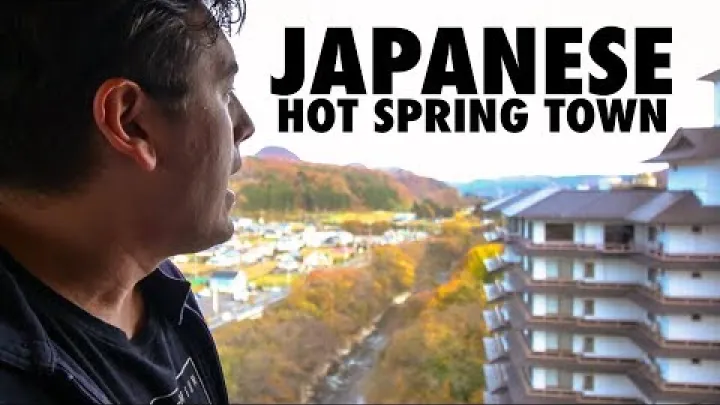
Where to stay in Sendai depends mainly on how you plan to use the city. For most first-time visitors, the area between Sendai Station and the Ichibancho shopping district is the most flexible base because it combines rail access, shopping, restaurants, and a broad choice of accommodation. Kokubuncho is better for nightlife, while Sakunami and Akiu suit travelers who want an onsen retreat rather than a city break. This guide compares Sendai's main areas, transport trade-offs, accommodation types, costs, nighttime conditions, and the checks to make before booking.
Quick Answer: The Best Area to Stay in Sendai for Most Visitors
For a first visit, begin your search around Sendai Station, the Sendai Station West Exit, the Sendai Station East Exit, and the Ichibancho shopping area. This central corridor is a practical default for short stays, first-time sightseeing, business trips, and visitors arriving with luggage. Sendai is relatively compact for a regional Japanese city, and the official Discover SENDAI guide presents it as a place where nature, food, history, culture, and sightseeing can be combined within one trip.
The best area is not universal. Choose Kokubuncho if evening restaurants and bars are the main attraction, Jozenji-dori or Hirose-dori if you want a more relaxed central streetscape, a residential subcenter for a specific family or longer-stay need, or Sakunami and Akiu if the accommodation itself is an onsen experience.
| Area | Best for | Main advantage | Main trade-off | Cost pattern |
|---|---|---|---|---|
| Sendai Station | Transport and short visits | JR, Shinkansen, subway, taxis | Busy commercial setting | Many price tiers |
| Ichibancho and central Aoba | Shopping and city sightseeing | Walkable dining and arcades | Less direct than the station for rail departures | Broad central-city range |
| Kokubuncho | Nightlife | Restaurants and bars nearby | More evening activity and possible noise | Varies by property |
| Nagamachi, Izumi-Chuo, and Arai | Families or specific local destinations | Residential services and subway access | Less flexible for typical sightseeing | Inventory is property-dependent |
| Sakunami and Akiu | Onsen retreats | Quiet surroundings and ryokan stays | Less spontaneous access to central Sendai | Plans and inclusions vary |
Why the Sendai Station–Ichibancho Corridor Is the Default Base
The station-to-downtown corridor gives visitors the widest choice of daily routines. You can arrive by train, leave luggage at a nearby hotel, walk to shopping arcades, find meals without a long transfer, and return to the same base after a day trip. It is particularly convenient when your itinerary combines Sendai sightseeing with JR travel elsewhere in Tohoku.
![Preview image for the video "Biggest City in Tohoku Region: Sendai Walking Tour - Miyagi Japan [4K/HDR/Binaural]".](/sites/default/files/styles/media_720x405/public/oembed_thumbnails/2026-08/nFTPiYKDl1nyKuM44026XptzraP1m4xB8UV6-hJVIyU.jpg.webp?itok=UCwe-RaY "Preview image for the video \"Biggest City in Tohoku Region: Sendai Walking Tour - Miyagi Japan [4K/HDR/Binaural]\".")
The area also works well for travelers who have not yet decided how much time they will spend in each part of the city. A station hotel favors fast departures and easy arrivals. A hotel closer to Ichibancho gives you a more destination-oriented downtown setting, with shopping streets and restaurants closer to your door. Both can be sensible choices, but the walking experience depends on the property's exact address and the route from the relevant station exit.
This is a practical commercial city base, not a quiet resort or a traditional hot spring neighborhood. Streets near the station can be active, and central hotels may feel more functional than residential. The benefit is flexibility: you have more lodging formats, meal choices, transit options, and backup plans than you usually have in a distant district. Travelers carrying large bags, visiting for one or two nights, or arriving late will often value that flexibility most.
When to Choose a Different Sendai Base
Move away from the default corridor when one clear priority is more important than general convenience. Use this framework:
- Transport and flexibility: choose Sendai Station, especially when your trip includes the Tohoku Shinkansen, airport travel, or several JR day trips.
- Shopping and central sightseeing: consider Ichibancho or another central Aoba Ward location.
- Nightlife: choose Kokubuncho if you want to walk back after dinner, drinks, music, or evening entertainment.
- A calmer city setting: look around Jozenji-dori or Hirose-dori, while accepting a less direct rail walk.
- Family or longer-stay needs: consider Nagamachi, Izumi-Chuo, or Arai only when the confirmed property and local destination make the location worthwhile.
- Hot spring immersion: book Sakunami or Akiu when bathing, meals, scenery, and time at the inn are central to the itinerary.
Think in terms of atmosphere, distance, noise, and transport rather than trying to identify one universally best neighborhood. A lively downtown area is not automatically unsuitable, and a quiet residential area is not automatically convenient. The right base is the one that reduces the most important difficulty in your particular trip.
Sendai Station Area: Best for Transport and Short Visits
Sendai Station is the strongest starting point for travelers who want to minimize transfers and luggage movement. The West and East Exits are parts of the same major transport hub, but the final walk, street environment, and nearby services differ according to the hotel.
West Exit: The Most Convenient Rail Base
The West Exit is a strong choice when immediate rail access matters more than a quiet neighborhood. It places you close to the station's Shinkansen and JR services, subway connections, taxi access, and the largest concentration of central hotels. This makes it useful for early departures, late arrivals, business schedules, and visitors who do not want to navigate a new city with luggage.
Hotel Metropolitan Sendai is a clear example of how close a property can be to the rail hub: its official access information describes the hotel as a one-minute walk from the JR Sendai Station West Exit. That very short approach can be valuable after a long journey, although the hotel's example should not be treated as a ranking of all West Exit accommodation.
When comparing West Exit hotels, look beyond the label near station. A property can be close in map distance but less convenient if the route involves stairs, a busy crossing, an underground passage, or a long walk through the station complex. Check the route that you will actually use with a suitcase, and compare the cancellation terms, room size, breakfast, laundry facilities, reception hours, and luggage arrangements. The trade-off for maximum convenience is an active, commercial city-center environment rather than a secluded setting.
East Exit: Station Access with Shopping and Dining Nearby
The East Exit is also part of Sendai's principal rail hub and can be convenient for short stays. Station-integrated shopping and dining facilities make it possible to move between trains, meals, shopping, and accommodation without planning a separate downtown journey. For a traveler staying only one night, that simple routine can matter more than a small difference in neighborhood atmosphere.
Hotel Metropolitan Sendai East is an example of the kind of east-side station property that travelers may consider, but its current official listing should establish the exact access route before booking. The name of an exit alone does not prove that every room or entrance is equally close to the ticket gates, station facilities, or a convenient street-level route.
Choose between the West and East Exits based on your actual route and the selected property's entrance. Consider where you will arrive, whether you need a taxi, how much luggage you have, and whether your evening plans are on the station side or toward Ichibancho and Kokubuncho. There is no universal quality difference between the two sides. The practical difference is the final walk and the direction in which you will spend most of your time.
Ichibancho, Kokubuncho, and Central Aoba Ward
Central Aoba Ward gives visitors a different experience from staying directly beside the station. You remain in the urban core, but the emphasis shifts toward shopping arcades, restaurants, nightlife, cafés, cultural facilities, and everyday city life. The atmosphere can change noticeably from one street to the next, so district names are only a starting point.
Ichibancho Shopping Arcade: Central, Walkable, and Balanced
Ichibancho and the connected covered shopping arcades around central Sendai are useful for travelers who want shops, restaurants, cafés, and everyday services close at hand. The area can balance station access with a more destination-oriented downtown stay. Instead of treating the hotel as simply a place to sleep between train journeys, you can use the surrounding streets as part of the trip.
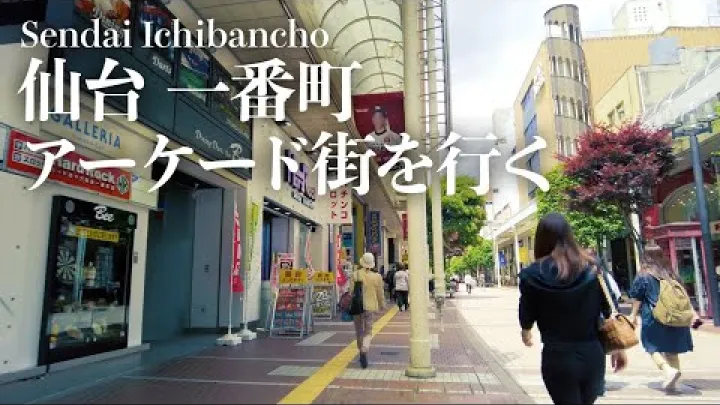
During the day, active shopping streets can make navigation and casual dining easy. In the evening, the experience depends on whether the property faces a main arcade, a restaurant street, or a quieter side road. Ichibancho is therefore a good match for first-time sightseers, couples, shoppers, and visitors who want central access without sleeping directly beside the station.
Use a current map to separate the station-facing parts of the arcades from the sections closer to Kokubuncho. Compare the hotel's actual walk to Sendai Station, its nearest subway access, and the route you will take after dinner. Walkability, dining convenience, and nighttime quietness are separate factors; a hotel can be excellent for one and less suitable for another.
Kokubuncho: The Best Area for Nightlife
Kokubuncho is the clearest choice for travelers who want Sendai nightlife close to their accommodation. The official local tourism guide describes a dense concentration of nearly 3,000 restaurants and bars within an area measuring about 900 by 250 meters. This includes many kinds of evening entertainment, so the district can suit visitors who want to explore after dinner rather than return to a station-side hotel.
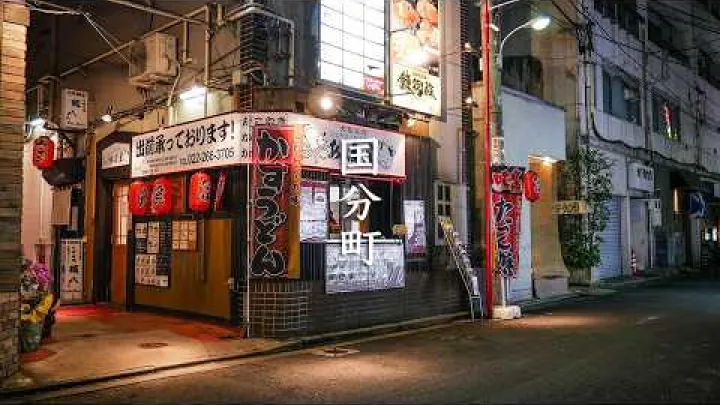
Staying nearby can simplify the end of the night. You may be able to walk back after visiting a restaurant, bar, music venue, or club instead of arranging a longer transfer. It can also be useful for a trip built around several evenings in the same entertainment district.
The trade-off is the same feature that makes Kokubuncho attractive: more activity after dark. Crowds, restaurant deliveries, voices, traffic, or nearby entertainment can affect sleep depending on the exact street and room position. This is an atmosphere decision, not a general safety label. If quiet sleep matters, choose a property set back from the busiest entertainment streets and examine recent property comments about noise and the late-night route.
Jozenji-dori and Hirose-dori: A More Relaxed Central Base
Jozenji-dori and Hirose-dori offer central urban locations with a streetscape that can feel different from the station area and the concentrated nightlife core. Jozenji-dori is associated with tree-lined streets, while the broader central corridors connect visitors with cafés, shopping, and cultural facilities. These areas may suit couples, culture-focused visitors, international guests, and longer stays that value an attractive everyday environment.
They are a compromise rather than a completely separate base. You still have central Sendai around you, but a hotel on one of these avenues may not be as direct for a Shinkansen departure as a property beside Sendai Station. The most useful comparison is door to door: the walk to the station, the walk to Kokubuncho, access to the nearest subway station, and the places you expect to visit most often.
Traffic, events, and the precise side street can change the nighttime experience. An avenue-facing room may be less quiet than a room on a side street, while a side-street property may involve a longer walk to shops or transit. Identify the nearest landmark or station for each hotel rather than relying on the avenue name alone.
Residential Subcenters for Families and Longer Stays
Not every traveler needs to sleep in the tourist core. Sendai's subway network and residential subcenters can be useful when you are visiting relatives, attending a local event, working for several weeks, or prioritizing neighborhood services over nightlife. These areas should be considered for a specific reason, because the mainstream short-stay hotel choice is more visibly concentrated around Sendai Station and central Aoba Ward.
Nagamachi, Izumi-Chuo, and Arai: What They Offer
Nagamachi is a southern residential and commercial subcenter with shopping facilities and connections toward central Sendai. It may work for families or visitors whose plans are in the southern part of the city. Its everyday services can be more relevant than tourist branding when the trip involves a longer stay or a local appointment.
Izumi-Chuo is a northern subcenter associated with parks, schools, and family-oriented services. It can appeal to visitors who need a calmer base or have a destination in northern Sendai. For a conventional first-time sightseeing trip, however, staying farther north may add unnecessary movement if most activities are around the station and central Aoba Ward.
Arai is an eastern residential area connected with central Sendai by the Tozai Line. It may be practical when your destination is on that line, when a particular property meets your family or medium-term needs, or when local residential surroundings are more important than being near the main station.
These districts are conditional alternatives, not guaranteed hotel clusters. Neighborhood suitability and accommodation availability are different questions. A location can be pleasant for living but have limited current choices for international visitors, short stays, late check-in, or larger room configurations.
What to Verify Before Booking Outside Downtown
Before choosing a property in a residential subcenter, confirm the exact address, nearest station, walking distance, route frequency, and practical return options. A listing that names Nagamachi, Izumi-Chuo, or Arai may cover a wider area than you expect. The actual map pin determines whether the journey is a short walk, a bus connection, or a transfer with luggage.
Also check whether the property accepts your intended length of stay and provides the facilities you need. Families may require connecting or larger rooms, elevators, laundry, luggage storage, or a nearby supermarket. Longer-stay visitors may need a kitchen, workspace, stable internet, cleaning arrangements, and a clear policy for staying several weeks. A quieter base can reduce downtown convenience and evening dining choices, so include the return journey in your decision.
If a suitable current property is difficult to confirm, the Sendai Station–Ichibancho corridor is the safer flexible default. It usually gives you more alternatives if your arrival time changes, if the weather affects plans, or if you decide to eat and sightsee in the center each evening.
Sakunami and Akiu: Where to Stay for an Onsen Trip
Sakunami and Akiu should be viewed as separate lodging environments rather than outer neighborhoods of the city center. They suit travelers who want hot spring bathing, scenery, traditional hospitality, meals, and time at the accommodation itself. They are less suitable when the main purpose is to walk between Sendai's shopping streets, restaurants, and transport hubs.
Choose an Onsen Ryokan for an Overnight Retreat
An onsen ryokan changes the structure of a trip. In a central hotel, the room is usually a base for exploring the city. In a ryokan, bathing, meals, quiet surroundings, and the property experience may be the main event. This can be especially appealing after a busy urban itinerary or for travelers who want one restorative night in the Tohoku region.
Sakunami and Akiu are separate choices. Sakunami offers a more rail-oriented access possibility, while Akiu generally requires travelers to plan around buses or roads. That difference can affect luggage, arrival time, and whether you want to make the area a stand-alone overnight stop or combine it with Sendai city sightseeing.
Individual inns differ considerably. Before booking, contact the onsen inn or use its current official listing to confirm check-in time, meal plans, bathing facilities, shuttle service, access for guests who are not staying overnight, and any day-use rules. Do not assume that every property has the same room style, meal schedule, bathing hours, or transfer arrangement simply because it is in an onsen area.
An onsen ryokan is usually best when you are willing to organize the day around the inn. If you want late dinners in Kokubuncho, spontaneous shopping at Ichibancho, or multiple rail day trips, central Sendai will be easier.
Compare an Onsen Stay with a Sendai Day Trip
You have two sensible itinerary patterns. The first is to stay in central Sendai and visit an onsen area as an excursion. This favors travelers with limited time, changing sightseeing plans, varied restaurants, or a strong need for flexible transport. You return to one city base and avoid moving luggage between accommodation types.
The second is to move to a ryokan for one or more nights. This favors travelers who consider relaxation and the ryokan experience more important than urban convenience. A split itinerary can work well: begin near Sendai Station for rail and city sightseeing, then finish in Sakunami or Akiu for a slower overnight stay.
Day-use bathing and shuttle arrangements are property-specific. Treat them as itinerary details to establish for the particular inn, not as automatic services provided by the existence of an onsen area. If the transfer is difficult at your arrival time, the city hotel may be the more comfortable choice even when a day trip requires more planning.
How Sendai Transport Should Shape Your Accommodation Choice
Accommodation location matters most when it changes the number of transfers, the amount of luggage handling, or the time you must leave your room. Start with your arrival and departure modes, then consider sightseeing. A beautiful neighborhood that creates an awkward airport or Shinkansen journey may cost more energy than it saves.
Plan Around Shinkansen, Airport, and Highway Bus Connections
Sendai Station is the most flexible base for many visitors arriving by Tohoku Shinkansen, using the rail connection to Sendai Airport, or combining rail with a long-distance highway bus. Staying nearby reduces the distance between your room and the departure point, which is useful with large bags, early trains, late arrivals, or an unfamiliar station layout.
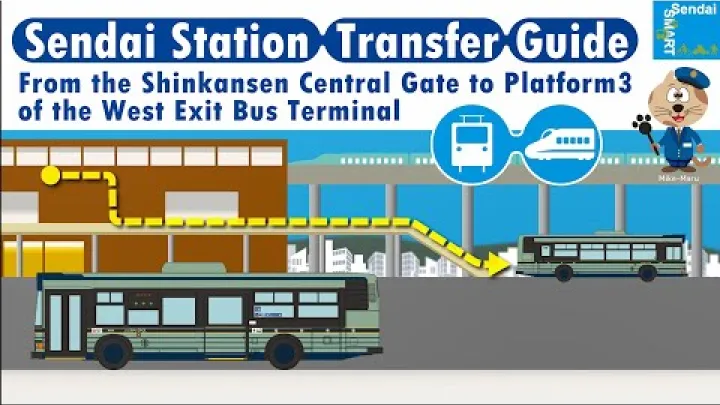
Station proximity also gives you a practical fallback. If you arrive later than expected, central hotels leave more options for food and taxis than a distant residential or onsen base. If your next journey leaves by a different operator, however, do not assume that every bus stop is inside the station building or beside the same exit. The relevant departure point can matter as much as the neighborhood.
A more distant district can still be a good choice when it sits directly on the line you need. For example, a traveler visiting a destination on the Tozai Line may find Arai practical, while someone with a northern local destination may prefer Izumi-Chuo. The advantage depends on the actual service pattern and transfer required, not just the name of the nearest station.
For your actual travel dates, check current JR, subway, airport-train, and highway-bus schedules before selecting a distant base. Confirm first and last services, transfer points, luggage requirements, and the departure location of the specific bus or train. General journey times are useful for initial planning, but they should not replace a date-specific route check. The station-exit orientation described by Japan Bullettrain can help with general rail planning, while operator information should control the final decision.
Use Local Rail and the Loople Bus for Sightseeing
The Namboku and Tozai subway lines make some subcenters viable when you have a location-specific reason to stay there. The JR Senzan Line and JR Senseki Line are also relevant when your itinerary includes regional destinations. The practical question is not simply whether a station exists, but how many times you will make the complete journey from your hotel door to the platform or sightseeing site.
Loople Sendai is designed around visitor movement through central sightseeing areas and can be useful when you want a sightseeing-oriented route rather than a series of ordinary transfers. Sendai Station remains the natural place to begin evaluating it because many visitors combine central attractions with JR travel. Route coverage, operating hours, fares, and pass usefulness depend on the service available for your trip, so use the current route information when building a specific day.
Compatible IC-card use can simplify ordinary transport, but acceptance and pass rules should match the service you intend to use. Do not buy a pass merely because it is marketed to visitors; compare the routes in your itinerary. A station hotel, a central downtown hotel, and a subcenter hotel may all be near public transport, yet the total door-to-door time can be very different once you include walking, transfers, and the return after dinner.
Choose the Right Accommodation Type and Budget
Sendai has accommodation for short business trips, rail-focused sightseeing, social budget travel, family visits, and onsen retreats. The best format depends on the purpose of the trip, the number of nights, the amount of privacy you need, and whether you want the property to be part of the experience.
Hotels for Convenience, Comfort, and Business Trips
City hotels around Sendai Station and central Aoba Ward are the most straightforward choice for short stays, business travelers, couples, and visitors who want predictable services. They commonly compete on location, room comfort, breakfast, reception support, laundry access, and easy connections to restaurants and public transport.
Representative properties to compare may include Hotel Metropolitan Sendai, Hotel Metropolitan Sendai East, Richmond Hotel Premier Sendai Ekimae, Hotel Monterey Sendai, and Daiwa Roynet Hotel SENDAI-ICHIBANCHO PREMIER. These names illustrate different central locations; they are not a permanent ranking. A hotel near the station may be better for an early train, while one near Ichibancho or Kokubuncho may be better for shopping or nightlife.
Compare hotels using the factors that affect your own stay:
- Walking route from the correct station exit, especially with luggage.
- Room configuration, bed size, and capacity for the actual number of guests.
- Breakfast schedule and whether the meal fits an early departure.
- Laundry facilities, front-desk hours, elevators, and luggage storage.
- Noise exposure from roads, arcades, event spaces, or nightlife streets.
- Cancellation terms and the final payable total.
Review scores can be useful, but they should not replace the location and policy comparison. A well-reviewed hotel is still inconvenient if it is far from the station you need or does not offer the room type your group requires.
Hostels for Budget and Social Travel
Hostels and guesthouses can suit solo travelers, backpackers, younger visitors, and anyone who gives priority to price or shared social areas. They may offer shared dormitories, private rooms, communal kitchens, or common spaces, but these features vary widely between properties.
The main trade-off is not only privacy. Check the bathroom arrangement, quiet hours, reception schedule, late-arrival process, luggage storage, and distance from Sendai Station. A lower nightly price may be less useful if you need a taxi after reception closes, cannot store a bag before check-in, or have an early train and a long walk.
Current listings in Aoba Ward or Wakabayashi Ward can illustrate market availability, but a listing should not be treated as proof that the property will remain open or equally central on every date. Hostel prices can change sharply with the weekday, season, events, and room type. Compare the actual private-room or dormitory option you intend to book, rather than using a headline price for the whole property.
Ryokan, Serviced Apartments, and Longer Stays
Onsen ryokan in Sakunami and Akiu are experience-led accommodation, not direct substitutes for central Sendai hotels. They are appropriate when bathing, meals, scenery, and quiet time are central to the visit. A city hotel is usually more suitable when your main plans involve shopping, nightlife, business meetings, or several transport connections.
Serviced apartments and medium-term lodging may be relevant to families, students, remote workers, and business visitors staying for several weeks. The available evidence does not establish a broad, consistently documented inventory across Nagamachi, Izumi-Chuo, and Arai, so treat these as property-led searches rather than guaranteed accommodation zones.
For an extended stay, compare kitchen access, laundry, cleaning schedules, minimum-stay rules, workspace, internet arrangements, and neighborhood services. Also consider the trip to the station and the availability of meals nearby. A residential location can be comfortable for daily life but less efficient if you expect to return to central Sendai every evening.
Prices, Seasonality, and Sendai's Accommodation Tax
Sendai offers many accommodation price levels, but there is no single nightly rate that represents the city. Hotel and hostel prices change with dates, weekday or weekend demand, room type, local events, season, cancellation flexibility, breakfast, and the number of guests. A booking page can show a useful current comparison, but an example price is valid only for the dates and conditions displayed.
Use budget, mid-range, and higher-priced categories as search filters rather than fixed promises. Station hotels often provide the widest range of room types and service levels. Central downtown properties may differ more by street and room position than by district name. A ryokan may appear expensive beside a room-only city hotel but include meals, bathing, and an experience that is not comparable on a nightly-rate basis.
Current visitor information from Discover SENDAI reports a Sendai accommodation tax of 300 yen per person per night when the accommodation fee reaches the stated threshold of 6,000 yen or more. Treat this as a rule to confirm for your booking and travel date. Before payment, check whether the quoted accommodation price includes Sendai's accommodation tax, other taxes, service charges, meals, parking, or optional facilities.
When comparing prices, record the travel dates, currency, room occupancy, cancellation conditions, included meals, and final payable total. This prevents a flexible rate, a per-person price, or a room-only offer from appearing cheaper than a less flexible package with more included services.
Safety, Nighttime Walkability, and Booking Checks
Safety and comfort are affected by the actual route to your accommodation, not only by the name of the district. Compare lighting, crowds, staffed entrances, reception arrangements, noise, and the distance from your evening plans. The same broad area can contain both busy commercial streets and quiet side roads.
How to Think About Safety After Dark
Japan is generally considered a safe destination, but normal travel awareness remains important. The JNTO emergency guidance advises visitors to be aware of potential dangers and know what to do if an incident occurs. This general national guidance does not provide a reason to make unsupported crime comparisons between Sendai neighborhoods.
Nighttime experience varies by setting. Station and shopping areas may remain active and easy to navigate, Kokubuncho is more entertainment-focused, and residential or onsen areas are quieter with fewer late-night services. Choose according to your comfort with crowds, noise, empty streets, and walking after the last meal or event.
Before a late arrival or evening outing, review the property's route from the station or entertainment area. Check the late-night entrance, reception hours, arrival instructions, street lighting, elevator access, and whether you will need a taxi for the final part of the journey. Save 110 for police and 119 for fire or ambulance, and follow official local instructions during an emergency.
Check Location, Noise, Access, and Current Booking Terms
Use this final checklist before paying:
- Confirm the exact map pin and the correct station exit.
- Measure the practical walking route with luggage, including stairs, crossings, and underground passages.
- Check check-in time, reception hours, elevator access, and the late-arrival procedure.
- Read recent comments about street noise, nightlife, construction, traffic, and event-related changes.
- Confirm the room type, bed arrangement, occupancy limit, breakfast, shared bathrooms, communal baths, parking, laundry, and luggage storage.
- Review cancellation conditions and compare the final payable total, not only the headline nightly rate.
- Check the property's current official page and booking page together when amenities, policies, or operating status matter.
These checks are especially important when a property is outside the main station and downtown corridor or when you are booking a ryokan, hostel, serviced apartment, or unusual room format. Confirm the exact room type, cancellation policy, included amenities, and current property status on the booking page before paying. Accommodation examples in a guide should help you understand areas and lodging types, not function as a permanent ranking.
Final Recommendation: Match Your Sendai Base to Your Itinerary
Sendai is easiest to plan when you choose the base before choosing the property. Start with the part of the trip that would be most difficult from the wrong neighborhood, then select accommodation that solves that problem.
A Practical Booking Sequence
Use this sequence:
- Define the trip purpose. Choose Sendai Station for maximum transport flexibility, Ichibancho or central Aoba for shopping and urban sightseeing, Kokubuncho for nightlife, a residential subcenter for a specific family or longer-stay need, and Sakunami or Akiu for an onsen-centered visit.
- Select the accommodation type. Compare a city hotel, hostel, ryokan, or verified longer-stay property according to privacy, budget, length of stay, meals, laundry, and the role of the accommodation in your trip.
- Test the complete route. Consider the journey from arrival point to hotel, hotel to the main sightseeing areas, and hotel back to the relevant departure point. Include luggage and late-night movement.
- Compare the actual booking terms. Check the room configuration, noise environment, check-in arrangements, included services, cancellation policy, taxes, and final total.
- Choose the simplest base that meets your priority. Do not move to a distant area merely for a lower headline rate if the transfers, meals, or return journeys remove the benefit.
If you are unsure, start your search around Sendai Station and the Ichibancho corridor. Move toward Kokubuncho when nightlife is the priority, toward Jozenji-dori or Hirose-dori when central atmosphere matters more, toward a residential subcenter for a confirmed local need, or toward Sakunami and Akiu for an overnight hot spring retreat. Recheck transport schedules, accommodation conditions, and local policies for your actual travel dates, then book the base that makes your itinerary simplest and most comfortable.
Select area
Create a post
Posting is free and no registration is required.