Sendai Getting There: Train, Plane, Bus, and Ferry Guide
Sendai getting there is easiest when you separate the long-distance journey from the final trip into the city center. From Tokyo and Ueno, the Tohoku Shinkansen is the main rail choice; from distant Japanese cities and nearby parts of East Asia, a flight to Sendai Airport may be more practical. Highway buses provide budget and overnight alternatives, while the Port of Sendai Ferry Terminal serves travelers who value a slower journey, a vehicle connection, or more luggage flexibility. This guide compares travel time, cost position, comfort, booking effort, arrival point, and transfer complexity so you can choose a route that fits your starting point.
Getting to Sendai at a Glance
Sendai has three principal long-distance arrival points: JR Sendai Station, Sendai Airport, and the Port of Sendai Ferry Terminal. The best route depends first on where you start and then on whether speed, price, sleep, luggage capacity, or simple transfers matter most.
Choose a route by speed, price, comfort, and booking effort
For travelers starting in Tokyo, the Tohoku Shinkansen is usually the clearest benchmark. It arrives in the city center and avoids the separate airport journey required by air travel. Highway buses can reduce the fare or replace a hotel night, but they take longer and are more exposed to road conditions. Flights become more competitive when the starting point is far from Tokyo or outside Japan, because the alternative rail journey may require several long connections.
| Option | Best starting points | Total journey profile | Cost position | Main arrival point |
|---|---|---|---|---|
| Tohoku Shinkansen | Tokyo, Ueno, northern Tokyo | Fastest and usually simplest from Tokyo | Often higher than a bus; fare depends on ticket product | JR Sendai Station |
| Flight | Distant Japanese cities and nearby overseas origins | Flight time can be short, but airport procedures add time | Highly dependent on airline, date, baggage, and booking conditions | Sendai Airport |
| Highway bus | Tokyo, Yokohama, Haneda, and selected regional cities | Longer; daytime and overnight patterns are available where listed | Often the budget-oriented choice, but promotions are limited | Operator-specific Sendai stop |
| Ferry | Tomakomai, Nagoya, and other connected ports | Slow, sailing-based, and suitable for an overnight-style journey | Depends on cabin, passenger, vehicle, and seasonal conditions | Port of Sendai Ferry Terminal |
These comparisons cover the complete journey, not only the moving vehicle. For a flight, include travel to the departure airport, check-in, security, baggage collection, and the airport-to-Sendai transfer. For a ferry, include access to the port and the trip from the terminal into the city. For a train or bus, include the time needed to reach the boarding point and to walk from the arrival stop to your accommodation.
Choose the Shinkansen when you start near Tokyo, want a central arrival, or need a dependable daytime schedule. Choose a flight when your origin is distant and a direct or convenient service to Sendai Airport is available. Choose a bus when saving money or traveling overnight is more important than speed. Choose a ferry when you have a flexible itinerary, a vehicle, or bulky luggage and want the journey itself to be part of the experience.
Use JR Sendai Station as the main arrival hub
JR Sendai Station is the practical center of most arrival plans. It connects the Tohoku Shinkansen with conventional JR lines, trains on the Sendai Airport Access Line, the Sendai Subway, and bus services for the city and surrounding areas. Travelers arriving by Shinkansen can move directly from a long-distance platform to a local train, subway route, or bus without first traveling to another part of the city.
Sendai Airport and the Port of Sendai Ferry Terminal are different gateways. Neither is another name for JR Sendai Station. Airport travelers must make a separate trip from Sendai Airport Station or another airport transport option into the center. Ferry passengers must travel from the port to the station area by a scheduled bus, a combination of regional rail and road transport, or a taxi.
Think of JR Sendai Station as a reset point. Confirm your onward destination, identify the relevant operator, and then choose the local train, subway, or bus from the station area. This is especially useful if your final accommodation is in Akiu Onsen, Matsushima, Shiogama, Sakunami, or another base outside central Sendai.
Getting to Sendai by Tohoku Shinkansen
The Tohoku Shinkansen is the main long-distance rail connection between Tokyo and Sendai. It is also the route against which many travelers compare buses and flights.
Travel from Tokyo or Ueno to Sendai
Most travelers use Tokyo Station as the departure point for a direct Tohoku Shinkansen service to JR Sendai Station. The fastest services take about 90 minutes according to Discover Sendai, making rail particularly attractive when the alternative involves an airport transfer. Treat that figure as a route benchmark rather than a promise for every train.
Services differ in stopping pattern and journey time. A faster train may make fewer stops, while a more stopping service may offer a different timetable or seat arrangement. Check the exact departure, arrival, service type, and reservation status for your date instead of assuming that every Tohoku Shinkansen train takes the same amount of time.
Ueno Station can be convenient for travelers staying in northern Tokyo or arriving from Narita through the Keisei route. It may reduce the amount of city travel before the Shinkansen, particularly if your accommodation is near Ueno or if you prefer to avoid the largest Tokyo Station transfer. If you are coming from Narita, however, Ueno still requires a separate airport-to-station journey and a transfer between Keisei Ueno and JR Ueno.
When comparing Tokyo and Ueno, use the station that creates the simplest complete route. A slightly shorter first leg is not useful if it requires a difficult walk with luggage or leaves little time before the reserved train.
Reservations, seat types, and rail passes
Long-distance Shinkansen travel involves more than choosing a departure time. Depending on the service and current rules, you may choose a reserved seat or a non-reserved seat. A reserved seat gives you an assigned place on the selected train. A non-reserved option, where offered, may provide more flexibility but does not guarantee that you will sit together or find a seat during a busy period.
Ordinary-class travel is the usual practical choice for many visitors. Higher-class seating can offer additional space or a quieter environment, but compare the current fare and actual seat product before paying. Consider whether your ticket includes a reserved seat, whether it can be changed, and what happens if you miss the selected train.
Rail-pass value depends on the specific pass, traveler eligibility, validity area, and the rest of the itinerary. A pass useful for several long-distance journeys may not be worthwhile for one Tokyo–Sendai trip. Reservation procedures and pass conditions can also differ from ordinary ticket purchases, so check the current conditions for the pass you intend to use.
Do not assume that a local IC card alone covers every Shinkansen booking pattern. Local trains and subways commonly use different ticketing arrangements from reserved long-distance rail products. Before leaving for the station, confirm whether you need a separate ticket, a reservation linked to an IC card, or a pass-based booking.
Getting to Sendai by Highway Bus
Highway buses connect Sendai with Tokyo and other cities, but the available route depends on the operator and date. They are most useful for travelers whose priorities differ from those of a fast rail journey.
Daytime and overnight buses from Tokyo and other gateways
Highway bus listings can include routes between Sendai and major gateways such as Tokyo, Yokohama, Haneda, and selected regional cities. The JR Bus Tohoku site separates highway bus, route bus, and sightseeing bus information, which helps distinguish an intercity journey from a local connection. Other booking platforms may show routes from nearby Tohoku cities, including connections involving Yamagata, when those services are available.
Daytime buses are suitable when you want to leave and arrive during normal waking hours and do not mind a longer road journey. Overnight buses can save the cost of a hotel night and may allow you to reach Sendai in the morning. The trade-off is sleep quality. Seat width, recline, privacy features, lighting, and the number of stops vary, so an overnight ticket is not automatically a comfortable substitute for accommodation.
Bus arrival points also vary. A service may stop near JR Sendai Station, at a specific highway-bus terminal, or at another city stop. These locations may be close but are not necessarily the same platform or building. Confirm the arrival stop before deciding how easily you can reach a hotel, subway station, or onward regional bus.
Buses are more sensitive to traffic, weather, road conditions, and other disruptions than rail. That matters if you have a fixed tour, ferry connection, work meeting, or same-day domestic flight after reaching Sendai.
Booking, comfort, and reliability trade-offs
Book through the selected operator’s website or a recognized booking platform that clearly identifies the operator. An English-language interface can make the process easier, but the booking page should still show the Japanese boarding stop, departure terminal, arrival stop, seat type, and passenger details. Keep the confirmation available on your phone and note whether a printed ticket or exchange procedure is required.
Before paying, review the exact boarding stop, seat configuration, baggage rule, and cancellation policy for the selected service. Do not treat these rules as universal. One bus may have a generous luggage compartment while another may restrict large items. One service may allow changes through the booking site, while another may require cancellation and a new purchase. Payment methods and IC-card acceptance can also differ.
Comfort depends on more than the seat diagram. Consider whether you can sleep on a moving bus, whether you need to arrive ready for work, and whether you are carrying a large suitcase. An overnight bus may be good value for a flexible traveler, while a daytime bus may be preferable if you want to see the route and avoid losing a night.
Choose a bus when the fare or overnight timing is the main advantage. Choose rail when arrival time, space to move, or easier recovery from a delay matters more. If a road journey is essential for a time-sensitive plan, avoid building an immediate connection around the scheduled arrival alone.
Flying to Sendai Airport
Sendai Airport is the main aviation gateway for Sendai and the wider Tohoku region. It is outside the central city, so air travel always includes a final ground connection.
Direct international and domestic flights
Sendai Airport is useful for travelers coming from distant Japanese cities and nearby parts of East Asia. The official tourism guide identifies international connections involving Taiwan, Hong Kong, China, and South Korea, although routes and frequencies can change with airline planning and season. Do not treat a general destination list as proof that a flight operates on your travel date.
Domestic flight availability also changes by airline and season. A direct flight can be competitive from western Japan, Hokkaido, or another distant region when the alternative requires several rail changes or a long journey back through Tokyo. From Tokyo itself, the flight time may look attractive, but travel to the airport, check-in, security, boarding, baggage collection, and the ride from Sendai Airport can reduce or remove that advantage.
Compare the full fare rather than only the base airfare. Add checked-baggage charges, seat fees, airport access, and the cost of getting from Sendai Airport to your accommodation. Also compare booking conditions. A cheaper fare may have stricter change or cancellation rules, while a flexible fare may be more valuable if your arrival time is uncertain.
For nearby overseas origins, Sendai Airport can avoid a long transfer from Narita or Haneda. For origins without a suitable Sendai service, arriving in Tokyo and continuing by Shinkansen may be more practical. The right choice depends on the date, connection time, and where you need to be after landing.
Take the Sendai Airport Access Line to central Sendai
Sendai Airport Station and the Sendai Airport Access Line provide the primary rail connection to JR Sendai Station. For a central-Sendai hotel, this is generally the simplest airport arrival because it takes you toward the main station hub rather than requiring a road transfer into the city.
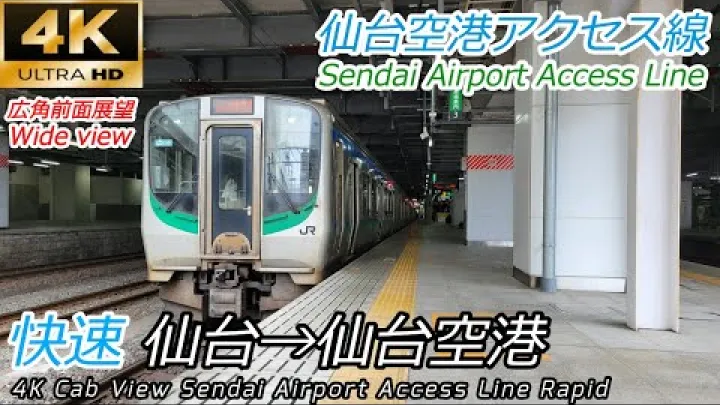
The Sendai Airport Transit page provides current airport-station fare and timetable information. Use it to compare journey time, fare, stopping pattern, and departure interval for your arrival period. Services can differ, so read the destination and stops shown for the particular train rather than boarding based only on a platform sign.
A bus, taxi, or rental car may be more suitable if you have unusually heavy luggage, are traveling to a rural area, or arrive after the most convenient rail services. A road option can also be useful for Akiu Onsen or other destinations where changing at JR Sendai Station would add a substantial detour. For most travelers going to central Sendai, however, the airport railway is the starting point for the comparison.
Late arrivals require special care. Check that the last Sendai Airport Access Line departure fits your actual landing plan, not only the scheduled arrival time on your flight ticket. Allow time for immigration, baggage collection, walking through the terminal, and finding the station. If the connection is too tight, select a later confirmed option, arrange suitable accommodation near the airport, or choose another transfer only after confirming its availability and cost.
Getting from Narita or Haneda Airport to Sendai
Tokyo’s airports are important gateways for international travelers, but reaching Sendai from them is a separate multi-stage journey. The common plan is to travel from the airport to a Shinkansen station and then continue north.
Narita Airport via Tokyo Station
The standard Narita-to-Sendai pattern is airport rail to Tokyo Station followed by the Tohoku Shinkansen to JR Sendai Station. Depending on the timetable and airport terminal, an airport express service such as the Narita Express may be part of the first leg. Select the exact service after checking your arrival time and terminal.

This route is easy to understand but not effortless. Tokyo Station is large, and the airport train and Shinkansen use different areas and ticket gates. A traveler with large luggage may need elevators, long corridors, and separate tickets or reservations. The transfer is more than a change of platform, so leave a generous buffer rather than booking a tight airport-to-Shinkansen connection.
Calculate the complete journey from the time your aircraft reaches the gate. Include immigration, baggage collection, customs, airport-rail ticketing, waiting, the journey into Tokyo, the station transfer, and the Shinkansen leg. A scheduled airport train that looks fast on paper may not produce the fastest arrival if the connection leaves no margin for a delayed flight.
A Tohoku University access guide describes the main Narita access patterns through Tokyo and Ueno. It can help explain the route sequence, but older example fares and journey times should not be copied as current prices or schedules.
Narita Airport via Ueno or a direct flight
The Ueno pattern uses the Keisei route from Narita to Keisei Ueno, followed by a walk or transfer to JR Ueno and a Tohoku Shinkansen service. Keisei Ueno and JR Ueno are separate station areas. They are not one platform, even though the names are similar and the stations are connected by a walk.
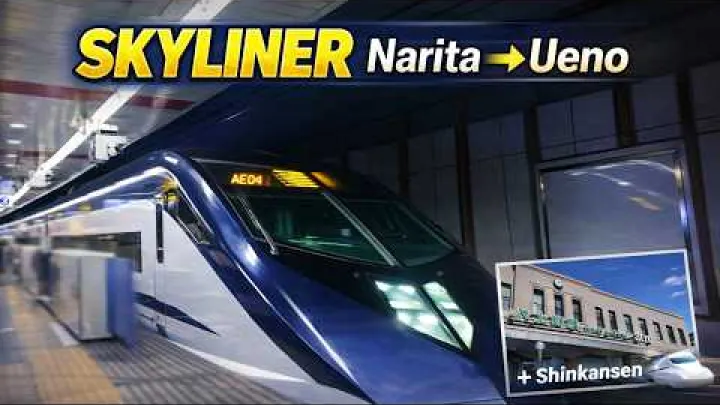
The Keisei Skyliner can be one fast airport-rail option, while other Keisei services may offer a different balance of fare, stops, and convenience. Choose based on accommodation, luggage, arrival time, and confidence with a station-area transfer. Ueno can be a good choice if you are staying nearby or prefer the northern Tokyo route, but it is not automatically cheaper or easier for every traveler.
A direct Narita-to-Sendai flight is worth considering only if a current service operates on your date and the schedule fits your international arrival or onward plan. Compare its total fare, frequency, baggage terms, and airport connection with rail. A flight can reduce the Tokyo station transfer but may add check-in time, a second airport process, and less flexibility if the service is limited.
If you have several large bags, choose the route with the fewest difficult changes rather than the shortest in-vehicle time. If you are staying near Ueno, the Ueno pattern may be convenient. If your accommodation or meeting is closer to Tokyo Station, traveling through Tokyo may reduce your final city transfer.
Haneda Airport options
From Haneda, compare three patterns: rail to Tokyo Station or Ueno Station followed by the Tohoku Shinkansen, a direct highway bus to Sendai where a current service is listed, or a domestic flight to Sendai if an appropriate service is operating. These are different products, not interchangeable timetable entries.
Rail is often the most straightforward fallback because it separates the airport transfer from the long-distance train. You still need to allow time to reach the correct Shinkansen departure station and move through a busy station with luggage. A direct bus can reduce the number of changes, but its boarding point, operating days, and road journey must suit your landing time.
A domestic flight may look fast, but compare airport access, check-in, security, baggage rules, and the Sendai Airport transfer. It may suit a traveler whose final Japanese origin or destination is already connected by air. It is less attractive if the flight is infrequent or if you would need a long wait between the international arrival and domestic departure.
For the fewest transfers, choose a direct bus only when its current schedule clearly fits. For a lower-cost plan, compare rail and bus fares after adding every airport transfer. For a more predictable daytime arrival, rail is often the clearest reference point. In every case, separate the Haneda-to-station or Haneda-to-Sendai leg from the Tokyo-to-Sendai leg when calculating the real journey.
Getting to Sendai by Ferry
Ferry travel is a specialist option rather than a fast substitute for the Shinkansen or an airplane. It can be appropriate when the journey itself, vehicle access, or luggage capacity is part of the plan.
Taiheiyo Ferry routes and the Port of Sendai
The Port of Sendai Ferry Terminal is a long-distance gateway served by Taiheiyo Ferry. Depending on the current sailing plan, relevant connections can involve Tomakomai in Hokkaido and Nagoya. Ferry travel is organized around sailing dates and departure times, not frequent departures throughout the day, so it suits travelers who can shape their itinerary around the vessel.
A ferry may appeal to someone carrying a vehicle, transporting bulky luggage, or preferring a slower journey with an overnight-style travel period. Cabin categories create a different experience from a bus seat, but the total price depends on passenger arrangement, accommodation category, vehicle, and booking conditions. Compare the complete ferry cost with a flight or train rather than assuming that a lower passenger fare is the final price.
The terminal is outside the central station area. Even after the ship docks, you are not yet in central Sendai. Plan a land transfer to JR Sendai Station or directly to your accommodation, and allow time to disembark and reach the bus or rail connection. For a short city break, the ferry may take too much time. For a flexible Tohoku journey, it can be a practical and distinctive arrival method.
Travel from the ferry terminal to Sendai Station
The simplest land option is the direct bus between JR Sendai Station and the Port of Sendai Ferry Terminal when it is operating for the relevant sailing. A direct bus avoids an extra change and is usually the first connection to investigate, especially after an overnight crossing or when carrying luggage.
The alternative is a Senseki Line journey to a suitable station such as Nakanosakae or Tagajo, followed by a local bus or taxi to the terminal. This route has more stages and can be less comfortable with large luggage, but it may be useful when the direct bus does not match the ship’s arrival or departure.
Pay attention to the difference between local and rapid Senseki Line services. A rapid train may not stop at the station you need, while a local train may take longer but provide the correct access point. Use the ferry operator’s current port-access instructions to choose between the direct bus and the correct Senseki Line service. Do not assume that a bus connection will wait for every ferry arrival; align the land transfer with the sailing schedule and allow time for disembarkation.
Arriving at Sendai Station and Continuing to Nearby Areas
Reaching JR Sendai Station is often only the first part of the trip. The station is the main place to organize a local transfer, so identify the final destination before leaving the arrival area.
Find the correct station exit and onward mode
Sendai Station contains distinct areas for the Tohoku Shinkansen, conventional JR lines, the Sendai Airport Access Line, and connections toward the Sendai Subway. Bus terminals and city bus stops are also arranged around the station area. The correct route may therefore begin with finding an exit rather than immediately looking for a platform.
Use a simple sequence: confirm the final destination, identify the operator, check whether the service is a train, subway, city bus, or highway bus, and then follow signs for that mode. Shinkansen passengers should not assume that the nearest stairs lead to the subway or bus terminal. If you are going to a hotel, check whether it is closer to the West Exit, East Exit, a subway station, or a specific bus stop.
Station maps and signs can show similar destination names. Match the final Japanese place name on your reservation or map with the name shown at the ticket machine and platform. If uncertain, ask station staff before passing through a gate or boarding a bus. A short confirmation at JR Sendai Station can prevent a long detour.
Continue to Akiu Onsen, Matsushima, and other nearby bases
Travelers staying outside central Sendai commonly continue to Akiu Onsen, Matsushima, Shiogama, or Sakunami after arriving in the city. The onward mode depends on the destination. Akiu Onsen is commonly planned around a bus journey, while Matsushima and Shiogama are natural comparisons for regional rail through the Senseki Line. Sakunami may require a different local rail or bus arrangement.
If you arrive by Shinkansen, changing at JR Sendai Station is often the most dependable planning assumption. If you arrive at Sendai Airport, compare a direct local bus to your accommodation area only when one is listed for your date. Otherwise, take the airport railway to Sendai and make the onward connection there. A direct airport route can save a change, but a central-Sendai transfer may offer more departure choices.
Do not plan the onward leg only from the long-distance arrival time. Check the gap between services, the location of the local stop, luggage storage, and the final walk or taxi ride to your accommodation. Local buses and regional trains may have a different operating window from the Shinkansen or your flight, especially in the evening. Use current local transport information for fares, travel times, service days, and pass conditions.
Book and Verify Your Sendai Arrival Plan
A reliable Sendai arrival plan is based on the exact date and arrival point, not only on a route name. Use the transport operator, airport, ferry company, or a recognized booking site as the final source for the journey you intend to take.
Check official timetables, fares, and booking channels
Before booking, work through one consolidated checklist:
- Enter the exact travel date and, for airport journeys, the scheduled arrival time and terminal.
- Confirm the departure station, airport, or port and the final arrival point in Sendai.
- Read the complete timetable, including transfer time and the last practical connection.
- Check the fare, seat or cabin type, baggage or vehicle charge, and payment method.
- Confirm whether a reservation is required, when booking opens, and how tickets are collected.
- Read change, cancellation, refund, and missed-connection conditions before paying.
- Look for a service notice, seasonal timetable, construction notice, weather disruption, or other status update.
Official operator pages are the authority for booking conditions and service status. Route aggregators are useful for comparing options, but they may combine old fare examples, different ticket products, or schedules that do not apply to your date. Use a comparison page to identify a route, then open the relevant operator page to complete the decision.
Save the names needed for maps and ticket searches in both languages: JR Sendai Station, Sendai Station or 仙台駅; Sendai Airport Station or 仙台空港駅; and Port of Sendai Ferry Terminal or 仙台港フェリーターミナル. Recheck the selected operator’s exact timetable, fare, booking condition, and service status on the day of travel, particularly when your plan depends on one final train, bus, or ferry-terminal connection.
Plan for late arrivals, transfers, and service changes
Airport railways, local trains, highway buses, and ferry-terminal buses all have finite operating windows. A flight or ferry arriving late in the day may not connect with the service you would use at midday. The same problem can occur when immigration, baggage collection, traffic, or a station transfer takes longer than expected.
Build the plan backward from the final connection. For an international arrival, use the time you expect to leave the airport after border procedures, not the aircraft’s landing time. For a ferry, include disembarkation and the walk to the terminal bus stop. For a Tokyo airport connection, allow time to reach the Shinkansen station and find the correct concourse.
If the planned final service is no longer realistic, practical fallback choices include a later train or bus, an overnight stay near the airport or station, or a taxi. Treat a taxi as a confirmed option only after checking the pickup location, operating availability, and likely cost. For rural accommodation, contact the property in advance if a late arrival could affect check-in.
Avoid common ticket, bus, and taxi mistakes
Long-distance rail, highway buses, local trains, subways, and city buses may use different booking, boarding, and payment rules. Do not assume that the same IC card, reservation, or mobile ticket works across every part of the journey. Check whether the ticket is tied to a particular departure, boarding stop, or passenger name.
Local bus instructions can also differ. If the relevant operator tells you to board at the rear, take a numbered ticket, or pay when leaving, follow that operator’s instructions rather than relying on a general rule from another city. Keep an accepted payment method available if the service requires it, and ask before boarding if the procedure is unclear.
For last-mile purchases, use an official ticket office, a recognized booking platform, or a marked taxi rank. Confirm the destination and fare with staff or the driver before departure. Avoid unsolicited offers from people approaching you inside or near a gateway. Keeping the Japanese name of your destination available can make the final transfer clearer and reduce the risk of boarding the wrong service.
The Best Way to Get to Sendai Depends on Your Starting Point
From Tokyo or Ueno, start with the Tohoku Shinkansen to JR Sendai Station. From Narita or Haneda, compare the complete airport-to-station journey with any current direct bus or flight rather than comparing only vehicle times. From a distant Japanese city or nearby overseas origin, check Sendai Airport and add the Sendai Airport Access Line or another final transfer. Choose a highway bus when budget or overnight travel is the priority, and consider the ferry from Tomakomai or Nagoya when you have flexible time, a vehicle, or bulky luggage.
Once you know your arrival point, the rest of the plan becomes simpler: use JR Sendai Station as the central transfer hub, identify the correct local operator, and match the final service to your accommodation. A route slightly slower on paper may be better if it reduces transfers, protects your arrival time, or makes luggage and the onward journey easier to manage.
Select area
Create a post
Posting is free and no registration is required.