Qingdao Getting There: Flights, Trains, Buses and Ferries
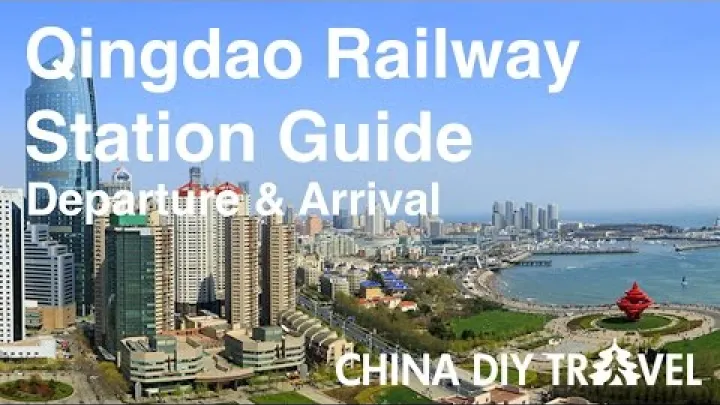
Getting to Qingdao is easiest when you compare the complete journey rather than only the flight, train or bus time. Long-distance and international travelers will usually start with flights, while high-speed rail is often a strong choice from Beijing, Shanghai, Jinan and other connected Chinese cities. Long-distance buses can help with selected regional trips, but ferry access from Korea requires special confirmation because published route information may not reflect the service on your travel date. This guide explains how to choose the right gateway, identify Qingdao’s arrival stations, book correctly and plan the final leg into the city.
Start with the Right Qingdao Arrival Option
Qingdao has several transport gateways, and the most convenient one depends on your starting point, final hotel district, luggage, arrival time and tolerance for transfers. A flight may appear shortest but include a long airport transfer and check-in process. A train may take longer on the timetable but offer a simpler city-to-city journey. Begin by comparing each option from your actual origin to your accommodation.
Compare Flights, High-Speed Rail, Buses and Ferries
As a practical starting point, choose flights for long domestic journeys and most international itineraries when a suitable service is available. Choose high-speed rail for corridors such as Beijing–Qingdao, Shanghai–Qingdao and Jinan–Qingdao when the departure station and arrival station work well for your plans. A bus can be useful for a regional Shandong journey or for a smaller city without a convenient railway connection. A ferry can be considered for a Korea–Qingdao itinerary only after the operator or port confirms the sailing.
Compare door-to-door time, not just time in the vehicle. For a flight, include the journey to the airport, check-in, security, boarding, possible delays and the transfer from Jiaodong International Airport to your hotel. For a train, include the trip to the departure station, security at the station, waiting time and the transfer from the Qingdao station named on the ticket. For a bus or ferry, include terminal access, baggage procedures, road or port delays and any border formalities.
| Transport mode | Usually suits | Cost and booking pattern | Main planning issue |
|---|---|---|---|
| Flight | Long domestic and international journeys | Fare and availability change by date, season and airline | Airport access, check-in and final transfer |
| High-speed rail | Beijing, Shanghai, Jinan and connected cities | Compare the live fare by train and seat class | The ticket may use a station outside the central districts |
| Conventional rail | Origins with limited high-speed service or flexible travelers | Check the actual train and class offered | Longer journey and potentially more overnight time |
| Long-distance bus | Selected regional and smaller-city routes | May offer a lower fare, but booking channels vary | Road congestion, changing terminals and language barriers |
| Ferry | Korea itineraries when a sailing is confirmed | Obtain a current operator quotation and sailing confirmation | Long crossing, port procedures and uncertain availability |
There is no useful permanent fare table for every route to Qingdao. Airfares change with demand and baggage choices, rail fares depend on the train and seat class, and bus and ferry prices depend on the operator and date. Use the live total shown at booking, then add the cost of local transport at both ends. Also consider booking difficulty. Airline websites are familiar to many international travelers, China Railway 12306 provides the core rail booking channel, and bus or ferry arrangements may require a Chinese-language app, a local contact or direct communication with the terminal.
Comfort and luggage can also change the decision. Rail avoids airport-style check-in for many travelers but still requires station security and a specific seat. A bus may stop closer to a regional destination but gives less protection from traffic delays. A ferry may allow a different luggage routine than a flight, but it adds port and border procedures. Choose the option that is reliable for the entire itinerary, not simply the one with the lowest advertised price.
Choose a Gateway Based on Your Starting Point
Travelers from Beijing should compare high-speed rail with flights to Qingdao Jiaodong International Airport. Rail is especially worth checking when the departure station is easy to reach and the hotel is near a suitable Qingdao railway station. A flight may still be preferable for a late booking, an international connection or an itinerary that continues directly from an airport.
Travelers from Shanghai can make the same comparison between a direct flight and a high-speed train. The better choice depends on the location of the departure airport or railway station, the available departure time and the Qingdao station used by the selected train. Do not compare the air and rail segments in isolation if one option requires an additional cross-city transfer.
Jinan can serve as an alternative gateway when air availability or fares to Qingdao are less suitable. One possible plan is to reach Jinan first and continue to Qingdao by rail. This is a complete two-leg itinerary, so check that the onward train is available after your arrival, allow time to change stations or terminals if necessary, and compare the combined cost with a direct Qingdao flight or train.
From other parts of China, search the live network from your actual city rather than assuming that a connection through Beijing or Shanghai is best. International travelers should first search for a direct flight to Qingdao, then compare a connection through a major Chinese hub if the direct option is unavailable or expensive. Seoul, other Korean gateways, Hong Kong, Tokyo and Osaka may appear as direct options on some dates, but routes and frequencies are date-dependent. Keep flights to Qingdao separate from the ferry question: a flight is not evidence that a passenger ferry is operating.
Arrive by Air at Qingdao Jiaodong International Airport
Air travelers arrive at Qingdao Jiaodong International Airport, Qingdao’s principal air gateway. The airport and its city access arrangements should be considered separately from the historic center because the airport is outside the central urban districts.
Qingdao Jiaodong International Airport and Flight Access
Search for Qingdao Jiaodong International Airport using the passenger code TAO. Some aviation systems also display the location identifier ZSQD. Older travel pages may refer to Qingdao Liuting Airport, so check the airport name carefully when comparing older instructions or arranging a pickup. The ANA airport guide is a useful wayfinding reference for the current Qingdao airport name and passenger context.
Qingdao Jiaodong serves domestic routes within China as well as international and regional Northeast Asian access. A flight search for your exact date may show direct services from major gateways such as Beijing, Shanghai, Guangzhou, Seoul, Hong Kong, Tokyo or Osaka. These examples should be treated as search targets, not as a permanent route list. Airlines can adjust seasonal schedules, operating days, aircraft and airport pairs.
Before building an itinerary around a fixed direct route, check the airline or airport system for a live TAO option on the intended date. A live airport information service such as Flightradar24 can help you understand current arrival and departure activity, but it should not replace the airline’s booking system for a purchase. If no convenient direct flight is available, compare an indirect itinerary through Beijing, Shanghai or another hub by adding the connection time, airport changes and baggage rules.
For international travelers, compare the complete ticket conditions as well as the fare. A cheap-looking itinerary may become less attractive if it uses separate tickets, requires collecting and rechecking baggage, or leaves little time between flights. A single booking can be simpler for a transfer, while separate tickets may provide more flexibility but place the connection risk on you. Check the transit and entry requirements that apply to your passport and itinerary through the relevant airline and official authorities.
Account for Jiaodong Airport's Out-of-Center Location
Jiaodong International Airport is not the same arrival point as Qingdao’s historic central districts. After landing, travelers may use a metro connection, an airport bus, a taxi or a pre-arranged transfer, depending on the destination and the operating hours on that date. The airport transfer itself is a separate planning stage from choosing a flight, so avoid judging a flight only by its time in the air.

For a daytime arrival, compare the current metro or airport-bus option with the price and convenience of a taxi. For a large group, heavy luggage or a hotel that is difficult to reach by public transport, a pre-arranged transfer may be easier. Check the exact destination address in Chinese as well as English if possible, because a driver needs the correct hotel or building rather than only the name of the wider district.
For an early-morning or late-night arrival, match the airport arrival time with a currently operating onward service before you pay for the flight. If the last metro or bus does not fit, keep a clearly identified taxi or pre-arranged transfer as a backup. The airport’s out-of-center location also matters when choosing accommodation: a central hotel may be convenient for sightseeing but add a longer final transfer, while an airport-area hotel may be easier after a late arrival.
Arrive by Train at Qingdao's Three Main Stations
Rail passengers need to treat the station name as part of the destination. Qingdao has more than one major railway gateway, and a ticket that contains the word Qingdao does not necessarily mean arrival at the historic central station. Check the Chinese and English station names before booking and compare them with your hotel location.
Qingdao, Qingdao North and Qingdao West Stations
Qingdao Railway Station, commonly displayed as Qingdao Station or Qingdao Zhan and sometimes shown with the Chinese name 青岛站, is in the central Shinan area. It is the station to examine first when your accommodation is in or near the historic central districts, although you should still plan the final city transfer from the station exit.
Qingdao North Railway Station, commonly displayed as Qingdao North, Qingdaobei or 青岛北站, is in Licang in the northern part of the city. It is a major rail gateway and may be used by high-speed or conventional services shown in the current timetable. It can be a good arrival point for a northern destination, but it is not automatically the most convenient choice for a hotel in central Shinan.
Qingdao West Railway Station, shown as Qingdao West, Qingdaoxi or 青岛西站, is in the western part of Qingdao. It may be practical for a western destination or a specific train pattern, but the extra road journey to a central hotel can change the value of an otherwise attractive ticket. Treat the station assignment on the ticket as decisive.
| Station name on booking screen | General location | Planning role | What to check |
|---|---|---|---|
| Qingdao Railway Station Qingdao Station 青岛站 | Central Shinan area | Often the first station to compare for central hotels | Exit, hotel address and final local connection |
| Qingdao North Railway Station Qingdao North 青岛北站 | Licang and northern Qingdao | Major intercity rail gateway | Whether the northern location is suitable for your hotel |
| Qingdao West Railway Station Qingdao West 青岛西站 | Western Qingdao | Useful when the service or final destination is west of the center | Road transfer time and destination district |
| Jiaozhou North Railway Station Jiaozhou North 胶州北站 | Jiaozhou area | Consider for an airport or regional rail connection only when shown | The complete onward route to Qingdao or your hotel |
Background information from China Discovery describes Qingdao Railway Station and Qingdao North Railway Station as handling high-speed D and G trains as well as some conventional services. That kind of station reference is helpful for orientation, but it is not a promise that a particular train will operate on your date. Read the live ticket details carefully, especially when a search offers several Qingdao-area stations.
Typical High-Speed Rail Routes from Beijing, Shanghai and Jinan
High-speed rail is often competitive with flying on domestic corridors because the railway station process can be simpler and many stations are closer to the urban area than airports. The comparison still depends on the departure station, the Qingdao arrival station and the time needed to reach your hotel. A train with a longer scheduled journey can be the faster complete option when the alternative flight involves a distant airport, a connection or a long wait.
Beijing–Qingdao is a representative corridor to check first. A 2026 route listing describes high-speed services on this corridor as taking about three to five hours, with the exact duration depending on the train. Use that figure only as a dated orientation: the live timetable, departure station, fare and seat availability on your date control the actual choice. Include the time needed to reach the Beijing station and the Qingdao station shown on the ticket.
Shanghai–Qingdao can also be compared as a rail-versus-flight decision. Look at the total route from your hotel or meeting point in Shanghai, not just the published train duration. If a train arrives at Qingdao North or Qingdao West while a flight arrives at Jiaodong, compare both final transfers. The most convenient mode may change according to the time of day and the location of your destination.
Jinan–Qingdao is a particularly useful regional connection to investigate. It may work as a direct trip from Jinan or as the onward rail leg after arriving in Jinan by air. Do not book the first leg until you have checked the onward train at a realistic time, including baggage collection, station access and a connection buffer. A single itinerary with a direct Qingdao arrival may be simpler even if its first advertised segment appears more expensive.
Conventional or overnight trains remain a possible budget-oriented alternative where the current timetable offers them and where a slower journey is acceptable. China’s rail system uses different train categories and not every route offers the same seats or sleeping arrangements. When the booking screen shows second class, first class or a sleeper category, compare the actual options displayed rather than assuming that every train has the same seating plan. The lower fare is useful only if the additional travel time and arrival hour fit your plans.
Book the Correct Train, Station and Seat
Use the current China Railway 12306 system or a reputable integrated booking platform to search the exact origin, destination, date and passenger details. The official system gives the most direct view of the live train inventory, while a third-party platform may be easier for international users or provide additional language support. Third-party services may add fees or have different change and refund procedures, so read the final price and conditions before payment.

Use this checklist before confirming a rail ticket:
- Enter the complete departure city and check the exact departure station. Large cities may have several stations with similar names.
- Search Qingdao, Qingdao North and Qingdao West as separate destinations when the route search allows more than one station. Select only a station that suits your final district.
- Read the train number, departure time, arrival time and seat class. Do not rely on a summary that displays only Qingdao.
- If the ticketing system requests passport or other real-name information, enter it exactly as required by the current instructions and carry the same travel document.
- Save the booking confirmation, passenger details and station names offline. Keep the Chinese station name available for navigation or questions at the station.
At the station, allow time for entry checks, security and finding the correct waiting area. The amount of time needed varies by station, crowding and your familiarity with the process, so a fixed universal boarding buffer is less useful than arriving with a clear margin. Check the departure information on site and make sure you are waiting for the correct train before moving to the platform.
Use Long-Distance Buses When Rail or Air Is Less Suitable
Long-distance buses are not usually the first choice for a long journey to Qingdao when a suitable high-speed train exists, but they can fill important regional gaps. They may serve smaller cities, places with limited railway access or travelers who prioritize a lower fare and a particular terminal location. The correct decision depends on the road route, the final Qingdao district and the reliability of the departure shown for your date.
When a Long-Distance Bus Is the Practical Choice
Consider a bus for a regional Shandong journey when it departs near your starting point and reaches a terminal that is convenient for your destination. This can avoid an indirect trip to a major railway station. A bus may also be useful when the available train is sold out, when the railway timetable does not match your schedule or when the final destination is closer to the bus terminal than to a railway station.
Compare the complete journey with rail. A bus may have a lower advertised fare, but road congestion, weather, rest stops and city traffic can make its arrival time less predictable. Rail usually offers a more structured journey and is often the stronger default for a longer intercity trip when a suitable high-speed service is available. A bus may still win on total access time if the departure point is much closer to your origin or the destination is outside the main rail network.
Comfort and baggage are also important. Check whether the ticket includes the type and amount of luggage you plan to carry, whether baggage is stored separately and whether the terminal has a practical waiting area. If you are traveling for a flight, ferry or important appointment, do not select a bus solely because its scheduled duration appears shorter than another option. Leave room for road conditions and a final transfer across Qingdao.
Find, Book and Recheck Bus Departures
Start by identifying the exact departure terminal, not just the city. Qingdao has several long-distance bus access points and local listings may use different English translations. A directory such as China Bus Guide can help you identify possible long-distance bus stations and their general information, but a directory is not a live timetable. Confirm the route, departure point and ticket conditions through the current operator or station channel.
Before buying, check the departure time, terminal address, destination name, baggage policy, refund conditions and language used for the booking. Save a screenshot of the ticket and the Chinese name of the terminal. If the booking interface is difficult to use, ask your hotel, host or a trusted local contact to confirm the departure information. Ask for the exact address rather than only the name of the bus station, because a route can be moved or displayed under a different translation.
Recheck the bus departure through the current operator channel or a local station notice on the day before travel. This is especially important when your trip depends on one bus, a late arrival, a connecting flight or a fixed event. Keep a rail or flight alternative in mind for an important connection. Do not pay for a route based only on an old directory entry, an undated social-media post or a timetable copied by an international aggregator.
Treat Sea Access from Korea as Uncertain
Qingdao’s position on the Yellow Sea makes sea travel from Korea appear attractive, but passenger-ferry information requires more checking than a normal flight search. Historical travel pages and ferry listings can remain online after schedules change. Treat the ferry as a special itinerary that is valid only when the operator or port confirms the sailing.
Treat the Qingdao–Incheon Ferry as a Check-Before-Travel Option
The Qingdao–Incheon passenger-ferry route has appeared in older travel material and online listings, including references to a Weidong service and the vessel New Golden Bridge V. Those references show that the route has been marketed or documented, but they do not establish that a sailing is operating on your date. Availability calendars and route pages can be incomplete, delayed or inconsistent with the port’s current passenger schedule.

Do not describe the ferry as permanently operating or permanently suspended without date-specific confirmation. Before paying or arranging hotels around the crossing, obtain direct confirmation from the ferry operator or the relevant port. Ask whether the sailing is available for your date, which passenger terminal to use, when check-in closes, what documents are accepted, how baggage is handled and what happens if the sailing changes. A listing such as Ferriesworldwide can help you recognize the route, but it is not sufficient confirmation by itself.
Compare the ferry with a direct flight between Korea and Qingdao as a complete journey. The ferry involves travel to the port, passenger check-in, security or immigration procedures, a long sea crossing and the onward trip from the Qingdao terminal. A direct flight is usually simpler and faster for a traveler whose priority is reaching Qingdao, although the final decision depends on fare, luggage, schedule and the experience you want.
Do not assume that an older Qingdao passenger-port arrangement is the current one. Port facilities, terminal names and passenger procedures can change independently of the city’s airport and railway information. Use the terminal named in the current confirmation and allow time for the required border and port procedures.
Use Alternative Ports Only with a Complete Onward Plan
Weihai or Yantai may appear as alternative Shandong sea gateways in a search for Korea connections. Treat them as contingency options rather than guaranteed substitutes for a direct Qingdao ferry. A possible sailing is not enough: you also need a confirmed onward rail, bus or private-road connection from the alternative port to your Qingdao destination.
Calculate the whole route in order: travel from your starting point to the Korean port, port check-in and border procedures, the crossing, arrival processing, travel from Weihai or Yantai to Qingdao and the final hotel transfer. Add the cost of each segment and consider what happens if the sailing arrives late. The additional transfer may remove the time or price advantage compared with flying directly to Qingdao.
Only commit after confirming both parts of the plan. The sailing must be confirmed by the relevant operator or port, and the onward connection must be available at a practical time. Avoid an alternative-port itinerary based only on a historical route listing or an undated report.
Book and Prepare for the Final Journey
Once you have selected a mode, treat the arrival gateway and the final city connection as parts of one booking decision. This prevents a low vehicle fare from becoming an expensive or difficult arrival in Qingdao.
Book Flights and Rail Through Current Operator Channels
Use a simple booking sequence:
- Write down your actual origin, final Qingdao district and preferred arrival window.
- Compare live flight and rail options, including the time and cost of reaching each departure gateway.
- Read the exact Qingdao airport, railway station or bus terminal name before payment.
- Check how you will reach the hotel after arrival, especially if the service arrives late.
- Save the booking confirmation, passport details, terminal address and relevant customer-service information offline.
For flights, use the airline’s booking system or a reputable flight platform, then confirm the airport code and baggage rules on the final ticket. For rail, use China Railway 12306 or a reputable integrated platform and compare the official train details with the confirmation you receive. The official channel gives the clearest control over the ticket record, while a third-party service may offer easier language support or payment options but can add a fee.
For buses and ferries, prioritize the current operator, terminal or local transport channel. International search tools may display only selected services and may not show a route change quickly. Fares, departure times, route availability and booking windows can change by date, season and operator, so keep the final confirmation accessible rather than relying on a saved search result.
Build Buffers for Transfers, Check-In and Late Arrivals
The fastest vehicle segment is not always the fastest complete journey. Add time for travel to the airport or station, airport security, railway-station entry, port procedures and the final trip into Qingdao. International itineraries may also require immigration or document checks. If you are connecting between separately booked tickets, use a larger margin because the first operator may not protect the second booking.
Check the operating hours of the final city connection before departure. Early-morning and late-night arrivals need special attention because a metro or airport bus may not fit your landing or train time. If the scheduled public transport is unavailable, arrange a taxi or private transfer through a reliable channel and keep the hotel informed of your expected arrival when possible.
Use flexible or changeable bookings when the plan depends on an uncertain bus, ferry or tight connection. This may cost more at the time of purchase, but it can reduce the cost of replacing a missed segment. For a business meeting, university registration or international connection, arrive in Qingdao with enough time to recover from a delay rather than scheduling the final transport at the narrowest possible margin.
Avoid Station Errors, Unofficial Sellers and Touts
At airports, railway stations and ferry terminals, use official ticket counters, clearly identified taxis and reputable booking applications. Confirm the destination, fare and booking details before departure. Do not follow unsolicited people who offer tickets, rides or unusually cheap transport, and refuse pressure to leave the official terminal or use a different vehicle.
Keep the exact Chinese and English name of your destination station or terminal with your booking. Show the address of your hotel rather than relying on a similar-sounding place name. Qingdao’s multiple railway gateways and transport access points make this a practical planning precaution, especially after a long journey or when using a translation application.
Final Qingdao Arrival Checklist
Use this checklist before you leave for Qingdao:
- Choose between flight, high-speed rail, conventional rail, bus and ferry by comparing the complete door-to-door journey.
- Search the correct airport, station or terminal. For air travel, look for Qingdao Jiaodong International Airport and the code TAO.
- For rail travel, confirm whether the ticket says Qingdao Railway Station, Qingdao North Railway Station or Qingdao West Railway Station.
- If you are considering Jiaozhou North, an alternative Shandong port or a ferry from Korea, map every onward segment before paying.
- Save booking confirmations, passport details, Chinese destination names and customer-service information offline.
- Match your arrival time with the currently available metro, bus, taxi or pre-arranged transfer to your accommodation.
- Allow practical time for check-in, security, station entry, port procedures and the final city transfer.
- Use official counters and reputable transport channels, and keep a backup plan for an important connection.
For most travelers, the final choice is straightforward once the arrival location is included: compare flights for long-distance and international access, compare high-speed rail for Beijing, Shanghai and Jinan, use buses selectively for regional journeys, and treat the Qingdao–Incheon ferry as valid only after direct confirmation. Checking the exact gateway and planning the last leg before booking will make getting to Qingdao more predictable.
Select area
Create a post
Posting is free and no registration is required.