Qingdao Where to Stay: Best Areas for Every Trip

Where to stay in Qingdao depends on whether your priority is classic sightseeing, beaches, mountain scenery, lower room costs, or convenient transport. For most first-time visitors, the best all-purpose base is central Shinan District around May Fourth Square and along the coastal corridor toward Badaguan, the bathing beaches, and Zhanqiao Pier. The old town is a better fit for historic streets and local food, while Laoshan and Huangdao suit more specialized nature and beach trips. This guide compares Qingdao areas, accommodation types, nighttime comfort, transport logistics, and the checks to complete before you pay for a room.
The Best Area to Stay in Qingdao for Most First-Time Visitors
Qingdao is easier to enjoy when your lodging matches the main purpose of your trip. A central room can cost more than a property in an outer district, but it may reduce daily travel, transfers, and route planning. The following recommendations give you a starting point before you compare individual hotels or apartments.
Make the Shinan Coastal Corridor Your Default Base
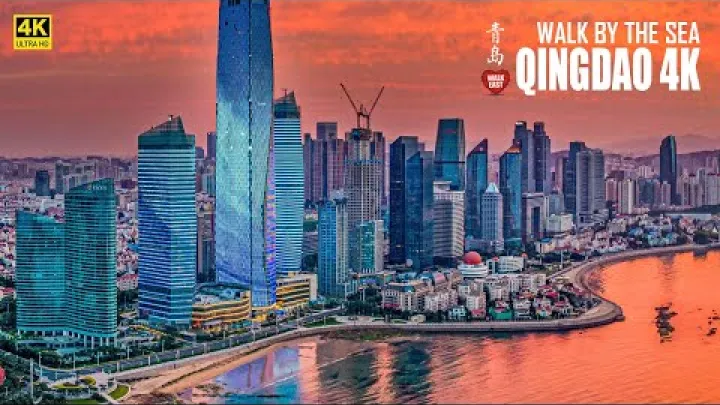
For most first-time visitors, choose central Shinan around May Fourth Square or along the coast toward Badaguan, Number One Bathing Beach, and Zhanqiao Pier. This is a broad corridor rather than one compact hotel street. It combines major urban services with seafront walks, restaurants, shopping, and access to several of Qingdao’s most recognizable visitor areas.
The area works well because it balances different kinds of sightseeing. You can stay near modern Qingdao around May Fourth Square, move toward the tree-lined streets of Badaguan, or choose an older coastal location closer to Zhanqiao Pier. The corridor also gives first-time visitors a practical base for returning to the hotel between activities. The central-location recommendation is also reflected by China Discovery, which points travelers toward downtown around May Fourth Square and the coastal line extending toward Zhanqiao Pier.
The main tradeoff is cost. Central coastal accommodation can be more expensive than rooms in Shibei, Licang, or other outer areas, especially for well-known brands and full-service hotels. However, the higher room rate may be worthwhile on a short trip if it saves time and makes evening walks easier. Compare the exact street, distance to a useful station, room position, hotel category, and likely noise level rather than treating all Shinan properties as equivalent.
When a Different Qingdao Base Is the Better Choice
Choose a different Qingdao base when your itinerary has a clear priority. The old town around Zhongshan Road and Zhanqiao Pier suits visitors focused on historic architecture, street food, railway convenience, and traditional urban atmosphere. Laoshan is more appropriate for hiking, coastal scenery, and a nature-focused stay. Huangdao, also called the West Coast, makes sense for Golden Sandy Beach, Lingshan Bay, resort time, or business in western Qingdao.
Chengyang District and the airport area are practical when a flight schedule matters more than sightseeing. Qingdao North Station can be the logical base for a rail connection or work in the northern part of the city. Jimo is best reserved for a specific northern or regional itinerary. These are priority-based choices, not general replacements for central Shinan. A listing described as downtown, seafront, or Qingdao may still be far from the particular attraction you plan to visit, so use the property’s exact address when deciding.
Qingdao Areas Compared: Atmosphere, Access, Walkability, and Cost
Qingdao’s main lodging areas offer different versions of the city. The table below is a quick comparison; the detailed sections explain what each base feels like and which travelers are most likely to enjoy it.
| Area | Best for | Evening and walkability | Cost tendency |
|---|---|---|---|
| May Fourth Square and modern Shinan | All-purpose sightseeing, shopping, business | Active waterfront and commercial areas | Often higher in central locations |
| Badaguan and central beaches | Scenery, heritage walks, beach access | Generally calmer; block-dependent | Varies by property and season |
| Old town | History, food, Zhanqiao Pier, rail arrival | Lively and potentially noisy near commercial streets | Budget to mid-range choices |
| Laoshan Scenic Area | Hiking, mountain and coastal retreats | Quieter, with fewer urban services in some locations | Budget value may be less competitive |
| Huangdao and the West Coast | Resort stays, open beaches, western business | Resort-oriented and location-dependent | Can offer value for beach-focused trips |
| Shibei and Licang | Lower-cost or practical urban stays | Local urban atmosphere; less immediate waterfront access | Potentially lower, but compare travel costs |
May Fourth Square and Modern Shinan
May Fourth Square is the strongest all-purpose base for travelers who want modern Qingdao. It offers a broad selection of hotels, restaurants, shopping, urban services, and seafront walking areas. Its position also makes it useful for visitors who want to combine the newer eastern waterfront and Olympic Sailing Center area with older coastal sights farther west.
This part of Shinan is especially suitable for business travelers, families, and first-time visitors who prefer predictable facilities. Branded mid-range and full-service hotels commonly appeal to people who value reception services, elevators, work space, family room options, or on-site dining. As a price and quality example rather than a permanent benchmark, a Booking listing snapshot for a hotel near May Fourth Square displayed a nightly rate from about $84.62 and a guest rating of 8.2. Rates and availability vary by dates, room type, and demand.
The disadvantages are a higher central price level and a more modern atmosphere than the old town. Major public spaces can also feel crowded, and events or busy streets may create more activity than a light sleeper wants. If you prefer quiet, look beyond the attraction label and inspect the exact road, building position, and room orientation.
Badaguan and the Central Bathing Beaches
Badaguan, Number One Bathing Beach, and the nearby central beach corridor are strong choices for visitors who value heritage scenery, tree-lined walks, sea views, and a calmer central environment. Badaguan is known for its historic streets and villas, while the wider beach area gives you a different kind of access to Qingdao’s coast. Together, they can provide a more relaxed base than the busiest modern commercial blocks.
This area suits couples, families, photographers, and travelers who want to spend part of the day walking near parks or the sea. Smaller boutique hotels, guesthouses, and properties with local character may be appealing where current listings confirm that they meet your needs. They can provide more atmosphere than a standardized business hotel, but facilities and room sizes may vary.
Badaguan itself should not be treated as one uniform hotel zone. A property beside a main road, bathing beach, or busy restaurant area may feel very different from one on a quieter side street. The area may also have fewer late-night dining choices and less direct transport convenience than modern Shinan, depending on the block. Do not assume that beach proximity means suitable swimming conditions or year-round beach activity; those depend on season and local conditions.
Old Town Around Zhongshan Road and Zhanqiao Pier
The old town around Zhongshan Road and Zhanqiao Pier is the best area to stay in Qingdao for historic architecture, street food, and a strong seafront atmosphere. It puts visitors closer to Zhanqiao Pier, Pichaiyuan, older streets, and nearby heritage attractions. The setting is more traditional and visually distinctive than the modern high-rise environment around May Fourth Square.
![Preview image for the video "[4K China] Walking In Qingdao | Zhanqiao Tier, Seaside | 青岛 栈桥 | China Walking Tour 2021".](/sites/default/files/styles/media_720x405/public/oembed_thumbnails/2026-08/7X66Z7HQgDRHrc5kLVBKQQ4Fmxwt03gCkpgpX9AfRys.jpg.webp?itok=AmpyeQIU "Preview image for the video \"[4K China] Walking In Qingdao | Zhanqiao Tier, Seaside | 青岛 栈桥 | China Walking Tour 2021\".")
Qingdao Station is an important local anchor for travelers arriving by train. Staying nearby can allow you to begin sightseeing soon after arrival instead of crossing the city to reach a hotel in eastern Shinan. The accommodation mix often includes budget hotels, hostels, guesthouses, and mid-range properties. This makes the old town useful for solo travelers, independent visitors, and people who would rather spend their budget on food and activities than on a full-service hotel.
Comfort varies more than it may in a modern branded property. Commercial streets can be busy after dark, and older buildings may have fewer standardized facilities or less sound insulation. If you want old-town access without staying directly above a busy street, search side streets and read recent comments about noise. Room orientation, building age, elevator access, cleanliness, and the condition of shared areas can matter as much as the district name.
Laoshan Scenic Area
Laoshan Scenic Area is a specialized base for travelers whose main purpose is hiking, mountain scenery, Taoist heritage, coastal views, or a quieter retreat. It is not simply another version of downtown Qingdao. A nature-focused traveler may enjoy spending several nights near the landscape, while a visitor planning repeated trips to the old town, May Fourth Square, or central evening areas may find the location less efficient.
District-level accommodation comparisons suggest that Laoshan may be less competitive for budget lodging than Shibei, Licang, or Huangdao. One Agoda comparison presents Laoshan among the more expensive areas in its budget-accommodation snapshot. Treat that information as a date-sensitive market signal, not as a fixed price rule, because individual guesthouses, weekends, seasons, and room standards can change the result.
Before booking Laoshan as a daily city base, confirm the property’s distance to the particular Laoshan Scenic Area entrance you intend to use. Also check current access options, nearby dining, and how you will return after a day outdoors. For many visitors, a split stay works better: central Qingdao for urban sightseeing and Laoshan for a dedicated nature segment.
Alternative Bases Outside the Coastal Core
Outer districts can be good choices when the trip is organized around a beach resort, airport, railway connection, or business appointment. They are less suitable when a short visit is mainly about walking between Qingdao’s classic coastal and historic sights.
Huangdao and the West Coast for Resort and Beach Stays
Huangdao, also known as the West Coast, follows a different destination logic from central Qingdao. It is a separate western urban and coastal base, not merely an extension of the Shinan sightseeing corridor. Travelers who prioritize Golden Sandy Beach, Lingshan Bay, open waterfront space, or a resort atmosphere may find it more satisfying than a central city hotel.
West Coast accommodation can be attractive for beach-focused trips and may provide value in some travel periods. It is also practical for business appointments in that part of Qingdao. The tradeoff is that classic old-town sightseeing around Zhongshan Road, Pichaiyuan, and Zhanqiao Pier becomes a longer cross-city activity. A short first visit should normally choose central Qingdao unless the West Coast itself is the main attraction.
Choose a West Coast-only stay when you want a relaxed resort trip or have work there. Choose a central base when you want the city’s historic and modern highlights with less daily movement. A split itinerary can combine both, but changing hotels is worthwhile only if the two areas provide substantially different experiences or solve a clear transport problem.
Shibei and Licang for Lower-Cost, Transit-Linked Stays
Shibei District includes parts of Qingdao’s older commercial urban fabric, so it should not be described as uniformly suburban. Some parts can feel connected to the city’s established neighborhoods and commercial life. Licang District is generally a more inland and practical base, with fewer iconic tourist sights immediately outside the property but potential value for travelers who are comfortable using public transport.
Accommodation evidence from Agoda identifies Shibei and Licang among areas with affordable hotel options, while also mentioning Huangdao. This does not establish a guaranteed nightly rate. Use the districts as search starting points, then compare the exact property, dates, room type, and distance to a station.
These areas suit cost-conscious visitors, repeat travelers, students, and business travelers whose destination is inland. The likely saving on the room can be reduced by longer daily journeys to the waterfront and historic attractions. Search by station and walking distance rather than by district name alone. A property on the edge of a district can have a very different daily convenience from one close to a useful rail connection.
Chengyang, the Airport Area, Qingdao North Station, and Jimo
Chengyang District and the area around Jiaodong International Airport are practical overnight bases for very early departures, late arrivals, airport business, or a suburban room that fits the budget. Their main advantage is logistics, not classic Qingdao atmosphere. If your flight leaves early, avoiding a long journey from the coastal core may be more valuable than being near a seafront attraction.
Qingdao North Station matters most to travelers with a rail transfer, a northern-city business appointment, or plans that begin in the northern part of the urban area. It is not normally the best base for a short trip centered on Badaguan, the bathing beaches, May Fourth Square, and Zhanqiao Pier. Jimo should be considered for a specific northern coastal, regional, or business itinerary rather than as a default sightseeing location.
Separate transport convenience from tourist atmosphere when comparing these bases. Check the current map and timetable for the airport or station, the property’s walking route, and the connection you need at your actual arrival or departure time. A location that looks close on a city-wide map may still require a difficult transfer or a taxi for the final part of the journey.
Choose Your Qingdao Lodging by Trip Purpose, Budget, and Stay Length
The best Qingdao accommodation is not necessarily the hotel with the highest rating or the lowest room price. Match the base and lodging type to how you will spend each day, how often you need to move, and what facilities are important in the room.
Best Bases for Sightseeing, Beaches, Night Walks, and First Visits
Use this priority guide to narrow the search:
- Classic first-time sightseeing: Choose May Fourth Square or the wider Shinan coastal corridor. You gain central access and a broad choice of services, but you may pay more than in an outer district.
- Historic streets and food: Choose the old town around Zhongshan Road, Zhanqiao Pier, or Pichaiyuan. You gain atmosphere and railway convenience, but busy commercial streets can be less restful.
- Beach access and scenic walks: Choose the central bathing-beach corridor or Badaguan. You gain coastal scenery and a calmer setting, but evening services and transport vary by block.
- Mountain and nature time: Choose Laoshan when hiking and coastal scenery are central to the itinerary. You gain a quieter environment, but central Qingdao becomes less convenient for daily visits.
- Resort or western business trip: Choose Huangdao and the West Coast. You gain proximity to Golden Sandy Beach, Lingshan Bay, or western appointments, but old-town sightseeing requires more travel.
Families often benefit from a central full-service hotel with easy access to food and a room layout that supports rest. Couples may prefer Badaguan, the central beaches, or an atmospheric old-town property. Solo travelers may favor a hostel or budget hotel near active commercial areas. Budget travelers should compare Shibei and Licang with the cost of daily transport, while business visitors should prioritize the address of the appointment over a generic district label.
Hotels, Boutique Stays, Hostels, and Resorts
A full-service or branded hotel is worth considering when you need predictable facilities, family support, business services, a reliable reception, or a low-planning trip. It can also be useful after a late arrival or a long day of sightseeing. The extra cost is easier to justify when you will spend little time searching for restaurants, transport, or practical services.
Boutique and heritage lodging fits travelers who value architecture, atmosphere, and a distinctive neighborhood setting. Look around the old town or the Badaguan and central beach corridor when the building and surroundings are part of the travel experience. Check the practical details carefully because local character may come with smaller rooms, older facilities, stairs, or less standardized service.
Hostels and budget hotels can suit solo travelers and tight budgets, especially in older commercial areas. Compare privacy, lockers, bathrooms, noise, reception hours, and room reviews rather than looking only at the lowest price. A resort-style property is a better match for a beach-focused stay in Huangdao or a selected coastal area. It is usually a poor choice if you plan to visit the old town every day.
Do not treat an individual hotel ranking as permanent. When a named property interests you, compare current reviews, the exact address, facilities, cancellation policy, and room category on the booking page instead of relying on a general list.
Serviced Apartments and Longer Stays
Serviced apartments can work well for longer stays, families, remote workers, and travelers who need a kitchen, laundry, extra living space, or a work area. For a week or more, neighborhood convenience may matter more than being beside a landmark. Supermarkets, daily dining, workspace, and a manageable commute can produce more value than a small room in the most central location.
A central apartment reduces sightseeing travel but may cost more. An outer-district apartment can offer more space or a lower room rate if it is genuinely close to a useful transport connection. The saving is less attractive when every outing requires a long transfer or a taxi. Think about how often you will travel to the coast, where you will buy meals, and whether the neighborhood works on days when you do not want to sightsee.
Before booking, confirm the included facilities and operating arrangements. Check whether cleaning is scheduled or charged separately, whether internet quality suits work, how laundry and kitchen equipment are supplied, how guests enter the building, and what cancellation terms apply. Do not assume that every listing has the same apartment services or that a larger room automatically provides a better long-stay experience.
How Much Centrality Is Worth Paying For
Decide whether centrality is worth the premium by calculating the total trip cost, not just the nightly room rate. Compare the room price, expected daily transport, travel time, number of transfers, convenience of returning after evening activities, and the value of having restaurants and services close by. A cheaper room is not necessarily cheaper when it adds transport costs and several hours of movement across a short visit.
Use the same dates, occupancy, room standard, and cancellation conditions for every comparison. A simple method is to multiply the nightly difference by the number of nights, then add the expected transport cost for sightseeing days. Also consider non-financial costs: a central base may let a family return for a break, while an outer base may be perfectly reasonable for a longer stay or a repeat visitor with a fixed route.
Central lodging is usually easier to justify for a short first visit, families, and travelers who want walkable evenings. An outer district can make more sense for a longer stay, a repeat visit, a strong station connection, or a fixed business destination. Booking-platform listings around central attractions and district-level budget comparisons are useful signals, but they are snapshots rather than stable Qingdao price benchmarks.
Transport and Location Checks Before You Book
Transport can widen your choice of neighborhoods, but it should not erase the importance of the property’s exact location. Use major places such as May Fourth Square, Qingdao Station, and Qingdao North Station as reference points, then measure the actual walking route and the connections you will use.
Use Qingdao's Rail Network as a Location Filter
Qingdao’s metro and rail network can make an outer-district stay practical when the property is genuinely close to a useful station. It is not enough for a listing to say that it is in Shinan, Shibei, or near a transport hub. The final walk, station entrance, transfers, and the location of your daily attractions all affect the real convenience.
For a central base, compare the property with May Fourth Square and the coastal sightseeing corridor. For an older-city arrival, use Qingdao Station as a reference. For northern rail or airport-oriented movement, use Qingdao North Station as a separate reference point. The best location is the one that reduces the routes you will repeat, not simply the one with the most prominent district name.
Open a current map and check the walking route, transfer count, operating hours, and last return service for your likely travel days. Keep route numbers, fares, and schedules out of a fixed lodging decision unless you have checked them in a current operator or map source. Public transport should help you widen the search, not encourage you to ignore the time needed for daily travel.
Plan Around Airport and Railway Arrival Times
Jiaodong International Airport, Qingdao Station, and Qingdao North Station create different arrival and departure decisions. If you arrive during normal daytime or early evening hours and your main goal is sightseeing, central lodging is usually the more convenient choice, subject to the route available on your date. If you have an early flight, a late arrival, or an appointment at the airport, a Chengyang or airport-area room may reduce the risk of a difficult transfer.
Qingdao Station is a natural reference for travelers beginning in the old town, while Qingdao North Station is more relevant to northern rail connections and business travel. Do not choose between them based only on the word station in a hotel description. Match the property to the station used by your actual train and consider luggage, the final walking distance, and the time of day.
Immediately before travel, match current airport and rail operating times to your arrival or departure schedule. For a late or very early movement, arrange a taxi or ride-hailing backup and confirm that the property can support the planned check-in or departure. Do not assume that a daytime connection will be equally convenient outside its normal operating period.
Check Nighttime Walkability and Noise at the Block Level
Personal safety, route lighting, and sleep comfort are separate lodging questions. City-level perception data can provide context, but it is not an official crime assessment or a guarantee about an individual street. For example, Numbeo presents user-reported perceived-safety indicators for Qingdao. Use such information carefully and focus on the immediate block around the property.
Central Shinan and busy old-town corridors can feel convenient at night because restaurants, shops, and other activity are nearby. That does not mean every route is equally comfortable or quiet. Zhongshan Road and other active commercial streets may have more people and services but also more traffic, conversation, and late-night activity. Scenic, resort, and suburban properties may be quieter while offering fewer active streets and fewer nearby services.
Read recent reviews for comments about the route, lighting, cleanliness, access, and noise. Inspect the surrounding streets on a current map and choose a well-lit, active walking route between the property, the nearest station, and evening attractions. Use ordinary precautions in crowded areas. If sleep matters, request a room away from the main commercial street or road and ask whether the property has rooms facing a quieter side.
A Practical Qingdao Booking Checklist
Once you have selected an area, compare properties in a consistent order. This prevents a low headline rate or an attractive landmark label from hiding a long walk, unsuitable room, or inconvenient arrival process.
Verify the Listing, Address, and Current Availability
Complete these checks before payment:
- Confirm the exact property address and district on the booking page.
- Measure the walking distance to the nearest useful station and to the attraction that matters most to your itinerary.
- Check the room type, bed arrangement, occupancy limit, window information, and included facilities.
- Read recent guest reviews for noise, cleanliness, access, room condition, and whether the location description matches reality.
- Review cancellation conditions, check-in details, reception arrangements, included amenities, and any date-specific price changes.
- Confirm current availability and make sure the booking page identifies the property you intend to reserve, not a similarly named location.
Labels such as downtown, seafront, May Fourth Square, and Qingdao can cover a wider area than an international visitor expects. A hotel may be marketed near an attraction while still requiring a taxi or a substantial walk. The exact address is therefore more useful than the promotional label.
If the property’s location, check-in process, or room description is unclear, contact the operator through the booking platform and keep the answer with your reservation details.
Build a One-Base or Split-Stay Plan
For most short first visits, use one central Shinan or old-town base. Keeping one room reduces packing, transfers, and daily route planning, and it makes it easier to adjust an itinerary around weather, energy, or opening times. Choose May Fourth Square for an all-purpose modern base or the old town when heritage streets and food are the main focus.
A split stay adds value when the experiences are genuinely different. One practical pattern is a central stay for coastal and historic sightseeing followed by Laoshan for hiking and nature. Another is a central stay combined with Huangdao for a West Coast resort experience. The second base should solve a clear problem or provide a substantially different setting; changing hotels only to move a little closer to one attraction usually adds inconvenience without much benefit.
Longer-stay travelers have more flexibility to combine a central base with a quieter or lower-cost district after comparing current connections. The direct booking rule is simple: choose the area that matches the trip’s main priority, then verify the exact property location, room conditions, current availability, and access before paying.
Final Recommendation for Where to Stay in Qingdao
If you are visiting Qingdao for the first time and have not chosen a specialized itinerary, start your search in central Shinan around May Fourth Square and the coastal corridor toward Badaguan, the bathing beaches, and Zhanqiao Pier. It offers the most balanced combination of sightseeing access, restaurants, urban services, waterfront walks, and accommodation choice.
Move your search to the old town for heritage and food, Laoshan for a dedicated nature stay, Huangdao for a West Coast beach or resort trip, and Chengyang or the airport area when flight logistics dominate. Shibei and Licang can reduce room costs for travelers who accept longer daily journeys. Compare the full trip cost and travel effort, then use the exact address and current listing details to make the final Qingdao accommodation decision.
Select area
Create a post
Posting is free and no registration is required.