Vung Tau Best Time to Visit: Weather by Month

The Vung Tau best time to visit is usually from December to March, when southeast Vietnam is generally drier and beach plans are easier to manage. Vung Tau stays warm throughout the year, so choosing travel dates is less about avoiding cold weather and more about rain, humidity, sea conditions, crowds, and storm monitoring. This guide explains the dry and rainy seasons, the month-by-month travel feel, and the best months for beaches, viewpoints, short breaks, and budget travel.
Quick Answer: Best Time to Visit Vung Tau
If you want the simplest answer, plan your Vung Tau trip during the drier months and avoid major holiday peaks when possible. The city can be visited year-round, but different months require different expectations.
Best Overall Months
December to March is generally the best time to visit Vung Tau for most travelers. These months sit in the drier season, so beach days at Back Beach or Front Beach are often easier to plan, and outdoor sightseeing is usually more comfortable than during the wetter, more humid months.
Vung Tau is warm all year, so there is no true cold season to avoid. The main travel decision is how much rainfall risk, rough sea risk, and crowd pressure you are willing to accept. For a good balance, early December and late February to March can be attractive because they often avoid some of the heaviest holiday demand.
Good Shoulder Months
April and November can work well for flexible travelers. April is usually hotter and more humid as the dry season moves toward the wet season, while November often marks the transition back toward drier weather.
These months are best treated as trade-offs, not guaranteed peak-season alternatives. Plan beach time in the morning, keep one indoor backup such as a long lunch or cafe break, and allow your schedule to move around showers.
Months to Approach with Extra Flexibility
May to October is generally the main rainy-season period in Vung Tau. Rainy season does not mean every day is lost, but it does mean you should check forecasts more often and avoid building an itinerary that depends on perfect beach weather every day.
For Vietnam travel more broadly, June to November is a period when storm monitoring becomes more important. June and July can also combine heat, humidity, domestic school-holiday travel, and rain interruptions, so they need both weather flexibility and crowd awareness.
Vung Tau Weather and Seasons
Vung Tau is a coastal city in Ba Ria-Vung Tau province, southeast Vietnam. Its seaside location helps shape the travel experience: warm temperatures are common, but wind, rain, thunderstorms, and sea conditions can change how comfortable the day feels.
Coastal Climate Basics
Vung Tau has a warm coastal climate with limited temperature variation compared with mountain destinations or places with cold winters. Local climate averages from Climate-Data.org list an average annual temperature of about 26.9 degrees Celsius and annual precipitation of about 1440 millimeters.
For travelers, this means lightweight clothing is useful in every season. The bigger differences are practical: drier months are better for beach mornings, viewpoint walks, and outdoor dining, while wetter months require rain breaks and more caution around the sea.
Dry Season from November to April
November to April is generally Vung Tau’s drier season. It usually brings lower rainfall probability, more sunshine, and more predictable beach days than the rainy season.
Dry does not mean rain-free. Short showers can still happen, and the sun can be strong even when the air feels pleasant. For activities such as walking to Vung Tau Lighthouse, visiting the Christ of Vung Tau area, or eating outdoors near the waterfront, start early and use sun protection.
Rainy Season from May to October
May to October is generally the rainy season, influenced by the southwest monsoon. Rain often arrives as short, intense showers or thunderstorms, although longer wet spells can happen in some years.
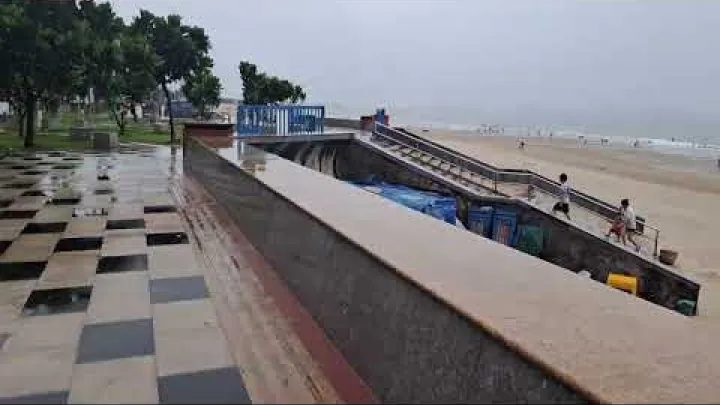
During these months, humidity is higher, roads may become wet quickly, visibility can drop during heavy rain, and sea conditions can be choppier. A rainy-season trip can still be enjoyable, but it works best when you plan flexible mornings, keep afternoons open, and take lightning warnings seriously.
Climate Averages Versus Live Weather
Climate averages help you choose a travel month, but they cannot predict the exact weather for your dates. Before beach days, boat plans, ferry travel, or hydrofoil travel on the Saigon River hydrofoil route, check current forecasts and warnings.
For official current weather and warnings, travelers can consult Vietnam’s National Center for Hydrometeorological Forecasting. Live conditions should always override seasonal expectations, especially when storms, rough seas, or thunderstorms are possible.
Month-by-Month Travel Feel
The table below gives a simple planning view. It is not a guarantee for any specific date, but it helps compare the main travel periods.
| Period | Typical feel | Planning note |
|---|---|---|
| December to March | Warm, relatively dry, beach-friendly | Best overall window; watch holiday crowds |
| April to May | Hotter, more humid, showers increasing | Use morning beach plans and flexible afternoons |
| June to September | Humid, wetter, more changeable | Check storms and avoid swimming during thunderstorms |
| October to November | Transition toward drier weather | Late November can be a good compromise |
December to March
December to March is the strongest period for most visitors. The weather is usually warm, relatively dry, and suitable for beaches, short walks, seafood meals, and outdoor sightseeing.
December and January may feel more comfortable than the hotter late dry-season period. However, Christmas, New Year, Tet, and weekends can increase crowds and accommodation demand. Tet dates change each year, so check the calendar before booking.
April to May
April is a hot transition month. It can still offer good beach time, but humidity increases and showers may become more frequent.
May is more likely to feel like the beginning of wetter conditions. Morning beach time, shaded breaks, and flexible afternoon plans are useful. Avoid treating April and May as identical because the seasonal shift becomes more noticeable as May progresses.
June to September
June to September is usually wetter, humid, and changeable. Beach days are still possible, but you need daily judgment about rain, waves, wind, and lightning.
Do not swim during thunderstorms, rough sea warnings, or beach closures. Also avoid exposed viewpoints and slippery steps during heavy rain. June and July may still be busy because of domestic school-holiday travel, even though they are part of the rainy season.
October to November
October is a transition month that may still be wet, especially earlier in the month. November often moves toward drier conditions, but showers and storm effects can still occur in some years.
Late November can be a useful compromise for travelers who want improving weather before the peak holiday period. Still, monitor forecasts and sea conditions during this transition period.
Best Time by Travel Purpose
The best month for Vung Tau depends on what you want most from the trip. A beach-focused holiday needs more reliable weather than a food-focused city break.
Beach Days and Swimming
For a beach-oriented trip, December to March is the safest general recommendation. Sea temperature is generally warm enough for swimming throughout the year, so comfort depends more on rain, wind, waves, and local safety conditions than on cold water.

Back Beach and Front Beach are useful local reference points, but conditions can vary by day. Do not swim during thunderstorms, rough sea warnings, strong currents, or any local beach closure.
Viewpoints, Walking, and Outdoor Sightseeing
December to February is often the most comfortable period for walking and exposed sightseeing. Places such as Christ of Vung Tau and Vung Tau Lighthouse are more enjoyable when heat, sun, rain, and visibility are manageable.

Start early, carry water, wear a hat, and use sunscreen. During storms or heavy rain, avoid slippery stairs, exposed paths, and high viewpoints until conditions improve.
Food, Culture, and Short City Breaks
Vung Tau works as a short city break year-round because food, cafes, markets, and many urban activities are less weather-dependent than beach plans. A rainy afternoon can be used for a meal, coffee, or rest rather than treated as a failed day.
Weekends can feel lively because Vung Tau is a convenient coastal escape from Ho Chi Minh City. If you prefer a quieter stay, choose weekdays when possible.
Budget Travel and Avoiding Crowds
For a better balance of weather and crowd levels, consider midweek travel in early December, late February to March, April, or late November. These periods may avoid some peak demand while still offering workable weather.
Major holidays, Tet, school holidays, and weekends can raise demand even when the weather is favorable. Rainy-season rates may be better at some properties, but the trade-off is a greater need for flexible plans.
Rain, Storms, and Practical Planning
Rain and storms are the main reasons to plan carefully in Vung Tau. The goal is not to avoid every shower, but to make safe decisions and protect the best parts of your trip.
How Rain Usually Affects a Trip
Rainy-season travel often works best with outdoor plans in the morning and flexible afternoons. Heavy showers can cause wet roads, temporary visibility drops, delayed beach time, and the need to shelter indoors.
Keep one or two indoor alternatives available each day. A simple plan such as beach in the morning, lunch during the hottest or wettest part of the day, and a short walk later can work well when the forecast is mixed.
Typhoon Season and Rough Sea Risk
Vietnam’s broader typhoon season overlaps with part of Vung Tau’s rainy season and transition months. The U.S. Embassy in Vietnam has warned travelers about typhoon and tropical cyclone seasons in Vietnam, including the need to monitor official updates.
Vung Tau may be affected by heavy rain, strong winds, rough seas, ferry disruptions, or beach warnings even when the strongest storm impacts occur elsewhere. Risk-averse travelers should favor December to March. If visiting from June to November, consider flexible bookings, suitable travel insurance, and avoiding marine activities during active warnings.
When to Check Official Forecasts and Local Advice
Check official forecasts before departure, again a few days before travel, and daily during rainy or storm-prone periods. This is especially important before swimming, fishing trips, boat travel, or hydrofoil plans.
Use live weather information together with local advice. Follow lifeguards, hotel staff, tour operators, port notices, and local authority instructions. Seasonal averages are helpful for planning, but local warnings should guide your decisions on the day.
Packing by Season
For the dry season, pack breathable clothing, sunscreen, sunglasses, a hat, swimwear, and a reusable water bottle or other hydration support. Strong sun can be an issue even when the weather feels pleasant.
For the rainy season, add a compact umbrella or light rain jacket, quick-drying clothes, water-resistant footwear, and a dry bag for valuables. A light layer may also be useful because air conditioning in hotels, buses, cafes, or malls can feel cool.
Planning Around Weekends and Holidays
Vung Tau can be much busier on weekends because it is close to Ho Chi Minh City. Tet, national holidays, Christmas-New Year, and school holidays can also affect crowds and accommodation demand.
Book earlier for holiday periods and choose weekdays if you want a quieter trip. This crowd planning matters even during the best weather months, because a good month can still feel busy on peak travel dates.
Simple Decision Guide
Use this final guide if you want a quick decision rather than a detailed weather comparison.
If This Is Your First Vung Tau Trip
Choose December to March, ideally midweek, if you want easier beach time, better odds of dry weather, and fewer crowd problems. If possible, avoid major holiday peaks and check the forecast close to departure even in the dry season.
If You Can Only Travel in Rainy Season
A rainy-season trip can still work if you plan differently. Prioritize morning beach time, monitor storms, and choose accommodation with easy access to food, cafes, and transport so you are not stranded during heavy rain.
If there are rough sea warnings, active storm alerts, or lightning nearby, delay swimming and avoid non-refundable marine activities. Treat rainy-season travel as flexible travel, not as second-rate travel.
Conclusion: Choosing Your Vung Tau Travel Dates
For most travelers, the best time to visit Vung Tau is December to March, when weather is generally drier and beach plans are easier. April and November can be good shoulder months for flexible visitors, while May to October requires more rain planning and daily forecast checks.
If your priority is swimming and sunny beach time, choose the dry season and avoid major holidays when possible. If your priority is food, cafes, and a short coastal break from Ho Chi Minh City, Vung Tau can work in any season as long as you respect rain, storms, and local sea-safety advice.
Select area
Create a post
Posting is free and no registration is required.