Ca Mau Travel Guide: Mekong Delta Nature & Itineraries

Ca Mau is Vietnam’s far-southern Mekong Delta destination for travelers who prefer mangrove forests, waterways, fishing communities, and quiet coastal scenery to a tightly scheduled city break. Its attractions are spread across a large, low-lying landscape, so the quality of a trip depends as much on transport planning as on sightseeing. This Ca Mau travel guide explains when to go, where to stay, how to reach the province, and how to choose realistic day trips. It also helps first-time visitors build an itinerary that leaves room for changing weather and rural travel logistics.
Ca Mau at a Glance: What to Expect
Ca Mau rewards a slower approach. Ca Mau City is the practical hub, while many of the landscapes visitors come to see lie outside the city along roads, canals, lagoons, and the southern coast.
How Ca Mau Fits into a Mekong Delta Trip
At the southern end of the Mekong Delta, Ca Mau has a distinctly water-shaped character. Mangroves, canals, aquaculture areas, lagoons, peat-forest landscapes, and coastal settlements are central to the experience. The province is often added after better-known Delta stops, but it is not simply another city stop: travel between sights takes planning, and the scenery is usually the main reason to come.
Compared with a larger Delta base such as Can Tho, Ca Mau is less concentrated and less commercially oriented toward international tourism. Ca Mau City provides hotels, restaurants, shops, taxis, and transport connections. From there, visitors commonly travel toward U Minh Ha, Nam Can, Dat Mui and Ca Mau Cape, or selected coastal sites. The official Vietnamtourism overview presents Ca Mau as a place where natural settings and local culture are closely connected.
Who Should Visit and How Long to Stay
Ca Mau is a strong choice for travelers interested in wetlands, conservation, seafood, rural livelihoods, and a quieter side of southern Vietnam. It suits people who are comfortable with early starts, longer transfers, and simple facilities outside the city. It is less suitable for visitors expecting resort-style beaches, dense nightlife, or easy walkability between major attractions.
Allow at least three nights for a meaningful first visit. That gives enough time for one major nature excursion, a second contrasting experience, and arrival or departure travel. One or two nights can work as a focused extension if Ca Mau Cape is the clear priority and transport is arranged well. Travelers who want both U Minh Ha and the Dat Mui area, plus a lagoon or coastal stop, should allow four or five days.
Best Time to Visit Ca Mau
Season affects comfort and access more than it determines whether Ca Mau is worth visiting. The province is hot and humid throughout the year, and a seasonal plan should be treated as a starting point rather than a guarantee.
Dry and Rainy Season Trade-Offs
December to April is generally the easier period for overland travel, outdoor visits, and coastal sightseeing. Drier conditions can make it simpler to arrange road transfers, forest routes, and boat outings. It is still important to expect heat, strong sun, and humidity during these months.
May to November is the wetter part of the year, with more frequent rain and potentially more disrupted outdoor plans. Rain may arrive as a short heavy shower or persist long enough to affect visibility and water-based activities. Climate records indicate substantial rainfall in most months and only a short dry period; Climate-Data identifies July among the wettest months. This is useful broad context, not a forecast for an individual trip.
Planning Outdoor Activities Around Weather
Rain, wind, heat, tides, and low visibility can change the character of a mangrove cruise, lagoon visit, forest walk, or coastal transfer. Put the most weather-sensitive outing early in your stay where possible. A later day can then serve as a backup rather than forcing you to cancel the main reason for visiting.
Pack light, quick-drying clothing, a hat, sunscreen, drinking water, insect repellent, and shoes with grip for wet or uneven ground. Check the local forecast and confirm boat or park operating conditions before leaving for a nature or coastal excursion. A flexible morning departure is often more useful than trying to follow a rigid hour-by-hour schedule.
How to Get to Ca Mau and Travel Around
Ca Mau is reachable by road and, when flights operate on your dates, by air. Once there, the challenge is usually the final transfer to a remote attraction rather than the journey into Ca Mau City itself.
Reaching Ca Mau by Bus, Car, or Road Transfer
Most overland visitors arrive from Ho Chi Minh City or another Mekong Delta base. Expect the journey to take a substantial part of a day rather than treating it as a quick transfer. Long-distance coaches are usually the practical budget choice. A private car with driver costs more but can be valuable for travelers combining stops, traveling with family, or arriving at a time that does not suit coach schedules.
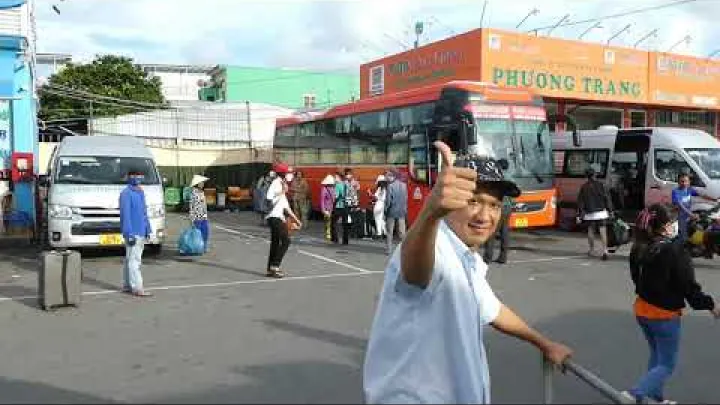
Ca Mau City and Ca Mau bus station are the usual arrival points for road travelers. Traffic, rest stops, weather, and road conditions can all alter journey length. Confirm the departure terminal, luggage policy, arrival point, and latest check-in instructions directly with the operator. If you plan to continue outside the city on the same day, leave a generous buffer instead of booking a tightly connected rural transfer.
Flying to Ca Mau and Continuing from the Airport
A flight from Ho Chi Minh City to Ca Mau can be a useful time-saving option when service is operating, particularly for travelers with limited time. Flight-search information indicates that the nonstop air journey is roughly one hour, but schedules, availability, and operating patterns can change; check current service directly with the airline or airport before relying on it. The Expedia route listing is a starting point for comparing current options, not a promise of daily flights.
Flying only shortens the intercity portion of the trip. You will still need a plan from Ca Mau Airport to your hotel and onward to U Minh Ha, Nam Can, Mui Ca Mau, or other rural areas. Arrange the first ground transfer before departure, especially for late arrivals or stays outside Ca Mau City.
Getting Between Ca Mau City and Remote Attractions
Transport choice depends on distance, group size, and whether the destination is reached mainly by road or water. Taxis are useful within and near Ca Mau City. A motorbike rental may appeal to experienced riders who understand local road conditions, but it is not the easiest option for a first visit involving long rural distances or rain. A private car with driver is usually the simplest choice for a full-day route with several stops. Local buses can be economical but may not match sightseeing schedules.

Nam Can can function as a gateway for travel toward Mui Ca Mau, while actual onward boat routes, road access, and departure locations must be confirmed locally. U Minh Ha, Hon Da Bac Island, Thi Tuong Lagoon, Khai Long Tourist Area, and Ca Mau Cape are not walkable extensions of the city center. Treat each as a separate excursion with its own transfer plan.
When comparing routes, start with the attraction rather than the vehicle. A city-based forest outing can be easier to manage without changing rooms; a Cape-focused plan may justify a private road transfer or rural night; a lagoon or island visit needs more attention to departure time and water conditions. If you are traveling independently, save the Vietnamese name and address of your hotel and pickup point, and ask the driver to confirm whether the quoted service is one-way, round-trip, or hourly. Keep enough daylight for the return, particularly where the final connection depends on a local boat or infrequent road service.
Before committing to a rural or water-based trip, confirm the departure point, return timing, route condition, total fare, and whether the price covers waiting time, fuel, entrance charges, or a guide. For boats, choose providers that supply properly fitting life jackets and understand local tides and channels. Arrange the return journey before leaving Ca Mau City; mobile coverage, language barriers, and limited late-day transport can make an improvised return difficult.
Where to Stay in Ca Mau
The best base is determined by your itinerary. Ca Mau City offers the broadest practical services, while rural stays can reduce travel time to the Cape and provide a more immersive setting.
Ca Mau City: The Most Convenient Base
Ca Mau City is the easiest base for first-time visitors. It has the widest choice of hotels, restaurants, coffee shops, shops, taxis, and onward connections. It works particularly well for a trip centered on U Minh Ha and one additional outing, while keeping luggage, meals, and transport arrangements straightforward.
City sightseeing is modest but worthwhile between excursions. Visitors may see the Cao Dai Temple, Monivongsa Bopharam Pagoda, and other local landmarks, then spend the evening eating or preparing for an early departure. Choose a hotel based on your actual departure needs, such as proximity to a pickup point or the bus station, rather than expecting a formal tourist district. Confirm check-in arrangements if you arrive late.
Dat Mui and Rural Homestays: Nature and Local Life
A homestay around Dat Mui or Mui Ca Mau can be a good fit for travelers who want more time near waterways, mangroves, and the Cape area. Staying locally can reduce repeated transfers and may create opportunities for home-style meals or locally arranged boat activities. It is best for visitors who value atmosphere and access to early or late outdoor time over hotel convenience.
Expect simpler rooms, fewer services, insects, limited English in some places, and less consistent online booking than in Ca Mau City. Contact the property directly to confirm the room type, private or shared bathroom arrangement, meals, available boat activities, payment method, and cancellation terms. Do not assume that a rural listing offers the same facilities as a city hotel.
Choosing a Base for Comfort, Access, and Itinerary Style
| Base | Best for | Main trade-off |
|---|---|---|
| Ca Mau City | First visits, services, flexible day trips | Longer trips to the Cape area |
| Dat Mui | Ca Mau Cape and rural immersion | Fewer services and transport choices |
| Split stay | Four or more nights and varied sights | Extra packing and booking steps |
A city base can still be efficient if a private transfer is available for a single long excursion. A remote base saves time near one attraction but creates more dependence on local transport. For a short trip, avoid changing hotels unless the move clearly removes substantial backtracking. For a longer nature-focused stay, a city-and-Dat-Mui split is often the most balanced arrangement.
For travelers arriving late, leaving early, or carrying large luggage, the most convenient room is often the one that simplifies the next transfer. Ask whether the property can arrange a taxi or driver and whether a boat operator will collect from the stated location; do not assume a map pin represents the actual pier. If you are splitting the stay, pack a small day bag for Dat Mui and ask the city hotel in advance whether it can store less-used luggage.
Best Places to Visit and Things to Do in Ca Mau
Ca Mau’s strongest sights are landscapes and working environments rather than a checklist of urban monuments. Choose a small number of places and allow enough time to experience them rather than trying to cover the province in one rushed loop.
Mui Ca Mau National Park and Ca Mau Cape
Mui Ca Mau National Park and Ca Mau Cape are the province’s main geographic and symbolic anchors. The area combines mangrove ecology, waterways, coastal views, and the appeal of reaching Vietnam’s southern tip. For many travelers, this is the one experience that justifies the longer journey to Ca Mau.

Depending on current access and local arrangements, visitors may use observation points, boardwalks or designated routes, and boat-based exploration to understand the mangrove environment. The value is not only the endpoint photo: it is the gradual transition from road travel to waterways and coastal forest. An early start, or an overnight stay in the Dat Mui area, usually gives a fuller experience than a hurried return trip from a distant base.
Facilities can feel basic or developing compared with major Vietnamese destinations. Before visiting, confirm current entrance procedures, operating hours, route availability, and any conservation restrictions. Stay on designated paths and follow staff instructions; mangrove environments are both sensitive and physically changeable.
U Minh Ha National Park and Melaleuca Forests
U Minh Ha National Park offers a useful contrast to the coast. Its melaleuca forests and inland wetland character create a different visual and ecological experience from the mangroves around Mui Ca Mau. It is often approached from Ca Mau City and can suit a half-day or full-day outing, depending on the access point, transfer method, and visitor facilities available at the time.
Focus on designated routes, observation opportunities, and the conservation context rather than expecting unrestricted access through sensitive habitat. The landscape is associated with peat-swamp environments and forest wetlands, so conditions underfoot and permitted activities can differ from coastal excursions. Access points, trails, boats, and fire-related or weather-related restrictions should be confirmed directly before setting out.
Bring water, sun protection, insect repellent, and footwear suitable for heat, humidity, mosquitoes, and damp ground. Wildlife encounters are possible in natural areas but should never be treated as guaranteed.
Hon Da Bac Island and Thi Tuong Lagoon
Hon Da Bac Island and Thi Tuong Lagoon make different kinds of coastal excursions. Hon Da Bac is valued for its rocky setting, maritime atmosphere, and coastal community context. Thi Tuong Lagoon is more about a broad working-water landscape, aquaculture, fishing activity, and the changing views seen from the water.
They are separate destinations, not two short stops beside each other. Combining them in one day may be possible only with a private transfer, an early start, favorable conditions, and an uncomplicated route. Travelers interested in fishing culture and local livelihoods may prefer the lagoon; those seeking a rocky coastal stop may prefer Hon Da Bac.
Local cultural events, including observances connected with Nghinh Ong traditions, can add interest when they coincide with a visit, but dates and public access should be confirmed locally. For either destination, confirm boat availability, tide, weather, and any local transport arrangements before departure.
Khai Long, Ca Mau City, and Local Food
Khai Long Tourist Area is a more structured coastal stop near the Ca Mau Cape area. It may suit travelers looking for leisure facilities alongside a coastal visit, but it should not be approached as a large resort destination. Check current opening hours, admission arrangements, facilities, and beach conditions if it is an important part of your plan.
Ca Mau City is better for practical urban time: religious sites, an evening coffee, supplies, and meals between excursions. At pagodas, temples, and community spaces, dress respectfully, keep noise low, and ask before taking close photographs. The same approach applies in working aquaculture areas, where boats, nets, and homes are part of daily life rather than visitor displays.
Food is a major reason to slow down in Ca Mau. Look for fresh shrimp, crab, fish, snails, and other seafood at busy local restaurants or trusted homestays. Mudskippers and river fish may also appear on local menus. Ask how a dish is prepared if you have allergies or dietary needs, and choose places with clear food handling and a steady local clientele.
Ca Mau Itineraries for Two to Five Days
These outlines are planning frameworks, not fixed timetables. Arrival time, transport, and outdoor conditions determine what is realistic on each day.
A Focused Two- to Three-Day Ca Mau Itinerary
Day 1: Arrive in Ca Mau City, check into your hotel, and use the evening for a simple city walk, temple or pagoda visit, and dinner. If arriving by road, avoid scheduling a major excursion on the same day.
Day 2: Choose one anchor nature experience. Select Mui Ca Mau and Ca Mau Cape if reaching the southern tip is your priority, or choose U Minh Ha if you prefer an inland forest-and-wetland outing with a city base. Do not try to add distant lagoon and coastal stops simply to fill the day.
Day 3: Use the remaining time for a city visit, a locally practical coastal or lagoon excursion, or departure. With three nights, consider replacing one city night with a Dat Mui homestay if the Cape is central to your plan; this can reduce unnecessary backtracking.
This short format works best when you choose between the inland and coastal experiences instead of treating both as compulsory. If the Cape is not your priority, do not use a long transfer merely to collect a landmark photograph; U Minh Ha plus Ca Mau City may create a calmer plan. Travelers starting in Can Tho or Ho Chi Minh City should count intercity travel as part of the trip, while those already nearby may have more usable sightseeing time.
A More Complete Four- to Five-Day Nature Itinerary
Day 1: Arrive in Ca Mau City and settle in. Day 2: Visit U Minh Ha National Park or another inland wetland-focused site. Day 3: Transfer toward Dat Mui or take a dedicated Ca Mau Cape excursion, ideally with an overnight rural stay if available and suitable.
Day 4: Explore the Cape area at a slower pace, then choose one additional interest: Khai Long for a structured coastal stop, Thi Tuong Lagoon for working-water scenery, or Hon Da Bac for a rocky coastal setting. Day 5: Keep as a travel day or weather buffer, rather than treating it as an automatic extra sightseeing day.
Choose alternatives according to your interests: U Minh Ha suits travelers focused on inland ecology, the Cape suits those prioritizing mangroves and the southern coast, Thi Tuong Lagoon emphasizes working waterways, and Hon Da Bac offers a different rocky coastal setting. A split stay can improve access to the Cape area, while a single Ca Mau City base simplifies bookings and luggage. Use a private vehicle on days involving distant road stops, and arrange locally operated boats only for the water component that genuinely adds value to your route.
Can You Visit Ca Mau as a One-Day Trip?
A one-day Ca Mau visit is possible only as a tightly focused stop, and it is usually more satisfying when you begin nearby or arrive by a conveniently timed flight. From major southern gateways, the distance and transfer time can leave little room for meaningful exploration.
Choose one anchor: a short Ca Mau City visit, or a carefully arranged transfer toward Ca Mau Cape. Do not attempt U Minh Ha, the Cape, a lagoon, and a coastal attraction in a single day. Travelers who want forests, waterways, seafood, and community experiences should add nights rather than turning the destination into a long sequence of transfers.
Costs, Booking, Food, and Practical Safety
Ca Mau can feel affordable compared with Vietnam’s largest tourist centers, but remote logistics change the calculation. The least expensive hotel room is not always the lowest-cost trip if it creates several long private transfers.
Typical Costs and Booking Priorities
Main spending categories are intercity transport, accommodation, local cars or motorbikes, boats, entrance charges, meals, and optional guides. City hotels and simple stays may be budget-friendly, while a private driver, a dedicated boat, or a remote pickup can become the largest daily cost. Hotel comparison listings such as Expedia can help identify the range of available accommodation, but displayed rates change and do not represent a fixed province-wide budget.
For a realistic estimate, price the itinerary by day rather than using a single daily average. List the intercity ticket or flight, city room, rural room if applicable, vehicle hire, boat, entrance charges, and meals separately. A short city-based day may need little beyond local transport and food, while a Cape or lagoon day can involve several services whose prices are quoted together. Comparing like with like helps reveal whether a bundled excursion includes return travel, waiting time, meals, and admissions.
Book or confirm accommodation and major intercity transfers ahead during busy domestic travel periods. For homestays, private cars, guides, and boats, confirm whether the quoted price includes all fees before booking. Ask specifically about accommodation taxes or service charges, entrance fees, fuel, meals, waiting time, pickup, return transport, and payment method. Published entrance prices and negotiated local services should be treated as different categories.
What to Eat and How to Engage Respectfully
Fresh seafood is the easiest food focus in Ca Mau: shrimp, crab, fish, snails, and seasonal local preparations are common choices. A trusted homestay may include meals as part of the stay or offer them as an extra. Clarify this before joining a fishing activity, boat trip, or rural overnight, especially if you have dietary restrictions.
Respectful travel is practical as well as courteous. Ask before photographing people, boats, homes, religious spaces, or work areas. At temples and pagodas, wear clothing that covers shoulders and knees when appropriate, follow local guidance, and avoid blocking worshippers. In conservation areas and fishing communities, do not step onto private equipment, disturb animals, or treat working spaces as open sets for photography.
Health, Transport, and Environmental Safety
Most practical risks in Ca Mau relate to heat, humidity, mosquitoes, wet ground, roads, tides, boats, and the distance from urban services. Carry drinking water, use sun and insect protection, and wear shoes that suit the activity. If using a motorbike, ride only within your experience level and ensure your insurance and licensing are appropriate for your plan.
For boat activities, use a properly fitted life jacket and follow crew instructions. In forests, mangroves, lagoons, and coastal areas, remain on designated routes and respect park rules. Do not assume a route is safe to walk simply because it appears close on a map. Travel insurance that covers the activities you intend to do, including boat travel or motorbike use where relevant, is a sensible precaution. Check current official travel information before departure, particularly if weather or local operating conditions could affect your itinerary.
Final Planning Takeaways
Ca Mau is best approached as a nature-focused Mekong Delta destination with a practical city hub and widely spaced highlights. Base yourself in Ca Mau City for convenience, add a Dat Mui stay when the Cape is the priority, and choose a small number of excursions that match your available time. Three nights is a solid first-trip minimum; four or five days allows a calmer combination of U Minh Ha, the Cape area, and one coastal or lagoon experience.
Plan the transport before choosing every sight, leave space for weather-sensitive activities, and treat local knowledge as part of the trip. With realistic expectations, Ca Mau offers a memorable view of southern Vietnam’s forests, waterways, coast, and everyday working landscapes.
Select area
Create a post
Posting is free and no registration is required.