Ben Tre Getting There: Routes, Buses, Airports, and Travel Tips
Getting to Ben Tre is mainly a road journey. Most international visitors arrive through Ho Chi Minh City, then continue by bus or private vehicle; Can Tho and My Tho can also work well for a wider Mekong Delta itinerary. This guide explains the main gateways, likely journey patterns, arrival points, and the practical details to settle before you leave. Times, fares, and departures are indicative because local transport services can change.
The Quickest Way to Get to Ben Tre
For most travelers, the simplest route is Ho Chi Minh City to Ben Tre by direct bus or pre-booked car. The best choice is not always the fastest vehicle: the complete journey also includes reaching the departure point and getting from Ben Tre’s arrival point to your hotel or homestay.
Choose Your Gateway by Arrival City
Ben Tre has no documented commercial passenger airport used as a normal visitor arrival point and no intercity rail station serving the city. Access is therefore centered on roads, bridges, interprovincial buses, taxis, and private cars. This makes the city from which you begin the road journey the most important decision.
Ho Chi Minh City is the usual gateway for international arrivals and has the broadest range of onward transport choices. Can Tho can be useful if you are flying domestically or traveling through the Mekong Delta before visiting Ben Tre. My Tho is a close regional connection for travelers already in Tien Giang Province. Choose based on where you land or stay, your luggage, your budget, and how comfortable you are with transfers. Check live departures close to travel day rather than relying on an old timetable.
A useful planning sequence is to identify your first overnight city, the road departure point, and the exact Ben Tre drop-off in that order. A route that looks short on a map may involve an airport-to-terminal transfer, a wait for a regional departure, or a final ride to a homestay outside the city. If you are traveling with a fixed tour, flight, or hotel check-in time, compare the complete itinerary rather than the driving distance alone.
Choose a Bus, Private Car, or Taxi
A bus is generally the lowest-cost way to get to Ben Tre from a major gateway. A private car or taxi costs more but can collect you at your accommodation or airport and take you directly to a specific address. The figures below are planning estimates, not guaranteed fares or travel times.
| Option | Typical use | Indicative time from Ho Chi Minh City | Cost level | Booking difficulty |
|---|---|---|---|---|
| Direct bus | Solo and budget travel | About 2 to 3 hours | Low | Moderate |
| Private car | Groups and luggage | About 2 to 3 hours | High | Low to moderate |
| Taxi | Flexible direct trip | About 2 to 3 hours | High | Moderate |
Bus travel usually requires reaching an operator office or terminal and arranging a final local ride after arrival. A private vehicle reduces those changes, which can be valuable for families, large bags, or rural accommodation. Compare the full quote, not just an advertised starting price, and do not assume one operator is always the best choice.
There is no dependable single private-car or taxi fare for every Ben Tre trip: pickup district, vehicle size, destination, tolls, waiting time, and booking method all change the quote. Treat any online estimate as a starting point and ask whether the quoted amount is for the whole vehicle or per passenger. For a bus, add the cost of reaching the office and continuing from the Ben Tre stop before comparing it with a shared car.
Ben Tre Gateways and Transport Network
Ben Tre sits within the road network of the Mekong Delta. Its connections are practical rather than rail-based, and travelers should think of airports as gateways to a separate road leg rather than as direct access to the city.
Tan Son Nhat International Airport in Ho Chi Minh City
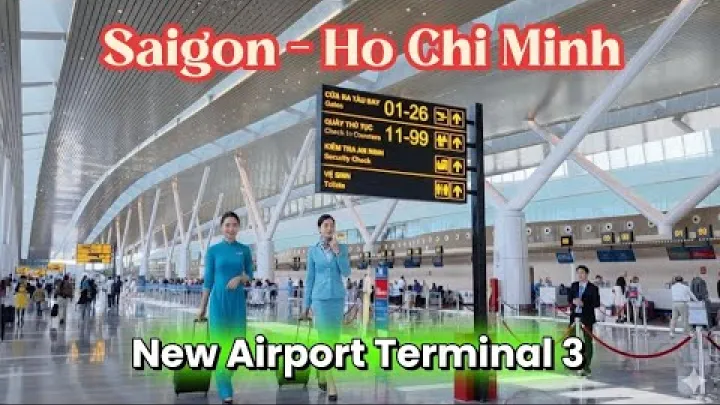
Tan Son Nhat International Airport, or SGN, is the principal international and domestic air gateway for travelers continuing to Ben Tre. It is north of central Ho Chi Minh City, so an arriving passenger still needs an urban transfer before joining an interprovincial bus or road vehicle. The location and airport role are outlined by the Ho Chi Minh City Airport Guide.
From SGN, the onward bus may leave from an operator office in District 5, another city pickup point, or the Western Bus Station, known in Vietnamese as Ben Xe Mien Tay, in Binh Tan District. These places are not interchangeable. A flight arrival is not a bus departure time: immigration, baggage collection, leaving the terminal, and cross-city travel all come first.
When comparing tickets, note whether the booking includes a shuttle from the airport or expects you to reach the office independently. Save the office name, Vietnamese address, and map pin before leaving the airport. This is particularly important if you have checked luggage or are arriving during a busy traffic period, when a short urban transfer can take much longer than its map distance suggests.
Can Tho International Airport as a Secondary Gateway
Can Tho International Airport, also called Tra Noc Airport and coded VCA, is a possible gateway for travelers whose itinerary already includes Can Tho or the southern Mekong Delta. It is described by Vietnam Airlines as the region’s largest international airport. Arrival there still requires a road journey to Ben Tre.

This route can make sense after a domestic flight or as part of a multi-stop trip, but it is not automatically faster than traveling through Ho Chi Minh City. Compare the domestic flight, the transfer from Tra Noc Airport into Can Tho, the regional bus or car, and the final Ben Tre ride. International flight availability and regional connections should be checked for your exact date rather than assumed from the airport’s designation.
For an itinerary beginning at VCA, first decide whether you will stay in Can Tho or leave directly for Ben Tre. Staying overnight removes pressure from a late arrival and gives you more choice of regional departures; leaving directly may reduce backtracking but requires a confirmed pickup and enough time for the airport-to-station leg. The airport and Can Tho Central Bus Station are separate points, so they should not be entered as the same departure location when booking.
Why Rail and Intercity Ferry Options Are Limited
There is no standard direct rail route into Ben Tre. Travelers arriving by train normally finish their rail journey in Ho Chi Minh City and continue by road. Likewise, Ben Tre’s rivers and canals are important to local life and sightseeing, but they should not be confused with a documented scheduled intercity ferry system for reaching Ben Tre city.
Road travel is the normal solution. The Rach Mieu Bridge provides the key road connection between the My Tho side of the Tien River and Ben Tre. Local boats around islands and canals can be enjoyable excursions after arrival, but they are not a dependable substitute for an interprovincial bus or car.
If a travel listing mentions a boat between My Tho and Ben Tre, check whether it is a sightseeing transfer, a private charter, or a regular point-to-point service. A tourism boat may not carry you to the same place as Ben Tre Bus Station or your accommodation, and its operating conditions can depend on the day’s itinerary and river conditions.
How to Get to Ben Tre from Ho Chi Minh City
Ho Chi Minh City offers the most straightforward transport choices for Ben Tre. The main decision is whether to accept a terminal or office transfer in return for a lower bus fare, or pay more for a direct vehicle.
Direct Buses to Ben Tre
A direct Ho Chi Minh City to Ben Tre bus commonly takes roughly two to three hours in normal conditions. Traffic, the departure office, stops, and the exact drop-off can make the total time longer. Travel guidance for this route reports frequent services in some periods and a bus fare around 90,000 VND, but these are useful reference points rather than a fixed public timetable. Mekong Zigzag lists route-specific advice and reported frequency information.
Services may use offices around District 5 or depart from Western Bus Station in Binh Tan. When searching on a map, use both the English and Vietnamese names. Before paying, identify the operator, ask for the exact departure point, and confirm where in Ben Tre the vehicle will stop. Arrive early enough to find the correct counter or office, label checked luggage, and keep your ticket, receipt, or booking message until you have arrived.
Do not assume that a search result showing “Ho Chi Minh City” represents one central terminal. Ask whether the vehicle departs from a District 5 office, Ben Xe Mien Tay, or a pickup point arranged by the operator. If a service includes a passenger shuttle to the bus, confirm where that shuttle collects you and whether you must reach the office by a particular time.
Private Car or Taxi from Ho Chi Minh City
A private car or long-distance taxi is useful when you want door-to-door travel, are carrying substantial luggage, are traveling with children, or arrive at a time that does not suit a bus. It can also be easier for a group because the total can be divided among passengers. Vehicle size, airport versus city pickup, destination address, booking channel, and the provider’s waiting-time rules all affect the final quote.
Published route listings may show broad estimates for car or taxi travel, but the available information does not establish one dependable current price for every journey. Ask for the total fare in Vietnamese dong and establish what it includes. Useful questions include whether tolls are included, whether a stop is permitted, how long the driver will wait, and whether a narrow rural lane can be reached by the booked vehicle. A direct car can reduce transfers, but traffic still affects the road journey and it is not necessarily quicker in every circumstance.
For a late airport arrival, pre-booking is more useful than trying to negotiate with an unidentified driver after landing. Send the exact accommodation address, passenger count, and luggage details in advance, then keep the booking contact available in case the meeting point changes. This improves coordination without treating a private vehicle as a guarantee against traffic delays.
Planning the Airport-to-Bus Connection
If you land at Tan Son Nhat and intend to use a bus, leave a substantial buffer before the selected departure. Allow for border formalities when relevant, baggage collection, leaving the airport, city traffic, and locating the correct office or terminal. The practical risk is not only a delayed flight; it is also arriving at the wrong pickup point or reaching it too late for boarding.
![Preview image for the video "[予習で安心] ホーチミン空港到着ガイド(路線バスで市内へ) SGN airport arrival guide".](/sites/default/files/styles/media_720x405/public/oembed_thumbnails/2026-07/pOtk-GJ3VdoszJTSrRhg4v2zQ8tO6oHIZSUUNasQ6W4.jpg.webp?itok=6EqE8968 "Preview image for the video \"[予習で安心] ホーチミン空港到着ガイド(路線バスで市内へ) SGN airport arrival guide\".")
Confirm the bus location by name and map pin, not just by the words “Ho Chi Minh City.” If your flight arrives late, if you have a time-sensitive commitment, or if you are uncomfortable managing the city transfer with luggage, a pre-arranged car or an overnight stop in Ho Chi Minh City may be the more reliable plan.
It is usually safer to treat the flight and bus as separate parts of the itinerary rather than as a guaranteed connection. If the bus is non-refundable or the next leg matters, choose a later departure with room for immigration and traffic, or travel into Ho Chi Minh City first and continue the following day.
How to Get to Ben Tre from Can Tho or My Tho
Can Tho and My Tho are useful starting points when Ben Tre is one stop in a Mekong Delta route. Their transport choices can be less simple than the main Ho Chi Minh City route, particularly if you arrive at an airport or on a local day trip rather than at a bus terminal.
Can Tho to Ben Tre by Bus or Taxi
Reported Can Tho to Ben Tre bus journeys are commonly around three to three and a half hours, subject to route, traffic, and current service pattern. A regional bus can reduce costs, while a taxi or private car can simplify pickup time and luggage handling. The choice is especially relevant if you need to leave Can Tho at a specific time or travel onward after arriving in Ben Tre.
Can Tho Central Bus Station and Tra Noc Airport are separate locations. Travelers landing at VCA should plan an additional local road leg before an intercity departure. Operators such as Thinh Phat, Minh Tam, FUTA or Phuong Trang, and Thao Chau may appear in route listings or traveler information, but route coverage and departure windows can change. Select a service based on its confirmed Can Tho departure point, booking method, and Ben Tre drop-off rather than its name alone.
For a multi-stop Delta itinerary, compare the time spent reaching a station with the convenience of a direct car from your Can Tho accommodation. A bus may be the better value for a solo traveler who can travel during the day, while a shared private vehicle may make more sense for several people with luggage. Because regional listings are not a consolidated live timetable, contact the operator before relying on a particular departure or fare.
My Tho to Ben Tre by Local Bus or Road
My Tho is a nearby connection point on the other side of the Tien River. Road travel to Ben Tre uses the Rach Mieu Bridge. A local bus may be inexpensive, but its frequency, boarding process, and daytime operating pattern can be less clear than a direct interprovincial booking. It is best suited to travelers who can tolerate waiting and who are traveling light.
A taxi or private car is often simpler after a My Tho day trip, when carrying luggage, or when arriving later in the day. Tourism boats around My Tho and nearby islands are not the same as a scheduled boat service to Ben Tre city. Check local road and weather conditions before setting out, and avoid a tightly timed onward connection because local transport conditions can vary.
Before leaving My Tho, confirm whether the local bus leaves from My Tho bus station or another roadside point, and whether it finishes at Ben Tre Bus Station or an operator office. A map route across Rach Mieu Bridge does not by itself confirm the boarding point, frequency, or final stop. If conditions are wet or the bridge approach is congested, keep extra time for the road leg.
Bus Stations, Operators, and Tickets
The most useful transport information is often the exact office or station name rather than a broad route label. Save those details on your phone in Vietnamese, especially if you do not speak Vietnamese.
Where Buses Arrive in Ben Tre
Ben Tre Bus Station, or Ben Xe Ben Tre, is a key documented arrival point on National Highway 60, usually written as QL60, in Huu Dinh. The published address is Bến Xe Bến Tre, QL60, Hữu Định, Thành phố Bến Tre, Bến Tre. Bookaway lists this station location and identifies it as a local transport point.
Not every Ben Tre-bound bus necessarily uses the main station. Some may terminate at an operator office or a designated roadside drop-off. Check whether your stop is the city bus station, an office on QL60, or another location before booking. A hotel in the riverside area or a rural homestay may still require a short taxi or motorbike-taxi ride after the bus.
At booking, save the arrival point as a separate item from the accommodation address. Showing a driver “Ben Xe Ben Tre” is useful if you need the central transport hub, but it is not the same instruction as asking for a riverside hotel or a homestay in the surrounding countryside. If the operator offers several drop-offs, choose the one that leaves the shortest and clearest final connection.
Reported Bus Operators and Departure Offices
Thinh Phat, Minh Tam, FUTA or Phuong Trang, and Thao Chau are among the names reported in available route information. Treat listings as starting points for comparison rather than proof of a current departure. Branding, office arrangements, route coverage, ticket channels, and vehicle types may change.
For example, a reported Thinh Phat office in Ben Tre is at 82A Khu Pho 2, Dai Lo Dong Khoi, National Highway 60. That is useful as a map-search anchor, but it does not mean every departure or arrival uses that office. Some operator listings also distinguish between a Ho Chi Minh City office and a Ben Tre office, so check the city attached to the address before traveling to the counter. Choose an operator by the pickup location you can reach, the drop-off that suits your accommodation, whether you can complete the booking, and the current departure that has been confirmed to you.
Cash, Language, and Booking Practicalities
Local ticketing can involve Vietnamese-language communication, an in-person counter, a phone call, and cash payment. Carry sufficient Vietnamese dong, save your accommodation name and address in Vietnamese, and use a translation app if needed. Accommodation staff may also be able to help communicate a destination or confirm a pickup point.
Before boarding or accepting a taxi ride, confirm the fare and payment method. Ask whether luggage is included, whether payment is due at booking or boarding, and what kind of vehicle or seat you are receiving. Online listings are helpful for finding possible services, but the operator or station is the better authority for a live departure. Keep the phone number or message thread available until the trip is complete.
A short written message can prevent several misunderstandings. Include your travel date, number of passengers, departure city, preferred time, destination in Ben Tre, luggage count, and whether you need a hotel or homestay drop-off. Ask the operator to reply with the pickup address and fare. Keep enough Vietnamese dong for the ticket and final local ride, since payment arrangements may differ between an online listing, a station counter, and the vehicle.
Choosing the Best Route for Your Trip
The best way to get to Ben Tre depends on total cost, the value of your time, luggage, and the consequences of a missed connection. Consider the entire door-to-door trip rather than comparing only the intercity fare.
Best Option for Budget Travelers
A direct public bus from Ho Chi Minh City is often the strongest budget option. If you are already in Can Tho or My Tho, compare the local onward bus with the cost and time of returning to Ho Chi Minh City; traveling back to the larger gateway may erase any apparent saving.
Use a complete-cost checklist: the intercity ticket, airport or city transfer to the departure point, luggage charges if any, meals or waiting during a long connection, and the final ride to your Ben Tre accommodation. A lower advertised fare can become less economical if it ends far from where you are staying.
For a solo traveler, the bus usually makes most sense when the departure point is easy to reach and the final accommodation is near a known arrival point. If reaching the terminal requires an expensive taxi or several changes, compare that total with a shared car before deciding. The practical budget choice is the lowest complete journey that you can manage comfortably, not necessarily the lowest ticket price.
Best Option for Groups, Families, and Heavy Luggage
A private car can become competitive when several people share it. It is especially practical for travelers with children, large suitcases, mobility needs, or a homestay outside central Ben Tre. Confirm the number of seats and the realistic luggage capacity, since a small car may not suit a full group with large bags.
A bus plus a short local taxi is a useful compromise when price matters but you do not want to navigate local transport after a long journey. The right choice depends on group size, luggage, the time of arrival, and whether the accommodation is easy for a vehicle to reach.
Before confirming a private vehicle, send the full address and ask where the car can stop. Some rural properties may require the last short section to be completed on foot or by a smaller local vehicle. Agreeing this in advance avoids treating “door to door” as a promise that the car can reach every entrance.
Best Option When You Have a Tight Schedule
When missing the next connection would be costly or disruptive, a direct pre-booked vehicle can reduce the number of transfers. A direct bus can still work well if its departure point, boarding process, and arrival point have been confirmed and your schedule has enough room for normal road delays.
Do not build a same-day flight connection, tour departure, or important appointment around an unconfirmed local timetable. Total itinerary time includes waiting, traffic, boarding, and the final trip from the Ben Tre stop to your accommodation, not only the advertised driving time.
Use the cost of a missed connection as the decision rule. If missing it would mean losing a tour, another ticket, or a late-night hotel arrival, pay for fewer changes or schedule an overnight stop. If the consequence is minor, a lower-cost bus with a flexible arrival plan may be reasonable.
Arriving in Ben Tre and Checking the Final Details
Arrival in Ben Tre is not always the end of the transport planning. Many stays are not directly beside the bus station, and the final handoff is easier when you have a clear address and a local transport plan.
From the Bus Station to Ben Tre City Center
Ben Tre Bus Station and operator offices along QL60 may be outside the precise hotel, riverside, or rural area where you are staying. Arrange a final ride in advance when possible, particularly for a homestay outside the center or when arriving with luggage. Your accommodation may be able to recommend a pickup arrangement.
Send the full destination address in Vietnamese to the driver or show it on your phone. Before leaving the station or office, make sure the driver understands the intended destination. Searching for “Ben Xe Ben Tre” or the relevant QL60 office can help distinguish the bus arrival point from your final accommodation.
If you are collecting a stored bag, check it before walking away from the bus. Keep your phone, passport, money, and medication with you during the handoff, and use the station name only when it is genuinely your destination. A pre-arranged pickup is particularly helpful for rural stays whose names may be difficult to match in a map application.
Avoiding Unclear Fares and Unmarked Rides
Use a clearly identified taxi operator, a ride-hailing service where available, or a pre-arranged vehicle. For an informal local ride, agree the fare before departure and make sure the destination is understood. This is a practical clarity measure, not a claim that unclear rides are inevitable in Ben Tre.
Keep your passport, phone, money, essential medication, and other important documents in your personal bag rather than in luggage stored away from you. Check that all luggage is present when you leave the bus or vehicle.
What to Verify Before Departure
Complete this final checklist shortly before travel:
- Operator name and contact number
- Departure time and exact pickup point
- Ben Tre arrival point and final local ride
- Total fare, currency, and payment method
- Luggage policy and vehicle or seat arrangement
- Whether the service is operating on your travel date
Schedules, fares, office locations, and service status can change because of holidays, roadworks, demand, or local conditions. Confirm the departure directly with the operator or terminal, retain the booking details, and keep a practical backup such as another departure, a private car contact, or a flexible arrival plan.
Final Takeaway for Getting to Ben Tre
For most visitors, Ho Chi Minh City to Ben Tre by direct bus or private car is the clearest route. Can Tho is a sensible alternative for a Mekong Delta itinerary, while My Tho is useful for a close regional connection across Rach Mieu Bridge. Choose transport based on your complete journey, then confirm the precise pickup, drop-off, fare, and service status before you travel.
Select area
Create a post
Posting is free and no registration is required.